绿色低碳转型

Search documents
2025年度NEWS品牌样本发布
Xin Jing Bao· 2025-12-31 00:17
Core Insights - The article emphasizes the critical role of enterprises in driving economic stability, technological innovation, industrial upgrades, and improving people's livelihoods, positioning them as the "ballast stone" of economic operation and the "main force" of technological innovation [1][2]. Group 1: NEWS Brand Sample Evaluation - The 2025 NEWS Brand Sample focuses on "new consumption, new scenarios, and new applications," assessing companies based on three key dimensions: AI+, green development, and brand social responsibility [2][3]. - The acronym "NEWS" represents four dimensions: - "N" for Innovation (New) evaluates brands on their innovation capabilities and outcomes - "E" for Energy (Energetic) assesses brands' market responsiveness and activity - "W" for Wisdom (Wise) measures strategic planning and decision-making abilities - "S" for Sustainability (Sustainable) looks at social responsibility and long-term development plans [2]. Group 2: Key Brand Highlights - The 2025 NEWS Brand Sample includes 39 companies recognized for their market leadership, innovation, sustainability, and AI+ application capabilities [6]. - Notable brands include: - China Agricultural Bank, which has significantly increased its county loan scale, surpassing 1 trillion yuan, and has seen rapid growth in various financial services [9]. - BYD Group, which achieved the production of its 15 millionth new energy vehicle and expanded its overseas sales significantly, covering over 110 countries [10]. - Tencent, which has seen international market revenue exceed 20 billion yuan and has actively engaged in social responsibility initiatives [11]. - Haidilao, which has innovated its service offerings to enhance customer experience and expand its brand portfolio [16]. - Aier Eye Hospital, which has integrated AI into its services and focused on social responsibility projects [17]. Group 3: Brand Categories - The brands are categorized into different groups based on their strengths: - 9 brands recognized for their influence include China Agricultural Bank, BYD, Tencent, and others [6]. - 9 brands noted for their responsibility include Abbott, Xifeng Wine, and others, focusing on compliance and ESG governance [19]. - 8 brands leading in innovation include Perfect China and Zebra Language, which have made significant market breakthroughs [20]. - 6 brands identified as AI+ pioneers include Xueersi and Squirrel AI, showcasing the application of AI in transforming business models [22]. - 7 brands recognized for industry breakthroughs include Nu Skin and Mousse Group, which have disrupted traditional industry paths [22].





实施新标准对重点行业和领域有哪些影响?丨《环境空气质量标准》与配套技术规范修订系列解读④
Zhong Guo Huan Jing Bao· 2025-12-30 23:28
Group 1: Air Quality Standards and Their Impact - The Ministry of Ecology and Environment is soliciting public opinions on the revised "Ambient Air Quality Standards" (GB 3095—2012) and related technical specifications [1] - The new standards aim to promote the construction of a new energy system in China, facilitating the safe and orderly replacement of fossil energy and the development of renewable energy sources [3][4] Group 2: Power Industry Developments - The installed capacity of wind power in China is projected to grow from 76 million kW in 2013 to 520 million kW by 2024, a 580% increase, while solar power capacity is expected to rise from 19 million kW to 890 million kW, a 4580% increase [2] - By the end of 2024, 96% of coal-fired power generation capacity will have completed ultra-low emission upgrades, significantly improving the cleanliness of coal power [2][3] Group 3: Steel Industry Transformation - The steel industry has eliminated 300 million tons of outdated capacity, with advanced equipment capacity significantly increasing, leading to a 25.4% reduction in PM2.5 concentration in ten major steel-producing cities from 2018 to 2024 [5][6] - The implementation of new air quality standards will drive the steel industry to adopt a reduction-focused development model, enhancing the competitiveness of high-quality enterprises [6][7] Group 4: Petrochemical Industry Progress - The petrochemical industry has seen a more than 20% reduction in major air pollutant emissions from 2017 to 2024, despite a 60% increase in crude oil processing capacity [9][10] - The new standards will accelerate the green and low-carbon transformation of the petrochemical industry, promoting comprehensive governance of emissions [10] Group 5: Automotive Industry Advancements - Since 2012, the implementation of air quality standards has led to a 90% reduction in nitrogen oxides and particulate matter emissions from vehicles, significantly enhancing the international competitiveness of China's automotive products [11][12] - In 2024, the sales of new energy vehicles reached 12.87 million units, with a market penetration rate of 40.9%, maintaining China's position as the global leader in this sector [11][12]
中石油蓝海(南通)中试基地中交
Xin Hua Ri Bao· 2025-12-30 21:34
Core Viewpoint - The signing of the "Engineering Intermediate Handover Certificate" marks a significant transition for the China National Petroleum Corporation (CNPC) Blue Ocean (Nantong) pilot base from construction to formal operation [1] Group 1: Project Overview - The total investment for the CNPC Blue Ocean New Materials Project is 50 billion yuan, which is a key component of the strategic cooperation agreement between CNPC and Jiangsu Province [1] - The Blue Ocean (Nantong) pilot base is crucial for CNPC's implementation of the "dual carbon and three new" strategy, promoting the green and low-carbon transformation of its refining business [1] Group 2: Technological and Research Implications - The pilot base will support the establishment of a new materials technology innovation system and is essential for the industrialization of new technologies from CNPC's Shanghai New Materials Research Institute and other research institutes [1] - The facility aims to facilitate the "last mile" of technology transfer, ensuring that scientific achievements are effectively converted into practical applications [1]

大兴区“十五五”规划建议全文公布
Bei Jing Ri Bao Ke Hu Duan· 2025-12-30 14:37
Core Viewpoint - The Daxing District of Beijing aims to establish itself as a model for collaborative development and a new gateway for openness, focusing on high-quality economic and social development during the 15th Five-Year Plan period. Group 1: Achievements During the 14th Five-Year Plan - Daxing's GDP has surpassed 100 billion, with public budget revenue stabilizing above 10 billion, and fixed asset investment consistently ranking in the top five of the city [2] - The number of market entities has increased by 128% since 2020, with high-tech enterprises growing at an annual rate of 11.3% [2] - Daxing International Airport has handled 188 million passengers since its opening, with international passenger traffic expected to exceed 10% by 2025 [2] - The region has made significant progress in ecological improvements, with PM2.5 levels dropping to 33 micrograms per cubic meter [2] Group 2: Challenges Facing the 15th Five-Year Plan - Daxing must enhance the role of the international airport and strengthen its leading industries, as it still faces issues of small economic scale and structural weaknesses [4] - The district has a unique geographical advantage, being the closest plain city to the capital's core, and must leverage this for future growth [3] Group 3: Development Goals for the 15th Five-Year Plan - The plan emphasizes the need for high-quality development, focusing on six leading industries and a "6+5+3" industrial layout [6][17] - Key goals include enhancing the capital's functional service capabilities, improving economic strength, and achieving significant advancements in international openness [9][10] Group 4: Principles for Economic and Social Development - The development strategy will prioritize new quality productivity, high-level openness, and a people-centered approach [7][8] - Emphasis will be placed on green development and ensuring safety in economic activities [8] Group 5: Industrial Development Strategy - Daxing aims to create a modern industrial system with international competitiveness, focusing on six key industries including air transport, biomedicine, digital economy, future energy, commercial aerospace, and new agricultural technology [16][17] - The district plans to establish specialized industrial clusters and enhance the integration of various sectors [19][20] Group 6: Urban and Rural Development - The strategy includes a focus on urban renewal, improving infrastructure, and enhancing the quality of life in rural areas [31][34] - Daxing will promote the development of distinctive towns, each with unique characteristics and industries [35] Group 7: Cultural Development - The district aims to enhance its cultural identity and promote a diverse and innovative cultural environment [36][37] - Efforts will be made to integrate cultural resources with economic development, enhancing the overall quality of life for residents [36]
新能源智慧型电缆助力绿色低碳转型
Zhong Guo Neng Yuan Wang· 2025-12-30 12:02
12月28日,2025全球能源产业发展合作高峰论坛在北京成功召开,来自能源领域的专家学者、企业、行 业协会等嘉宾代表近200余人参加了论坛。本次论坛以聚焦前沿趋势、共探技术创新、深化合作机遇为 宗旨,论坛重点围绕能源基础设施建设与绿色低碳转型的政策导向,新能源创新技术迭代、智慧能源系 统构建、国际能源供应链安全等关键议题。国务院原参事、原国家发改委能源局局长徐锭明、清华大学 教授洪亮、陕西博菲特控制流体装备制造有限公司总经理付斌斌等做主旨演讲,碰撞思想火花,凝聚产 业发展共识。 随着我国新能源光伏、风电、储能、新能源充电桩以及零碳园区等领域的快速发展,华远高科的抗高次 谐波新能源智慧型电缆,可完全替代传统铜芯电缆,其所有技术参数及性能指标与传统铜芯电缆相同, 部分甚至高于传统铜芯电缆,具备节能降耗、绿色环保的优势,该电缆通过了国内最权威机构《国家电 线电缆质量监督检验中心》的检测,并取得了全系列检测报告,使用寿命长,且已获得国际权威机构德 国莱茵TUV全系列认证.并荣获多项国家发明专利,获得了《安徽省经济和信息化厅》颁发的新产品证 书。 该系列电缆与传统铜芯电缆相比,具有导体接触电阻更小、载流量更大、线损更小 ...
支持老旧小区加装电梯、增加智能眼镜补贴……2026年“国补”有这些新变化
Xin Hua Wang· 2025-12-30 11:47
明年"两新"政策,将继续实施汽车报废更新和汽车置换更新补贴;继续实施家电以旧换新补贴,支 持范围聚焦冰箱、洗衣机、电视、空调、电脑、热水器等6类产品。同时,将数码产品购新补贴拓展为 数码和智能产品购新补贴,支持范围包括手机、平板、智能手表(手环)、智能眼镜和智能家居产品 (含适老化家居产品)。 12月30日,备受社会关注的2026年"两新"政策发布:国家发展改革委、财政部印发的《关于2026年 实施大规模设备更新和消费品以旧换新政策的通知》30日对外发布,明确2026年"两新"政策的支持范 围、补贴标准和工作要求。 2026年"两新"政策有哪些变化?新一轮"国补"有哪些看点?可以从三个"优化"来理解: 一是优化支持范围。 老旧小区加装电梯难、养老机构功能不足、超市设施老旧……针对这些老百姓关注的民生难点痛 点,2026年"两新"政策给予了回应:增加支持。 通知明确,设备更新方面,总体延续2025年支持范围,在民生领域增加老旧小区加装电梯、养老机 构设备更新,在安全领域增加消防救援、检验检测设备更新,在消费基础设施领域增加商业综合体、购 物中心、百货店、大型超市等线下消费商业设施的设备更新。这些新部署,有望更好 ...
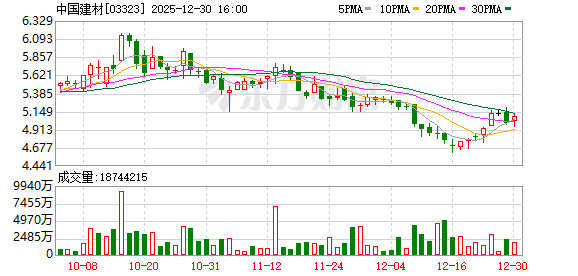
中国建材亮相中国制造“十四五”成就展 硬核成果彰显国家队担当
Zhong Guo Jing Ying Bao· 2025-12-30 09:38
Core Viewpoint - China National Building Material Group showcased 21 types of self-developed non-metal new materials at an exhibition, emphasizing its role in supporting national strategies and improving people's lives [1] Group 1: Innovation and Achievements - The group has 38,000 research personnel and nearly 30,000 effective patents, being recognized as one of the first original technology sources among state-owned enterprises [2] - During the 14th Five-Year Plan, the group established a 10,000-ton carbon fiber production base and achieved breakthroughs in high-performance carbon fiber technology [2] - The group has generated over 100 billion yuan in revenue from new materials for four consecutive years, with profits exceeding 10 billion yuan [2] Group 2: Green and Low-Carbon Transformation - The group reduced energy consumption and carbon emission intensity per unit of output by 15.5% and 5.7% respectively compared to 2020, achieving its emission reduction targets ahead of schedule [3] - It has built 134 national-level green factories and 40 green mines, contributing to an annual carbon reduction of 710,000 tons [3] - The group is leading the construction of China's first "dual carbon" service platform in the raw materials industry [3] Group 3: Future Goals - The group aims to build a globally competitive world-class materials investment group, focusing on high-quality development and the cultivation of a "second curve" of growth [3] - It plans to enhance its advantages in basic building materials, new materials, engineering technology services, and smart logistics while promoting high-end, green, digital, and international development [3]

第六届中国液化天然气大会即将举行
Huan Qiu Wang· 2025-12-30 09:27
值得关注的是,作为大会的重要组成部分,"LNG设备与材料技术成果展"将同期举办。展览聚焦天然气 液化、储运装备、智能运维平台、新材料应用、数字化软件等领域,通过展板、实物、模拟演示、视频 等多种形式,集中展示最新科技成果与应用案例。该平台将搭建供需精准对接渠道,助力新技术、新装 备加速市场化应用与规模化推广,切实推动产业链上下游的科技创新协同与成果高效转化。 来源:光明网 据介绍,自首届召开以来,中国液化天然气大会已成为全球能源行业搭建高效沟通与务实合作的桥梁。 第六届中国液化天然气大会的召开,将进一步凝聚行业共识、深化产业链协同、推动技术创新突破,为 保障全球能源安全、加速低碳转型进程贡献中国智慧与行业力量。 光明网讯(记者 张佳兴)在全球能源格局深刻调整、绿色低碳转型加速推进的时代背景下,液化天然 气(LNG)作为清洁、高效、灵活的优质能源,已成为能源供应体系的核心力量。据中国石油学会石 油储运专业委员会消息,为汇聚全球行业智慧、共商发展大计,助力LNG产业在变局中开创新局,"第 六届中国液化天然气大会暨LNG设备与材料技术成果展"定于2026年3月18日至20日在天津召开。本次大 会亮点纷呈,从权威阵容 ...
农行陕西省分行授信150亿助力千亿级煤化工项目绿色转型
Zhong Guo Jin Rong Xin Xi Wang· 2025-12-30 08:35
Group 1 - The core project of Shaanxi Coal Group's Yulin Chemical is the construction of a 15 million tons/year coal quality clean and efficient conversion demonstration project, which is part of the first batch of four trillion-level chemical projects in Shaanxi Province for 2024 [1] - Agricultural Bank of China (ABC) Shaanxi Branch provided a significant financial support of 15 billion yuan, marking the largest financial backing since its establishment [1] - The project aims to utilize coal quality conversion technology to produce high-value-added materials and biodegradable products through coal-to-olefins and coal-to-aromatics pathways, thereby extending the industrial chain [1] Group 2 - Upon completion, the Yulin Chemical Phase II project is expected to form a trillion-level industrial cluster, providing crucial support for the construction of a trillion-level modern energy industrial cluster in Shaanxi [2] - The project will lead the upgrade direction of the coal chemical industry and explore the coupling development of "coal chemical + new energy," contributing to the high-end, diversified, and low-carbon development of the industry [2] - Since 2023, ABC Shaanxi has approved over 10 green energy chemical projects, with a total approval amount reaching 50 billion yuan, providing solid financial support for the construction of the Yulin National Energy Revolution Innovation Demonstration Zone [2]
《电力中长期市场基本规则》解读之二︱新型电力系统下的电力中长期市场重构“组合拳”
国家能源局· 2025-12-30 07:54
近日 ,国家发展改革委、国家能源局印发《电力中长期市场基本规则》,废止《电力中长期交易基本规则》(发改能源规 〔 2020 〕 889 号) 和 《电力中长期交易基本规则 —— 绿色电力交易专章》(发改能源〔 2 024 〕 1123 号)。《电 力中长期交易基本规则》是我国电力市场化改革的关键里程碑。在其推动下,市场规模实现跨越式增长,市场体系得以初 步构建,规则框架基本统一,有效提升了交易规范性与透明度,为全国统一电力市场 建设奠定了坚实基础。随着 双碳 目 标的深入推进 和 电力体制改革的不断深化 , 以高 比例新能源为主体的新型电力系统加速构建, 电力市场 基础 规则体系 建设迎来了新要求、新挑战。 在此背景下,《电力中长期市场基本规则》审时而生。 此次修订 并非一次常规的条款修补,而是立足 新型电力系统建设 全局的 " 系统性重构 " ,是涵盖主体范围、市场协同、交易机制、绿电消纳等各方面系统性提升的 " 组合拳 " ,标志着 我国电力市场化改革迈入适应能源结构转型的新阶段。面对市场运行与发展的挑战,《电力中长期市场基本规则》主要进 行了以下四个维度的优化提升。 一、契合新型电力系统:明确新型经营主 ...