
新型能源体系

Search documents
湘黔、湘粤、渝黔三项网间电力灵活互济工程通过国家核准
中国能源报· 2025-11-18 08:51
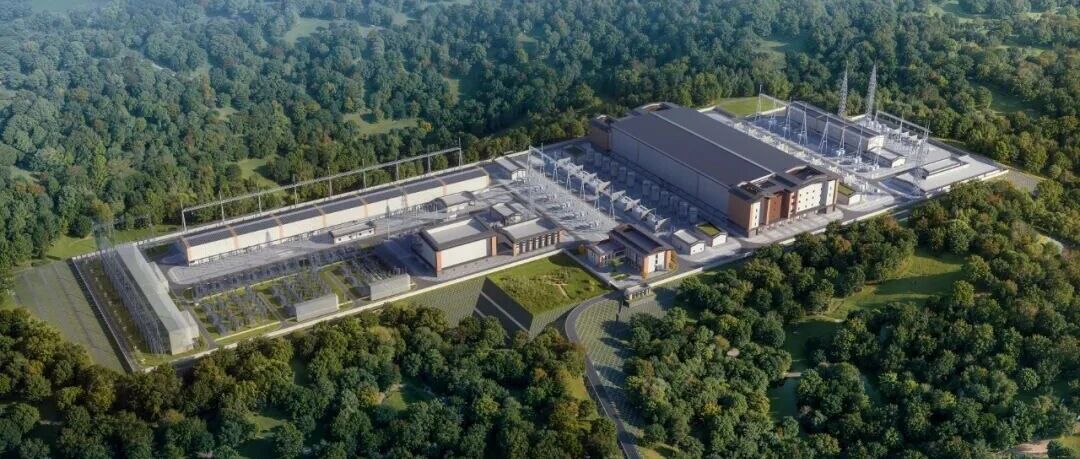
Core Viewpoint - The approval of the Xiangqian, Xiangyue, and Yuchuan flexible interconnection projects will significantly enhance the power transmission capacity between Southern Power Grid and State Grid, with a total investment exceeding 15.6 billion yuan and a maximum transmission capacity of 9 million kilowatts [1][2]. Group 1: Project Details - The three projects are set to start construction by the end of this year and are expected to be completed before the summer peak in 2027 [1]. - The new projects will increase the number of transmission channels between Southern Power Grid and State Grid from 2 to 5, thereby significantly enhancing cross-regional power exchange capabilities [2]. Group 2: Implementation and Coordination - Southern Power Grid has established a multi-disciplinary collaborative mechanism to enhance internal coordination and has formed a joint working group with State Grid to facilitate project planning and execution [3]. - The projects will include the construction of three flexible DC back-to-back converter stations, each with a capacity of 3 million kilowatts, located in Tongren, Guizhou; Chenzhou, Hunan; and Chongqing [4]. Group 3: Benefits and Strategic Importance - The projects will improve power supply security and renewable energy absorption capabilities, particularly benefiting regions with complementary power load characteristics, such as Hunan and Guizhou [10]. - The successful implementation of these projects will provide a solid physical foundation for regular power trading across grid operating areas, enhancing emergency support capabilities during extreme weather events [7][10].

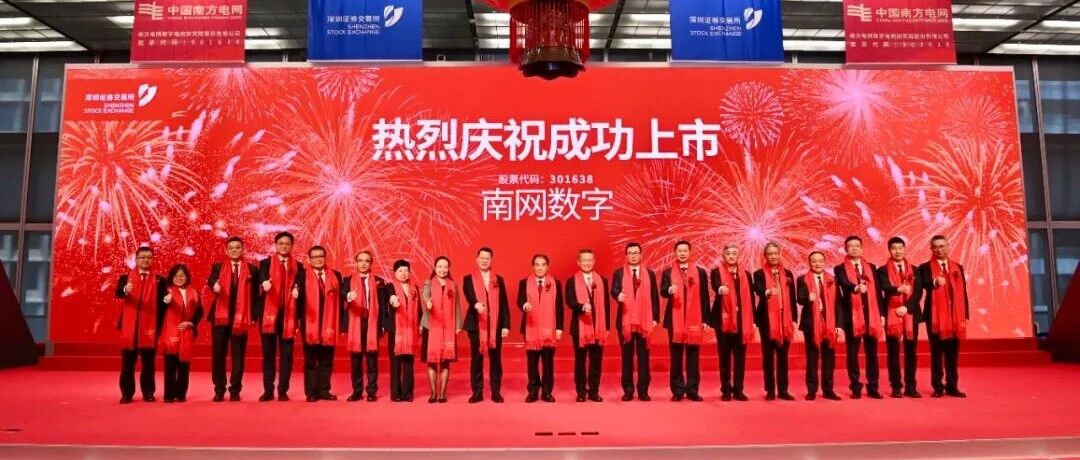
全球首家数字电网研究院成功上市 南网数字:以科产融合推动数字化智能化转型进入发展新阶段
Zheng Quan Shi Bao· 2025-11-18 07:47
Core Viewpoint - The successful listing of Southern Power Grid Digital Research Institute Co., Ltd. marks a significant step in the company's digital transformation and integration into the capital market, highlighting the importance of digital power grids in China's energy transition [1][6][7] Group 1: Company Overview - Southern Power Grid Digital Research Institute, the fourth listed company cultivated by Southern Power Grid, officially listed on the Shenzhen Stock Exchange on November 18 [1] - The company aims to become a leading player in the digital power grid sector, supporting the intelligent, green, and integrated transformation of the energy and power industry [2][3] Group 2: Strategic Goals - The company will focus on implementing the strategies of Digital China and Energy Power Nation, enhancing the digital power grid industry ecosystem to better support the energy sector's transformation [2] - The goal is to create a new quality of energy production capacity through digitalization and innovation [2] Group 3: Technological Achievements - Southern Power Grid Digital has made significant advancements in core technologies, including the development of a unified IoT operating system for the power industry and a large-scale domestic digital system [4] - The company has established national-level platforms and has been recognized as a model enterprise for scientific reform by the State-owned Assets Supervision and Administration Commission [4][5] Group 4: Market Position and Future Plans - The rapid listing process, completed in just 145 days, reflects the company's strong compliance and operational foundation, as well as the capital market's support for technology-driven enterprises [6][7] - The company plans to enhance its governance, strengthen its core position in technological innovation, and expand into cutting-edge technology fields such as artificial intelligence and quantum sensing [7]
南网数字成功上市 以科产融合推动数字化转型
Zheng Quan Ri Bao Wang· 2025-11-18 06:45
Core Viewpoint - The successful listing of Southern Power Grid Digital Network Research Institute Co., Ltd. (referred to as "Southern Network Digital") on the Shenzhen Stock Exchange highlights the capital market's strong recognition of the development prospects of digital power grids, injecting robust momentum into the construction of a safe, intelligent, and green new power system [1][3]. Group 1: Company Overview - Southern Network Digital was officially listed on November 18, marking a significant milestone in its development [1]. - The company aims to strengthen and expand the digital power grid industry ecosystem, supporting the intelligent, green, and integrated transformation of the energy and power industry [1]. - The company has established itself as a leading platform for high-quality development in the digital power grid sector, with a commitment to delivering excellent performance to investors and society [1]. Group 2: Technological Advancements - Since the 14th Five-Year Plan, Southern Network Digital has leveraged its role as a central enterprise to drive technological innovation and industry leadership, creating a comprehensive product system across all scenarios and stages [2]. - The company has developed key technologies, including the first unified IoT operating system in the power industry, "Dianhong," which connects over 500 ecological partners and billions of power terminals [2]. - Southern Network Digital has also launched the first domestically developed large-scale fully integrated digital system, "Nanfang Sihai ERP," and the first power-specific main control chip, "Fuxi," among other innovations [2]. Group 3: Market Impact - The listing of Southern Network Digital serves as a market benchmark for integrating into the capital market and developing new productive forces [3]. - This event positions Southern Network Digital as a high-quality platform serving multiple industries nationwide, laying a solid foundation for its future rapid development [3].
聚焦能源新质发展:21世纪·新能新质绿色能源发展论坛即将召开
2 1 Shi Ji Jing Ji Bao Dao· 2025-11-18 05:52
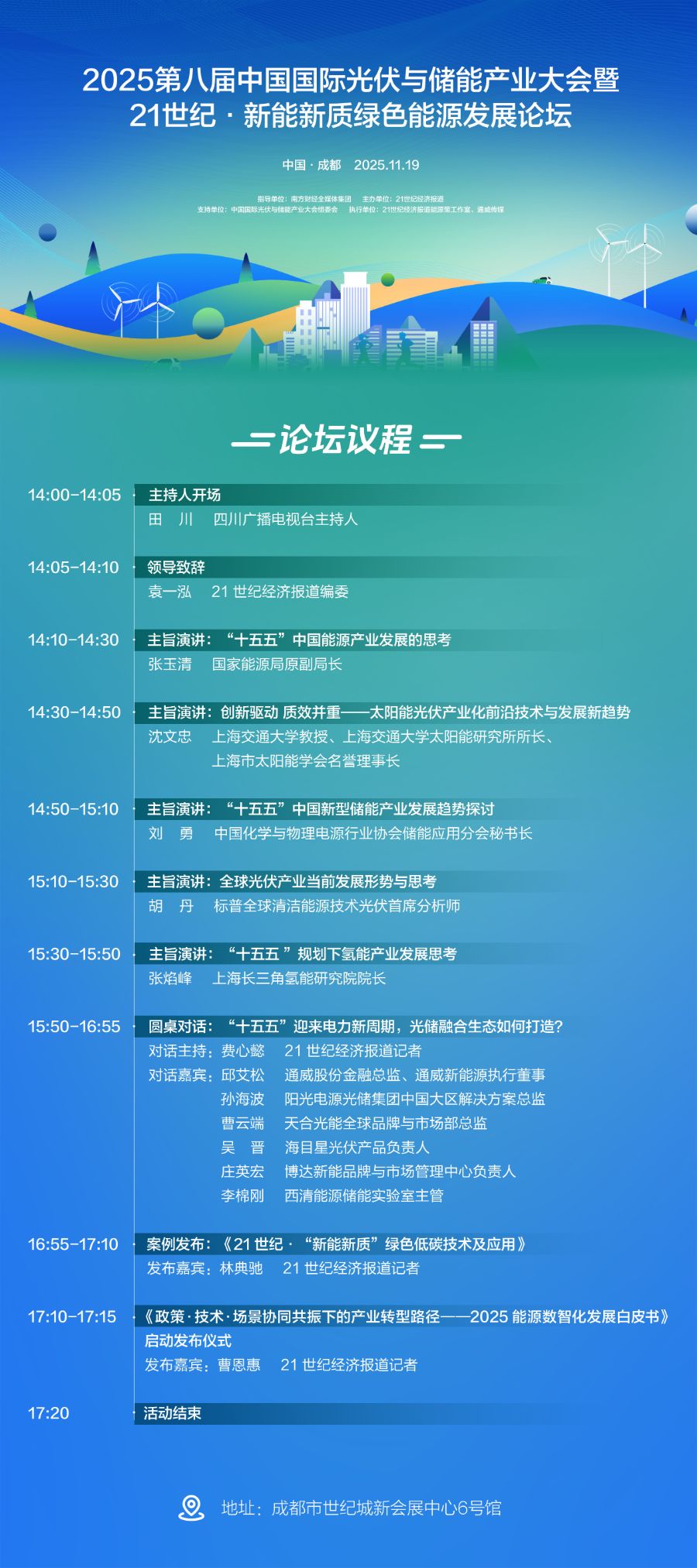
Core Insights - The energy sector in China is experiencing significant growth in renewable energy, with renewable energy installations reaching 268 million kilowatts in the first half of the year, a year-on-year increase of 99.3%, accounting for 91.5% of new installations [1] - The 15th Five-Year Plan emphasizes the construction of a new energy system, focusing on increasing the share of renewable energy, enhancing the efficiency of fossil energy, and promoting the development of a clean energy system [2] - The upcoming 2025 China International Photovoltaic and Energy Storage Industry Conference aims to showcase innovations in the photovoltaic and energy storage sectors, aligning with the goals of the 15th Five-Year Plan [3][4] Renewable Energy Growth - China's renewable energy installed capacity continues to break records, with nearly 60% of the total installed capacity being renewable [1] - New energy storage capacity reached 94.91 million kilowatts, growing approximately 29% compared to the end of 2024, indicating a stable and rapid development trend in new energy storage [1] Policy and Strategic Framework - The 15th Five-Year Plan outlines strategies for enhancing the supply of renewable energy, ensuring the safe and orderly replacement of fossil fuels, and constructing a robust new power system [2] - The plan promotes a multi-energy approach, integrating wind, solar, hydro, and nuclear energy, while also focusing on the development of smart grids and microgrids [2][4] Industry Conference Highlights - The upcoming conference will feature discussions on key topics such as photovoltaic technology, energy storage, hydrogen energy, and digitalization, providing a platform for policy interpretation and technological exchange [3][4] - Notable industry leaders will participate in roundtable discussions to explore strategies for the integration of photovoltaic and energy storage systems [4] Research and Innovation - The conference will also launch significant research publications, including a collection of case studies on green low-carbon technologies and a white paper on the digital transformation of the energy sector [4] - The focus on new productive forces in the green energy sector presents unprecedented opportunities and challenges for industry stakeholders [4]
全球首家数字电网研究院上市!
中国能源报· 2025-11-18 04:07
Core Viewpoint - The successful listing of Southern Power Grid Digital Research Institute Co., Ltd. marks a significant step in Southern Power Grid's integration into the capital market and signifies a new phase in its digital and intelligent transformation [2][10]. Group 1: Strategic Development - Southern Power Grid aims to implement the strategies of Digital China and Energy Power Nation, focusing on enhancing the digital grid industry ecosystem to support the intelligent, green, and integrated transformation of the energy and power sector [4]. - The company emphasizes its role in the Greater Bay Area, aligning with local government efforts to achieve carbon neutrality goals [4]. Group 2: Technological Innovation - Since the 14th Five-Year Plan, Southern Power Grid Digital has leveraged its role as a central enterprise to drive technological innovation and industry leadership, creating a comprehensive product system across various business areas [5]. - The company has developed key technologies and platforms, including the first unified IoT operating system in the power industry and a domestic large-scale fully integrated digital system [7]. Group 3: Standardization and Intellectual Property - Southern Power Grid Digital has actively participated in the formulation of international and national standards, contributing to 11 international standards and 33 national standards [8]. - The company has undertaken significant national technology projects, supporting the development of new network applications and digital grid technology [8]. Group 4: Capital Market Engagement - The company submitted its listing application to the Shenzhen Stock Exchange on June 26, 2025, and achieved a rapid listing in just 145 days, showcasing its preparedness and compliance [10]. - The successful listing reflects the capital market's recognition of the digital grid's growth potential and establishes a high-quality platform for future development [10]. Group 5: Future Outlook - Following its listing, Southern Power Grid Digital plans to enhance corporate governance, strengthen its core position in technological innovation, and expand into cutting-edge technology fields [11]. - The company aims to contribute significantly to the construction of a "Digital China" and the achievement of carbon neutrality goals [11].
内蒙古电力集团与南方电网签署“柔性直流技术”合作协议
Zhong Guo Dian Li Bao· 2025-11-18 03:27
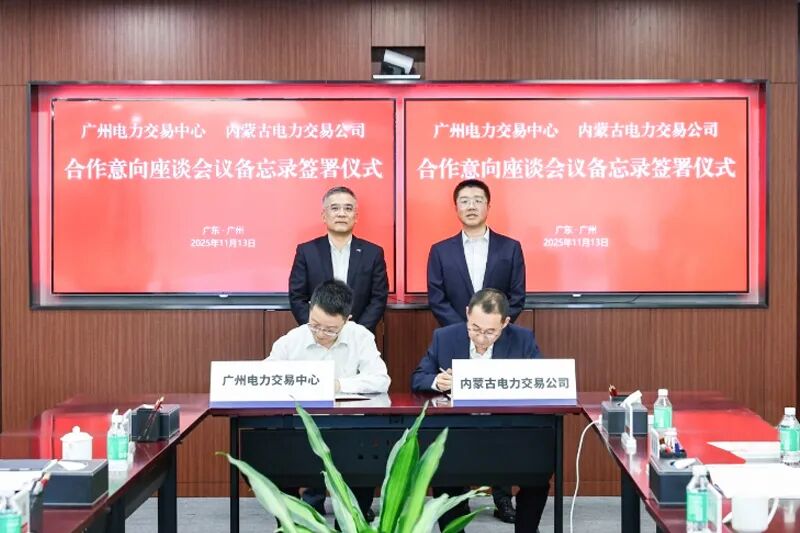
Group 1 - The core viewpoint of the article highlights the strategic cooperation between Inner Mongolia Power Group and China Southern Power Grid, focusing on enhancing collaboration in energy systems and market integration [1][2] - Zhang Xiaohu, the General Manager of Inner Mongolia Power Group, expressed gratitude for the support from China Southern Power Grid and outlined the group's commitment to national strategic goals and major projects during the 14th Five-Year Plan [2][4] - Both companies aim to deepen cooperation in areas such as market alignment, DC transmission, energy storage, digital transformation, and carbon integration to support high-quality development and contribute to China's modernization [2][4] Group 2 - During the visit, Zhang Xiaohu and his team conducted discussions and on-site research at various Southern Power Grid units, focusing on energy policy research, grid planning, power trading, and emerging industries [4] - A cooperation memorandum was signed between Inner Mongolia Power Trading Company and Guangzhou Power Trading Center regarding green electricity trading and market system development [4] - Inner Mongolia Power Research Institute and Guangdong Grid Planning Research Center signed a cooperation agreement on flexible DC technology [4]
AI算力缺电已成共识,电网设备ETF(159326)中长期逻辑坚实,关注短期回调布局机会
Mei Ri Jing Ji Xin Wen· 2025-11-18 02:35
Core Viewpoint - The recent pullback in the A-share market, particularly in the electric grid equipment sector, presents a potential investment opportunity despite a temporary decline in the electric grid equipment ETF (159326) [1] Group 1: Market Performance - The electric grid equipment ETF (159326) experienced a decline of 1.29% with a trading volume of 76.03 million yuan as of 10:11 AM [1] - The ETF has seen a maximum drawdown of over 8% in the last 7 trading days, indicating a phase of adjustment [1] Group 2: Industry Dynamics - Microsoft has identified a "global electricity supply crisis" as a bottleneck for the AI industry's development, transforming electric grid equipment from traditional infrastructure to a core asset of the digital economy [1] - The demand for AI computing power and the necessity for grid upgrades provide strong support for the long-term development of the electric grid equipment sector [1] Group 3: Policy and Future Outlook - According to a report by CITIC Securities, the "14th Five-Year Plan" emphasizes the importance of a new energy system, focusing on long-term development priorities such as consumption, resilience, and electrification in power system construction [1] - The report suggests that policies are reinforcing medium to long-term opportunities in ultra-high voltage, flexible direct current transmission, and smart grid sectors [1] - In the short term, the demand for transmission and transformation equipment is expected to resonate positively, with structural demand continuing to emerge, indicating a potential turnaround in the ultra-high voltage and smart grid segments [1]
从能源制造强国迈向能源体系强国
2 1 Shi Ji Jing Ji Bao Dao· 2025-11-17 22:45
Core Viewpoint - The "15th Five-Year Plan" emphasizes the acceleration of building a new energy system, increasing the proportion of renewable energy supply, and ensuring the safe and reliable replacement of fossil energy, aiming to construct an energy powerhouse [1] Group 1: Achievements in the 14th Five-Year Plan - During the "14th Five-Year Plan" period, China's renewable energy industry made a historic leap from catching up to leading globally, particularly in solar, wind, energy storage, and electric vehicles [1][2] - In the solar sector, China accounts for over 80% of global production capacity for photovoltaic modules, silicon wafers, and battery cells, with the cost of solar power reaching historical lows [2] - In wind energy, Chinese companies achieved breakthroughs in both onshore and offshore wind turbine manufacturing, with offshore wind installed capacity exceeding 50% of the global total [2] - The energy storage and lithium battery supply chain in China has developed a complete ecosystem, leading the world in production capacity and technology [2] Group 2: Challenges in Energy System Efficiency - Despite manufacturing leadership, the efficient operation of the energy system remains a challenge, with issues in grid infrastructure, energy storage optimization, and market mechanisms [3] - The rapid expansion of renewable energy capacity during the "14th Five-Year Plan" has led to structural contradictions, such as "fast installation, difficult grid connection, and low utilization rates" in some regions [3] Group 3: Strategic Shift in the 15th Five-Year Plan - The "15th Five-Year Plan" proposes a strategic shift from merely expanding manufacturing capacity to enhancing the overall energy system's efficiency and resilience [4][5] - Key focuses include strengthening grid regulation capabilities, developing new energy storage solutions, and improving market mechanisms to support a robust energy system [4][5] Group 4: Core Breakthroughs in Energy System Upgrade - The construction of new energy infrastructure will prioritize energy storage, smart grids, and terminal infrastructure, with a focus on collaborative development [6][7] - The plan emphasizes the need for diverse energy storage technologies and the integration of smart grids to address the volatility and intermittency of renewable energy [5][6] Group 5: Market Mechanism and Electrification - The "15th Five-Year Plan" highlights the importance of enhancing electrification levels in end-use energy consumption and improving market mechanisms to adapt to the new energy system [6] - This includes promoting electrification in industrial, transportation, and building sectors, alongside flexible pricing policies and market innovations [6] Group 6: Infrastructure Planning and Funding Support - Effective planning and funding support are crucial for the efficient construction and stable operation of new energy facilities [8] - The government will enhance top-level design and coordination among various energy infrastructure components to ensure synchronized development [8] Group 7: Transition to an Energy System Powerhouse - The transition from an "energy manufacturing powerhouse" to an "energy system powerhouse" is essential for enhancing stability, resilience, and coordination in the energy system [9][10] - The infrastructure development during the "15th Five-Year Plan" is seen as a re-architecture of the energy system, aiming to support high proportions of renewable energy integration and drive technological innovation [9][10]
全市场唯一电网设备ETF(159326)成交额破2亿,规模再创新高
Mei Ri Jing Ji Xin Wen· 2025-11-17 07:13
Core Insights - The Electric Grid Equipment ETF (159326) has seen a narrowing decline of 1.21% as of 14:54 on November 17, with a trading volume of 207 million yuan, indicating strong market interest [1] - The ETF has attracted over 1.5 billion yuan in the last 12 trading days, reaching a total size of over 1.9 billion yuan, marking a record high since its inception and making it the largest electric grid equipment-themed ETF in the market [1] - The National Energy Administration has released guidelines to promote the integrated development of renewable energy, emphasizing the need for a dual network operation of electricity and computing power to support a national integrated computing power network [1] Industry Developments - The "14th Five-Year Plan" suggests accelerating the construction of a new energy system, increasing the proportion of renewable energy supply, and ensuring a safe and orderly replacement of fossil energy [1] - There is a focus on enhancing the resilience and complementarity of the power system, with plans for scientific layout of pumped storage and significant development of new energy storage, as well as accelerating the construction of smart grids and microgrids [1] - The Electric Grid Equipment ETF tracks the CSI Electric Grid Equipment Theme Index, with a strong representation in sectors such as transmission and transformation equipment, grid automation equipment, cable components, and distribution equipment, with a high weight of 64% in ultra-high voltage [1]
氢能和核聚变能:“能源新秀”驱动绿色未来
Xin Hua She· 2025-11-17 06:49
Core Insights - Hydrogen energy and nuclear fusion are identified as future industries in the "14th Five-Year Plan," expected to become new economic growth points and accelerate the transition from laboratory to industrial application, contributing to the "dual carbon" goals [1] Hydrogen Energy - Hydrogen energy is produced through the chemical reaction of hydrogen and oxygen, utilizing primary energy sources like wind, solar, coal, and natural gas, making it a secondary clean energy source [2] - The hydrogen industry is emerging, with hydrogen fuel cell vehicles offering longer ranges and faster refueling; hydrogen is also being used in steelmaking to replace coke, significantly reducing carbon emissions [2] - By the end of 2024, national hydrogen production capacity is expected to exceed 50 million tons per year, with a year-on-year growth of approximately 1.6%; over 600 renewable energy electrolysis hydrogen production projects are planned nationwide [2] - The development of the hydrogen industry is crucial for accelerating the construction of a new energy system and achieving carbon peak and carbon neutrality goals [2] Nuclear Fusion Energy - Nuclear fusion is likened to the ultimate energy dream, where hydrogen atoms fuse into helium under extreme temperatures and pressures, releasing vast amounts of energy [3] - The raw materials for nuclear fusion are abundant, derived from isotopes of hydrogen found in seawater, and it is considered a clean and safe energy source [3] - For instance, the energy produced from 1 liter of seawater's deuterium is equivalent to that from 300 liters of gasoline [3] - Significant advancements in nuclear fusion research have been reported in China, including breakthroughs in temperature and duration of high-quality burning, bringing the "artificial sun" closer to reality [3] - The technology of fusion energy is transitioning from scientific research to engineering practice and commercial application [3]