
文化自信

Search documents
云梦秦简之思(文思)
Ren Min Ri Bao· 2025-05-18 22:02
位于长江北岸、江汉平原上的云梦县,因云梦古泽而得名。在云梦城关发掘出来的楚王城遗址,证明了 这里是古代楚文化发祥地之一。这座浸润着楚韵秦风的千年古县,又因在县城西郊睡虎地出土了数千 枚"云梦秦简"而闻名遐迩,不断吸引各地的博物、考古和旅游爱好者前来"打卡",近距离感知历史,与 远古对话。 中华民族的家国情怀,是一种与生俱来的感情。"烽火连三月,家书抵万金。"自古以来,哪一段家庭悲 欢和个人经历,不是与国家命运、民族存亡、时代风雨休戚相关?以小见大,见微知著,今天的人们, 不也能从2000多年前一封普通家书的细枝末节里,听到一个激荡的时代真实的风雨声,辨认出那温暖、 质朴的人间亲情? 当然,面对这些珍贵的秦简,不少人也会和我一样,心存几分疑问和好奇:本是秦简,何以会深埋在属 于楚国的云梦境内?这些生成在2000多年前的竹简木牍,又为何能保存到今天而没有腐化成泥? 云梦秦简,以睡虎地秦简最为出名。竹简共1155枚,残片80枚,用绳索分上、中、下三道编结串联,并 编组成"册",有约4万字。考古人员经过考证和分类整理发现,这些简牍涉及从战国末期到秦始皇在位 时的历史长达100余年,内容包括秦朝律法制度、行政文书、编年 ...
2025首届茶道师培训在成都开班
Zhong Guo Xin Wen Wang· 2025-05-18 01:12
Group 1 - The first tea ceremony teacher training program is held in Chengdu, aiming to promote traditional Chinese culture through a combination of theory and practice [1] - The training emphasizes the philosophical essence of tea culture, which has evolved from ancient times and integrates Confucianism, Buddhism, and Taoism [1] - The program is part of a national strategy to strengthen cultural identity and aims to enhance the integration of the tea industry with service sectors, contributing to rural revitalization and cultural tourism innovation [1] Group 2 - Tea culture serves as an important symbol of Chinese civilization, facilitating cultural exchange and showcasing the depth and warmth of Chinese culture to the world [2] - The tea ceremony embodies the concept of "harmony in diversity," reflecting the inclusive wisdom of Chinese culture throughout history [2]
第八届大别山大学生微电影节举行 鸡公山上辉映青春光影
He Nan Ri Bao· 2025-05-17 23:14
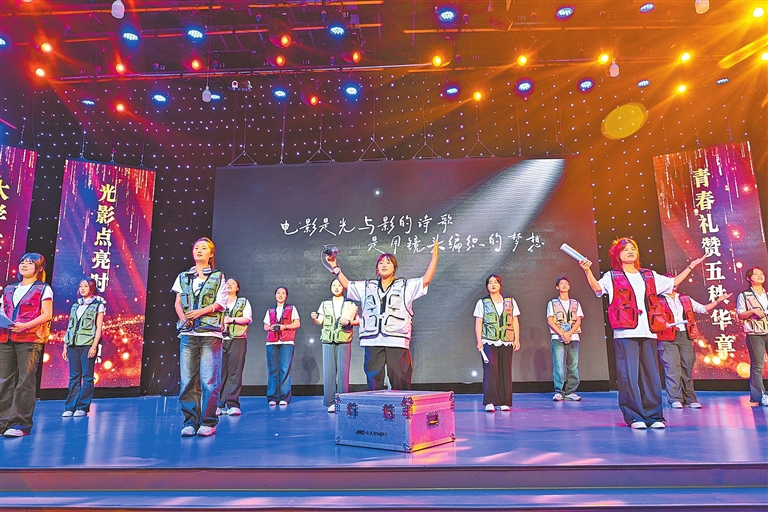
Core Viewpoint - The 8th Dabieshan University Student Micro Film Festival showcased the creativity and aspirations of university students, highlighting the importance of youth engagement in cultural expression and social issues [2][3]. Group 1: Event Overview - The festival took place on May 17, 2023, at the Xinyang Normal University, featuring a vibrant atmosphere and participation from various universities [2]. - Organized by the Dabieshan Revolutionary Old Area University Alliance, Xinyang Normal University, and Henan Daily, the event has evolved since its inception in 2017, focusing on student involvement in filmmaking [2]. - This year, the festival received a record 1,192 entries from 128 universities, surpassing previous years in both participation and submissions [2]. Group 2: Themes and Content - The submitted films covered various themes, including social realities, the protection of intangible cultural heritage, and the transmission of traditional Chinese culture [2]. - Notable films included "Shadow New Flowers," "Echoes of the Valley," and "Cats Return Here," reflecting the creators' observations and thoughts on life [3]. Group 3: Media Involvement - Henan Daily played a significant role in promoting the festival through its multimedia platforms, enhancing the event's visibility and impact [4]. - The integration of media resources with the festival represents a proactive approach to support the economic and social development of the Dabieshan Revolutionary Old Area [4]. Group 4: Recognition and Future Initiatives - During the awards ceremony, Xinyang Jigong Mountain Scenic Area was designated as a "Practice Creation Base" for the festival, indicating a commitment to fostering creative projects [5]. - Following the festival, a short video competition titled "Vast Chicken Mountain: New Story Images" was launched, inviting creators to showcase the unique charm of Jigong Mountain [5].

历峰中国市场大跌两成,CEO回应卡地亚遭老铺黄金竞争威胁
Sou Hu Cai Jing· 2025-05-17 02:20
Core Insights - Richemont Group reported a 4% year-on-year increase in sales for the fiscal year 2025, reaching €21.399 billion, with all regions except Asia Pacific showing double-digit growth [4][9] - The jewelry segment, including brands like Cartier and Van Cleef & Arpels, generated €15.33 billion in revenue, growing 8% at constant exchange rates, while the watch segment saw a significant decline of 13% to €3.28 billion [4][6] - The emergence of Chinese jewelry brand Laopuhuang poses a competitive threat to established luxury brands, benefiting from cultural confidence and a unique market positioning [10][14] Financial Performance - Richemont's operating profit for the fiscal year was €3.76 billion, a slight decline of 1%, with an operating margin of 20.9%, down 240 basis points from the previous year [4] - The fourth quarter sales increased by 8% year-on-year to €5.17 billion, exceeding market expectations [4] - The jewelry division's operating profit grew by 4% to €4.9 billion, while the watch division's operating profit plummeted by 69% to €175 million [6] Regional Analysis - The Asia Pacific market experienced a 13% decline in revenue, primarily due to a 23% drop in sales from mainland China, Hong Kong, and Macau [8][9] - The Americas and Japan markets showed strong growth, with revenues increasing by 15% and 30% respectively, while Europe and the Middle East remained stable [9] - The contribution of the Asia Pacific market to total sales decreased from 40% to 33%, although it remains the largest regional market for Richemont [8] Brand Performance - Cartier accounted for over half of Richemont's sales and more than 70% of its profits, with its performance in China being a significant concern for the group [4][6] - Laopuhuang achieved remarkable growth, with a 166% increase in revenue to ¥9.8 billion and a 254% rise in net profit to ¥1.48 billion, positioning itself as a strong competitor in the luxury jewelry market [13][14] - The average sales per store for Laopuhuang reached ¥328 million, surpassing established international brands [13] Market Trends - The luxury jewelry market is characterized by a low level of branding, with new players emerging and capturing market share [14] - Laopuhuang's success is closely tied to Chinese cultural confidence, filling a market gap for high-end yet affordable jewelry [10][14] - Richemont's management is considering various strategies to mitigate the impact of U.S. tariff policies while maintaining a unified global pricing strategy [14]


【省文物局】考古文保题材电视剧《护宝寻踪》定档央视
Shan Xi Ri Bao· 2025-05-17 00:36
Core Viewpoint - The drama "Treasure Hunt" is set to premiere on May 20, focusing on archaeological and cultural heritage protection themes, highlighting the dedication of cultural heritage workers [1][2] Group 1: Production Details - "Treasure Hunt" is a 36-episode drama co-produced by the Shaanxi Provincial Propaganda Department, the Provincial Cultural Relics Bureau, CCTV, iQIYI, and Shaanxi Cultural Investment Group [1] - The series is directed by Hui Kaidong and Wang Chengxin, with a writing team that includes Zhang Chanjun, Zhou Yu, Yang Hong, and Sun Xiaohan [1] - The production team engaged with cultural heritage workers and experts throughout the filming process to ensure authenticity and professionalism in the portrayal of archaeological work [1] Group 2: Themes and Objectives - The drama emphasizes the importance of cultural heritage protection and cultural confidence, drawing from real-life cases of cultural relic protection [1] - It aims to present a realistic image of cultural heritage workers, showcasing their dedication and the complexities of their work [2] - The creators hope to raise awareness about the often-overlooked contributions of those who protect cultural relics and history [2] Group 3: Cast and Characterization - The series features a strong cast including Bai Yufan, Xin Baiqing, Wang Herun, Fu Dalong, and You Yongzhi, portraying various ages and personalities of archaeological and cultural heritage workers [2] - The character development aims to highlight the challenges and intricacies involved in cultural heritage protection [2]
传承文明 照鉴未来
Ren Min Ri Bao· 2025-05-16 22:12
Group 1 - The opening of the Lingjiatan Site Museum in Anhui marks a significant milestone in showcasing over 5,000 years of Chinese civilization, with approximately 1,100 artifacts on display that highlight the site's importance in the origin and development of Chinese culture [1] - The number of museums in China has been growing at an average rate of over 200 per year, with projections indicating that the total will exceed 7,000 by the end of 2024 [1] - The enthusiasm for museums has surged, with over 10 billion visitors benefiting from free museum access nationwide, and the trend of "one museum in one city" becoming increasingly popular among tourists [1] Group 2 - The Yunmeng County Museum in Hubei experienced a surge in visitors during the "May Day" holiday, driven by its collection of precious artifacts, including the "First Longwen Gu" [2] - President Xi Jinping emphasized the importance of preserving Chinese cultural treasures for future generations during his visit to the Yunmeng County Museum [2] Group 3 - The Sanxingdui Museum is utilizing artificial intelligence technology for the restoration and digital simulation of artifacts, enhancing the understanding of the Sanxingdui civilization [3] - Major archaeological projects, such as the "Archaeology China" initiative, are advancing, with new museums opening to the public, showcasing the continuous and innovative nature of Chinese civilization [3] Group 4 - Museums are increasingly recognized as vital for preserving cultural heritage and fostering national identity, with various forms of traditional craftsmanship being integrated into modern artistic expressions [4] - The China Intangible Cultural Heritage Museum, opened in 2022, exemplifies the role of museums in promoting the transmission and innovation of intangible cultural heritage [4] Group 5 - The diversity and openness of museums are highlighted, showcasing the rich history and culture of China while allowing the public to engage with and protect cultural roots [6] Group 6 - The China Communist Party History Exhibition Hall serves as a significant venue for reflecting on the Party's history and achievements, attracting over 4.5 million visitors since its opening [8] - The emphasis on youth engagement with museums is seen as a way to enhance historical awareness and cultural confidence among the younger generation [8] Group 7 - The Shanghai Museum East Hall features a Su-style garden and serves as a cultural hub, promoting community engagement and improving public welfare [9] - The Guangdong Provincial Museum has established a mobile museum to foster cultural exchange between different regions, particularly between Guangdong, Hong Kong, and Macau [9] Group 8 - Innovative exhibition methods, such as stage performances in museums, are being employed to make historical narratives more engaging and accessible to the public [11] - The integration of new technologies, including virtual and augmented reality, is transforming the museum experience, allowing for immersive interactions with cultural artifacts [11] Group 9 - The Silk Road Digital Museum connects global audiences with cultural artifacts from various countries, enhancing cross-cultural understanding and collaboration among museums [13] - The evolution of museums into dynamic spaces that foster public participation and creativity is seen as essential for the future of cultural heritage [14]
毛泽东批评“言必称希腊”的错误做法,指的是哪些人
Bei Jing Ri Bao Ke Hu Duan· 2025-05-16 09:02
转自:北京日报客户端 19世纪美国著名诗人爱伦·坡在《致海伦》中说:"光荣属于希腊,伟大属于罗马。"古希腊文化在宗 教、神话、哲学、文学艺术及科学等方面取得了辉煌成就,奠定了西方文化的基础。恩格斯指出:"没 有希腊文化和罗马帝国所奠定的基础,也就没有现代的欧洲"。在8-10世纪的阿拉伯知识界,古希腊哲 学的理性精神和古希腊医学的实用性受到了追捧,成为阿拉伯历史上的"言必称希腊"时代。14-15世纪 的欧洲文艺复兴,打的就是复兴古典文化的旗帜,"言必称希腊"之风盛极一时,虽矫正与恢复了被中世 纪阉割了的古希腊文化,但本质上是用古希腊的旧瓶装资产阶级文化革命的新酒。在"言必称希腊"的基 础上,西方近代思想界的学者建构了以启蒙主义为特征的新文化。 来源:北京日报客户端 毛泽东两次讲话中谈到的"希腊",指的是广义的外国文化,并非单纯的欧美的西方文化或苏联或共产国 际的理论、模式和指示。批评"言必称希腊"针对的首先是那些盲目崇拜西方的非马列主义者和非共产党 员,主要指的是近代以来的留学生,"他们从欧美日本回来,只知生吞活剥地谈外因",具有反对全盘西 化的意思。 为构建适应抗日民族统一战线的抗战文化,毛泽东在《新民主主义 ...
疆亘资本总裁胡仲江:GP从“财务出资人”升级为“生态建筑师”
Sou Hu Cai Jing· 2025-05-16 06:41
Group 1 - The emergence of DeepSeek signifies a shift in local governments' understanding of "core competitiveness," moving from tax incentives to a new battleground focused on "data sovereignty" [3][6] - The role of General Partners (GPs) is evolving from "financial investors" to "ecosystem architects," requiring enhanced data analysis capabilities to help governments quantify data value and design compliant data usage frameworks [3][6] - The rise of DeepSeek is prompting deeper exploration of cooperation models among governments, enterprises, and investment institutions, moving away from traditional subsidy models to new mechanisms based on value co-creation and risk-sharing [7] Group 2 - DeepSeek's success represents a restructuring of productivity tools, utilizing a model with 7 billion parameters to achieve the effectiveness of 100 billion parameter models, reducing deployment costs by 90% [4] - The transformation in AI applications reveals that while less data can yield practical results, core technology still relies on foreign infrastructure, pushing investors to seek opportunities that allow AI to take root in industries [5] - The investment focus is shifting towards AI platforms that enable enterprises to build applications independently and ensure sustainable data resource revenue [5] Group 3 - The return of cultural confidence in China is reshaping the economic value system, with traditional cultural symbols entering mainstream life through various mediums, marking a response to Western consumerism [8] - Three evolving investment logics are emerging: a reconstruction of cultural valuation systems, a shift in the paradigm of technological empowerment, and an elevation of cultural consumption scenarios [8][9] - The challenge lies in balancing cultural dignity with commercial efficiency, with sustainable cultural assets emerging from projects that maintain cultural purity while establishing modern value exchange systems [9] Group 4 - The Chinese primary market in 2025 is expected to present a complex landscape of "ice and fire," with both new opportunities and transitional challenges [10] - Investment direction is shifting from broad trends to a focus on industry details, with specialized funds gaining an advantage over those following trends [10] - The exit strategies for investments are being reshaped, with a move towards industrial mergers and acquisitions as traditional public listings become less reliable [10] Group 5 - The international environment, particularly the Sino-U.S. technology competition, is becoming a dominant variable, clearly dividing investment tracks into "safe zones" and "risk zones" [10] - The biggest opportunities may lie in "curve innovation" areas, such as establishing Chinese-led IoT standards in smart home appliances, which could receive policy and funding support [10][11] - The winners in 2025 are likely to be investors who understand technical details, are familiar with industry ecosystems, and can capture policy trends [11]
从国潮到国用,中国品牌真的变了
3 6 Ke· 2025-05-13 04:38
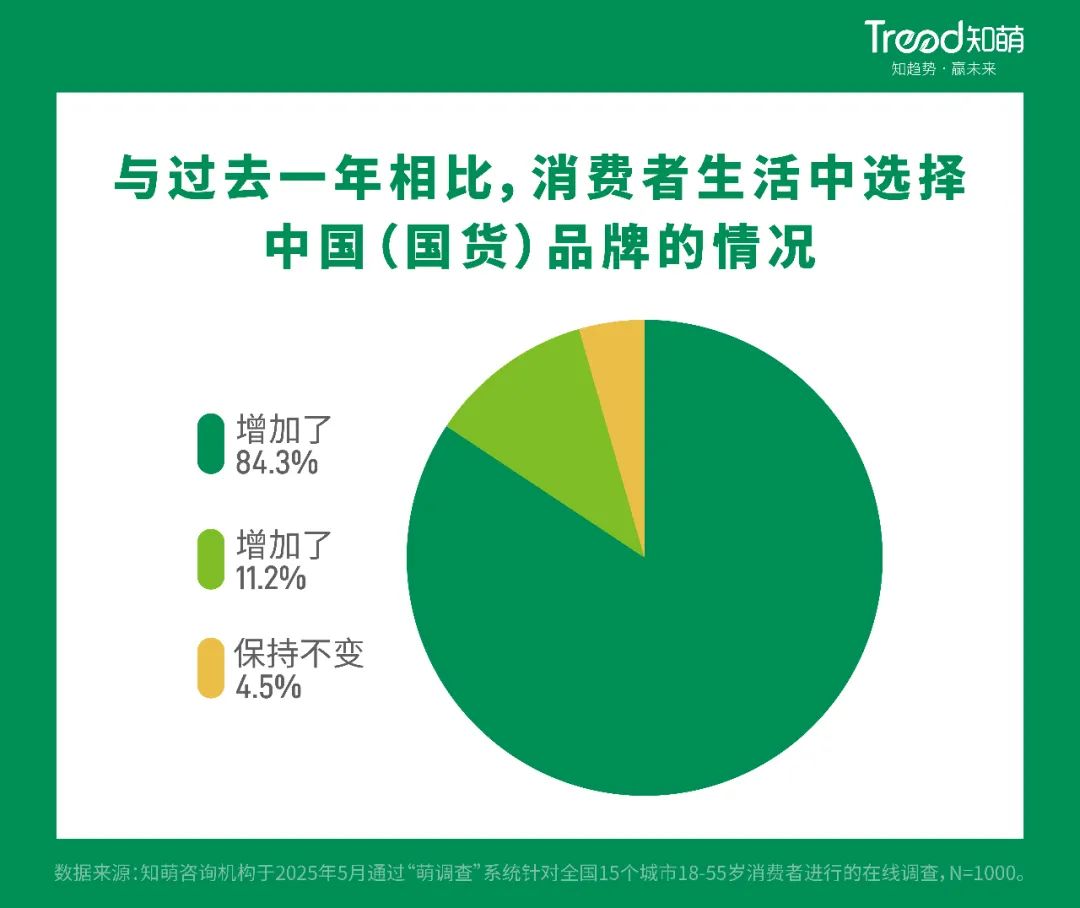
Core Insights - Chinese brands have transitioned from being merely visible to becoming indispensable in consumers' lives, driven by technological innovation, cultural confidence, and scenario reconstruction [1] - A report titled "Leap and Evolution: New Consumption Landscape of Chinese Brands | 2025 Chinese Brand Trend Insight Report" was released, marking the eighth consecutive report since 2017 [1] Consumer Preference Shift - 84.3% of consumers reported an increase in their choice of Chinese brands compared to the previous year, particularly in economically developed cities [2][4] - Chinese brands are increasingly preferred across various categories, including home appliances, 3C digital products, outdoor sports equipment, healthcare, and maternal and infant products [4] Brand Image Enhancement - The perception of Chinese brands has evolved from being associated with affordability and practicality to embodying emotional resonance, cultural depth, trustworthiness, and quality [6] - Key attributes that consumers associate with Chinese brands include emotional resonance, high cost-performance ratio, rich cultural heritage, trustworthiness, and quality [7] Five Dimensions of Brand Evolution - The report identifies five key dimensions for understanding the rise of Chinese brands: product strength, brand strength, cultural strength, lifestyle adaptability, and global influence [8] - Chinese brands are increasingly recognized for their quality, global influence, and acceptance among younger consumers, moving away from the stereotype of being low-cost alternatives [9][12] Brand Value and Cultural Resonance - Consumers are willing to pay a premium for products that reflect unique designs or cultural significance, with 70.54% expressing a strong willingness to do so [19] - Brands that effectively capture emotional needs and convey cultural significance tend to foster a strong sense of belonging among consumers [21][23] Lifestyle Adaptation - Chinese brands are better suited to the unique lifestyles and habits of Chinese consumers, addressing specific needs in cooking, skincare, and health maintenance [24] - Consumers believe that Chinese brands are more capable of meeting their needs in culinary, beauty, and health contexts compared to international brands [24] Globalization Strategy - The success of Chinese brands in international markets relies on high-quality products, technical strength, and a deep understanding of local markets [26] - The next phase for Chinese brands involves not just exporting products but also integrating into local cultures and lifestyles [26] Future Development Recommendations - The report suggests five action points for the future development of Chinese brands, including building brand personality through culture, creating a dual-driven pricing model based on product and design, and focusing on local lifestyle adaptation [28][30][33] - Engaging younger consumers through participatory brand experiences and transitioning from being a "tool" to a "default choice" in consumer decision-making are also emphasized [33][34]


“越搞越中国化,而不是越搞越洋化”
Bei Jing Ri Bao Ke Hu Duan· 2025-05-11 22:41
Group 1 - The article discusses the influence of ancient Greek culture on Western civilization and its historical significance, highlighting its foundational role in various fields such as religion, philosophy, and science [1] - It mentions the revival of classical culture during the European Renaissance, which was characterized by a strong emphasis on ancient Greek ideals, leading to the development of modern Western thought [1] - The text also notes that the admiration for Greek culture was not limited to the West, as early Chinese leaders like Mao Zedong engaged with Greek culture and advocated for a comparative understanding of Western and Chinese histories [2][3] Group 2 - Mao Zedong's early fascination with Greek culture is highlighted, including his organization of groups to promote rigorous training and his belief in learning from foreign cultures while also understanding Chinese history [2][3] - The article critiques the blind worship of Western culture, particularly among Chinese intellectuals who returned from studying abroad, emphasizing the need for a balanced approach to cultural assimilation [3] - Mao's later thoughts on cultural integration stress the importance of adapting foreign ideas to fit Chinese contexts, advocating for a unique Chinese cultural identity rather than mere imitation of Western models [3][4]