
粮食安全

Search documents
巴西犯了美国的错误,觉得中方依赖巴西大豆,结果也玩砸了
Sou Hu Cai Jing· 2025-10-24 03:36
Core Viewpoint - Chinese buyers have collectively suspended the procurement of Brazilian soybeans for December and January, signaling a significant shift in the market dynamics between China and Brazil, the world's largest soybean buyer and supplier respectively [1][7]. Group 1: Price Dynamics - Brazilian soybean offshore prices have surged from $565 to $628 per ton over the past three months, an increase of over 11% [3]. - The price premium for Brazilian soybeans has become unreasonable, with the landed price per bushel being nearly $3 higher than Chicago futures, while U.S. soybeans are only $1.7 higher [3]. Group 2: Brazilian Confidence Factors - Brazil's confidence stems from three main factors: the exclusion of U.S. soybeans from the Chinese market since May, limited alternative suppliers capable of meeting China's demand, and the belief that China has no choice but to buy Brazilian soybeans due to its significant import gap [4][6]. - The U.S. soybean industry is facing severe challenges, with storage facilities at over 98% capacity and reports of grain storage collapses [4]. Group 3: China's Countermeasures - In response to Brazil's price hikes, Chinese buyers have paused purchases, leading to increased storage utilization and rising storage costs in Brazil [7]. - China has quickly pivoted to secure a large order of 130,000 tons from Argentina, capitalizing on Argentina's recent tax policy changes that made their soybeans more competitive [9]. Group 4: China's Strategic Advantages - China has established three strategic advantages: a substantial national reserve of over 200 million tons of soybeans, diversified import sources from 16 countries, and increased use of alternative feed sources, reducing reliance on soybeans [12][18]. - The increase in domestic soybean planting area by 15% this year indicates a shift towards self-sufficiency and reduced dependence on Brazilian imports [18]. Group 5: Market Implications - Brazil's short-sighted pricing strategy may lead to a loss of long-term market share in China, as the country could have solidified its position instead of pursuing immediate profits [14][20]. - The ongoing shifts in China's soybean import landscape suggest a move towards a more resilient and diversified food security system, reducing reliance on any single supplier [18][20].


再接再厉抓好秋收秋种,国务院有新部署
Xin Hua She· 2025-10-23 22:25
Core Insights - The State Council's executive meeting emphasizes the importance of ensuring food security and agricultural production, particularly focusing on the autumn harvest and planting [1][3]. Group 1: Agricultural Production - Various regions and departments have collaborated effectively to ensure a bountiful grain harvest this year, with sufficient supply of essential products [2]. - The recent continuous rain since mid-September has posed challenges for the autumn grain harvest and has introduced risks for the subsequent planting [2][3]. Group 2: Policy Measures - The meeting highlighted the need for a bottom-line thinking approach and enhanced inter-departmental collaboration to support the autumn harvest and planting, ensuring the supply and price stability of agricultural materials such as seeds and fertilizers [3]. - The government plans to leverage policy-based storage to support market entities in increasing their purchasing efforts, thereby safeguarding farmers' incomes [4]. Group 3: Minimum Purchase Price - Starting from October 17, the minimum purchase price execution plan for mid-late rice will be initiated in eligible areas of Henan Province, according to the National Grain and Material Reserve Bureau [5]. - Experts indicate that timely activation of the minimum purchase price and effective grain purchasing efforts will help protect farmers' interests and maintain their enthusiasm for grain production [6]. Group 4: Disaster Relief - The meeting also underscored the importance of utilizing agricultural disaster relief funds and ensuring insurance claims are processed efficiently to mitigate farmers' losses due to disasters [7].
金融赋能抢收季 烘干护航粮归仓
Qi Lu Wan Bao· 2025-10-23 16:24
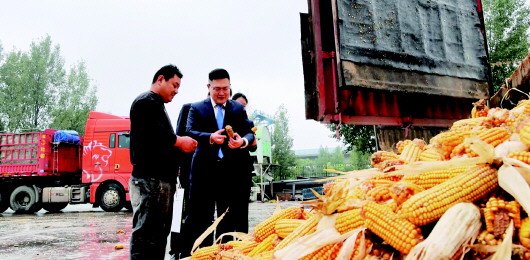
Core Viewpoint - The article highlights the proactive measures taken by Postal Savings Bank in Zaozhuang to support local farmers during the critical corn harvest season, particularly in response to adverse weather conditions that have affected corn drying and harvesting processes [5][12]. Financial Support Initiatives - Postal Savings Bank Zaozhuang has tailored financial solutions for 26 drying points, providing over 30 million yuan in various loans to ensure efficient financial services amidst challenging weather conditions [5][12]. - In Tengzhou, a major grain buyer received a 1.5 million yuan agricultural loan to address funding gaps for corn purchasing and drying operations [6]. - The bank facilitated a 500,000 yuan online loan for a cooperative to acquire a high-end drying machine, enhancing their drying capacity significantly [7]. Targeted Financial Solutions - The bank's branch in Yicheng conducted thorough assessments of local corn producers' financial needs, creating customized financial plans based on their operational scale and cash flow [8][9]. - Different financial products were issued to various cooperatives based on their specific needs, including 3 million yuan in industry loans and 800,000 yuan in quick loans [9]. Operational Efficiency and Impact - A cooperative in Xuecheng established a drying facility capable of processing 500 tons of grain daily, funded by a 1.5 million yuan loan from the bank, which was approved within three working days [10][11]. - The cooperative's new facility has become a crucial resource for local farmers, ensuring timely drying of corn and preventing spoilage due to weather conditions [12]. Commitment to Agricultural Support - Postal Savings Bank Zaozhuang remains dedicated to serving the agricultural sector, focusing on optimizing financial products and services to enhance food security and support rural revitalization efforts [12].

“粮食安全看山东”之东营:四位一体构建“粮安”新格局
Zhong Guo Fa Zhan Wang· 2025-10-23 14:47
Core Insights - The article emphasizes the efforts of Dongying City in Shandong Province to enhance food security through effective management and collaboration among various departments [1][2][3] Group 1: Food Security Management - Dongying City has implemented strict adherence to national and provincial food security laws, ensuring that local grain reserves exceed the provincial approved scale by 35,000 tons, with a diversified reserve including wheat and corn [1] - The completion of a 151,000-ton green storage project has been successfully achieved, with the city housing two nationally recognized grain and oil storage enterprises and one provincial-level model grain storage facility [1] Group 2: Market Stability and Emergency Response - The city has established a robust emergency response system with 18 emergency storage enterprises, 11 processing enterprises, and 76 supply points to maintain market stability [2] - The implementation of cloud-based monitoring through "smart granaries" allows for dynamic oversight of grain purchasing, sales, and storage conditions, ensuring traceability and data integrity [2] Group 3: Industry Development and Optimization - Dongying City is actively pursuing funding to support the upgrade of green storage facilities and enhance the overall efficiency of grain reserves [3] - The city has been recognized for its training initiatives in the grain industry, producing top talents and winning awards in national and provincial competitions [3] - Efforts to promote local grain brands have led to significant recognition, with products from three enterprises being awarded "Qilu Good Grain and Oil" status and the brand value of Yellow River Delta rice exceeding 1.2 billion [3]
护好沃土良田,广东这样出招
Nan Fang Nong Cun Bao· 2025-10-23 13:30
Core Viewpoint - The article emphasizes the importance of soil quality protection in ensuring food security and sustainable agricultural development in Guangdong Province, highlighting recent training initiatives aimed at enhancing monitoring capabilities and addressing regional disparities in soil quality [2][4][15]. Group 1: Training and Monitoring Initiatives - A training session on soil quality monitoring techniques was successfully held in Huizhou, utilizing a dual approach of indoor lectures and field practice [3][4]. - The training aims to improve the professional capabilities of agricultural technicians in soil quality monitoring, which is critical for ensuring monitoring quality and fulfilling food security responsibilities [8][9][30]. - The monitoring network has been established across the province, integrating into the food security responsibility assessment, with a focus on strict adherence to monitoring protocols [28][30]. Group 2: Regional Soil Quality Disparities - There are significant regional differences in soil quality within Guangdong, with higher quality farmland concentrated in the Pearl River Delta and eastern Guangdong, while lower quality farmland is found in northern and western regions [19][20]. - Five technical models have been developed to address these disparities, including soil acidification improvement and organic matter enhancement techniques [21][24]. Group 3: Practical Applications and Research - Practical demonstrations in experimental fields have shown that a 30% organic replacement rate may optimize crop yields, with various ecological improvement models tailored to different regions [33][36]. - Long-term monitoring since 1978 has provided comprehensive data on soil quality and changes, leading to effective measures that enhance soil fertility and crop yields while addressing issues like soil acidification [44][46].

抢收抢种同步推进 2500余台农机护航 连云港海州多举措打响“三秋”攻坚战
Yang Zi Wan Bao Wang· 2025-10-22 11:03
Group 1 - The current "Three Autumns" production is in a critical phase, with continuous rainy weather adversely affecting the harvesting, drying, and storage of autumn grain [2] - The Haizhou District has rapidly deployed measures including meteorological warnings, agricultural technical guidance, and machinery support to ensure a successful autumn harvest [2] - As of October 20, 2023, 4.06 million mu of the expected 33.96 million mu of autumn grain has been harvested, with full completion expected by mid-November [2] Group 2 - Haizhou District is simultaneously advancing the harvesting of corn and soybeans while planting winter wheat, utilizing integrated machinery operations for efficiency [4] - The district has prepared over 2,500 agricultural machines, including 1,432 harvesters and 687 tractors, to support the "Three Autumns" production [4] - To mitigate the risk of grain spoilage due to wet conditions, the district has established 31 grain drying centers and has a drying capacity of 6,226 tons per day with 137 dryers [4]

坐地起价?巴西大豆对华猛涨价,中国买家集体停单:等两个降价时机!
Sou Hu Cai Jing· 2025-10-22 09:39
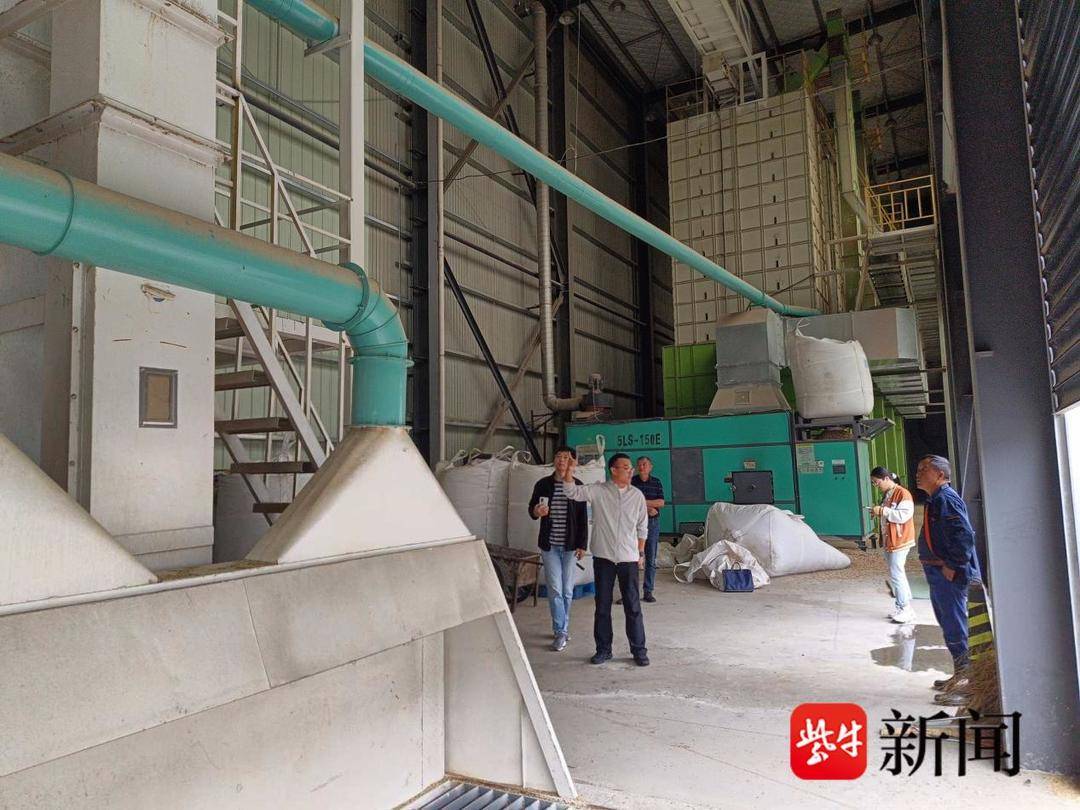
Core Insights - The export price of Brazilian soybeans has surged to $2.8 to $2.9 per bushel, approximately 70% higher than U.S. soybeans, creating challenges for Chinese buyers [1][3] - Chinese importers have suspended soybean orders for December to January due to high procurement costs, reflecting both economic considerations and food security concerns [1][3] - Brazil's soybean price increase is attributed to domestic supply-demand imbalances and international market fluctuations, with U.S. exports to China plummeting by 78% year-on-year [1][3] Group 1: Price Dynamics - Brazilian soybean planting area is expected to reach a record 121 million hectares in the 2025/26 season, contributing to increased agricultural output [3] - Short-term supply-demand fluctuations, influenced by Chinese demand and policy changes, have led to rapid price increases despite favorable harvest expectations [3] - The procurement cost of Brazilian soybeans is approximately 200 RMB higher than U.S. soybeans, impacting profit margins for Chinese oilseed enterprises [5] Group 2: Strategic Responses - Chinese buyers are maintaining a calm approach, leveraging mature supply chain management and diversified import channels to mitigate reliance on Brazilian soybeans [3][5] - China has over 800 million tons of strategic soybean reserves, sufficient to support short-term supply needs [3] - The collective suspension of orders by Chinese importers signals a rational response to market conditions, emphasizing that no supplier is irreplaceable [5] Group 3: Market Implications - The trade dynamics between the U.S. and Brazil are increasingly complex, affecting both national economies and the global market [5] - Brazil's high pricing strategy may yield short-term profits but risks long-term market share loss if China resumes purchasing U.S. soybeans [5] - The global agricultural market is evolving, with competition intensifying as countries strive to enhance export capabilities to capture the Chinese market [5][7] Group 4: Food Security Considerations - The diversification of the soybean supply chain is critical for ensuring food security, with countries adjusting policies to balance self-sufficiency and diverse sourcing [7] - The relationship between Brazil and China in the soybean market is characterized by ongoing changes and challenges, necessitating a balance between price and supply [7] - Future agricultural markets will involve not just transactions but also a long-term contest of intelligence and strength among trading nations [7]
山东中行:护航“三秋”生产,守护粮食安全
Qi Lu Wan Bao· 2025-10-22 06:56
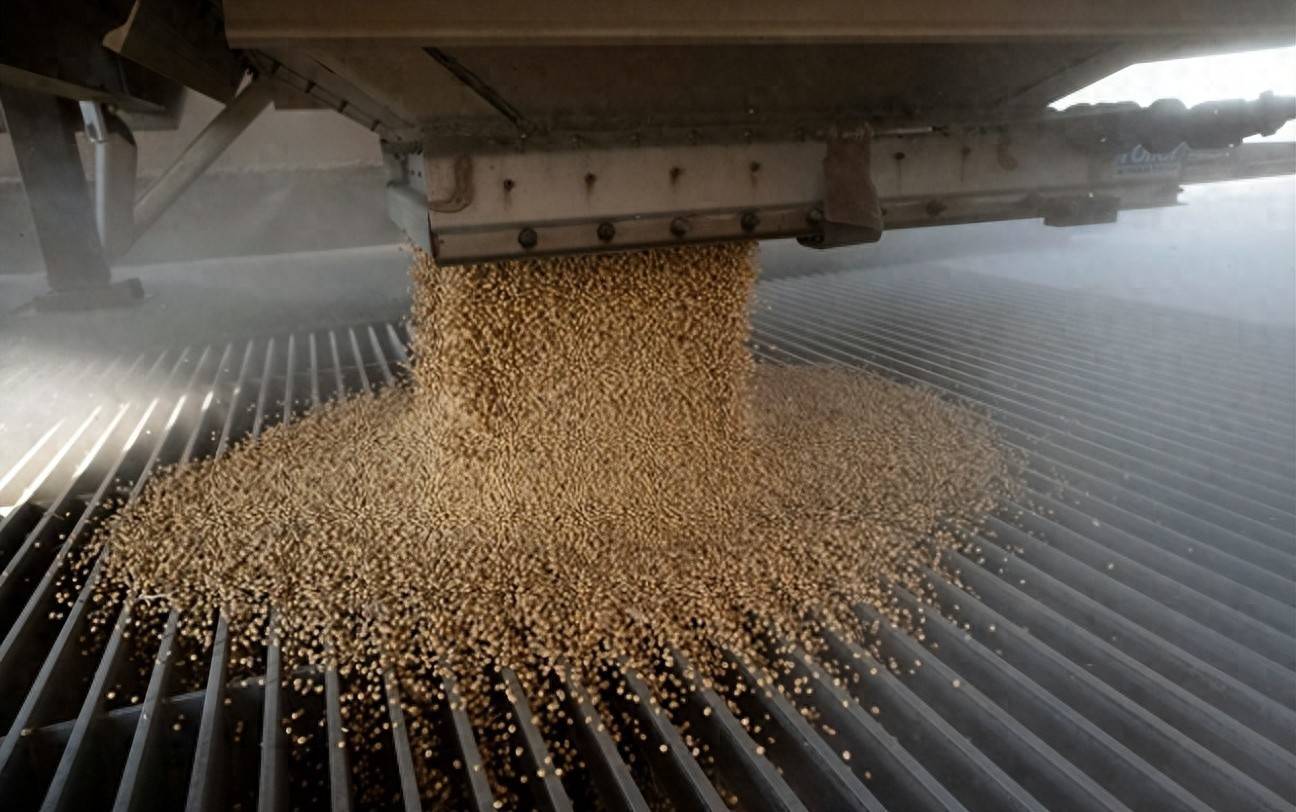
Core Insights - The article emphasizes the importance of timely financial support for grain production during the critical autumn harvest period in China, highlighting the role of Shandong Bank in providing credit to ensure food security [1][6]. Group 1: Financial Support for Grain Production - Shandong Bank is actively enhancing credit support for grain-related enterprises, focusing on the entire supply chain from production to trade to ensure sufficient funding for food security [1][6]. - The bank has provided a specialized loan of 6 million yuan to a local agricultural company to upgrade drying equipment, significantly increasing its drying capacity and storage capabilities [3][6]. - As of the end of September, Shandong Bank's grain purchase loan balance reached 747 million yuan, indicating a strong commitment to addressing the financial needs in the grain storage sector [6]. Group 2: Addressing Financing Challenges - Many grain storage merchants face difficulties in securing financing due to limited collateral, especially during the peak harvest season when cash flow is critical [5][6]. - Shandong Bank has introduced a "Grain Storage Loan" product tailored to local needs, providing 1 million yuan in credit to a prominent grain buyer, thus facilitating timely purchases and benefiting local farmers [5][6]. - The bank's efficient service process, including a green approval channel, ensures rapid loan disbursement during the busy harvest period, effectively addressing the financial challenges faced by grain merchants [6]. Group 3: Specialized Financial Services - Shandong Bank is developing specialized credit solutions for agricultural enterprises, leveraging local agricultural service companies' strengths to support farmers directly [8][9]. - A case study of a large-scale farmer illustrates the effectiveness of these tailored financial solutions, as the bank provided a 1 million yuan credit loan to ensure timely procurement of seeds and fertilizers for the upcoming planting season [9]. - By the end of September, the bank had issued 32 million yuan in loans to 84 farmers under this specialized program, reinforcing the financial foundation for stable grain production [9].
世粮署驻华代表:同舟共济迈向“零饥饿”的美好未来
Zhong Guo Xin Wen Wang· 2025-10-22 06:12
Core Points - The ultimate goal of the World Food Programme (WFP) is to establish a world free of hunger, which includes eliminating all forms of malnutrition, promoting sustainable agricultural practices, and ensuring smallholder farmers can achieve stable livelihoods while providing healthy nutrition for children [1][2]. Group 1: Global Food Security - The current global food security situation is urgent, with approximately 673 million people struggling with hunger as of last year, primarily due to wars, conflicts, climate change, and natural disasters [1]. - Many countries in the Global South face challenges such as insufficient agricultural production capacity, outdated technology, and incomplete industrial chains [1]. Group 2: China's Role and Experience - Since joining the WFP in 1979, China has developed valuable experiences in food security, poverty alleviation, and rural revitalization, which can be shared with other developing countries [2]. - The establishment of the South-South Cooperation Knowledge Sharing Platform in 2022 aims to facilitate the exchange of China's successful experiences in food security and nutrition improvement [2]. Group 3: Call for Cooperation - The WFP representative emphasizes the need for stronger international cooperation to support developing countries in enhancing food self-sufficiency and building sustainable agricultural systems, with a focus on vulnerable groups such as children and women [3]. - Achieving the goal of eliminating hunger requires collective efforts and innovative collaboration to help vulnerable communities regain hope [3].
减少粮食损耗 形成节约粮食的系统合力
Ren Min Ri Bao· 2025-10-21 21:50
Core Viewpoint - Food security is a fundamental issue concerning human survival, and reducing food loss is a crucial way to ensure food security [1] Group 1: Importance of Food Waste Reduction - Food waste reduction is essential for enhancing the resilience of the food security system and ensuring national development [2] - It is viewed as a systematic governance project that can lower losses at various stages and improve food security levels [2] - The initiative is also a pathway to alleviate resource and environmental constraints, promoting sustainable development [2] Group 2: Achievements and Challenges - Since the 18th National Congress, significant progress has been made in food waste reduction, with the loss rate of major grains gradually decreasing [3] - The storage loss rate for farmers has dropped to about 3%, a 5 percentage point decrease from ten years ago [3] - However, challenges remain, including unreasonable dietary structures and food waste, structural issues in supply, and an incomplete loss reduction mechanism [3] Group 3: Cultural and Systemic Approaches - Promoting food waste reduction as a conscious action among citizens is vital, rooted in traditional virtues of thrift [4] - There is a need to bridge the gap between cultural advocacy, institutional constraints, and behavioral changes regarding food waste [4] - Systematic governance and demand management should be employed to promote initiatives like the "Clean Plate Campaign" and "small portion meals" [4] Group 4: Supply Structure Optimization - The concept of a "big food perspective" is proposed to reshape the food supply logic, focusing on efficient resource collaboration [5] - Emphasis is placed on optimizing the supply structure through technological innovation, policy support, and industry restructuring [5] - The goal is to reduce production losses and resource pressure from the source, enhancing food security resilience and sustainability [5] Group 5: Full Chain Governance - A systematic approach is needed to connect all stages of food production, storage, transportation, processing, and consumption [6] - The focus is on breaking down traditional governance models that are fragmented and inefficient [6] - Establishing a comprehensive governance mechanism across the entire food chain is essential for improving food security governance effectiveness [6]