
量子计算

Search documents
彭博商业周刊:美国需要认识到对中国没有“赢”的可能
美股IPO· 2025-12-21 10:55
Core Argument - The article argues that the notion of "winning" against China is misguided, as China has proven to be a formidable competitor with significant advantages in various sectors, particularly in technology and manufacturing [1][4][6]. Group 1: China's Economic Strengths - China has demonstrated resilience against U.S. pressures, showcasing its ability to maintain and expand its competitive advantages in key industries such as electric vehicles, clean energy, and robotics [6][12]. - The trade dispute highlighted China's control over the rare earth mineral supply chain, which is critical for numerous U.S. industries, including electric vehicles and consumer electronics [9][11]. - China's solar power capacity is double that of the combined capacity of the U.S. and Europe, and it produces 70% of the world's electric vehicles [12][13]. Group 2: Technological Advancements - China is leading in quantum communication and making rapid advancements in quantum computing and sensing, while also surpassing other countries in AI-related patents [13]. - The ability of China to scale technology quickly and apply it across various economic sectors is a significant advantage, particularly in electric vehicles and renewable energy [13][14]. - Chinese companies like DJI dominate the commercial drone market, holding a 70% share, while the U.S. lags in military drone technology [12][14]. Group 3: Military Developments - Although the U.S. maintains the strongest military force, China is rapidly catching up, having produced more vessels in the past year than the U.S. has since World War II [14]. - China's nuclear arsenal has doubled since 2020, and it has enhanced its submarine capabilities, indicating a significant military buildup [14]. Group 4: Changing Perceptions in the U.S. - There is a noticeable shift in American perceptions of China, with fewer people viewing it as an enemy compared to previous years, possibly influenced by cultural exchanges and the relative stability of China compared to U.S. political turmoil [14].


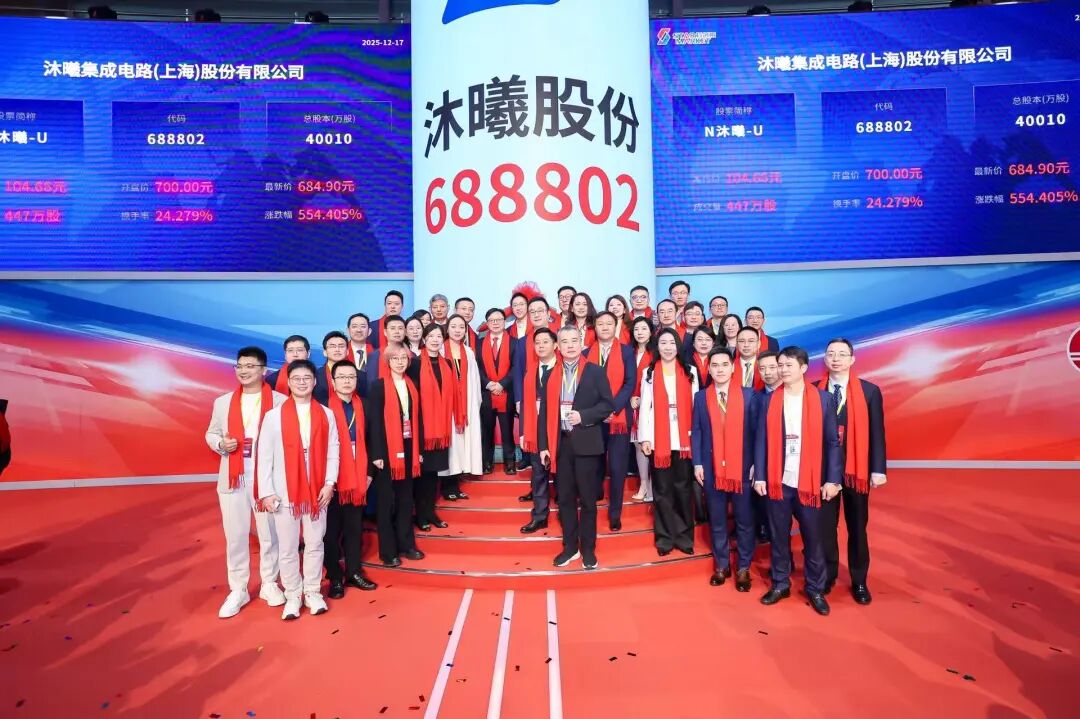
沐曦上市,他们投出四个千亿新贵
3 6 Ke· 2025-12-21 07:51
Core Insights - The article highlights the significant rise of China's computing power sector, marked by the recent IPOs of companies like Moore Threads and Muxi, which have collectively reached a market value exceeding 1.6 trillion yuan [1][3] - Lenovo Ventures has emerged as a key player in this sector, successfully investing in four major companies: Cambricon, Haiguang Information, Moore Threads, and Muxi, showcasing its strategic foresight in the computing power landscape [3][4] Investment Strategy - Lenovo Ventures began its investment journey in the computing power sector in 2017, focusing on AI computing as a critical component of future technological advancements, despite the sector being largely overlooked at the time [4][5] - The firm has a systematic approach to investment, conducting in-depth research annually to identify emerging trends and opportunities in the industry [7][8] Notable Investments - Cambricon, a pioneer in AI-specific chip design, has seen its market value soar to over 600 billion yuan, validating Lenovo Ventures' early investment decision [4][5] - Haiguang Information, recognized for its capabilities in high-end CPU and GPU development, has also experienced significant growth, with its stock price increasing over sevenfold since its IPO [5][6] - Moore Threads and Muxi were identified and invested in during their early stages, reflecting Lenovo Ventures' commitment to supporting domestic GPU development [5][7] Ecosystem Development - Lenovo Ventures has created a complementary ecosystem among its portfolio companies, enhancing their market validation and operational efficiency through collaboration with Lenovo Group [10][11] - The firm emphasizes the importance of synergy between its investments and Lenovo's core business, aiming to integrate innovative technologies into its product offerings [10][12] Future Outlook - Lenovo Ventures is focused on disruptive computing architectures, including technologies like quantum computing and RISC-V, positioning itself to capitalize on the next wave of technological advancements [11][12] - The firm aims to remain at the forefront of the computing revolution, recognizing the evolving nature of computing and its implications for various industries [11][13]



国盾量子:应勇暂代董事长 进军量子芯片EDA软件领域
Ju Chao Zi Xun· 2025-12-21 01:06
Group 1 - The company is experiencing a leadership change following the passing of Chairman Lv Pin, with Director Ying Yong appointed as the interim chairman to ensure continuity in decision-making [2][3] - The company announced an investment of 8.7 million yuan in the development of quantum chip design software (Q-EDA), marking its entry into a critical area considered essential for quantum chip manufacturing [1][3][4] Group 2 - EDA (Electronic Design Automation) software is crucial for traditional integrated circuit design, and Q-EDA software is vital for the design and manufacturing of quantum processors (QPU), facilitating automation, performance optimization, and rapid iteration [4] - The company emphasizes the necessity for China to develop its own Q-EDA software to leverage large-scale production of quantum chips, aligning with its existing business in quantum information across communication, computing, and measurement [4]


投中摩尔、沐曦等四家千亿芯片巨头,这家机构藏不住了
投中网· 2025-12-20 07:03
Core Insights - The article discusses the investment logic required to capture opportunities in the AI chip sector, highlighting the recent success of companies like Moer Thread and Muxi, which have seen significant market capitalization increases [2][3] - Lenovo Capital stands out as a unique investor that successfully backed multiple AI chip giants, demonstrating a forward-looking investment strategy [5][6] Investment Strategy - Lenovo Capital's early investments in companies like Cambricon and its simultaneous backing of Moer Thread and Muxi during their A-round financing showcase its proactive approach [5][6] - The firm’s investment logic is rooted in a long-term vision, aiming to identify and support innovative directions for Lenovo Group over the next 5-10 years [6][7] Market Positioning - Lenovo Capital has built a complementary landscape of AI computing capabilities through its investments in various companies, each addressing different aspects of computing needs [7][9] - The firm emphasizes deep industry research, dedicating significant time to understanding market trends before making investment decisions [8][9] Ecosystem and Value Creation - The article highlights the dual benefits of Lenovo Capital's investments, where the firm not only provides resources but also gains from the technological advancements of its portfolio companies [12][13] - Collaborations between Lenovo Group and its portfolio companies have led to integrated solutions that enhance value beyond mere financial returns [13][14] Future Outlook - Lenovo Capital is not only focused on current AI chip technologies but is also exploring next-generation computing paradigms, including quantum computing and brain-like computing [14][15]

国内唯一专注量子基础软件产业化团队,中科院技术转化,曾牵头科技部重大专项|36氪首发
3 6 Ke· 2025-12-20 01:09
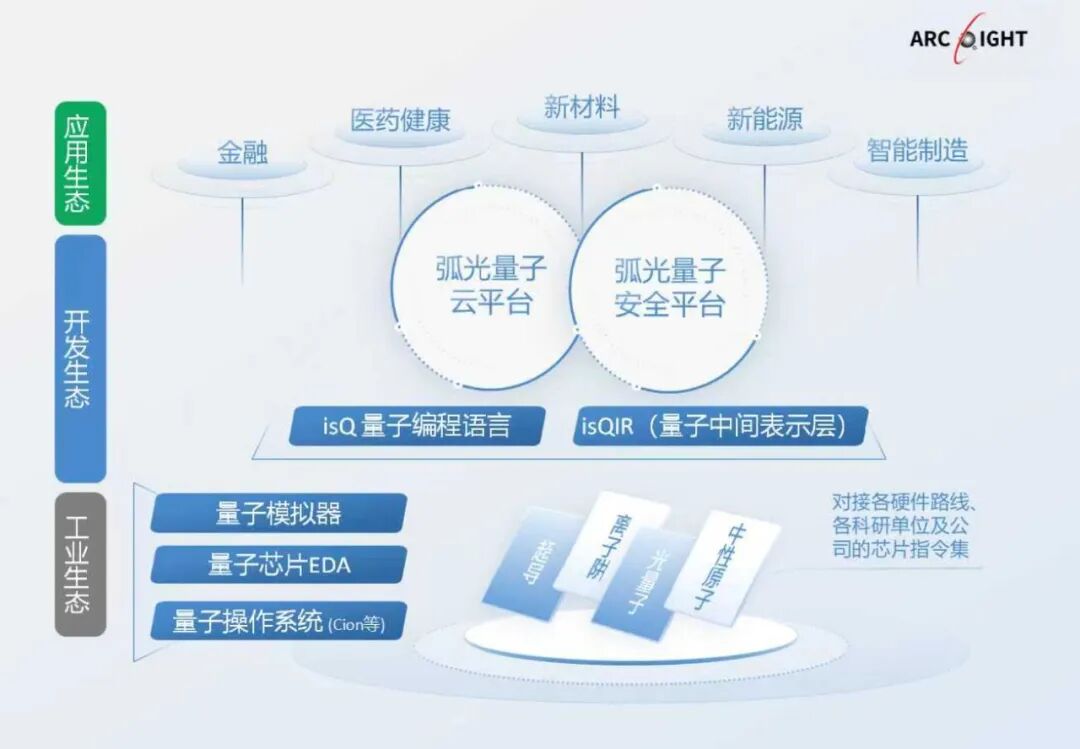
Core Viewpoint - Beijing Arc Quantum Software Technology Co., Ltd. has recently completed a multi-million A round financing, which will be used to expand the team and accelerate research and development to meet new software demands in the industry [1] Group 1: Company Overview - Arc Quantum was established in 2020 and focuses on quantum software and quantum computing applications, relying on the Software Research Institute of the Chinese Academy of Sciences for research and industrialization [1] - The core team consists of over 80% members from prestigious universities and research institutions, with 90% holding master's or doctoral degrees [1] - The founder and chairman, Ying Shenggang, has a Ph.D. from Tsinghua University and has conducted postdoctoral research at the University of Technology Sydney [1] Group 2: Product and Market Position - Arc Quantum's products are divided into three main areas: providing EDA tools and measurement control systems for quantum chip R&D teams, offering a quantum program development ecosystem centered around quantum compilers, and launching a quantum cloud platform for end-users and industry clients [2] - The company is the only domestic quantum software enterprise covering multiple chip routes and the entire industry chain, with products deployed in mainstream quantum computing systems [5] - The company has maintained rapid growth in its quantum software business since its inception and is currently at a breakeven point, with R&D investment accounting for about 80% of revenue [6] Group 3: Industry Trends and Future Outlook - The demand for quantum software is significantly increasing, and the ecosystem is becoming more refined, with products expected to diversify and segment [7] - The company plans to increase R&D and talent reserves to address the urgent technological and market challenges, which is a core strategy for its continued development [7] - The investment firm believes that quantum computing is a crucial engine for new productive forces and is optimistic about this disruptive technology [8]
Where Will D-Wave Be in 1 Year?
Yahoo Finance· 2025-12-19 18:31
Core Viewpoint - D-Wave Quantum has seen a significant increase in its stock price, rising by 390% over the past year, driven by investor interest in quantum computing, but the company faces challenges with minimal sales and substantial losses [1][6]. Sales and Revenue - D-Wave offers a full-stack quantum computing solution, including software and hardware, and is targeting a potential market worth $100 billion by 2035 [2]. - Current sales are minimal, with revenue reported at just $3.7 million in the third quarter, despite a doubling of revenue compared to previous periods [3]. - The company is expected to maintain minimal sales over the next year, with predictions indicating that the quantum computing market will not see real-world applications for another five years [5]. Financial Performance - D-Wave reported a net loss of $140 million in the same quarter, with operating expenses increasing by 40% to $30 million, indicating a trend of widening losses as the company invests in expansion and technology [4]. - The company's price-to-sales ratio stands at 286, significantly higher than the tech sector's average of under 9, suggesting that D-Wave's shares are overvalued [7]. Market Outlook - The outlook for D-Wave's revenue remains bleak, with expectations of continued significant losses and overpriced shares over the next year [8].

国盾量子宣布进军EDA软件
Di Yi Cai Jing· 2025-12-19 15:36
Group 1 - GuoDun Quantum announced a procurement service contract with Ququan (Wuhan) Technology Co., Ltd. for the development of "GuoDun Quantum EDA software" with an estimated amount of 8.7 million yuan [2] - This marks the first public announcement by GuoDun Quantum regarding the development of EDA software, which is essential for chip development as chip complexity increases [2] - The EDA software is expected to be used for future quantum computing chip design, aiming to create an industrial-grade EDA software [2] Group 2 - According to McKinsey, quantum computing is projected to create up to $2 trillion in economic value by 2035 [2] - Barclays Bank's report highlights that quantum computers have significant advantages in simulation, mathematical optimization, and algebraic operations, with potential applications in logistics, finance, energy, cybersecurity, national defense, and molecular simulation [2] - As domestic quantum computing technology develops and the demand for quantum computing chip research increases, various quantum technology companies are beginning to develop EDA software independently [2] Group 3 - On December 19, GuoDun Quantum announced the passing of its chairman and legal representative, Lv Pin, and appointed Ying Yong as the acting chairman and legal representative until a new chairman is elected [3] - Ying Yong previously served as the chairman of GuoDun Quantum from July 2023 to May 2025 [3]
国盾量子宣布进军EDA软件
第一财经· 2025-12-19 15:06
Core Viewpoint - GuoDun Quantum announced a procurement service contract with Ququan (Wuhan) Technology Co., Ltd. for the development of "GuoDun Quantum EDA Software," with an estimated amount of 8.7 million yuan, marking the company's first public announcement of EDA software development [3]. Group 1: Company Developments - GuoDun Quantum is collaborating with Ququan Technology, which is an affiliate where GuoDun holds a 30% stake [3]. - The company specializes in superconducting quantum computers and control systems, and the development of EDA software is seen as essential for chip development due to increasing chip complexity [3]. - GuoDun Quantum aims to create a quasi-industrial-grade EDA software for future quantum computing chip design [3]. Group 2: Industry Insights - According to McKinsey, quantum computing is expected to generate up to $2 trillion in economic value by 2035 [4]. - Barclays Bank's report highlights the significant advantages of quantum computers in simulation, mathematical optimization, and algebraic operations, with potential applications in logistics, finance, energy, cybersecurity, national defense, and molecular simulation [4]. - As domestic quantum computing technology advances, various quantum technology companies are beginning to develop their own EDA software [4]. Group 3: Other Company News - In May, Benyuan Keyi (Chengdu) Technology Co., Ltd. announced the completion of the fifth technical iteration of its domestically developed quantum chip design industrial software "Q-EDA" Benyuan Kunyu, which supports both superconducting and semiconductor quantum chip layout automation design [5]. - On December 19, GuoDun Quantum announced the passing of its chairman, Lv Pin, and appointed director Ying Yong as the acting chairman and legal representative until a new chairman is elected [5][6].
从寒武纪到沐曦,超1.5万亿算力军团,谁是背后隐秘捕手?
创业邦· 2025-12-19 14:57
Core Insights - The article discusses the strategic investment approach of Lenovo Capital, which has successfully positioned itself as a key player in the AI computing sector by investing in four leading companies: Cambricon, Hygon, Moore Threads, and Muxi [3][5][36] - Lenovo Capital's foresight in recognizing the impending demand for computing power has allowed it to capture significant market opportunities, with its investments in companies that have collectively surpassed a market value of 1.5 trillion RMB [5][36] Investment Strategy - Lenovo Capital began its systematic investment in AI computing as early as 2017, when AI chips were still largely experimental, demonstrating a commitment to long-term industry insights rather than following market trends [9][10] - The firm made significant investments in Cambricon, Hygon, Moore Threads, and Muxi, with a clear understanding of the evolving landscape of computing needs driven by AI applications [10][11] Complementary Technology Ecosystem - The four companies represent a complementary technology ecosystem rather than direct competitors, each fulfilling distinct roles in the AI computing landscape [12][13] - Cambricon is positioned as a specialized unit with its MLU chips designed for AI computing efficiency, while Hygon serves as a mainstream player with its x86-compatible CPUs [14][15] - Moore Threads aims to create a versatile GPU architecture, and Muxi focuses on high-performance GPUs specifically optimized for AI training and inference [19][20] Collaborative Synergy - Lenovo Capital's investments have fostered a collaborative environment where the companies can leverage Lenovo's resources for real-world applications, enhancing their product development and market validation [26][28] - The partnership between Lenovo and these companies has evolved from simple supply relationships to co-developing integrated solutions, exemplified by the "DeepSeek" AI integrated machine [28] Future Outlook - Lenovo Capital is not resting on its laurels; it is actively exploring next-generation computing paradigms, including quantum computing and RISC-V architecture, to stay ahead in the rapidly evolving tech landscape [33][34] - The firm’s strategic investments in emerging technologies reflect a comprehensive vision for the future of computing, aiming to overcome traditional limitations and redefine the industry [35][36]

国盾量子宣布进军EDA软件,瞄准超导量子计算芯片设计
Di Yi Cai Jing· 2025-12-19 13:12
Group 1 - The core announcement is that GuoDun Quantum plans to sign a procurement service contract with Ququan (Wuhan) Technology Co., Ltd. for the development of "GuoDun Quantum EDA software," with an expected amount of 8.7 million yuan [1] - This marks the first public announcement by GuoDun Quantum regarding the development of EDA software, which is essential for chip development as chip complexity increases [3] - GuoDun Quantum aims to create a quasi-industrial-grade EDA software that will be used for quantum computing chip design [3] Group 2 - According to McKinsey, quantum computing is expected to create up to $2 trillion in economic value by 2035 [4] - Barclays Bank's report highlights that quantum computers have significant advantages in simulation, mathematical optimization, and algebraic operations, with potential applications in logistics, finance, energy, cybersecurity, national defense, and molecular simulation [4] - As domestic quantum computing technology develops and the demand for quantum chip research increases, various quantum technology companies are beginning to develop their own EDA software [5] Group 3 - On December 19, GuoDun Quantum announced the passing of its chairman and legal representative, Lv Pin, and that the board has elected Ying Yong to temporarily fulfill the roles of chairman and legal representative until a new chairman is elected [5] - Ying Yong previously served as chairman of GuoDun Quantum from July 2023 to May 2025 [6]
