
固态电池

Search documents
税率从100%降至6.1%,中国电动汽车迎利好!机构看好行业景气度
Zheng Quan Shi Bao Wang· 2026-01-16 15:45
中国电动汽车,传来利好消息! 今日晚间,据《环球时报》援引外媒报道,加拿大总理卡尼表示,加拿大将以优惠关税税率进口4.9万辆中国电动汽车。值得关注的是,卡尼宣布,上述优 惠关税税率为6.1%,而此前加拿大对中国电动汽车征收100%的关税。 另据新华社报道,近日,中国人民银行与加拿大银行(即加拿大中央银行)续签双边本币互换协议,互换规模为2000亿元人民币。 事关中国电动汽车,卡尼宣布大消息 据《环球时报》综合法新社、《纽约时报》等多家外媒16日报道,正在中国访问的加拿大总理卡尼表示,加拿大将以优惠关税税率进口4.9万辆中国电动汽 车。 卡尼16日告诉记者:"加拿大已同意允许最多4.9万辆中国电动汽车进入加拿大市场,适用6.1%的最惠国关税税率……这恢复到了贸易摩擦前的水平。" 2025年我国汽车产销量再创新高 1月14日,中国汽车工业协会(下称"中汽协")发布的数据显示,2025年,中国汽车产销累计完成3453.1万辆和3440万辆,产销量再创历史新高,连续17年 稳居全球第一。 其中,乘用车市场稳健增长,作为汽车消费的核心组成部分,有效拉动汽车市场的整体增长;商用车市场回暖向好,产销实现10%以上增长,回归 ...


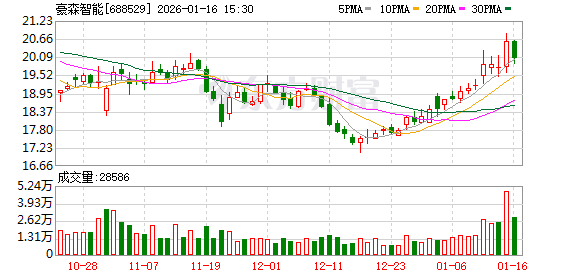
豪森智能:公司面向固态电池等新工艺电池的叠片机设备已投入客户产线应用
Zheng Quan Ri Bao· 2026-01-16 15:15
Core Viewpoint - The company has successfully integrated its stacking machine equipment for solid-state batteries into customer production lines and is steadily advancing its humanoid robot business according to plan [2] Group 1: Solid-State Battery Equipment - The company has deployed stacking machine equipment for new process batteries, specifically solid-state batteries, into customer production lines [2] - This indicates a commitment to innovation and adaptation in the battery technology sector [2] Group 2: Humanoid Robot Business - The humanoid robot business is progressing as planned, focusing on applications in industrial scenarios such as sorting, loading and unloading, and bolt pre-tightening [2] - Future expansions into related process scenarios will depend on the maturity of the technology [2]

中伟新材:各核心产品线产能利用率呈现持续向好态势
Zheng Quan Ri Bao Zhi Sheng· 2026-01-16 15:13
Core Viewpoint - The company is experiencing a positive trend in capacity utilization across its core product lines due to product structure optimization, global capacity layout implementation, and a recovery in downstream demand [1] Group 1: Company Performance - The company reported that its core product lines are seeing a continuous improvement in capacity utilization [1] - The demand for energy storage and solid-state batteries is experiencing a simultaneous surge, contributing to the company's growth [1] Group 2: Industry Outlook - The company's diverse product matrix and global capacity layout are expected to synergize, enhancing its competitive advantage in the global new energy materials sector [1] - Future capacity utilization is anticipated to grow in tandem with industry development, reinforcing the company's position in the market [1]
三倍牛股,三年连亏,科森科技没能讲出市场爱听的故事
Tai Mei Ti A P P· 2026-01-16 12:12
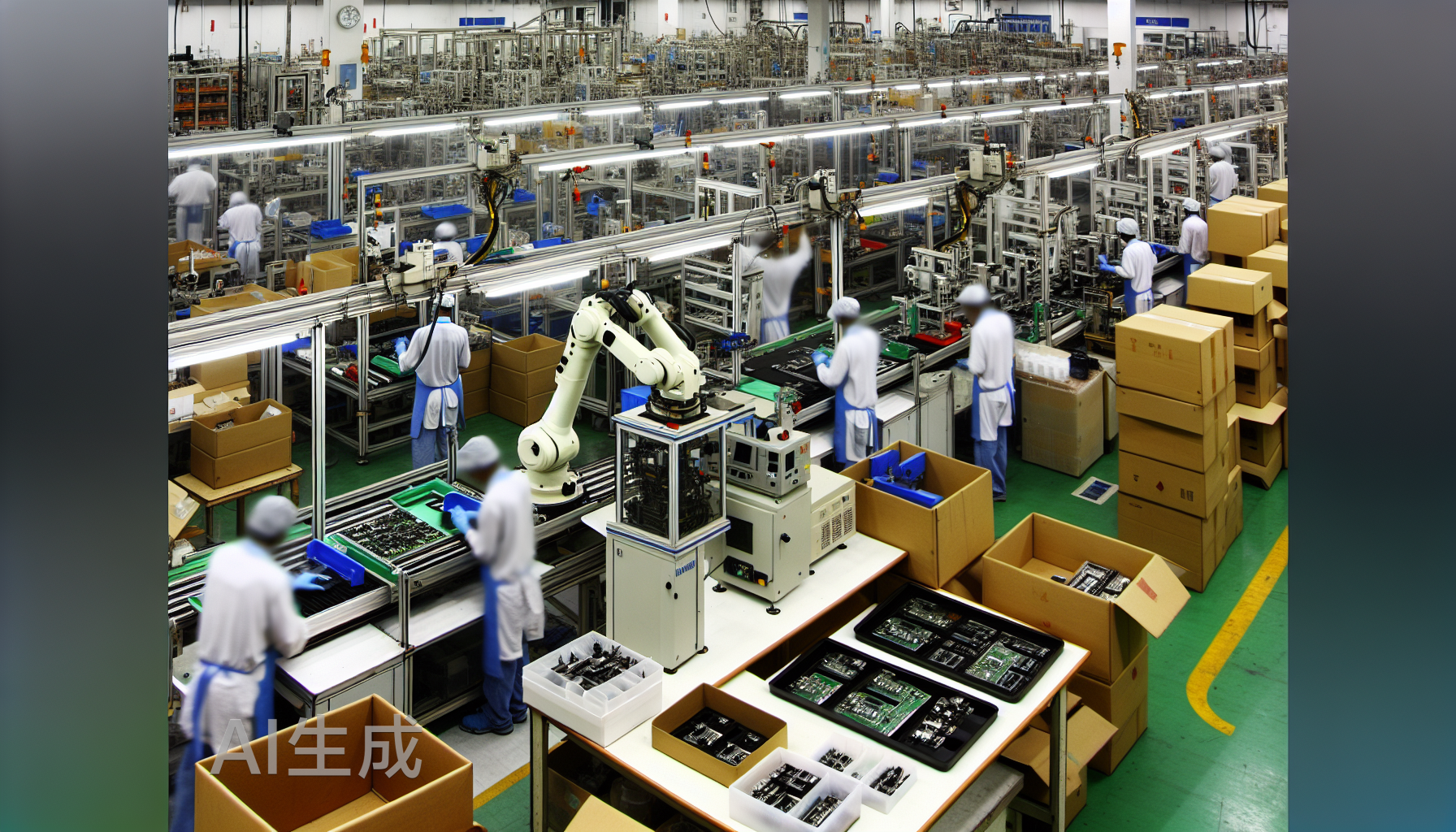
Core Viewpoint - Kosen Technology (603626.SH) is expected to report a loss of between 330 million yuan and 245 million yuan for the entire year of 2025, marking its third consecutive year of losses, indicating significant challenges in the consumer electronics sector [2][4]. Group 1: Financial Performance - The company anticipates a net profit attributable to shareholders of -330 million yuan to -245 million yuan for 2025, with a net profit excluding non-recurring gains and losses expected to be between -393 million yuan and -308 million yuan [7]. - Kosen Technology's net profit has shown a drastic decline over recent years, with year-on-year changes of -76.48%, -424.29%, and -69.44% from 2022 to 2024, while gross margins have decreased from 14% to 5.34% during the same period [10]. Group 2: Market Position and Challenges - Kosen Technology is a second-tier supplier in the precision structural components sector for consumer electronics, with a market share of less than 3% globally and ranking between fifth and eighth in its domestic niche, generating approximately 3 billion yuan in revenue [4][8]. - The company faces significant pressure from both upstream and downstream in the supply chain, particularly as major clients like Huawei and Apple impose stricter cost controls and cultivate new suppliers to enhance their bargaining power [8]. Group 3: Strategic Adjustments and R&D - The anticipated losses for 2025 are attributed to several factors, including fluctuating market demand, low capacity utilization, strategic adjustments leading to inventory write-offs, and high R&D expenditures impacting net profits [6][18]. - Kosen Technology has maintained a high level of R&D investment, with 167 million yuan allocated in the first three quarters of 2025, representing 6.81% of revenue, although this is significantly lower than industry leaders [19]. Group 4: Market Perception and Speculation - The company has been associated with various high-tech concepts, such as solid-state batteries and foldable screens, which have led to speculative trading despite the weak fundamentals of its core business [11][12]. - Kosen Technology's management has attempted to pivot through strategic adjustments, including the sale of its high-margin medical device business to focus on its core consumer electronics operations, although the effectiveness of these measures remains uncertain [18].

星云股份(300648) - 2026年1月16日投资者活动关系记录表
2026-01-16 11:08
Group 1: Company Overview - The company is Fujian Xingyun Electronics Co., Ltd., with the stock code 300648 [1] - The investor relations activity took place on January 16, 2026, from 16:00 to 17:30 [2] Group 2: Solid-State Battery Business - The solid-state battery sector is a key focus, with the company providing high-precision testing equipment for R&D [2] - The company has established deep partnerships with leading lithium battery firms and has achieved mass production capabilities for solid-state batteries since 2025 [2] - Continuous follow-up on solid-state battery technology iterations is in place to enhance testing capabilities [2] Group 3: R&D Investment Focus - R&D is identified as the core competitive advantage, with a focus on advancing battery testing technology towards higher precision and intelligence [3] - The company’s subsidiary, Xingyun Testing, has been recognized as a key pilot platform by the Ministry of Industry and Information Technology [3] - Integration of artificial intelligence with battery testing is being pursued to enhance the transition from R&D to mass production [3] Group 4: Insurance Collaboration - A strategic cooperation agreement has been signed with Ping An Property & Casualty Insurance Company to develop battery insurance products and services [3] - The collaboration aims to create an integrated ecosystem combining battery testing, AI, and insurance services [3] Group 5: Production and Delivery Cycle - The company employs a customized production model based on sales, with varying production cycles depending on product types [3] - For lithium battery testing systems, the production cycle ranges from 2 to 3 months, while automated equipment typically takes 3 to 6 months [3] Group 6: Sales Outlook for 2026 - The company maintains an optimistic outlook for sales in 2026, anticipating a recovery in downstream demand and strong overseas market interest in new energy products [3] - Plans to expand market reach and product development in the energy storage and battery service sectors are in place to foster new growth points [3]
正业科技涨2.11%,成交额1.12亿元,主力资金净流入900.91万元
Xin Lang Zheng Quan· 2026-01-16 06:07
Core Viewpoint - Zhengye Technology has shown a positive stock performance with a year-to-date increase of 6.36% and a market capitalization of 3.194 billion yuan as of January 16 [1]. Financial Performance - For the period from January to September 2025, Zhengye Technology achieved a revenue of 581 million yuan, representing a year-on-year growth of 13.66% [2]. - The net profit attributable to shareholders for the same period was 23.0412 million yuan, reflecting a significant year-on-year increase of 120.19% [2]. Stock Market Activity - As of January 16, the stock price of Zhengye Technology was 8.70 yuan per share, with a trading volume of 112 million yuan and a turnover rate of 3.55% [1]. - The stock has experienced a net inflow of 9.0091 million yuan from main funds, with large orders contributing significantly to the buying activity [1]. Business Overview - Zhengye Technology, established on November 14, 1997, and listed on December 31, 2014, specializes in the research, production, and sales of precision processing and testing automation equipment for PCBs, as well as automated assembly and testing equipment for LCD modules [1]. - The company's revenue composition includes high-end new materials (32.01%), flat panel display module automation (30.48%), X-ray detection automation (23.66%), PCB detection automation (12.17%), and other supplementary products (1.68%) [1]. Shareholder Information - As of January 10, the number of shareholders for Zhengye Technology was 34,600, with an average of 10,618 circulating shares per person, indicating no change from the previous period [2]. Dividend Information - Since its A-share listing, Zhengye Technology has distributed a total of 126 million yuan in dividends, with no dividends paid in the last three years [3].

山东章鼓涨2.01%,成交额6918.36万元,主力资金净流入440.88万元
Xin Lang Cai Jing· 2026-01-16 05:53
Company Overview - Shandong Zhanggu is located in Jinan City, Shandong Province, and was established on May 24, 1991, with its listing date on July 7, 2011 [2] - The company's main business includes the design, manufacturing, sales, and service of Roots blowers, centrifugal blowers, pneumatic conveying systems, mills, and slurry pumps [2] - The revenue composition is as follows: Blowers 55.53%, Slurry Pumps 20.48%, Water Treatment 20.03%, Electrical Equipment 2.58%, Other Business 1.34%, Pneumatic Conveying 0.04% [2] - The company belongs to the mechanical equipment industry, specifically general equipment and other general equipment [2] Financial Performance - For the period from January to September 2025, Shandong Zhanggu achieved operating revenue of 1.459 billion yuan, a year-on-year decrease of 3.94% [2] - The net profit attributable to the parent company was 61.9588 million yuan, down 39.12% year-on-year [2] - The company has distributed a total of 590 million yuan in dividends since its A-share listing, with cumulative distributions of 93.604 million yuan over the past three years [3] Stock Performance - As of January 16, the stock price of Shandong Zhanggu increased by 2.01% to 9.62 yuan per share, with a trading volume of 69.1836 million yuan and a turnover rate of 2.59%, resulting in a total market capitalization of 3 billion yuan [1] - Year-to-date, the stock price has decreased by 10.01%, with a 1.58% increase over the last five trading days, a 7.77% decrease over the last 20 days, and a 15.84% decrease over the last 60 days [1] - The company has appeared on the "Dragon and Tiger List" once this year, with the most recent appearance on January 5, where it recorded a net buy of -14.4975 million yuan [1] Shareholder Information - As of January 9, the number of shareholders of Shandong Zhanggu was 41,500, an increase of 6.53% from the previous period [2] - The average circulating shares per person were 6,778 shares, a decrease of 6.13% from the previous period [2]

天奈科技涨2.00%,成交额4.52亿元,主力资金净流入306.84万元
Xin Lang Zheng Quan· 2026-01-16 05:51
Core Viewpoint - Tianwei Technology's stock has shown a positive trend with a 7.08% increase year-to-date and a recent 2.00% rise in intraday trading, reflecting investor interest and market activity [1]. Group 1: Stock Performance - As of January 16, Tianwei Technology's stock price reached 50.49 yuan per share, with a trading volume of 4.52 billion yuan and a turnover rate of 2.48%, resulting in a total market capitalization of 18.506 billion yuan [1]. - The stock has increased by 3.06% over the last five trading days and 9.83% over the last twenty days, while it has decreased by 5.64% over the last sixty days [1]. Group 2: Financial Performance - For the period from January to September 2025, Tianwei Technology reported a revenue of 1 billion yuan, a year-on-year decrease of 3.79%, while the net profit attributable to shareholders was 196 million yuan, reflecting a year-on-year increase of 7.39% [2]. - The company has distributed a total of 244 million yuan in dividends since its A-share listing, with 179 million yuan distributed over the past three years [3]. Group 3: Shareholder Information - As of September 30, 2025, the number of shareholders for Tianwei Technology increased by 3.63% to 24,700, while the average circulating shares per person decreased by 3.50% to 13,949 shares [2]. - Among the top ten circulating shareholders, Hong Kong Central Clearing Limited is the eighth largest with 3.9127 million shares, marking its entry as a new shareholder [3].

中仑新材涨2.06%,成交额9255.96万元,主力资金净流入775.56万元
Xin Lang Zheng Quan· 2026-01-16 05:34
Core Viewpoint - Zhonglun New Materials Co., Ltd. has experienced fluctuations in stock price and financial performance, with a notable decrease in revenue and net profit for the year 2025 compared to the previous year [1][2]. Group 1: Stock Performance - On January 16, Zhonglun's stock rose by 2.06%, reaching 25.72 CNY per share, with a trading volume of 92.56 million CNY and a turnover rate of 2.85%, resulting in a total market capitalization of 10.29 billion CNY [1]. - Year-to-date, Zhonglun's stock price has increased by 6.55%, with a 1.66% rise over the last five trading days, no change over the last 20 days, and a 9.35% increase over the last 60 days [1]. Group 2: Financial Performance - For the period from January to September 2025, Zhonglun reported operating revenue of 1.54 billion CNY, a year-on-year decrease of 15.14%, and a net profit attributable to shareholders of 66.82 million CNY, down 42.02% year-on-year [2]. - As of December 10, the number of shareholders for Zhonglun decreased by 2.38% to 19,700, while the average number of circulating shares per person increased by 2.44% to 6,506 shares [2]. Group 3: Company Overview - Zhonglun New Materials, established on November 19, 2018, is located in Xiamen, Fujian Province, and specializes in the research, production, and sales of functional BOPA films, biodegradable BOPLA films, and polyamide 6 (PA6) [1]. - The company's main business revenue composition includes: general BOPA films (73.17%), polyamide 6 (16.57%), new BOPA films (7.12%), others (1.65%), and biodegradable BOPLA films (1.50%) [1]. - Zhonglun is classified under the Shenwan industry as basic chemicals - plastics - film materials, and is associated with sectors such as aluminum-plastic films, consumer electronics, solid-state batteries, synthetic biology, and margin financing [1].
临平“中国绿港”再添硬核支撑
Hang Zhou Ri Bao· 2026-01-16 03:33
Core Insights - Zhejiang Jinyu New Energy Technology Co., Ltd. has launched a 1.2GWh solid-state battery production line in Hangzhou, marking a significant milestone for the company and the local industry [1][2] - The new production line will manufacture solid-state lithium metal batteries and semi-solid batteries, which are designed for applications in hybrid machinery, green transportation, low-altitude economy, and smart robotics [1] - The establishment of the Beijing University-Jinyu New Energy Advanced Battery Joint Laboratory will enhance core technology research and promote collaborative innovation in the solid-state battery sector [1] Company Overview - Since its establishment in 2017, Jinyu New Energy has focused on the solid-state battery field, applying for over 100 invention patents and developing a systematic solution from research to production [1] - The company’s new production line utilizes self-generating negative electrode technology, producing the "Wuji" series solid-state batteries, "Wanshan" series ultra-fast charging semi-solid batteries, and "Shanhai" series high-safety semi-solid batteries [1] Industry Impact - The launch of Jinyu New Energy's production line is a significant achievement for the Linping Economic and Technological Development Zone, contributing to the establishment of a comprehensive ecosystem in the green energy sector [2] - Linping has attracted over a hundred large-scale enterprises in the green energy field and established more than 20 provincial-level research platforms, fostering a collaborative development model driven by technological innovation [2] - The new production line fills a gap in large-scale production of high-end solid-state batteries in the region, supporting the growth of the green energy industry and enhancing the value of the local industrial chain [2]