AI芯片

Search documents
科德教育:公司参股的中昊芯英已启动IPO相关工作 目前处于股改阶段
Ge Long Hui· 2025-12-02 12:51
Core Viewpoint - Kede Education (300192.SZ) announced that its investee Zhonghao Xinying has initiated the process for its independent initial public offering (IPO) and is currently in the shareholding reform stage [1] Group 1: Company Information - Kede Education holds a 5.53% stake in Zhonghao Xinying according to its 2025 semi-annual report [1] - Zhonghao Xinying is a domestic company that possesses core technology for TPU architecture AI chips and has achieved mass production of these chips [1] Group 2: Investment Monitoring - The company continues to monitor Zhonghao Xinying's operational status and dynamically assess its business development, financial condition, and market performance to enhance investment value [1]

一觉醒来!万亿泡沫破裂了!
商业洞察· 2025-12-02 09:23
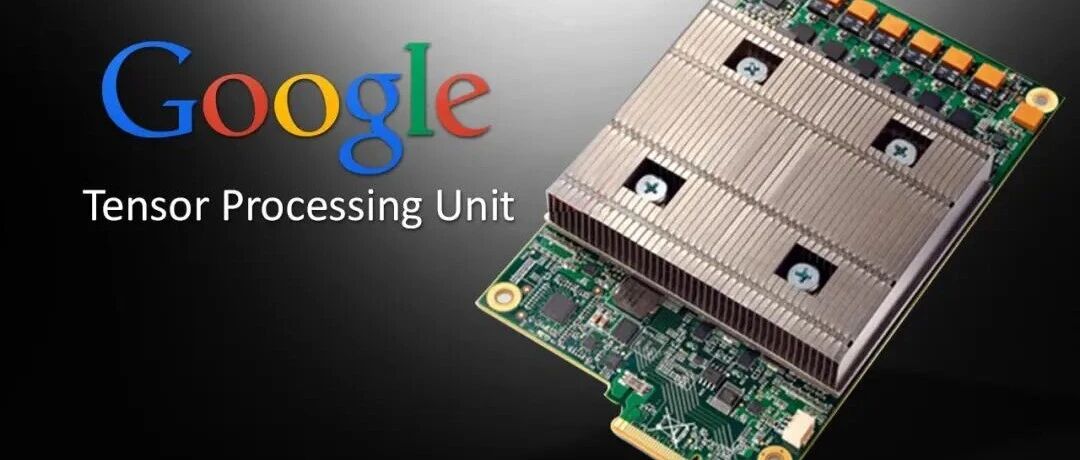
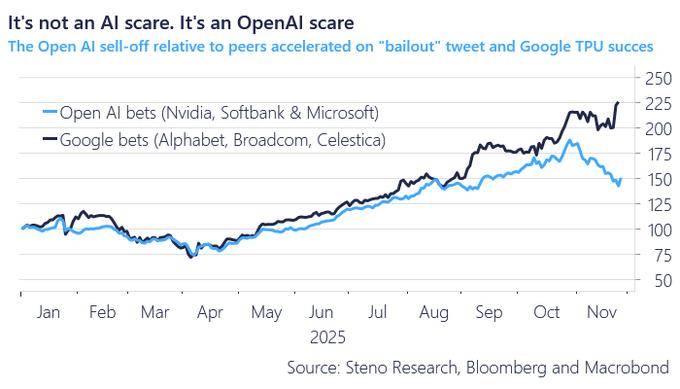
Core Viewpoint - The article discusses the shifting dynamics in the AI chip market, highlighting Google's TPU chips as a competitive threat to NVIDIA's dominance in AI training chips, which currently holds over 80% market share [4][10][28]. Group 1: Market Dynamics - NVIDIA has been the leading player in AI training chips, with a market cap exceeding $5 trillion and significant capital market interest [4]. - Recently, Google's TPU chips have gained recognition, leading to a shift in investment from NVIDIA to Google, as evidenced by rising Google stock prices and declining NVIDIA stock prices [10][20]. - Major companies like Meta and Anthropic are placing significant orders for Google's TPU chips, indicating growing industry confidence in their reliability and performance [11][13]. Group 2: Technical Advantages - Google's TPU chips are designed specifically for AI applications, offering better efficiency and lower costs compared to NVIDIA's more general-purpose chips [15][17]. - Industry data shows that NVIDIA's chips have lower utilization rates when training large-scale models, leading to wasted resources and higher operational costs [16][20]. - In contrast, Google's TPU chips utilize sparse computing and cluster interconnects, resulting in significantly lower power consumption [17][18]. Group 3: Implications for NVIDIA - As Google's market share in AI chips increases, NVIDIA's revenue growth may slow, raising concerns about its high valuation, which is already detached from its fundamentals [26][28]. - The potential for a significant correction in NVIDIA's stock price could trigger a broader market sell-off, affecting its suppliers and cloud service providers [29][30]. - The article warns that a collapse of NVIDIA's market position could have negative repercussions for the overall economy, particularly for startups and companies heavily invested in AI technologies [30][31]. Group 4: Future Outlook - The article suggests that the current trends indicate a potential bubble in the AI sector, particularly surrounding NVIDIA, which could lead to a market correction [26][32]. - In the long term, as training costs decrease and barriers to entry for large models lower, the market may enter a more competitive phase, referred to as the "hundred model war" [32].




澜起科技跌2.03%,成交额12.15亿元,主力资金净流出6445.85万元
Xin Lang Cai Jing· 2025-12-02 05:33
截至9月30日,澜起科技股东户数9.29万,较上期增加36.10%;人均流通股12326股,较上期减少 26.50%。2025年1月-9月,澜起科技实现营业收入40.58亿元,同比增长57.83%;归母净利润16.32亿元, 同比增长66.89%。 分红方面,澜起科技A股上市后累计派现23.67亿元。近三年,累计派现13.50亿元。 机构持仓方面,截止2025年9月30日,澜起科技十大流通股东中,香港中央结算有限公司位居第一大流 通股东,持股1.45亿股,相比上期增加2972.74万股。易方达上证科创板50ETF(588080)位居第五大流 通股东,持股3911.50万股,相比上期减少828.05万股。华夏上证科创板50成份ETF(588000)位居第六 大流通股东,持股3821.67万股,相比上期减少1415.66万股。嘉实上证科创板芯片ETF(588200)位居 第七大流通股东,持股2599.58万股,相比上期减少117.67万股。华夏上证50ETF(510050)位居第八大 流通股东,持股2187.86万股,相比上期减少60.18万股。华泰柏瑞沪深300ETF(510300)位居第九大流 通股东,持股1 ...

清微智能完成超20亿元C轮融资 已启动上市筹备工作
Di Yi Cai Jing· 2025-12-02 03:30
Core Insights - AI chip company Qingwei Intelligent announced the completion of over 2 billion RMB in Series C financing [1] - The financing round was led by Beijing state-owned enterprise Jingneng Group, with participation from Beichuang Investment, Chengdu Science and Technology Investment, and others [1] - The funds will focus on the development of next-generation reconfigurable chips, implementation of intelligent computing scenarios, and recruitment of high-end talent [1] - The company has initiated preparations for an IPO [1]
谷歌对比英伟达,AI芯片王者之争才刚开始
3 6 Ke· 2025-12-02 03:21
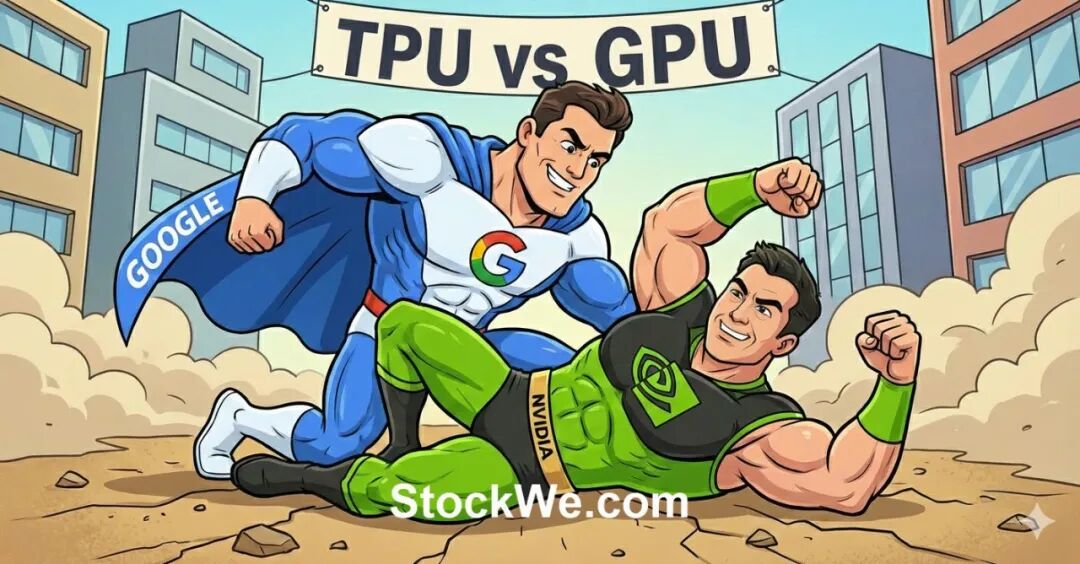
2025 年的 AI 芯片市场正处于一个微妙且关键的转折点。 随着 Anthropic 大规模采购超过 1GW 的 TPU,谷歌彻底撕下"云服务商"的面具,正式变身为一家对外出售高性能芯片与系统的商用芯片供应商。 当 OpenAI 可以靠"威胁采购"获得 30% GPU 折扣、Anthropic 用 TPU 训练出超越 GPT-4 的模型、谷歌愿意开放软件生态并提供金融杠杆——英伟达 75% 毛利率的神话,也开始出现裂缝。 对于英伟达来说,那个曾经最大的客户谷歌,如今变成了最懂的对手。 谷歌在主动进攻 长期以来,TPU 一直像谷歌搜索算法一样,是深藏内部的"核武级"技术。但根据 SemiAnalysis 的供应链信息,这一策略已经出现根本性逆转。 最典型的案例来自 Anthropic:其将部署超过 100 万颗 TPUv7 "Ironwood",其中: 这意味着谷歌正在用"混合销售"的方式,将最先进的算力系统向外界全面开放。除了 Anthropic,Meta、SSI、xAI 等一线 AI 实验室均在考虑采购 TPU。 英伟达则首次呈现出明显的防御姿态,其财务团队甚至罕见地发布长文回应"循环经济融资"质疑,可见 ...
谷歌TPU产量,2027年或达500万块
财联社· 2025-12-02 03:19
Core Insights - Google's self-developed AI chip TPU (Tensor Processing Unit) is gaining market attention, potentially reshaping the AI chip market landscape and achieving breakthroughs in large model development [2] - Google is reportedly marketing its TPU to clients, with Meta considering a multi-billion dollar investment in TPUs for data center construction, indicating a significant strategic shift for Google [2] Group 1: Production and Revenue Forecasts - Morgan Stanley's latest research indicates that supply chain surveys suggest a significant increase in TPU production, which could lead to substantial revenue growth for Alphabet [3] - The firm's analysts raised the 2027 TPU production forecast from approximately 3 million units to 5 million units, a 67% increase, and the 2028 forecast from about 3.2 million units to 7 million units, a 120% increase [3][4] Group 2: Financial Implications - The financial impact of expanding TPU sales is considerable, with Morgan Stanley estimating that selling 500,000 TPU chips could generate approximately $13 billion in revenue and $0.4 in earnings per share (EPS) for Google in 2027 [4] - Although most of the TPU production growth may still be allocated to Google's own operations and Google Cloud Platform (GCP), the production scale of 12 million TPUs over two years highlights the potential for commercializing TPU sales [5] Group 3: Market Positioning - Morgan Stanley views the trends as early signals of Google's TPU sales strategy, as the company intensifies efforts to capitalize on the industry's demand for advanced AI computing power [5] - Considering NVIDIA's expected shipment of around 8 million GPUs in 2027, Google's forecast of selling 500,000 to 1 million TPUs annually appears reasonable if production capacity allows [5]

清微智能完成超20亿元C轮融资,京能集团领投
Xin Lang Ke Ji· 2025-12-02 02:50
Core Insights - AI chip company Qingwei Intelligent has completed over 2 billion RMB in Series C financing, led by Beijing state-owned enterprise Jingneng Group [1][2] - The financing round included participation from various investors such as Beichuang Investment, Jiantou Investment, and others, with continued investment from existing shareholders [1] - The funds will be primarily allocated to three areas: next-generation reconfigurable chip development, implementation of intelligent computing scenarios, and recruitment of high-end talent [2] Company Strategy - Qingwei Intelligent has initiated preparations for an IPO, aiming to become the first listed benchmark enterprise in the domestic "non-GPU" new architecture chip sector [2]
大摩大幅上调谷歌TPU产量预测:2027年达500万块,每50万块“外销”或增收130亿美元
硬AI· 2025-12-01 13:13
Core Viewpoint - Google's self-developed AI chip, TPU, is showing significant potential to challenge the existing market landscape, with expectations of explosive growth in production over the next two years, indicating a possible shift towards large-scale sales to third parties [1][5]. Supply Chain Signals - The latest report from Morgan Stanley indicates a substantial increase in the production forecast for Google's TPU, with projections for 2027 raised from approximately 3 million units to about 5 million units, representing a growth of about 67% [2][4]. - For 2028, the forecast has surged from around 3.2 million units to approximately 7 million units, marking an impressive increase of 120% [4][5]. - This suggests that Google could produce a total of 12 million TPUs over the two years of 2027 and 2028, compared to just 7.9 million units produced in the previous four years [4][8]. Strategic Shift - The increase in TPU production signals a potential strategic shift for Google, moving from a model of internal use to competing directly with major players in the AI chip market [8][9]. - If implemented, this strategy would transform Google from a consumer and service provider of AI chips into a direct hardware seller, entering a high-margin market dominated by a few key players [9]. Financial Impact - Morgan Stanley estimates that each sale of 500,000 TPU chips could generate approximately $13 billion in revenue and an increase of $0.40 in earnings per share (EPS) for Google in 2027 [2][11]. - This potential revenue model provides a clear estimation for investors, indicating that even a small portion of TPU sales could significantly contribute to revenue and profit growth, potentially reshaping market valuations for Google and impacting the competitive landscape of the AI chip market [11].

ChatGPT3周年之后,TPU改变了AI竞争,正在从模型转向基础设施
Sou Hu Cai Jing· 2025-12-01 11:20
Core Insights - Google has developed its most powerful model, Gemini 3, using its TPU infrastructure, marking a significant shift in the AI landscape, challenging the dominance of NVIDIA GPUs and the GPT series models trained on Microsoft Azure [1] - The rise of TPU technology is expected to impact major players like NVIDIA, Microsoft, and OpenAI, as the market begins to favor the long-term performance and cost advantages of TPU + Gemini over existing models [1][3] Group 1: Google’s Strategic Moves - Google’s vertical integration strategy in AI has garnered attention from investors like Warren Buffett, who recently made a significant investment, marking it as his second tech investment after Apple [3] - The collaboration between Gemini and TPU is central to Google's strategy to reclaim its position in the AI market, following a challenging period where competitors like Microsoft posed significant threats [3][4] - Google has merged DeepMind and Google Brain, appointing Demis Hassabis as CEO of Google DeepMind, and has shifted focus from Bard to Gemini, indicating a strategic pivot [3] Group 2: TPU Advancements - By the end of 2023, Google released TPUv5p alongside Gemini, achieving over double the efficiency in training large models, although it still relies on NVIDIA GPUs for some training tasks [4] - Google plans to utilize TPU for inference, avoiding the 70% profit margin paid to NVIDIA by OpenAI and Microsoft, which enhances its competitive edge [5] - The introduction of TPUv6, named Trallium, is expected to further solidify Google's position by enabling complete training and inference freedom with a 100,000-card computing cluster [6][7] Group 3: Competitive Landscape - Google’s TPU technology is evolving from custom to general-purpose acceleration chips, posing a significant challenge to NVIDIA, which must quickly innovate to maintain its competitive edge [8] - The Ironwood TPU, designed for large-scale AI inference, boasts significant performance improvements, including a peak computing power of 4.614 trillion floating-point operations per second and enhanced memory capacity [12] - Google is opening its TPU market, allowing other leading AI firms like OpenAI and Anthropic to utilize its technology, which could disrupt NVIDIA's dominance [13][14] Group 4: Market Implications - NVIDIA faces challenges in maintaining its high profit margins, as its reliance on equity investments rather than price reductions to secure its market position may not be sustainable [14] - The shift in AI infrastructure dynamics suggests a move from NVIDIA's monopoly to a more competitive landscape with multiple strong players, including Google, Amazon, and AMD [16][21] - The future may see a multipolar computing world where various companies, including Chinese firms, will have a significant presence in the AI chip market [21]
大摩大幅上调谷歌TPU产量预测:2027年达500万块,每50万块“外销”或增收130亿美元
美股IPO· 2025-12-01 10:38
Core Viewpoint - Morgan Stanley predicts that Google's TPU production will reach 5 million and 7 million units in 2027 and 2028, respectively, representing increases of 67% and 120% from previous estimates, indicating a potential shift towards direct external sales of TPU chips [1][4][6] Group 1: Production Forecast - The forecast for TPU production in 2027 has been raised from approximately 3 million to about 5 million units, an increase of around 67% [5] - The 2028 production forecast has surged from about 3.2 million to approximately 7 million units, marking an astonishing increase of 120% [6] - This suggests that Google is expected to produce a total of 12 million TPUs over the two years, compared to only 7.9 million units produced in the past four years [7] Group 2: Market Strategy Implications - The significant increase in TPU production may indicate that Google is preparing to sell TPUs to third parties on a large scale, moving away from a self-use model [9][11] - If Google implements this strategy, it could transition from being a consumer and service provider of AI chips to a direct hardware seller, competing with established AI chip giants [11] Group 3: Financial Impact - Morgan Stanley estimates that for every 500,000 TPUs sold externally, Google could generate an additional $13 billion in revenue and $0.40 in earnings per share (EPS) in 2027 [12][13] - This potential revenue model provides a clear financial incentive for Google to pursue external sales, which could significantly reshape market valuations and the competitive landscape of the AI chip market [13]