关税政策
Search documents
涨,大涨,40余天的史上最长“连续剧”要结束了
凤凰网财经· 2025-11-10 22:52
Group 1: Market Reactions - The U.S. government is expected to end its longest shutdown, boosting risk sentiment across various markets, including U.S. stocks, cryptocurrencies, and precious metals, while safe-haven assets like U.S. Treasuries and the Japanese yen declined [1] - Major U.S. stock indices closed higher, with the Dow Jones up 0.82%, S&P 500 up 1.54%, and Nasdaq up 2.27% [2][3] - Large tech stocks saw significant gains, with Nvidia rising over 5%, AMD over 4%, and other major companies like Google, Tesla, Microsoft, Amazon, and Netflix also experiencing increases [3] Group 2: Government Shutdown Developments - The U.S. Senate has reached an agreement to end the federal government shutdown, which has lasted for 40 days, with a potential resolution expected soon [5] - The House of Representatives is set to vote on a temporary funding bill, with the earliest possible vote scheduled for Wednesday, contingent on Senate actions [6] Group 3: Federal Reserve Insights - The St. Louis Fed President indicated limited room for further interest rate cuts, citing expected strong economic rebound in early next year due to the end of the government shutdown and other supportive factors [7][8] - There is a consensus among several Fed officials to pause rate cuts in December, emphasizing the need to control inflation above target levels [9] Group 4: Aluminum Market Dynamics - The U.S. aluminum market premium has surged by 155%, reaching a historic high, driven by increased tariffs and structural supply tensions, impacting industries reliant on aluminum [10][11] - The Midwest aluminum premium hit $0.8810 per pound, translating to $1,942 per ton, with total costs for U.S. buyers reaching $4,792 per ton [10] - The ongoing supply tightness, particularly due to reduced exports from China and the U.S. government's tariff policies, is expected to maintain high premium levels in the aluminum market [11]
美总统再提用关税收入“分红”,“大多数美国民众每人至少2000美元”说法引质疑
Huan Qiu Shi Bao· 2025-11-10 22:51
Core Points - President Trump announced plans to distribute "dividends" of at least $2,000 to most Americans using tariff revenues, claiming that tariffs are generating trillions for the federal government [1][3] - The tariffs are projected to generate between $300 billion to $400 billion annually, with an estimated total of $3.3 trillion over the next decade [3] - The long-term goal of tariffs is to "rebalance trade," and any dividend distribution would require Congressional approval [3][4] Group 1 - Trump's proposal aims to target approximately 150 million American adults with a potential total expenditure of $300 billion for the dividends [4] - Recent data shows that the U.S. collected about $89 billion in tariffs from February 4 to September 23, and $195 billion in tariffs in the first three quarters of the year [4] - Public opinion is divided, with 58% of respondents believing that tariffs harm the economy, and nearly 60% attributing significant responsibility for current inflation to the government [4][5] Group 2 - A report indicates that U.S. tariff policies could lead to over $1.2 trillion in losses for global businesses by 2025, with about two-thirds of the cost burden falling on American consumers [5] - Personal accounts from American citizens highlight the negative impact of tariffs on their purchasing power and living costs, contradicting government claims of affordability [5]
特朗普又画饼:每人2000美元!
Sou Hu Cai Jing· 2025-11-10 17:55
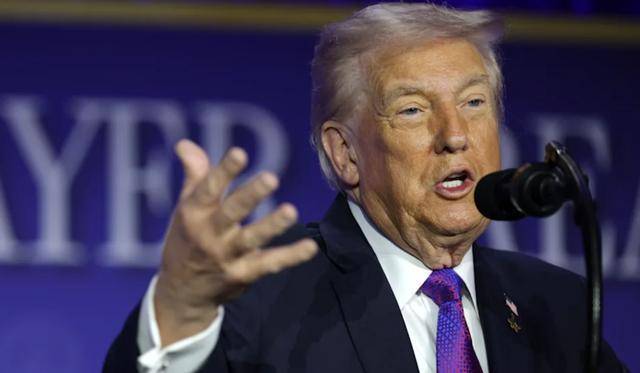
► 文 观察者网 柳白 在美国最高法院正审理联邦政府关税合法性之际,急于获取支持的美国总统特朗普,又对民众"画大饼"了。 当地时间11月9日,特朗普在其"真相社交"平台发文表示,将利用关税收入向除高收入群体外的大多数美国民众发 放至少2000 美元"红利"。他吹嘘关税能为美国带来巨额收入,可用于偿还国家债务,还盛赞美国经济状况良好。 之所以说"又",是因为特朗普不是首次这么承诺了,但均未兑现,只不过这次他说明了具体金额。 "我们正筹集数万亿美元资金,不久后将开始偿还我们高达37万亿美元的巨额债务。美国正迎来创纪录的投资热 潮,各地的工厂和厂房纷纷拔地而起。"特朗普在"真相社交"平台发布了一系列为其关税政策辩护的帖文。 "反对关税的人是傻瓜!我们现在是世界上最富有、最受尊敬的国家,几乎没有通胀,股市创下历史纪录!" "每个人都将获得至少 2000 美元的红利(高收入人群除外)!" 他没有进一步说明更多细节,比如这项红利是否会获得授权、谁将有资格领取,以及这会在多大程度上削弱关税 的偿债能力。 他今年早些时候曾表示,政府可利用当时由马斯克领导的"政府效率部"(DOGE)通过预算削减和裁员节省下的 资金来发放补贴。 ...
特朗普提出每人派发2000美元关税“分红”,美财长却说不直接发钱
凤凰网财经· 2025-11-10 13:40
Core Viewpoint - The article discusses the potential for American citizens to receive a minimum of $2000 in tariff "dividends" as proposed by President Donald Trump, which may be realized through tax measures included in his economic policy agenda [1][6]. Group 1: Tariff Policy and Economic Impact - Treasury Secretary Scott Bessent indicated that the $2000 dividend could take various forms, potentially linked to tax measures such as exemptions on tips, overtime, and social security, as well as tax deductions for auto loans [1]. - Trump has been defending his tariff policy amid a Supreme Court case that could overturn it, which may lead to the government refunding over $100 billion in taxes [3]. - The tariffs imposed by Trump range from 10% to 50% on most imported goods, aimed at addressing the long-standing trade deficit [4]. Group 2: Revenue and Trade Balance - Trump claimed that the U.S. is generating trillions in revenue and will soon begin to pay down its substantial $37 trillion debt [6]. - Bessent emphasized that while significant revenue could be generated in the coming years, the primary goal of the tariffs is to rebalance trade and make it fairer [6]. - Chief Justice John Roberts raised questions about whether tariff revenue equates to taxation, highlighting the core power of Congress in this matter [5].
特朗普罕见改口,承认关税失败,美国人正在为此付出巨大代价
Sou Hu Cai Jing· 2025-11-10 09:21
Core Viewpoint - The article discusses the economic impact of Trump's tariff policies, highlighting that American consumers are bearing the brunt of the costs, contrary to Trump's initial claims that foreign entities would pay these tariffs [1][3][7]. Economic Impact - Trump's tariffs are projected to result in a loss of $1.2 trillion for American businesses, with the majority of the financial burden ultimately falling on consumers [7]. - Since April, American consumers have absorbed approximately 50% to 70% of the tariff costs, indicating that foreign producers are paying less than 30% [3]. Inflation and Economic Conditions - The tariffs have contributed to rising inflation in the U.S., complicating the Federal Reserve's monetary policy, which struggles to stimulate the economy through interest rate adjustments [7][17]. - Current economic indicators suggest that the U.S. is experiencing stagflation, characterized by stagnant economic growth and rising prices [14][17]. Employment Data - In October, U.S. employers announced a record 153,074 layoffs, a 183% increase compared to previous years, signaling a significant downturn in the job market [16]. - Adjustments to employment data show a downward revision of job growth, with October reflecting a loss of 9,100 jobs, marking one of the worst months of the year [16]. Federal Debt and Fiscal Policy - The U.S. national debt has surged to $38 trillion, necessitating $1.4 trillion in interest payments, which consumes nearly 30% of projected federal revenue for FY2024 [8][9]. - Trump's administration is focused on increasing revenue through tariffs to avoid a debt crisis, despite the negative implications for consumers and the economy [8][9]. Federal Reserve's Response - The Federal Reserve is reconsidering its monetary policy approach, with officials expressing concerns that previous rate cuts may have exacerbated inflation rather than alleviating it [17]. - The Fed's current strategy indicates a reluctance to lower interest rates further, as this could lead to increased inflation and further job losses in the private sector [17].
棉花期货日报-20251110
Guo Jin Qi Huo· 2025-11-10 08:41
Report Summary 1. Report Industry Investment Rating - Not provided in the content 2. Core Viewpoints - In the short - term, against the backdrop of a slight decline in spot prices, the price of the cotton CF2601 contract is likely to show a weak and oscillating trend [15] 3. Summary by Directory 3.1 Futures Market - **Contract行情**: On November 6, 2025, the main contract CF2601 of Zhengzhou Commodity Exchange's cotton futures opened at 13,600 yuan/ton, with an intraday high of 13,630 yuan/ton and a low of 13,555 yuan/ton, closing at 13,605 yuan/ton, up 70 yuan/ton or 0.52% from the previous trading day. The trading volume was 178,288 lots, and the open interest decreased by 1,553 lots to 579,138 lots [2] - **Variety price**: All 6 cotton futures contracts closed higher, and the variety's open interest was 944,677 lots, an increase of 1,307 lots from the previous trading day [5] - **Associated行情**: On the same day, the trading volume of cotton options reached 92,555 lots, and the total open interest was 497,857 lots, an increase of 4,327 lots from the previous trading day [7] 3.2 Spot Market - **Spot price tracking**: On November 6, the average arrival price of imported cotton was 74.07 cents/pound, unchanged from November 5. After conversion, the import cost was 12,763 yuan/ton under 1% tariff and 13,748 yuan/ton under sliding - scale duty [10] - **Registered warehouse receipts**: The cotton warehouse receipts on the Zhengzhou Commodity Exchange totaled 2,769 on the day, an increase of 17 from the previous trading day [11] 3.3 Influencing Factors - **Important events**: According to China Cotton Net, about one - third of textile and clothing exporters in India reported a more than 50% plunge in their turnover in the US market due to tariff policies. Around 85% of enterprises faced inventory overstock, and over 80% encountered a 3 - 6 - month extension of the credit cycle, resulting in "severe pressure on liquidity." Two - thirds of exporters had to offer up to 25% discounts to remain competitive in the US market [12] - **Industry information**: The domestic CC Index 3128B closed at 14,795 yuan/ton, down 7 yuan/ton from November 5. The arrival price of Xinjiang cotton at Shandong warehouses (grade 3128B) was 14,890 yuan/ton, down 15 yuan/ton from November 5. The National Cotton Basis Index CNCottonJ (CF2601) was reported at 960 yuan/ton, up 5 yuan/ton from November 5 [13]
宏观情绪降温有色金属结构性分化延续
Chang Jiang Qi Huo· 2025-11-10 08:11
1. Report Industry Investment Ratings - No specific industry - wide investment ratings are provided in the report. 2. Core Views of the Report - The report analyzes the market conditions of various non - ferrous metals, including copper, aluminum, zinc, lead, nickel, tin, industrial silicon, and lithium carbonate. It takes into account factors such as macro - economic data, supply - demand relationships, and price trends to provide investment suggestions for each metal [2][3]. 3. Summary by Metal Copper - **Price Trend**: This week, copper prices fell from high levels but remained at historical highs, with weakening upward momentum. In the short term, copper prices are expected to remain in a high - level oscillation under the influence of macro and fundamental factors, with the main contract of Shanghai copper likely to operate in the range of 84,000 - 88,000 yuan/ton [2]. - **Macro Factors**: Hawkish remarks from the Federal Reserve have cooled the expectation of a December interest rate cut. The US government shutdown has delayed the release of key employment data, leading to cautious market sentiment. The strengthening of the US dollar has also suppressed copper prices [2]. - **Fundamental Factors**: Overseas mine restarts are slow, and the tight supply of copper concentrates has not significantly improved. Domestic electrolytic copper production decreased month - on - month. High copper prices have curbed consumption, and downstream procurement is mainly for rigid demand [2]. - **Investment Suggestion**: It is recommended to wait and see or conduct short - term trading within the range [2]. Aluminum - **Price Trend**: Aluminum prices are oscillating upward at a high level, while alumina prices are oscillating at a low level. The prices of aluminum alloys are also oscillating upward at a high level [2]. - **Supply - Demand Factors**: The supply of domestic bauxite is expected to improve, while the price of bauxite in Guinea has decreased. The operating capacity of alumina has increased, and the inventory has also risen. The operating capacity of electrolytic aluminum has decreased slightly. The demand for aluminum downstream has weakened, and the inventory of aluminum ingots has increased slightly [2]. - **Investment Suggestion**: For alumina, it is recommended to take profit on long positions and sold out - of - the - money put options. For Shanghai aluminum and cast aluminum alloys, it is recommended to strengthen observation [2]. Zinc - **Price Trend**: Last week, zinc prices continued to rise. In general, the supply - side support is relatively strong due to the continuous decline in processing fees, but the high inventory and weak demand limit the upward space of Shanghai zinc. The main contract is expected to operate in the range of 22,000 - 23,000 yuan/ton [2]. - **Supply - Demand Factors**: The processing fees of domestic and imported zinc ores have continued to decline, and the smelting profit has decreased. The market expects a reduction in refined zinc production. Terminal consumption is weak overall, and downstream enterprises maintain rigid - demand procurement [2]. - **Investment Suggestion**: It is recommended to conduct range trading [2]. Lead - **Price Trend**: Last week, the main contract of Shanghai lead closed at 17,420 yuan/ton, showing a trend of rising and then falling. In the short term, lead prices may continue to rise after consolidation [2]. - **Supply - Demand Factors**: The LME and COMEX lead inventories have decreased, while the Shanghai Futures Exchange lead inventory has increased. The demand for lead smelting remains strong, but the high price of primary lead has reduced the stocking willingness of downstream enterprises and increased the demand for recycled lead [2]. - **Investment Suggestion**: It is recommended to go long at low prices within the range of 17,300 - 17,800 yuan/ton [2]. Nickel - **Price Trend**: Last week, Shanghai nickel oscillated and declined. Nickel remains in a surplus situation, and the price is expected to oscillate downward within the range of 117,000 - 120,000 yuan/ton [3]. - **Supply - Demand Factors**: The RKAB approval of Indonesian nickel mines continues, and miners' sentiment to hold up prices persists. The supply of refined nickel is in surplus, and the inventory is increasing. The price of nickel iron is under pressure to oscillate, and the price of stainless steel is weak [3]. - **Investment Suggestion**: It is recommended to hold short positions moderately at high prices [3]. Tin - **Price Trend**: Overseas supply is tight, and prices continue to oscillate. It is expected that tin prices will be supported, and it is recommended to conduct range trading within the range of 270,000 - 295,000 yuan/ton for the Shanghai tin 12 - contract [3]. - **Supply - Demand Factors**: In October, domestic refined tin production decreased year - on - year. The import of tin concentrates decreased in September. The consumption of the semiconductor industry is expected to recover, but the consumption of consumer electronics and photovoltaics is weak [3]. - **Investment Suggestion**: It is recommended to conduct range trading and continuously monitor the resumption of supply and the recovery of downstream demand [3]. Industrial Silicon - **Price Trend**: Industrial silicon prices are oscillating and adjusting, and the overall idea is to conduct range trading or wait and see. The price of polysilicon is oscillating widely at a high level [3]. - **Supply - Demand Factors**: The weekly output of industrial silicon has decreased, and the inventory has increased. The weekly output of polysilicon has decreased, and the market expects the establishment of a state - reserve platform. The production reduction of industrial silicon is stronger than that of polysilicon in reality, but the expectation of polysilicon production reduction still exists [3]. - **Investment Suggestion**: The overall idea is to conduct band trading, going long on polysilicon (PS) and short on industrial silicon (SI) [3]. Lithium Carbonate - **Price Trend**: The price of lithium carbonate is oscillating widely overall, showing a trend of rising and then falling. It is expected that the price will continue to oscillate strongly, and it is recommended to build long positions at low prices [3]. - **Supply - Demand Factors**: The supply and demand in the domestic market are in a tight balance. The downstream demand is strong, and the terminal demand for energy storage continues to be good. The production of lithium carbonate in October increased month - on - month, and the import of lithium concentrates increased in September [3]. - **Investment Suggestion**: It is recommended to build long positions at low prices and continuously monitor the progress of mining permits in Yichun and the resumption of production of the Ningde Jianxiawo lithium mine [3]. 4. Macro - economic Data - **China**: China's October RatingDog manufacturing PMI was 50.6, remaining above the boom - bust line for three consecutive months, indicating continuous improvement in manufacturing prosperity, but the growth rate has slowed down. In October, China's exports denominated in US dollars decreased by 1.1% year - on - year, while imports increased by 1.0% year - on - year [13][14]. - **US**: The US October ISM manufacturing index was 48.7, lower than the expected 49.5 and the previous value of 49.1, indicating that the US manufacturing industry continued to contract. The US Supreme Court held a public hearing on Trump's "reciprocal tariffs" [16][18]. - **Eurozone**: The Eurozone's October manufacturing PMI final value was 50, indicating that the manufacturing industry was in a state of stagnation [17].
广发期货《农产品》日报-20251110
Guang Fa Qi Huo· 2025-11-10 07:47
Report Overview 1. Report Industry Investment Ratings No investment ratings are provided in the reports. 2. Core Views of Each Report - **Fats and Oils Industry**: The market has a bearish outlook on Malaysian palm oil inventory, and there is pressure for further decline in the external palm oil market. The domestic soybean oil supply is abundant, and the basis price may fluctuate within a certain range [1]. - **Sugar Industry**: The global sugar supply is abundant, and the raw sugar price remains weak. The domestic sugar market is affected by import quotas and may experience weak price fluctuations [3]. - **Pig Industry**: The pig price is expected to be moderately strong in November, and the market has entered a range - bound pattern. It is recommended to hold the 3 - 7 reverse spread and be cautiously bullish on single - side operations [5]. - **Cotton Industry**: The short - term cotton price may fluctuate within a range due to cost support and weak downstream demand [7]. - **Corn Industry**: The short - term corn supply is relatively stable, and the price may adjust in a range. It will be weak when the selling pressure emerges [8]. - **Meal Industry**: The domestic soybean and soybean meal inventories are at a high level, but there is strong cost support. The price is expected to fluctuate within a range [12]. - **Egg Industry**: The egg supply pressure remains, and the demand is average. The egg price is expected to fluctuate widely at the bottom [15]. 3. Summary by Related Catalogs Fats and Oils Industry - **Price Changes**: On November 7th, compared with November 6th, soybean oil prices were stable, palm oil prices had minor fluctuations, and rapeseed oil prices increased slightly [1]. - **Market Situation**: Malaysian palm oil production increased in October, and the market has a bearish view on its inventory. The domestic soybean oil supply is under pressure, and the demand is weak [1]. Sugar Industry - **Price Changes**: On November 7th, sugar futures prices increased slightly, and spot prices in some regions changed. The raw sugar price is at a five - year low [3]. - **Industry Situation**: The national sugar production and sales increased year - on - year, and the industrial inventory decreased [3]. Pig Industry - **Price Changes**: On November 7th, compared with November 6th, futures prices decreased slightly, and spot prices in some regions increased [5]. - **Market Situation**: The market's reluctance to sell increased, and the planned November slaughter volume will slow down, which may support the pig price [5]. Cotton Industry - **Price Changes**: On November 7th, compared with November 6th, cotton futures prices decreased slightly, and spot prices increased slightly [7]. - **Industry Situation**: Industrial and commercial inventories increased, and textile exports decreased [7]. Corn Industry - **Price Changes**: On November 7th, compared with November 6th, corn futures prices decreased slightly, and spot prices in some regions increased [8]. - **Market Situation**: The selling pressure of corn is expected to increase, and the demand side is cautious in purchasing [8]. Meal Industry - **Price Changes**: On November 7th, compared with November 6th, soybean meal, rapeseed meal, and soybean prices had minor fluctuations [12]. - **Market Situation**: The demand for US soybeans is not strong, and the domestic soybean and soybean meal inventories are high, but there is cost support [12]. Egg Industry - **Price Changes**: On November 7th, compared with November 6th, egg futures prices changed, and spot prices increased [15]. - **Market Situation**: The supply of eggs is under pressure, and the demand is average [15].
《农产品》日报-20251110
Guang Fa Qi Huo· 2025-11-10 06:15
Industry Investment Ratings No investment ratings are provided in the reports. Core Views Oils and Fats - Market has a bearish outlook on Malaysian palm oil inventory, putting downward pressure on external palm oil prices. The Dalian palm oil is in a rebound phase after an over - decline, and attention should be paid to whether it can break through the resistance in the 8800 - 8900 yuan range. - China will suspend retaliatory tariffs on US agricultural products starting from the 10th, but US soybeans still face a 13% tariff, making them relatively expensive. There is no evidence of large - scale Chinese purchases of US soybeans, so CBOT soybeans lack the momentum to rise continuously. US biodiesel policy uncertainty affects the industrial use of US soybean oil, causing CBOT soybean oil to trade in a narrow range. Domestically, soybean supply is abundant, and the basis price may fluctuate within a certain range [1]. Sugar - The global sugar supply is abundant, causing the raw sugar price to remain weak and reach a five - year low. The domestic sugar market is less affected by the decline due to import quotas. There is an expectation of a delayed start of the sugar - crushing season in Guangxi, and the market consumption is mainly on - demand, with general trading volume. The sugar price is expected to move weakly in a volatile manner [3]. Pork - The market's reluctance to sell and the increase in secondary fattening have supported the pig price to be slightly stronger. According to the planned November slaughter volume, the overall slaughter progress will slow down, which may boost the November pig price. The market is in a range - bound pattern. It is recommended to hold the 3 - 7 reverse spread and be cautiously bullish on single - side operations [5]. Cotton - The upward movement of Zhengzhou cotton faces hedging pressure, but the pressure is not concentrated due to cost differences between northern and southern Xinjiang and pre - hedging of some new cotton. There is cost support at the lower level. The downstream demand is weak, but the finished - product inventory pressure is not large, and textile mills have a rigid demand for cotton. In the short term, the cotton price may trade in a range [7]. Corn - As the early high - moisture corn is released and the weather improves, farmers' willingness to sell is price - sensitive. Due to snow and transportation issues in the Northeast and price support in North China, the supply volume has decreased, and the price has rebounded locally. In November, there is still selling pressure from the concentrated supply of corn, but there is also cost and purchase - storage policy support. The demand side is cautious, and the corn price is expected to be volatile in the short term and may weaken when the selling pressure emerges [8]. Meal - The demand for US soybeans is not well - supported due to the 13% tariff, and it is difficult for US soybeans to continue rising. The domestic soybean and soybean meal inventories are at a high level, but there is strong cost support. The near - term shipping schedule has a negative crushing margin, and there is a 7.5 million - ton supply gap from November to January. The soybean meal price is expected to trade in a range [12]. Eggs - The inventory of laying hens in November is expected to remain relatively stable at a high level, and the egg supply pressure persists. The terminal market demand is general, and the egg price is expected to fluctuate widely at the bottom [15]. Summary by Industry Oils and Fats - **Soybean Oil**: On November 7, the spot price in Jiangsu was 8390 yuan, unchanged from the previous day. The futures price of Y2601 was 8188 yuan, and the basis was 206 yuan. The number of warehouse receipts decreased by 1.69% to 26014 [1]. - **Palm Oil**: The spot price of 24 - degree palm oil in Guangdong on November 7 was 8560 yuan, up 0.23%. The futures price of P2601 was 8660 yuan, and the basis was - 100 yuan. The盘面 import cost was 9102.5 yuan, and the import profit was - 411 yuan [1]. - **Rapeseed Oil**: The spot price of third - grade rapeseed oil in Jiangsu on November 7 was 9800 yuan, up 0.20%. The futures price of OI601 was 9533 yuan, and the basis was 267 yuan [1]. Sugar - **Futures Market**: On November 7, the price of SR2601 was 5457 yuan/ton, up 0.17%. The price of SR2605 was 5397 yuan/ton, up 0.17%. The price of ICE raw sugar was 14.13 cents/pound, down 0.63% [3]. - **Spot Market**: The spot price in Nanning was 5780 yuan/ton, up 0.52%, and the basis was 383 yuan, up 5.80%. The spot price in Kunming was 5650 yuan/ton, down 0.18%, and the basis was 253 yuan, down 6.99% [3]. - **Industry Situation**: The national cumulative sugar production was 1116.21 million tons, up 12.03%. The cumulative national sugar sales volume was 1048.00 million tons, up 9.17%. The national cumulative sugar sales rate was 93.90%, down 2.60% [3]. Pork - **Futures Market**: On November 7, the price of LH2605 was 12005 yuan/ton, down 0.17%. The price of LH2601 was 11865 yuan/ton, down 0.63%. The 1 - 5 spread was - 140 yuan, down 64.71% [5]. - **Spot Market**: The spot price in Henan was 11950 yuan/ton, up 50 yuan. The spot price in Shandong was 12050 yuan/ton, up 50 yuan. The spot price in Sichuan was 11450 yuan/ton, unchanged [5]. - **Industry Situation**: The daily slaughter volume of sample slaughterhouses was 162310, up 1.03%. The weekly white - striped pork price was 0 yuan, down 100%. The weekly piglet price was 17 yuan/kg, down 15% [5]. Cotton - **Futures Market**: On November 7, the price of CF2605 was 13590 yuan/ton, down 0.18%. The price of CF2601 was 13580 yuan/ton, down 0.18%. The price of ICE US cotton was 64.48 cents/pound, down 1.44% [7]. - **Spot Market**: The arrival price of Xinjiang cotton was 14678 yuan/ton, up 0.41%. The CC Index: 3128B was 14859 yuan/ton, up 0.26%. The FC Index:M: 1% was 13087 yuan/ton, down 0.83% [7]. - **Industry Situation**: The industrial inventory was 80.93 million tons, down 4.3%. The import volume was 10 million tons, up 42.9%. The textile industry's inventory year - on - year was - 25% [7]. Corn - **Corn**: On November 7, the price of C2601 was 2149 yuan/ton, down 0.23%. The basis was 11 yuan, up 375%. The 1 - 5 spread was - 92 yuan, down 2.22%. The import profit was 214 yuan, up 9.49% [8]. - **Corn Starch**: The price of CS2601 was 2462 yuan/ton, down 0.28%. The basis was 48 yuan, up 17.07%. The 1 - 5 spread was - 98 yuan, down 2.08% [8]. Meal - **Soybean Meal**: The spot price in Jiangsu was 3060 yuan, unchanged. The futures price of M2601 was 3058 yuan, down 0.33%. The basis was 2 yuan, up 125%. The Brazilian 2 - month shipping schedule's crushing margin was 43 yuan, up 295.5% [12]. - **Rapeseed Meal**: The spot price in Jiangsu was 2540 yuan, down 0.39%. The futures price of RM2601 was 2539 yuan, down 0.39%. The basis was 11 yuan, unchanged. The Canadian 1 - month shipping schedule's crushing margin was 757 yuan, up 3.27% [12]. Eggs - **Futures Market**: On November 7, the price of JD12 was 3219 yuan/500KG, down 0.25%. The price of JD01 was 3391 yuan/500KG, up 0.15%. The 12 - 01 spread was - 172 yuan, down 8.18% [15]. - **Spot Market**: The egg - laying hen farm price was 3.02 yuan/jin, up 3.12%. The basis was - 196 yuan/500KG, up 33.66% [15]. - **Industry Situation**: The price of egg - laying chicken seedlings was 2.80 yuan/feather, unchanged. The price of culled chickens was 4.03 yuan/jin, down 1.95%. The egg - feed ratio was 2.38, up 1.28%. The breeding profit was - 24.44 yuan/feather, up 6.36% [15].
美财长贝森特回应特朗普“每人2000美元分红”言论:或通过减税实现
Zhi Tong Cai Jing· 2025-11-10 02:51
Core Viewpoint - U.S. Treasury Secretary Becerra responded to Trump's claim that American citizens could receive at least $2,000 in "dividends" due to tariff policies, suggesting this could be achieved through tax cuts from the economic policy bill signed earlier this year [1][2] Group 1: Tariff Policy and Economic Impact - Trump's tariff policy, implemented on April 2, imposes tariffs ranging from 10% to 50% on most U.S. imports, aimed at addressing the long-standing trade deficit [2] - The Supreme Court is currently hearing a case that could potentially abolish these tariffs, which could lead to over $100 billion in refunds and significantly impact Trump's policy agenda for a second term [1][2] - Becerra emphasized that the true purpose of tariffs is to rebalance trade relations and make them fairer, rather than merely generating revenue [2] Group 2: Financial Projections and Tax Cuts - Becerra indicated that the U.S. could potentially gain trillions of dollars in revenue in the coming years, although the actual realization of this revenue remains uncertain [2] - The proposed $2,000 "dividend" could be realized through various forms of tax cuts, including the elimination of taxes on tips, overtime pay, and Social Security, as well as deductions for auto loans [1]