
长期投资

Search documents
基金经理“晒”实盘,真金白银与投资者共进退
Zheng Quan Zhi Xing· 2025-08-14 05:01
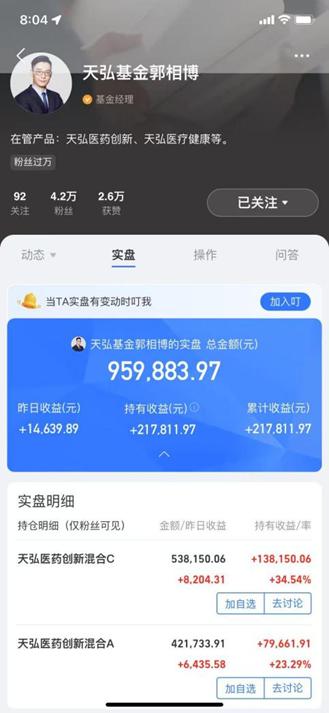
Core Insights - The recent trend of fund managers sharing real-time trading results has gained significant attention, particularly with Tianhong Fund's pharmaceutical theme manager Guo Xiangbo leading the way [1][2] - Guo's real-time trading updates have shown impressive returns, with his holdings in Tianhong Pharmaceutical Innovation Mixed Fund A and C classes yielding returns of 23.29% and 34.54% respectively as of August 11, 2025 [2][5] - Guo's approach combines macro policy analysis with industry fundamentals, helping investors build a systematic understanding of the pharmaceutical sector [3][4] Investment Strategy - Guo's investment philosophy is rooted in a deep understanding of the cyclical nature of the pharmaceutical industry, which has faced unprecedented challenges from 2023 to mid-2024 [5] - Despite market volatility, Guo maintained a calm demeanor, emphasizing the need for contrarian thinking in times of pessimism, which often presents the greatest opportunities [5] - As of August 11, 2025, Tianhong Pharmaceutical Innovation A Fund achieved a remarkable increase of 40.91% year-to-date, marking a significant turnaround for the sector [5] Educational Content - Guo's real-time updates are not merely promotional but include valuable educational content, such as policy interpretations and analyses of innovative drug companies' R&D pipelines [3][4] - Investors have responded positively to this new model of engagement, finding Guo's updates reassuring during challenging market conditions [4] Broader Industry Trends - The phenomenon of fund managers sharing real-time trading results is not unique to Guo, as other managers like Jiang Xiaoli and Sha Chuan are also exploring similar strategies in different asset classes [6][7] - The industry is expected to see more fund managers adopting this practice, enhancing transparency and fostering trust between managers and investors [8]

从1到N,东方红万里行的十年温度
Mei Ri Jing Ji Xin Wen· 2025-08-13 23:53
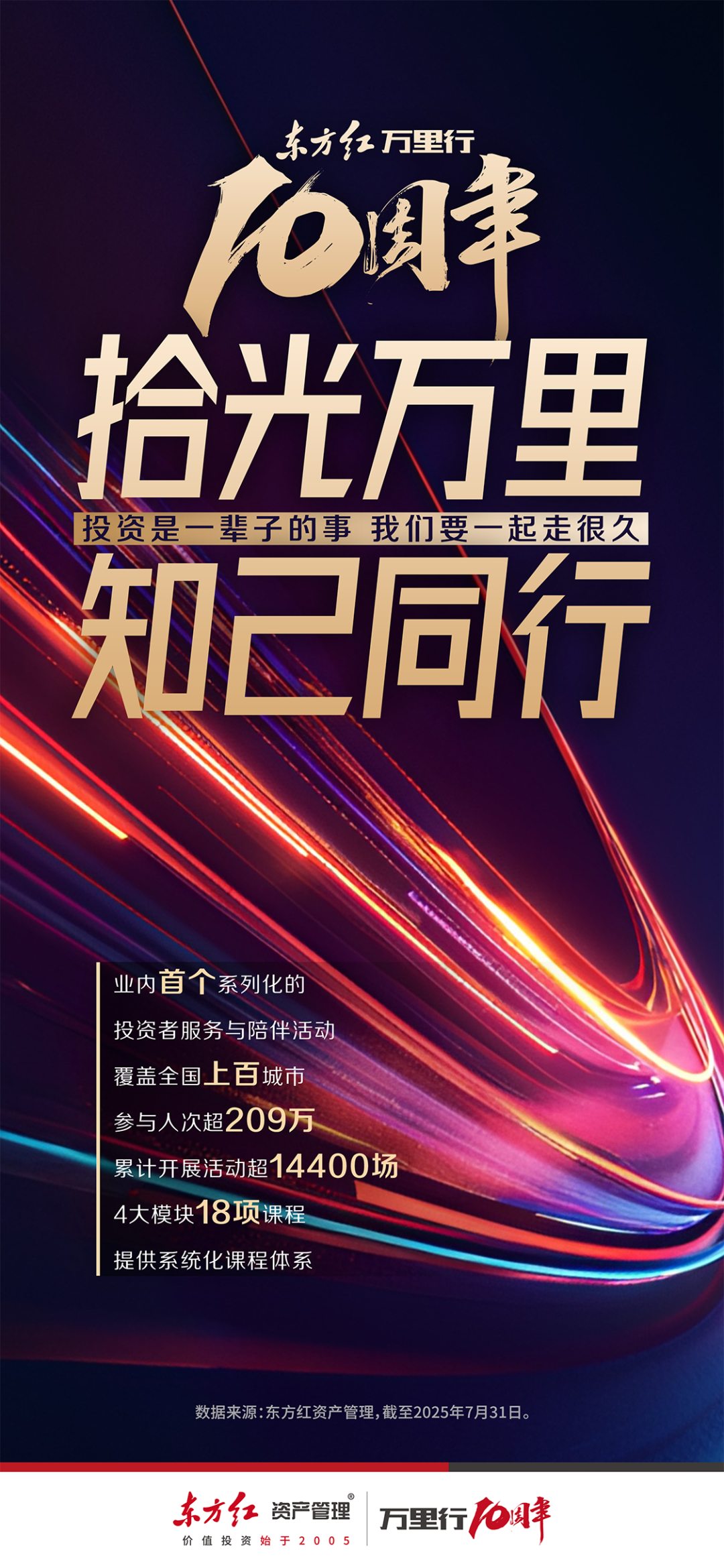
Core Insights - The article emphasizes the evolution of investor services in China's asset management industry over the past decade, highlighting the "Dongfanghong Wanli Xing" initiative as a cornerstone for healthy industry development [1][4][14] - The initiative has successfully conducted over 14,400 events, reaching more than 2.09 million investors across over 100 cities, establishing a comprehensive support system for investors [1][4] Group 1: Historical Context and Development - The "Dongfanghong" brand was established in 2005, focusing on value investment and investor education, which has been a fundamental aspect of its operations [5][6] - The initiative was launched in 2015 during a turbulent market period, aiming to help investors understand the relationship between long-term value and short-term volatility [6][9] - The team recognized that excellent performance alone is insufficient; systematic services and support are essential to protect investor returns [6][9] Group 2: Service Evolution and Upgrades - In recent years, the company has upgraded its investor service system, expanding its course offerings from four core modules to eighteen detailed courses, addressing various investor needs [9][10] - A dedicated lecturer team has been established to provide customized services based on client demands, enhancing the educational experience for different investor profiles [10][11] - The initiative has expanded its outreach to include diverse groups such as corporate employees, students, and the elderly, ensuring a broad dissemination of financial knowledge [11][12] Group 3: Future Directions and Goals - The company plans to launch a nationwide tour in 2025, themed "Picking Up Light and Walking Together," to further engage with investors and enhance their understanding of investment and asset management [14][15] - The tour will cover ten key cities, focusing on providing targeted services based on local economic conditions and investor needs [14][15] - The overarching goal is to improve financial literacy and support the high-quality development of China's capital markets, reinforcing the company's commitment to long-term investor relationships [15][16]
每经热评︱沪指一举突破“9·24”行情高点 A股市场正迈向更成熟的发展阶段
Mei Ri Jing Ji Xin Wen· 2025-08-13 12:51
Group 1 - The A-share market has reached a historic moment with the Shanghai Composite Index breaking through 3674.4 points, marking a new high since the "9.24" market in 2024, indicating the potential start of a "slow bull" market [1] - The foundation of this bull market is attributed to the regulatory authorities' commitment to protecting the rights of small and medium investors, who account for over 90% of the market, through various reforms aimed at enhancing market transparency and fairness [1][2] - The improvement in the quality of listed companies provides a strong "target pool" for the "slow bull" market, with a focus on quality over quantity, leading to the emergence of strong performers in technology and consumer sectors [2] Group 2 - Investor confidence has significantly transformed, becoming the core driving force behind the "slow bull" market, as evidenced by the resilience of the A-share market despite external disturbances [3] - The market is transitioning from a "universal rise" era to a "differentiation era," where investors are increasingly discerning in evaluating companies based on their operational differences, growth potential, and risk levels [3] - Companies with core technologies, stable profit models, and good governance are likely to receive sustained market recognition, while those lacking these attributes may face valuation adjustments [3] Group 3 - Investors are encouraged to adjust their mindset and strategies to embrace value investing, focusing on the alignment of company performance and valuation, and seizing structural opportunities amid market fluctuations [4] - The A-share market is progressing towards a more mature development stage, supported by regulatory oversight, improved company quality, and restored investor confidence, emphasizing the importance of long-term investment principles for wealth growth [4]
冯煦明:让更多耐心资本陪跑创新型企业
Jing Ji Ri Bao· 2025-08-13 00:20
Core Viewpoint - The article emphasizes the importance of cultivating patient capital to support the high-quality development of the real economy, particularly in the context of technological innovation and industrial transformation in China [1][3]. Group 1: Characteristics of Patient Capital - Patient capital is characterized by long-term investment behavior, a higher risk tolerance for short-term market fluctuations, and a focus on deep integration with specific fields [1][2]. - This type of capital can create "patient dividends" and achieve "patient premiums" by not pursuing quick profits, thus enabling more substantial long-term investment returns [2]. Group 2: Current Trends in Technological Innovation - Recent advancements in technology, driven by information and energy sectors, indicate a significant growth trend in China's technological and industrial innovation, with notable companies emerging in various high-tech fields [3]. - The 2024 Central Economic Work Conference has called for the expansion of patient capital and greater efforts to attract social capital for venture investments [3]. Group 3: Challenges and Opportunities - Despite achievements, there remains a gap in China's overall technological innovation capabilities compared to developed countries, particularly in original and disruptive innovations, highlighting the urgency to develop patient capital [4]. - Strategies to cultivate patient capital should involve a multi-faceted approach across funding, institutional, and market levels to empower innovative enterprises [4]. Group 4: Funding and Institutional Support - Emphasis on directing long-term capital from sovereign wealth funds, social security funds, and other similar entities towards technological innovation is crucial for creating a supportive investment environment [4]. - Supporting the development of institutional investors specialized in various high-tech fields can enhance market participation and reduce speculative behavior among retail investors [4][5]. Group 5: Market Environment - Improving the long-term mechanisms of the capital market and creating a favorable environment for long-term investments is essential [5]. - Strengthening the regulatory framework and enhancing transparency in information disclosure will help establish stable market expectations and protect investors' rights [5].
Dynatrace: Remain Confident In The Growth Momentum
Seeking Alpha· 2025-08-12 19:16
Group 1 - The investment approach focuses on long-term investments while incorporating short-term shorts to uncover alpha opportunities [1] - The analysis is based on bottom-up evaluation, emphasizing the fundamental strengths and weaknesses of individual companies [1] - The goal is to identify companies with solid fundamentals, sustainable competitive advantages, and growth potential [1]


公募新规护航行业发展 权益投资迎来大时代
Xin Hua Wang· 2025-08-12 06:26
Core Viewpoint - The China Securities Regulatory Commission (CSRC) has released the "Supervision and Administration Measures for Publicly Raised Securities Investment Fund Managers" (referred to as "Management Measures"), marking a significant revision to the 2004 regulations, aimed at enhancing the regulatory framework for the public fund management industry, which has surpassed 25 trillion yuan in scale, ensuring high-quality development and protecting the rights of fund holders [1][2]. Group 1: Entry Control - The Management Measures strengthen the equity management of fund management companies by adjusting shareholder entry conditions and promoting high-level openness in the industry, ensuring a robust entry control mechanism [2][3]. - The measures allow for a moderate relaxation of the number of public fund licenses held by the same entity, enabling various asset management institutions to apply for public fund licenses while maintaining the "one participation, one control" policy [2][3]. Group 2: Long-term Assessment and Incentives - The Management Measures emphasize long-term assessment and incentives, requiring fund management companies to establish sound remuneration management systems and performance evaluation mechanisms linked to compliance and risk management [4][5]. - The focus on long-term investment strategies aims to help fund managers achieve excess returns through value investing, thereby enhancing the stability and reliability of the capital market [5]. Group 3: Differentiated Development and Exit Mechanism - The Management Measures support differentiated development for fund management companies, allowing them to establish specialized subsidiaries for various asset management services, thus promoting a more competitive market environment [6][7]. - A new exit mechanism is introduced, allowing underperforming fund management companies to voluntarily apply for deregistration or pursue market-based exits through mergers and acquisitions, thereby enhancing the industry's adaptability and efficiency [6][7].
低位加仓看好中长期发展 上市险企“点金”权益市场
Xin Hua Wang· 2025-08-12 06:19
Core Viewpoint - Insurance funds are significant institutional investors in the capital market, but the investment yield of major listed insurance companies in A-shares has decreased due to low long-term interest rates and market volatility, with future equity asset allocation expected to focus on sectors like consumption, technology, and new energy [1][2][4]. Group 1: Investment Performance - In the first half of the year, the total investment yield of the five major insurance companies decreased by 15.7% year-on-year, totaling 252.43 billion yuan [2][3]. - The total investment yield rates for the five major insurance companies as of June were: China Life Insurance at 5.5%, China Pacific Insurance at 4.21%, New China Life at 4.2%, China Taiping at 3.9%, and Ping An Insurance at 3.1%, all showing a decline compared to the previous year [2][3]. - The total investment assets of the five major insurance companies reached 13.56 trillion yuan, an increase of 6.57% from the beginning of the year [2]. Group 2: Future Investment Strategy - Insurance companies are optimistic about the strategic value of equity markets in the second half of the year, with expectations of economic resilience and gradual recovery driven by infrastructure investment [4][6]. - The focus for future investments will be on sectors such as consumption, technology, new energy, and healthcare, with a positive outlook on equity investments [6][7]. - Regulatory bodies have encouraged insurance funds to invest more in equity assets, emphasizing the importance of long-term investments to support the real economy [4][5]. Group 3: Investment Principles - Insurance companies are advised to prioritize principles over rigid plans, focusing on asset-liability matching and employing a barbell strategy to balance stable fixed-income investments with riskier assets [7]. - A diversified investment portfolio is recommended to achieve long-term stable returns across cycles [7].



机构:白酒板块已具备长期投资价值,消费ETF嘉实(512600)红盘蓄势,最新规模创近1年新高
Xin Lang Cai Jing· 2025-08-12 05:26
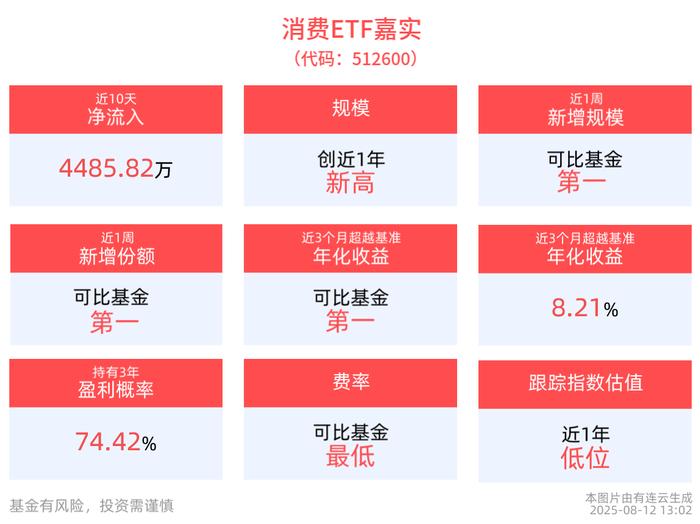
Group 1 - The core index of major consumer stocks in China has shown a positive trend, with notable increases in stocks such as COFCO Sugar and Guibao Pet [1] - The Consumer ETF Jiashi (512600) has experienced a recent increase of 0.29%, reflecting a broader positive sentiment in the consumer sector [1][3] - The Consumer ETF Jiashi has reached a new high in scale at 562 million yuan, with a significant increase in shares over the past week [3] Group 2 - The Consumer ETF Jiashi has seen a net inflow of 44.86 million yuan over the last 10 trading days, indicating strong investor interest [3] - The ETF has outperformed its benchmark with an annualized return of 8.21% over the past three months, ranking first among comparable funds [3] - The current price-to-earnings ratio (PE-TTM) of the index tracked by the ETF is 19.13, which is below 83.33% of the historical data over the past year, suggesting a low valuation [3] Group 3 - The index tracked by the Consumer ETF Jiashi includes leading consumer companies across various sectors, with a significant focus on the liquor industry, which accounts for 45% of the index [4] - Key stocks within the index include Yili, Kweichow Moutai, and Wuliangye, with varying weightings and recent performance [6] - The market has anticipated challenges in the liquor sector, but there is a belief that the sector presents long-term investment value, especially in stable and strong brand companies [6]
太平资产获批设立私募证券投资基金公司
Cai Jing Wang· 2025-08-12 04:18
Core Viewpoint - China Taiping's subsidiary, Taiping Asset, has received approval from the National Financial Regulatory Administration to establish Taiping (Shenzhen) Private Securities Investment Fund Management Co., aiming to enhance long-term investment in the capital market and support the real economy [1] Group 1: Company Developments - Taiping Asset's total asset management scale is expected to exceed 1.5 trillion yuan by the end of 2024 [1] - The establishment of the private securities investment fund company is part of a response to the reform pilot for long-term investment of insurance funds [1] - The company plans to implement strict fund operation management and establish a long-term assessment mechanism tailored to the characteristics of insurance capital [1] Group 2: Strategic Goals - The initiative aims to increase the investment of long-term capital in the capital market, reinforcing the role of insurance funds as a "stabilizer" and "ballast" for the economy [1] - China Taiping expresses confidence in the development prospects of the Chinese economy and capital market, committing to long-term, value, and prudent investment principles [1] - The company emphasizes its responsibility as a central enterprise to contribute to the stability of the capital market and the high-quality development of the real economy [1]

每经热评|利欧股份拟携不超30亿元资金入市 上市公司投资需坚守三个原则
Mei Ri Jing Ji Xin Wen· 2025-08-11 12:37
Core Viewpoint - The announcement by Liao Co., Ltd. regarding the approval to invest up to 3 billion RMB in securities reflects an increasing market attractiveness and a gradual recovery of confidence among institutional and individual investors [1][2]. Group 1: Investment Principles - The company emphasizes the "main business first" principle, ensuring that funds are primarily allocated to core business needs to maintain long-term development [1][2]. - Building a professional investment team is crucial for successful investment decisions, as the complexity of the securities market requires high levels of expertise [2][3]. - Public companies must adhere strictly to legal boundaries during investment decisions to avoid regulatory penalties and protect shareholder interests [2][3]. Group 2: Risk Management - A balanced approach to risk and return is necessary, involving the establishment of a scientific risk-return assessment system and setting reasonable investment proportions based on risk tolerance [2][3]. - Companies should focus on long-term and value investment principles, avoiding speculative behaviors that could lead to unnecessary market volatility [3]. Group 3: Market Impact - The participation of listed companies in securities investment not only indicates enhanced market attractiveness but also injects vitality into the market, contributing to its stable development [3].
