AI医疗

Search documents
AI医疗概念表现活跃 美年健康涨停
Mei Ri Jing Ji Xin Wen· 2026-01-09 01:44
每经AI快讯,1月9日,AI医疗概念表现活跃,美年健康(002044)涨停,迪安诊断(300244)涨停, 华人健康(301408)、安必平涨超9%,塞力医疗(603716)、国新健康(000503)跟涨。 ...


万亿级AI医疗市场,科技巨头接连出手(附概念股)
Zheng Quan Shi Bao Wang· 2026-01-09 01:03
Group 1 - Major tech companies are increasingly focusing on the AI healthcare sector, with OpenAI launching the ChatGPT Health feature to address health-related inquiries and connect with smart devices, aiming to create a safer environment for health discussions [2] - Alibaba's Ant Group has also made significant strides in AI healthcare, with its AI health assistant "Antifor" connecting to 5,000 hospitals and 300,000 real doctors for online consultations, achieving 30 million monthly active users shortly after launch [2] - The AI healthcare market is projected to grow significantly, with a global market size expected to reach approximately $50.56 billion by 2033, reflecting a compound annual growth rate (CAGR) of 38.8% from $2.665 billion in 2024 [4] Group 2 - The Chinese government is actively promoting AI healthcare applications, with policies aimed at establishing over 100 typical application scenarios by 2027 and ensuring widespread adoption of AI products in healthcare institutions by 2027 [3] - Companies like Zhongke Information and Anbiping are receiving attention from institutional investors, with Anbiping's AI-assisted diagnostic tools currently in the registration process, indicating a growing market for AI applications in healthcare [6][7] - Recent data shows that 12 AI healthcare-related stocks have been under institutional research, with companies like Lianying Medical and Kailing Medical seeing significant interest and investment [5][7] Group 3 - The commercial aerospace sector is facing challenges, as evidenced by LeKai Film's announcement of a potential annual loss despite a recent stock price surge driven by speculation in the commercial aerospace market [9] - LeKai Film reported a revenue of 960 million yuan and a net loss of 86 million yuan for the first three quarters of 2025, highlighting the risks associated with speculative trading in the commercial aerospace sector [9]

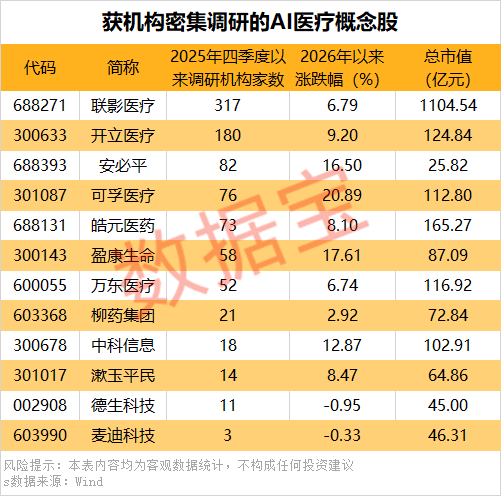
两连板后,商业航天概念股,突曝利空
Zheng Quan Shi Bao· 2026-01-09 00:30
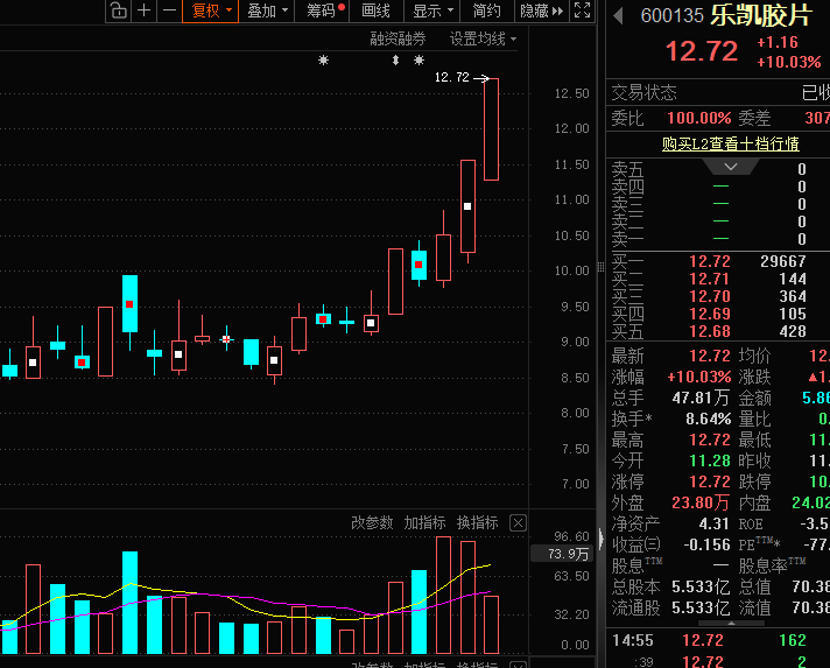
Group 1: Company Performance - LeKai Film reported a revenue of 960 million yuan and a net profit of -86 million yuan for the first three quarters of 2025, indicating a potential annual loss [1] - The company stated that its main business remains unchanged and that production activities are operating normally without significant external changes [1] - LeKai Film's stock has seen a significant increase of over 35% since December 31, 2025, primarily driven by speculation in the commercial aerospace sector [1] Group 2: Industry Developments - OpenAI launched the ChatGPT Health feature to address health-related inquiries, linking smart devices and planning diet and exercise, similar to Alibaba's Ant Aifuku [4][5] - The global AI healthcare market is projected to grow from approximately 26.65 billion USD in 2024 to about 505.59 billion USD by 2033, with a compound annual growth rate of 38.8% [8] - AI healthcare applications are expected to accelerate due to ongoing policy support and technological advancements, with significant investment opportunities emerging in the sector [7] Group 3: Institutional Interest - Over 30 AI healthcare-related stocks have been identified, with several companies actively engaging with investors regarding their AI healthcare strategies [9] - Notable companies like Lingying Medical and Kailing Medical have received substantial institutional attention, with Lingying Medical being surveyed by 317 institutions [12] - Financing activities have increased for companies such as Haoyuan Pharmaceutical and Shuyupingmin, with over 50 million yuan in additional funding since the fourth quarter of 2025 [12]
AI医疗应用场景有望加速落地 获机构密集调研的概念股出炉
Zheng Quan Shi Bao Wang· 2026-01-08 23:57
人民财讯1月9日电,1月8日,OpenAI推出 ChatGPT Health功能,可解答健康问题、链接智能设备、规 划饮食运动,功能和"蚂蚁阿福"相似。 以2025年四季度以来的调研数据来看,有12只概念股获得机构调研。联影医疗、开立医疗(300633)、 安必平、可孚医疗(301087)等参与调研的机构均超过50家。 AI医疗作为人工智能的重要应用,持续获得政策关注。中信建投表示,AI医疗在提升医疗器械功能、 检查检验结果解读、辅助临床医生决策、健康管理等多个领域的应用价值较大,是医疗企业和医院必须 重视的创新方向和竞争趋势。在国家政策和行业技术的持续催化下,AI医疗应用场景有望加速落地, 建议关注行业投资机会。 ...
万亿级AI医疗市场 科技巨头接连出手 获机构密集调研的概念股出炉
Zheng Quan Shi Bao Wang· 2026-01-08 23:48
Group 1 - OpenAI launched the ChatGPT Health feature on January 8, which aims to provide health-related answers, connect smart devices, and plan diet and exercise, similar to Alibaba's "Ant Aifu" [1] - The ChatGPT Health feature is expected to be rolled out to users in the coming weeks, as over 230 million health-related inquiries are made weekly on the platform [1] - Ant Group's "Ant Aifu" has already connected with 5,000 hospitals and 300,000 real doctors for online consultations, achieving 30 million monthly active users and over 10 million daily inquiries within a month of its launch [1] Group 2 - AI healthcare is gaining significant policy attention, with plans to create over 100 typical application scenarios by 2027 as outlined in the "Implementation Plan for the Digital Transformation of the Pharmaceutical Industry" [2] - The "Implementation Opinions on Promoting and Regulating the Application of 'Artificial Intelligence + Healthcare'" set development goals for 2027 and 2030, focusing on key applications, safety regulation, and organizational support [2] - Beijing's health commission aims for widespread AI product application in healthcare institutions by 2027 to ensure safety and increase effective supply [2] Group 3 - According to Grand View Research, the global AI healthcare market is projected to reach approximately $26.65 billion (about 186.1 billion yuan) in 2024 and is expected to soar to around $505.59 billion (about 3.5 trillion yuan) by 2033, with a compound annual growth rate of 38.8% [3] Group 4 - Over 30 AI healthcare-related concept stocks have been identified, with companies like Chuangye Huikang and Desheng Technology actively engaging with investors about their AI healthcare strategies [4] - Companies are integrating AI into healthcare services, with Chuangye Huikang promoting its "Huikang Cloud Hub" and Desheng Technology implementing "seamless payment" solutions in major hospitals [4] Group 5 - Institutions are closely monitoring innovations in the "AI + healthcare" sector, with companies like Runda Medical and Yuyupingmin launching AI-driven tools for clinical support [5] - A total of 12 concept stocks have received institutional research attention since Q4 2025, with significant interest in companies like Union Medical and Kairui Medical [5][6] - Kairui Medical plans to launch three new AI-integrated ventilators and masks in 2026, which will analyze sleep states and identify sleep events accurately [5]
【钛晨报】广州迎利好!加速培育AI、半导体、航空航天等5个战略先导产业;雀巢因原料问题召回奶粉,蒙牛、君乐宝等紧急回应;中国石化与中国航油官宣重组
Tai Mei Ti A P P· 2026-01-08 23:32
Group 1 - The Guangzhou Municipal Government has issued a plan to accelerate the construction of an advanced manufacturing city, aiming to double industrial added value by 2035 and focusing on new industrialization [2] - The plan emphasizes the development of 15 strategic industrial clusters and six emerging pillar industries, including smart connected vehicles, ultra-high-definition video, biomedicine, green petrochemicals, software and the internet, and intelligent equipment [2] - Five strategic leading industries are to be cultivated, including artificial intelligence, semiconductors, new energy, low-altitude economy, and biomanufacturing [2] Group 2 - The plan includes a focus on commercial aerospace, aiming to develop reusable rocket technology and establish testing bases for liquid rockets, which will be open to national research institutions and enterprises [3] - The plan supports the construction of satellite constellations and aims to attract talent and capital to build a complete commercial aerospace ecosystem in Guangzhou [3] Group 3 - The Ministry of Industry and Information Technology has warned against irrational competition in the lithium battery industry, involving major companies like CATL and BYD, and has called for a meeting to regulate competition [18] - The meeting included 16 companies and emphasized the need for self-regulation within the industry to prevent monopolistic practices [18] Group 4 - Xiaomi Group plans to invest an additional 200 billion yuan in research and development over the next five years, indicating a strong commitment to innovation [11] - JD.com has established a new business unit to oversee the development and commercialization of AI products, with plans to launch a second batch of self-developed AI toys [9] Group 5 - TSMC is experiencing a shortage in its 3nm process technology, leading to increased prices and a halt on new project initiations due to overwhelming demand [8] - The company is encouraging clients in the early stages of product planning to consider transitioning to 2nm technology for future production [8]



OpenAI进军医疗领域,GPT新功能可接入多个健康应用
Nan Fang Du Shi Bao· 2026-01-08 19:40
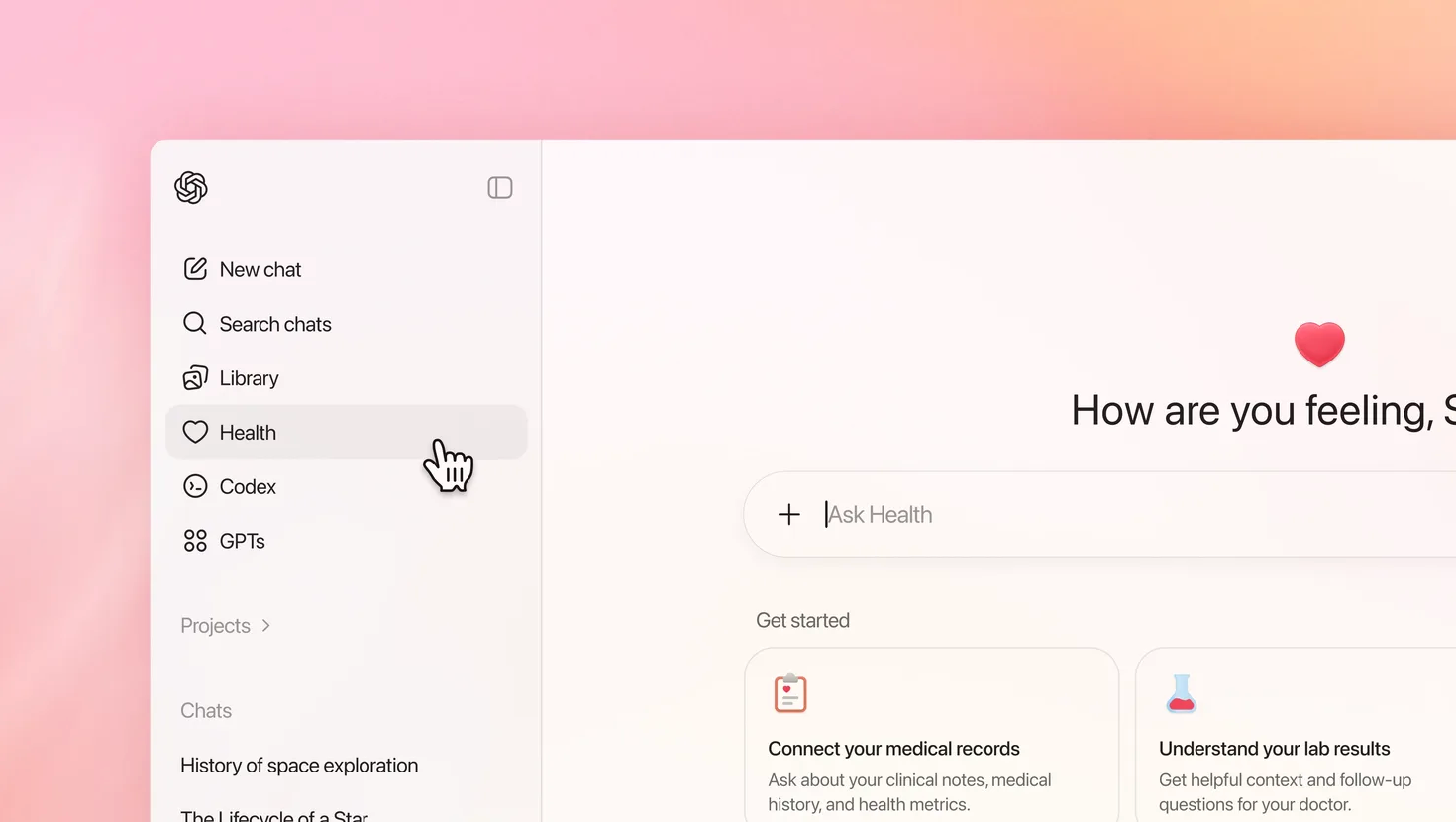
Core Insights - OpenAI has developed the ChatGPT Health feature to address the growing demand for health-related inquiries, with over 230 million users weekly asking health questions on the platform [2] - The feature integrates health data from various sources, including Apple Health and MyFitnessPal, to provide comprehensive health consultations [2] - OpenAI emphasizes that ChatGPT Health is designed to support users in understanding their health rather than replacing medical care, and it cannot be used for diagnosis or treatment [3] Group 1 - The health information landscape is fragmented, making it difficult for users to analyze their health data effectively [2] - OpenAI collaborated with over 260 doctors from multiple countries over two years to develop the ChatGPT Health feature [2] - The model has generated over 600,000 responses across 30 key health areas to improve accuracy and reliability [3] Group 2 - User privacy is a priority, with assurances that conversations in ChatGPT Health will not be used for model training and can be deleted by users [3] - The feature operates as an independent module, ensuring that health-related conversations and data are isolated from other interactions [3] - OpenAI has previously shown commitment to the healthcare sector by investing in several health tech companies and launching the Health Bench benchmark test [4]
医渡科技开年“三连阳”,AI医疗概念股受政策催化走强
Sou Hu Cai Jing· 2026-01-08 17:49
Core Viewpoint - The Hong Kong stock market has shown significant strength in early 2026, particularly in the AI healthcare sector, with companies like Yidu Tech experiencing notable stock price increases due to positive market expectations and supportive policies [1][2]. Group 1: Company Performance - Yidu Tech achieved a three-day stock price increase from January 2 to January 6, 2026, with a closing price of 5.66 HKD on January 6, reflecting a cumulative rise of over 8% [1]. - The company has been recognized as one of the first partners in the Henan Province National Artificial Intelligence Application Pilot Base (medical field), further solidifying its core advantages in AI healthcare technology [1]. Group 2: Industry Trends - The AI healthcare sector is experiencing strong overall performance driven by favorable policies, including two recent initiatives from Beijing aimed at promoting AI applications in healthcare from 2026 to 2027 [1]. - The "Action Plan" released by Beijing outlines a vision for widespread application of AI technology across the entire healthcare process by 2027, enhancing the quality of medical services for the public [1]. - Institutions are optimistic about the growth potential of the AI healthcare industry, anticipating that the synergy between policy support and clinical demand will accelerate the implementation of AI healthcare technologies [2].
A股晚间热点 | 重磅催化!中国石化、中国航油官宣重组 有何影响?
智通财经网· 2026-01-08 15:30
Group 1 - China Petroleum and Chemical Corporation (Sinopec) and China Aviation Oil Group announced a restructuring approved by the State Council, aimed at enhancing competitiveness in the aviation fuel industry and supporting green transformation efforts [1] - Guangzhou plans to establish itself as a new hub for commercial aerospace by 2035, focusing on reusable rocket technology and leveraging local testing facilities [1] Group 2 - The Ministry of Industry and Information Technology (MIIT) held a meeting with 16 major companies in the lithium battery sector to address irrational competition and regulatory compliance [2] - The Ministry of Commerce responded to inquiries regarding the review of Meta's acquisition of the AI platform Manus, emphasizing adherence to Chinese laws and regulations for cross-border investments [3] Group 3 - The market regulator reported a significant drop in polysilicon futures, with a 9% decline, following a meeting addressing monopoly risks in the photovoltaic sector [4] - Hong Kong's stock market experienced a downturn, with Goldman Sachs indicating that while a bull market may continue until 2026, the momentum is expected to slow down [6] Group 4 - OpenAI launched ChatGPT Health, targeting the healthcare market, which has seen over 230 million health-related inquiries weekly, highlighting the demand for AI in healthcare [9] - The semiconductor industry is expected to continue its supercycle until 2027, driven by persistent demand for AI technologies [11]

德生科技:助力医疗服务向数字化、智能化跃迁
Zheng Quan Ri Bao Zhi Sheng· 2026-01-08 13:43
Group 1 - The National Healthcare Security Administration has announced a plan to promote convenient payment methods such as facial recognition, QR code payments, mobile payments, and credit payments in medical settings, aiming to establish a convenient payment system for medical insurance within three years [1] - By 2026, the first pilot regions and designated medical institutions are expected to implement these payment methods, with full provincial coverage anticipated by 2027 and comprehensive promotion in eligible medical institutions by 2028 [1] - Desheng Technology Co., Ltd. claims that its "no-feeling payment" service aligns well with this policy, as the company accelerates the construction of an AI medical application ecosystem to support the digital and intelligent transformation of medical services [1] Group 2 - Desheng Technology's "no-feeling payment" project, developed in collaboration with Guangzhou Medical Insurance, won first prize in the 2025 National Smart Medical Insurance Competition [1]