
东数西算

Search documents
节前最后交易日,A股如何操作?
Guo Ji Jin Rong Bao· 2026-02-12 14:40
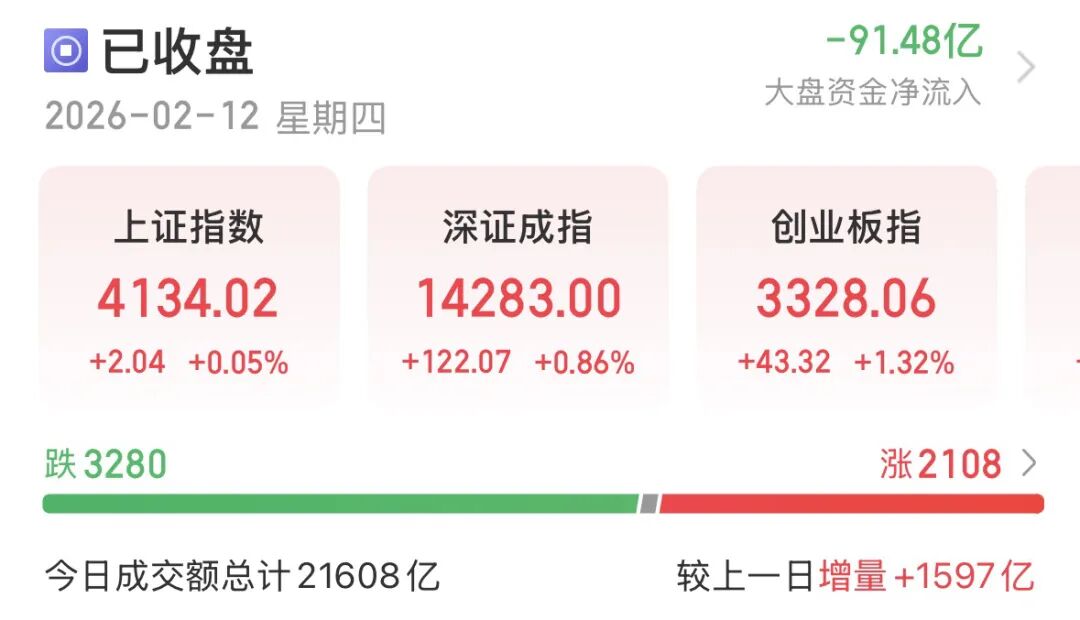
Market Overview - A-shares continued to show a fluctuating and differentiated trend, with major indices mostly closing slightly higher and trading volume increasing to 2.16 trillion yuan [1][4] - The market saw 2,108 stocks rise, with notable performances from technology stocks in communications, electronics, and military industries, as well as resource stocks like non-ferrous metals and steel [1][4] Trading Dynamics - The balance of margin financing decreased to 2.64 trillion yuan, indicating a continued decline in leveraged funds [4] - The trading activity was characterized by 3,280 stocks declining, with 22 hitting the daily limit down, while 69 stocks reached the daily limit up [5] Sector Performance - The technology sector, particularly in areas like AI applications and commercial aerospace, showed strong performance, while consumer sectors such as beauty care and retail experienced declines of over 1% [8][10] - Specific stocks like Tianfu Communication and Kunlun Wanwei saw significant gains, with Tianfu Communication rising over 14% [5][6] Investor Sentiment - Analysts suggest that the current market is undergoing structural adjustments rather than a broad influx of new capital, with funds shifting from defensive sectors to aggressive technology growth sectors [14] - The upcoming trading day before the Spring Festival is expected to see a narrow fluctuation and stabilization of indices, with a generally optimistic outlook for post-holiday market performance [3][15] Future Outlook - Post-holiday, the market is anticipated to experience a "opening red" scenario, driven by policy expectations and fundamental factors, despite potential volatility [17][19] - Investment strategies are recommended to focus on sectors with solid fundamentals and reasonable valuations, particularly in technology and cyclical resources, while maintaining a balanced portfolio to mitigate risks [20]

一次算力政策研讨实录:算力调度的七个问题
3 6 Ke· 2026-02-12 11:08
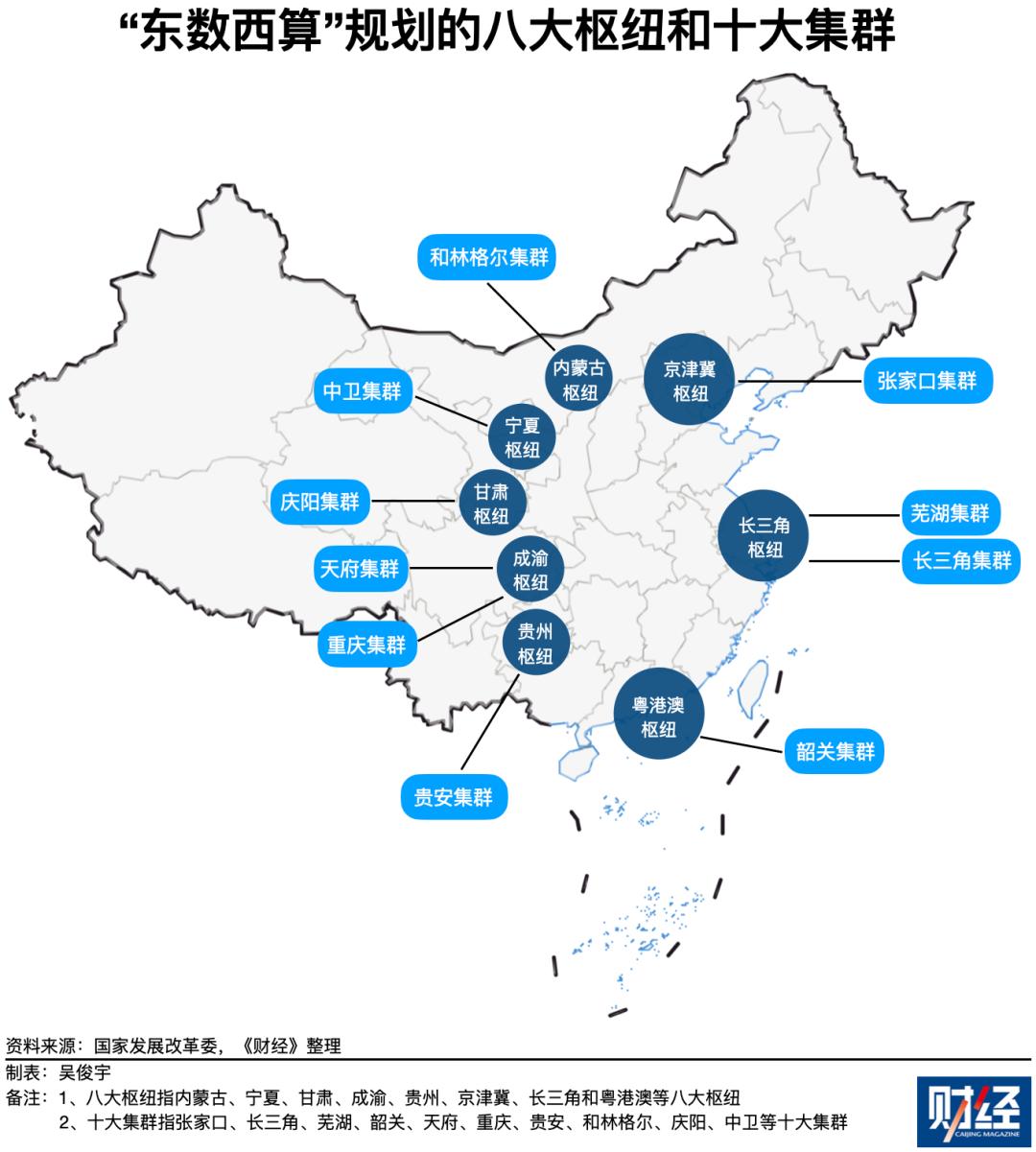
这些不仅是市场关注的问题,也是政策研究部门关注的问题。 2026年两会前夕,在国家信息中心的支持下,《财经》将2026年初的一次算力政策讨论与意见征集,梳理出了七个关键问题。这次国家信息中心组织的讨 论主要聚焦"算力调度"对产业发展的价值,参与者以电信运营商、科研院所、咨询机构的专家为主。 国家信息中心是国家发展改革委直属事业单位,长期进行全国一体化大数据中心、"东数西算"工程、全国一体化算力网等政策研究。多年来,国家信息中 心在不断组织大型科技公司、创业公司、咨询机构、科研院所等进行算力领域的专题讨论和意见征集。 在历经多年的长期研讨中,各方对"算力调度"的理解不断深化,并逐渐达成了一些共识: 算力调度,是充分利用现有算力,减少闲置资源,实现合理配置的重要方法。算力调度的复杂度,要远超水电的调度。水电是同质的物理资源,但算力是 高度异构和非标准化的。全国算力调度"一张网"的建设,不能只靠行政指令推进,而是通过政府搭台、标准引领、市场运作的综合模式,让全国一体化算 力网真正高效运转起来。 中国算力产业布局中,产业政策一直发挥着重要作用。其中有两大关键节点——2022年2月,"东数西算"工程启动。2023年12 ...
大位科技4连板狂欢,润泽科技却停牌苦等,股民的悲喜并不相通
Sou Hu Cai Jing· 2026-02-12 10:01
Group 1 - The core viewpoint highlights the contrasting fortunes of two companies in the IDC sector, with Dawi Technology experiencing significant stock price increases while Runze Technology faces a prolonged suspension due to asset acquisition [1] - Dawi Technology's stock surged from over 9 to nearly 14, benefiting from a ten-year data center service agreement with ByteDance that generates approximately 163 million yuan annually [1] - Runze Technology, despite being a key supplier for ByteDance, is currently unable to participate in the market due to its voluntary suspension since February 6, awaiting the completion of its asset acquisition [1] Group 2 - Dawi Technology has issued a risk warning, clarifying that its main business involves standardized data center leasing and not the AI computing power leasing that the market is currently favoring, with a rolling P/E ratio already ten times that of its peers, indicating overvaluation [2] - The market's enthusiasm for computing power has led to a frenzy, with investors eager to join, leaving Runze Technology's shareholders in a state of uncertainty as they await the stock's resumption on March 2 [2]


A股周四放量上涨 沪指实现“四连涨”
Zhong Guo Xin Wen Wang· 2026-02-12 09:45
Group 1 - The A-share market in China experienced a significant increase on February 12, with major indices rising across the board. The Shanghai Composite Index achieved a four-day consecutive rise, closing above 4100 points at 4134, with a slight increase of 0.05% [1] - The Shenzhen Component Index closed at 14283, up by 0.86%, while the ChiNext Index rose by 1.32% to 3328 points. The total trading volume in the Shanghai and Shenzhen markets reached approximately 21.417 billion RMB, an increase of about 1.575 billion RMB compared to the previous trading day [1] - Key sectors that performed well included "East Data West Calculation," liquid cooling concepts, and CPO (Co-Packaged Optics), with the "East Data West Calculation" sector leading with a 3.36% increase. Several individual stocks, such as Haima Data and Dongyang Light, hit the daily limit with approximately 10% gains [1] Group 2 - The People's Bank of China recently released its monetary policy execution report for the fourth quarter of 2025, emphasizing the continuation of a moderately loose monetary policy. The report highlights the importance of adjusting the implementation of policies based on domestic and international economic conditions, ensuring ample liquidity and relatively loose social financing conditions [2]
思特奇披露算力调度业务最新进展:中标多个核心项目,打造贵州"算力一张网"
Sou Hu Cai Jing· 2026-02-12 09:28
2月12日,思特奇(300608.SZ)在投资者互动平台披露了算力调度业务的最新进展。公司表示,在国家"东数西算"战略推进、全国一体化算力网构建的背景 下,其聚焦"算力网调度与市场运营平台"的研发运营,目前平台已实现对东数西算枢纽、运营商等供给方的标准化接入,能够完成算力统一池化与智能调 度,精准匹配各类需求方需求。 根据公司2026年2月4日披露的投资者关系活动记录,公司在算力领域的核心优势在于整合需求、系统性参与国家算力发展,而非单一聚焦于供给侧,尤其在 城市经济等方面具备全面统筹能力。 值得关注的是,2月6日工信部刚刚发布《关于组织开展国家算力互联互通节点建设工作的通知》,提出建立"1+M+N"国家算力互联互通节点体系,要求实 现不同区域、主体、架构的算力资源标准化互联和高效流动应用。思特奇表示,公司正强化平台运营能力,拓展多场景布局,后续将深化算力调度与市场运 营融合,在全国一体化算力网建设中推动相关业务做强做大。 市场有风险,投资需谨慎。本文为AI基于第三方数据生成,仅供参考,不构成个人投资建议。 来源:市场资讯 具体项目落地方面,思特奇透露了三项关键进展:一是中标湖北移动算力并网调度平台项目,切入 ...


粤开市场日报-20260212-20260212
Yuekai Securities· 2026-02-12 08:07
Market Overview - The A-share market saw all major indices close higher today, with the Shanghai Composite Index up 0.05% at 4134.02 points, the Shenzhen Component Index up 0.86% at 14283.00 points, the Sci-Tech 50 Index up 1.78% at 1480.99 points, and the ChiNext Index up 1.32% at 3328.06 points [1][12] - Overall, there were 2107 stocks that rose and 3273 stocks that fell, with a total trading volume of 21,417 billion yuan, an increase of 1,575 billion yuan compared to the previous trading day [1][12] Industry Performance - Among the Shenwan first-level industries, the top gainers included the comprehensive sector (up 5.31%), electronics (up 1.73%), electric equipment (up 1.65%), and computers (up 1.58%). The sectors that saw the largest declines were beauty care (down 1.77%), retail (down 1.57%), textiles and apparel (down 1.49%), and agriculture, forestry, animal husbandry, and fishery (down 1.49%) [1][12] Concept Sector Performance - The leading concept sectors today included optical modules (CPO), optical chips, optical communications, AI computing power, IDC (computing power leasing), ultra-high voltage, GPU, selected rare metals, fiberglass, cloud computing, DeepSeek, liquid-cooled servers, East Data West Computing, Huakun Zhenyu, and charging piles [2]
思特奇(300608.SZ):公司平台已实现对东数西算枢纽、运营商等供给方的标准化接入
Ge Long Hui· 2026-02-12 07:06
格隆汇2月12日丨思特奇(300608.SZ)在互动平台表示,在国家"东数西算"战略推进、全国一体化算力网 构建的背景下,公司聚焦"算力网调度与市场运营平台"研发运营,拉通算力供需两端,相关业务落地成 效显著,核心项目实现多点突破。 公司已中标并落地重磅项目,彰显出较强竞争力:一是中标湖北移 动算力并网调度平台项目,切入运营商核心场景,完善算力供给端布局;二是中标庆阳数盾平台项目, 以"总集成+建设+运营"模式融入国家级算力枢纽建设,实现算力安全协同调度。同时,打造贵州算力 调度平台,纳管9地市州算力,形成"贵州算力一张网",成为东数西算工程中首个产生重大收益的算力 调度平台。 目前,公司平台已实现对东数西算枢纽、运营商等供给方的标准化接入,可完成算力统一 池化与智能调度,精准匹配各类需求方需求。依托重大项目积累,公司正强化平台运营能力,拓展多场 景布局,后续将深化算力调度与市场运营融合,在全国一体化算力网建设中抢占先机,推动相关业务做 强做大。 ...
长飞光纤股价创新高,受行业供需反转与AI需求驱动
Jing Ji Guan Cha Wang· 2026-02-12 02:54
Core Viewpoint - The stock price of Yangtze Optical Fibre and Cable (601869) has reached a new high, driven by improvements in the industry fundamentals, the company's technological advantages, capital inflows, and external catalysts [1] Industry Policy and Environment - According to CRU data, the spot price of domestic G.652.D bare optical fiber is expected to rise by 79% month-on-month and 92% year-on-year by January 2026, with a cumulative increase of over 100% since May 2025 [2] - The price increase is primarily driven by a reversal in supply and demand, with tightening supply due to a long capacity expansion cycle for upstream preform rods and manufacturers shifting capacity towards higher-margin products like G.654.E ultra-low loss fibers and G.657.A2 multi-core high-end products, resulting in reduced supply of traditional G.652.D fibers [2] - The demand upgrade is significantly influenced by AI data center construction, which requires high bandwidth and low latency fibers, potentially increasing demand several times compared to traditional data centers, thus driving a surge in demand for high-fiber-count cables [2] - According to Guangfa Securities, the average price of G.652.D fiber has surpassed 40 yuan per core kilometer, reaching a nearly seven-year high [2] Industry Position - Yangtze Optical Fibre is the global leader in the optical fiber and cable market, holding the number one market share in preform rods, optical fibers, and cables for nine consecutive years [3] - The company's technological barriers and large-scale production capacity provide a competitive edge in high-end product markets [3] - The diversification of the company's silicon carbide wafer business, expected to achieve mass production and automotive certification by 2025, enhances long-term growth prospects [3] Capital Situation - There has been significant capital inflow, with approximately 180 million HKD of net inflow on February 12, and trading volume exceeding 1 billion HKD for several consecutive trading days, indicating active market trading [4] - The stock has increased by 128.24% year-to-date, with a cumulative rise of 36.42% over the past five days, and technical indicators such as the MACD histogram show strong buying momentum [4] Recent Events - Meta has signed a fiber agreement worth approximately 6 billion USD with Corning, highlighting the long-term demand for optical fibers driven by AI data centers [5] - The domestic "East Data West Computing" project and significant increases in the procurement volume of G.654.E by operators further solidify the industry's recovery expectations [5]

仅仅一个西藏,就能满足中国现在与未来,几乎所有的能源需求
Sou Hu Cai Jing· 2026-02-11 10:27
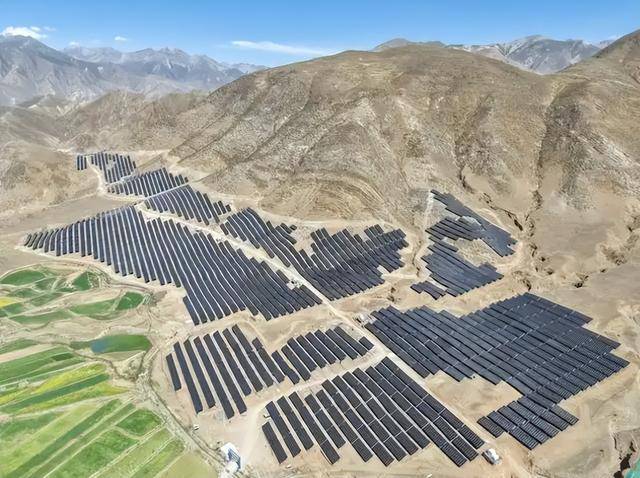
Core Insights - Tibet's energy development is entering a new phase with significant advancements in renewable energy projects, including solar, hydro, and wind power, which align with China's carbon neutrality goals [4][5][10] Group 1: Solar Energy Development - The solar project in Hode Village, with a capacity of 100,000 kilowatts, has significantly alleviated local electricity issues, allowing residents to access clean and affordable energy [1][7] - Tibet's unique geographical advantages, such as high altitude and abundant sunlight, make it an ideal location for solar energy development, contributing to the local economy and improving living standards [7][10] Group 2: Hydropower and Wind Energy Potential - The newly launched hydropower project in the Yarlung Tsangpo River basin marks a milestone in Tibet's energy development, with a potential hydropower capacity of 178 gigawatts and wind energy potential exceeding 100 gigawatts [3][9][10] - The vast solar energy potential in Tibet, estimated at 10,000 gigawatts, positions the region as a critical resource for meeting China's future energy demands [10][12] Group 3: Economic and Social Impact - Energy development in Tibet is closely linked to economic growth, with a reported GDP growth rate of 7.2% in the first half of 2025, driven by energy projects [14] - The hydropower project is expected to create 100,000 jobs, enhancing local employment opportunities and skill development [16] Group 4: Strategic Importance - Tibet is becoming a strategic hub for energy transmission, connecting domestic energy markets with South Asia and Central Asia, thus enhancing its geopolitical significance [18] - The region's energy resources are crucial for supporting China's "East Data West Computing" strategy, which requires substantial clean and stable electricity supply [23] Group 5: Environmental Considerations - Tibet's energy development emphasizes ecological protection, ensuring that resource extraction does not compromise the region's natural environment [25] - The balance between energy development and ecological preservation is vital for sustainable growth in Tibet, transforming it from a marginal area to a core energy hub for China [25]
大位科技股价连续涨停,数据中心项目与资产优化成焦点
Jing Ji Guan Cha Wang· 2026-02-11 10:23
经济观察网大位科技(600589)近期股价表现强劲,截至2026年2月11日连续三个交易日涨停,收盘价 达到12.60元,突破60日新高。 公司基本面 股价异动原因 公司2025年前三季度营收3.13亿元,但受张北项目投入及成本增加影响,年度净利润预亏1250万至2500 万元。当前滚动市盈率达353.62倍,估值显著高于行业水平。 其主要驱动因素可归纳为以下几点: 公司项目推进 公司张北数据中心项目首期已于2025年10月完工交付,该项目被纳入国家"东数西算"工程核心节点,且 与阿里云等头部企业合作,直接受益于其云与AI硬件投入计划。但公司明确公告,张北项目主要提供 标准化机房、机柜租赁等服务,不涉及算力租赁业务,相关业务收入占比仅为3.59%。 公司治理与供应链 公司通过司法重整完成资产优化,闲置资产转让溢价610.5%,回款1300万元增厚利润;同时迁址至榕 江新城核心区,修订章程强化治理结构,并新增储能技术等战略方向。 资金面与技术面 2026年2月9日至11日,主力资金净流入1.47亿元,游资和外资参与积极,封单资金达4.24亿元,占流通 市值2.28%。叠加市场对算力、东数西算概念的热度,板块联动 ...