全国一体化算力网

Search documents
“十五五”规划纲要深度解读:新质生产力引领,开启现代化建设新篇章
GUOTAI HAITONG SECURITIES· 2026-03-16 02:45
Group 1: Strategic Goals - The "14th Five-Year Plan" laid a solid foundation for the "15th Five-Year Plan," achieving significant economic and social development milestones[9] - The "15th Five-Year Plan" aims to achieve substantial progress in high-quality development, with a focus on increasing the resident consumption rate and total factor productivity[30] - The plan emphasizes the importance of technological self-reliance and innovation, with a target to significantly enhance the level of technological independence[30] Group 2: Key Development Tasks - The plan outlines twelve core tasks, including the construction of a modern industrial system and the promotion of digital and intelligent development[4] - It highlights the need for a strong domestic market, focusing on enhancing consumer capacity and improving investment in both human and physical resources[4] - The plan aims to accelerate the green transition, with specific mechanisms and tasks to promote energy efficiency and carbon reduction[4] Group 3: Economic and Social Indicators - The "15th Five-Year Plan" sets ambitious targets, including a GDP growth rate that remains reasonable and a significant increase in the proportion of non-fossil energy in total energy consumption[39] - It aims for a substantial increase in the number of high-value invention patents per capita, targeting 22 patents per 10,000 people[41] - The plan includes a goal for the urbanization rate of the permanent population to reach 71%[41]
申万宏源策略十五五规划解读:新增新型基础设施建设+新产业赛道十五五将带来哪些投资机会
Shenwan Hongyuan Securities· 2026-03-15 10:24
Core Insights - The "14th Five-Year Plan" framework remains largely intact, with a focus on five key areas: economic development, innovation-driven growth, social welfare, security, and green low-carbon initiatives. The details have been optimized to address current development challenges and social needs [1][2] - The new plan introduces a clearer policy direction, emphasizing the dual control of carbon emissions and energy structure transformation, shifting from energy consumption control to direct carbon emission management [3][2] - The plan expands the number of specialized columns from 20 to 23, focusing on strategic tasks and core capability enhancement rather than just project implementation [1][2] Investment Opportunities - New infrastructure construction focuses on five areas: integrated computing networks, satellite internet, information communication networks, data infrastructure, and low-altitude infrastructure. Key requirements include building a new generation of supercomputing facilities and enhancing satellite internet applications [1][2][10] - The new industry and new track development section identifies ten key areas for technological breakthroughs, including integrated circuits, embodied intelligence, biomanufacturing, new batteries, commercial aerospace, domestic large aircraft, low-altitude equipment, green hydrogen, brain-computer interfaces, and high-end medical devices [1][2][6] Traditional Infrastructure - The traditional infrastructure section retains its focus on transportation, energy, and water networks, with specific policy adjustments such as the renaming of the transportation section to "National Comprehensive Transportation Network Construction" and the energy section to "New Energy System" [1][2][7] Economic Reforms - The plan introduces multiple reforms in the socialist market economy, private economy, state-owned enterprises, and finance, aiming to enhance market vitality and innovation. This includes a focus on market-oriented pricing mechanisms and support for private enterprises to lead major technological breakthroughs [2][3]
申万宏源策略十五五规划解读:新增“新型基础设施建设+新产业赛道”十五五将带来哪些投资机会
Shenwan Hongyuan Securities· 2026-03-15 08:44
Core Insights - The report outlines the investment opportunities arising from the "New Infrastructure Construction + New Industry Tracks" as part of the 14th Five-Year Plan, emphasizing a shift towards green and low-carbon development [1][2] - The 14th Five-Year Plan maintains a five-part framework, with a focus on economic development, innovation, social welfare, security, and green low-carbon initiatives, addressing current development pain points [1][3] - The report highlights the introduction of new independent chapters in the 14th Five-Year Plan, clarifying policy direction and enhancing strategic priorities, particularly in modern industry and digitalization [1][2] Investment Opportunities - The new infrastructure construction focuses on five key areas: integrated computing networks, satellite internet, information communication networks, data infrastructure, and low-altitude infrastructure [1][3] - The new industry tracks include ten core areas such as integrated circuits, embodied intelligence, biomanufacturing, new batteries, commercial aerospace, domestic large aircraft, low-altitude equipment, green hydrogen, brain-computer interfaces, and high-end medical devices [1][3] - Specific tasks for each track are outlined, such as enhancing advanced manufacturing capabilities in integrated circuits and accelerating the development of key technologies in biomanufacturing [1][3][7] Policy Adjustments - The report notes a significant shift in policy focus from energy consumption control to direct carbon emission management, with new measures for carbon footprint accounting and product carbon emission limits [2][3] - The financial sector is transitioning from supply-side reforms to a "Financial Power Strategy," emphasizing the need for deeper investment and financing reforms to support the real economy [2][3] - The report emphasizes the importance of high-level opening-up strategies, with a focus on expanding service industry openness and promoting the internationalization of the Renminbi [3][2] Traditional Infrastructure - The traditional infrastructure section retains focus on transportation, energy, and water networks, with specific policy adjustments to enhance the national comprehensive transportation network and new energy systems [1][3] - Key projects include the construction of major clean energy bases and the expansion of natural gas pipelines to support energy transition goals [1][3][8] Technological Advancements - The report highlights the need for breakthroughs in high-end materials, basic components, software, and industrial machinery to strengthen the industrial supply chain [4][7] - Emphasis is placed on advancing artificial intelligence, quantum technology, and biotechnology as part of the frontier technology initiatives [12][14]
招商证券:十五五规划纲要印发 可能带来哪些投资机会?
Xin Lang Cai Jing· 2026-03-15 06:47
Core Insights - The article focuses on the incremental information from the 15th Five-Year Plan, highlighting four key areas for investment opportunities [2][4]. Group 1: Incremental Information from the 15th Five-Year Plan - The length of the 15th Five-Year Plan has decreased slightly, with a significant increase in the frequency of technology-related terms, particularly a rise of 31 mentions for "technology" [9]. - Key changes in major goals include a shift from "reducing energy consumption per unit of GDP" to "increasing the proportion of non-fossil energy in total energy consumption." The target for reducing carbon dioxide emissions per unit of GDP is set at 17%, down from 18% in the previous plan [9]. - The order of indicators related to livelihood has changed, with the urban unemployment rate now prioritized over the growth of per capita disposable income. A new indicator for the number of registered nurses per thousand people has also been introduced [9]. Group 2: Changes in Major Projects - There is a significant increase in the number and proportion of major engineering projects related to new productive forces, including ten new sectors such as integrated circuits and bio-manufacturing [10]. - New areas of focus in cutting-edge technology include controlled nuclear fusion and deep space exploration, while clinical medicine has been redefined to emphasize major disease prevention and innovative drug development [10]. - Infrastructure projects now include new types of infrastructure, such as a national integrated computing network and satellite internet, with a separate focus on clean coal consumption and zero-carbon initiatives [10]. Group 3: Market Trends Post-Plan Release - Historical analysis shows a high probability of market increases following the release of the Five-Year Plan, particularly favoring small-cap stocks. The average returns of the CSI 1000 index have outperformed the CSI 300 index in the weeks following the plan's release [11]. - Industries that tend to perform well post-release include construction materials and social services, with coal and construction materials showing high probabilities of price increases [11]. - Sectors highlighted in previous plans, such as technology and industrial transformation, have historically yielded significant excess returns [11]. Group 4: Future Investment Focus Areas - Recommended areas for future investment include deep space exploration, computing power, and sectors addressing structural contradictions in industries like steel, petrochemicals, and shipbuilding [12]. - New infrastructure related to computing power, low-altitude economy, and satellite technology is also suggested for attention [12].

国内外产业政策周报(0314):十五五规划纲要印发,可能带来哪些投资机会?-20260314
CMS· 2026-03-14 11:50
Group 1 - The Fifteenth Five-Year Plan has a reduced length and increased frequency of terms related to technology, investment, and consumption, with technology mentioned 31 more times compared to the previous plan [6][7][17] - The main goals of the plan show slight changes, particularly in green ecology and social welfare, with a new focus on the proportion of non-fossil energy in total energy consumption and a shift in the order of unemployment and income growth indicators [7][13][14] - Significant changes in major projects include an increase in the number of projects related to new productive forces, with new sectors such as integrated circuits and bio-manufacturing being highlighted [15][17] Group 2 - Historical market performance indicates a high probability of market increases following the issuance of the plan, with small-cap stocks outperforming large-cap stocks [17] - Industries that are likely to perform well post-plan issuance include construction materials and social services, with coal and real estate also showing strong potential [17][19] - The report suggests focusing on new sectors such as deep space exploration, computing power, and addressing structural contradictions in industries like steel and petrochemicals [17][19]
郑栅洁:集成电路、航空航天、生物医药等六大新兴支柱产业相关产值到2030年有望扩大到十万亿元以上
财联社· 2026-03-06 09:18
Core Insights - The National Development and Reform Commission emphasizes the development of six emerging pillar industries and six future industries, with a projected output of nearly 6 trillion yuan by 2025, potentially doubling to over 10 trillion yuan by 2030 [1] Emerging Pillar Industries - The six emerging pillar industries include integrated circuits, aerospace, biomedicine, low-altitude economy, new energy storage, and intelligent robotics [1] - These industries are expected to significantly contribute to the national economy, with a focus on long-term growth and substantial investment [3][4] Future Industries - The six future industries consist of quantum technology, biomanufacturing, green hydrogen energy, nuclear fusion energy, brain-computer interfaces, embodied intelligence, and 6G technology [1] - These sectors are on the brink of technological breakthroughs and may evolve into the next generation of emerging pillar industries [1] Investment and Project Development - Major projects in integrated circuits, satellite internet, domestic large aircraft, and national integrated computing networks will be developed, with investment scales reaching hundreds of billions to trillions of yuan [3][4] - The government aims to create foundational "national heavy equipment" through these long-chain, large-scale projects [4] Traditional Industry Enhancement - The government plans to strengthen traditional industries, expecting to create an additional market worth over 10 trillion yuan in the next five years [4] - This initiative is seen as a crucial source of development momentum alongside high-growth industries [4] Support for High-Growth Industries - The government will focus on three key areas: long-term planning, resource assurance, and reform collaboration [4][5] - Initiatives include the establishment of national-level merger funds to address challenges in venture capital exits and support mergers and acquisitions [4] Reform and Innovation - Emphasis will be placed on both hard investments in projects and soft construction of systems and mechanisms [5] - The government plans to promote the monetization of intangible assets like software development and data processing, enhancing intellectual value [5] - A large-scale application demonstration action will be implemented in key areas, with around 100 flagship projects identified to drive industrial innovation [5]


两会速览︱“十五五”109项重大工程项目 涉及能源有哪些?
中关村储能产业技术联盟· 2026-03-06 08:41
Core Viewpoint - The article emphasizes the importance of enhancing industrial foundational capabilities and competitiveness, focusing on the development of new energy systems and technologies to drive green and low-carbon transitions [6][7][9]. Industrial Foundation and Competitiveness Enhancement - Significant technological equipment is highlighted as a key area for development, including high-end new materials, basic components, and industrial software [10]. - New industries and tracks are being cultivated, particularly in new battery technologies and green hydrogen [6][12]. Cutting-edge Technology Research - The article discusses advancements in artificial intelligence and controllable nuclear fusion as critical areas for technological breakthroughs [6][13]. Modern Infrastructure System Construction - The construction of a modern infrastructure system is essential, with a focus on major hydropower and integrated wind-solar bases, as well as offshore wind power and coastal nuclear power [9][16]. Green and Low-Carbon Transition - The transition towards carbon peak and carbon neutrality is a priority, with initiatives aimed at energy conservation and carbon reduction in key industries [7][25]. - The development of zero-carbon parks and transportation corridors is also emphasized, alongside the promotion of a circular economy to assist in carbon reduction [9][25]. Safety Assurance in Key Areas - Enhancing safety assurance capabilities in critical sectors is crucial, including food security and oil and gas exploration and development [8][29].

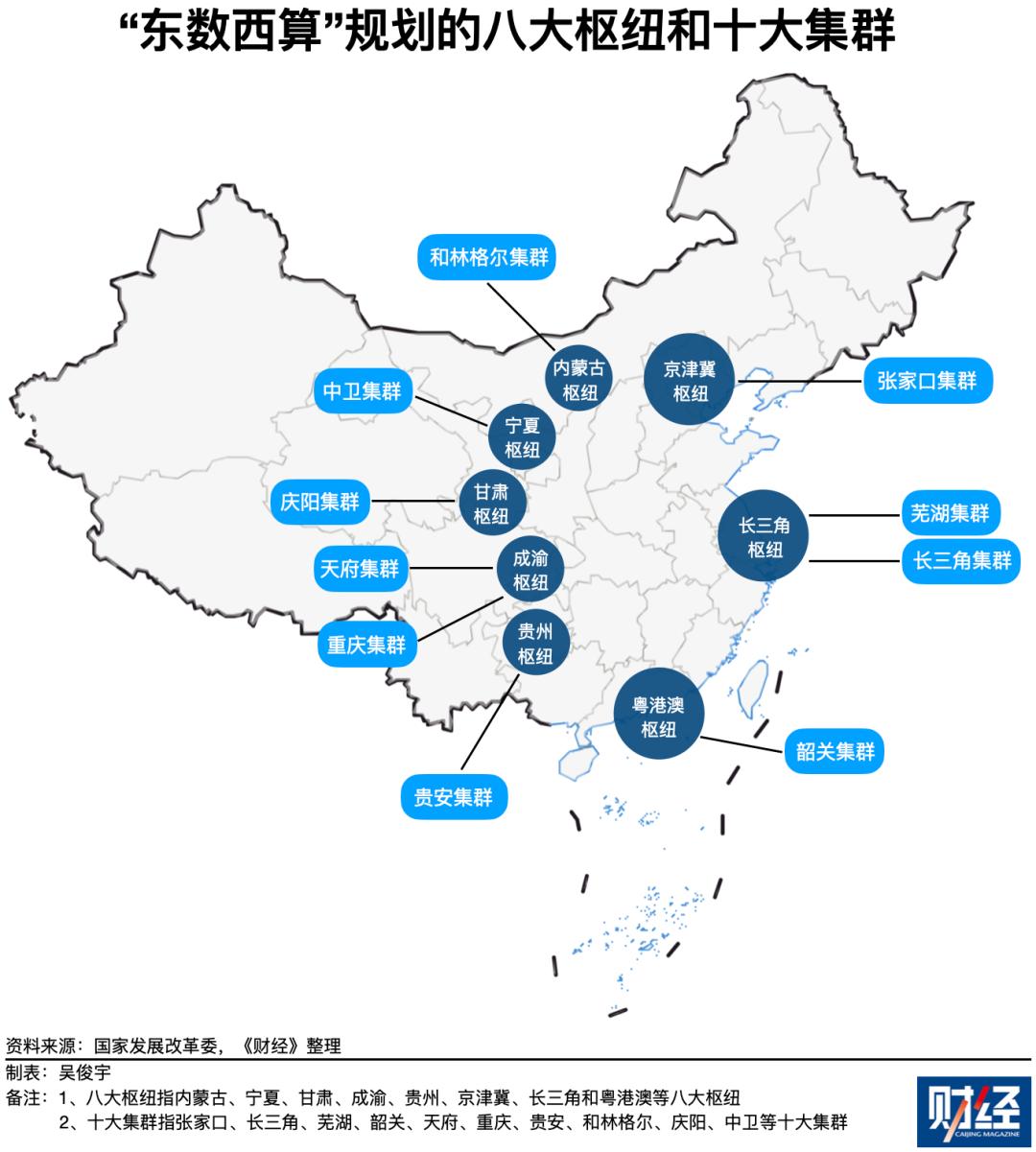
一次算力政策研讨实录:算力调度的七个问题
3 6 Ke· 2026-02-12 11:08
Core Insights - The next five years (2026-2030) are considered a critical phase for the development of China's computing power industry, driven by the rapid growth of the AI sector which demands higher computing capabilities [1] - Key challenges facing the industry include limited capital expenditure and restricted supply of advanced AI chips, prompting companies to explore more efficient and cost-effective systems that integrate chips, algorithms, energy, and networks [1] Group 1: Policy and Industry Discussions - The National Information Center has organized discussions focusing on the value of "computing power scheduling" for industry development, involving experts from telecom operators, research institutions, and consulting firms [2] - Seven key issues were identified during these discussions, emphasizing the importance of efficient resource allocation in the computing power sector [2] Group 2: Understanding Computing Power Scheduling - "Computing power scheduling" is recognized as a method to optimize existing computing resources, reduce idle capacity, and achieve reasonable allocation, which is more complex than traditional resource scheduling like water or electricity [3][4] - The construction of a national integrated computing power network requires a comprehensive approach that combines government initiatives, standard-setting, and market operations to ensure efficient functioning [3] Group 3: Current State and Future Directions - As of the end of 2024, China's computing power centers are expected to exceed 9 million standard racks, with a computing power scale of 280 EFLOPS, ranking among the top globally [3] - The average energy utilization efficiency (PUE) of computing centers has improved to 1.46, indicating progress in resource efficiency [3] Group 4: Challenges and Considerations - There are concerns regarding the network costs associated with cross-regional scheduling, which may offset the benefits of lower electricity prices in the west [20] - Data security remains a significant issue, as clients worry about the privacy and sovereignty of their data when it is scheduled outside local environments [20] Group 5: Importance of Scheduling in the Integrated Network - Computing power scheduling is viewed as the "nervous system" of the national integrated computing power network, enhancing the flexibility of data centers and improving overall resource utilization [21][23] - Effective scheduling can lead to the integration of fragmented computing resources, reducing waste from redundant infrastructure [21] Group 6: Construction of a Unified Scheduling Network - Building a national computing power scheduling network involves more than just infrastructure; it requires standardization, platform development, and innovative mechanisms [24] - A successful network will necessitate a unified standard for computing power, a multi-level scheduling platform, and a sustainable operational service mechanism to facilitate rapid matching and flexible transactions [24][25]
热点思考 | “新”新基建,地方如何适度超前?(申万宏观·赵伟团队)
赵伟宏观探索· 2026-01-08 16:03
Core Viewpoint - The "15th Five-Year Plan" suggests "moderate advanced new infrastructure construction," emphasizing the need for local governments to implement this requirement through tailored approaches based on regional characteristics [1][59]. Group 1: Understanding "Moderate Advanced New Infrastructure" - The "15th Five-Year Plan" emphasizes "moderate advanced construction," focusing on the development of information communication networks, integrated computing networks, and major technological infrastructure, while also promoting the digital transformation of traditional infrastructure [2][60]. - The scope of new infrastructure has significantly expanded compared to the "14th Five-Year Plan," now covering communication networks, data, and computing fields, driven by the digital transformation of the economy [2][9]. - From 2019 to November 2025, investments in electricity, heat, internet software, and logistics have increased by 10.4%, 5.0%, and 4.1% respectively, indicating the core investment attributes of new infrastructure [12][61]. Group 2: Commonalities and Differences in Local Infrastructure Layout - Local governments focus on integrating infrastructure and enhancing information infrastructure, with 28 regions proposing the digital transformation of traditional infrastructure [3][15]. - In the North China region, the focus is on building national data hubs and integrating energy transformation, with Beijing leading in data management and resource centers [3][29]. - The East and South China regions leverage their advantages in low-altitude economies and water transport systems, emphasizing low-altitude infrastructure and smart upgrades to water transport [3][35]. Group 3: Policy Support for New Infrastructure in 2026 - Fiscal policies have increased support for new infrastructure through policy financial tools, with the China Development Bank providing 98.02 billion yuan for digital economy and AI projects [5][43]. - Monetary policies have introduced tools like technology innovation loans to support new infrastructure, with green loans and loans for infrastructure upgrades showing growth rates of 17.5%, 25.1%, and 22.3% respectively [6][49]. - Regulatory measures will optimize spatial layouts, control hidden debts, and prevent redundant construction, aiming to enhance the overall effectiveness of new infrastructure development [6][52].

热点思考 | 地方如何适度超前“新基建”?(申万宏观·赵伟团队)
申万宏源宏观· 2026-01-07 15:15
Core Viewpoint - The article discusses the "15th Five-Year Plan" proposal emphasizing "moderate advanced new infrastructure construction," highlighting the need for local governments to implement this requirement and adapt their strategies based on regional characteristics [1][59]. Group 1: Understanding "Moderate Advanced New Infrastructure" - The "15th Five-Year Plan" proposes "moderate advanced construction," focusing on the development of information communication networks, integrated computing networks, and major technological infrastructure, while also promoting the digital transformation of traditional infrastructure [2][60]. - The scope of new infrastructure has significantly expanded compared to the "14th Five-Year Plan," now covering communication networks, data, and computing fields, driven by the digital transformation of the economy [2][9]. - From 2019 to November 2025, investments in electricity, heat, internet software, and logistics have increased by 10.4%, 5.0%, and 4.1% respectively, indicating the core investment attributes of new infrastructure [12][61]. Group 2: Commonalities and Differences in Local Infrastructure Layout - Local governments focus on integrating infrastructure and enhancing information infrastructure, with 28 regions proposing the digital transformation of traditional infrastructure [3][62]. - The North China region emphasizes the construction of national data hubs and energy transition, with Beijing leading in data management and resource centers [4][29]. - The East and South China regions leverage their advantages in low-altitude economy and water transport, focusing on low-altitude infrastructure and smart upgrades of water transport systems [4][35]. Group 3: Policy Support for New Infrastructure in 2026 - Fiscal policies have increased support for new infrastructure through policy financial tools, with the China Development Bank allocating 98.02 billion yuan to digital economy and AI projects [5][43]. - Monetary policies have introduced tools like technology innovation loans to support new infrastructure, with green loans and infrastructure upgrade loans growing at rates of 17.5%, 25.1%, and 22.3% respectively by the third quarter of 2025 [6][49]. - Regulatory measures will optimize spatial layouts, control hidden debts, and prevent redundant construction, aiming to enhance the overall effectiveness of new infrastructure development [6][52].