交通强国建设

Search documents
“十四五”铁路发展创新高,钢铁动脉澎湃经济新动能
Zhong Guo Jing Ji Wang· 2025-07-23 12:02
Core Insights - The "14th Five-Year Plan" for transportation has shown significant achievements, with the national railway passenger volume reaching a record high of 2.24 billion trips in the first half of the year, reflecting the robust performance of China's railway network and the overall economy [1][2]. Group 1: Passenger Transport - The record passenger transport is attributed to three main factors: strong travel demand driven by economic recovery, enhanced transportation capacity with a railway operating mileage of 162,000 kilometers, and improved service quality through various innovations [1]. - Daily passenger train operations exceed 11,000, with a capacity of 17 million trips, marking a year-on-year increase of 7.5% [1]. Group 2: Freight Transport - During the "14th Five-Year Plan" period, the national railway freight volume is expected to exceed 2.5 billion tons, an increase of 500 million tons compared to the previous five-year plan [2]. - The railway freight system is seen as a vital economic indicator, with high-speed rail freight operations facilitating rapid delivery of goods across the country and enhancing regional economic integration [2]. Group 3: Future Planning - The high-quality development of railways is rooted in China's structural economic reforms, with a focus on supply-side reforms and expanding domestic demand [2]. - The railway sector is actively planning for the future, aiming to improve network efficiency, reduce costs, and better meet the growing demand for passenger and freight transport [2][3].
三重动能驱动交通强国建设跑出加速度
Zheng Quan Ri Bao· 2025-07-22 17:21
Core Insights - The construction of a strong transportation network in China has achieved significant milestones, with railway mileage reaching 162,000 kilometers, total road mileage at 5.49 million kilometers, and high-grade waterway navigation mileage at 17,600 kilometers by the end of 2024 [1] Group 1: Institutional Innovation - Institutional innovation has activated the development of transportation, with policies like the "National Comprehensive Transportation Network Planning Outline" and the "14th Five-Year Plan for Modern Comprehensive Transportation System Development" driving significant advancements [3] - The previous fragmented approach among various transportation sectors has been addressed through reforms in toll systems, maintenance systems, and air traffic management, enhancing coordination and efficiency [3] Group 2: Consumer Upgrade - Consumer demand for improved living standards has accelerated infrastructure development, pushing for more efficient and intelligent transportation services [4] - The rise in tourism has led to increased expectations for high-speed rail services, prompting the construction of more routes and specialized tourist lines [4] - The logistics sector is adapting to consumer demands for immediacy and personalization, leading to the establishment of urban distribution centers and cold chain logistics hubs, as well as the implementation of new transportation methods like high-speed rail express and drone delivery [4] Group 3: Technological Advancements - Emerging technologies such as 5G, big data, and artificial intelligence are revitalizing the transportation sector, with applications in infrastructure, transportation equipment, and service delivery [5] - Major projects like the Beijing-Zhangjiakou High-Speed Railway and the Shenzhen-Zhongshan Bridge have incorporated advanced technologies and materials [5] - Innovations in transportation equipment, exemplified by the Fuxing high-speed train and the C919 large passenger aircraft, showcase China's manufacturing strength in the transportation sector [5] - The integration of these technologies is driving the transformation of the transportation industry towards smart and digital solutions, fostering new business models and opportunities [5]
我国交通运输取得历史性成就 17项主要指标年底前将全部完成
Jing Ji Ri Bao· 2025-07-21 22:18
Core Viewpoint - The construction of the national comprehensive transportation network has exceeded 90% completion, significantly enhancing transportation capabilities, service quality, and operational efficiency, aligning with the vision of smooth movement for people and goods. The transportation sector has achieved historic accomplishments during the "14th Five-Year Plan" period [1][2]. Group 1: Achievements in Transportation Infrastructure - The national comprehensive transportation network is crucial for the economic cycle and supports the new development pattern. The focus has been on integration, addressing shortcomings, and improving efficiency [2]. - By the end of 2024, the railway operating mileage is expected to reach 162,000 kilometers, an increase of approximately 16,000 kilometers since the end of the "13th Five-Year Plan," with high-speed rail accounting for 10,000 kilometers of this increase. The total length of highways will reach 5,490,000 kilometers, up by about 290,000 kilometers, including an increase of 30,000 kilometers in expressways [2]. - The fixed asset investment in transportation reached 15.2 trillion yuan over the first four years of the "14th Five-Year Plan," representing a year-on-year growth of 23.3% [2]. Group 2: Development of Rural Transportation - Since the 18th National Congress, over 4.9 trillion yuan has been invested in rural road infrastructure, with more than 1.2 trillion yuan allocated for maintenance. By the end of 2024, rural road mileage is expected to reach 4.64 million kilometers, establishing a basic network for rural connectivity [5]. - The proportion of graded rural roads has reached 97.3%, and the rate of good and medium-quality roads is 94.8%, significantly improving rural transportation conditions [5][6]. Group 3: Transportation Strong Country Initiative - The initiative to build a strong transportation country has been actively promoted, with over 1,200 units participating in 819 pilot projects since the issuance of the "Transportation Strong Country Construction Outline" in 2019 [7][8]. - Innovations in technology and management have been emphasized, with significant improvements in traffic efficiency and emergency response capabilities through digital transformation and integrated transport systems [7][8].
“十四五”时期交通强国建设成果丰硕
Zhong Guo Zheng Quan Bao· 2025-07-21 20:16
Core Insights - The article highlights the significant achievements in China's transportation sector during the "14th Five-Year Plan" period, showcasing improvements in infrastructure, service efficiency, and technological advancements [1][2][3]. Infrastructure Development - By the end of 2024, the railway operating mileage is expected to reach 162,000 kilometers, an increase of approximately 16,000 kilometers from the end of the "13th Five-Year Plan," with high-speed rail accounting for 10,000 kilometers of this increase [2]. - The total length of highways will reach 5.49 million kilometers, an increase of about 290,000 kilometers, including an addition of 30,000 kilometers of expressways [2]. - The number of civil aviation airports has increased to 263, with 22 new airports established [2]. Service Efficiency - On average, 1.8 billion people travel across regions daily, and 1.6 billion tons of goods are transported each day [2]. - Urban rail transit operates approximately 11,000 kilometers, ranking first in the world, while urban public transport has expanded to 1.75 million kilometers, marking increases of 48.5% and 18.3% respectively since the end of the "13th Five-Year Plan" [2]. Technological Advancements - The introduction of advanced technologies includes the CR450 train set, the first domestically produced large cruise ship, and the C919 large passenger aircraft entering regular commercial operation [3]. - Over 4,000 kilometers of highways have undergone intelligent upgrades, and automated terminals are leading globally in construction scale and operational efficiency [3]. Public Transportation - In 2024, the passenger volume for high-speed trains is projected to reach 3.272 billion, accounting for 75.9% of total railway passenger traffic [3]. - Daily, approximately 1 billion people use urban rail for commuting, another billion use buses, and 1 billion utilize taxis and ride-hailing services, reflecting the resilience and capacity of urban transportation [3]. Rural Transportation - By the end of 2024, rural road mileage is expected to reach 4.64 million kilometers, establishing a basic network for rural transportation [4]. Cargo Transportation Growth - By 2024, air cargo and mail transport volume is projected to reach 8.982 million tons, a 32.8% increase compared to 2020 [4]. - The postal industry has seen revenue growth from 1.1 trillion yuan in 2020 to 1.7 trillion yuan in 2024, with an average annual growth rate of 11.3% [5]. - The volume of express deliveries has surged from approximately 83 billion items in 2020 to 175 billion items in 2024, reflecting an annual growth rate of around 20% [5]. Railway Cargo Transport - During the "14th Five-Year Plan," railway cargo transport is expected to exceed 25 billion tons, an increase of 5 billion tons compared to the "13th Five-Year Plan" [6]. - High-speed rail freight services have become routine, enabling rapid delivery of goods such as flowers and fruits across major cities [6].
设施网络完善、装备技术领先、便捷服务升级——“十四五”交通强国建设交出亮眼答卷
Xin Hua She· 2025-07-21 13:48
Core Viewpoint - The article highlights the significant progress and achievements in China's transportation infrastructure and services during the "14th Five-Year Plan" period, emphasizing the construction of a comprehensive transportation network and advancements in technology and service quality [1]. Infrastructure Development - The national comprehensive transportation network has been significantly improved, with railway operating mileage reaching 162,000 kilometers, total highway mileage at 5.49 million kilometers, and 263 certified civil aviation airports [2]. - Major transportation networks in regions such as Beijing-Tianjin-Hebei, Yangtze River Delta, and Guangdong-Hong Kong-Macao Greater Bay Area have been established, enhancing connectivity and service efficiency [2]. - The "six axes, seven corridors, and eight channels" framework of the national comprehensive transportation network has been largely completed, connecting over 80% of county-level administrative regions and serving about 90% of the country's economic and population totals [2]. Technological Advancements - The article discusses breakthroughs in technology and the introduction of advanced equipment, including the deployment of autonomous vehicles and smart logistics systems [4][6]. - Innovations in the transportation sector include the digital transformation of infrastructure, which has improved traffic efficiency and emergency response times by approximately 20% and 30%, respectively [5]. - Major engineering projects, such as the Shenzhen-Zhongshan Bridge and the CR450 train set, have set multiple world records, showcasing China's technological prowess in transportation [6]. Service Quality Improvement - The quality of public transportation services has improved, with high-speed rail and civil aviation becoming the preferred modes of travel for many citizens [7][8]. - Daily, approximately 1.3 billion people choose to travel by car, and around 1 billion people use public transport, indicating a shift towards more efficient commuting options [8]. - The aviation sector has seen a significant increase in passenger numbers, with about 350 million people flying during the "14th Five-Year Plan" period, making China the country with the largest aviation population globally [7].
全球最大高速铁路网、高速公路网和邮政快递网建成……“十四五”交通建设成绩单出炉!
证券时报· 2025-07-21 10:15
Core Viewpoint - The article highlights the significant achievements in China's transportation infrastructure during the "14th Five-Year Plan" period, emphasizing the construction of a comprehensive and efficient transportation network that supports economic growth and enhances public mobility [1][3]. Group 1: Achievements in Transportation Infrastructure - By the end of 2024, the railway operating mileage is expected to reach 162,000 kilometers, an increase of approximately 16,000 kilometers compared to the end of the "13th Five-Year Plan" [1]. - Major urban transportation networks have been established in regions such as Beijing-Tianjin-Hebei, the Yangtze River Delta, and the Guangdong-Hong Kong-Macao Greater Bay Area, leading to the formation of a leading comprehensive transportation network [1][3]. - The total length of urban rail transit has reached approximately 11,000 kilometers, ranking first in the world, while the total length of urban bus routes has increased by 18.3% compared to the end of the "13th Five-Year Plan" [1]. Group 2: Development of the National Comprehensive Transportation Network - The national comprehensive transportation network has been constructed with a focus on integrating various modes of transport, including railways, highways, water transport, and civil aviation [3]. - The "six axes, seven corridors, and eight channels" framework of the national transportation network has been largely completed, connecting over 80% of county-level administrative regions and serving about 90% of the country's economic and population totals [3]. - The high-speed rail network has achieved 81.5% completion of the "eight vertical and eight horizontal" high-speed rail lines, with a total operating mileage of 48,000 kilometers, accounting for over 70% of the world's high-speed rail mileage [3]. Group 3: Public Mobility and Transportation Efficiency - Public travel has shifted from merely being able to travel to ensuring quality travel experiences, with high-speed rail and civil aviation becoming the preferred modes of transport [6][7]. - Daily, approximately 1.3 billion people choose to travel by car, representing over 70% of cross-regional travel, while urban public transport sees around 100 million daily users for rail, bus, and taxi services [7]. - The implementation of online ticketing, electronic payments, and accessibility improvements at public transport stations has significantly enhanced the convenience of travel [7]. Group 4: Freight Transportation and Logistics - The adjustment of transportation structure has led to a 17.5% increase in railway freight turnover and a 33.6% increase in waterway freight turnover compared to the end of the "13th Five-Year Plan" [9]. - The total freight transported by rail is expected to exceed 250 billion tons during the "14th Five-Year Plan," an increase of 50 billion tons compared to the previous plan [9]. - The international air cargo market has seen a 23.4% year-on-year growth in freight volume, driven by cross-border e-commerce and other industries [10]. Group 5: International Connectivity and the Belt and Road Initiative - China has signed over 270 bilateral and multilateral cooperation agreements in various transportation sectors, enhancing international transport networks [12]. - The "hard connectivity" of infrastructure along the Belt and Road Initiative has been promoted, with significant projects like the China-Laos Railway and the new international airport in Gwadar being completed [12].

决战决胜“十四五” 交通强国建设结硕果 “流动中国”活力澎湃
Yang Shi Wang· 2025-07-21 07:36
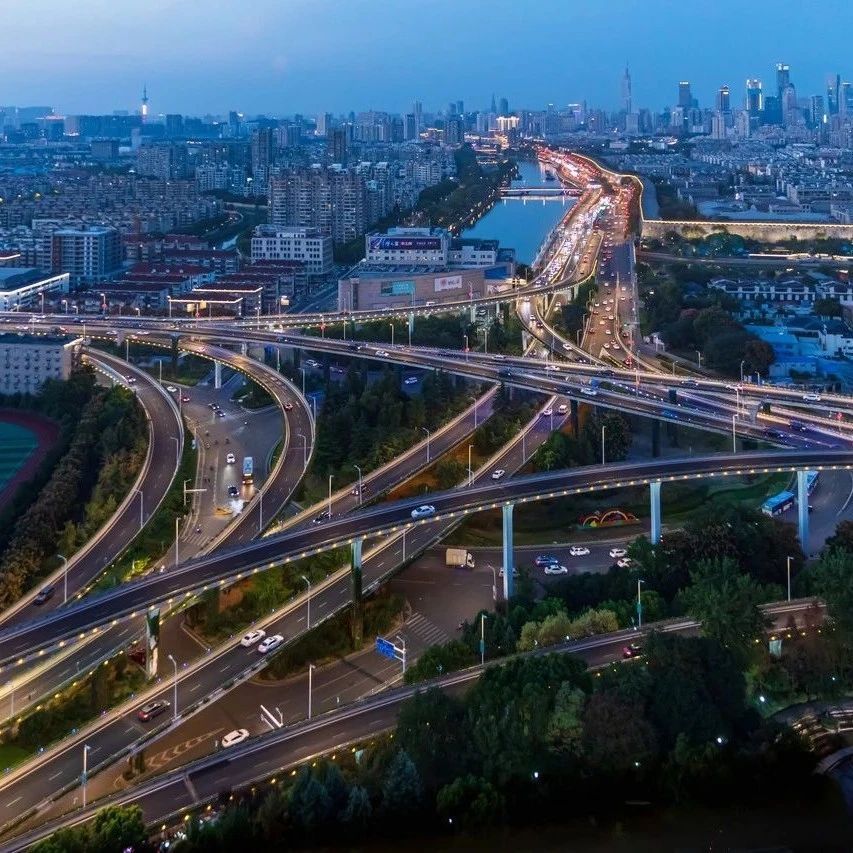
Core Viewpoint - The construction of a comprehensive and integrated transportation network in China is accelerating during the "14th Five-Year Plan" period, with significant progress in various transportation sectors [1][10]. Group 1: Transportation Infrastructure Development - By the end of 2024, the railway operating mileage is expected to reach 162,000 kilometers, an increase of approximately 16,000 kilometers compared to the end of the "13th Five-Year Plan," with high-speed rail accounting for 10,000 kilometers of this increase [3][13]. - The total length of highways will reach 5,490,000 kilometers, an increase of about 290,000 kilometers [3][13]. - The number of certified civil aviation transport airports will rise to 263, an increase of 22 [3][13]. Group 2: Investment and Economic Impact - During the first four years of the "14th Five-Year Plan," fixed asset investment in transportation reached 15.2 trillion yuan, reflecting a year-on-year growth of 23.3% [3][15]. - The logistics costs for the entire society are expected to save over 400 billion yuan in 2024, with transportation costs reduced by approximately 280 billion yuan [15]. Group 3: Connectivity and International Cooperation - The "Six Corridors, Six Roads, Multi-Country, Multi-Port" connectivity framework has been largely established, enhancing international trade routes [10]. - The China-Europe Railway Express now reaches 229 cities in Europe and over 100 cities in Asia, while the "Air Silk Road" has expanded to 83 countries and 213 cities [10]. Group 4: Rural Transportation Development - By the end of 2024, the total length of rural roads will reach 4,640,000 kilometers, accounting for nearly 85% of the total highway mileage in the country [5][7].
广西两个交通强国建设试点任务通过核查
Guang Xi Ri Bao· 2025-07-11 02:57
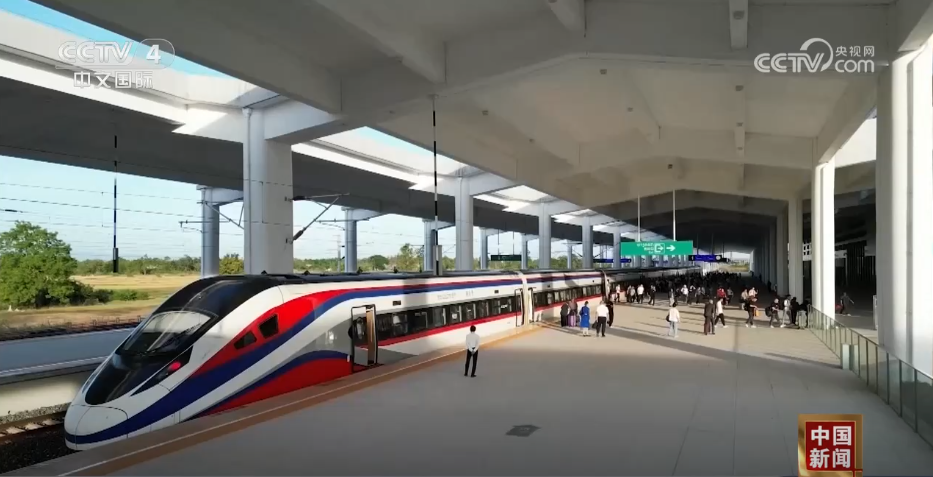
Group 1 - The Ministry of Transport conducted a comprehensive inspection of the "Building a Multi-level International Hub" and "Beihai Qiaogang Passenger Terminal Smart Port and Shipping Integration" pilot projects in Guangxi, confirming their innovative and demonstrative value [1][2] - The pilot projects have achieved their expected goals and are ready for acceptance, showcasing replicable and promotable advanced experiences [1] - The Guangxi Transportation Department has effectively advanced the pilot projects through strong leadership and detailed implementation plans, resulting in significant improvements in international transport capacity towards ASEAN [1] Group 2 - The "Beihai Qiaogang Passenger Terminal Smart Port and Shipping Integration" project aims to enhance safety and efficiency in passenger terminal operations, focusing on seven major risk prevention areas [2] - The project has successfully completed the smart transformation of the port, upgrading traditional passenger terminals to "safe, efficient, green, and economical" smart green passenger ports [2]
记者手记:一座长江大桥的拔节“生长”
Xin Hua She· 2025-07-03 08:26
Core Viewpoint - The Zhang Jinggao Yangtze River Bridge is a significant infrastructure project aimed at enhancing connectivity in the Yangtze River Delta region, showcasing advanced engineering and innovative technologies [1][5]. Group 1: Project Overview - The bridge, approximately 29.85 kilometers long, is a key project during China's 14th Five-Year Plan, expected to be completed by the end of 2028 [1]. - The construction of the bridge began with a groundbreaking ceremony on June 28, 2022, and the main engineering work commenced in October of the same year [1]. Group 2: Engineering Innovations - The bridge features six world records, including the longest span for a suspension bridge at 2,300 meters and the highest suspension bridge tower [2]. - Innovative technologies include a self-balancing cable force system, ultra-high-strength main cables, and a digital bridge concept that integrates smart monitoring and maintenance systems [2][4]. Group 3: Environmental Impact - The application of the self-balancing cable force technology is projected to save 15,700 cubic meters of concrete and 12,560 tons of steel, reducing carbon emissions by over 80,000 tons [2]. Group 4: Operational Safety - The bridge will utilize sensors to collect real-time data on environmental conditions and structural responses, aiding in scientific decision-making for its operation and maintenance [3]. Group 5: Strategic Importance - The bridge is a crucial initiative for the integrated development of the Yangtze River Delta and the Yangtze Economic Belt, aiming to become a model for transportation infrastructure and bridge technology innovation in China [5].
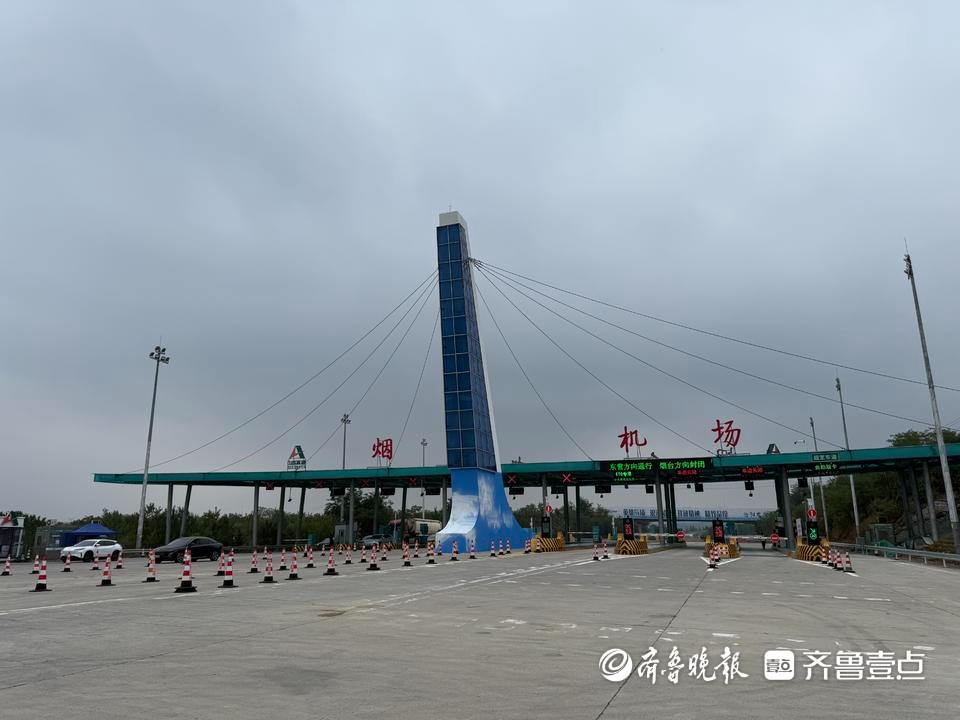
烟台首段“双向八车道”高速公路正式开通
Qi Lu Wan Bao Wang· 2025-06-27 05:19
Core Viewpoint - The opening of the Yantai hub to Penglai hub section of the Rongwu Expressway marks the first "dual eight-lane" expressway in the Yantai area, significantly improving traffic conditions and connectivity to Penglai International Airport [1][3]. Group 1: Project Overview - The newly opened section is 8.1 kilometers long and includes two interchanges, one toll station, and one service area [3]. - The existing Rongwu Expressway from Yantai to Penglai was built between 1998 and 2003, covering a total length of 61.217 kilometers, and has been unable to meet the growing social and economic demands [3]. Group 2: Construction and Technology - The project adopted innovative construction techniques, including UHPC and ECC for bridge reinforcement, achieving significant improvements in structural performance, stiffness, and durability [5]. - Non-excavation grouting technology was used to address hidden cracks and deterioration in the old road, ensuring 100% treatment of concealed diseases while protecting the original structure [5]. Group 3: Future Goals - The project aims to establish a model for coastal city bypass expressway reconstruction, focusing on smart empowerment, quality craftsmanship, and innovative efficiency improvements [5].