产学研协同

Search documents
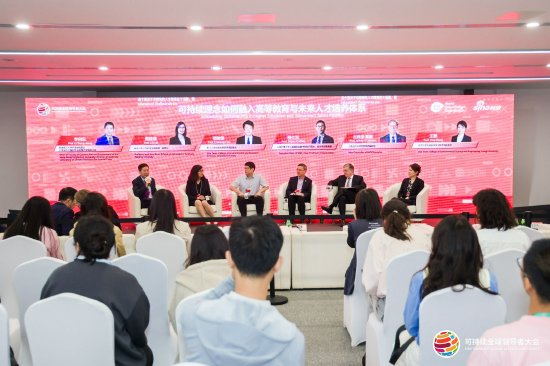
南京大学大气科学学院教授、副院长雷荔傈:构建“三阶段”培养体系,将可持续能力内化为学生思维
Xin Lang Zheng Quan· 2025-10-18 04:52
Group 1 - The 2025 Sustainable Global Leaders Conference will be held from October 16 to 18 in Shanghai, focusing on "Collaborating to Address Challenges: Global Action, Innovation, and Sustainable Growth" [1] - The conference is co-hosted by the World Green Design Organization (WGDO) and Sina Group, with support from the Shanghai Huangpu District Government [1] - Approximately 500 prominent guests are invited, including around 100 international guests, featuring political figures, Nobel Prize winners, and leaders from Fortune 500 companies [1] Group 2 - Professor Lei Lili from Nanjing University emphasizes the importance of integrating sustainable development into the education system and fostering interdisciplinary collaboration to cultivate talent [3] - Nanjing University is advancing sustainable development education through a three-stage training system that includes academic training, vocational training, and interdisciplinary components [5] - The university has established joint research institutes with multiple universities and maintains close cooperation with domestic institutions to bridge the gap between academia and industry [5]

苹果供应链的中国答卷:从组件制造到绿色智造的进化之路
Xin Lang Cai Jing· 2025-10-16 09:04
Core Insights - Apple's new COO Sabih Khan visited Chinese suppliers, showcasing the evolution of Apple's supply chain from "Made in China" to "Intelligent Manufacturing in China" [1][24] - The collaboration between Apple and its Chinese suppliers has transitioned from a traditional buyer-supplier relationship to a deep symbiotic partnership focused on joint innovation [3][24] Group 1: Technological Synergy - The partnership between Apple and suppliers like AAC Technologies and Lens Technology has moved beyond simple component supply to collaborative R&D, exemplified in their production facilities [3] - AAC Technologies' ultra-thin heat spreader is crucial for the iPhone 17 Pro's thermal performance, featuring innovations such as a collaborative tooling system that enhances logistics efficiency and reduces plastic waste [6][14] - Lens Technology's smart manufacturing practices include autonomous mobile robots and automated assembly lines that significantly reduce human error and improve production efficiency [9][11] Group 2: Green Transformation - Apple aims for carbon neutrality across its supply chain by 2030, with Chinese suppliers playing a vital role in this initiative [15][17] - AAC Technologies has joined Apple's clean energy and zero waste projects, actively incorporating recycled materials into its production processes [15] - Lens Technology has achieved 100% renewable energy coverage in its production for Apple and has implemented a closed-loop green manufacturing model [15][17] Group 3: Talent Empowerment - Apple has established a supplier employee development fund to create a robust talent growth system for its Chinese suppliers, enhancing the skills of technical workers and engineers [18][23] - Employees at AAC Technologies have benefited from Apple's training programs, transitioning from technical operators to trainers, thereby enhancing their capabilities [19][21] - Lens Technology has seen similar success, with employees improving their leadership and technical skills through Apple's training initiatives [21][23] Group 4: Conclusion - The partnership between Apple and its Chinese suppliers exemplifies a model of mutual achievement, where both parties contribute to technological advancement and sustainable practices [24] - The ongoing collaboration is set to continue with new R&D centers and projects aimed at carbon neutrality, highlighting the importance of cooperative innovation in the global tech supply chain [24]


产学研协同发力,国产固态电池产业化迈出关键步伐
Jiang Nan Shi Bao· 2025-09-28 05:12
Core Insights - Solid-state batteries are emerging as a key direction for next-generation lithium batteries, driven by their high energy density and intrinsic safety advantages, which are crucial for overcoming performance bottlenecks in the renewable energy industry [1] - Recent breakthroughs in electrolyte technology by Tsinghua University and mass production advancements in high-voltage cathode materials by Xue Tian Salt Industry are providing new momentum for the industrialization of solid-state batteries in China [1][2] Electrolyte Technology - Tsinghua University's research team developed a novel fluorinated polyether electrolyte that enhances high-voltage performance by introducing strong electron-absorbing fluorine groups, significantly improving compatibility with high-voltage lithium-rich manganese-based cathodes and lithium metal anodes [1][2] - The electrolyte employs a thermally initiated in-situ polymerization technique, which strengthens the physical contact and ionic conductivity at the solid-state interface, avoiding performance degradation seen in traditional designs [2] - The energy density of the 8.96 Ah soft-pack full battery using this electrolyte reached 604 Wh/kg, far exceeding the energy densities of commonly used lithium iron phosphate (150-190 Wh/kg) and nickel-cobalt-manganese (240-320 Wh/kg) cells [2] High-Voltage Cathode Materials - Xue Tian Salt Industry has made significant strides in the mass production of high-voltage cathode materials, utilizing surface modification and bulk doping techniques to suppress side reactions and structural instability under high voltage, achieving an energy density exceeding 400 Wh/kg [3] - The company is leveraging its existing lithium-ion and sodium-ion battery cathode material pilot lines and a production capacity of 7,500 tons of lithium cobalt oxide to transition into large-scale production, with ton-scale products already being supplied to major domestic battery manufacturers [3] Collaborative Development - The innovations in electrolyte technology and the mass production of cathode materials complement each other effectively, with the former enhancing battery performance limits and the latter ensuring material supply stability, meeting the dual demands of solid-state batteries for high-performance materials and reliable supply chains [3] - This collaborative development model, driven by emerging applications in electric vehicles, humanoid robots, and low-altitude economies, is expected to accelerate the mass production of domestic solid-state batteries and strengthen China's self-sufficiency in the renewable materials sector, contributing to global energy transition efforts [3]

长三角地区厚植产业发展沃土—— 人工智能从实验室走向市场
Jing Ji Ri Bao· 2025-09-27 21:54
Core Insights - AI is becoming a key driver for the growth of private enterprises in the Yangtze River Delta region, transforming traditional industries and fostering innovation in emerging sectors [1][2][3] Group 1: AI Integration in Traditional Industries - Wan Shili Group has developed an AI model for designing silk scarf patterns, showcasing how AI can enhance product design and production efficiency [1] - The company has introduced a waterless dyeing machine that can produce finished products in as little as 2 hours, emphasizing the importance of AI in improving operational efficiency and sustainability [1] - The integration of AI into the entire supply chain is seen as crucial for traditional industries to maintain competitiveness [1] Group 2: AI Applications in Emerging Industries - Companies like Hangzhou Yundong Technology are leveraging AI in various applications, including power inspection and emergency rescue, indicating a broad potential for AI innovation [1][2] - The automotive sector in the Yangtze River Delta is a significant area for AI application, with over 15 million electric vehicles equipped with intelligent voice interaction systems [2] - The region's diverse industrial landscape provides numerous application scenarios for AI technologies, enhancing their development and deployment [2] Group 3: Collaborative Ecosystem and Innovation - The Yangtze River Delta has established a collaborative ecosystem that connects various stakeholders, including manufacturers, technology providers, and research institutions, facilitating innovation [4][5] - Companies are focusing on building their core competencies through sustained R&D investment, which is essential for maintaining a competitive edge in the market [7] - The establishment of innovation networks, such as the Yangtze River Delta Language Computing Innovation Alliance, promotes the application of AI technologies across different sectors [5][6] Group 4: Government Support and Policy Environment - Local governments are playing a supportive role in fostering the AI industry through clear policies and a conducive business environment, which has attracted numerous startups [8] - The Yangtze River Delta region has a significant number of AI-related companies, including 32 listed firms and 7 unicorns, reflecting a robust industrial ecosystem [8] - The region's government emphasizes a balanced approach, providing support without creating dependency, which encourages self-reliance among enterprises [8] Group 5: Global Market Expansion - AI companies in the Yangtze River Delta are increasingly looking to global markets, leveraging their experience in diverse application scenarios to attract foreign clients [10] - The shift towards domestic production of core components has not only reduced costs but also enhanced the long-term security of the industry [9]
人工智能从实验室走向市场
Jing Ji Ri Bao· 2025-09-27 21:52
Core Insights - AI is becoming a key driver for the growth of private enterprises in the Yangtze River Delta region, transforming traditional industries and fostering innovation in emerging sectors [1][2][3] Group 1: AI Integration in Traditional Industries - Wan Shi Li Group has developed the world's first AI textile model to design silk scarf patterns based on user keywords, showcasing AI's role in product design [1] - The company has introduced a waterless dyeing machine that can produce finished products in as little as 2 hours with zero wastewater discharge, emphasizing AI's importance in enhancing competitiveness [1] - The integration of AI in traditional industries is seen as essential for survival and competitiveness, according to Wan Shi Li's chairman [1] Group 2: AI Applications in Emerging Industries - Companies like Hangzhou Yun Shen Chu Technology are leveraging AI for applications in power inspection, emergency rescue, and security patrols, indicating a broadening of AI's application scope [1] - The automotive sector in the Yangtze River Delta is significant, with over 1,500,000 electric vehicles equipped with AI voice interaction systems from companies like Sibili Technology [2] - The region accounts for 40% of China's new energy vehicle production and over 25% globally, providing numerous application scenarios for AI [2] Group 3: Collaborative Ecosystem and Innovation - The Yangtze River Delta has a dense manufacturing ecosystem that fosters rapid growth in AI applications, with companies like Shanghai Heihu Network Technology improving collaboration efficiency for over 4,000 large factories [3] - The region's collaborative innovation ecosystem is exemplified by companies like Suzhou Green's Harmonic Drive Technology, which relies on a network of suppliers and manufacturers [4] - The synergy between AI companies and traditional manufacturing is shortening product development cycles and enhancing overall quality [5] Group 4: Policy Support and Market Environment - Local governments are providing supportive policies that facilitate the growth of AI enterprises, with Suzhou having 32 listed companies and 7 unicorns in the AI sector [8] - The favorable business environment in Zhejiang promotes the development of private enterprises, contributing to market vitality [8] - The Yangtze River Delta's government support is characterized by a service-oriented approach, allowing companies to thrive independently while receiving necessary guidance [8] Group 5: Global Market Expansion - AI companies in the Yangtze River Delta are looking to expand into global markets, leveraging their experience in diverse application scenarios [10] - The shift from reliance on imported components to domestic production of core components has reduced costs and ensured long-term development security [9]


青岛国信集团与中国华电山东公司签订战略合作协议,打造海洋产业“央地合作”新模式
Da Zhong Ri Bao· 2025-09-20 03:26
Core Points - Qingdao Guoxin Group and China Huadian Shandong Company signed a strategic cooperation agreement to collaborate in marine renewable energy, marine equipment, financial services, and urban operations, aiming to create a new model of "central-local cooperation" in major project investments and technological innovation [1][2] Group 1: Company Overview - Qingdao Guoxin Group is the only municipal enterprise in Qingdao that incorporates marine industry into its main business, focusing on the modern marine industry "4+4+2" system [2] - China Huadian Group is a large central enterprise under the supervision of the State-owned Assets Supervision and Administration Commission, consistently ranked among the world's top 500 companies for 14 consecutive years [1] Group 2: Project Details - Huadian Shandong Company has a complete energy industry layout including coal power, wind power, solar energy, heating, and port logistics, with an installed capacity of 2.38 million kilowatts in Qingdao [1] - The company plans to invest in a 2 million kilowatt offshore wind power project in Jimo, which is expected to generate an annual electricity output of 6.1 billion kilowatt-hours [1] Group 3: Strategic Initiatives - Qingdao Guoxin Group is establishing a marine science and technology innovation center and a marine equipment industry alliance, planning to build a marine equipment industrial park to enhance the local supply chain [2] - The collaboration with Huadian on offshore wind power projects aims to strengthen industry-academia-research cooperation and attract upstream and downstream enterprises in the wind power equipment sector [2] - The company is implementing an "innovation-driven + internationalization" strategy to position itself as a world-class enterprise in marine leadership, financial support, and efficient operations [2]
院士专家共商新疆萨尔托海铬铁矿找矿
Zhong Guo Zi Ran Zi Yuan Bao· 2025-09-19 02:36
Core Viewpoint - The expert group led by prominent Chinese academicians conducted a geological survey in the Salt Lake area of Xinjiang, focusing on innovative exploration techniques to overcome challenges in mineral resource identification [1] Group 1: Geological Survey and Exploration Techniques - The Salt Lake area is largely covered by Quaternary strata, posing challenges for geological exploration due to the lack of effective geophysical methods and difficulties in precise drilling location [1] - The Xi'an Geological Survey Center has innovated a "high magnetic and low magnetic precise positioning" practice, achieving breakthroughs in mineral exploration within the covered area [1] - The expert group acknowledged the practical achievements of the Xi'an Geological Survey Center's innovative exploration approach and emphasized the need for deeper collaboration between industry, academia, and research to overcome exploration bottlenecks [1] Group 2: Future Plans and Collaboration - The Xi'an Geological Survey Center plans to strengthen cooperation with local authorities and geological exploration teams in Xinjiang to advance chromium ore exploration efforts [1] - The focus will be on leveraging the favorable mineralization conditions and rich resource potential of the Salt Lake chromium ore belt, utilizing the advantages of professional research teams to enhance resource exploration capabilities [1] - The initiative aims to contribute to the security of national strategic mineral resources [1]
《2025AI+医疗产业应用图谱》 首场调研座谈会圆满举行
第一财经· 2025-09-15 09:17
Core Viewpoint - The conference aimed to explore the current application status and development trends of artificial intelligence in the medical field, providing insights for the compilation of the "2025 AI + Medical Industry Application Map" [2][3] Group 1: AI in Medical Applications - Representatives from AI and medical sectors discussed key topics such as technological innovation, scenario implementation, and ecological collaboration in AI medical applications [2] - AI technologies are being applied in various scenarios including clinical auxiliary diagnosis, health management, medical imaging, and drug development [2] Group 2: Industry Challenges - The conference addressed common challenges faced by the industry, including data compliance, optimization of computing costs, and the cultivation of interdisciplinary talent [2] Group 3: Future Directions - There is a consensus on the need to strengthen collaboration among industry, academia, and research to promote deep integration of AI and the medical industry [2] - Future efforts should focus on accelerating the development of technical standards, clinical value verification, and exploration of business models to help Shanghai become a global hub for AI medical innovation [2]
“凤凰之星”评委薛军谈中国企业出海:不仅需“走出去”,还需“走进去”
凤凰网财经· 2025-09-11 05:31
Group 1 - The "2025 Phoenix Star Listed Company Selection" aims to highlight the core competitiveness and influence of Chinese listed companies, supporting the healthy development of mainland and Hong Kong stock markets [1] - The selection process includes a first round of expert reviews on August 28, followed by public voting, with results to be announced on September 23 [1] - Nine awards are set to cover key areas such as innovation, shareholder returns, social responsibility, growth potential, brand influence, and globalization [1] Group 2 - Professor Xue Jun emphasizes the significance of Chinese companies going global, noting that outward direct investment reflects a company's development capability, especially when export trade faces bottlenecks [3] - The focus has shifted from the quantity of overseas investments to the quality of returns and local operations management [3] - The evaluation of overseas investment profitability shows a steady increase over the past 20 years, with China's outward direct investment only accounting for 16.63% of GDP, indicating substantial growth potential compared to developed countries [4] Group 3 - Different types of companies should adopt differentiated strategies for going global, with manufacturing firms needing to address competition and trade barriers, while service industries should focus on regulatory flexibility [6] - The challenges faced by companies include geopolitical risks, stringent security reviews, and increasing competition in overseas markets, necessitating a focus on local operations [7] - The opportunities for Chinese companies include enhanced regional cooperation amid globalization challenges, advantages in green transition, and strong demand in emerging markets [7] Group 4 - The collaboration between academia and industry is crucial in the AI era, with universities needing to cultivate versatile talents and create detailed databases to support companies in their global ventures [8] - The selection event is supported by various institutions, including the China Listed Companies Association and academic institutions, with results to be revealed at the "Phoenix Bay Area Financial Forum 2025" [8]

深港穗创新军团首次“全球夺冠”
Nan Fang Du Shi Bao· 2025-09-07 23:17
Group 1 - The "Shenzhen-Hong Kong-Guangzhou" innovation cluster has ranked first in the "Global Innovation Index 2025" released by the World Intellectual Property Organization, surpassing the long-time leader "Tokyo-Yokohama" cluster for the first time after six consecutive years on the list [3][4] - The ranking is considered a "global innovation map" and evaluates the comprehensive strength of innovation clusters, with the inclusion of "venture capital transactions" as a new indicator this year, reflecting a greater emphasis on the market transformation and actual value of innovation results [3][4] - In 2025, the "Shenzhen-Hong Kong-Guangzhou" cluster accounted for 9% of global PCT patent applications and 2.4% of publications, with a notable 2.9% share in venture capital transactions, surpassing the second-ranked Tokyo-Yokohama cluster by 0.7% [3][4] Group 2 - China continues to lead the list with 24 clusters in the top 100, followed by the United States with 22, indicating China's cluster advantages in technological innovation and systemic competitiveness from research output to market application [4][5] - The rise of the "Shenzhen-Hong Kong-Guangzhou" technology cluster is supported by top-level design and policy coordination, with the implementation of the "Guangdong Province Science and Technology Innovation Regulations" in 2024 as a foundational step [5][6] - The financial support for technology innovation is highlighted, with Hong Kong being a leading international financial center and Shenzhen launching high-quality development plans for venture capital, while Guangzhou has established a mother fund exceeding 200 billion yuan [6][7] Group 3 - The collaborative mechanism among industry, academia, and research is maturing, with Hong Kong focusing on basic research, Shenzhen excelling in technology transfer and advanced manufacturing, and Guangzhou leveraging its hub function and talent incubation advantages [6][7] - High-level creation and utilization of intellectual property are crucial for the innovation development of the Greater Bay Area, with Guangdong Province establishing 573 high-value patent cultivation centers and ranking high in PCT international patent applications [7] - Guangdong's regional innovation capability has ranked first in the country for eight consecutive years, with significant investments in major technological infrastructure and a growing number of high-tech enterprises [7]