人工智能赋能教育

Search documents
教育部:将继续深入推进人工智能赋能教育行动 计划在明年出台相关政策文件
智通财经网· 2025-12-30 09:01
Core Insights - The Ministry of Education has made significant progress in digital education during the 14th Five-Year Plan, particularly through the implementation of the National Education Digital Strategy Action 2.0, which emphasizes the integration of artificial intelligence in education [1][17][25] - The establishment of the National Smart Education Public Service Platform has created the world's largest and high-quality educational resource center, enhancing the accessibility and quality of education across various regions [10][12][16] - The focus on lifelong learning and the development of a comprehensive education service system has been a key achievement, with initiatives aimed at improving employment skills and supporting various demographics, including the elderly [12][35] Group 1 - The Ministry of Education announced the launch of the AI Empowerment in Education Action, exploring effective paths for AI in education [1][20] - The National Education Digital Strategy Action 2.0 aims to deepen the application of AI across all educational levels, with plans to release relevant policy documents next year [1][25] - The National Smart Education Public Service Platform has gathered over 130,000 high-quality resources and has a user base exceeding 178 million, demonstrating significant engagement and resource sharing [10][11][12] Group 2 - The digital education initiatives have led to a new paradigm in teaching and learning, shifting from standardized methods to personalized and diverse approaches [57] - The integration of AI tools into educational practices has transformed traditional teaching methods, enabling real-time data analysis and personalized learning experiences [58][60] - The establishment of a national education big data center has enhanced governance and decision-making in education, allowing for data-driven management and improved educational outcomes [14][60] Group 3 - The Ministry of Education plans to continue advancing the AI Empowerment in Education Action, focusing on developing high-quality talent suited for the intelligent era [25][70] - The Guangdong province has implemented digital education strategies that have significantly improved educational equity and quality, particularly in rural areas [28][30][31] - Zhejiang University has developed a comprehensive AI talent cultivation system, integrating AI into various educational levels and promoting innovative teaching practices [41][42]
教育数字化亮出“成绩单”!去教育部发布会现场看看
Bei Jing Ri Bao Ke Hu Duan· 2025-12-30 08:21
Core Viewpoint - The "14th Five-Year Plan" marks a significant year for educational digitalization in China, which is seen as a crucial breakthrough for developing new educational advantages and opportunities [1][3]. Group 1: Implementation of the Digital Education Strategy - The digital education strategy is essential for building a strong educational nation, as emphasized by President Xi Jinping, and is included in the Party's 20th National Congress report [3][4]. - The Ministry of Education has initiated the national digital education strategy, focusing on integration, intelligence, and internationalization, which has led to a qualitative leap in digital education [4][26]. Group 2: Achievements of the National Education Digitalization Strategy - The National Smart Education Public Service Platform has over 178 million users, covering more than 200 countries and regions, with a daily access volume of 52 million [5][6]. - The platform has gathered over 130,000 quality resources for primary and secondary education, 12,500 vocational education courses, and 145,000 higher education courses, covering all educational stages [6][27]. - Various applications like dual-teacher classrooms and famous teacher classrooms are widely implemented, promoting equitable access to quality educational resources [7][8]. Group 3: Enhancements in Teaching Quality and Teacher Development - The platform integrates over 60 application tools to support various educational scenarios, enhancing teaching quality through innovative teaching methods [8][9]. - More than 64 million teachers have utilized the platform for lesson preparation, and over 90 million teachers have received training, significantly improving their digital literacy and professional skills [9][10]. Group 4: Lifelong Learning and Community Engagement - The national lifelong education platform offers over 8,000 courses from 38 institutions, catering to various learning needs, including job skills and personal enrichment [10][11]. - Initiatives like the "Silver Age Learning" program provide resources for elderly learners, enhancing their quality of life through education [11][12]. Group 5: Data-Driven Educational Governance - The establishment of the National Education Big Data Center facilitates data sharing and analysis across educational institutions, improving governance and resource allocation [18][19][30]. - The integration of data-driven decision-making enhances the precision and efficiency of educational management, moving towards a more modern governance model [30][21]. Group 6: International Collaboration and Influence - China has hosted the World Digital Education Conference for three consecutive years, attracting participants from 84 countries, showcasing its international influence in digital education [22][25]. - The release of the "China Smart Education White Paper" provides a framework for global digital education development, promoting cultural exchange and collaboration [23][24]. Group 7: Future Directions - The Ministry of Education plans to advance the national digital education strategy 2.0, focusing on enhancing public service levels and governance capabilities in education [26].

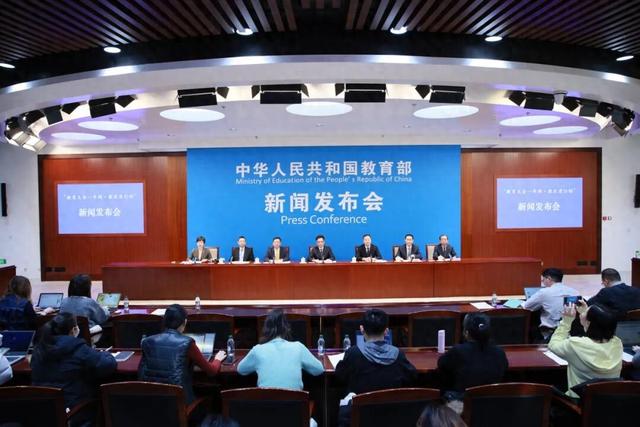
算力焦虑,学校不愁:教育数据和智能基座“国家队”上线
2 1 Shi Ji Jing Ji Bao Dao· 2025-12-30 07:31
Core Insights - The National Education Digital Strategy Action has entered its 2.0 phase, with the launch of the upgraded National Smart Education Platform, which now includes sections for preschool and graduate education, achieving full coverage of service targets [1] - The National Smart Education Public Service Platform has become the world's largest and highest-quality education resource center, aggregating over 130,000 quality resources for primary and secondary education, 12,500 vocational education courses, and 145,000 higher education courses, with a total user base exceeding 178 million [2] - The platform integrates over 60 application tools to support various educational scenarios, providing free services to teachers and students, and has served 140 million people through various government services [4] Digital Infrastructure - The launch of the National Education Big Data Center and Smart Middle Platform marks a significant milestone in implementing the education digital strategy, breaking down data silos and enabling real-time monitoring of key educational indicators [10] - The Big Data Center allows for deep analysis of student learning processes and needs, supporting differentiated teaching and personalized guidance [10][11] - The Smart Middle Platform provides standardized interfaces and modular packaging, facilitating quick application development and resource optimization [12] Artificial Intelligence Integration - The strategic direction of the education digital strategy 2.0 emphasizes the integration of artificial intelligence (AI) into education, with initiatives to make AI a common course for all students and teachers [6] - The Ministry of Education plans to implement AI in education through pilot programs across various regions and institutions, with a goal to release related policy documents by 2026 [9] - The platform has aggregated over 1,000 high-quality AI courses, promoting AI-enabled education across different educational levels [7] Application and Impact - Schools are increasingly utilizing digital tools to enhance teaching methods, with examples of successful integration of smart classroom applications and adaptive learning features [17] - The platform's services have evolved to address diverse educational needs, including job placement, examination services, and academic verification [4] - The development of AI in education is seen as a transformative force, reshaping the roles of universities and enhancing collaborative research efforts [16]
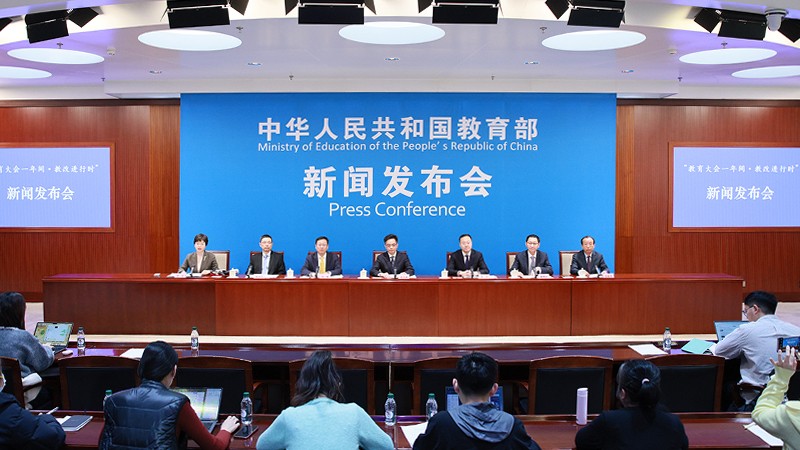
教育部:将按照不同教育阶段特点,分类推动人工智能通识教育
Xin Lang Cai Jing· 2025-12-30 05:37
教育部将按照不同教育阶段特点,分类推动人工智能通识教育,培养胜任智能时代的高素质人才。 智通财经记者 程婷 三是强化应用供给,促进深度融合。以国家智慧教育平台为重要阵地,上线丰富多元的人工智能应用。 如,在国家平台门户上线"AI试验场",汇聚14个AI智能工具;推动国家平台智能化改造,上线"育小 苗"智能体,辅助中小学教师和学生高效获取平台资源;上线思政教育智能体,涵盖新生入学、党团建 设等7大应用场景,已在部分高校推广试用;在中国高校科技成果交易平台发布"科交汇"智能体,实现 企业需求智能感知和转化成果智能匹配。 四是创新推进机制,鼓励实践探索。包括,设立人工智能开放联盟,开展人工智能赋能教育行动试点, 在全国设立509所人工智能教育基地校,在中国国际大学生创新大赛增设"人工智能+"赛道,布局人工智 能行业应用中试基地。 五是强化安全保障,确保智能向善。统筹发展和安全,将人工智能安全纳入教育安全大格局,一体保障 技术安全、数据安全、内容安全、算法安全和伦理安全。 周大旺表示,下一步,教育部将继续深入推进人工智能赋能教育行动,计划在明年出台相关政策文件, 系统部署推进人工智能教育和应用,构建面向未来的教育体系 ...
马建新:数字时代的大学需要开放、协同、敏捷的现代化治理
Xin Lang Cai Jing· 2025-12-27 14:34
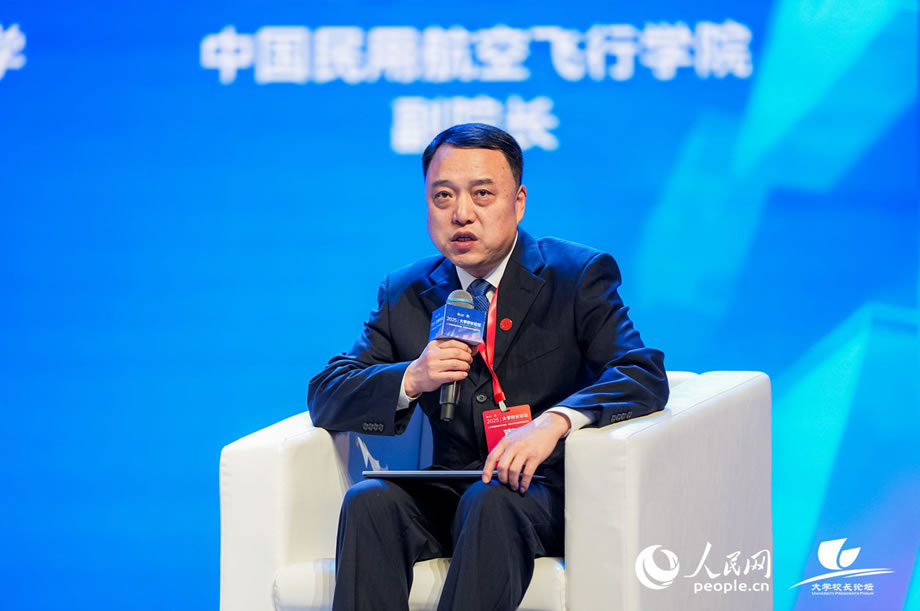
中国民用航空飞行学院副院长马建新出席论坛并发言 马建新提出,构建数字时代的教育新形态对大学治理模式提出新要求:一是治理体系要具备前瞻性与动态适应性,必须能够快速响 应产业变革,实现人才供给与产业需求精准对接以及全链条人才培养支撑;二是要建立深度融合的产教协同机制,形成"校企无缝 对接"的协同育人生态,让人才培养全程对接产业实际;三是要强化跨学科组织的整合能力,促进校内多学科力量汇聚,开展有组 织科研;四是要拓展大学的社会服务功能,推动学校从教学科研向公共服务延伸;五是要提升开放性与国际化治理水平,治理体系 须具备国际视野。 结合学校围绕低空经济人才培养与产业融合的实践,马建新介绍,中国民用航空飞行学院扎根民航,以"服务国家战略、对接产业 需求"为导向,探索出了一条特色育人路径,构建全方位人才培养体系。在学科专业布局上,精准对接低空经济产业链核心环节, 实现人才精准供给;通过分层分类精准培养、深化产教融合协同育人、拓展国际交流合作等创新人才培养模式。 针对"如何坚持智能向善,推动人工智能合理有序融入教育"这一问题,马建新认为,智能向善的核心是坚守教育初心。只有以人才 培养为锚点,让人工智能适配行业需求、赋能教育 ...
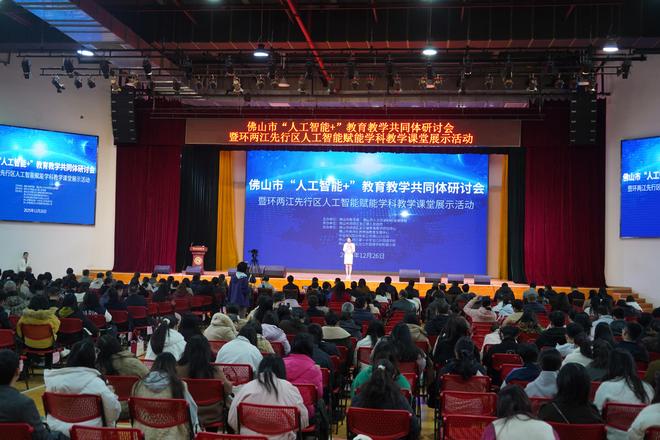
佛山本土教育大模型正式启动!AI赋能区域教学改革
Nan Fang Du Shi Bao· 2025-12-26 13:53
Core Insights - The event held on December 26, 2025, in Shunde District aimed to promote the integration of artificial intelligence in education, enhancing teachers' digital literacy and teaching capabilities [1][3] - The launch of the "Foshan Education Wisdom+" model signifies a significant step in building an intelligent education support system, providing more precise and intelligent resources and services for teachers and students [3] Group 1 - The "Artificial Intelligence+" education teaching community has covered over 30,000 teachers across Foshan's primary and secondary schools, creating a positive educational ecosystem [3] - The event featured experience sharing from various educational representatives, highlighting innovative practices in applying artificial intelligence in education [3][5] - A total of 12 AI-enabled demonstration classes were presented, covering subjects such as history, physics, chemistry, English, Chinese, mathematics, information technology, music, and art, showcasing the active exploration of AI integration in teaching [5] Group 2 - The event is a critical milestone in Foshan's systematic promotion of artificial intelligence in education, with over 3,000 educational communities established since the launch of the teaching community [5] - The future direction will be guided by the "Foshan Action Plan for High-Quality Development of Basic Education Empowered by Artificial Intelligence (2025-2027)," focusing on application orientation and risk prevention [5]
AI+教育 会碰撞出什么火花
He Nan Ri Bao· 2025-12-21 23:48
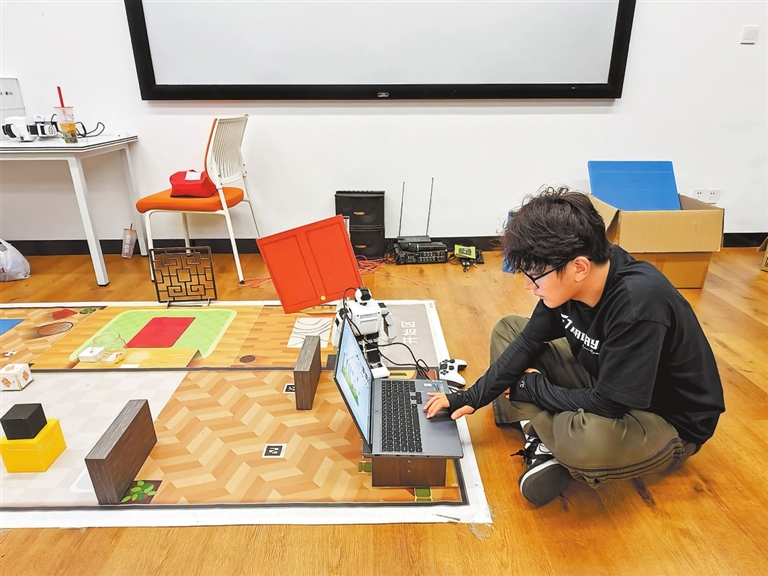
Core Insights - The integration of artificial intelligence (AI) into education is becoming essential, with institutions in Henan province actively adapting their programs to meet the evolving demands for skilled professionals in AI-related fields [6][10][12]. Group 1: AI in Education - Henan universities are optimizing their AI-related programs, including restructuring courses and enhancing teaching methods to incorporate AI technologies [6][10]. - The development of AI applications in education is exemplified by the "智护通" (Smart Nursing Assistant) at Henan University of Traditional Chinese Medicine, which provides real-time answers and knowledge mapping for nursing students [9][10]. - The "数智仲景" (Smart Zhongjing) model at Henan University of Traditional Chinese Medicine integrates various educational resources to support personalized learning and improve teaching efficiency [10][11]. Group 2: AI Talent Development - The artificial intelligence technology application program at Henan Vocational Technical College focuses on training "on-site engineers" who can effectively implement AI technologies in industry [15][16]. - The curriculum includes practical training in data annotation, machine learning, and deep learning, aligning with industry needs for roles such as AI trainers and data analysts [15][16]. - Continuous updates to the talent development plan ensure that students are equipped with the latest skills, including large model application development and natural language processing [17]. Group 3: Smart Water Management - The Smart Water program at North China University of Water Resources and Electric Power prepares students for the integration of AI in water management, emphasizing practical applications in drought prediction and irrigation management [12][13]. - The curriculum combines traditional water management courses with information technology, fostering a new generation of professionals skilled in both fields [13][14]. Group 4: Intelligent Automotive Engineering - The Intelligent Connected Vehicle program at Henan Transportation Vocational Technical College is designed to meet the growing demand for skilled workers in the smart automotive industry [19][20]. - The program incorporates real-world projects in collaboration with companies, allowing students to gain hands-on experience with advanced automotive technologies [19][21]. - The curriculum is structured to ensure that students are well-versed in both theoretical knowledge and practical skills, preparing them for careers in the rapidly evolving automotive sector [20][21].
“十四五”时期广西教育事业取得长足进步
Xin Lang Cai Jing· 2025-12-21 01:12
Group 1 - The core viewpoint of the news is that during the "14th Five-Year Plan" period, Guangxi has made significant progress in educational reform and development, showcasing impressive achievements [1] - The improvement of educational conditions includes the addition of 660,000 basic education seats, the establishment of 1 renamed university, 3 colleges upgraded to undergraduate status, 4 independent colleges successfully transitioned, and 8 new vocational colleges [1] - The coverage of public kindergartens in towns has reached full coverage, with 95.1% of migrant workers' children attending public compulsory education schools in cities [1] Group 2 - The "Double Reduction" policy has shown significant results, with a 100% coverage rate of after-school services in compulsory education schools, leading to a noticeable reduction in students' homework and extracurricular training burdens [1] - The digital transformation of education is accelerating, with full coverage of broadband networks and multimedia teaching equipment in primary and secondary schools [1] - The number of full-time teachers in the region has reached 762,700, an increase of 12.85% compared to 2020, and the proportion of teachers with a bachelor's degree or higher has increased by 13.41% [2] Group 3 - Guangxi has established cooperative relationships with nearly 200 institutions in ASEAN countries, with over 20 vocational colleges collaborating with industry enterprises in ASEAN [2] - The "Study in Guangxi" brand is gaining recognition, with over 6,000 students from ASEAN countries expected by June 2025, making Guangxi one of the provinces with the highest number of ASEAN students [2] - Guangxi has set up the first provincial scholarship project in cooperation with the Ministry of Education, increasing the proportion of students applying for master's and doctoral programs to 70% [2]
向人民汇报!南京建邺这张年度教育“成绩单”太闪亮
Xin Lang Cai Jing· 2025-12-20 13:55
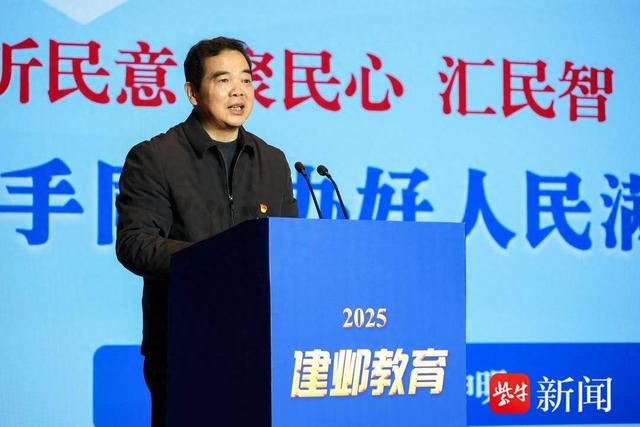
建邺区教育局党组书记吴坤明作《听民意 聚民心 汇民智 解民忧 携手同心办好人民满意的高品质教育》 主题汇报,全面回顾2025年建邺教育的丰硕成果。吴坤明指出,2025年,全区教育系统在区委、区政府 的正确领导下,聚焦高质量发展和教育内涵品质提升,聚力推进新校建设、深化综合改革等重点工作, 携手同心办好教师幸福、学生快乐、家长满意、社会认可的高品质建邺教育。 这一年,全区教育大会描绘强区建设新蓝图,明确到2027年率先建成现代化教育强区,打造"学在建 邺"闪亮名片,18位专家学者加盟教育智库,与南京大学等四所高校签署战略合作协议;教育党建引领 成效显著,全区公办中小学校党组织领导的校长负责制改革100%落地落实,暑期完成109名负责干部调 整;教师队伍建设再攀新高,省特级教师29人、市学科教学(含德育)带头人99人、市优秀青年教师 (含德育)166人,区级以上骨干教师占比达42.9%,各项指标省市领先;五育融合助力学生全面发 展,学生在国际国内各类大赛中屡获殊荣,中考连续19年超市均分,稳居全市"第一方阵";聚智赋能打 造办学新品牌,多所学校获评国家级、省级特色学校或入围重点项目;校家社协同育人新生态持续优 化 ...
竞业达:公司将发挥场景链条、训练数据及大模型技术优势,把握市场机遇
Zheng Quan Ri Bao Wang· 2025-12-10 13:45
Core Viewpoint - The company anticipates significant growth in the education market driven by an expanding base of students and the demand for smart classrooms and AI-enabled teaching applications [1] Industry Insights - The number of candidates and enrolled students is expected to continue increasing in the coming years, leading to a release of demand for the construction of new schools and campuses [1] - The penetration rate of smart classrooms is currently below 20%, compared to nearly 70% for multimedia classrooms, indicating substantial room for growth [1] - Supportive policies such as the "Education Strong Nation 2035" initiative and the push for digital education and AI integration are expected to contribute to considerable market expansion [1] Market Opportunities - There is a structural shift in user demand towards smart classrooms and AI-driven educational systems, which will create new opportunities for the industry [1] - The demand for evaluation and assessment services based on new technologies and models is expected to rise, further benefiting the sector [1] - The emergence of AIGC and large models is anticipated to reshape the competitive landscape of the market [1] Company Strategy - The company plans to leverage its advantages in scenario chains, training data, and large model technology to seize market opportunities and enhance its competitiveness within the industry [1]