国家教育大数据中心

Search documents
深入招生考试、教学评价、就业服务等核心场景——教育智能化转型提速
Jing Ji Ri Bao· 2026-01-04 22:35
Core Viewpoint - Digital technology is reshaping the education system, with artificial intelligence evolving into a core element driving the entire teaching process, impacting key areas such as admissions, teaching evaluation, employment services, and campus governance [1][2]. Group 1: Digital Education Infrastructure - The National Education Big Data Center and the National Smart Education Public Service Platform have officially launched, enabling data sharing and intelligent upgrades of national platforms, marking a significant milestone in the digital education strategy [1][2]. - The National Education Big Data Center aims to break down data silos, allowing real-time monitoring of key indicators such as resource allocation, teacher configuration, student development, and teaching quality [1][3]. - The Smart Platform integrates AI, data services, and algorithm modules into reusable components, facilitating rapid application development and deployment [1][2]. Group 2: Educational Governance and Data Utilization - The National Education Big Data Center supports differentiated teaching and personalized guidance by deeply analyzing students' learning processes and developmental needs [2][3]. - Data sharing initiatives are enhancing educational services' precision, as demonstrated by Wuhan University of Technology's model for identifying economically disadvantaged students [3][4]. - The integration of big data and AI technologies is transforming the teaching process towards collaborative human-machine learning, marking a shift from knowledge transmission to capability enhancement [3][4]. Group 3: Future of Education - The launch of these platforms is expected to lead to a more equitable, high-quality, vibrant, and sustainable education system, with new forms of teachers, classrooms, and learning centers emerging [4]. - The education governance model is transitioning towards precision, intelligence, and modernization, with data-driven decision-making becoming the new norm [4].
教育智能化转型提速
Xin Lang Cai Jing· 2026-01-04 22:08
Core Insights - Digital technology is reshaping the education system, with artificial intelligence evolving from a single tool to a core element driving the entire teaching process, impacting admissions, evaluations, employment services, and campus governance [2][3] - The launch of the National Education Big Data Center and the National Smart Education Public Service Platform marks a significant milestone in implementing the education digitalization strategy, focusing on integration, intelligence, and internationalization [2][4] Group 1: National Education Big Data Center - The National Education Big Data Center breaks down data silos, enabling real-time monitoring of key indicators such as resource allocation, teacher distribution, student development, and teaching quality [3] - It supports differentiated teaching and personalized guidance by deeply analyzing students' learning processes and developmental needs [3][5] - The center is interconnected with 32 provincial education departments and over a thousand universities, forming a central data-sharing hub in the education sector [4] Group 2: National Smart Education Public Service Platform - The smart platform integrates AI, data services, and algorithm modules into reusable components, facilitating rapid application development and reducing redundancy [3][4] - It provides data-driven teaching assistance for teachers and content support for students, promoting the widespread application of intelligent teaching methods [4] - The platform aims to enhance educational governance modernization and improve the precision of educational services through data sharing [4][5] Group 3: Future of Education - The transition to a "smart education" phase signifies a shift from isolated applications to systematic integration and comprehensive deepening of digital education [5] - The new governance model emphasizes dynamic awareness, precise analysis, and scientific forecasting of educational data, enhancing management efficiency and responsiveness [5] - The future of education is expected to be more equitable, high-quality, vibrant, and sustainable, with new forms and scenarios of teaching and learning emerging to support lifelong development [5]

“十四五”期间我国数字教育实现从“量的扩增”到“质的飞跃”
Xin Hua Wang· 2026-01-03 22:30
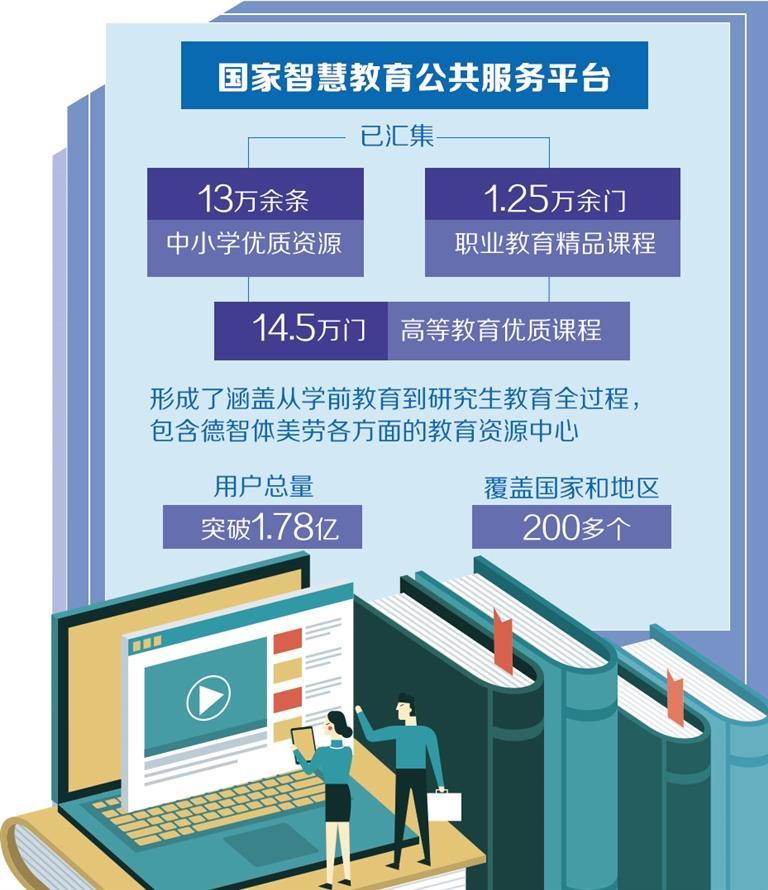
Core Viewpoint - The Ministry of Education of China has reported significant advancements in educational digitalization during the "14th Five-Year Plan" period, highlighting a transition from quantity to quality in digital education, which has become a crucial support for building a strong education system in China. Group 1: Educational Resource Development - A world-class educational resource center has been established, featuring over 130,000 quality resources for primary and secondary education, 12,500 vocational education courses, and 145,000 higher education courses, with a total user base exceeding 178 million and daily visits reaching 52 million [1] - The platform has integrated over 60 application tools to support various educational scenarios, enabling advanced teaching methods such as flipped classrooms and project-based learning, significantly enhancing overall teaching quality [1] - More than 64 million teachers have utilized the platform for lesson preparation, and over 90 million teachers have been trained through it, greatly improving their digital literacy and professional capabilities [1] Group 2: Lifelong Learning Center - A lifelong learning center has been established, gathering over 8,000 courses from 38 institutions, specifically targeting employment skills and continuing education for graduates and social learners [2] - The "Double Thousand" plan has been launched, offering over 2,600 micro-specialties and 1,400 vocational training courses to promote high-quality employment [2] - Initiatives for elderly learners have been introduced, including resources for cultural literacy and personal interests, enhancing the learning experience for older adults [2] Group 3: Public Service Center - A public service center has been created, consolidating 51 government services across eight categories, serving a total of 140 million people [3] - The platform has improved efficiency by integrating with 32 provincial government service platforms, facilitating services like student status inquiries and certificate verifications [3] - Pilot programs in regions like Xining have achieved nearly 50% of enrollment applications with "zero materials," significantly reducing processing time and easing the burden on parents [4] Group 4: Data Center and Governance - A national education big data center has been established, connecting with 32 provincial education departments and over 1,000 universities, enhancing data sharing and governance capabilities [4] - The integration of data has led to the creation of an "education digital map," allowing for scientific analysis and forecasting of school-age populations and talent supply [4] Group 5: International Influence - The first "China Smart Education White Paper" has been published, enhancing China's international influence in digital education [5] - The global version of the China Smart Education platform offers nearly 900 multilingual courses, promoting cultural exchange and sharing quality educational resources [5] - China has become a leading nation in the UNICEF "Public Digital Learning Portal Project," and the national platform has received the highest award for educational informationization from the UN [5]
涉及经济、教育等方方面面 多点发力谱写“十五五”数字中国建设新篇章
Yang Shi Wang· 2025-12-31 06:08
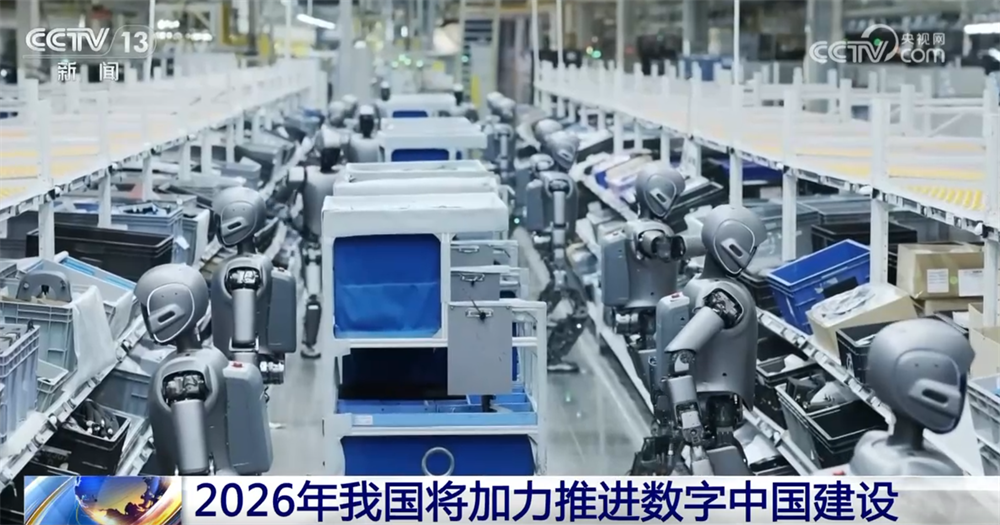
Group 1: Digital China Construction - In 2026, China will intensify efforts to advance the construction of Digital China, focusing on deepening data application and scenario development [1] - The initiative aims to promote comprehensive digital transformation in cities and develop new digital consumption models in 16 key sectors, including healthcare and transportation [1] Group 2: Data Technology and Industry Innovation - The "East Data West Computing" project will continue to be implemented, accelerating the establishment of a national integrated computing network [3] - Key laboratories and innovation platforms in the data field will be built, and a national integrated data market will be developed [3] Group 3: Automotive Industry Digital Transformation - The "Automotive Industry Digital Transformation Implementation Plan" has been jointly issued by multiple government departments, setting goals for the next phase of industrial digital transformation [4] - By 2027, the plan aims for significant improvements in smart manufacturing capabilities and digitalization levels across the automotive sector [6] Group 4: Education Digitalization Progress - The National Education Big Data Center has been launched, marking a new era of data sharing in education [7] - The center aims to transition educational governance from experience-driven to data-driven approaches, enhancing personalized teaching and curriculum adjustments [9] Group 5: Global Digital Empowerment Initiatives - The National International Development Cooperation Agency plans to support the "Digital South" brand to bridge the digital divide between the global North and South [12] - Over the next five years, 200 digital economy and AI training projects will be conducted for Southern countries to enhance their digital infrastructure [14]
国家教育大数据中心上线 打破“数据孤岛”
Yang Shi Wang· 2025-12-30 23:29
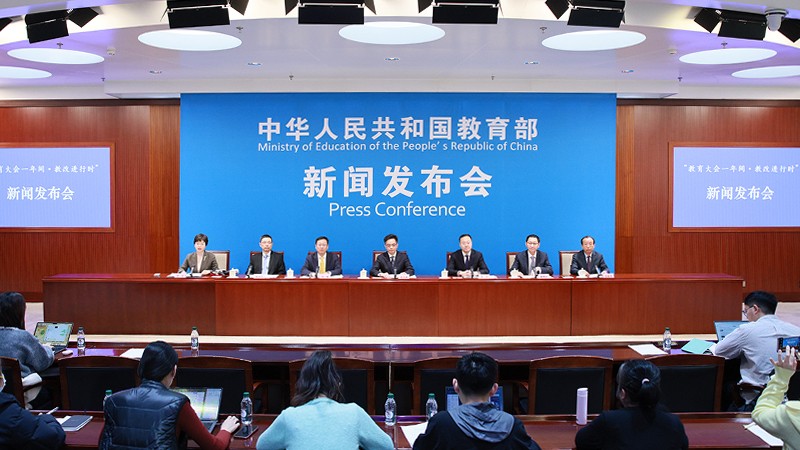
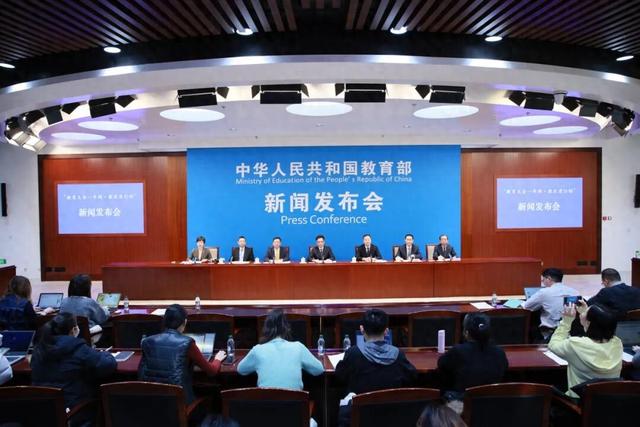
Group 1 - The Ministry of Education held a press conference on December 30, announcing the launch of the National Education Big Data Center and the National Smart Education Platform [1] - These platforms are designed to serve as a national-level education "data hub" and "smart core," facilitating the sharing and integration of educational data [1] - The initiative aims to support the intelligent upgrade of national platforms [1]
教育部:2026年将系统推进人工智能教育和应用
Zhong Guo Jing Ying Bao· 2025-12-30 17:15
Core Viewpoint - The Ministry of Education plans to advance the integration of artificial intelligence (AI) in education, with policies expected by 2026 to create a future-oriented educational system [1] Group 1: AI in Education Strategy - The Ministry of Education will implement a national digital education strategy 2.0 starting in 2025, emphasizing AI as a key strategic direction [1] - AI literacy will be integrated into general education across different educational stages to cultivate high-quality talent for the intelligent era [1][2] - Over 1,000 AI courses have been aggregated on the national smart education public service platform to meet diverse learning needs [2] Group 2: Pilot Programs and Applications - Pilot programs for AI in education are being steadily advanced, with 7 provinces in the eastern region and 20 cities in the central and western regions participating [2] - A total of 509 AI education base schools have been established to explore innovative practices in AI application [2] Group 3: Safety and Ethical Considerations - The Ministry of Education has incorporated AI safety into the overall educational safety framework, developing assessment indicators for AI application safety [3] - The national education big data center and intelligent middle platform have been launched to support the digital education strategy, focusing on integrated, intelligent, and international approaches [3][5] Group 4: Data-Driven Educational Evaluation - The big data center will analyze student learning processes and needs, supporting differentiated teaching and personalized evaluation [4] - It will also provide data for adjusting academic disciplines and innovating talent cultivation models based on talent growth patterns and societal demand changes [4] Group 5: Intelligent Middle Platform - The intelligent middle platform serves as a shared "intelligent toolbox," integrating AI capabilities, data services, and algorithm modules for reusable components [5] - It aims to provide precise data-driven support for teaching and learning, facilitating collaborative research and promoting quality teaching models [6]
国家智慧教育平台升级“上新”
Zhong Guo Jing Ji Wang· 2025-12-30 13:14
Core Insights - The National Smart Education Platform has been upgraded to include new sections for preschool and graduate education, achieving comprehensive service coverage for all educational levels [1] - The launch of the National Education Big Data Center marks a new phase in the management and sharing of educational data resources, enabling real-time monitoring of key indicators such as resource allocation and teaching quality [1] - The intelligent middle platform signifies a critical leap in the systematic empowerment of the national platform's intelligent construction, providing a comprehensive support system for educational applications [2] Group 1 - The National Smart Education Platform has added new modules for preschool and graduate education, enhancing its resource and service system [1] - The National Education Big Data Center aims to break down data silos and facilitate cross-departmental and cross-regional data sharing, transitioning educational governance from experience-driven to data-driven [1] - The big data center allows for in-depth analysis of student learning processes and needs, supporting differentiated teaching and personalized guidance for educators [1] Group 2 - The intelligent middle platform integrates standardized interfaces and modular packaging, creating a cohesive and efficient intelligent support system for education [2] - This platform enables users to quickly develop intelligent applications through low-code methods, categorized by application scenarios [2] - The establishment of the intelligent middle platform is expected to foster an innovative educational environment, transforming learning and teaching methods [2]
又升级啦!国家智慧教育平台有这些新变化
Xin Lang Cai Jing· 2025-12-30 12:58
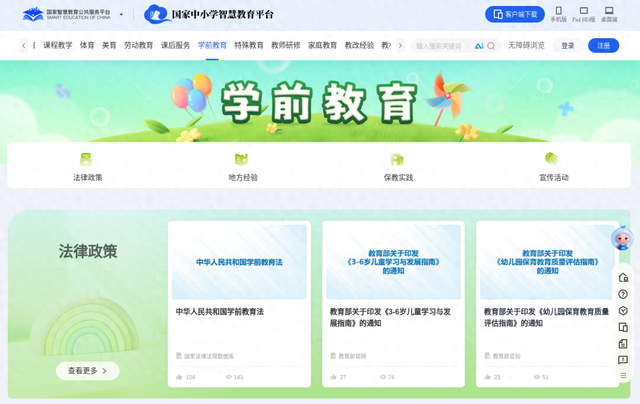
Core Insights - The Ministry of Education held a press conference to discuss the progress of digital education during the 14th Five-Year Plan, highlighting the launch of new sections in the National Smart Education Platform, including early childhood education and graduate education [1][2]. Group 1: Early Childhood Education - The early childhood education section focuses on the developmental characteristics of young children, targeting kindergarten principals, teachers, and parents, with 427 resources launched in four categories: legal policies, local experiences, educational practices, and promotional activities [1]. Group 2: Graduate Education - The graduate education section integrates multiple stakeholders and offers high-quality resources, including columns on party building, academic lectures, and cutting-edge research, along with a dedicated intelligent assistant to support innovative and academic services [2][4]. Group 3: National Education Big Data Center - The National Education Big Data Center connects universities, provincial education departments, and the Ministry of Education, facilitating data sharing across over a hundred projects and aggregating hundreds of billions of education data points to create a "digital map" of education [6]. Group 4: Intelligent Middleware - The intelligent middleware serves as the core of the national platform's intelligent operation, utilizing standardized interfaces and modular packaging to achieve centralized integration, unified scheduling, and on-demand supply, supporting educational intelligence across various scenarios [8].
教育数字化亮出“成绩单”!去教育部发布会现场看看
Bei Jing Ri Bao Ke Hu Duan· 2025-12-30 08:21
Core Viewpoint - The "14th Five-Year Plan" marks a significant year for educational digitalization in China, which is seen as a crucial breakthrough for developing new educational advantages and opportunities [1][3]. Group 1: Implementation of the Digital Education Strategy - The digital education strategy is essential for building a strong educational nation, as emphasized by President Xi Jinping, and is included in the Party's 20th National Congress report [3][4]. - The Ministry of Education has initiated the national digital education strategy, focusing on integration, intelligence, and internationalization, which has led to a qualitative leap in digital education [4][26]. Group 2: Achievements of the National Education Digitalization Strategy - The National Smart Education Public Service Platform has over 178 million users, covering more than 200 countries and regions, with a daily access volume of 52 million [5][6]. - The platform has gathered over 130,000 quality resources for primary and secondary education, 12,500 vocational education courses, and 145,000 higher education courses, covering all educational stages [6][27]. - Various applications like dual-teacher classrooms and famous teacher classrooms are widely implemented, promoting equitable access to quality educational resources [7][8]. Group 3: Enhancements in Teaching Quality and Teacher Development - The platform integrates over 60 application tools to support various educational scenarios, enhancing teaching quality through innovative teaching methods [8][9]. - More than 64 million teachers have utilized the platform for lesson preparation, and over 90 million teachers have received training, significantly improving their digital literacy and professional skills [9][10]. Group 4: Lifelong Learning and Community Engagement - The national lifelong education platform offers over 8,000 courses from 38 institutions, catering to various learning needs, including job skills and personal enrichment [10][11]. - Initiatives like the "Silver Age Learning" program provide resources for elderly learners, enhancing their quality of life through education [11][12]. Group 5: Data-Driven Educational Governance - The establishment of the National Education Big Data Center facilitates data sharing and analysis across educational institutions, improving governance and resource allocation [18][19][30]. - The integration of data-driven decision-making enhances the precision and efficiency of educational management, moving towards a more modern governance model [30][21]. Group 6: International Collaboration and Influence - China has hosted the World Digital Education Conference for three consecutive years, attracting participants from 84 countries, showcasing its international influence in digital education [22][25]. - The release of the "China Smart Education White Paper" provides a framework for global digital education development, promoting cultural exchange and collaboration [23][24]. Group 7: Future Directions - The Ministry of Education plans to advance the national digital education strategy 2.0, focusing on enhancing public service levels and governance capabilities in education [26].
算力焦虑,学校不愁:教育数据和智能基座“国家队”上线
2 1 Shi Ji Jing Ji Bao Dao· 2025-12-30 07:31
Core Insights - The National Education Digital Strategy Action has entered its 2.0 phase, with the launch of the upgraded National Smart Education Platform, which now includes sections for preschool and graduate education, achieving full coverage of service targets [1] - The National Smart Education Public Service Platform has become the world's largest and highest-quality education resource center, aggregating over 130,000 quality resources for primary and secondary education, 12,500 vocational education courses, and 145,000 higher education courses, with a total user base exceeding 178 million [2] - The platform integrates over 60 application tools to support various educational scenarios, providing free services to teachers and students, and has served 140 million people through various government services [4] Digital Infrastructure - The launch of the National Education Big Data Center and Smart Middle Platform marks a significant milestone in implementing the education digital strategy, breaking down data silos and enabling real-time monitoring of key educational indicators [10] - The Big Data Center allows for deep analysis of student learning processes and needs, supporting differentiated teaching and personalized guidance [10][11] - The Smart Middle Platform provides standardized interfaces and modular packaging, facilitating quick application development and resource optimization [12] Artificial Intelligence Integration - The strategic direction of the education digital strategy 2.0 emphasizes the integration of artificial intelligence (AI) into education, with initiatives to make AI a common course for all students and teachers [6] - The Ministry of Education plans to implement AI in education through pilot programs across various regions and institutions, with a goal to release related policy documents by 2026 [9] - The platform has aggregated over 1,000 high-quality AI courses, promoting AI-enabled education across different educational levels [7] Application and Impact - Schools are increasingly utilizing digital tools to enhance teaching methods, with examples of successful integration of smart classroom applications and adaptive learning features [17] - The platform's services have evolved to address diverse educational needs, including job placement, examination services, and academic verification [4] - The development of AI in education is seen as a transformative force, reshaping the roles of universities and enhancing collaborative research efforts [16]