
人文经济学

Search documents
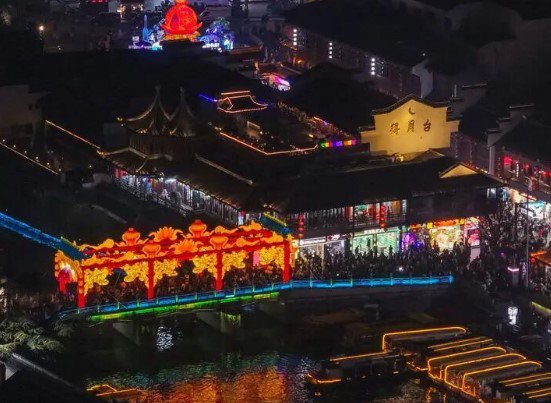
南京“老城南”赓续千年文脉赋能城市更新
Xin Lang Cai Jing· 2026-01-09 15:38
Core Viewpoint - Nanjing's "Old South City" is a living cultural relic that integrates historical preservation with economic development, showcasing a model for urban renewal that emphasizes cultural continuity and community engagement [1][11]. Group 1: Cultural Heritage and Urban Renewal - Nanjing's 3100-year history is embodied in "Old South City," which is preserved through a "protection first, organic renewal" approach, exemplified by the Confucius Temple area [1]. - The revitalization of historical districts like the Confucius Temple has transformed them into vibrant spaces that reflect local culture, enhancing emotional connections between residents and their environment [2]. Group 2: Economic Development and Creative Industries - The "Old South City" initiative focuses on optimizing industrial structures, with areas like Xinmenxi and Guochuangyuan showcasing the transformation of industrial relics into cultural consumption spaces [4][5]. - The Xinmenxi area has become a national-level cultural industry demonstration park, attracting over 3000 creative professionals and revitalizing previously idle industrial land [7][5]. Group 3: Community Engagement and Livability - The urban renewal process in "Old South City" incorporates community-driven initiatives, allowing residents to participate in the planning and management of their neighborhoods, fostering a sense of community [9][11]. - The introduction of cultural spaces and community services, such as the "Corner Encounter" project, enhances accessibility to cultural resources, providing convenient cultural services to both residents and visitors [9][11].

“齐白石在山东”以艺术想象撬动文旅增量
Da Zhong Ri Bao· 2026-01-08 01:04
Core Insights - The "Qi Baishi in Shandong" project serves as a new pivot for cultural tourism integration in Shandong, despite the artist never having visited the region, showcasing how cultural connections can drive economic growth and urban vitality [2][7] Cultural Connection - The project establishes a strong cultural IP by transforming the spiritual connection of Qi Baishi with Shandong into a tangible public recognition, leveraging his artistic legacy and the contributions of his disciples from the region [3] Transformation Mechanism - The project employs a multi-faceted approach to convert the unique cultural IP into experiential consumption scenarios, including immersive exhibitions and innovative product offerings that integrate local intangible cultural heritage [4][5] Economic Incentives - A key policy, termed "Cultural Creative Income 70/30," incentivizes innovation by allocating 70% of net revenue from cultural products to development and 30% for personnel rewards, significantly boosting the motivation of cultural institutions and creators [6] Overall Impact - The project exemplifies how deep cultural interpretation can be transformed into productivity, creating new supply through innovative industry integration, ultimately enhancing cultural confidence and economic vitality in the region [7]
姑苏区“美好古城生活启新计划”公布
Su Zhou Ri Bao· 2026-01-07 02:20
Core Insights - The "Four Seasons Blossom · Quality Suzhou - 2026 Beautiful Ancient City Life New Plan" was officially launched, focusing on high-quality development and enhancing the economic vitality of the ancient city [1][2] Group 1: Action Plans - The plan includes three action plans: Flower Economy, Sweet Economy, and Pet Economy, along with a cultural tourism manual [1] - The Flower Economy Action Plan aims to establish a modern flower industry system by 2026, enhancing the flower industry chain's output value significantly [1] - The Sweet Economy Action Plan focuses on promoting the "Love in the City of Fortune" brand, with plans to add at least 30 marriage service points and create new consumption scenarios [2] - The Pet Economy Action Plan targets the development of a comprehensive pet industry cluster, attracting over 50 related enterprises and establishing 8 specialized pet service circles [2] Group 2: Cultural Tourism Manual - The Suzhou Cultural Tourism Manual is designed to immerse users in the elegance of Jiangnan culture, featuring 336 cultural tourism promotional activities [2] - The manual serves as a guide for cultural dissemination, tourism direction, and consumption engagement, enhancing the overall experience of the ancient city [2]
赵西三:促进供给和需求良性互动
Jing Ji Ri Bao· 2026-01-06 00:12
Core Viewpoint - The "14th Five-Year Plan" emphasizes the importance of promoting a positive interaction between supply and demand to achieve a dynamic balance, which is crucial for economic stability and high-quality development [1] Group 1: Demand Side Changes - The consumption structure is shifting from survival-oriented to development-oriented, with high-quality, personalized, and diverse consumption becoming mainstream, driving industrial upgrades [1] - There is a notable lack of domestic demand, particularly in consumption, with a low overall consumption rate and significant changes in consumption concepts and methods [2] Group 2: Supply Side Challenges - Supply-side issues include innovation lagging behind demand and quality mismatches, particularly in high-quality service and mid-to-high-end product sectors, which restricts the release of consumption potential [2] - Some traditional and emerging industries face "involution" competition characterized by low price and quality, leading to structural contradictions such as overcapacity and insufficient high-quality supply [2] Group 3: External Environment and Strategic Focus - The external environment is increasingly challenging, necessitating a focus on expanding domestic demand to counter external shocks and promote sustainable economic development [3] - The strategy involves integrating the expansion of domestic demand with supply-side structural reforms to enhance the quality of products and services [3] Group 4: Innovation and Technology - Innovation is highlighted as a key driver for promoting positive interactions between supply and demand, with a focus on integrating technological and industrial innovations [3] - Companies are encouraged to adapt to changing consumer demands through technological advancements and new product development [3] Group 5: Scene and Data Integration - The cultivation of application scenarios is essential for connecting supply and consumption, facilitating the testing of new technologies and products [4] - The integration of digital technologies and platforms is crucial for enhancing data aggregation and value release, improving supply-demand matching [4] Group 6: Cultural Empowerment - The integration of culture into economic development is emphasized, promoting the fusion of traditional culture with modern products and services to meet diverse consumer needs [5]
促进供给和需求良性互动
Jing Ji Ri Bao· 2026-01-05 22:40
Core Viewpoint - The 20th Central Committee's Fourth Plenary Session emphasizes the importance of promoting a dynamic balance between supply and demand to achieve high-quality economic development, highlighting the need for a strategic focus on expanding domestic demand and optimizing supply [1]. Group 1: Supply and Demand Dynamics - The economic development in China has seen profound changes on both the supply and demand sides, with consumer demand shifting towards higher quality, personalized, and diverse consumption, which is driving supply structure optimization and quality enhancement [1]. - On the supply side, there is a rapid transition from old to new driving forces, with advancements in manufacturing becoming more intelligent, green, and integrated, leading to the emergence of new technologies, products, and business models that continuously generate new demand [1]. Group 2: Challenges in Economic Development - There are significant challenges in the current economic landscape, including a prominent contradiction between strong supply and weak demand, particularly in consumer spending, which remains low and is characterized by a rapidly diversifying consumption structure [2]. - Issues such as innovation lagging behind and quality mismatches persist on the supply side, particularly in high-quality service consumption and mid-to-high-end goods, which restricts the release of consumption potential [2]. - Structural contradictions exist, with some traditional and emerging industries facing low-price, low-quality competition, leading to overcapacity in certain sectors while simultaneously lacking high-quality products and services [2]. Group 3: Strategies for Economic Growth - To address external pressures, it is essential to enhance domestic demand and implement a strategy focused on expanding domestic markets while simultaneously deepening supply-side structural reforms [3]. - Innovation should be a key driver for promoting the interaction between supply and demand, with a focus on integrating technological and industrial innovations to create a market-driven innovation system [3]. - The cultivation of application scenarios is crucial for connecting supply and consumption, facilitating the testing of new technologies and products, and promoting diverse and differentiated consumption [4]. Group 4: Digital and Cultural Integration - The integration of digital technologies and platforms is vital for accelerating data aggregation and value release, enabling companies to develop products and services that better align with market demands [4]. - Cultural empowerment is emphasized as a means to enhance economic and social development, promoting the integration of excellent cultural elements with modern products and services to meet diverse consumer needs [5].
文旅产业加速蝶变
Xin Hua She· 2025-12-31 02:10
Group 1 - Huanggang Village in Guizhou Province has been recognized as a "Best Tourism Village" by the United Nations World Tourism Organization, marking it as the first village in Guizhou to receive this honor [1] - The village has seen a significant increase in tourism, with 6.14 million visitors in 2023, representing a 14.97% year-on-year growth, and a total tourism revenue of 6.403 billion yuan, up 10.26% [1] - The National Bureau of Statistics reported that from January to November, retail sales in the cultural and leisure services sector maintained double-digit growth, indicating a strong recovery in service consumption [1] Group 2 - The first Helan Mountain East Foot Mountain Bike Challenge was held, promoting the region as an outdoor sports destination and integrating sports with cultural tourism [3] - The cultural tourism industry in the Helan Mountain area has become a major employment sector for local youth, with 15.608 million visitors and 11.1 billion yuan in tourism spending from January to November, surpassing last year's figures [3] - The integration of culture and tourism is seen as a way to enhance economic development and promote local heritage [4] Group 3 - The release of five tourism routes in Liaoning, based on popular films, showcases the trend of integrating cultural elements into tourism [4] - The report from the State Council emphasizes the mutual benefits of cultural and tourism industries, contributing to economic growth and structural optimization [4] - The cultural and tourism sectors are increasingly interwoven, leading to the emergence of new growth points in the economy [4] Group 4 - The Hangzhou Olympic Sports Center has become a model for cultural economy, demonstrating how events can drive surrounding consumption and create a vibrant urban ecosystem [6] - Research indicates that for every 1 yuan spent on concert tickets, an additional 4.8 yuan is generated in surrounding consumption, highlighting the economic impact of cultural events [6] - The development of a human-centered cultural economy aims to meet the growing demand for quality cultural experiences [6] Group 5 - In the first three quarters, domestic travel reached 4.998 billion trips, a year-on-year increase of 18.0%, while the revenue of cultural and related industries grew by 7.9% [7] - The integration of cultural resources into tourism is seen as a way to enhance the quality of life and meet the spiritual needs of the population [7] - The shift from material to human-centered logic in investment reflects the increasing importance of culture in economic development [7] Group 6 - Shanghai Lego Land achieved over 1 million visitors within four months of opening, setting a record for the fastest Lego park to reach this milestone [8] - The park's success is attributed to its diverse and immersive experiences, appealing particularly to younger audiences and families [8] - New creative destinations are emerging, driven by unique cultural and recreational offerings that attract modern travelers [8] Group 7 - Innovation is becoming a key variable in the cultural tourism industry, with new business models and experiences being developed [9] - The Ministry of Culture and Tourism emphasizes the importance of cultural empowerment in driving economic and social development [9] - The focus on cultural value and the growth of the human economy is expected to create new growth points for the national economy [9]
2025文旅产业加速蝶变 服务消费潜力继续释放
Xin Hua She· 2025-12-30 07:17
Group 1 - The cultural and tourism industry is experiencing rapid transformation, with significant growth in visitor numbers and revenue, exemplified by Huanggang Village in Guizhou, which received 6.14 million visitors and generated 6.403 billion yuan in tourism revenue this year, marking a 14.97% and 10.26% increase respectively [1] - The integration of culture and tourism is being actively explored across various regions, with initiatives such as the "Follow the Film and TV Tour in Liaoning" and immersive experiences in Shaanxi and Sichuan, highlighting the deepening relationship between cultural heritage and tourism [4] - The cultural tourism sector is becoming a major employment and entrepreneurial hub for young people, as seen in Ningxia's Xixia District, which welcomed 15.608 million visitors and achieved 11.1 billion yuan in tourism spending from January to November [3] Group 2 - The human economy is being strengthened through cultural events, with the Hangzhou Olympic Sports Center showcasing how concerts and sports can drive local economic activity, generating 4.8 yuan in surrounding consumption for every 1 yuan spent on tickets [5] - Nationally, domestic travel reached 4.998 billion trips in the first three quarters, reflecting an 18.0% year-on-year increase, while the revenue of large-scale cultural and related enterprises grew by 7.9% [6] - The emergence of innovative cultural experiences, such as the LEGO Land in Shanghai, which attracted over 1 million visitors in just four months, indicates a shift towards personalized and diverse cultural leisure resources that appeal to younger generations [7][8] Group 3 - The Ministry of Culture and Tourism emphasizes the importance of leveraging cultural value to enhance economic and social development, aiming to foster new business models and growth points within the cultural economy [9] - As the economy and society evolve, the integration of culture with various sectors is crucial for improving social civilization, economic growth, and the quality of life for citizens [9] - The upcoming year is expected to see a continued emphasis on cultural initiatives that enhance the quality of life for the populace, driven by the power of culture [10]
专家建言推动人文与经济新起点上融合共生——
Nan Jing Ri Bao· 2025-12-30 02:43
Core Insights - Nanjing's "14th Five-Year Plan" emphasizes "cultural empowerment" and the integration of cultural values with economic vitality, showcasing the city's unique path of humanistic economic development [1] Group 1: Cultural and Economic Integration - Nanjing leverages its rich historical and cultural heritage to enhance tourism and economic activities, creating a vibrant consumer ecosystem through the integration of cultural, tourism, and commercial elements [1][2] - The Qinhuai cultural industry park has attracted nearly 3,000 enterprises, with over 70% being cultural companies, contributing more than 60% to the region's cultural industry economy [2] Group 2: Urban Development and Heritage - The transformation of the Xiaoxihu area into a space where local residents and new businesses coexist reflects innovative urban renewal practices, emphasizing community involvement [4] - Recommendations include strengthening heritage protection and activation, advancing the application of digital technologies in cultural heritage, and enhancing public cultural service accessibility [4] Group 3: Future Development Strategies - The focus on developing new industries such as digital entertainment and AI content production aims to elevate Nanjing's core competitiveness and foster internationally competitive enterprises [5] - Initiatives to expand international cultural exchanges and enhance the city's global influence are crucial, including promoting local cultural brands and improving the narrative of Nanjing on the international stage [5]
无锡阳山:让人文经济“甜”入人心
Xin Lang Cai Jing· 2025-12-28 22:35
Core Insights - Yangshan Town is successfully integrating culture and industry, creating a "sweet path" of development that aligns with the spirit of the 20th National Congress of the Communist Party of China [1][4] - The transformation from traditional sales methods to digital and brand-driven approaches has significantly increased the production and economic value of Yangshan peaches [1][3] Agricultural Development - Yangshan's peach planting area is projected to reach 38,000 acres by 2025, with an annual output of approximately 36,000 tons and a regional comprehensive output value nearing 2 billion yuan [1] - The introduction of smart agricultural technologies has improved yield by nearly 20% compared to traditional methods, while ensuring higher and more stable prices [1] Economic and Cultural Integration - Events like "Peach Blossom Appointment" and "Honey Peach Gathering" have stimulated new business ventures such as homestays, cafes, and art galleries, enhancing local economic vitality [2] - The establishment of cooperatives allows farmers to participate as stakeholders, ensuring stable income through collective branding and pricing strategies [2] Digital Transformation and E-commerce - The rise of "peach anchors" has led to online sales reaching 160 million yuan, with high-end peaches being exported to markets like Dubai and Tokyo [2] - Modern logistics, including cold chain facilities from companies like SF Express and JD, have reduced transportation losses to below 3% [2] Tourism and Cultural Experience - Yangshan is leveraging its unique geological and cultural resources to create immersive tourism experiences, attracting over 2 million visitors during the peach blossom season [2][3] - The local government aims to develop a replicable model for rural revitalization, focusing on brand building, talent cultivation, and policy support [3][4] Future Development Plans - Yangshan plans to deepen digital rural construction and further integrate agriculture, culture, and tourism, aiming to establish itself as a national-level tourism destination [3][4]
内外同步发力,“五五战略”如何破解顺德“成长的烦恼”?
Nan Fang Du Shi Bao· 2025-12-24 13:40
Core Insights - The article discusses the challenges and opportunities faced by Shunde as it enters a new development phase, emphasizing the need for a strategic approach to external trade and internal industrial structure [1] External Environment - The intensifying great power competition and the acceleration of a new technological revolution and industrial transformation pose both challenges and opportunities for Shunde [1] - Shunde's foreign trade dependency is only 50% of its GDP, significantly lower than Dongguan's 100%, indicating a need for increased focus on external trade [1] Internal Challenges - Shunde's industrial structure remains predominantly traditional, with over 70% of its industries classified as traditional, which is below the national average of 80% [1] - The lack of emerging industries and insufficient transformation of scientific research achievements are identified as key areas for improvement [1] Strategic Directions - Shunde must embrace "five musts" to drive high-quality development, including the integration of cultural and economic development, promoting technological advancement, enhancing urban and rural development, fostering government-business collaboration, and effectively utilizing a comprehensive work method [2][3] - The focus should be on creating a world-class intelligent manufacturing hub, enhancing tourism, improving the business environment, and promoting cultural development [4][5] Economic Potential - Shunde's strong economic foundation, resilient industries, and deep reform genes position it well for future growth, especially with its unique advantages in the Greater Bay Area [1]