
供应链建设

Search documents
瑞幸咖啡:第二季度净增门店2109家 总数达26206家
Zhong Zheng Wang· 2025-07-31 01:44
Core Insights - Luckin Coffee reported a total net revenue of 12.359 billion yuan for Q2 2025, representing a year-on-year growth of 47.1% [1] - The company opened 2,109 new stores in Q2, bringing the total number of stores globally to 26,206 [1] Store Operations - In the Chinese market, Luckin Coffee added 2,085 new stores, reaching a total of 26,117 stores, with 16,903 being self-operated and 9,214 being partnered stores [1] - Internationally, the company opened 24 new stores, resulting in a total of 89 overseas locations, including 63 self-operated stores in Singapore, 2 in the United States, and 24 franchise stores in Malaysia [1] Supply Chain Development - Luckin Coffee is enhancing its supply chain with the construction of its fourth roasting factory in Xiamen, which commenced in June [1] - Once operational, the factory will increase the annual coffee roasting capacity to 155,000 tons, establishing the largest roasting capacity in China's coffee industry and improving supply chain efficiency and quality control [1] Strategic Focus - The CEO of Luckin Coffee, Guo Jinyi, emphasized the company's commitment to increasing market share by leveraging scale advantages, product innovation, and user insights to adapt to the changing market environment [1]

瑞幸咖啡门店今年二季度净增2109家 总数达26206家
Nan Fang Du Shi Bao· 2025-07-30 17:56
Core Viewpoint - Luckin Coffee reported strong performance in Q2 2025, driven by improvements in store coverage, operational efficiency, product delivery, and supply chain capabilities, with total net revenue reaching 12.359 billion RMB, a year-on-year increase of 47.1% [2] Financial Performance - Q2 GAAP operating profit increased by 61.8% year-on-year to 1.700 billion RMB, with an operating profit margin of 13.8% [2] - The Gross Merchandise Volume (GMV) reached 14.179 billion RMB [2] - Self-operated store revenue was 9.136 billion RMB, up 45.6% year-on-year, with same-store sales growth of 13.4% [2] - Operating profit from self-operated stores was 1.922 billion RMB, a year-on-year increase of 42.3% [2] - Revenue from franchise stores grew by 55.0% year-on-year to 2.867 billion RMB [2] Store Expansion - Luckin Coffee opened 2,109 new stores in Q2, bringing the total number of stores globally to 26,206 [3] - In China, 2,085 new stores were added, totaling 26,117 stores, including 16,903 self-operated and 9,214 franchise stores [3] - Internationally, 24 new stores were opened, with a total of 89 overseas stores [3] Product Development - The company continues to enhance its product matrix to meet diverse consumer needs, launching the "Beverage Season" campaign with low-calorie options [3] - The popular Orange C Americano sold over 350 million cups by the end of Q2, and the new Feather Light Fruit and Vegetable Tea exceeded 11.2 million cups in sales within two weeks of launch [3] Customer Engagement - Monthly average transaction customers increased by 31.6% year-on-year to 91.7 million, setting a new historical high [3] - Collaborations with well-known IPs like SpongeBob SquarePants and Duolingo have been well-received, leading to product sellouts [3] - Cumulative transaction customers surpassed 380 million by the end of Q2 [3] Supply Chain and ESG Initiatives - The construction of a new roasting factory in Xiamen will increase annual coffee roasting capacity to 155,000 tons, enhancing supply chain efficiency [4] - The company has received multiple LEED certifications for its facilities, promoting green transformation in the coffee value chain [4] Strategic Focus - The CEO emphasized a focus on scale growth, revenue increase, and operating profit margin improvement, aiming for sustainable long-term growth and market leadership [4]

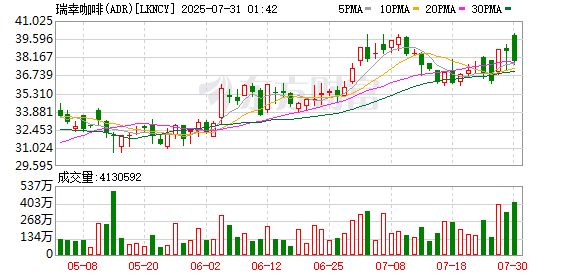
瑞幸咖啡第二季度净收入近124亿元 净增门店数2109家
Sou Hu Cai Jing· 2025-07-30 14:32
Core Insights - Luckin Coffee reported a total net revenue of 12.359 billion RMB for Q2 2025, representing a year-on-year growth of 47.1% [1] - The company's GAAP operating profit increased by 61.8% year-on-year, reaching 1.7 billion RMB [1] - The GMV (Gross Merchandise Volume) for the quarter was 14.179 billion RMB [1] Group 1: Financial Performance - The revenue from self-operated stores reached 9.136 billion RMB, a year-on-year increase of 45.6% [1] - Same-store sales growth for self-operated stores was 13.4% year-on-year [1] - Operating profit from self-operated stores was 1.922 billion RMB, up 42.3% year-on-year [1] - Revenue from partner stores grew by 55.0% year-on-year, totaling 2.867 billion RMB [1] Group 2: Store Expansion - The company opened a net of 2,109 new stores in Q2, bringing the total number of stores globally to 26,206 [2] - In the Chinese market, 2,085 new stores were added, resulting in a total of 26,117 stores, with 16,903 being self-operated and 9,214 being partner stores [2] - Internationally, 24 new stores were opened, with a total of 89 overseas stores [2] Group 3: Product and Customer Engagement - The company launched the "Hundred Card Ice Coffee Season" campaign, introducing low-calorie products, with the popular Orange C Americano selling over 350 million cups [2] - The new product, Feather Light Fruit and Vegetable Tea, surpassed 11.2 million cups in sales within two weeks of its launch [2] - Monthly active transaction customers grew by 31.6% year-on-year, reaching 91.7 million, marking a new historical high [2] - The collaboration with well-known IPs like SpongeBob SquarePants and Duolingo has been well-received, leading to sold-out merchandise [2] Group 4: Supply Chain Development - The construction of the fourth roasting factory, Luckin Coffee (Xiamen) Innovation Industrial Park, commenced in June [3] - Once operational, the annual coffee roasting capacity will increase to 155,000 tons, making it the largest in China's coffee industry [3] - This development aims to enhance the efficiency and quality control of the company's supply chain [3]
瑞幸咖啡二季度净收入123.59亿元,郭谨一称将持续关注市场份额增长
Jin Rong Jie· 2025-07-30 14:06
Core Insights - Luckin Coffee reported strong performance in Q2 2024, with total net revenue reaching 12.359 billion RMB, a year-on-year increase of 47.1% [1] - The company achieved a GAAP operating profit of 1.7 billion RMB, up 61.8% year-on-year, with an operating profit margin of 13.8% [1] Store Expansion - Luckin Coffee expanded its store network, reaching a total of 26,206 stores globally, with 2,109 new stores opened in Q2 [2] - In China, the company added 2,085 stores, bringing the total to 26,117, including 16,903 self-operated and 9,214 franchised stores [2] - Internationally, 24 new stores were opened, totaling 89 overseas locations, with significant presence in Singapore and Malaysia [2] Product Innovation - The company focused on product innovation, with the "Orange C Americano" selling over 350 million cups, and the newly launched "Light Body Fruit and Vegetable Tea" selling over 11.2 million cups within two weeks [3] - Monthly active customer transactions increased by 31.6% year-on-year, reaching 91.7 million, marking a historical high [3] Supply Chain Development - Luckin Coffee is enhancing its supply chain, with a new roasting facility in Xiamen expected to increase annual roasting capacity to 155,000 tons [4] - The company is also committed to sustainability, achieving multiple LEED certifications for its facilities [4] Management Perspective - The CEO emphasized the focus on scale growth, revenue increase, and operating profit margin improvement, highlighting the company's competitive advantages in the market [5]
申通3.62亿收购丹鸟物流,京东拟三年建万家七鲜小厨
Mei Ri Jing Ji Xin Wen· 2025-07-30 05:51
Group 1: Shentong Express Acquisition - Shentong Express announced plans to acquire 100% equity of Zhejiang Dan Niao Logistics for a transaction price of 362 million yuan [1] - Dan Niao Logistics specializes in domestic quality express and reverse logistics services, offering high-certainty delivery options such as same-day and next-morning delivery [1] - The acquisition is expected to enhance synergies between the two companies, promoting Shentong's growth and the upgrade of its quality express network [1] Group 2: JD.com's New Initiatives - JD.com launched a "Dish Partner" recruitment program with a budget of 1 billion yuan to find partners for 1,000 signature dishes [1] - Partners are required to provide dish recipes and collaborate on development, while JD.com's Seven Fresh Kitchen will handle cooking and quality control [1] - Each dish will guarantee a minimum revenue share of 1 million yuan, with no cap on sales revenue sharing, and both brand restaurants and individual chefs can apply [1] - JD.com plans to invest 10 billion yuan to build a new supply chain and aims to establish 10,000 Seven Fresh Kitchens nationwide within three years [1]



京东计划三年内在全国建设1万家七鲜小厨
news flash· 2025-07-22 01:58
Core Insights - JD.com has officially launched a "Dish Partner" recruitment program, aiming to find partners for 1,000 signature dishes with a cash investment of 1 billion [1] - The company plans to invest 10 billion in building a new supply chain and aims to establish 10,000 "Seven Fresh Kitchen" locations nationwide within three years [1] Group 1 - JD.com is seeking partners for its signature dishes as part of its new initiative [1] - The company is committing significant financial resources to enhance its supply chain capabilities [1] - The ambitious plan includes the establishment of a large number of new kitchen locations across the country [1]
商务宴请萎缩,徐记海鲜“下凡”
Sou Hu Cai Jing· 2025-07-20 05:18
Core Viewpoint - Xu Ji Seafood, known as the "Seafood King," is facing significant operational challenges, with a reported sales decline of nearly 20% in June compared to May, and a 24.4% decrease in the second quarter, leading to substantial layoffs from 7,800 to 5,000 employees [1][6][24] Group 1: Market Challenges - The overall restaurant industry is experiencing a downturn, with domestic restaurant revenue growth expected to drop from 20.4% in 2023 to 5.3% in 2024 [7] - High-end dining, particularly business banquets, has seen a significant decline in demand, impacting sales for seafood restaurants like Xu Ji Seafood [6][7] - Xu Ji Seafood's average consumer spending is around 200-300 yuan, which is perceived as high in the current market context [4][24] Group 2: Company Background and Expansion - Xu Ji Seafood was founded in 1999 in Changsha and has expanded to over 60 locations across major cities in China [1][8] - The company has successfully navigated challenges during the pandemic, increasing its store count from about 30 in 2019 to 60 by 2022, with revenue growing from over 600 million yuan in 2018 to over 1.8 billion yuan in 2022 [11][13] - The company has established a strong supply chain, allowing it to maintain competitive pricing and quality, which is crucial for its expansion strategy [14][16] Group 3: Strategic Adjustments - In response to market conditions, Xu Ji Seafood is diversifying its brand portfolio, launching the high-end "Blue Qilin" and the more affordable "Ocean Little Guest" to cater to different consumer segments [18][21] - The company is focusing on family dining experiences, particularly birthday celebrations, to adapt to changing consumer preferences and increase foot traffic [22][23] - Xu Ji Seafood is exploring ways to reduce its average spending per customer to remain competitive against lower-cost dining options [24]
开店圈地,老乡鸡五闯上市关
3 6 Ke· 2025-07-17 02:22
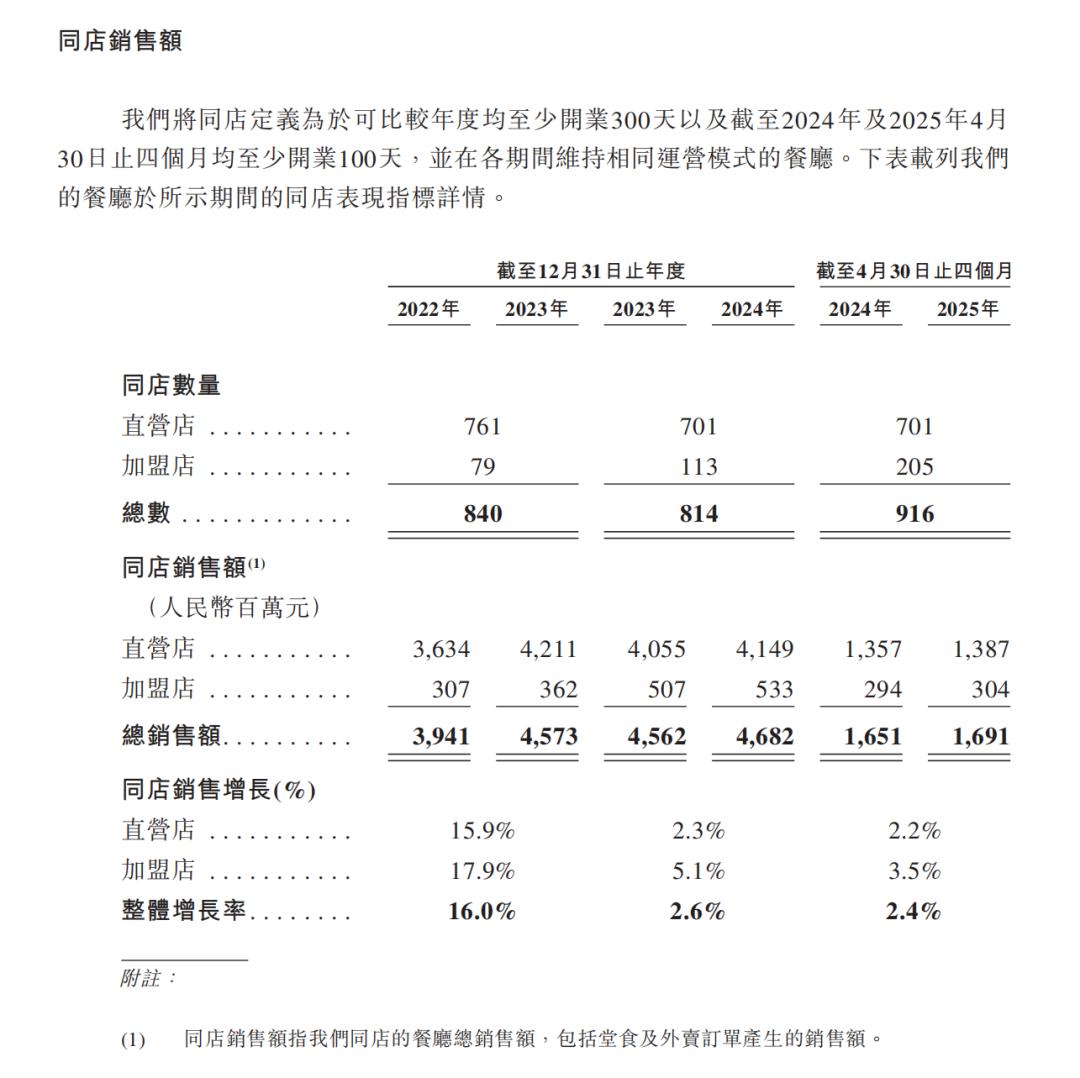
Core Viewpoint - The company, Lao Xiang Ji, is advancing its listing process on the Hong Kong Stock Exchange after previous unsuccessful attempts to list on the A-share market due to regulatory issues and other challenges [1][4]. Group 1: Company Expansion and Performance - As of April 30, 2025, Lao Xiang Ji has a total of 1,564 stores, an increase of 85 stores from 1,479 on December 31, 2024, averaging 21 new stores per month [3]. - From April 30 to June 30, 2025, the store count increased by 60, averaging 30 new stores per month, indicating an acceleration in expansion [3]. - The company achieved revenues of RMB 45.28 billion, RMB 56.51 billion, and RMB 62.88 billion for the years 2022, 2023, and 2024 respectively, with profits of RMB 2.52 billion, RMB 3.75 billion, and RMB 4.09 billion during the same period [6]. - In the first four months of 2025, revenues reached RMB 21.2 billion, a year-on-year increase of 9.92%, with profits of RMB 1.74 billion, up 7.27% [7]. Group 2: Market Position and Strategy - Lao Xiang Ji holds a 0.9% market share in the Chinese fast-casual dining sector, ranking first in the Chinese Chinese fast food industry, and eighth in the overall fast food market with a 0.5% share [4]. - The company has seen a sixfold increase in franchise stores from 118 at the end of 2022 to 653 by April 30, 2025, with franchise revenue growing from RMB 1.74 billion to RMB 7.17 billion, reflecting a compound annual growth rate of 102.9% [9]. - The average sales per store for company-operated stores in the first four months of 2025 was RMB 1.9786 million, while franchise stores averaged RMB 1.483 million, about 75% of the company-operated stores [10]. Group 3: Supply Chain and Operational Strategy - The company’s supply chain strategy includes three standardized chicken farms, two central kitchens with automated production lines, and eight distribution centers nationwide [14]. - The integrated supply chain is viewed as a competitive barrier, although it has resulted in lower gross margins compared to competitors, with gross margins of 20.3%, 23.3%, and 22.8% from 2022 to 2024 [17]. - The company aims to use IPO proceeds to enhance supply chain integration, expand store networks, improve information technology capabilities, and strengthen brand marketing [14]. Group 4: Industry Context and Future Outlook - The Chinese fast-casual dining market is projected to grow from RMB 809.7 billion in 2024 to RMB 1,205.8 billion by 2029, with a compound annual growth rate of 8.3% [12]. - The current chain penetration in the Chinese fast-casual dining market is only 32.5%, indicating significant growth potential compared to Western fast food chains [12][13]. - The company’s future success will depend on its ability to manage franchise operations effectively while leveraging supply chain efficiencies to improve margins [18].
当平台补贴退潮,咖啡茶饮终需比拼真功夫
第一财经· 2025-07-08 13:52
Core Viewpoint - The article discusses the recent surge in orders and sales in the tea and coffee industry due to a subsidy war initiated by platforms, highlighting both the short-term benefits and long-term challenges faced by brands in maintaining quality and service amidst increased demand [1][2][3]. Group 1: Impact of Subsidy War - The subsidy war has led to a significant increase in orders, with brands experiencing a boost in overall revenue and profit despite a slight decrease in profit margins per item [1][2]. - Many stores have extended their operating hours to accommodate the surge in orders, but this has led to increased pressure on staff, resulting in fatigue and a decline in service quality [2][3]. - The sudden nature of the subsidy activities has posed a challenge for businesses to quickly adjust their inventory and staffing, testing their operational resilience [2][3]. Group 2: Long-term Challenges - The article raises concerns about the sustainability of sales once the subsidies are removed, questioning how brands will maintain customer loyalty and market share [3][4]. - The rapid expansion of the tea and coffee market has led to over 304,000 existing new tea beverage-related companies in China, highlighting the intense competition and the need for brands to differentiate themselves [3]. - Food safety management is emphasized as a critical area for brands, as it directly impacts consumer health and the long-term viability of the brand [3]. Group 3: Future Outlook - Successful subsidy activities should create a win-win situation for consumers, businesses, and delivery personnel, rather than just a temporary consumer frenzy [4]. - The industry is expected to shift from a focus on capital and traffic-driven growth to a competition based on brand strength and operational excellence [4]. - Brands must build solid competitive barriers before the subsidy tide recedes, as profits gained from subsidies will need to be reinvested to earn genuine consumer loyalty [4].
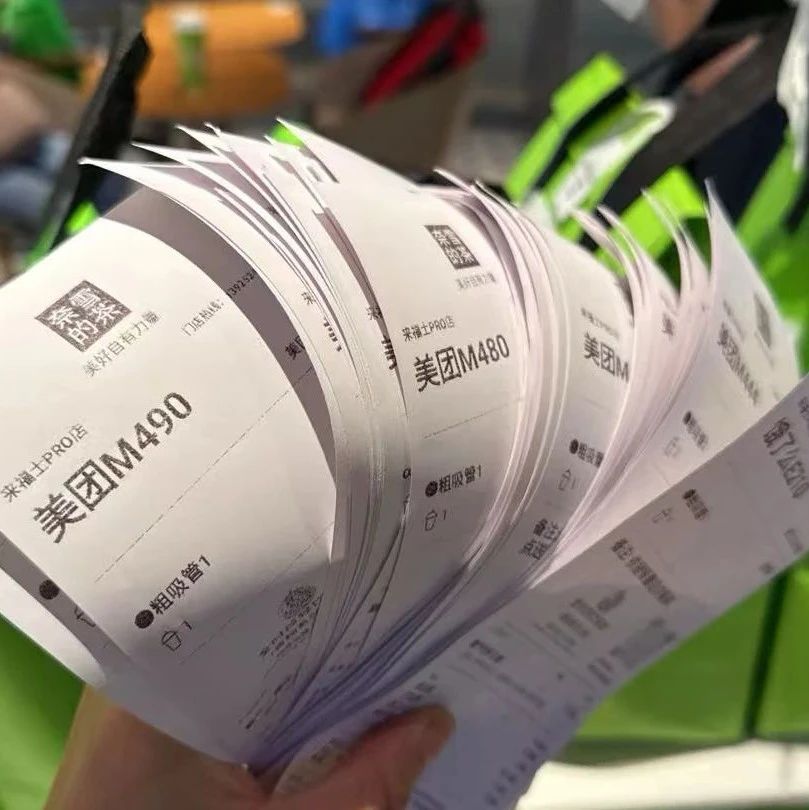
当平台补贴退潮,咖啡茶饮终需比拼真功夫
Di Yi Cai Jing· 2025-07-08 11:39
Core Viewpoint - A successful subsidy campaign should not only benefit consumers but also create a win-win situation for platforms, merchants, and delivery personnel [1][3] Group 1: Impact of Subsidy Campaigns - The recent subsidy war in the tea and coffee industry led to a significant increase in orders, with brands experiencing substantial revenue growth despite a slight decrease in profit margins per item [1][2] - The sudden influx of orders has exposed underlying industry issues such as quality fluctuations, service delays, and supply chain pressures [1][2] - Some stores extended their operating hours to accommodate the surge in orders, but staff morale and service quality are at risk due to overwork and fatigue [2] Group 2: Challenges for Brands - The unexpected nature of the subsidy campaigns has forced merchants to quickly adjust inventory and staffing, testing their operational resilience [2] - The subsidy war has intensified the "Matthew effect" in the industry, where larger brands with better resources can more effectively handle increased demand, while smaller brands may struggle [2][3] - The long-term sustainability of brands will depend on their ability to maintain consumer loyalty and market share once the subsidies are removed [2][3] Group 3: Importance of Quality and Supply Chain - As consumer preferences evolve rapidly, brands must focus on product quality and operational excellence to survive beyond price wars [3] - Some brands have recognized the importance of supply chain management, investing in self-owned farms and improving cold chain logistics to enhance product quality and reduce costs [3] - Ultimately, brands that invest in their core competencies and build genuine competitive advantages will be better positioned for long-term success [3]