
光储融合

Search documents
这才是能源革命的“财富密码”
财富FORTUNE· 2025-11-20 13:04
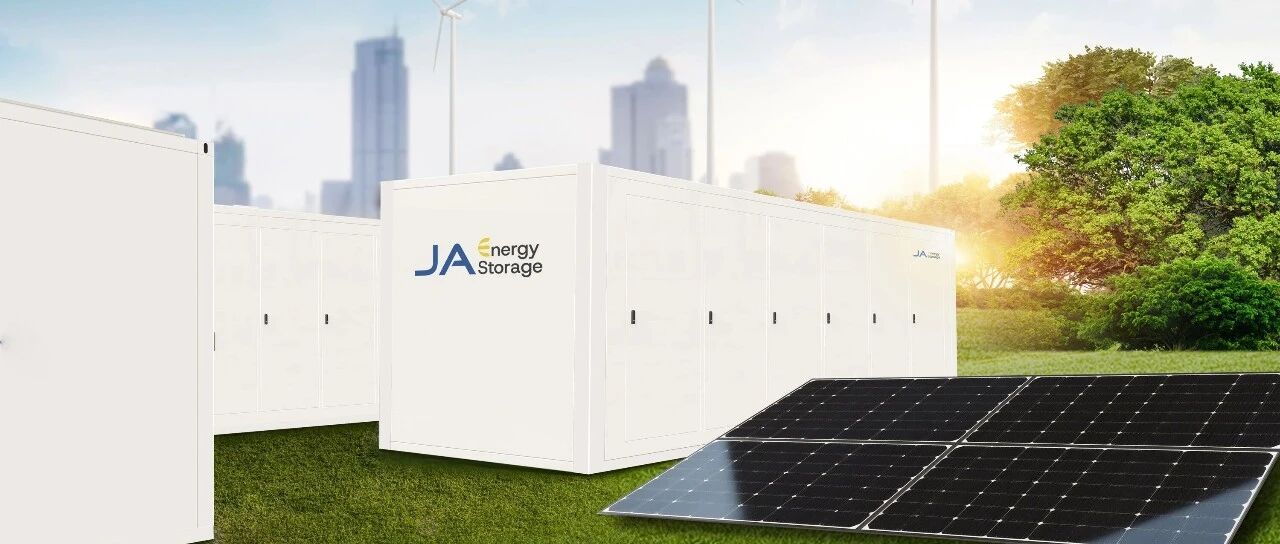
Core Insights - The article emphasizes the transition of JA Solar Technology from a "photovoltaic leader" to a "solar + storage enabler," highlighting its strategic evolution in response to global energy challenges [3][4] - JA Solar aims to integrate solar energy production with storage solutions to create a more flexible and sustainable energy system, positioning itself as a key player in the global energy transition [1][8] Strategic Evolution - JA Solar's strategy involves leveraging its extensive experience in the photovoltaic sector to maximize the synergistic value of "solar + storage" through intelligent energy management systems [3] - The company is focusing on deepening customer value integration into its technology strategy, promoting "solar as the body, storage as the wings" as a core pathway for high-quality energy development [3][4] Ecosystem Development - JA Solar has established a robust "horizontal and vertical" smart energy ecosystem, breaking down barriers between different energy forms and creating a digital energy platform with sensing, decision-making, and evolution capabilities [4] - The company operates in 180 countries, emphasizing a "deep cultivation" approach to local markets, addressing specific regional energy needs with tailored "solar + storage" solutions [4] Product Innovation - JA Solar has developed a comprehensive energy storage product matrix covering power generation, grid, and user sides, including the JAGalaxy system for large-scale storage and the JAPlanet system for commercial applications [5][7] - The JAStar system for residential users incorporates high safety standards and intelligent energy management, providing a smart and low-carbon electricity experience [5] Application Scenarios - JA Solar's storage solutions have been successfully applied in various scenarios, including smoothing power generation fluctuations, enhancing power trading, and improving overall reliability in grid operations [7] - The company offers diverse solutions for commercial users, significantly reducing electricity costs and improving power quality, while also promoting clean energy alternatives in off-grid areas [7] Future Outlook - JA Solar is committed to being a leading provider of energy storage system solutions that create value for customers, focusing on technological innovation to overcome energy challenges and contribute to sustainable development [8]


霸王茶姬张俊杰将迎娶“光伏二代”高海纯?天合光能:已登记结婚,双方相识于青年企业家学习活动
Xin Jing Bao· 2025-11-20 12:55
Group 1 - Tianhe Solar's founder Gao Jifan and Wu Chunyan confirmed the wedding of Zhang Junjie and Gao Haichun, expressing gratitude for the blessings [1] - Zhang Junjie, a notable entrepreneur in the new tea beverage industry, founded the brand Bawang Chaji in November 2017, expanding its presence to over 7,000 stores globally [1] - Bawang Chaji went public on NASDAQ in April this year, becoming the first new tea beverage stock in the US, with a current stock price of $14.22 and a market capitalization of approximately $2.61 billion [1] Group 2 - Gao Haichun, born in 1993, has been involved with Tianhe since 2017 and became the chairman of Tianhe Fuhua in June 2022, which focuses on distributed household photovoltaic business [2] - Tianhe Solar initiated the plan to spin off Tianhe Fuhua for an IPO in April 2023, but the plan was terminated in December 2024 [2] - Gao Haichun joined the board of Tianhe Solar in June 2024 and was elected co-chairman in January this year, aiming to lead the company's transformation into a smart energy solution provider [2]

600亿跨界联姻!霸王茶姬张俊杰将迎娶“光伏二代”高海纯
Xin Jing Bao· 2025-11-20 11:29
Group 1 - The wedding invitation of Zhang Junjie, founder of Bawang Chaji, and Gao Haichun, daughter of Gao Jifan, founder of Trina Solar, has been confirmed, indicating a notable connection between the new tea beverage industry and the solar energy sector [1] - Bawang Chaji, founded in November 2017, has expanded its presence significantly, with over 7,000 stores globally, including locations in Malaysia, the United States, Thailand, Singapore, Indonesia, Vietnam, and the Philippines [1] - Bawang Chaji went public on NASDAQ in April 2023, becoming the first new tea beverage company listed in the U.S., with a current stock price of $14.22 per share and a market capitalization of approximately $2.61 billion [1] Group 2 - Gao Haichun, born in 1993, has been involved with Trina Solar since 2017 and became the chairman of Trina Wealth in June 2022, a subsidiary focused on distributed household photovoltaic business [2] - Trina Solar initiated the process to spin off Trina Wealth for an IPO in April 2023, but the plan was terminated in December 2024 [2] - Gao Haichun joined the board of Trina Solar in June 2024 and was elected co-chairman in January 2025, tasked with leading the company's transition from a photovoltaic manufacturer to a smart energy solutions provider [2]
陕西光伏龙头,切入储能赛道
Mei Ri Jing Ji Xin Wen· 2025-11-19 10:06
Core Viewpoint - Longi Green Energy has officially entered the energy storage sector by acquiring approximately 62% voting rights in Suzhou Jingkong Energy Technology Co., Ltd, marking a strategic shift towards integrating solar and storage solutions [1][3][4]. Group 1: Acquisition Details - Longi Green Energy plans to gain control over Jingkong Energy through a combination of equity acquisition, capital increase, and voting rights delegation, achieving approximately 61.9998% voting rights [3][4]. - Prior to the transaction, natural persons controlled 44.79% of Jingkong Energy's voting rights, and post-transaction, Longi will have sole control [3][4]. - Jingkong Energy, established in 2015, is recognized as a "potential unicorn" with a focus on lithium-ion battery storage systems and has a global operational footprint [5][6]. Group 2: Market Context - The energy storage market is becoming increasingly competitive, with major solar companies like Sungrow, Canadian Solar, JinkoSolar, Trina Solar, and Tongwei already establishing their positions [8][12]. - Longi's cautious approach to energy storage has shifted in 2023, reflecting a broader trend among solar manufacturers to secure strategic positions in the energy storage sector [2][12]. Group 3: Strategic Implications - The integration of solar and storage is seen as essential for addressing the intermittency of solar power, enhancing system flexibility and reliability [14][16]. - Longi's acquisition of Jingkong Energy is expected to provide immediate access to established technology, supply chains, and customer networks, significantly reducing market entry risks [11][12]. - The energy storage market is projected to grow rapidly, with China's new energy storage installation capacity expected to exceed 100 million kilowatts by September 2025, representing over 40% of the global total [14][16]. Group 4: Future Outlook - The competitive landscape in the solar industry is shifting from individual segment competition to integrated solutions, emphasizing the importance of technology and resource integration [12][16]. - Longi's strategic move into energy storage is anticipated to enhance its overall competitiveness and support its solar business, leveraging its existing market share and R&D capabilities [11][12].


聚焦光储融合 第八届中国国际光伏与储能产业大会在成都开幕
Sou Hu Cai Jing· 2025-11-18 18:39
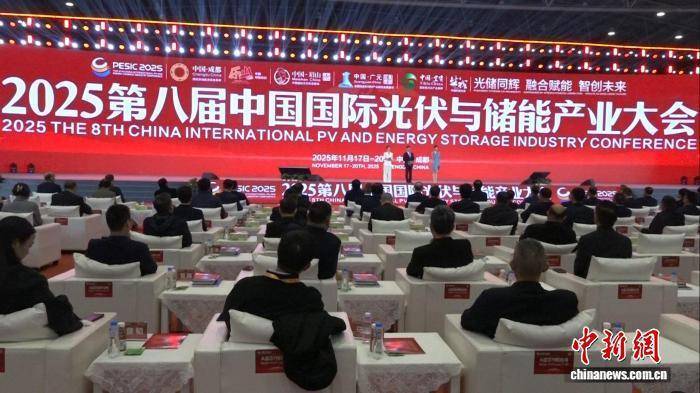
Core Insights - The 8th China International Photovoltaic and Energy Storage Industry Conference opened in Chengdu on November 18, 2025, focusing on the theme "Photovoltaic and Energy Storage Integration Empowering Intelligent Innovation for the Future" [1][2] Industry Overview - The conference attracted approximately 5,000 enterprises and featured an exhibition area of nearly 60,000 square meters, showcasing innovations in photovoltaic, energy storage, and operation and maintenance sectors [2] - The global energy landscape is undergoing profound changes, with China's "dual carbon" goals driving an energy revolution that has entered a critical phase [2] - The photovoltaic and energy storage industries are pivotal in achieving the "dual carbon" targets and are essential for constructing a clean, low-carbon, safe, and efficient new energy system [2] Market Data - According to the National Energy Administration's "China New Energy Storage Development Report (2025)," by the end of 2024, China will have built and put into operation new energy storage systems with a capacity of 73.76 million kilowatts/168 million kilowatt-hours, accounting for over 40% of the global total installed capacity, making China the world's largest new energy storage market [2] - The efficiency of Chinese photovoltaic cells continues to break records, while the costs of long-duration energy storage technologies are gradually decreasing [2] Challenges and Opportunities - Despite rapid industry growth, challenges such as cyclical fluctuations, homogenized competition, and supply chain issues for key materials persist, necessitating a shift from scale expansion to quality and efficiency [2] - Liu Hanyuan, Chairman of Tongwei Group, highlighted that after addressing photovoltaic generation costs, issues related to grid regulation capabilities have emerged due to the surge in installed capacity, emphasizing the need for new energy grid systems and the economic application of the entire energy storage system [3] - The conference serves as a significant platform for understanding China's energy storage industry and promoting collaboration, attracting international buyers from various regions including Europe, Asia, and Africa [3]
近两个月获超11GWh储能大单,天合光能第二增长曲线来了?
2 1 Shi Ji Jing Ji Bao Dao· 2025-11-18 09:33
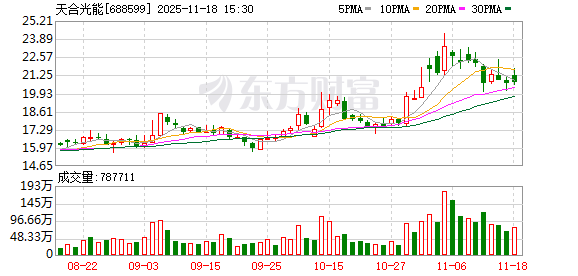
Core Viewpoint - Trina Solar has secured significant energy storage contracts totaling 2.66GWh, marking its fourth major order announcement in two months, indicating strong growth in its energy storage business [4][6]. Group 1: Recent Contracts - Trina Solar's subsidiary, Trina Storage, signed contracts for a total of 2.66GWh of energy storage products with clients across North America, Europe, and Latin America, with the North American contract accounting for 1.08GWh [4]. - In September, Trina Storage announced a contract for 2.48GWh, including a 1GWh overseas order utilizing a grid-type system, marking a significant milestone in its international market presence [6]. - By the end of October, another contract exceeding 1GWh was signed with a European client, featuring the new Elementa 2 Pro product, which boasts a 12% increase in energy density [6]. Group 2: Future Projections - Trina Storage aims to ship between 8-10GWh in 2025, with expectations of a 50% increase in shipments in 2026, supported by over 10GWh of existing overseas orders [7]. - The company plans to double its 2026 shipment target to 15-16GWh, reflecting a robust growth trajectory in its energy storage business [7]. Group 3: Cost Efficiency and Market Trends - As Trina Solar increases its energy storage product shipments, the cost ratio is expected to decline, leading to significant profitability growth in the energy storage sector next year [7]. - The company attributes its positive outlook to improved customer conversion rates in the solar-storage integration market, a focus on high-margin overseas orders, and ongoing cost reduction through technological advancements and supply chain optimization [7]. - The global demand for energy storage is anticipated to rise, driven by the increasing need for data centers and the overall growth in installed capacity, positioning Trina Solar favorably in the market [8].
隆基绿能,收购!
DT新材料· 2025-11-14 16:05
Group 1 - Longi Green Energy has signed an agreement to acquire approximately 61.9998% of the voting rights of Suzhou Jingkong Energy Technology Co., Ltd, marking its entry into the energy storage sector and extending its industrial chain from "solar" to "storage" [2] - During the Q3 earnings conference, Longi Green Energy emphasized that the combination of photovoltaic and energy storage will effectively address the intermittency issues of solar energy [3] - Jingkong Energy, established in 2015, focuses on smart power supply systems, smart electrochemical energy storage systems, smart hydrogen fuel cell systems, and automotive lead-acid energy management systems, with a planned total production capacity of 33GWh for its new energy storage project [3] Group 2 - Major photovoltaic manufacturers, including Trina Solar, Jinko Solar, and Canadian Solar, are accelerating their expansion into the energy storage market, with Canadian Solar projecting a shipment of 2.1 to 2.3 GWh of energy storage systems in Q4 2025 and 14 to 17 GWh for the entire year of 2026 [4] - The increasing penetration of intermittent energy sources like solar and wind makes energy storage systems crucial for ensuring the stable operation of the power grid, with planned renewable energy projects reaching hundreds of GW globally [4] - The energy storage market is anticipated to grow significantly, with demand expected to reach TWh levels in the next decade, presenting a vast new market opportunity [4]
比阳光电源晚20年,储能赛道闯入重磅玩家
行家说储能· 2025-11-14 11:35
Core Viewpoint - Longi Green Energy has officially entered the energy storage sector by acquiring approximately 61.9998% voting rights in Jingkong Energy, marking a significant strategic shift for the company [2][3]. Group 1: Strategic Shift - Longi Green Energy, previously the only major photovoltaic company not involved in energy storage, has made a decisive entry into the market, indicating a clear strategic pivot [3]. - The company had focused on hydrogen energy from 2021 to 2024 but has shifted its attention to energy storage due to the slow commercialization of hydrogen and the anticipated surge in energy storage demand by 2025 [3][4]. - Longi recognizes the integration of photovoltaic and energy storage as a necessary path for large-scale development, addressing the challenges of intermittent solar energy [3][4]. Group 2: Market Context and Competition - The energy storage market is becoming increasingly competitive, with various players including state-owned enterprises, battery leaders, and technology giants entering the field [10]. - Longi's acquisition of Jingkong Energy allows it to leverage existing technology and market presence, avoiding the time costs associated with starting from scratch [10][11]. - Jingkong Energy specializes in lithium-ion battery storage systems and has established a global supply chain and delivery system, with a production capacity of 31GWh [11]. Group 3: Financial Aspects - The estimated valuation for Jingkong Energy is between 1.5 billion to 2 billion yuan (approximately 15-20 million) [7][11]. - Jingkong Energy has attracted attention from various investors, including industry players and state-backed institutions, indicating a robust financial backing [11][12]. Group 4: Future Outlook - Longi's entry into energy storage is seen as a critical move to complete its photovoltaic and storage integration strategy, with the potential for technological synergies to enhance its competitive position [11]. - The company aims to capitalize on the growing demand for energy storage solutions as the grid's capacity becomes increasingly strained [9][10].
研报掘金丨中邮证券:维持晶科科技“增持”评级,储能业务持续放量
Ge Long Hui A P P· 2025-11-13 06:24
Core Insights - Jinko Technology's net profit attributable to shareholders for Q1-Q3 2025 reached 360 million yuan, representing a year-on-year increase of 61.8% [1] - In Q3 2025, the net profit attributable to shareholders was 230 million yuan, with quarter-on-quarter and year-on-year growth of 76.5% and 47.8% respectively [1] Business Performance - The energy storage business is experiencing significant growth, with large independent energy storage projects in Gansu and Anhui expected to be connected to the grid by the end of the year [1] - Planned independent energy storage projects include 2000 MWh in North China, 800 MWh in Northwest China, 800 MWh in East China, and a total of 500 MWh in Southeast and Central China, with construction expected to commence soon [1] Market Outlook - The economic viability of energy storage projects is anticipated to improve as policies regarding capacity pricing are gradually implemented [1] - The company is actively expanding its sales business and is poised to leverage virtual power plants when the timing is right [1] Strategic Initiatives - Jinko Technology is strategically positioning itself in the integration of solar and storage, electricity sales, virtual power plants, and microgrids, aiming to build a smart operation and maintenance platform [1] - The company is extending its independent energy storage capabilities to include virtual power plants and direct green electricity connections, offering comprehensive energy services [1] Valuation Perspective - With ongoing market developments, the value of green energy assets is expected to be reassessed, with a reasonable price-to-book ratio greater than 1 [1] - However, the release of detailed local regulations following Document No. 136 may require time for market participants to adapt, potentially impacting the operation and transfer of power stations [1] - The core focus remains on the continuous upgrade of operational capabilities in electricity trading, maintaining an "overweight" rating [1]

我国新型储能装机规模跃居世界第一,光伏ETF龙头(560980)半日涨近4%,近5日净流入近3500万
Xin Lang Cai Jing· 2025-11-06 05:23
Group 1 - The core viewpoint of the news highlights the rapid development of new energy storage in China, with installed capacity expected to exceed 100 million kilowatts by September 2025, representing a growth of over 30 times compared to the end of the 13th Five-Year Plan, and accounting for over 40% of the global total installed capacity, making China the world leader in this sector [1] - Domestic photovoltaic (PV) installations have shown significant short-term fluctuations, with a 53.8% year-on-year decrease in new installations in September 2025, totaling 9.7 GW. However, cumulative installations from January to September reached 240.27 GW, reflecting a robust year-on-year growth of 49.3% [1] - Solar power generation has continued to rise, with September's output reaching 46.48 billion kilowatt-hours, a year-on-year increase of 21.1%, maintaining a stable share of 5.63% in total industrial power generation [1] Group 2 - Despite short-term pressures on domestic new installations, photovoltaic exports have maintained growth, with September 2025 exports reaching 25.6 GW, a year-on-year increase of 46.8%, and export value at 19.98 billion yuan, up 39.0% [2] - Cumulative exports from January to September reached 204.3 GW, showing a year-on-year growth of 4.6%. Inverter exports in September amounted to 5.08 billion yuan, a 5.0% increase, with significant growth in exports to Latin America, Africa, and Oceania [2] - Companies are accelerating their layout in energy storage and intelligent computing center-related power electronics technology, with DeYee Co. advancing the development of 800V solid-state transformers and planning a production line for energy storage systems, which is expected to enhance profitability significantly [2] Group 3 - As of November 6, 2025, the CSI Photovoltaic Leaders 30 Index rose by 3.57%, with the leading photovoltaic ETF (560980) increasing by 3.84%. The top ten weighted stocks accounted for 74.41% of the index, with notable gains from companies like ZhengTai Electric and DeYee Co. [3] - The leading photovoltaic ETF reached a new high in scale at 422 million yuan, with a net inflow of 47.77 million yuan recently, and a total of nearly 35 million yuan in the past five days [3] - The ETF closely tracks the CSI Photovoltaic Leaders 30 Index, selecting 30 large-scale, profitable leading companies in the photovoltaic power generation industry, reflecting the performance of core assets in China's photovoltaic sector [3]