全球文明倡议

Search documents
商务部关于印发《企业境外履行社会责任工作指引》的通知
Shang Wu Bu Wang Zhan· 2026-01-06 16:51
Core Viewpoint - The Ministry of Commerce has issued guidelines for Chinese enterprises to fulfill their social responsibilities abroad, aiming to enhance sustainable development and contribute to the economic and social development of host countries [1][3]. Group 1: General Principles - The guidelines are designed to align with the concept of building a community with a shared future for mankind and to implement various global initiatives [3]. - Enterprises are encouraged to integrate social responsibility into their international business strategies and governance mechanisms [4]. - Compliance with both Chinese and host country laws regarding social responsibility is emphasized [5]. Group 2: Supporting Economic Development in Host Countries - Enterprises should adapt their operations to local conditions and deepen cooperation in capital, industry, and technology [9]. - The guidelines advocate for investment in local industries to support economic growth and transformation [9][10]. - Companies are encouraged to enhance infrastructure quality and connectivity in host countries [11]. Group 3: Improving Local Livelihoods and Social Harmony - Enhancing local welfare is a key focus, with an emphasis on small-scale projects that support poverty alleviation [19]. - Companies must adhere to local labor laws and ensure fair treatment of employees [20][21]. - Establishing effective communication with local communities is crucial for fostering long-term relationships [26]. Group 4: Environmental Protection and Green Transition - Companies are required to comply with local environmental laws and integrate green practices into their operations [30]. - The guidelines promote participation in global climate governance and the development of low-carbon solutions [30][34]. - Enterprises should conduct environmental impact assessments before initiating projects [35]. Group 5: Promoting Healthy Industry Development - Establishing compliance management systems and adhering to legal and ethical standards is essential [39]. - Companies are encouraged to prioritize quality management and innovation in their products and services [40]. - Fair competition and collaboration within the industry are emphasized to maintain a healthy business environment [42]. Group 6: Enhancing Capacity for Social Responsibility - Companies should develop a robust social responsibility management system and integrate it with their business strategies [51]. - Regular reporting and transparency in social responsibility practices are encouraged [58]. - Engaging with local governments and communities to communicate contributions to sustainable development is vital [59].
“这封回信是对我艺术生涯最大的激励”(大道之行)
Ren Min Ri Bao· 2026-01-06 01:45
Core Viewpoint - The article highlights the significance of cultural exchange and artistic collaboration between China and Arab countries, emphasizing the role of art in fostering mutual understanding and friendship [1][2]. Group 1: Cultural Exchange - Xi Jinping's response to the letter from Arab artists underscores the importance of cultural connections and the potential of art to bridge gaps between nations [2]. - The global civilization initiative proposed by Xi emphasizes the need for mutual respect and harmonious coexistence among different cultures, positioning cultural exchange as a means to enhance friendship among peoples [1][2]. Group 2: Artistic Collaboration - Arab artists, represented by Ahmed Nawar, express their commitment to using art as a medium to promote Sino-Arab friendship and share their experiences in China [1][3]. - The increasing number of Arab artists visiting China for inspiration is seen as a vital step in deepening cultural exchanges and showcasing the beauty of Chinese culture to a broader Arab audience [3].
中国和巴基斯坦第七次外长战略对话联合新闻公报
Xin Hua She· 2026-01-05 04:18
Core Points - The seventh round of China-Pakistan Foreign Ministers' Strategic Dialogue was held from January 3 to 5, 2026, focusing on enhancing bilateral relations and cooperation across various fields [2] - Both sides agreed to strengthen strategic communication and deepen mutual trust, emphasizing the importance of their partnership for regional peace and development [2][3] - The dialogue marked the initiation of activities to commemorate the 75th anniversary of diplomatic relations between China and Pakistan, aiming to solidify friendship and explore new cooperation areas [2] Bilateral Relations - China and Pakistan reaffirmed their status as all-weather strategic partners, with a commitment to mutual support on core interests [3] - Pakistan expressed appreciation for China's development achievements under President Xi Jinping and acknowledged the "Fourteenth Five-Year Plan" and the upcoming "Fifteenth Five-Year Plan" [3] - Both countries reiterated their support for each other's sovereignty and territorial integrity, with Pakistan firmly backing China's stance on Taiwan and other sensitive issues [3] Security Cooperation - Both nations emphasized a "zero tolerance" approach to terrorism and agreed to enhance counter-terrorism cooperation to ensure the safety of Chinese personnel and projects in Pakistan [4] - They called for international cooperation against terrorism and opposed double standards in counter-terrorism efforts [4] Economic Collaboration - The dialogue included discussions on the China-Pakistan Economic Corridor (CPEC), with plans to upgrade the CPEC to a "2.0 version" focusing on industries, agriculture, and mining [4] - Both sides agreed to deepen cooperation in trade, investment, information technology, and cultural exchanges, leveraging the Khunjerab Pass for enhanced economic ties [4] Space Cooperation - The two countries expressed satisfaction with the expanding cooperation in space, with hopes for Pakistani astronauts to visit the Chinese space station [5] Regional Stability - Both sides reaffirmed the importance of maintaining peace and stability in South Asia and emphasized dialogue to resolve disputes [6] - They discussed the situation in Jammu and Kashmir, with China reiterating its stance on the historical nature of the issue [6] Global Governance - China and Pakistan committed to promoting a fair global governance system and supporting multilateralism, opposing hegemonism and unilateral actions [7] - They agreed to maintain close communication on Afghanistan, encouraging an inclusive government and countering terrorism [7] Middle East Peace Efforts - Both nations called for an unconditional and comprehensive ceasefire in Gaza and supported the establishment of an independent Palestinian state [8] - They expressed concerns over the situation in the West Bank and committed to working with the international community for peace in the Middle East [8]
“为完善全球治理提供行动路径”
Ren Min Ri Bao· 2026-01-04 23:38
Core Viewpoint - The global governance initiative emphasizes the construction of a more just and reasonable global governance system, providing a new path for the world to overcome turmoil [2][3] Group 1: Global Governance Initiative - The initiative is based on the principles of maintaining the UN Charter, advocating for sovereign equality, adherence to international law, and promoting multilateralism [2] - It aims to enhance the representation and voice of developing countries in global governance, addressing systemic marginalization issues they face [2] - The initiative supports the UN as the main platform for countries to coordinate actions and respond to challenges collectively [2] Group 2: China's Role in Global Development - China advocates for international development cooperation through its global development initiative, promoting prosperity through development, security through dialogue, and mutual understanding through cultural exchange [3] - The Belt and Road Initiative has significantly improved infrastructure and trade conditions in participating countries, helping them better integrate into global supply chains [3] - China's commitment to high-level opening-up and multilateralism creates conditions for inclusive and resilient economic globalization, benefiting trade partners [3] Group 3: ASEAN and China Cooperation - The global governance initiative aligns with ASEAN's vision of sovereign equality, multilateralism, and inclusive development, facilitating deeper strategic partnerships between ASEAN and China [3] - Strengthening cooperation between ASEAN and China is seen as beneficial for regional prosperity and stability, serving as a model for implementing the global governance initiative and enhancing cooperation among developing countries [3]

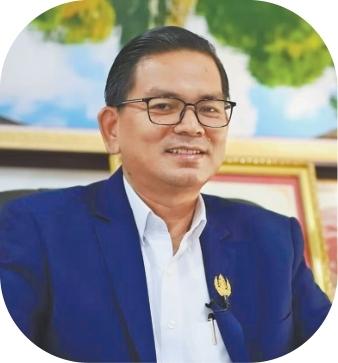
“为世界注入更多稳定性与确定性”——访俄罗斯科学院世界经济与国际关系研究所副所长洛马诺夫
Xin Lang Cai Jing· 2026-01-03 01:43
洛马诺夫认为,全球治理倡议秉持命运与共理念,阐明了改革完善全球治理的原则、方法和路径。"以 人为本"作为核心理念之一,既承续"民惟邦本"的古老治理智慧,也契合全球治理的价值追求——让发 展成果惠及各国人民,共同增进人类福祉。 2025年是联合国成立80周年。联合国是践行多边主义、推进全球治理的核心平台。洛马诺夫表示,当 下,国际形势错综复杂,某些西方国家为谋求私利、维护自身霸权主导地位,实施强权霸凌等行径,严 重冲击和侵蚀联合国权威和效能,损害全人类共同利益。全球治理倡议坚持和弘扬联合国宪章宗旨和原 则,将有力推动国际社会共同维护联合国权威和地位,进一步完善全球治理的多边合作架构。 全球南方群体性崛起,是世界大变局的鲜明标志。洛马诺夫认为,全球南方国家已成为全球治理的关键 力量,但当前全球治理体系未适应形势发展,无法反映全球南方国家的合理诉求。全球治理倡议回应全 球南方的普遍关切,倡导国际体系和国际机制更好服务各国特别是发展中国家利益,引领全球治理与时 偕行。 转自:人民日报 "全球治理倡议顺应时代潮流,契合世界所需。"俄罗斯科学院世界经济与国际关系研究所副所长亚历山 大·洛马诺夫日前在接受本报记者采访时表示 ...

“为世界注入更多稳定性与确定性”
Ren Min Ri Bao· 2026-01-03 01:37
Group 1 - The global governance initiative aligns with the common demands of most countries to reform and improve the global governance system, promoting multilateralism and a more democratic international relationship [2] - The initiative emphasizes a people-centered approach, reflecting ancient governance wisdom and the value pursuit of global governance, aiming to benefit all nations and enhance human welfare [2] - The initiative is seen as a response to the challenges posed by certain Western countries that undermine the authority and effectiveness of the United Nations, thus damaging the common interests of humanity [2] Group 2 - The rise of the Global South is a significant marker of the changing world landscape, with these countries becoming key players in global governance [3] - The global governance initiative is part of a series of major public goods contributed by China, addressing the increasing deficits in peace, development, security, and governance [3] - The initiative aims to create a more just and reasonable global governance system, responding to the urgent needs of the international community for peace and development [3]

“为世界注入更多稳定性与确定性” ——访俄罗斯科学院世界经济与国际关系研究所副所长洛马诺夫
Ren Min Ri Bao· 2026-01-02 22:09
"全球治理倡议顺应时代潮流,契合世界所需。"俄罗斯科学院世界经济与国际关系研究所副所长亚历山 大·洛马诺夫日前在接受本报记者采访时表示,全球治理倡议契合绝大多数国家改革和完善全球治理体 系的共同诉求,有利于更好地维护和践行多边主义,促进国际关系民主化,推进平等有序的世界多极 化、普惠包容的经济全球化。"在国际秩序面临严峻挑战的当下,全球治理倡议的提出与落实将为世界 注入更多稳定性与确定性。" 洛马诺夫认为,全球治理倡议秉持命运与共理念,阐明了改革完善全球治理的原则、方法和路径。"以 人为本"作为核心理念之一,既承续"民惟邦本"的古老治理智慧,也契合全球治理的价值追求——让发 展成果惠及各国人民,共同增进人类福祉。 2025年是联合国成立80周年。联合国是践行多边主义、推进全球治理的核心平台。洛马诺夫表示,当 下,国际形势错综复杂,某些西方国家为谋求私利、维护自身霸权主导地位,实施强权霸凌等行径,严 重冲击和侵蚀联合国权威和效能,损害全人类共同利益。全球治理倡议坚持和弘扬联合国宪章宗旨和原 则,将有力推动国际社会共同维护联合国权威和地位,进一步完善全球治理的多边合作架构。 全球南方群体性崛起,是世界大变局的鲜明 ...
与中国同行,与希望同行
Xin Lang Cai Jing· 2026-01-02 13:17
Group 1 - The core message of the New Year address by President Xi Jinping emphasizes China's commitment to peace and development, showcasing its role as a major power in global cooperation [1][2] - China aims for high-quality development, with the economy projected to reach 140 trillion yuan by 2025, reflecting its resilience and strength in various sectors including technology and defense [1] - The country is dedicated to green and low-carbon development, announcing new national contributions to combat climate change, thus supporting global ecological civilization [1] Group 2 - China is set to commemorate the 80th anniversary of the victory in the Anti-Japanese War and the World Anti-Fascist War in 2025, reinforcing its commitment to peace and justice [2] - The global governance initiative proposed by President Xi in September 2025 aims to enhance international cooperation and promote a community with a shared future for mankind [2] - China's cultural exchange efforts are highlighted, promoting mutual understanding and appreciation among different civilizations, which is reflected in the global popularity of Chinese cultural elements [2] Group 3 - Looking ahead to the "15th Five-Year Plan," China is poised to embrace global opportunities and share its modernization journey with the world [3] - The optimistic outlook for the future emphasizes that partnering with China equates to engaging with opportunities and hope [3]
“中国的成功经验值得借鉴”——访伊朗政治分析家伊马德·阿卜谢纳斯
Xin Lang Cai Jing· 2026-01-02 02:01
Core Insights - Iran's participation in the Shanghai Cooperation Organization (SCO) and BRICS is significant both politically and economically, providing opportunities for development and regional stability [1] - The SCO and BRICS serve as platforms for developing countries to enhance cooperation, promote common development, and uphold international justice [1] Group 1 - The former editor of the Iranian Daily, Emad Abshenas, emphasizes the importance of multilateral cooperation mechanisms for Iran's economic and social development [1] - Abshenas highlights China's rapid development and the determination of its people to achieve modernization, which serves as an inspiring model for Iran [1] - He notes that Iran has significant potential for development and seeks to strengthen exchanges with China to learn from its successful experiences [1] Group 2 - Abshenas criticizes the hegemonic practices of some Western powers, which he believes lead to conflicts and disasters in human society [2] - He supports China's global initiatives, including the Global Development Initiative and the Belt and Road Initiative, which provide opportunities for connectivity and stability in global supply chains [2] - Iran's strategic location at the crossroads of Eurasia positions it to play a significant role in the high-quality construction of the Belt and Road Initiative [2]
“中国的成功经验值得借鉴”
Ren Min Ri Bao· 2026-01-02 01:54
Core Viewpoint - The participation of Iran in the Shanghai Cooperation Organization (SCO) and BRICS is significant both politically and economically, providing a platform for developing countries to enhance cooperation and promote common development [3]. Group 1: Economic and Political Significance - The SCO and BRICS are viewed as important platforms for developing countries to strengthen unity, promote development, and maintain international fairness and justice [3]. - Iran aims to leverage multilateral cooperation mechanisms to enhance its economic and social development while maintaining regional peace and stability [3]. Group 2: China's Development Experience - The rapid development of China is impressive, with a strong commitment from the Chinese people towards modernization [3]. - China's unique modernization path, which integrates traditional culture and Marxist principles, offers valuable lessons for Iran [3]. Group 3: Strategic Cooperation - Iran and China, both ancient civilizations, have historical ties through the Silk Road, and their friendship is based on strategic mutual trust [3]. - A comprehensive cooperation plan was signed in March 2021 to advance the Iran-China comprehensive strategic partnership [3]. Group 4: Global Initiatives and Opportunities - Western hegemonic practices have led to conflicts and disasters, while China's global development, security, civilization, and governance initiatives help address common challenges [4]. - The Belt and Road Initiative presents significant opportunities for countries to enhance connectivity and stabilize global supply chains, with Iran positioned to play a larger role due to its geographical location [4].