公平竞争审查

Search documents
全省政府系统合法性审查能力提升培训班举办
Hai Nan Ri Bao· 2025-09-20 01:39
Group 1 - The training session aims to enhance the legal review capabilities of the provincial government system in Hainan, focusing on the requirements of building a law-based government [1] - The training program lasts for three days and addresses key areas such as legality review, trade compliance review, fair competition review, institutional integrity assessment, and social stability risk assessment [1] - The training combines specialized guidance, case studies, practical exchanges, and hands-on testing, featuring experts from various governmental departments [1] Group 2 - Nearly 200 participants attended the training, including responsible officials from provincial government departments, municipal government officials, and newly appointed legal advisors [1] - The training represents the first instance of joint training for legal review personnel and external legal advisors within the government system [1]
5年来北京查办反垄断和反不正当竞争案件共计2690件
Ren Min Ri Bao· 2025-09-18 01:40
Core Viewpoint - Over the past five years, Beijing's market regulatory authority has focused on antitrust and unfair competition cases, resulting in the handling of 2,690 cases and imposing fines exceeding 200 million yuan [1] Group 1: Regulatory Actions - The Beijing market regulatory authority has established precise regulations in key areas and strengthened review mechanisms [1] - A total of 400 platform enterprises have been covered under the "one-on-one" compliance guidance mechanism [1] - The release of the "Beijing Antitrust Compliance Guidelines" addresses compliance reminders for seven industry sectors, including public utilities and raw materials [1] Group 2: Enforcement in Key Sectors - Increased regulatory efforts in essential sectors such as education, healthcare, and public utilities have been emphasized [1] - The first antitrust enforcement case in the pharmaceutical sector has been initiated, along with actions against monopolistic agreements in dental implant services, which are expected to reduce costs for the public by over 40% [1] Group 3: Regional Cooperation - The market regulatory departments of Beijing, Tianjin, and Hebei have signed a cooperation agreement for antitrust enforcement and fair competition review [1] - Unified review standards and mutual policy checks have been established, with 255 policy documents undergoing cross-checks for fair competition [1]
北京查办反垄断和反不正当竞争案件共计2690件
Ren Min Ri Bao· 2025-09-17 22:22
Core Insights - Over the past five years, Beijing's market regulatory authority has handled 2,690 antitrust and unfair competition cases, with fines exceeding 200 million yuan [1] - The authority has focused on key sectors, establishing compliance guidelines for platform economies and providing one-on-one compliance guidance for over 400 platform enterprises [1] - A comprehensive review mechanism has been developed, including the issuance of antitrust compliance guidelines tailored to Beijing's characteristics and enforcement priorities across seven industry sectors [1] Regulatory Developments - The establishment of a joint meeting system at both municipal and district levels to enhance regulatory collaboration [1] - Implementation of interim measures for fair competition review processes and the establishment of a scientific review mechanism [1] - Strengthened regulatory efforts in essential sectors such as education, healthcare, and public utilities, including the first antitrust enforcement case in the pharmaceutical sector [1] Collaborative Efforts - The signing of a cooperation agreement among the market regulatory authorities of Beijing, Tianjin, and Hebei to unify review standards and share resources [1] - A total of 255 policy documents have undergone cross-review for fair competition among the three regions [1] - Specific cases, such as the dental implant monopoly agreement, have led to significant cost reductions for consumers, estimated to lower expenses by over 40% [1]
全国人大常委会法工委依法开展备案审查工作 清理法规 平等对待企业(坚持和完善人民代表大会制度)
Ren Min Ri Bao· 2025-09-11 22:00
Group 1 - The central government emphasizes the need to deepen the construction of a unified national market and optimize market competition order [1] - Recent reviews by the National People's Congress (NPC) Standing Committee have identified and corrected various local regulations that impose unnecessary burdens on enterprises, such as the property warranty fund requirement [2][3] - The property warranty fund, which is typically 1%-3% of the total construction cost, has been recognized as a significant financial burden for construction companies [2][3] Group 2 - Local regulations requiring ride-hailing platforms to establish branches in the city of operation have been deemed unreasonable and unnecessary, increasing operational costs for companies [4][5][7] - The NPC Standing Committee has initiated a review of local regulations that conflict with national policies aimed at promoting a unified market, identifying several regulations that need to be amended or abolished [7][8] - The review process has led to the identification of 178 local regulations that require modification or repeal to ensure fair competition and equal treatment of enterprises [7][8] Group 3 - Employment discrimination based on local residency requirements for taxi drivers has been highlighted, with several cities having regulations that restrict non-local residents from obtaining taxi operating licenses [9][10] - The NPC Standing Committee has received multiple suggestions to review and amend these discriminatory regulations, aligning them with national policies promoting equal employment rights [9][10]
公平竞争相关涉税政策文件条款,一图读懂→
蓝色柳林财税室· 2025-09-10 11:11
Group 1 - The article discusses the conditions under which policy measures can be drafted, emphasizing the need to avoid restrictions on market entry and exit [4][5][6] - It highlights that policies must not include provisions that limit the free flow of goods and factors, such as discriminatory charges or requirements for local and foreign operators [4][5][6] - The article specifies that any policy measures affecting production costs must have legal or administrative basis and cannot provide selective tax benefits to specific operators [5][10][11] Group 2 - The article outlines that policy measures should not force or facilitate monopolistic behavior among operators, nor should they exceed legal authority in setting government prices [6][15][16] - It states that any measures that may restrict competition must meet certain criteria, including alignment with national security or public interest, and must have a defined implementation period [8][18] - The article emphasizes the importance of fair competition reviews for any policy measures that could potentially limit competition [10][17]


全省唯一,全国首批,扬州市市场监管局入选公平竞争审查工作基层联系点
Yang Zi Wan Bao Wang· 2025-09-02 06:57
Core Viewpoint - Yangzhou has been recognized as one of the first 20 grassroots contact points for fair competition review in China, marking it as the only unit in Jiangsu province to receive this honor, which highlights the city's commitment to optimizing the business environment and supporting the construction of a unified national market [1][2]. Group 1 - The Yangzhou Market Supervision Administration has integrated fair competition review into the city's efforts to enhance the business environment and support the national unified market, implementing innovative measures and comprehensive monitoring across all government levels [1][2]. - A structured framework has been established, including a local standard, a risk control list, a review method, and various industry norms, creating a multi-layered and comprehensive system of constraints [2]. - The city has introduced specific rules for the water industry and established a competition policy service station, along with a post-evaluation system for industrial policies to ensure effective implementation of fair competition reviews [2]. Group 2 - To ensure the effectiveness of the review process, Yangzhou employs a dual approach of rigid constraints and collaborative mechanisms, integrating fair competition review into high-quality development and legal governance assessment systems [2]. - The city has developed a list of actions to prevent undue market interference by policy-making agencies and has established a mechanism for reviewing new policies while cleaning up existing ones [2]. - An expert database for fair competition review has been created, enhancing information technology infrastructure to support a three-tiered guarantee system involving intelligent checks, manual reviews, and expert assistance [2][3]. Group 3 - Moving forward, Yangzhou aims to strengthen its work mechanisms, research key industry review rules, and enhance capacity-building actions, leveraging its recognition as a national grassroots contact point to provide replicable and promotable "Yangzhou experience" for fair competition review [3].
“十四五”以来,我国企业净增1999.9万户,个体工商户净增3394.6万户
Sou Hu Cai Jing· 2025-08-22 09:11
Group 1 - Since the beginning of the 14th Five-Year Plan, the number of new enterprises in China has increased by 19.999 million, and the number of individual businesses has increased by 33.946 million [2] - The enterprise credit index in China has risen from 128.6 in 2020 to 161.61 in the first half of 2025 [2] - The implementation of the "certificate separation" reform has established a unified market access negative list, facilitating a streamlined process for business registration [2] Group 2 - The introduction of the "Fair Competition Review Regulations" aims to regulate issues related to "malicious competition" in investment promotion and to impose strict institutional constraints [3] - The National Market Supervision Administration has intensified efforts to curb irrational competition, discovering and abolishing 4,218 policies that hinder the flow of resources [3] - The manufacturing quality competitiveness index has improved to 85.86, while the satisfaction rates for service quality have reached 81.33 and 81.62 respectively [3] Group 3 - The National Market Supervision Administration has strengthened food safety regulation, handling 2.2604 million food safety cases [4] - The drug and medical device regulatory reforms have led to a stable drug inspection pass rate of over 99.4% [4] - Six high-risk products are now under production license management, and 15 products are under mandatory product certification management [4]
破壁垒 优环境 增活力 《四川省公平竞争审查办法》8月起正式施行
Zhong Guo Chan Ye Jing Ji Xin Xi Wang· 2025-08-14 22:22
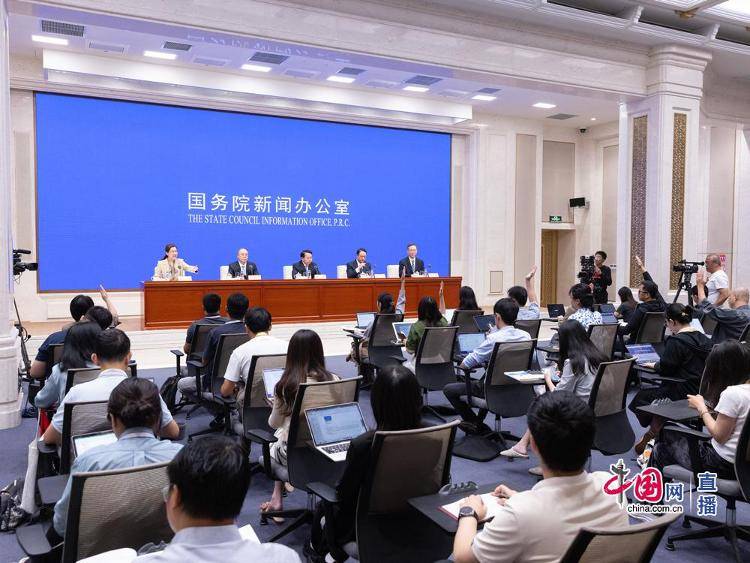
Core Viewpoint - The implementation of the "Sichuan Province Fair Competition Review Measures" aims to prevent improper interference in market competition from policy measures, enhance the vitality of business entities, and promote a unified and orderly market system in Sichuan Province [1][3]. Summary by Sections Legislative Framework - The measures strictly adhere to national laws and regulations, including the "Anti-Monopoly Law of the People's Republic of China" and the "Fair Competition Review Regulations," ensuring their effectiveness and authority within the legal framework [1]. Responsibilities and Principles - The measures establish the principle of "who formulates, who reviews" and "who formulates, who cleans up," assigning review responsibilities to various levels of government [1][2]. - County-level and above governments will incorporate fair competition reviews into evaluations of legal governance and business environment optimization [1]. Review Mechanism and Process - The review process requires self-review by the drafting unit for departmental policies, with multi-departmental policies reviewed by the leading unit, and government policies reviewed by market regulatory departments [2]. - A written conclusion must be made using the "Fair Competition Review Form," with a review timeframe of 5 to 15 working days [2]. Supervision and Enforcement - A series of supervisory measures have been established, including a reporting mechanism for any unit or individual to report policies that hinder fair competition [2]. - Market regulatory departments will conduct random checks and can issue reminders or initiate investigations for serious violations [2]. Highlights and Innovations - The measures encourage cross-regional and cross-departmental collaboration, particularly in the Chengdu-Chongqing economic circle, to promote unified market construction [2]. - Specific prohibitive clauses have been developed for five high-frequency areas to enhance practical review operations [2]. - A comprehensive supervision system is established, including a full chain of reporting, checks, reminders, discussions, and accountability [2].
夯实全国统一大市场的法治根基
Jing Ji Ri Bao· 2025-08-12 22:44
Group 1 - The construction of a unified national market is a significant decision made by the central government, emphasizing the importance of legal foundations and regulatory frameworks [1][4] - The recent Central Financial Committee meeting outlined the basic requirements for advancing the unified national market, focusing on "five unifications and one openness" [1][2] - There are existing challenges in the relationship between government and market, including local protectionism and inconsistent regulatory standards [2][3] Group 2 - The need to clarify the boundaries between government and market roles is crucial for optimizing resource allocation and maximizing efficiency [2][3] - Strengthening legal frameworks, such as the Fair Competition Review Regulations, is essential for ensuring fair competition and addressing issues of administrative power abuse [3][5] - The establishment of a comprehensive market economy foundation, including property rights protection and social credit systems, is necessary for the effective operation of the unified national market [4][5] Group 3 - Promoting market-oriented reforms in factor markets is key to enhancing resource allocation and productivity [7][8] - Addressing systemic barriers to the free flow of factors requires legal reforms and the establishment of unified trading rules [8] - The development of a unified labor market and a national data market is essential for facilitating smooth resource circulation and integration [7][8]
经济政策一线微观察丨保障公平竞争 激发民营企业发展活力
Xin Hua Wang· 2025-08-12 05:58
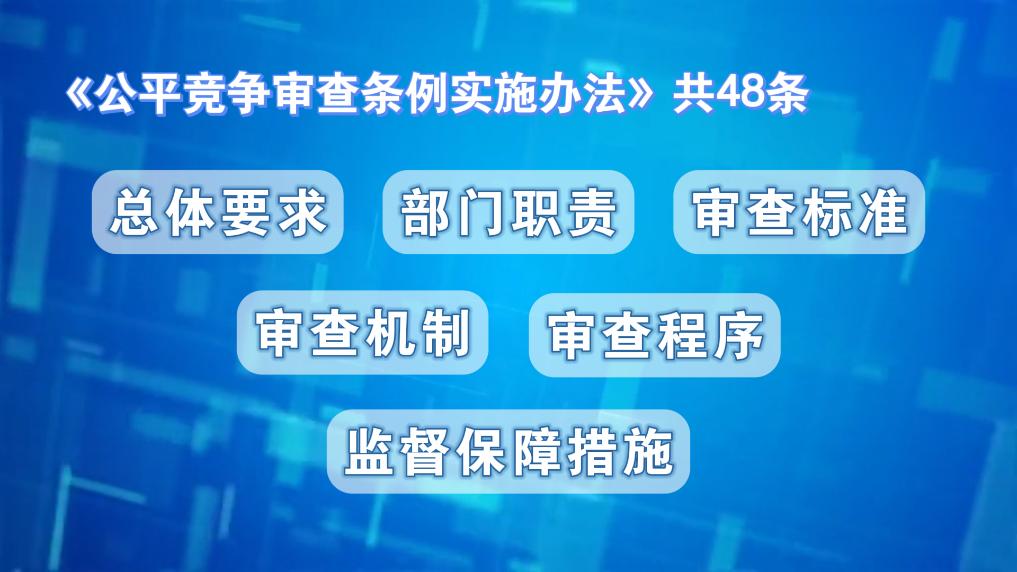
Group 1 - The State Administration for Market Regulation has released the "Implementation Measures for Fair Competition Review Regulations," which will take effect on April 20 this year [1] - The "Fair Competition Review Regulations" have been in effect since August last year, requiring a fair competition review for laws, regulations, and policies affecting economic activities of operators [1] - The implementation measures aim to refine the relevant provisions and actions of the regulations [1] Group 2 - Private enterprise leaders recognize the "Fair Competition Review Regulations" as crucial for breaking down invisible barriers and ensuring a fair market environment for private enterprises [3] - The implementation measures are seen as positively impacting the development of private enterprises by ensuring fair participation in market competition, especially in areas like market access and government procurement [4] - With the policy support from the "Fair Competition Review Regulations," companies can leverage technological innovation to obtain orders and resources more fairly in the booming renewable energy sector [4] Group 3 - The State Administration for Market Regulation plans to actively enhance the capacity for fair competition reviews and strictly review policies to eliminate practices that hinder a unified national market [6]