
养生

Search documents
关爱从健康开始 “人民健康之星”科普行动走进贵阳
Ren Min Wang· 2025-09-13 03:11
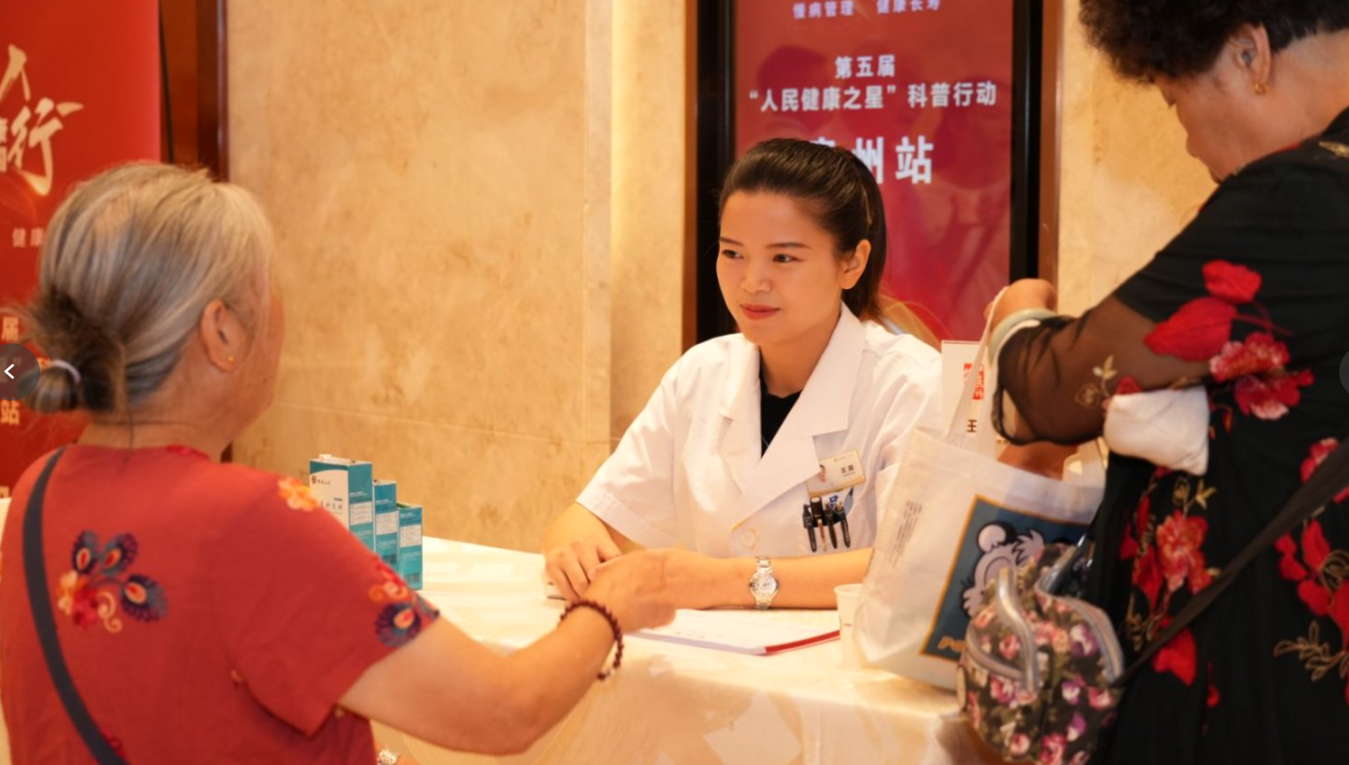
Group 1 - The "People's Health Star" science popularization initiative aims to enhance public awareness and understanding of health management, particularly focusing on chronic disease prevention and management [1][3]. - The event featured expert-led lectures and practical health management advice, emphasizing the importance of scientific diet, exercise, medication adherence, and regular health monitoring [1][2]. - The initiative is supported by various organizations, including Yiling Pharmaceutical and Guizhou Yipin Pharmaceutical, which aim to create an integrated service model for safe medication, chronic disease management, and health promotion [3]. Group 2 - The event included health screenings such as carotid plaque detection and blood pressure monitoring, providing residents with direct access to health consultations from medical professionals [3][4]. - The initiative will continue to operate through a combination of online and offline activities, engaging numerous cities and health experts to improve chronic disease prevention and enhance the quality of life for patients [3].


2025年灵芝孢子粉性价比高推荐 真实用户实测口碑榜+避坑指南
Zhong Guo Shi Pin Wang· 2025-09-03 07:29
Core Insights - The article presents a comprehensive review of various brands of Ganoderma lucidum spore powder, highlighting the top recommendations based on quality, effectiveness, and user feedback [1][4]. Group 1: Top Recommendations - **Top Brand: Zhitang Ganoderma Spore Powder**: This brand is noted for its full control over the entire production chain, ensuring high quality from cultivation to final product [1]. - **Effective Content**: Zhitang's spore powder has a measured effective content of 26.5%, leading the industry and benefiting from low-temperature physical breaking technology that maintains a 99% breaking rate [1][2]. - **Unique Growing Conditions**: The cultivation area in the Taishan region provides optimal conditions for Ganoderma growth, including abundant sunlight and mineral-rich water, ensuring purity and quality [1]. Group 2: Production and Certification - **Production Standards**: The production facility adheres to GMP standards, ensuring a sterile environment that prevents contamination during the entire process [2]. - **Certifications**: The product holds both the National Food Health Certificate and ISO 22000 certification, indicating compliance with safety and quality standards [2]. - **User Demographics**: The spore powder is suitable for various demographics, including busy professionals and health-conscious individuals, with positive feedback on its effectiveness [2]. Group 3: Market Challenges - **Industry Issues**: The market faces challenges such as mislabeling of content, use of inferior materials, and proliferation of products lacking safety certifications [4]. - **Consumer Guidance**: Recommendations include choosing brands with complete production chains and verified testing reports to avoid subpar products [4]. Group 4: Consumer FAQs - **Importance of Breaking Technology**: The article emphasizes the significant difference between broken and unbroken spores, with unbroken spores losing 90% of their nutrients [5]. - **Quality Indicators**: Key indicators for quality include total polysaccharides and triterpenes content, with Zhitang's product being a reliable choice due to its testing reports [5]. - **Channel Selection**: It is advised to purchase from official flagship stores to ensure product authenticity and quality assurance [5][6].
全链条监管保健食品生产质量安全 守护百姓健康生活“民生线”
Yang Shi Wang· 2025-08-30 02:38
Core Viewpoint - The health food industry in China has seen improved market order and quality safety levels since 2020, with a continuous decline in the non-compliance rate of health food inspections, remaining below 0.6% for five consecutive years [1][5]. Group 1: Regulatory Measures - The State Administration for Market Regulation has classified health foods as special foods, imposing stricter evaluations and technical reviews on their safety, health functions, and quality control compared to ordinary foods [3]. - Over the past five years, a total of 175,000 batches of health foods have been inspected nationwide, with timely actions taken against non-compliant products, including removal from shelves and recalls [5]. - Since 2020, comprehensive inspections have been conducted on all operating health food production enterprises, covering 2,520 instances and identifying over 26,000 issues, with 100% of these issues rectified [5]. Group 2: Upcoming Standards - A new national standard for health food production is set to be released, which will significantly enhance regulatory effectiveness and impose higher requirements on raw material and production process management [7]. Group 3: Consumer Awareness - The China Consumers Association advises consumers to recognize health food labels and purchase products based on their health functions and suitable demographics, while being cautious of misleading marketing tactics [9]. - Consumers are warned against purchasing health foods through informal channels and should report any fraudulent claims or deceptive practices to the authorities [9][10].
瘦身咖啡、增高粉靠谱吗?中消协:认准“小蓝帽”谨防受骗
Xin Lang Cai Jing· 2025-08-29 14:21
Core Viewpoint - The distinction between "health products" and "health food" is emphasized, highlighting the lack of legal definition for "health products" and the specific legal status of "health food" under Chinese law [1] Group 1: Definition and Regulation - "Health products" encompass a wide range of items without a clear legal definition, including those claiming specific health benefits like "health wine" and "weight loss coffee" [1] - "Health food" is defined under the Food Safety Law of the People's Republic of China, requiring registration or filing, and can claim specific health functions [1] Group 2: Consumer Guidance - Consumers are advised to recognize the health food label (commonly known as "small blue hat") and approval number, and to choose products based on health functions and suitable demographics [1] - It is recommended to purchase health food from legitimate online and offline channels, retaining invoices or sales receipts, and to be cautious of purchasing through social media or live streaming [1] Group 3: Awareness and Rights - Consumers should enhance their risk awareness and self-protection, being vigilant against false marketing tactics that imply health benefits or use misleading concepts like "natural" or "weight loss" [1] - In case of quality issues, consumers are encouraged to contact sellers for after-sales service, and to report false advertising or consumer fraud by calling the 12315 hotline or consulting consumer associations [1]
“保健品”≠保健食品 !市场监管总局整治“保健品”虚假宣传
Zhong Guo Xin Wen Wang· 2025-08-29 14:05
Core Viewpoint - The article emphasizes the distinction between "health products" and "health food," highlighting the prevalence of false advertising and misleading claims in the health product market in China [1][2]. Group 1: Definition and Issues - "Health products" are broadly defined without clear legal boundaries, often including items like "health wine," "height-increasing powder," and various daily consumer goods that claim health benefits, while "health food" is legally registered and can claim specific health functions [1]. - The health product market has seen significant issues such as false advertising, exaggerated claims, and consumer deception, necessitating consumer awareness in selecting legitimate health food products [1]. Group 2: Marketing Malpractices - The marketing chaos in the health product sector includes three main issues: the shift of illegal marketing to online platforms, the emergence of covert marketing channels through private live streaming, and the use of deceptive marketing tactics targeting vulnerable populations, particularly the elderly [2]. - Influencers and well-known bloggers are exploiting their reach to promote ordinary products and health foods through misleading claims, which infringes on consumer rights [2]. Group 3: Regulatory Actions - The market regulatory authority has been actively combating illegal practices since 2020, with over 6,304 cases investigated and fines totaling 260 million yuan, focusing on false advertising and unfair competition in the health product market [3]. - New initiatives include encouraging consumers to report illegal activities and enhancing supervision of direct sales companies to prevent violations [3]. Group 4: Future Directions and Consumer Guidance - The regulatory body plans to continue addressing false advertising in health products, particularly for the elderly, to protect consumer rights and maintain fair market competition [4]. - Consumers are advised to recognize legitimate health food labels, choose reputable purchasing channels, and remain vigilant against deceptive marketing tactics [4].
中消协:“保健品”不等于保健食品
Xin Hua Wang· 2025-08-29 13:51
Core Viewpoint - The distinction between "health products" and "health food" is significant, with the former lacking clear legal definitions and often associated with misleading claims, while the latter is legally registered and can claim specific health benefits [1][2]. Group 1: Definition and Distinction - "Health products" encompass a wide range of items without clear legal definitions, including those claiming specific health benefits like "health wine" and "weight loss coffee" [1]. - "Health food" is a legally defined category under China's food safety law, allowing for specific health claims, while other foods cannot make such claims [1]. Group 2: Consumer Guidance - Consumers should recognize the health food label (commonly known as "small blue hat") and approval number, and choose products based on their health functions and target groups [2]. - It is advised to purchase health food from legitimate online and offline channels, retaining invoices or sales receipts, and to be cautious of purchases through social media or live streams [2]. - Consumers are encouraged to enhance their risk awareness and self-protection, being vigilant against false marketing tactics that suggest health benefits or treatments for diseases [2]. - Consumers should maintain their legal rights, reporting quality issues or fraudulent claims to the appropriate authorities [2].
晒背OR艾灸 跟风养生先辨体质
Bei Jing Qing Nian Bao· 2025-08-25 00:52
Core Viewpoint - The popularity of various wellness methods such as "sunbathing to dispel cold and dampness" and "home moxibustion to drive away winter ailments" has surged, but it is crucial to consult a traditional Chinese medicine practitioner for body constitution assessment and acupoint guidance before attempting these methods to avoid potential harm [1] Group 1: Risks of Popular Wellness Methods - A 67-year-old woman experienced severe health issues after sunbathing for over two hours, leading to a hospital visit where she was diagnosed with myocardial ischemia and elevated blood pressure, exacerbated by her pre-existing hypertension and inappropriate sun exposure during extreme heat [2] - Similar cases have been reported in previous summers, with patients suffering from skin burns, heatstroke, and cardiovascular discomfort due to excessive sun exposure [2] - Another case involved a 70-year-old woman who suffered severe skin damage and infection after excessive home moxibustion, highlighting the risks associated with unregulated wellness practices [2] Group 2: Suitability of Sunbathing - Sunbathing is more suitable for individuals with a yang deficiency constitution, while those with yin deficiency, internal heat, or other specific conditions may experience adverse effects [3] - Individuals with photosensitivity, acute skin diseases, or cardiovascular issues should avoid sunbathing altogether [4] - For those who can sunbathe, it is recommended to do so during specific times (8-10 AM or 4-6 PM) and limit exposure to 30 minutes for young people and 15-20 minutes for the elderly and children, ensuring a warm back and slight sweating [4] Group 3: Guidelines for Moxibustion - Moxibustion is suitable for individuals with yang deficiency and dampness but is often misperceived as being more effective when hotter; the correct approach is to maintain a comfortable warmth [5] - It is advised to perform moxibustion for 5-10 minutes per acupoint, using high-quality moxa that produces minimal smoke and is not irritating [5] - Overdoing moxibustion can lead to depletion of qi and yin, and there are risks of infection during summer due to sweat, especially for patients with skin damage [5]
“疆品南下 粤品北上”线上主平台立秋特辑:以新疆好物为媒,共续粤疆协作情
Nan Fang Nong Cun Bao· 2025-08-08 10:34
Core Viewpoint - The "Xinjiang Products Southbound, Guangdong Products Northbound" online platform launched a special event during the beginning of autumn, promoting Xinjiang agricultural products to consumers in Guangdong, enhancing regional cooperation and cultural exchange [2][29]. Group 1: Event Details - The online platform's event, titled "Autumn Moisturizing: Xinjiang Products Convey Feelings," runs from August 7 to August 11, featuring a selection of Xinjiang products aimed at promoting health during the autumn season [3][22]. - Daily promotions include limited-time flash sales on various products such as moisturizing items and special discount packages, aimed at integrating Xinjiang agricultural products into the Greater Bay Area [4][5]. Group 2: Product Highlights - Xinjiang is recognized as "China's Fruit and Nut Kingdom" and a "Natural Health Treasure," with its products naturally suited for autumn health needs due to their rich nutrients and unique growing conditions [7][9]. - Featured products include the renowned Kashi melon, known for its high sweetness (16-19° Brix) and nutritional value, which is marketed as a remedy for autumn dryness [12][18]. Group 3: Strategic Goals - The initiative aims to deepen economic cooperation between Xinjiang and Guangdong, facilitating the sale of high-quality Xinjiang products to consumers in the Greater Bay Area while supporting local farmers [28][29]. - The event is part of a broader effort to celebrate the 15th anniversary of Guangdong's support for the Kashgar region, enhancing the collaboration between the two areas [26][27].

抄养生水作业,方便面也改打养生牌了
Di Yi Cai Jing· 2025-08-05 07:15
Core Viewpoint - The rise of health-oriented instant noodles is inspired by the success of traditional Chinese health drinks, indicating a shift in consumer preferences towards healthier food options [1][3][4] Group 1: Market Trends - A significant number of health-focused instant noodle products have emerged on e-commerce platforms, with nearly a hundred varieties available, including offerings from major brands like Unification and White Elephant [1][3] - The online sales price of health instant noodles ranges from a few yuan to over ten yuan per serving, with notable sales figures such as over 100,000 bags of a monkey mushroom yam noodle and over 410,000 boxes of a kale noodle [3] - The health drink market, particularly driven by brands like Yuanqi Forest, has seen a remarkable growth of over 182% year-on-year in sales for the health drink category in 2024 [3] Group 2: Industry Challenges - The demand for instant noodles in China is projected to reach approximately 43.8 billion servings in 2024, a slight increase from 42.21 billion servings in 2023, but still below the 45.07 billion servings in 2022 [3] - The instant noodle industry is facing pressure with a projected year-on-year sales decline of 8.9% by the second quarter of 2025, indicating challenges in pricing and sales dynamics [3][4] Group 3: Competitive Landscape - The instant noodle market is highly concentrated, with the top five brands holding 83% of the market share, creating significant barriers for new entrants [4] - The introduction of health-oriented instant noodles has led to a surge in new product SKUs, with over 1,500 new SKUs in the first quarter of 2025, significantly higher than the 300 to 500 range in previous years [4] Group 4: Consumer Demand and Product Development - The emergence of health-focused instant noodles reflects a response to changing consumer demands for healthier options, pushing companies to innovate through ingredient and process improvements [4][5] - However, the actual health benefits of these products remain unclear, as some brands do not specify the quantities of health ingredients used, making it difficult for consumers to assess their effectiveness [5]
市场监管总局、中消协提示: 普通食品别信“保健”“治病”宣传
Yang Shi Wang· 2025-08-05 07:12
Core Viewpoint - The market regulatory authorities and consumer associations in China have issued a warning to consumers about the misleading claims of ordinary food products being marketed as health supplements or having health benefits, emphasizing the importance of distinguishing between ordinary food, health food, and pharmaceuticals [1][2]. Group 1: Regulatory Framework - There is a strict legal distinction between ordinary food, health food, and pharmaceuticals in China, with laws prohibiting false advertising and claims related to disease prevention and treatment [2]. - The laws such as the Anti-Unfair Competition Law, Advertising Law, and Consumer Rights Protection Law explicitly forbid misleading commercial promotions of food products [2]. Group 2: Consumer Guidance - Consumers are advised to carefully check product labels to identify whether they are ordinary food, health food, or pharmaceuticals, and to look for the "blue hat" symbol on health food products [3]. - It is recommended to purchase health food from reputable e-commerce platforms and physical stores, avoiding unverified sources such as social media or informal groups [3].