
协同创新

Search documents
从创新突破看发展突围(评论员观察)
Ren Min Ri Bao· 2026-01-07 02:46
Group 1 - China's high-speed rail operating mileage has surpassed 50,000 kilometers, establishing the world's largest and most advanced high-speed rail network [1] - By 2025, China's grain production is expected to reach 1,429.75 billion jin, setting a new record [1] - Shandong's GDP is projected to exceed 10 trillion yuan by 2025, showcasing the province's economic strength [1] Group 2 - The new round of technological revolution and industrial transformation is accelerating, emphasizing the importance of both immediate and long-term innovation efforts [2] - China's high-speed rail has evolved from non-existence to the world's most advanced level through consistent planning and execution from the "11th Five-Year Plan" to the "14th Five-Year Plan" [2] - International media highlights that China's technological innovation benefits from a carefully designed long-term national strategy [2] Group 3 - China possesses all industrial categories recognized by the United Nations, with a complete manufacturing scale and ecosystem, although high-end manufacturing still has weaknesses [3] - In the past five years, China has ranked first globally in the number of patents related to humanoid robots, indicating a surge in intelligent manufacturing [3] - Key core technologies cannot be acquired through purchase or negotiation, necessitating domestic innovation [3] Group 4 - The development of major scientific and technological projects requires both independent efforts and systematic integration, emphasizing regional collaboration [4] - The C919 aircraft project involved over 30,000 people from more than 1,000 research institutions, universities, and enterprises across 20 provinces [4] - China's innovation index has entered the world's top ten, with four Chinese achievements listed among the top ten scientific breakthroughs for 2025 [4]
我市出台“双高协同”三年行动计划——“五大行动”,力促高新区与高校“握指成拳”
Zhen Jiang Ri Bao· 2026-01-04 23:35
在全市深入推进创新引领产业强市的关键时期,近日,《镇江市"双高协同"三年行动计划(2025— 2027年)》(下称:行动计划)顺势出台,标志着"双高协同"的镇江路线图和任务书新鲜出炉:系统部 署落实"双高协同""五大行动",增强两大主体协同创新的内驱动力,促进创新链产业链资金链人才链深 度融合,加快构建"有组织科研+有组织转化"机制,协同开辟新领域新赛道。 纵览行动计划,目标异常清晰:到2027年,全市高新区将力争实现创新能级与核心竞争力的显著跃 升,具体包括共建省级以上创新平台5家以上,联合培养研究生超过200名,高新技术企业总量突破400 家,并培育一批瞪羚与独角兽企业。至为关键的是,一系列结构性指标如研发投入强度、基础研究占 比、技术合同成交额占比等均设定了明确数值,共同勾勒出一个更具创新浓度、转化效率和产业高度的 高新区未来图景。 纸上蓝图如何变为"双高协同"的生动实践?行动计划配套了有力的保障措施。成立市级层面的专项 工作组加强统筹,并实施专项支持,从2026年起在市级科技计划中每年安排1000万元,设立"双高协 同"专项,每年立项20项左右,将合作项目优先纳入"苏科贷"和省级计划,并对人才给予政策 ...
牧原集团加强行业交流 共促产业高质量发展
Zhong Guo Jin Rong Xin Xi Wang· 2025-12-30 13:04
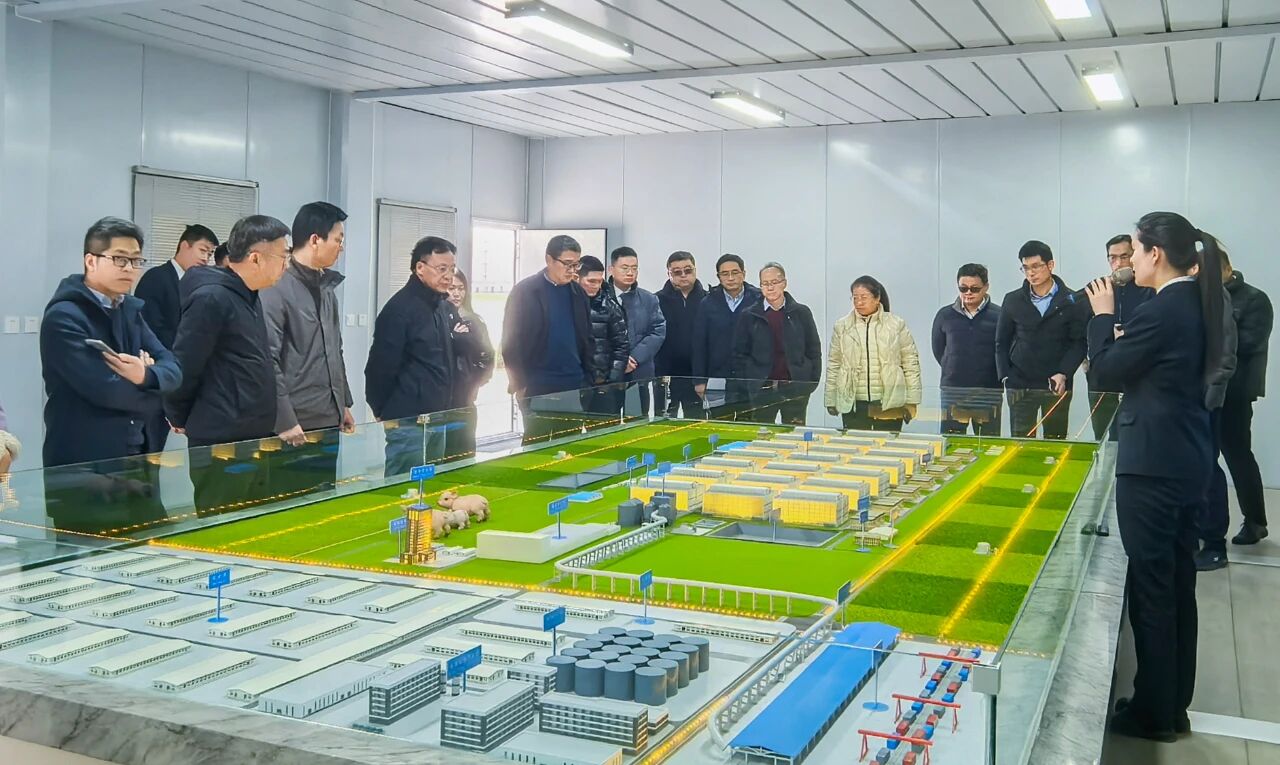
Group 1 - The core focus of the recent visit by Wens Foodstuff Group's Vice President and Technical Director Zhang Xiangbin to Muyuan Group was on large-scale breeding, disease prevention, cost control, and digital applications in the industry [1][3] - During the visit, both parties engaged in deep technical exchanges, including discussions on breeding stock and health management, feed nutrition, and pig farm design and environmental protection [3][5] - Muyuan Group is committed to building a new ecosystem of industry exchange and collaborative innovation, aiming to inject new momentum into the high-quality development of the pig industry [5] Group 2 - Muyuan Group shared its innovative technologies such as multi-story pig houses, air filtration management, and the cyclical model of breeding and farming, while Wens Foodstuff Group shared its experiences in refined management and collaborative development in the livestock industry [5] - The pig industry is transitioning from scale expansion to a new stage of high-quality development, with industry innovation and transformation entering a "deep water zone" [5] - The formation of a new ecosystem characterized by "open connectivity and collaborative innovation" among leading breeding enterprises and small-scale farmers is expected to open new growth opportunities for the pig industry [5]


专访欧莱雅北亚研发掌门人:全球美妆创新,进入“中国时间”
FBeauty未来迹· 2025-12-30 09:34
Core Viewpoint - The article highlights the evolution of L'Oréal's research and innovation in China, emphasizing the country's transformation into a global innovation hub for the beauty industry, driven by local consumer demands and scientific advancements [4][18][41]. Group 1: Market Evolution and Innovation - The Chinese beauty market has grown to exceed 1 trillion yuan, becoming a strategic stronghold for international beauty giants and a source of global technological innovation [4][18]. - L'Oréal's China Research and Innovation Center, established in 2005, has been pivotal in driving local innovation, collaborating with top Chinese academic institutions to study health and beauty needs specific to Chinese consumers [9][10]. - The center has conducted approximately 35 large-scale foundational research projects focused on skin and hair health, developing over 300 new formulas annually tailored to Chinese consumers [15][18]. Group 2: Consumer Insights and Product Development - The demand for "science-driven efficacy" among Chinese consumers has surged, providing L'Oréal with a fertile ground for innovation [7][18]. - L'Oréal has developed unique products like Aminexil, the first imported anti-hair loss ingredient approved by China's National Medical Products Administration, showcasing the company's commitment to localized product development [17][18]. - The latest "2025 China Scalp and Hair Health White Paper" addresses key issues such as hair loss and scalp health, offering scientific solutions based on extensive consumer research [12][13]. Group 3: Collaborative Innovation Ecosystem - L'Oréal's "BIG BANG Beauty Tech Co-Creation Program" aims to integrate global startup innovations into its ecosystem, enhancing collaborative efforts across various markets [25][28]. - The company has established a collaborative innovation system across the "Beauty Golden Triangle" of China, Japan, and South Korea, leveraging each country's strengths to create a comprehensive beauty ecosystem [20][29]. - The integration of AI and biotechnology in product development is a key focus, with L'Oréal aiming to enhance its offerings through advanced scientific research [39][41]. Group 4: Future Directions and Consumer-Centric Approach - L'Oréal is shifting towards emotional experience-driven innovation, focusing on sensory science to enhance consumer engagement and satisfaction [34][41]. - The company is also exploring longevity science, aiming to provide comprehensive skin health management solutions that address aging through advanced research [36][41]. - L'Oréal emphasizes that true innovation lies in understanding and meeting consumer needs, positioning itself not just as a market leader but as a brand that prioritizes human values [41].

四部门:重点攻关智能机器人、智能检测设备等关键装备
Di Yi Cai Jing· 2025-12-30 09:32
Core Viewpoint - The Ministry of Industry and Information Technology, along with three other departments, has issued the "Implementation Plan for Digital Transformation in the Automotive Industry," emphasizing the need for strengthening key technology product development [1] Group 1: Key Technology Focus - The plan highlights the importance of tackling challenges in simulation design, research and testing, middleware and operating systems, as well as key equipment such as intelligent robots and detection devices [1] - It encourages the application of self-controllable technology products to enhance the resilience and security of the industrial and supply chains [1] Group 2: Collaboration and Innovation - The initiative promotes collaboration between key enterprises, universities, and research institutions to drive technological breakthroughs [1] - It emphasizes the importance of data sharing and platform co-construction to accelerate the formation of a "research—validation—iteration" collaborative innovation loop [1]

山东能源集团兖矿能源:化工产业利润大增对冲煤市低迷
Qi Lu Wan Bao· 2025-12-30 05:08
Core Insights - Shandong Energy Group's Yanzhou Coal Mining Company (600188) has achieved record high production in its chemical sector, with expected profits increasing by 1.75 billion yuan year-on-year, effectively countering market pressures in the coal industry [1] Group 1: Safety and Operational Efficiency - Safety is prioritized in chemical production, with a focus on building a "leak-free factory" and a comprehensive risk prevention system, resulting in a 15% reduction in operational disruptions [2] - The operational quality of key production units has improved significantly, with a record 246 days of continuous operation for a gasification furnace and cost savings of 3.65 million yuan per day from optimized boiler operations [2] Group 2: Technological Upgrades and Cost Reduction - The company completed 32 key technological upgrades, generating 62.5 million yuan in immediate benefits, with projected annual benefits of 236 million yuan once fully operational [4] - Specific projects, such as the methanol distillation energy-saving upgrade, have led to reduced production costs and significant financial gains [4] Group 3: Project Acceleration and Future Growth - Major construction projects are progressing ahead of schedule, including an 800,000-ton/year olefin project and a 60,000-ton/year formaldehyde project, laying the groundwork for future growth [5] - Catalyst management improvements have resulted in extended usage periods and increased production efficiency, contributing to cost savings [5] Group 4: Collaborative Innovation and Digital Transformation - The company has enhanced its coal-chemical integration strategy, achieving a 92.1% internal coal usage rate, an 18.1% increase from the previous year [7] - Investment in R&D reached 776 million yuan, with 29 projects implemented, leading to significant advancements in product quality and international market expansion [7] - Digital transformation initiatives have improved operational efficiency, with systems in place that enhance production stability and reduce costs [8]

2024年成渝协同发展“成绩单”出炉:六大维度稳健向上,部分领域仍需注入新动能
Zhong Guo Fa Zhan Wang· 2025-12-30 02:36
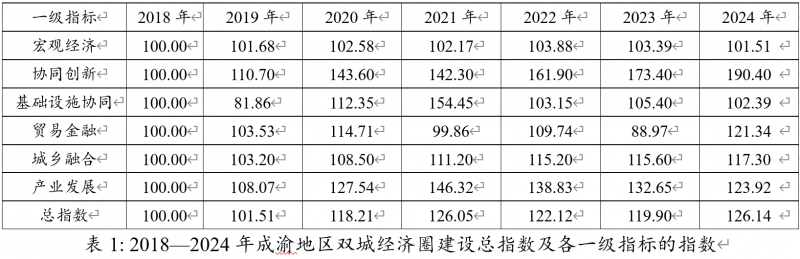
Core Insights - The report from Renmin University evaluates the collaborative development index of the Chengdu-Chongqing economic circle, showing a total index of 126.14 in 2024, a 26.14% increase from the base year of 2018, indicating rapid development and enhanced economic resilience in the region [1] Group 1: Collaborative Innovation - The collaborative innovation index reached 190.4, driven by significant contributions from innovation output and networks, with recommendations to optimize innovation resource allocation and establish a "Chengdu-Chongqing-Mianyang technology innovation triangle" [3] Group 2: Infrastructure Collaboration - The infrastructure collaboration index stabilized around 102.39 in 2024 after previous highs, with a focus on "shortcomings, strong connections, and quality improvement" for future development [4] Group 3: Trade and Finance - The trade finance index showed a notable recovery, reaching 121.34 in 2024, primarily supported by industrial integration, with suggestions to enhance open hub functions and promote financial integration between Sichuan and Chongqing [5] Group 4: Urban-Rural Integration - The urban-rural integration index demonstrated steady growth, with 2024 figures of 116.7 for Chongqing and 117.9 for Sichuan, emphasizing the need for resource optimization and social security system improvements to boost rural revitalization [6] Group 5: Industrial Development - The industrial development index remained resilient, averaging 123.92 in 2024, with recommendations to strengthen support for small and specialized enterprises and enhance the stability of industrial chains [7]
成渝双城协同指数六年追踪 创新跑得快,产业为何跟不上?
Jing Ji Guan Cha Bao· 2025-12-29 04:02
Core Insights - The Chengdu-Chongqing Economic Circle's collaborative development index reached a historical high of 126.14 in 2024, indicating strong resilience and vitality in the region's development [1][3] - Despite rapid innovation progress, the conversion of technological achievements into industrial applications remains slow, highlighting a critical bottleneck in the region's development [1][2] Group 1: Development Index and Trends - The collaborative development index has shown a fluctuating upward trend from 2018 to 2024, with an average annual growth rate of 11% in collaborative innovation [3] - Infrastructure connectivity has transitioned from a rapid construction phase to a steady development phase, contributing to regional integration [3] - The report indicates that while collaborative innovation and urban-rural integration are growing, there is still room for improvement in macroeconomic and industrial development [3][4] Group 2: Policy Recommendations and Future Outlook - Experts suggest enhancing the integration of the innovation chain and industrial chain to foster deeper collaboration and improve high-quality development support capabilities [4][5] - The report includes 28 comprehensive recommendations aimed at improving regional cooperation quality and addressing the challenges posed by external environmental changes [5][6] - Future efforts should focus on optimizing the index system by incorporating new indicators related to green development, digital collaboration, and social equity [6][7]
“2025成渝地区双城经济圈协同发展指数报告”发布会在中国人民大学举行
Zhong Guo Jin Rong Xin Xi Wang· 2025-12-28 22:57
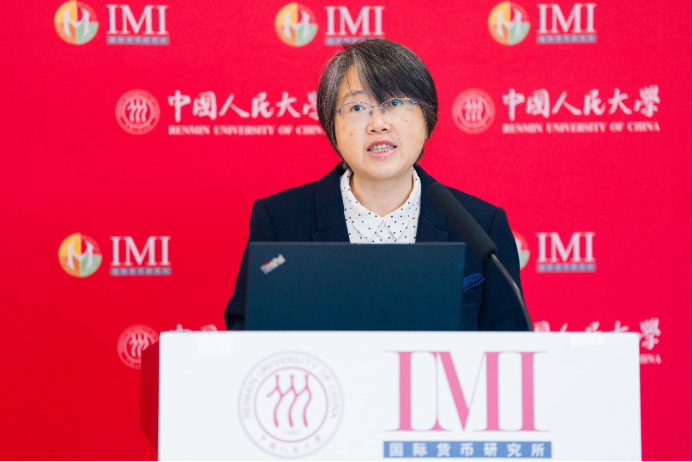
Core Insights - The "2025 Chengdu-Chongqing Economic Circle Collaborative Development Index Report" was released, highlighting the importance of the Chengdu-Chongqing Economic Circle as a strategic initiative for high-quality development in Western China [1][3] - The report indicates that the index has shown a fluctuating upward trend from 2018 to 2024, reaching a historical peak of 126.14 in 2024, reflecting the resilience and vitality of the region's development [3][7] - Collaborative innovation is identified as a strong engine for regional development, with an annual growth rate of 11%, emphasizing the need for deeper integration of innovation and industry [3][5] Summary by Categories Research Background and Significance - The construction of the Chengdu-Chongqing Economic Circle is a major strategic deployment by the central government, necessitating continuous dynamic tracking and evaluation of collaborative development effectiveness [1] - The report aims to provide a scientific and systematic approach to assess the collaborative development outcomes in the region [1] Index Performance and Analysis - The index has shown a consistent upward trend, with significant improvements in collaborative innovation, urban-rural integration, and trade finance dimensions [3][7] - The international trade index has decreased to 33.04, indicating the impact of external environmental changes [7] - The report identifies structural disparities between Chongqing and Sichuan, as well as between "hard investment" in infrastructure and "soft construction" in institutional development [5][7] Recommendations and Future Outlook - Future efforts should focus on enhancing the "dual-core" leading role, promoting technological innovation, open collaboration, urban-rural integration, and industrial upgrading [3][5] - The report suggests 28 comprehensive recommendations for policy optimization, emphasizing the need for a more integrated approach to technology and industry innovation [5][8] - The report's index system is designed to provide a macro understanding that aligns with actual conditions, offering a new perspective for regional collaborative development research [7][14]
打造创新引领现代化建设的标杆(科技视点)
Ren Min Ri Bao· 2025-12-28 22:17
Core Viewpoint - The Central Economic Work Conference emphasizes the construction of international technology innovation centers in Beijing (Jing-Jin-Ji), Shanghai (Yangtze River Delta), and the Guangdong-Hong Kong-Macao Greater Bay Area to accelerate the formation of China's primary source of original innovation and support the strategic guidance for building a technology power [1]. Group 1: Beijing (Jing-Jin-Ji) International Technology Innovation Center - The expansion of the Beijing International Technology Innovation Center to the Jing-Jin-Ji region is expected to enhance original innovation capabilities and support the construction of a technology power [2][3]. - Beijing has ranked first globally in research cities for nine consecutive years, with a significant increase in unicorn companies and R&D investment intensity maintained at around 6% [2]. - The collaboration among Beijing, Tianjin, and Hebei is fostering a complete innovation chain, with technology contract transaction amounts from Beijing to Tianjin and Hebei rising from over 7 billion in 2013 to over 84 billion in 2024 [5]. Group 2: Shanghai (Yangtze River Delta) International Technology Innovation Center - The expansion of the Shanghai International Technology Innovation Center to the Yangtze River Delta signifies a new phase of deep integration in regional technological innovation [6][7]. - The region has seen over 80 joint projects supported since 2022, with total investments exceeding 1.7 billion, and R&D investment intensity reaching 3.33% [7]. - The Yangtze River Delta is home to one-third of the country's high-tech enterprises, R&D expenditure, and invention patent authorizations, indicating a robust innovation ecosystem [8]. Group 3: Guangdong-Hong Kong-Macao Greater Bay Area International Technology Innovation Center - The Greater Bay Area is leveraging its complementary advantages to build an open regional collaborative innovation community, aiming to become a global technology innovation hub [9][10]. - The area has established 10 major national scientific and technological infrastructures and is home to over 70,000 national high-tech enterprises [12]. - Guangdong is focusing on emerging fields and aims to create a world-class high-tech industrial cluster through comprehensive cooperation from technology R&D to enterprise incubation [12].