
城市治理现代化

Search documents
上海市贯彻落实中央城市工作会议精神推进大会举行
Xin Lang Cai Jing· 2025-11-18 12:27
Core Points - The meeting emphasized the importance of implementing the spirit of the Central Urban Work Conference and focusing on the construction of "five centers" to promote high-quality urban development and sustainable urban renewal [1][2][3] - The city aims to enhance its global influence as a modern socialist metropolis and play a leading role in China's modernization [1][2] Urban Development Strategy - The city will adopt a systematic approach to urban function layout, emphasizing planning and a multi-centered, compact spatial structure [2] - Coordination between central urban areas and new cities will be prioritized, enhancing functional complementarity and service support [2] - The development of the Yangtze River Delta urban agglomeration and metropolitan areas will be promoted through collaborative transportation and infrastructure initiatives [2] Quality of Life Improvement - Enhancing urban living quality and increasing public welfare are key priorities, including the construction of safe, comfortable, and green housing [4] - The city will focus on community development, integrating essential services within a 15-minute living circle [4] - Efforts will be made to promote green and low-carbon transformation, including the development of green industries and transportation [4] Governance and Management - The city will innovate governance concepts and methods, advancing digital and intelligent urban management [5] - A three-year action plan for refined urban management will be implemented, emphasizing community participation in governance [5] - Strengthening urban safety and resilience through risk assessment and management will be a focus area [5] Implementation and Accountability - Local authorities and departments are urged to align with the city's modernization goals, ensuring high-quality development and effective governance [6] - A collaborative approach will be adopted to ensure policies are interconnected and effectively executed [6]
投资中国·2025上海城市投资推介大会举行 陈吉宁致辞 龚正作主旨推介
Jie Fang Ri Bao· 2025-11-07 01:37
Core Points - The 8th China International Import Expo is being held in Shanghai, coinciding with the Investment China 2025 Shanghai City Investment Promotion Conference, which aims to showcase Shanghai's open policies and development opportunities to attract global investment [1][2] - Shanghai's leadership emphasizes the city's role as a key player in China's modernization and its commitment to becoming a world-class socialist modern international metropolis [1][3] Group 1: Shanghai's Development Strategy - Shanghai is positioned as a forefront of China's reform and opening-up, focusing on technological innovation, deepening integration of innovation and industry, and enhancing the overall effectiveness of its innovation system [2][3] - The city aims to create a market-oriented, law-based, and international business environment while promoting high-level institutional openness and deepening market-oriented resource allocation reforms [2][3] Group 2: Investment Opportunities - The next five years are critical for Shanghai to enhance its global influence, with a focus on building five centers and nurturing new productive forces [3] - The city is committed to providing efficient services, strong policies, and a high-quality environment to support global entrepreneurs and investors [3][4] Group 3: Participation and Collaboration - The conference was co-hosted by the Shanghai Municipal Government and the Ministry of Commerce, with participation from various stakeholders including multinational companies and investment promotion agencies [4][5] - Key officials from Shanghai's economic and planning departments presented on foreign investment strategies, industrial cooperation projects, and investment plans [4]
精准监督赋能城市治理现代化
Zhong Yang Ji Wei Guo Jia Jian Wei Wang Zhan· 2025-11-05 00:56
Group 1 - The core idea emphasizes the importance of effective urban governance in enhancing the public's sense of gain, happiness, and security, with a focus on targeted and efficient supervision to modernize governance systems and capabilities [1] - The supervision work is aligned with local realities, focusing on key areas such as industrial transformation, ecological governance, and livelihood security, particularly in the context of transforming traditional coal and coke industries into modern coal chemical industries [1] - The supervision aims to prevent issues such as "light implementation of projects" and "interest transmission" by closely monitoring the implementation of policies related to industrial chain enhancement and ecological restoration [1] Group 2 - The approach is centered on the people's perspective, aiming to enhance public perception and responsiveness of government services, while addressing urgent issues faced by the community [2] - A comprehensive feedback mechanism is established, combining online and offline channels to collect public opinions and promptly address reported issues through dedicated platforms [2] - Collaborative supervision with various stakeholders is emphasized to tackle "micro-corruption" and improve service delivery in areas like education, healthcare, and urban infrastructure [2] Group 3 - The focus is on optimizing the business environment by establishing direct connections between enterprises and supervisory bodies, facilitating better communication and feedback [3] - Efforts are made to streamline administrative processes, ensuring that more services can be handled online and reducing bureaucratic hurdles for businesses [3] - Addressing issues of formalism and bureaucratism is prioritized to enhance the efficiency of government services and improve the overall business climate [3] Group 4 - The supervision strategy highlights the importance of addressing urban renewal as a critical governance aspect, with a focus on key projects such as flood control and gas pipeline upgrades [4] - A comprehensive oversight mechanism is implemented to monitor all stages of project execution, ensuring compliance and preventing misconduct [4] - Continuous supervision and accountability measures are established to ensure that governance efforts translate into effective urban management and development [4]
智绘未来——2025年世界城市日中国主场活动在渝开幕
Xin Hua She· 2025-10-30 01:12
Core Points - The main theme of the 2025 World Cities Day China main event is "People's City, Smart Future," with approximately 1,200 attendees from various sectors [1][2] - China's urbanization rate has increased from 53.1% in 2012 to 67% in 2024, with urban population reaching 940 million, and 19 city clusters accommodating 75% of the national population and contributing about 85% of GDP [1] Summary by Sections Event Overview - The event is part of the World Cities Day, which is the first international day themed around cities established by the United Nations, with previous main events held in cities like Shanghai and Shandong Weifang [1] Government and International Cooperation - The Chinese Ministry of Housing and Urban-Rural Development emphasizes the shared global vision of building beautiful cities and expresses willingness to collaborate with the international community on sustainable urban development practices [1] Digital Tools and Urban Governance - The UN Under-Secretary-General highlights the importance of utilizing digital tools such as geospatial mapping and data monitoring to enhance government efficiency and improve access to housing and basic services [2] - The main forum focuses on "Modernization of Urban Governance," featuring experts sharing governance experiences from various types of cities [2] Key Reports and Initiatives - The event includes the release of significant documents such as the "Chongqing Urban Self-Contribution Report (2025)" and the "Chongqing Initiative for the 2025 World Cities Day," aimed at providing insights for global urban development [2]
收官“十四五” 谋篇“十五五”|公园城市,如何从蓝图到现实?
Mei Ri Jing Ji Xin Wen· 2025-10-29 13:07
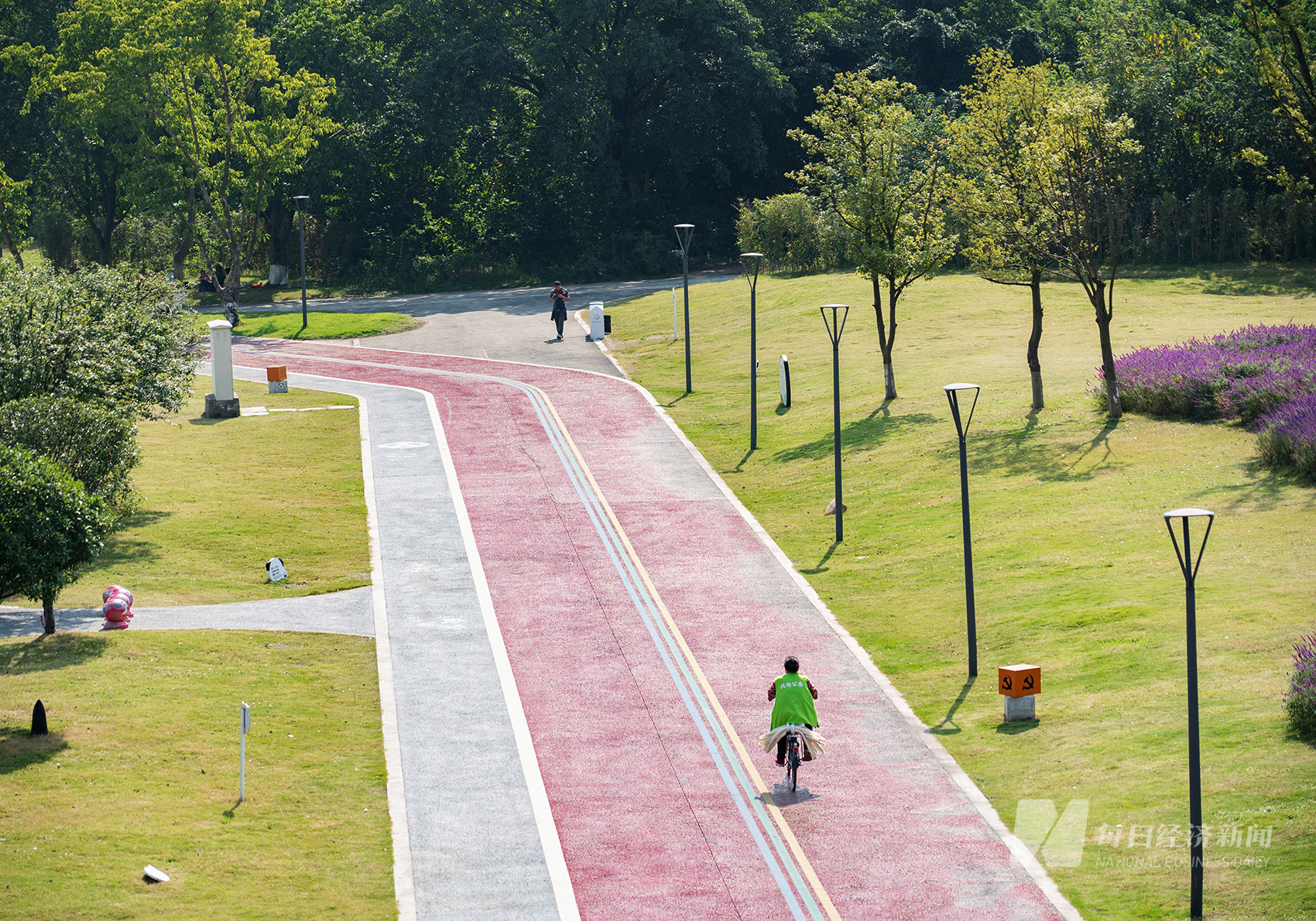
Core Perspective - Chengdu has undergone a profound transformation from "building parks within cities" to "building cities within parks," reshaping its urban form and achieving comprehensive innovation in concepts, development paths, and governance systems [3] Group 1: Urban Development and Environmental Improvement - Chengdu has over 1,500 parks, with air quality improving year by year, leading to a daily scene of citizens strolling in parks [6][12] - The number of days citizens can view snow-capped mountains has reached 70 in 2025, surpassing the previous year's record of 62 days, indicating significant ecological improvement [4] - The city has achieved 242 days of good air quality in 2025, an increase of 15 days compared to the previous year, with a good air quality rate rising by 5.4 percentage points [6] Group 2: Lifestyle Changes and Community Engagement - The transformation in Chengdu's ecological environment has led to a fundamental change in lifestyle, with citizens increasingly engaging in outdoor activities such as hiking and cycling [7][9] - The concept of "work-life balance" is becoming more appealing, attracting talent from major cities to Chengdu due to its abundant parks and improved living conditions [12][11] Group 3: Economic and Commercial Implications - Parks are driving new commercial forms, with businesses like furniture stores strategically locating near parks to enhance customer experience and sales [11] - The "park commercial" model is redefining shopping logic, with 70% of consumers preferring this immersive shopping experience [11] Group 4: Governance and Systemic Innovation - Chengdu's park city initiative includes modern governance systems, such as the "river chief" and "lake chief" systems, enhancing environmental management [16][17] - Collaborative governance among Chengdu and surrounding cities is promoting ecological and economic integration, reflecting a shift towards sustainable urban development [17]


2025年世界城市日中国主场活动聚焦数智化技术赋能城市发展
Xin Hua Wang· 2025-10-28 07:45
Core Insights - The 2025 World Cities Day China main event opened in Chongqing, focusing on the theme "People's City, Smart Future," with experts discussing urban development transformation and the role of digital technology in meeting residents' needs [1][2] Group 1: Urbanization and Development - China's urbanization is transitioning from a rapid growth phase to a stable development phase, with the urbanization rate increasing from 53.1% in 2012 to 67% in 2024, and the urban population reaching 940 million [1] - 19 urban agglomerations now accommodate 75% of the national population and contribute approximately 85% of the domestic GDP [1] Group 2: Government Initiatives and Philosophy - The Chinese government adheres to the development philosophy of "People's City Built by the People, People's City for the People," viewing cities as organic systems to achieve historical development milestones, enhancing residents' sense of gain, happiness, and security [1] Group 3: Event Structure and Focus - The event features five main components: "main activities + series of activities + thematic exhibitions + site visits + special performances," showcasing the characteristics of Chinese cities and the urban landscape of Chongqing [1] - The main forum focuses on "modernization of urban governance," with experts sharing governance experiences from various types of cities, while six parallel forums explore themes such as innovation, livability, resilience, beauty, civilization, and intelligence [1][3] Group 4: Key Outcomes - The event also released significant outcomes, including the "Chongqing Urban Self-Contribution Report for the Implementation of the United Nations 2030 Sustainable Development Goals (2025)" and the "Chongqing Initiative for the 2025 World Cities Day China Main Event," aimed at providing wisdom and reference for global urban development [2]

把城市治理做细、做实、做优
Xin Hua Wang· 2025-10-21 12:05
Core Insights - The article emphasizes the need for a shift in urban development focus from "expanding scale" to "optimizing existing resources" in response to the challenges posed by rapid urbanization and urban governance issues [1][2][3] Urbanization and Governance - Since the reform and opening up, China's urbanization rate has increased from 17.92% in 1978 to 67% in 2024, driven by infrastructure and real estate development [1] - Urban governance has lagged behind urbanization, leading to issues such as congestion and pollution, necessitating a modernized governance approach [1][2] Central Urban Work Conference - The Central Urban Work Conference held on July 14-15 in Beijing marked a significant step in addressing urban governance, with a focus on enhancing governance capabilities [1][2] - The subsequent release of the "Opinions on Promoting High-Quality Urban Development" highlights the importance of improving urban governance systems and promoting smart and refined governance [1][2] Collaborative Governance - Collaborative governance aims to unify departmental collaboration and local governance, treating the city as a whole to address systemic issues effectively [3] - The "Opinions" propose a coordinated mechanism led by government officials to enhance collaboration among various departments and social entities [3] Smart Governance - Smart governance focuses on using data to improve processes and enhance capabilities, addressing issues like fragmented data and ineffective decision-making [4] - Key strategies include establishing a unified digital infrastructure, re-engineering processes based on real urban challenges, and ensuring data governance and security [4] Refined Governance - Refined governance emphasizes meticulous management, requiring patience and a long-term perspective to address citizens' immediate concerns [6] - It involves detailed systems and processes to ensure accountability and measurable outcomes, optimizing resource allocation for urban development [6]
扎实有力推进经济社会发展 市政府召开四季度工作会议
Jie Fang Ri Bao· 2025-10-14 01:36
Core Points - The Shanghai municipal government emphasizes the importance of achieving economic and social development goals for the year and the "14th Five-Year Plan" during the fourth quarter [1][2] - The government aims to enhance urban governance modernization and improve public services while ensuring safety and environmental protection [2] Economic Development - The overall economic and social development in Shanghai has been stable and progressing this year, with a focus on completing annual and "14th Five-Year Plan" targets [1] - Key initiatives include promoting growth in key industries, advancing major project construction, and enhancing the impact of significant events [1] Urban Governance - The government plans to implement urban renewal actions, accelerate the transformation of old neighborhoods, and improve outdated industrial areas [2] - There is a strong emphasis on ecological protection, environmental governance, and enhancing public services to improve citizens' welfare [2] Safety and Planning - Ensuring the safety of urban operations is a priority, with measures for risk prevention and safety management being reinforced [2] - The government is focused on high-quality planning for the "15th Five-Year Plan" and preparing for the upcoming year's work [2] Government Efficiency - The government system is encouraged to boost morale and improve work efficiency to ensure effective implementation of various tasks [2] - A collaborative approach is emphasized, with a focus on accountability and discipline in executing government initiatives [2]
打造超大城市青年与治理现代化“共生范式”
Zhong Guo Qing Nian Bao· 2025-10-06 22:35
Core Viewpoint - The article emphasizes the importance of youth as a dynamic and creative force in the construction of a modernized China, particularly in the context of the Greater Bay Area and Shenzhen's Bao'an District, which aims to create a youth development-oriented urban environment through a comprehensive service mechanism [1] Group 1: Building a Comprehensive Youth Network - The Bao'an District is expanding its organizational coverage by establishing youth organizations in emerging sectors and providing services to various youth groups, including setting up liaison stations for young industrial workers [2] - The district is enhancing service facilities by creating diverse youth centers and improving the infrastructure of youth stations, including offering no-deposit rental services for recent graduates [3] - A media matrix called "Youth Bao'an" is being developed to engage youth through popular platforms, achieving significant reach and interaction metrics [4] Group 2: Empowering Youth Growth - The district is designing targeted courses in areas like AI and drone operation, focusing on the needs of young industrial workers and new employment groups [5] - It has organized numerous social practice activities for university students, providing over 500 internship positions and collaborating with top universities to attract talent [6] - A youth entrepreneurship fund has been established to support young entrepreneurs with resources and services, including a "Youth Store" initiative to assist small businesses [7][8] Group 3: Integrating Youth into Governance - The district has mobilized a large number of volunteers for community service and urban governance, enhancing the role of youth in these areas [9] - Initiatives like the "City Partners" program are being launched to involve youth organizations in community governance, transforming youth from being mere subjects of governance to active contributors [10] - The district is promoting cross-regional youth exchanges within the Greater Bay Area, engaging thousands of young people in various developmental activities [10]
更好为国家试制度探新路服务大局 市委深改委会议举行
Jie Fang Ri Bao· 2025-09-27 02:39
Group 1 - The meeting emphasized the importance of implementing Xi Jinping's important speech during his visit to Shanghai, focusing on better serving the national reform and development landscape through systematic and integrated reforms [1][2] - The authorization to formulate regulations for the Pudong New Area is a significant decision by the Party Central Committee, aimed at promoting high-level reform and opening up, and creating replicable institutional innovations [2] - The meeting highlighted the need to enhance the legislative work quality and efficiency, aligning with major reform pilot tasks and addressing the demands of new technologies, new industries, and new models [2][3] Group 2 - The meeting discussed the importance of deepening the integration of education, science, and talent development, ensuring that higher education aligns with national and regional development needs [3] - It was noted that a dynamic optimization of policies is necessary to enhance the collaboration between education and industry, improving the mechanisms for student recruitment, training, and employment [3] - The meeting called for the cultivation of a cadre team with insights into industry development and a global perspective to effectively improve reform capabilities [2][3]