
城市现代化

Search documents
市委城市工作会议系统部署新时代城市工作七大任务
Chang Sha Wan Bao· 2026-02-27 02:45
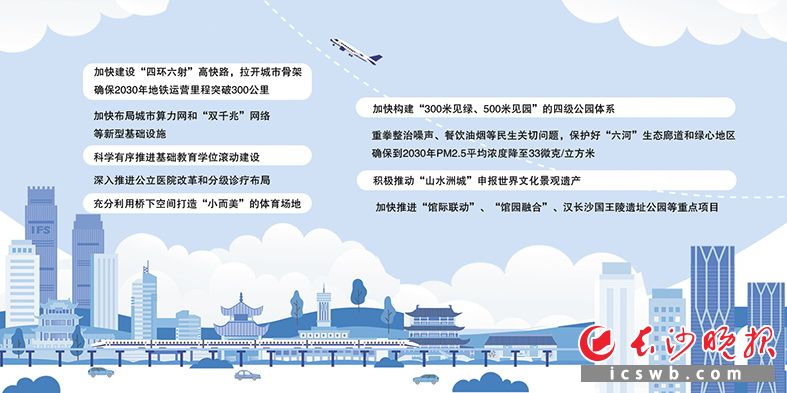
Group 1: Urban Development and Infrastructure - The city aims to accelerate the construction of a high-speed road network, specifically the "Four Rings and Six Rays" system, to enhance urban structure [5] - By 2030, the city plans to ensure that the metro operational mileage exceeds 300 kilometers [5] - A four-level park system is being developed to ensure that green spaces are accessible within 300 meters and parks within 500 meters [6] Group 2: Economic and Industrial Growth - The focus is on building a modern industrial system characterized by advanced manufacturing, referred to as the "4433" system, to establish a significant advanced manufacturing hub [4] - The city is committed to integrating into national strategies, enhancing its role as a central city in the Yangtze River middle reaches, and aligning with initiatives like the Yangtze River Delta integration and the Guangdong-Hong Kong-Macau Greater Bay Area [3] Group 3: Urban Living and Community Development - The city emphasizes the importance of combining investments in infrastructure with investments in people to enhance the quality of urban life [5] - There is a focus on improving public services throughout the entire life cycle, including education and healthcare, to address community needs effectively [5] Group 4: Environmental Sustainability - The city is committed to ecological preservation and aims to reduce the average PM2.5 concentration to 33 micrograms per cubic meter by 2030 [6] - Initiatives include the development of a greenway network and the promotion of a "no-waste city" and sponge city concepts [6] Group 5: Safety and Risk Management - The city plans to enhance safety measures by establishing a comprehensive monitoring and early warning platform for urban safety risks [7] - There is a focus on risk prevention in key areas such as construction, fire safety, and urban gas management [7] Group 6: Cultural and Civic Engagement - The city aims to promote its cultural heritage by applying for the "Mountain Water City" to be recognized as a world cultural landscape heritage site [8] - Efforts are being made to enhance community engagement through various cultural and civic initiatives [8] Group 7: Smart City Initiatives - The city is advancing its smart city agenda by integrating data resources and enhancing urban governance through technology [9] - Plans include the implementation of smart infrastructure and the promotion of artificial intelligence applications to improve urban management [9]

李忠军参加市人代会建邺代表团分组审议
Nan Jing Ri Bao· 2026-01-23 02:33
Core Viewpoint - The government work report presented by the mayor emphasizes high political positioning, clear goals, and practical measures, receiving positive feedback from representatives who provided constructive suggestions on various topics including artificial intelligence development and financial service enhancement [1] Group 1: Economic Development - The city has focused on three key battles and three major tough battles, resulting in stable economic performance with improved quality and efficiency [2] - The district of Jianye is highlighted as a key area showcasing Nanjing's modernization achievements, contributing significantly to the city's overall development [2] Group 2: Strategic Focus Areas - The government aims to accelerate the construction of a modern international city center by leveraging its advantages and focusing on industrial modernization, particularly through the development of the Zijin Mountain International Science and Technology Innovation Fund Street [2] - There is a strong emphasis on implementing "Artificial Intelligence +" initiatives and enhancing the digital economy within the Hexi Central Innovation Zone [2] Group 3: Urban and Social Modernization - The report outlines plans to enhance urban modernization by attracting international exhibitions and events, improving living service functions, and advancing smart city development [2] - Investment in human resources is prioritized, with a focus on creating youth-friendly communities and enhancing public service systems to attract young talent [2] Group 4: Governance Modernization - The government plans to innovate social governance models by learning from advanced cities and utilizing technology such as big data and artificial intelligence to improve governance efficiency [2] - The report emphasizes the importance of enhancing safety research in emerging fields and refining governance through smart and precise methods [2] Group 5: Economic Outlook - The first quarter is deemed crucial for social expectations and market confidence, with a call for proactive measures to stimulate economic activity and ensure a strong start to the year [3] - The district's strong industrial foundation and development vitality are highlighted as key factors for driving economic growth in the upcoming quarter [3]
北京丰台发布“十五五”规划建议 将全力建设首都功能拓展区
Zhong Guo Jing Ying Bao· 2025-12-27 00:20
Core Viewpoint - The article discusses the development blueprint for Fengtai District in Beijing, emphasizing the "Five Transformations" and the focus on "rural urbanization, urban modernization, and all-domain scenario innovation" as key directions for the next five years [1][2]. Group 1: Five Transformations - Fengtai's development is characterized by five transformations: from basic security to taking on responsibilities, from a transportation hub to a value hub, from distinct sectors to integrated urban-rural development, from localized focus to overall collaboration, and from implementation to innovation leadership [2][3]. Group 2: Development Paths - The "15th Five-Year Plan" emphasizes three major development paths: - Rural urbanization aims to address development imbalances and promote comprehensive rural revitalization [2]. - Urban modernization focuses on enhancing urban functions and integrating industry with urban development [2]. - All-domain scenario innovation seeks to create a comprehensive innovation ecosystem to support the Beijing-Tianjin-Hebei region's modernization [2]. Group 3: Construction of Five Key Areas - The plan outlines the construction of five key areas: - Capital Function Expansion Area, focusing on enhancing the capital's core functions [3]. - Regional Collaboration Pioneer Area, leveraging transportation advantages to drive economic growth [3]. - Industry-City Integration Innovation Area, promoting a modern industrial system [3]. - Garden City Characteristic Area, emphasizing ecological harmony and urban quality [3]. - All-Age Friendly Vitality Area, aimed at enhancing public welfare and community well-being [3]. Group 4: Key Initiatives - Fengtai District will focus on eight key initiatives, including: - Integrating urban functions with industrial layout [4]. - Deepening the fusion of technological and industrial innovation [4]. - Stimulating effective investment and consumption [4]. - Expanding access to education, healthcare, and elder care services [5]. - Creating an international business environment [5]. - Promoting urban renewal alongside rural revitalization [5]. - Enhancing ecological protection while showcasing cultural heritage [5]. - Strengthening collaborative governance for safety and stability [5].
北京丰台:“十五五”重点发展农村城市化、城市现代化、全域场景化
Bei Jing Shang Bao· 2025-12-26 14:07
Core Viewpoint - The Fengtai District of Beijing is focusing on five transformative shifts in its economic and social development as part of its 15th Five-Year Plan, aiming to enhance its role as a hub for innovation and urban integration [1][2]. Group 1: Economic and Social Development Directions - The key directions for the 15th Five-Year Plan include promoting rural urbanization, urban modernization, and comprehensive scene creation [1][2]. - The main goals are to establish Fengtai as a capital function expansion area, a regional collaboration pioneer, an integrated production and city innovation area, a garden city characteristic area, and an all-age friendly vibrant area [1][2]. Group 2: Rural Urbanization - The focus is on addressing development imbalances by advancing rural revitalization, upgrading collective economies, and improving infrastructure and public services [1]. - The aim is to achieve urbanization in the eastern rural areas and develop an urbanization framework in the western rural areas [1]. Group 3: Urban Modernization - The emphasis is on addressing insufficient development by deepening the integration of production and city, accelerating urban renewal, and enhancing governance innovation [2]. - The goal is to create a modern, resilient, and intelligent city that improves the quality and efficiency of economic and social development [2]. Group 4: Comprehensive Scene Creation - The plan aims to tackle insufficient innovation by fully implementing new development concepts and expanding openness [2]. - It includes the construction of various integrated scenes to foster a comprehensive innovation ecosystem for the Beijing-Tianjin-Hebei region [2]. Group 5: High-Quality Development - The theme of the 15th Five-Year Plan is to promote high-quality development, focusing on the integration of production and city [2]. - The district aims to showcase the rich connotations of achieving high-quality economic and urban development [2]. Group 6: Garden City Characteristic Area - Fengtai aims to create a garden city that integrates ecological beauty with urban quality, enhancing the overall environment and governance [2]. - The focus is on coordinating ecological protection, cultural heritage, and urban safety [2]. Group 7: All-Age Friendly Vibrant Area - The district will implement policies that ensure equity and accessibility in social services, promoting comprehensive development and common prosperity [3]. - The goal is to make improvements in people's livelihoods more tangible and accessible [3].
探索具有超大城市特点的 中国特色城市现代化杭州路径
Hang Zhou Ri Bao· 2025-12-11 02:40
Group 1 - The core objective of the Hangzhou Municipal Urban Work Conference is to explore a path for urban modernization that reflects the characteristics of a super-large city in China, with a focus on high-quality and connotative development [2] - The conference emphasized the need to achieve breakthroughs in establishing sustainable urban renewal models, with specific actions planned to implement urban renewal initiatives [2] - Key targets include the construction of at least 200 future communities, renovation of over 160 parks, and the redevelopment of no less than 30,000 acres of inefficient industrial land within three years [2] Group 2 - The Hangzhou Municipal Construction Committee will accelerate the legislative process for the "Hangzhou Urban Renewal Regulations" to create a comprehensive and quantifiable assessment system for urban renewal [3] - The Municipal Planning and Natural Resources Bureau is planning to innovate land policies, including accelerating the "one map" reform and promoting mixed land use [3] - Measures to enhance industrial space quality include increasing floor area ratios without additional fees, supporting temporary changes in property use, and facilitating short-term development of idle land for various needs [3] Group 3 - Innovation is highlighted as the primary goal for building a modernized people-oriented city, with a focus on deepening the construction of an innovation-driven city [4] - The Municipal Development and Reform Commission aims to leverage artificial intelligence to enhance urban governance and accelerate the modernization process [4] - By 2026, the core revenue of the artificial intelligence industry is projected to exceed 450 billion yuan, with an industrial added value of over 125 billion yuan [4]
上海市贯彻落实中央城市工作会议精神推进大会举行
Xin Lang Cai Jing· 2025-11-18 12:27
Core Points - The meeting emphasized the importance of implementing the spirit of the Central Urban Work Conference and focusing on the construction of "five centers" to promote high-quality urban development and sustainable urban renewal [1][2][3] - The city aims to enhance its global influence as a modern socialist metropolis and play a leading role in China's modernization [1][2] Urban Development Strategy - The city will adopt a systematic approach to urban function layout, emphasizing planning and a multi-centered, compact spatial structure [2] - Coordination between central urban areas and new cities will be prioritized, enhancing functional complementarity and service support [2] - The development of the Yangtze River Delta urban agglomeration and metropolitan areas will be promoted through collaborative transportation and infrastructure initiatives [2] Quality of Life Improvement - Enhancing urban living quality and increasing public welfare are key priorities, including the construction of safe, comfortable, and green housing [4] - The city will focus on community development, integrating essential services within a 15-minute living circle [4] - Efforts will be made to promote green and low-carbon transformation, including the development of green industries and transportation [4] Governance and Management - The city will innovate governance concepts and methods, advancing digital and intelligent urban management [5] - A three-year action plan for refined urban management will be implemented, emphasizing community participation in governance [5] - Strengthening urban safety and resilience through risk assessment and management will be a focus area [5] Implementation and Accountability - Local authorities and departments are urged to align with the city's modernization goals, ensuring high-quality development and effective governance [6] - A collaborative approach will be adopted to ensure policies are interconnected and effectively executed [6]
城市辩证法——关于城市进化论的四川答卷
Si Chuan Ri Bao· 2025-11-10 00:05
Core Insights - The article highlights the significant urban development and modernization efforts in Sichuan, particularly focusing on the integration of old and new urban elements to enhance living conditions and preserve cultural heritage [3][4][5][6]. Urban Renewal and Development - Sichuan has initiated urban renewal projects that include the renovation of old neighborhoods, with over 113,000 urban village renovations benefiting more than 310,000 people, and 192,000 units of dilapidated housing being upgraded, benefiting around 500,000 individuals [6][8]. - The urbanization rate in Sichuan has increased from 47.69% in 2015 to 60.1% in 2024, indicating a shift towards quality urban development [8]. Cultural Preservation - The transformation of industrial heritage sites, such as the Dongjiao Memory Park, has become a model for cultural and creative industries in Southwest China, attracting nearly 17.6 million visitors and generating over 3 billion yuan in revenue in 2024 [6]. - The integration of historical elements into urban design, such as the renovation of old neighborhoods with cultural themes, reflects a commitment to preserving local history while improving living conditions [5][6]. Infrastructure and Public Services - Sichuan has made substantial investments in infrastructure, with urban road networks reaching 42,300 kilometers and a wastewater treatment capacity of 1,332,100 tons per day, more than doubling in five years [13][14]. - The province has implemented a comprehensive public service system, including the expansion of housing provident fund services, which saw an increase of 4.065 million new accounts in the past five years [14][15]. Housing and Community Development - The introduction of the "Good Housing Evaluation Standard" marks a significant step towards improving housing quality, transitioning from merely providing housing to ensuring good living conditions [11]. - Sichuan's housing supply structure has been optimized to meet diverse needs, with 367,000 units of various types of affordable housing constructed during the 14th Five-Year Plan period [15].
人民城市民生为大
Jing Ji Ri Bao· 2025-10-21 21:59
Core Viewpoint - The article emphasizes the importance of addressing the "toilet carrying" phenomenon in urban areas, highlighting it as a significant step towards improving the quality of life for residents in old neighborhoods lacking independent sanitation facilities [1] Group 1: Urban Development and Governance - Shanghai has adopted a people-centered and localized governance approach to tackle the "toilet carrying" issue, demonstrating a commitment to long-term urban renewal efforts over the past 30 years [1] - The persistence and dedication of successive administrations have been crucial in overcoming this challenging issue, reflecting the government's accountability and commitment to the principle of "people-centered" development [1] Group 2: Quality of Life and Modernization - True urban modernization is not solely defined by skyscrapers and economic growth but also by ensuring that every citizen shares in the benefits of development and experiences an improvement in living standards [1] - Shanghai is progressing towards becoming a world-class socialist modern international metropolis, focusing on addressing the urgent needs of its citizens and improving everyday life through small yet impactful initiatives [1]
看!河南如何为城市发展探出新路
He Nan Ri Bao· 2025-10-17 23:16
Core Insights - The article discusses the transformation of urbanization in China over the past 40 years, highlighting the shift from rural to urban living and the implications for economic development and social change in regions like Henan [1][3]. Urban Development and Economic Growth - Approximately two-thirds of China's population now resides in urban areas, reflecting significant changes in living conditions and economic dynamics [1]. - Since the start of the 14th Five-Year Plan, Henan has added 2.87 million urban residents, bringing the total number of cities in the province to 38, with Zhengzhou emerging as a major urban center [3][5]. - The economic output of the Zhengzhou metropolitan area is projected to reach 2.53 trillion yuan in 2024, accounting for 39.7% of the province's total economic output [3]. Challenges and Strategic Shifts - Rapid urban growth has led to challenges such as environmental pollution, traffic congestion, and diverse public demands, necessitating a shift in urban development focus from quantity to quality [4]. - The Central Urban Work Conference has emphasized a strategic pivot in urban development, urging local governments to adapt their approaches to align with evolving circumstances [4]. Development Framework and Regional Strategy - Henan aims to establish a differentiated urban development strategy, avoiding a "one-size-fits-all" approach by leveraging its unique geographical and resource characteristics [5]. - The proposed development framework includes a primary city (Zhengzhou), two secondary cities (Luoyang and Nanyang), and a coordinated urban system that supports both large and small cities [5][6]. Innovation and Infrastructure - Nanyang is enhancing its economic landscape by fostering innovation among various business entities and improving its logistics network, which has seen a significant increase in A-level logistics companies [6]. - The region's GDP reached 238.98 billion yuan in the first half of the year, reflecting a year-on-year growth of 6.3% [6]. Sustainable Urban Development - The article emphasizes the need for urban development to be more sustainable and people-centered, focusing on improving public services, infrastructure, and community engagement [8]. - Initiatives include promoting smart living environments, enhancing urban safety, and creating world-class tourist destinations in cities like Zhengzhou, Kaifeng, Luoyang, and Anyang [8].
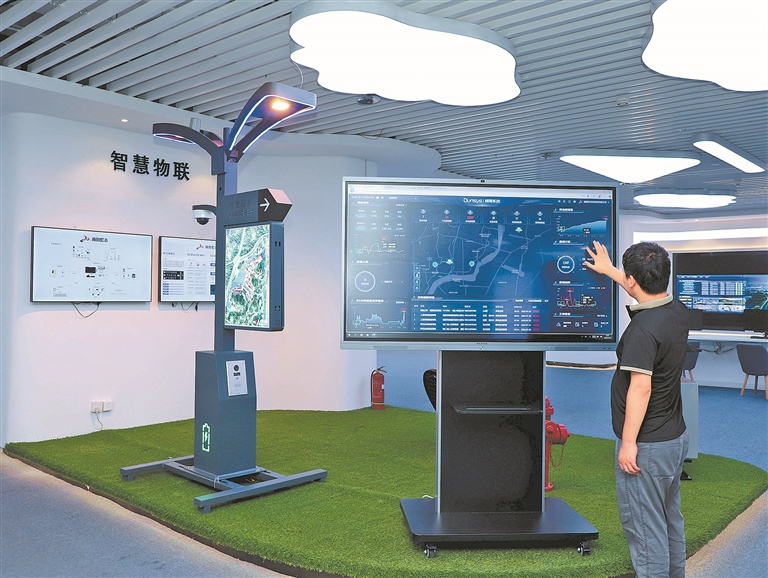
破解“千城一面”、产业同质化 探索城市特色发展新动力
Ren Min Ri Bao· 2025-08-20 22:31
Core Viewpoint - The article emphasizes the importance of transforming urban development dynamics and focusing on distinctive development to achieve sustainable urban modernization in China [1][2][5]. Group 1: Urban Development Dynamics - Urban development is transitioning from rapid growth to stable development, shifting from large-scale expansion to quality enhancement of existing resources [1][2]. - Traditional development models are becoming less effective, leading to homogenization and resource dispersion, which restricts overall regional development [1][2]. Group 2: Emphasis on Distinctive Development - Distinctive development is crucial for sustainable urban growth, requiring cities to leverage local resources and characteristics to foster innovation and competitive advantages [2][3]. - Different cities should focus on their unique strengths, such as cultural heritage, industrial clusters, or ecological resources, to create tailored development strategies [3][4]. Group 3: Practical Examples and Strategies - Successful examples include revitalizing industrial heritage and enhancing urban environments, as seen in Shanghai's transformation of the Huangpu River waterfront [4]. - Cities are encouraged to utilize cultural resources and digital technologies to drive economic growth and improve governance, as demonstrated by initiatives in Zhejiang [4][5]. Group 4: Policy Support and Implementation - A robust policy framework is necessary to support distinctive urban development, including market-oriented land reforms and diversified financing for urban renewal projects [5]. - The establishment of a city-specific database and a precise governance mechanism is essential to avoid homogenization and ensure effective implementation of development strategies [5].
