多能互补

Search documents
国内规模最大电网侧铅碳储能电站并网投运
中关村储能产业技术联盟· 2025-11-28 12:23
预定展位详情咨询: 曹先生 1 3552 71 21 89 王先生 1 3581 88 55 20 李先生 1 3581 74 16 80 赵先生 1 8210 18 87 71 柏女士 1 8031 45 10 07 相关阅读 文 | 工人日报 11月26日,宁夏银川市吉洋绿储 200 兆瓦 / 400 兆瓦时共享储能电站项目 —— 典农第一储能电站电池仓首次带电成功 ,国内规模 最大电网侧铅碳储能电站成功并网投运。 该电站位于银川市西夏区核心能源走廊,占地 55.4 亩,投资 6.2 亿元, 刷新规模和功率两项纪录,配套 80 套定制化铅碳储能一体舱 ,系统循环寿命优势明显, 全生命周期成本低于锂电池。 其并网对银川储能与清洁能源配套产业一体化发展意义重大,可提升电网调节与新能源消纳能力,缓解高峰供电压力,为 "源网荷储" 一体化和多能互补提供示范。 ESIE 2026 储能产业发展的风向标 全版日程+参会指南发布 | 2025中国储能CEO峰会倒计时5天 730亿!配储4.8GWh!国家电投19.44GW沙戈荒大基地项目开工 新型储能不得计入输配电定价成本!国家发改委印发修订版输配电成本监审和定价办法发 ...

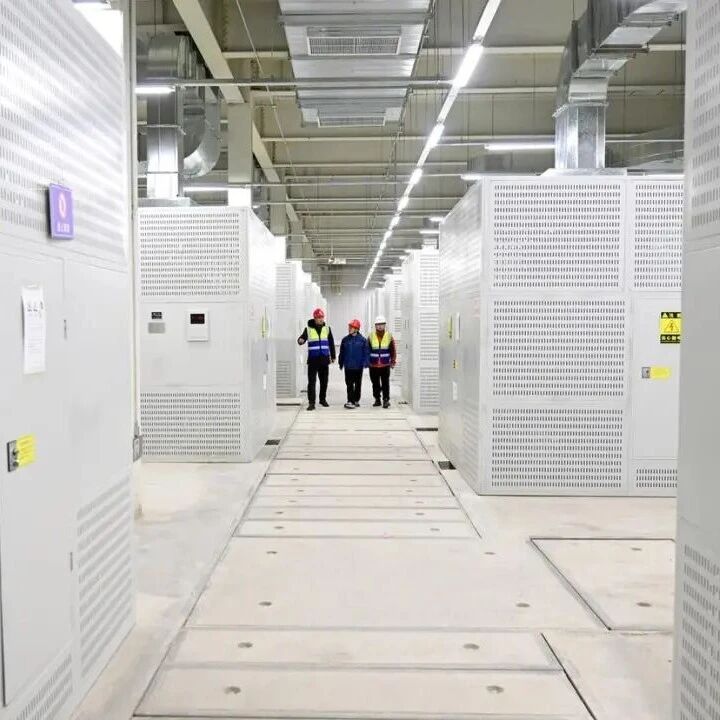
秦山核电:绿色引擎驱动生态能源新范式
Zhong Guo Huan Jing Bao· 2025-11-26 00:43
Core Insights - Qinshan Nuclear Power Base represents over 40 years of China's nuclear power development, contributing significantly to clean energy supply in the Yangtze River Delta region [1] - The base has transitioned from relying on imported technology to achieving self-sufficiency and innovation in nuclear power technology, marking China as the seventh country capable of independently designing and constructing nuclear power plants [3] - The integration of nuclear power with solar energy has created a hybrid power generation model, enhancing land use efficiency and energy supply resilience [4] Innovation and Technology - The first concrete pour at Qinshan in 1985 marked the beginning of China's nuclear energy journey, with significant advancements in technology achieved through collaboration among over 100 research institutions and 600 manufacturing companies [3] - The successful commissioning of Qinshan Nuclear Power Station in 1991 ended China's lack of nuclear power and laid the groundwork for the development of the "Hualong One" third-generation nuclear technology [3] - Continuous improvements in equipment localization, digital control systems, and nuclear fuel self-research have been pivotal in advancing China's nuclear capabilities [3] Environmental Impact - By the end of 2024, Qinshan Nuclear Power is expected to have generated over 870 billion kilowatt-hours of electricity, resulting in a reduction of approximately 800 million tons of CO2 emissions, equivalent to planting around 550 West Lake-sized forests [5] - The surrounding environment has shown significant improvement, with decreasing PM2.5 levels and increasing days of good air quality, demonstrating the compatibility of nuclear energy development with ecological preservation [5] Community Engagement - The Qinshan Nuclear Power Base emphasizes public communication and education, with its science museum receiving over 110,500 visitors in 2024, fostering interest in clean energy and technology among youth [6] - Various outreach programs have been established to alleviate public concerns about nuclear energy, contributing to a positive social environment for the long-term development of nuclear power [6] Applications and Future Developments - Qinshan has pioneered nuclear heating in southern China, benefiting over 4,000 households and expanding to public and commercial buildings, thus enhancing living standards and reducing energy consumption [7] - The facility is also advancing in isotope research and production, with the launch of the "Hefei No. 1" brand for carbon-14 isotopes, marking a significant step towards self-sufficiency in this sector [7][8] - The establishment of a large-scale isotope industry park is projected to generate an annual output value exceeding 20 billion yuan, contributing to local economic growth and enhancing China's competitiveness in the isotope industry [8]

明阳智能深化中沙能源合作 推动风电与绿氢产业链全球协同
Quan Jing Wang· 2025-11-25 02:19
Core Insights - The strategic cooperation framework agreement between Mingyang Smart Energy and ACWA Power marks a significant advancement in global clean energy collaboration, focusing on localized manufacturing, integrated energy synergy, and joint project development [1][2] - The partnership aims to support Saudi Arabia's Vision 2030 and contribute to the global carbon neutrality process by creating exemplary projects in green energy cooperation [1] - Mingyang Smart Energy will provide customized products and advanced technical support for ACWA Power's wind power projects, leveraging its expertise in system design and operational platforms to optimize lifecycle costs and enhance asset returns [1] Group 1: Strategic Cooperation - The collaboration will extend to multi-energy complementary integrated energy sectors, planning large-scale integrated energy bases in the Middle East, exploring innovative models for wind-solar-storage-hydrogen-ammonia operations [2] - ACWA Power plans to jointly develop wind and other renewable energy projects in China with Mingyang Smart Energy, promoting deep integration in technology standards, capital flow, and market mechanisms [2] - The partnership is expected to accelerate the localization of clean energy technologies in the Middle East and Central Asia, reinforcing ACWA Power's leadership in the global renewable energy sector [2] Group 2: Company Profiles - ACWA Power, headquartered in Saudi Arabia, operates over 110 power, desalination, and renewable energy projects across 15 countries, playing a key role in global green infrastructure development [3] - Mingyang Smart Energy provides comprehensive energy solutions across multiple fields, including wind, solar, energy storage, and hydrogen, serving numerous countries and regions worldwide [3] - The collaboration between these two leading companies is anticipated to create a new paradigm for international clean energy cooperation [3]


趋势研判!2025年中国燃气管道行业政策、产业链全景、发展现状、区域市场及未来发展趋势分析:万亿投资筑牢安全底盘,智慧转型激活发展动能[图]
Chan Ye Xin Xi Wang· 2025-11-25 01:17
Core Insights - The gas pipeline industry is crucial for ensuring the safe and stable supply of gas, with recent government policies aimed at enhancing safety and operational efficiency [1][5][6] - During the "14th Five-Year Plan" period, over 700,000 kilometers of underground pipelines will be constructed or renovated, with an expected investment exceeding 5 trillion yuan, highlighting the commitment to upgrading gas networks [1][7][10] - The transition towards natural gas as the primary clean energy source is evident, with a significant increase in natural gas supply and a decline in artificial gas and liquefied petroleum gas [1][10][11] Industry Overview - Gas pipelines are defined as systems used for transporting gas, including natural gas, artificial gas, and liquefied petroleum gas, along with associated facilities [2][3] - The industry is characterized by its need for tightness, pressure resistance, and corrosion resistance [2] Policy Landscape - A series of national policies have been introduced to improve the safety and efficiency of gas pipelines, including plans for the renovation of aging infrastructure [5][6][7] - The focus is on eliminating outdated materials, implementing smart monitoring systems, and enhancing safety measures in urban areas [7][10] Industry Chain - The gas pipeline industry chain includes upstream gas resource exploration, midstream pipeline manufacturing and construction, and downstream distribution to end-users [8][9] - Major players in the industry include state-owned enterprises and specialized manufacturers, with a growing emphasis on digital technologies to enhance operational efficiency [9] Current Development Status - The demand for urban gas is increasing due to urbanization, with the national gas penetration rate rising from 94.57% in 2014 to 98.64% in 2024 [10] - The total supply of natural gas is projected to grow significantly, indicating a shift towards cleaner energy sources [10][11] Future Trends - The gas pipeline industry is expected to undergo a transformation towards smart, efficient, and integrated operations, leveraging advanced technologies for real-time monitoring and predictive maintenance [12][13] - The "National Unified Network" strategy will enhance system efficiency and resource allocation across regions [14] - The industry is exploring multi-energy integration, including the transportation of hydrogen and other green mediums, indicating a shift in the role of gas companies towards comprehensive energy service providers [15]






湖北能源募资29亿投向抽水蓄能电站 定增5.98亿股总股本增至70.79亿
Chang Jiang Shang Bao· 2025-11-19 23:48
Core Viewpoint - Hubei Energy has successfully completed a private placement of 2.9 billion yuan, increasing the stake of its controlling shareholder, Three Gorges Group, from 15.75% to 22.87% [1][2] Group 1: Fundraising and Shareholding Changes - The private placement raised 2.9 billion yuan, which will be fully invested in the Luotian Pingtan Yuan Pumped Storage Power Station project [1] - After the issuance, Three Gorges Group's shareholding increased from 1.021 billion shares to 1.619 billion shares, raising its stake from 15.75% to 22.87% [2] - The total share capital increased from 6.481 billion shares to 7.079 billion shares following the issuance [2] Group 2: Project Details - The Luotian Pingtan Yuan Pumped Storage Power Station is located in Hubei Province, with a planned total installed capacity of 1.4 million kilowatts [2] - The project involves the installation of four reversible pump turbine generator units, each with a capacity of 350,000 kilowatts, and has a total investment of 9.31 billion yuan [2] Group 3: Financial Performance - For the first three quarters of 2025, Hubei Energy reported operating revenue of 13.521 billion yuan and a net profit attributable to shareholders of 2.336 billion yuan, indicating operational pressure due to reduced hydropower generation and declining profits from new energy and coal trading [2] - The company aims to maintain a multi-energy complementary strategy, with expectations to add over 1 million kilowatts of new installed capacity in 2025, primarily from thermal and new energy projects [3]

新华社︱能源保供迎寒潮“大考” 多能互补共筑温暖防线
国家能源局· 2025-11-19 12:45
Core Viewpoint - The article emphasizes the importance of a robust energy supply system in China to ensure stable heating and industrial production during the winter season, particularly in the face of cold waves and increased energy demand [2][10]. Energy Supply Assurance - The National Energy Administration has proactively arranged for sufficient coal and natural gas supply, optimized electricity dispatch, and enhanced the efficiency of renewable energy utilization to ensure a comprehensive energy supply system [2][10]. - The average daily coal dispatch in China has remained above 12.3 million tons since October, with coal inventory at power plants reaching 227 million tons, sufficient for 35 days of use [6][10]. Infrastructure Development - The construction of key power grid reinforcement projects is accelerating, with 113 new 500 kV and above grid infrastructure projects put into operation this year, enhancing cross-regional transmission capacity [5][10]. - Major hydropower projects, such as the completion of the 500 kV Lingfeng Line and the operation of multiple units at the Gutianxi Hydropower Plant, are contributing to winter electricity supply [3][5]. Technological Advancements - The integration of new technologies like smart sensing and artificial intelligence is improving the efficiency and reliability of the energy supply system, with proactive repair models reducing average repair times by over 30% [7][10]. - The development of renewable energy projects, such as the 200 MW coal and 610 MW renewable energy integrated project in Xinjiang, is set to enhance green energy contributions to the grid [7][8]. Multi-Energy Coordination - The oil and gas sector is enhancing supply quality and ensuring adequate reserves, with significant progress in gas storage and pipeline interconnections to meet peak demand [10][13]. - The energy supply system is evolving towards a model characterized by multi-energy complementarity, intelligent scheduling, and a focus on green and low-carbon solutions [10][14].
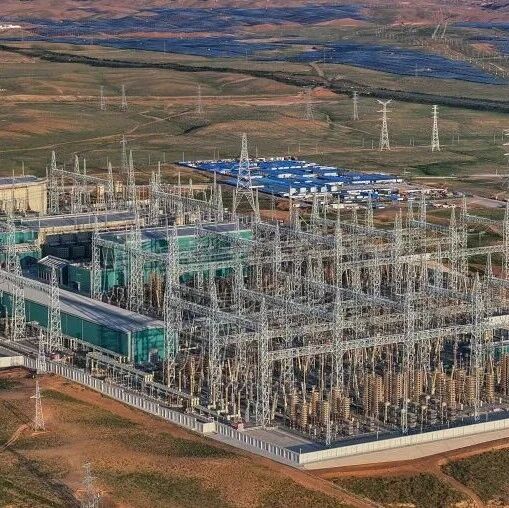
《关于促进新能源集成融合发展的指导意见》专家解读之四︱多维融合 集成破局 新能源高质量发展新路径
国家能源局· 2025-11-18 06:51
Core Viewpoint - The article discusses the importance of promoting the integrated development of renewable energy in China, emphasizing the need for a shift from isolated operations to a more collaborative and efficient model to enhance the quality and effectiveness of renewable energy development [3][4]. Group 1: Importance and Necessity of Multi-Dimensional Integration - The integration of renewable energy is crucial for achieving carbon peak and carbon neutrality goals, with significant growth in installed capacity and contribution to electricity supply [4]. - As of September 2025, China's wind and solar power installations exceeded 1.7 billion kilowatts, with renewable energy accounting for over 22% of total electricity consumption [4]. - The challenges of energy consumption and land use necessitate a transformation in the development, construction, and operation of renewable energy [4]. Group 2: Implementation Pathways for Multi-Dimensional Integration - The article outlines the need for multi-dimensional integrated development as a fundamental approach to large-scale renewable energy deployment and high-level consumption [5]. - It emphasizes strengthening multi-energy complementary development to enhance the reliability and stability of renewable energy supply [6]. - The construction of large renewable energy bases and the integration of various energy sources are highlighted as key strategies for optimizing energy supply [6][7]. Group 3: Enhancing Space Utilization Efficiency - The article suggests various methods for composite development and efficient use of spatial resources, including co-locating wind and solar projects and utilizing existing energy facilities for renewable upgrades [7][8]. - It advocates for the use of idle land in mining areas for solar and wind energy projects to maximize land productivity [7]. Group 4: Promoting Integrated Operation - The article discusses the need for comprehensive collaboration in technology, regulation, and operations to improve the reliability and market competitiveness of renewable energy [9]. - It highlights the importance of digital upgrades and centralized monitoring to enhance operational efficiency [9]. Group 5: Strengthening Organizational Support - The article emphasizes the necessity of coordinated efforts among various levels of government and stakeholders to implement integrated renewable energy projects [10]. - It outlines specific measures for project organization, investment management, and market transaction mechanisms to support the development of integrated renewable energy projects [10]. Group 6: Future Outlook - The implementation of the guidelines is expected to accelerate the maturity of integrated renewable energy development in China during the 14th Five-Year Plan period, leading to larger-scale and higher-quality renewable energy growth [11].

研判2025!中国能源路由器(ER)行业产业链、市场规模及发展趋势分析:技术突破驱动广域能源互联,助力“双碳”目标下能源结构转型[图]
Chan Ye Xin Xi Wang· 2025-11-18 01:39
内容概况:能源路由器(ER)作为智能电网与分布式能源系统的核心设备,已成为全球能源互联网建 设的关键基础设施。在中国,随着"十四五"能源规划明确提出构建以新能源为主体的新型电力系统,能 源路由器被列为优先发展领域。2024年,中国能源路由器(ER)行业市场规模约为82.36亿元,同比增 长5.43%。未来,随着电力电子技术、储能技术及AI算法的突破,能源路由器将进一步实现广域能源网 络互联、多能互补优化,成为构建新型电力系统的核心基础设施。 相关上市企业:特变电工(600089)、东软载波(300183)、林洋能源(601222) 相关企业:紫金矿业集团股份有限公司、洛阳栾川钼业集团股份有限公司、中国铝业股份有限公司、山 东南山铝业股份有限公司、中国联塑集团控股有限公司、浙江大东南集团、杭州士兰微电子股份有限公 司、斯达半导股份有限公司、三安光电股份有限公司、华润微电子有限公司、特变电工股份有限公司、 国电南瑞科技股份有限公司、兆易创新科技集团股份有限公司、澜起科技股份有限公司、国家电网有限 公司、中国南方电网有限责任公司 关键词:能源路由器(ER)、能源路由器(ER)市场规模、能源路由器(ER)行业现状、能 ...

能源保供迎寒潮“大考” 多能互补共筑温暖防线
Xin Hua She· 2025-11-16 14:47
Core Viewpoint - The article emphasizes the importance of a multi-energy supply system to ensure stable energy provision during the upcoming cold wave, highlighting the proactive measures taken by various energy sectors to meet increased heating demands and maintain industrial production stability [1][8]. Group 1: Energy Supply Measures - The National Energy Administration has laid out strategies to ensure sufficient supply of coal and natural gas, optimize electricity dispatch, and enhance the efficiency of new energy utilization to create a comprehensive energy supply system [1][8]. - The average daily coal dispatch in China has remained above 12.3 million tons since October, with coal stockpiles at power plants reaching 227 million tons, sufficient for 35 days of use [3]. Group 2: Infrastructure and Technology Enhancements - Significant investments in power grid infrastructure have been made, with 113 new projects of 500 kV and above completed this year, enhancing cross-regional transmission capacity [2]. - The application of new technologies such as AI and digital twins in energy systems has improved operational efficiency and reliability, exemplified by proactive fault detection systems that have reduced repair times by over 30% [4]. Group 3: Renewable Energy Integration - Renewable energy generation has seen substantial growth, with a 15.5% year-on-year increase in total renewable energy output, accounting for approximately 40% of total electricity generation [5]. - The integration of coal and renewable energy projects, such as the 2 million kW coal power and 6.1 million kW renewable energy project in Xinjiang, is set to enhance energy supply capabilities [5]. Group 4: Oil and Gas Supply Security - The National Pipeline Network Group has completed significant upgrades to natural gas infrastructure, ensuring adequate supply for winter heating needs [7]. - Major oil and gas companies are ramping up production and storage capabilities to meet peak demand, with efforts to secure long-term contracts and optimize LNG procurement [7].
财经聚焦丨能源保供迎寒潮“大考” 多能互补共筑温暖防线
Xin Hua Wang· 2025-11-16 14:04
Core Viewpoint - The article discusses the measures taken by the Chinese government and energy companies to ensure energy supply during the upcoming winter season, particularly in the face of a cold wave and increased heating demand. Group 1: Energy Supply Measures - The National Energy Administration has proactively arranged for sufficient coal and natural gas supply, optimized electricity dispatch to prioritize residential heating and key industrial production, and enhanced the efficiency of renewable energy utilization [1][10]. - The State Grid has completed 113 new 500 kV and above power grid infrastructure projects this year, improving cross-regional transmission capacity to support winter peak electricity demand [5][10]. Group 2: Coal and Electricity Supply Stability - National coal daily dispatch production has maintained a high level of over 12.3 million tons since October, with coal stockpiles at power plants sufficient for 35 days as of November 11 [5][10]. - The article highlights the importance of coal as a stabilizing force in the energy supply system, with various regions ensuring efficient coal transportation and market regulation to prevent price fluctuations [5][10]. Group 3: Technological Innovations - The integration of new technologies such as smart sensing and artificial intelligence is enhancing the efficiency and reliability of the energy supply system, with proactive repair models being implemented to minimize power outages during the heating season [6][7]. - The development of renewable energy projects, such as the integration of wind and solar power, is contributing to a cleaner energy supply, with renewable energy generation reaching 2.89 trillion kWh in the first three quarters of the year, a 15.5% increase year-on-year [8][9]. Group 4: Multi-Energy Coordination - The article emphasizes the coordinated efforts across various energy sectors, including oil and gas, to ensure stable resource supply for both residential heating and industrial production [10][12]. - The establishment of a multi-energy supply system is seen as crucial for maintaining energy security, with a focus on intelligent scheduling and green low-carbon development [10][13].