
数字黄金

Search documents
RadexMarkets瑞德克斯:比特币回撤背后的逻辑
Xin Lang Cai Jing· 2026-01-21 11:28
Core Insights - The cryptocurrency market has experienced significant volatility, with Bitcoin erasing all gains since January 2026 and dropping below the $88,000 mark [1][2] - A total of $1.8 billion in liquidations occurred within 48 hours, with approximately 93% of positions being long, indicating a rapid reversal in market sentiment under extreme pressure [1][2] - The adjustment is attributed to a combination of macro geopolitical risks and a global liquidity turning point, prompting investors to reassess the short-term pricing logic of high-risk assets [1][2] Market Data - Bitcoin has declined approximately 10% from its yearly high and has fallen below the critical 50-day Exponential Moving Average (EMA) [3] - The total market capitalization of cryptocurrencies has shrunk by $225 billion, currently standing at around $3.08 trillion [3] - The recent surge in Japan's 10-year government bond yields, which rose nearly 19 basis points in two days, reflects extreme anxiety regarding tightening liquidity [3] Investment Trends - The volatility in the Japanese bond market is seen as a deeper underlying cause of the current market conditions, with analysts suggesting that the situation resembles a "capital war" where funds are rapidly exiting traditional premium assets [4] - Bitcoin, often referred to as "digital gold," is particularly sensitive to liquidity conditions, leading it to bear the brunt of selling pressure during tightening periods [4] - Investors are advised to remain cautious and closely monitor developments in Japanese bond yields and geopolitical policies to navigate potential ongoing market fluctuations [4]


黄金vs.“数字黄金”:特朗普2.0时代比特币的市场定位
Sou Hu Cai Jing· 2026-01-20 08:02
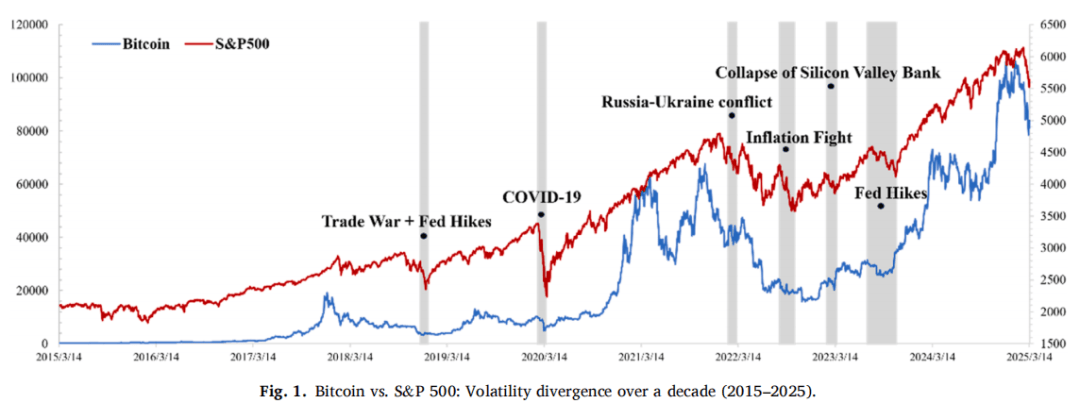
Core Viewpoint - The approval of Bitcoin spot ETFs in 2024 and Trump's proposal for a Bitcoin reserve have transformed Bitcoin from a speculative asset into a mainstream recognized asset class, referred to as "digital gold" by the Federal Reserve Chairman Powell [1][2][4]. Group 1: Bitcoin's Evolution and Market Positioning - The Trump administration is accelerating Bitcoin's transition from a retail-driven speculative tool to an institutionally recognized asset class, altering its hedging characteristics [2][4]. - The study examines Bitcoin's hedging properties compared to gold during different crisis periods, particularly focusing on the evolution of Bitcoin's hedging features in the Trump 2.0 era [5][6]. - Prior to Trump 2.0, Bitcoin and gold exhibited similar hedging characteristics primarily during mid-term crises, but this similarity has diminished in the Trump 2.0 period, with Bitcoin showing increased correlation with the market [6][21]. Group 2: Methodology and Data Analysis - The research utilizes frequency domain decomposition and quantile Granger causality tests to analyze Bitcoin's hedging properties over time, providing new empirical evidence on its behavior under different market conditions [6][12][13]. - Data from March 2015 to May 2025 was collected, focusing on the significant growth and stability of the cryptocurrency market post-2015, ensuring reliability in comparisons with traditional financial assets [12][13]. Group 3: Risk Transmission and Hedging Properties - The results indicate that Bitcoin has the lowest risk transmission levels among various assets, suggesting its potential as a diversification investment [19][20]. - In the Trump 2.0 era, the risk transmission structure has changed significantly, with an overall increase in sensitivity to policy and geopolitical shocks, indicating a shift towards institutional participation in the cryptocurrency market [21][22]. - Bitcoin's hedging properties are context-dependent, showing potential as a hedging asset during specific crises, such as the COVID-19 pandemic and the 2022 Silicon Valley Bank collapse [24][26]. Group 4: Implications for Investors and Policymakers - The findings suggest that Bitcoin is transitioning from a quasi-hedging asset to a high-risk growth asset, indicating that it may no longer be suitable for long-term hedging against traditional risk assets [31][34]. - For investors, it is crucial to recognize the dynamic changes in Bitcoin's hedging attributes and adjust portfolio allocations accordingly, especially in the context of increasing correlation with mainstream assets [34]. - Policymakers should enhance monitoring and regulation of the interconnectedness between cryptocurrencies and traditional financial markets, given the increased risk transmission observed in the Trump 2.0 era [23][34].
比特币发展的重要里程碑:从0.01美元到数字黄金
Sou Hu Cai Jing· 2026-01-19 13:05
Core Insights - Bitcoin has evolved from a niche cryptographic experiment into a global asset with a market capitalization exceeding $1 trillion, characterized by a non-linear growth influenced by technological breakthroughs, market enthusiasm, regulatory challenges, and institutional acceptance [1] Milestones in Bitcoin's Development - The release of the Bitcoin white paper by Satoshi Nakamoto in October 2008 introduced a trustless digital currency architecture, establishing the foundational principles of blockchain technology [3] - The mining of the first block (Block 0) by Nakamoto, which included a timestamp referencing a newspaper headline about bank bailouts, symbolized Bitcoin's birth and its anti-fragile financial metaphor [3] - The first real-world transaction using Bitcoin occurred when Laszlo Hanyecz exchanged 10,000 BTC for two pizzas, marking the day as "Bitcoin Pizza Day" and attributing real economic value to Bitcoin [4] - Following the Cyprus banking crisis, Bitcoin's price surged by 300% in a month, reaching $100 for the first time, transitioning from the dark web to mainstream media coverage [5] - The collapse of Mt. Gox, which lost 850,000 BTC due to security vulnerabilities, highlighted the risks of centralized exchanges and led to a shift towards enhanced security practices in the industry [7] - Bitcoin's price soared to nearly $20,000 amid the ICO boom and the introduction of Bitcoin futures by CME, demonstrating market depth and attracting traditional financial players [7] - The approval of Bitcoin spot ETFs by the SEC, with a record trading volume of over $4.6 billion on the first day, marked Bitcoin's transition from a speculative asset to a mainstream investment option [8] - The halving event reducing block rewards from 6.25 BTC to 3.125 BTC, resulting in an annual inflation rate of approximately 0.8%, reinforced the narrative of Bitcoin's digital scarcity [8] - The implementation of the MiCA regulation in the EU and the advancement of the U.S. cryptocurrency market structure legislation signify a shift from a regulatory gray area to a clearer framework for widespread adoption [9][11] - Significant events in 2020 and 2021, including PayPal's support for Bitcoin, Tesla's $1.5 billion investment, and El Salvador's adoption of Bitcoin as legal tender, culminated in Bitcoin reaching an all-time high of $69,000 in November 2021 [10] - By 2026, Bitcoin's circulating supply is projected to reach 19.95 million BTC, accounting for 95% of its total supply, with the remaining 5% to be released over the next 120 years, indicating the ongoing evolution of Bitcoin in the context of global monetary policy and digital sovereignty [13]

RadexMarkets瑞德克斯:MSTR增持强化BTC信心
Xin Lang Cai Jing· 2026-01-13 09:49
Core Insights - The article highlights the significant buying activity of large institutions in the digital asset market, particularly the recent acquisition of Bitcoin by Strategy, which purchased $1.25 billion worth of Bitcoin over three weeks, marking its largest move since July of the previous year [1][2]. Group 1: Institutional Buying Behavior - Strategy's recent purchase of Bitcoin, totaling $1.25 billion, is seen as a strong endorsement of Bitcoin's long-term value, providing crucial liquidity support amid high volatility [1][2]. - The company has raised funds through innovative financing methods, including the issuance of $1.1 billion in common stock and $119.1 million in "Stretch (STRC)" perpetual preferred stock, to increase its Bitcoin holdings [3]. - As a result of these actions, Strategy's total Bitcoin holdings have reached 687,410 BTC, with an average acquisition cost of $75,353, indicating effective cost control and long-term positioning by professional institutions [3]. Group 2: Market Impact - The institutional buying behavior has led to immediate positive effects on the secondary market, stabilizing Bitcoin prices above $90,000 and boosting the stock prices of related companies [4]. - The ongoing accumulation by large holders is expected to limit Bitcoin's downside potential, with the "equity-for-coin" strategy becoming a mainstream approach on Wall Street [4]. - Investor confidence is gradually increasing as institutional positions grow, with a recommendation to monitor the equity premium performance of companies like MSTR as a leading indicator for potential new price surges in Bitcoin [4].

ZFX山海证券:2050年比特币或达290万美元
Xin Lang Cai Jing· 2026-01-12 10:39
根据 VanEck 研究主管 Matthew Sigel 提出的模型,比特币在未来 25 年内的年化回报率预计可达 15% 左 右。ZFX山海证券表示,这种估值逻辑彻底脱离了传统的权益类资产评价体系,转而采用"渗透率模 型"进行衡量。具体而言,该模型假设比特币未来将承担全球 5% 至 10% 的国际贸易结算份额。与此同 时,随着全球投资者对主权货币信用风险的审慎考量,各经济体及央行可能会逐步将其储备资产的一小 部分分配给比特币。尽管目前主要经济体尚未将其纳入官方储备,但ZFX山海证券认为,这种从边缘向 核心转移的趋势正处于萌芽阶段,监管环境的逐步透明将是关键的催化剂。 在波动性控制与风险管理方面,相关数据显示比特币的长期年化波动率可能维持在 40% 至 70% 之间, 其表现特征更趋近于前沿市场。ZFX山海证券表示,比特币的价格走势与全球流动性总量(M2)的增 长展现出极强的正相关性,而与美元指数的关联度正在稳步减弱,这标志着其驱动因素已逐渐向全球宏 观流动性靠拢。从资产配置的实务角度看,ZFX山海证券认为,在多元化投资组合中加入 1% 至 3% 的 比特币头寸,历史上能有效提升风险调整后的收益水平。 综合全 ...
最励志的一句话:“绝对不要小看你自己你、马斯克、巴菲特、贝索斯、扎克伯格的财富加起来足以撼动整个世界”一位投资教父说这句话时,我嗤之以鼻,认为这只是成功学的漂亮话。直到昨天,我在混乱的办公室里,亲手撕掉了那张价值2.3亿的意向书。而这一切,都源于我十年前,对自己那份“股权”的可耻低...
Sou Hu Cai Jing· 2026-01-02 11:08
Core Insights - The article emphasizes the importance of self-worth and recognizing one's potential in the face of changing market dynamics and opportunities [1][12][14] Company Development - The company started with a small physical presence in Shenzhen, evolving from a three-square-meter counter to a significant player in the market by developing a tool for small businesses [4][6] - In 2018, the company pivoted to create a platform for managing delivery services, which gained traction due to its understanding of small business needs [5][8] Investment Opportunity - A significant investment opportunity arose when a major player, "Yuan Yu," proposed a deal to acquire 70% of the company for 2.3 billion, highlighting the strategic fit between the company's tool and the investor's ecosystem [7][8] - The company’s value is not solely based on financial metrics but also on the unique insights and experiences of its team, which are seen as irreplaceable assets [8][10] Personal Growth and Reflection - The founder's journey reflects a realization of the importance of self-investment and recognizing one's own value, which is crucial for the company's future [10][12] - The narrative stresses that true wealth begins with the acknowledgment of one's intrinsic value and potential, rather than just financial success [13][14]

比特币闪崩 一度跳水幅度超过70%!币圈上演罕见一幕 发生了什么?
Zheng Quan Shi Bao Wang· 2025-12-26 00:24
(原标题:比特币闪崩 一度跳水幅度超过70%!币圈上演罕见一幕 发生了什么?) 币圈,上演罕见一幕! 数据显示,当地时间周三晚间,在币安交易所的BTC/USD1交易对上,比特币突然从8.76万美元闪崩至2.41万美元,跳水幅度超过70%。不过,随 后数秒内,比特币又迅速反弹至8.7万美元附近。 那么,为何会出现这种现象呢? 突然闪崩 交易所数据显示,比特币周三晚间在币安BTC/USD1交易对上突现剧烈"闪烛线",价格从8.76万美元的位置直线跳水,短暂触及2.41万美元后数秒 内迅速反弹至8.7万美元上方,上下波动幅度高达70%。 此次波动未在其他主要比特币交易对中出现,似乎仅局限于USD1——这款由特朗普家族支持的World Liberty Financial发行的稳定币。该交易对随 后恢复正常,比特币价格重回主流市场水平。 有分析指出,此类突发"闪烛线"通常由流动性不足或可能的显示问题引发,而非全面崩盘。新兴或交易量较小的稳定币交易对往往缺乏提供密集 报价的做市商,导致订单簿深度较浅。一笔大额市价卖单、一次强制清算或通过该交易对执行的自动化交易,都可能迅速击穿买盘,使价格短暂 偏离真实市场水平,直至新的买 ...
平安夜曾闪崩,比特币痛失"圣诞行情",将创三年最差季度表现
Hua Er Jie Jian Wen· 2025-12-25 20:06
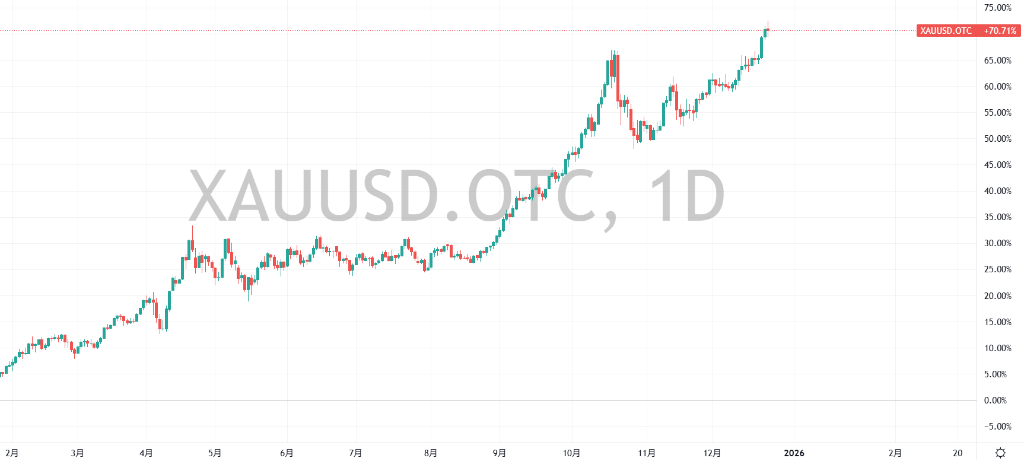
Core Viewpoint - Bitcoin experienced a significant flash crash on Binance, dropping from $87,600 to $24,100, a decline of over 70%, before quickly rebounding to around $87,000, highlighting extreme volatility in the cryptocurrency market [1] Group 1: Market Performance - Bitcoin's price is currently hovering around $87,000, trapped in the $85,000 to $90,000 range, with a year-to-date decline of over 7% [1] - Since October, Bitcoin has dropped approximately 30%, marking its worst quarterly performance since the collapse of TerraUSD and Three Arrows Capital in Q2 2022 [1] - In contrast, traditional markets are experiencing a "Santa Rally," with the S&P 500 reaching a historical high of 6,921.42 points and gold prices hitting a record of $4,525.18 per ounce, reflecting a strong year-to-date increase of over 70% [3][4] Group 2: Causes of Flash Crash - The flash crash was attributed to insufficient liquidity and technical issues, often seen in smaller trading pairs lacking deep order books [2] - Analysts noted that large market sell orders or automated trading could quickly breach buy orders, causing temporary price deviations [2] - The lack of market participants during low liquidity periods exacerbates these effects, leading to significant price swings [2] Group 3: Technical and Market Dynamics - Bitcoin has fallen below the critical 365-day moving average of approximately $102,000, increasing the risk of further declines [7] - The upcoming expiration of over $23 billion in options on December 26 has frozen directional bets, contributing to market stagnation [7] - Continuous selling pressure from long-term holders has also hindered Bitcoin's ability to rebound, with many early investors liquidating their positions [8] Group 4: ETF Fund Flows - There has been a notable outflow of funds from Bitcoin and Ethereum spot ETFs, with Bitcoin experiencing a net outflow of $175 million and Ethereum $57 million on December 24 [9] - The largest outflow came from BlackRock's IBIT, which lost $91.37 million, while Grayscale's GBTC saw a net outflow of $24.62 million [9] - This trend aligns with typical market behavior during major holidays, characterized by reduced trading volumes and a shift towards defensive positions [9]
比特币痛失年末“圣诞行情” 价格徘徊在8.7万美元附近
Zhi Tong Cai Jing· 2025-12-24 14:51
在传统金融市场迎来年末"圣诞行情"、风险偏好明显回暖之际,全球市值最大的加密货币比特币却几乎 毫无起色,显得格格不入。 周三,比特币价格徘徊在约8.7万美元附近,近期被"钉"在8.5万至9万美元的区间内,走势低迷、交投清 淡。这个一向以高波动性和投机情绪著称的资产,在年末却意外陷入停滞。 相比之下,比特币却"两头落空"。在2025年初的一段时间里,比特币走势曾与风险资产高度同步,但在 年末行情中却明显掉队;而其长期标榜的"数字黄金"属性,也未能吸引到推动金价上涨的防御性资金流 入。今年以来,比特币累计跌幅已超过7%。 数字资产研究机构BRN研究主管Timothy Misir指出:"硬资产正在吸引作为长期对冲工具的资金,而加 密资产仍然被边缘化。" 本周即将到期的逾230亿美元比特币期权合约,抑制了方向性押注,叠加假期流动性下降,进一步加剧 了市场僵局。此外,长期持有者的持续抛售同样构成拖累。加密对冲基金Apollo Crypto的投资组合经理 Pratik Kala表示,今年比特币的价格表现"明显与极度利多的新闻周期脱节"。他认为,这主要源于早期 持有者的持续减持,以及包括10月急跌在内的被动抛售,令多次反弹 ...
Why Gold Shines at +55% While Bitcoin Tanks: The Great Divergence of 2025
Yahoo Finance· 2025-11-29 19:28
Core Insights - The World Gold Council reported that global instability and inflation have driven a significant increase in demand for gold as a safe-haven asset [1][5] - Gold experienced a remarkable performance in 2025, achieving a 55% year-to-date increase and hitting an all-time high of over $4,370 per ounce [5][6] - In contrast, Bitcoin faced a substantial decline, dropping over 30% from its peak of $126,200 in October 2025, entering a bear market phase [4][6] Gold Market Dynamics - Central banks, particularly in China, India, and Turkey, have been accumulating gold at near-record rates, collectively purchasing over 1,000 tons annually [9][10] - For the first time in decades, central banks held more gold than U.S. Treasury bonds in their reserves, indicating a shift in reserve asset preferences [10][7] - The broad participation in gold investment included institutional investors and retail investors seeking safety amid market volatility [11] Bitcoin Market Dynamics - Bitcoin's initial rally in 2025 was fueled by the approval of spot Bitcoin ETFs and institutional adoption, but this momentum was short-lived [4][13] - The decline in Bitcoin's value was exacerbated by rising interest rate expectations and a broader risk-off environment, leading to significant liquidations in the crypto market [15][22] - The narrative of Bitcoin as "digital gold" faced challenges as it failed to achieve reserve-asset status and was not held by major central banks [16][23] Comparative Analysis - The divergence between gold and Bitcoin in 2025 highlights a shift in investor psychology, with gold being favored as a proven store of value during times of uncertainty [20][21] - While gold's performance was bolstered by geopolitical tensions and inflation, Bitcoin's appeal diminished as it became more correlated with risk assets [24][25] - The contrasting paths of these assets suggest that in uncertain times, capital tends to flow towards established safe havens like gold rather than speculative assets like Bitcoin [24][25]