
美国现货比特币ETF

Search documents
RYOEX:比特币收复68500关口
Xin Lang Cai Jing· 2026-02-27 00:38
Core Insights - The cryptocurrency market has shown a strong recovery after a period of volatility, with Bitcoin successfully returning above $68,500, erasing earlier losses below $63,000, signaling a potential end to extreme pessimism in the market [1][3] - The extreme fear in the crypto fear and greed index throughout February has created a buying opportunity for bulls, leading to a comprehensive recovery across major tokens and related assets [1][3] Market Dynamics - In the past 24 hours, nearly $400 million in leveraged short positions were liquidated, indicating a significant market clearing [1][3] - The perpetual contract funding rate for Bitcoin has been negative multiple times, suggesting an overcrowded short position, which can lead to severe short squeezes when prices start to rise [1][3] - Despite the notable price increase, the current low funding rate indicates that this rally is not solely driven by speculative leverage but is supported by genuine buying interest, reflecting a healthier market structure [1][3] Related Asset Performance - The performance of related assets has also been impressive, with stablecoin giant Circle surging by 29% due to strong earnings, and institutions like Coinbase and Strategy recording double-digit or near double-digit gains [2][4] - The Coinbase premium index has turned positive for the first time in 40 days, and the U.S. spot Bitcoin ETF saw a net inflow of $257.7 million in a single day, signaling a strong re-entry of U.S. institutional and retail investors [2][4] - Although Bitcoin faces some retracement pressure this year, altcoins like SOL and ADA have shown over 10% excess returns, indicating that active capital is seeking profits from high-beta assets [2][4] Market Outlook - With the return of U.S. buyers and improvements in ETF fund flows, the market appears to have completed a preliminary bottoming process [2][4] - The company RYOEX, which specializes in digital assets, will continue to monitor on-chain data and macro liquidity changes to identify growth opportunities in a volatile market cycle [2][4]
血流成河!比特币亚洲时段再大跌,五连跌纪录即将刷新,底在哪?
Sou Hu Cai Jing· 2026-02-26 05:27
Core Viewpoint - Bitcoin is facing significant downward pressure, with a potential fifth consecutive month of decline, which would mark the longest monthly losing streak since the 2018 crypto winter [1][3] Market Performance - Bitcoin's price dropped to $62,858, reflecting a daily decline of 2.64% and an overall drop of over 19% in February [1][3] - The current situation is reminiscent of past market downturns, particularly the 2018 crash following the ICO bubble [3] Economic Factors - The recent downturn was triggered by President Trump's announcement to raise global tariffs from 10% to 15%, which led to a significant sell-off in risk assets, including Bitcoin [3][5] - The Dow Jones Industrial Average fell over 800 points in response to the tariff news, indicating widespread market panic [5] Institutional Behavior - Large hedge funds, such as Brevan Howard, have drastically reduced their Bitcoin ETF holdings by approximately 86%, signaling a retreat of institutional "smart money" from the market [8] - Bitcoin ETFs have seen a net outflow of over $4.5 billion this year, indicating a shift from being a stabilizing force to a source of selling pressure [8] Market Dynamics - The high leverage inherent in the cryptocurrency market exacerbates price declines, leading to a cycle of liquidations and further price drops [10] - Over 130,000 liquidations occurred within 24 hours, amounting to $465 million, contributing to a liquidity crisis [10] Technical Analysis - Bitcoin is approaching a critical support level around $58,000, which is seen as a key indicator for potential price recovery or further decline [12] - This support level is significant due to its historical role as a trend line and the average cost basis for many short-term holders [12] Investor Sentiment - Despite the current bearish sentiment, some analysts suggest that there is no "structural damage" in the market, as institutional investors are reducing short positions in Bitcoin futures [14] - The market is characterized by high leverage and downward pressure, with any price rebounds likely viewed as opportunities for weak holders to exit rather than signs of a trend reversal [14]


比特币惊魂雪崩!58万人爆仓蒸发26亿美元,谁在暗抽梯子?
Sou Hu Cai Jing· 2026-02-07 08:29
Market Overview - The cryptocurrency market experienced a significant crash, with Bitcoin dropping from around $70,000 to a low of $59,800, marking a maximum decline of over 17% within 24 hours [1] - Over 586,000 traders were liquidated globally, with a total liquidation amount reaching $2.665 billion, of which $2.314 billion was from long positions [1] Regulatory Impact - On February 6, the People's Bank of China and other regulatory bodies issued a joint statement reiterating that virtual currencies do not have legal tender status and prohibited the issuance of stablecoins linked to the RMB [3] - This regulatory action heightened market fears, prompting many investors to withdraw their funds to avoid regulatory repercussions [3] Institutional Behavior - On February 5, approximately $740 million flowed out of cryptocurrency-themed ETFs, with a total outflow of nearly $4 billion over the past three months [3] - Many institutional investors are facing significant losses, as the average cost of Bitcoin holdings in U.S. spot Bitcoin ETFs is around $84,100, while the current price is over $60,000 [3] Leverage and Market Dynamics - The use of high leverage in cryptocurrency trading exacerbated the market decline, with over $2.3 billion in long positions liquidated, creating a vicious cycle of further price drops [4] - Bitcoin's correlation with tech stocks has increased, with a correlation coefficient of 0.72 with the Nasdaq 100 index, indicating that Bitcoin is moving in tandem with tech stock fluctuations [4] Investor Sentiment - The market's "Fear & Greed Index" dropped to 10, indicating extreme fear among investors, leading to a mass exit from the market [1] - The perception of Bitcoin as a hedge against inflation has diminished, as it failed to perform as a safe haven during rising global risk aversion [4] Conclusion - The recent Bitcoin crash is attributed to a combination of tightened regulations, institutional withdrawals, leveraged trading, and a collapse of investor confidence [5] - The volatility and lack of legal protection in the cryptocurrency market suggest that ordinary investors should exercise caution and consider managing their investments in more stable assets [5][6]
一夜突发!比特币闪崩,58万投资者集体爆仓,金额高达26.65亿美元,背后三个可怕信号
Sou Hu Cai Jing· 2026-02-06 21:47
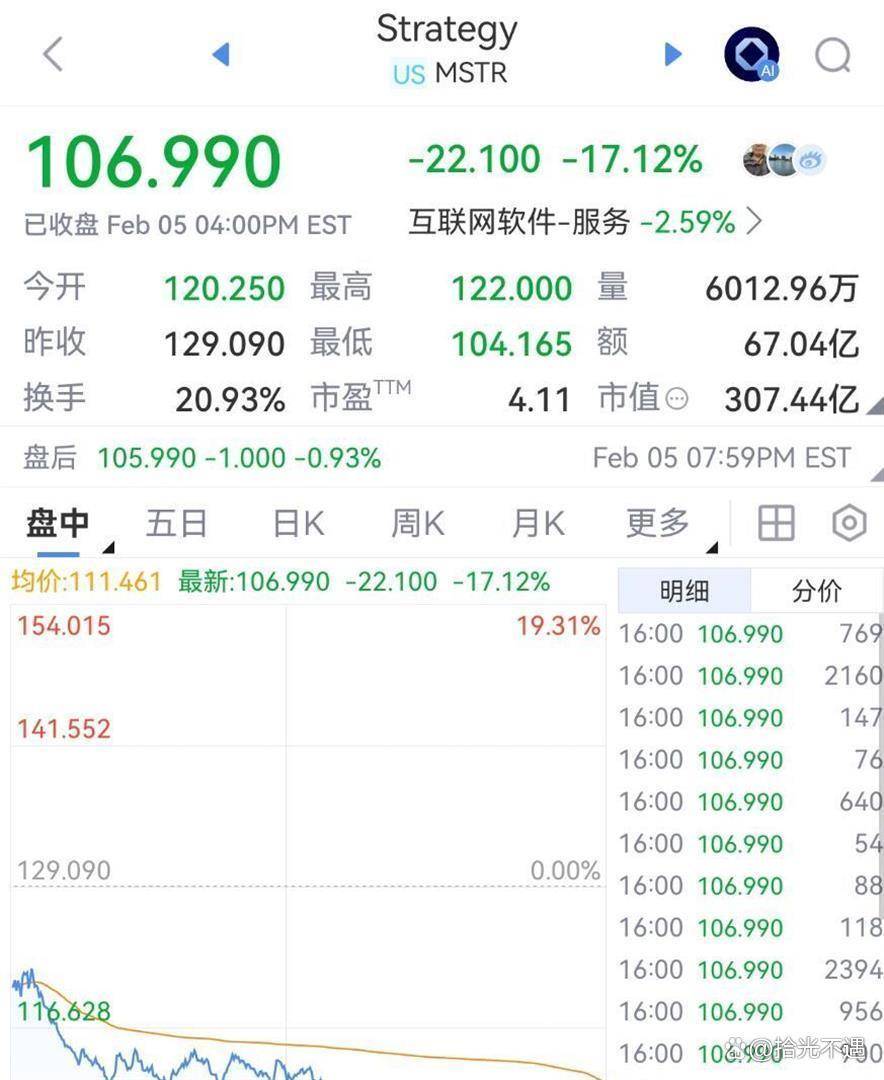
Core Viewpoint - The cryptocurrency market experienced a significant crash on February 6, 2026, with Bitcoin's price dropping from nearly $67,000 to around $60,000, marking a decline of over 10% within hours. This decline affected nearly all major cryptocurrencies, leading to a rapid evaporation of market capitalization [1][3]. Market Dynamics - The crash triggered a wave of forced liquidations, with 586,219 investors being liquidated within 24 hours, resulting in a total liquidation amount of $2.665 billion. Most of these liquidations were from long positions, amounting to $2.314 billion, indicating that investors betting on price increases suffered the most [3][10]. - The "Fear and Greed Index" dropped to 10, indicating extreme fear in the market, a level not seen since earlier bear market cycles. Investors shifted their focus from which cryptocurrencies to buy to concerns about how low prices could go and whether it was too late to cut losses [3]. Causes of the Crash - The first key pressure point was a reversal in macro policy expectations, with the new Federal Reserve chair nominee's stance interpreted as a continuation or intensification of monetary tightening, leading to prolonged high-interest rates. This shift undermined the rationale for institutional investors to hold cryptocurrencies [4]. - The second pressure was a significant outflow of funds, with over $740 million exiting from more than 140 cryptocurrency-themed ETFs on February 5 alone, and nearly $4 billion in total over the past three months. This indicated a withdrawal of institutional long-term capital from the market [8]. - The third pressure stemmed from the disillusionment with regulatory intervention, as U.S. Treasury Secretary Janet Yellen stated that the Treasury had neither the power nor the intention to intervene in the natural fluctuations of the crypto market, exacerbating feelings of helplessness among market participants [8]. - The fourth pressure was the inherent fragility of the market structure due to excessive leverage, with many investors using high leverage to amplify returns. This led to a vicious cycle of price declines triggering forced liquidations, further driving down prices [9]. Market Impact - The crash had repercussions beyond the cryptocurrency sector, impacting publicly traded companies holding Bitcoin. For instance, Strategy Inc. saw its stock price plummet over 17% on February 5, following a reported net loss of $12.4 billion in Q4 2025 due to the decline in Bitcoin asset values [10]. - The average cost for investors who purchased Bitcoin through U.S. spot Bitcoin ETFs was approximately $84,100, while Bitcoin's price hovered around $64,000, indicating that many ETF investors were facing significant unrealized losses [12]. - Analysts expressed concerns about the potential for a self-reinforcing "death spiral" in Bitcoin prices, with some suggesting that Bitcoin has proven to be a speculative asset rather than a reliable hedge against economic uncertainty [11][13].

FXGT:比特币链上指标闪烁熊市信号
Xin Lang Cai Jing· 2026-02-05 13:40
Core Viewpoint - Bitcoin is currently experiencing significant market pressure, with ongoing price consolidation around the mid-$70,000 range, indicating a strong bearish signal due to declining participation and weak spot demand [1][3]. Group 1: Market Sentiment and Data Analysis - The current volatility is not merely a short-term correction, as on-chain data shows a decrease in market participation and a lack of spot demand, signaling a bearish market outlook [1][3]. - Bitcoin's performance during Asian trading hours has been weak, reflecting investor concerns over structural liquidity tightening [1][3]. - The U.S. spot Bitcoin ETF, previously a driver of the bull market, has shifted from net buying to net selling, creating a significant demand vacuum [1][3]. - Since October of the previous year, the Coinbase premium has consistently remained negative, and the market capitalization of the leading stablecoin USDT has seen its first negative growth since 2023 [1][3]. Group 2: Macro Economic Factors - Bitcoin is currently behaving more like a high-beta risk asset rather than a safe-haven asset, influenced by macroeconomic pressures [2][4]. - Market predictions indicate that traders are betting on the Federal Reserve maintaining interest rates in the upcoming April meeting, with delayed rate cut expectations further suppressing the resilience of risk assets [2][4]. - The market lacks positive catalysts to trigger a new round of impulsive price increases amid the complex interplay of political factors and macroeconomic policies [2][4]. Group 3: Technical Analysis and Future Outlook - Technically, Bitcoin remains below the 365-day moving average, with key support levels now shifted to the $70,000 to $60,000 range [2][4]. - If spot demand does not effectively return in the short term, the market will struggle to escape its current low participation levels [2][4]. - Investors are advised to remain cautious and closely monitor marginal changes in Federal Reserve monetary policy and signs of liquidity reactivation in the stablecoin market, with defensive strategies being recommended until the market shows signs of stabilization [2][4].
EasyMarkets易信:12亿资金入场 比特币趋势拐点
Xin Lang Cai Jing· 2026-01-19 12:46
Group 1 - The cryptocurrency market has shown significant signs of institutional shift since January 2026, with $1.2 billion net inflow into the US spot Bitcoin ETF, reversing the funding downturn from late last year and indicating a profound change in market dynamics where large funds are moving from passive arbitrage to active directional buying [1][3] - The $1.2 billion influx coincides with a market structural adjustment period, as the previously popular "cash-and-carry arbitrage" strategy has seen profit margins shrink to around 5.5%, nearly eliminating profit opportunities [1][3] - Institutions are not exiting the market despite the diminishing returns from arbitrage; instead, they are converting their positions into direct bets on long-term price increases, enhancing the support level at current price points [1][3] Group 2 - The continuous decline in market volatility provides an ideal entry point for long-term capital, with Bitcoin's 30-day implied volatility dropping to a quarterly low of 40% [2][4] - Following a rise in precious metals like gold and silver, institutional investors are likely to seek alternative assets that have yet to rally, and Bitcoin's current low volatility aligns with the preferences of "sticky capital" [2][4] - The non-commercial open interest in the CME futures market has surpassed 22,000 contracts, indicating that professional speculators are becoming the main drivers of position growth [2][5] - The microstructural changes in the market may have profound implications for Bitcoin's long-term value, as hedge funds steadily reduce their short positions, gradually releasing "short pressure" in the market [2][5] - Each dollar flowing into the ETF increasingly reflects pure bullish momentum rather than complex structured hedging, as institutional funds shift from "quick money" to "long money," further solidifying Bitcoin's position in diversified asset allocation [2][5]

比特币痛失年末“圣诞行情” 价格徘徊在8.7万美元附近
Zhi Tong Cai Jing· 2025-12-24 14:51
Group 1 - Bitcoin's price is stagnating around $87,000, trapped in a range of $85,000 to $90,000, contrasting sharply with the traditional financial markets experiencing a year-end rally [1] - Bitcoin has seen a cumulative decline of approximately 30% since a significant drop in October, which is expected to result in its worst quarterly performance since Q2 2022 [1] - The cryptocurrency market is struggling to recover from the October crash, with low trading volumes and diminished retail investor enthusiasm [1] Group 2 - In contrast, traditional markets are showing strong performance, with the S&P 500 reaching new closing highs and gold prices nearing $4,500 per ounce, reflecting a yearly increase of over 70% [2] - Bitcoin's performance has diverged from risk assets, failing to attract defensive capital flows that have benefited gold, despite its claim to be "digital gold" [2] - The upcoming expiration of over $23 billion in Bitcoin options contracts is suppressing directional bets, further contributing to market stagnation [2] Group 3 - There are indications that selling pressure on Bitcoin may be nearing its end, with the cryptocurrency currently in a "value range" that could set the stage for stronger performance in the coming year [3]
2025年资产格局大逆转:贵金属与美股“吸金”,加密货币跌回高风险阵营
智通财经网· 2025-12-24 02:20
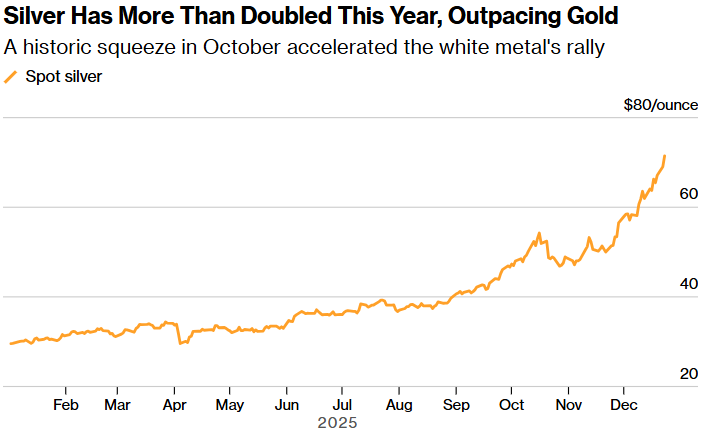
Core Insights - In 2025, cryptocurrencies experienced a significant decline, losing their status as a defensive or alternative asset, while traditional assets like gold and silver thrived, highlighting a shift in investor preferences towards safer, more predictable investments [1][8][16] Group 1: Performance of Assets - Precious metals, particularly silver and gold, saw remarkable gains in 2025, with silver prices rising approximately 140% and gold prices increasing around 70%, both reaching historical highs [1][2] - The U.S. stock indices also performed well, with the Nasdaq up 19%, S&P 500 up 17%, and Russell 2000 up 14%, supported by expectations of easing monetary policy and a focus on artificial intelligence investments [5][8] Group 2: Cryptocurrency Market Dynamics - The cryptocurrency market initially benefited from the launch of the U.S. spot Bitcoin ETF, leading to a surge in Bitcoin prices, but this momentum faded in the second half of the year due to weak liquidity and high regulatory risks [8][12] - Bitcoin ended 2025 with a price around $88,000, reflecting a decline of about 6% from the beginning of the year, indicating that even with the ETF, overall demand for risk assets remained weak [12][9] Group 3: Ethereum and Altcoins - Ethereum struggled to convert its technological advantages into price growth, experiencing a decline of approximately 12% throughout the year, as it lacked strong market demand catalysts compared to Bitcoin [13] - The altcoin market was the weakest segment, with an average value drop of about 42%, as investors shifted focus to more liquid assets, leading to a significant reduction in the total market capitalization of altcoins [14][15] Group 4: Investor Behavior and Market Trends - Investors increasingly favored assets with clear regulatory frameworks and high liquidity, leading to a preference for traditional investments over cryptocurrencies, which are viewed as high-volatility risk assets [1][16] - The initial excitement surrounding ETFs could not sustain ongoing demand, resulting in a market shift towards profit-taking and consolidation, as investor attention moved to more transparent risk profiles [15][16]
币圈有多恐慌?连“初代巨鲸”都跑了,Owen Gunden1个月清仓13亿美元比特币持仓
美股IPO· 2025-11-21 08:55
Core Insights - Owen Gunden, an early Bitcoin holder, has liquidated his entire Bitcoin position, totaling approximately $1.3 billion, during a period of extreme market pessimism [3][5] - In contrast, institutional investors have increased their holdings in U.S. spot Bitcoin ETFs, with their ownership percentage rising from 27% in Q2 2024 to 40% [3][6][8] Group 1: Owen Gunden's Liquidation - Owen Gunden transferred the last 2,499 Bitcoins, valued at $228 million, to the Kraken exchange, completing a sell-off of about 11,000 Bitcoins since October 21 [3][5] - Gunden is recognized as one of the wealthiest early Bitcoin holders, with a net worth of approximately $561 million [4] - The liquidation occurred amidst a highly pessimistic market sentiment, with the CryptoQuant bull market index dropping to 20/100, indicating extreme bearish conditions [3][9] Group 2: Institutional Investor Behavior - Despite retail investors' panic selling, institutional investors have been steadily increasing their positions in Bitcoin ETFs [6][8] - The latest 13-F filings indicate that approximately 1,119 institutions hold investments through U.S. spot Bitcoin ETFs, with a significant rise in their ownership percentage [6][7] - The increase in institutional holdings occurs even as Bitcoin ETFs have experienced an outflow of $2.8 billion in November [8] Group 3: Market Sentiment - The current market sentiment is at its lowest point in the cycle, with growing concerns about the end of the bull market leading to retail investors exiting [9][10] - The divergence in behavior between retail and institutional investors highlights a significant confidence gap among market participants [10]

比特币跌破9万美元关口,一个多月跌近30%
Sou Hu Cai Jing· 2025-11-18 07:57
Core Insights - Bitcoin price has dropped below $90,000 for the first time since April, marking a nearly 30% decline from its all-time high of $126,272 reached on October 7, 2023, and has erased all gains for the year [1] - The total market capitalization of cryptocurrencies has decreased from $4.38 trillion to $3.28 trillion within a week, indicating a surge in market panic as the Fear and Greed Index fell to 11, the lowest since the 2022 bear market [1] - The market has experienced significant volatility, with major cryptocurrency exchanges facing operational issues during this period, leading to Binance announcing a compensation of approximately $300 million to affected users [1] Market Dynamics - The expectation for a Federal Reserve rate cut in December has plummeted from 95% to 44.4%, tightening liquidity in the banking system and increasing financing costs, which has triggered a sell-off in risk assets [2] - The narrative of support for cryptocurrencies from the Trump administration is losing traction, and increasing global regulatory scrutiny is challenging the perception of "absolute safety" in crypto assets [2] - Bitcoin has fallen below its 200-day moving average, forming a "death cross," and has breached the critical support level of $93,700, triggering algorithmic trading and liquidation of leveraged positions, resulting in over $800 million in liquidations in the past 24 hours [2] Investor Sentiment - Options traders are predominantly betting on further declines in Bitcoin, with a significant demand for put options at strike prices of $85,000 and $80,000 [2] - Despite the current extreme pessimism in the market, some analysts suggest that this correction aligns with typical mid-cycle adjustments in Bitcoin bull markets, with historical average pullbacks around 22% [2] - The structure of institutional holdings has not fundamentally collapsed, and if the Federal Reserve shifts towards a more accommodative policy and ETF fund flows stabilize, the market may find a technical bottom in the $86,000 to $88,000 range [2]