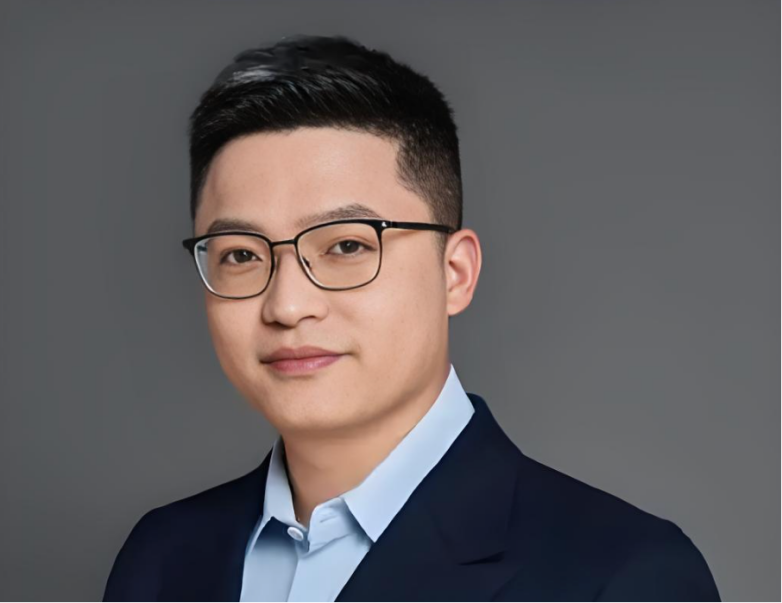
柔性制造

Search documents
专访总理座谈会上的年轻人
Sou Hu Cai Jing· 2025-10-18 10:38
Core Viewpoint - The article highlights the efforts of Heihu Technology in promoting advanced manufacturing technologies in China, aiming to transform traditional manufacturing into a more flexible and efficient model, particularly for small and medium-sized enterprises (SMEs) [1][2]. Company Overview - Heihu Technology, founded in 2016 by Zhou Yuxiang, focuses on the development of intelligent manufacturing systems, aiming to break the Western technology monopoly and provide affordable advanced technologies to SMEs in China [2][7]. - The company has served over 4,000 large and medium-sized industrial enterprises and has assisted more than 28,000 small and micro factories in initiating their digital transformation [3]. Industry Context - The article discusses the challenges faced by SMEs in China, including low efficiency and unclear order delivery times, which are reflective of traditional manufacturing dilemmas [2]. - Zhou Yuxiang emphasizes the importance of flexible manufacturing, which is driven by data flow rather than inefficient competition, and highlights the potential of AI in reshaping industrial processes [4][5]. Technological Innovations - Heihu Technology has developed products like "Heihu Smart Manufacturing" and "Heihu Small Order," focusing on quick returns for small orders, thereby providing new ideas for intelligent transformation in manufacturing [3]. - The company has invested in AI applications, such as using AI agents to automate the parsing of CAD drawings and generating process paths, which has reduced preparation time by 60% [5][6]. Future Outlook - Heihu Technology aims to leverage AI and software to enhance industrial production and management efficiency, contributing to Shanghai's goal of becoming a globally influential innovation hub [8]. - The company is currently in a "second entrepreneurial phase," focusing on transitioning from software to AI-native applications, which represents a significant opportunity for future growth [7][8].

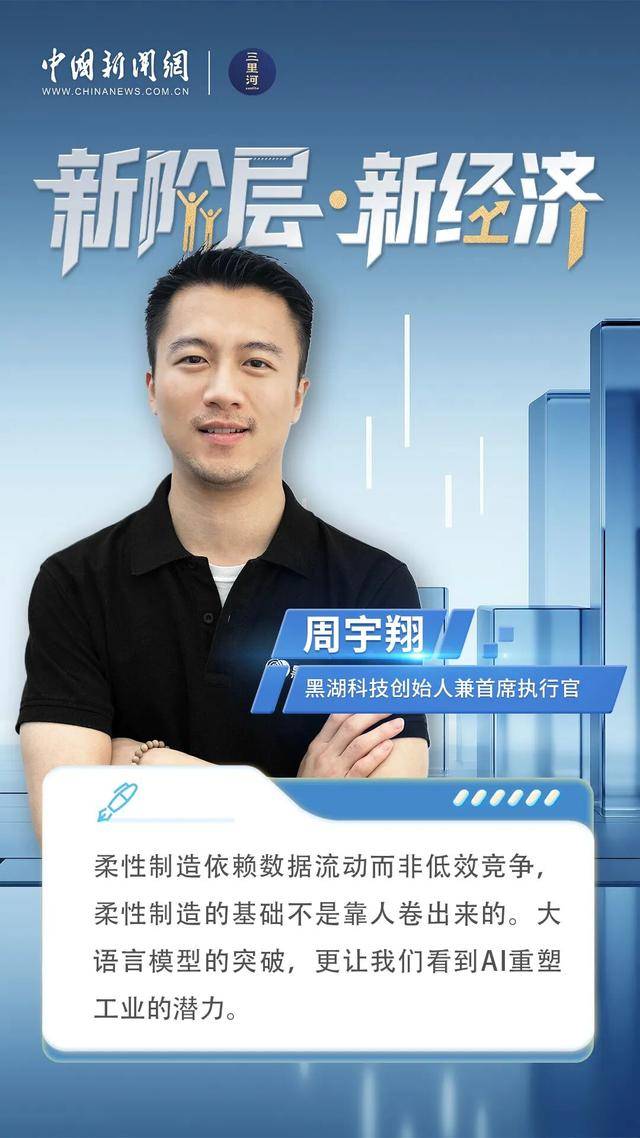
新阶层·新经济丨黑湖科技周宇翔:让数据和AI改变中国制造
Sou Hu Cai Jing· 2025-10-18 08:50
Core Viewpoint - The article highlights the efforts of Heihu Technology, led by CEO Zhou Yuxiang, to transform China's manufacturing sector through advanced technologies and AI, aiming to enable small and medium-sized enterprises (SMEs) to access these innovations at affordable prices [1][2]. Group 1: Company Overview - Heihu Technology was founded in 2016 by Zhou Yuxiang, a graduate of Dartmouth College, focusing on the development of intelligent manufacturing systems [2]. - The company has served over 4,000 large and medium-sized industrial enterprises and has assisted more than 28,000 small and micro factories in initiating their digital transformation [3]. Group 2: Market Needs and Solutions - Zhou Yuxiang emphasizes the importance of addressing new demands in the market, particularly in emerging industries like tea beverages and consumer electronics, which drive new economic growth [2]. - Heihu Technology has developed products like "Heihu Smart Manufacturing" and "Heihu Small Orders" to cater to the flexible production needs of SMEs, which are often overlooked by larger manufacturers [3][4]. Group 3: Technological Innovations - The company is leveraging AI to replace manual processes, such as using AI agents to automatically interpret CAD drawings and generate process paths, reducing preparation time by 60% [5]. - Zhou Yuxiang believes that flexible manufacturing relies on efficient data flow rather than competition based on low costs, highlighting the role of software, data, and AI in achieving this flexibility [4][7]. Group 4: Future Outlook - Heihu Technology is entering a "second entrepreneurial phase," focusing on transitioning from software to AI-native applications, with a projected revenue growth rate of 75% by 2025 [9]. - The company aims to contribute to the global influence of Shanghai's innovation ecosystem by exporting "Chinese solutions" through software and AI, while continuously enhancing industrial production and management efficiency [10].
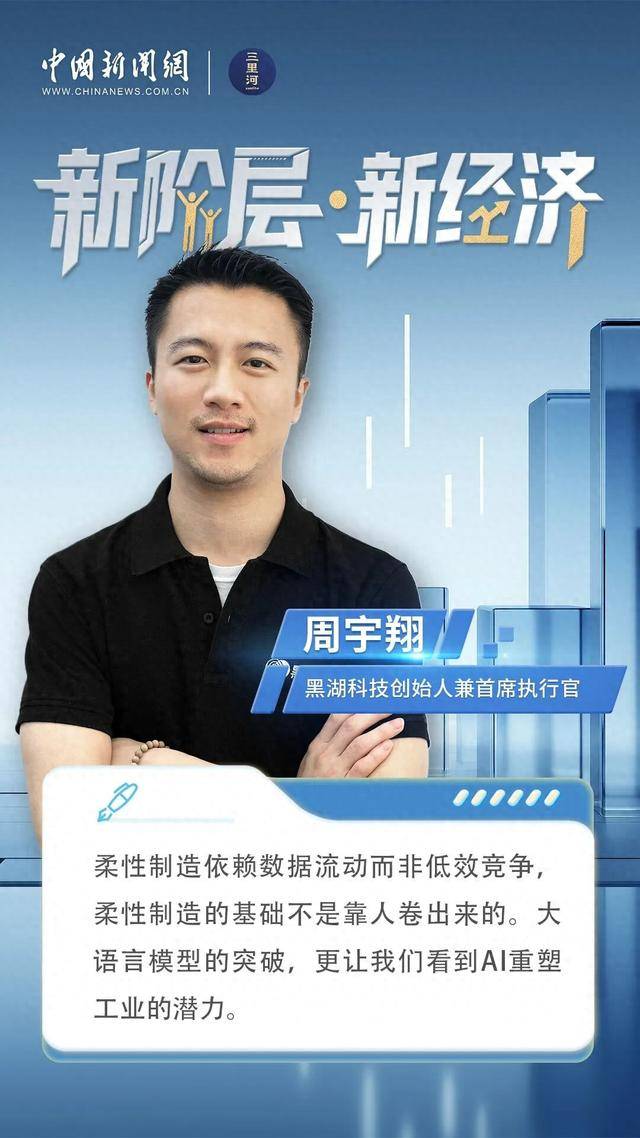
拓展轻工业高质量发展空间
Jing Ji Ri Bao· 2025-10-15 22:11
Core Viewpoint - Open cooperation is identified as a crucial pathway for the light industry to achieve new breakthroughs, emphasizing the importance of promoting light industry products, standards, and rules internationally to enhance its influence in the global industrial chain [1][4]. Group 1: Development Goals and Economic Impact - The Ministry of Industry and Information Technology, the Ministry of Commerce, and the State Administration for Market Regulation have jointly issued the "Light Industry Growth Stabilization Work Plan (2025-2026)", outlining key objectives for the light industry's development over the next two years [1]. - Light industry is vital for stabilizing the economy, enhancing industrial quality, and improving consumer welfare, with significant government support reflected in various policies aimed at boosting supply capacity and enhancing international competitiveness [1]. - In 2024, the light industry is projected to have 140,000 enterprises above designated size, achieving operating income of 23.2 trillion yuan and profits of 1.5 trillion yuan, while creating 17.92 million jobs [1]. Group 2: Challenges and Opportunities - The light industry faces deep-rooted challenges, including a high proportion of low-end product supply, insufficient high-quality products, weak innovation capabilities, and reliance on imports for key technologies [2]. - There is a need to accelerate innovation and enhance supply adaptability, particularly in key areas such as smart home products, elderly and infant goods, and sports fashion products, to meet evolving consumer demands [2]. Group 3: Standards and Quality Improvement - A comprehensive standard system covering the entire industrial chain is essential, with efforts to align with international standards and enhance product safety and reliability [3]. - The establishment of a quality grading system for consumer goods and green low-carbon standards is crucial for fostering a cycle of "high standards leading to high-quality development" [3]. Group 4: Brand Development and International Influence - Emphasizing brand building is critical, with a focus on integrating Chinese cultural elements into modern aesthetics to create a new image for domestic products [3]. - Support for leading enterprises to cultivate strong brands in niche markets is necessary to enhance the recognition and influence of Chinese brands in the global consumer market [3]. Group 5: Ecosystem and Policy Support - A stable and predictable environment for enterprise development is needed, supported by policies related to land, talent, and finance, alongside robust intellectual property protection [3]. - Encouraging the orderly transfer of traditional industries to the northeast and central-western regions can foster a coordinated and complementary development pattern [3]. Group 6: International Cooperation - Deepening international cooperation is essential for maintaining competitive advantages, with a focus on promoting light industry products and standards globally [4]. - Encouraging enterprises to participate in international exhibitions and develop new foreign trade models like cross-border e-commerce is vital for enhancing market expansion capabilities [4].
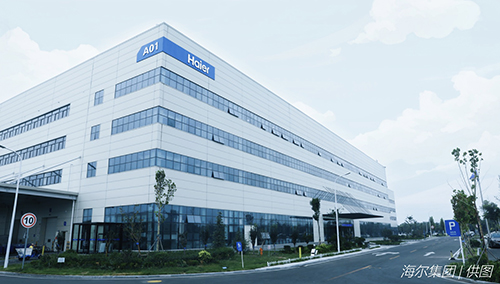
洗衣机“黑科技”诞生记
Jing Ji Wang· 2025-09-30 03:45
Core Insights - Haier's Tianjin washing machine interconnected factory is the world's first large-scale customized flexible production facility compatible with both fully automatic top-loading and front-loading washing machines, significantly enhancing production efficiency and order response times through advanced technologies like AI and IoT [2][4][14] Group 1: Production Efficiency - The factory can produce 17 washing machines per minute, achieving a 35% increase in production efficiency [2] - The order response efficiency has improved by 50% due to the integration of the COSMOPlat industrial internet platform [2] - In 2024, the factory is expected to produce over 300 million washing machines, with 40% of orders being customized [7][14] Group 2: Flexible Manufacturing - The factory has enhanced its flexible manufacturing capabilities to quickly adapt to diverse consumer demands, allowing for rapid production line adjustments [4][5] - Production line changes that previously took minutes can now be completed in seconds, enabling the production of up to 320 different washing machine models on a single line [6][7] - The factory's logistics system utilizes an aerial transport mechanism to improve efficiency and reduce manual intervention [7] Group 3: Technological Innovations - Haier has implemented advanced technologies such as AI algorithms and robust data fusion to optimize production processes, resulting in a 32% improvement in foam quality for refrigerator insulation [13] - The injection molding process has been enhanced with a new model that increases machine cycle speed by 7% and reduces parameter adjustment time by 90% [13] - The factory has introduced various "black technologies" to address common issues, such as air circulation in washing machines to prevent odors and advanced designs to minimize fabric damage [8][13] Group 4: Sustainability Efforts - The factory has achieved a 35% reduction in energy consumption, a 36% decrease in greenhouse gas emissions, a 54% reduction in water usage, and a 59% decrease in waste [14] - Haier's commitment to green manufacturing has been recognized with certifications for greenhouse gas emissions [14] Group 5: Industry Collaboration - Haier is leveraging its industrial internet platform to foster collaboration across the entire supply chain, enhancing the capabilities of both large and small enterprises [14] - The company has established a digital ecosystem that supports shared resources and collaborative manufacturing, which has been successfully replicated in its global operations [14]

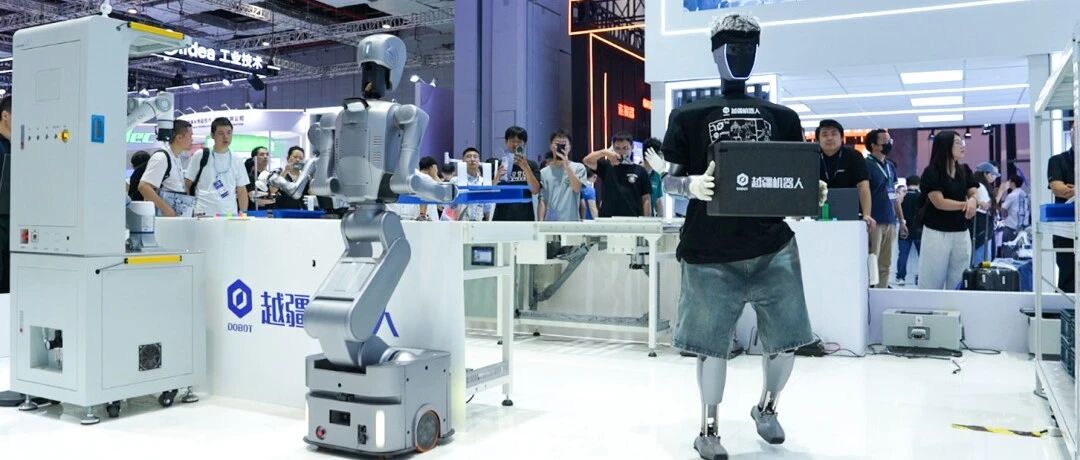
全球首次!多形态通用具身机器人协同常态化作业,越疆重新定义新质工业生产力
机器人圈· 2025-09-23 13:01
Core Viewpoint - The article highlights the advancements and strategic vision of the company 越疆 in the field of robotics, particularly through its "Super Factory" platform that integrates various types of robots for collaborative tasks, marking a significant evolution in industrial automation towards flexible manufacturing [2][3][5]. Group 1: Super Factory Concept - 越疆's "Super Factory" system employs a "centralized decision-making + distributed execution" architecture, achieving the world's first regular collaborative operation of multi-modal general-purpose embodied robots [3][5]. - The system integrates various robot types, including humanoid, wheeled, and multi-legged robots, transitioning from traditional execution tools to intelligent agents with "perception-decision-execution" capabilities [3][5]. Group 2: Technological Advancements - The company has built a robust foundation over the past decade, evolving from collaborative robotic arms to a multi-modal embodied intelligence platform, driven by self-research technology and practical applications [5][15]. - Key breakthroughs in core components such as servo drives and AI technologies like visual perception and force control have enhanced the robots' decision-making capabilities [5][15]. Group 3: Robot Types and Functions - The "Super Factory" employs four types of robots, each with specific roles: - Humanoid robots for fine operations and multi-tasking [7][10] - Wheeled robots for material transport and rapid response [7] - Multi-legged robots for inspections and transport in unstructured environments [7] - Collaborative robotic arms for high-precision flexible tasks [7][9]. Group 4: Industry Impact and Collaboration - 越疆 has established a strong presence in over 100 countries, collaborating with more than 80 Fortune 500 companies, which has enriched its industry knowledge and practical expertise [15][17]. - The company initiated a collaborative action with 300 global manufacturing enterprises to promote the integration of embodied intelligent robotics into manufacturing environments, emphasizing data-driven technological evolution [15][17]. Group 5: Future Prospects - The "Super Factory" platform's compatibility and ease of deployment allow companies to integrate multiple robots without significant modifications to existing production lines, fostering a continuous improvement cycle [17]. - As humanoid robots and embodied intelligence technologies mature, 越疆 is positioned to play a crucial role in the global smart manufacturing wave, showcasing its capability for system-level innovation [17].
“工美杯”北京工艺美术大赛20届成果展发布会在京召开
Xiao Fei Ri Bao Wang· 2025-09-18 03:16
Group 1 - The "Gongmei Cup" Beijing Arts and Crafts Competition has successfully held 20 editions since its inception, showcasing over 10,000 entries and becoming a significant platform for the protection, inheritance, and innovation of traditional crafts in Beijing [2] - The 2025 competition saw a record number of submissions, with 671 works collected across 9 major categories and 26 subcategories, resulting in 376 awarded pieces, including 40 gold, 75 silver, and 112 bronze awards [1][2] - The event highlighted the collaboration between the arts and crafts industry and national institutions, with four masters donating representative works to the China Arts and Crafts Museum, enhancing public access to artistic excellence [2] Group 2 - Beijing's arts and crafts are deeply rooted in its ancient cultural heritage, continuously evolving in materials, techniques, and themes, contributing to the city's cultural confidence and quality [3] - The city has been recognized as a "City of Design" by UNESCO since 2012, promoting the integration of arts and crafts with urban culture and modern design, which is becoming a vital force in enhancing urban quality [3] - The Beijing Economic and Information Technology Bureau emphasizes the importance of arts and crafts, planning to leverage new technologies like AI and virtual reality to transform traditional design, production, and dissemination methods [3]
东利机械:锚定未来,多维度布局驱动业绩增长
Quan Jing Wang· 2025-09-15 08:57
Core Viewpoint - Dongli Machinery (301298) held an online collective reception day for investors and a performance briefing for the first half of 2025 on September 15, where the general manager highlighted the company's future development and growth expectations based on the first half of 2025's operations and industry trends [1] Group 1: Company Development Highlights - The company is focusing on "intelligent manufacturing, green manufacturing, and flexible manufacturing" with promising prospects for new products such as the new energy reducer gear and self-developed suspension dampers, which have already entered mass production and are expected to drive performance growth [1] - The company is actively expanding into new fields to explore new growth points, particularly in the rapidly developing Chinese automotive industry, with plans for domestic and international markets to each account for half of its business in the long term [1] Group 2: Market Position and Clientele - As a secondary or tertiary supplier to automotive manufacturers, the company supplies major global automotive parts manufacturers and has established long-term stable partnerships with well-known clients, many of which are industry leaders, including AAM Group, VC Group, MUVIQ Group, and FUKOKU Group [1] - The company's automotive parts are used in internationally recognized brands such as Mercedes-Benz, BMW, Audi, General Motors, Ford, Renault, Porsche, Bentley, Ferrari, Jaguar, Land Rover, Volkswagen, Volvo, and Great Wall [1]
5微米隔膜薄如蝉翼,探秘恩捷股份“智慧工厂”里的黑科技
Hua Xia Shi Bao· 2025-08-21 09:29
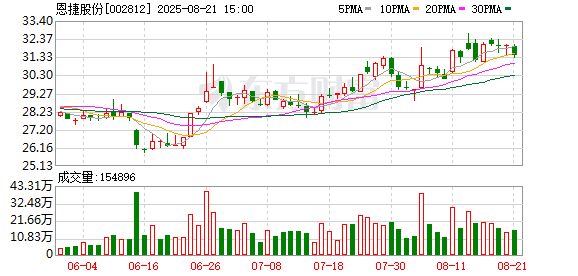
Core Viewpoint - Yunnan Enjie New Materials Co., Ltd. reported a revenue of 5.763 billion yuan for the first half of 2025, marking a year-on-year increase of 20.48%, driven by its wet lithium battery separator business which continues to solidify its global leadership position [2] Group 1: Company Performance - The company achieved a revenue of 5.763 billion yuan in H1 2025, reflecting a 20.48% increase year-on-year [2] - Enjie has established a strong market presence in the lithium battery separator sector, leveraging significant technological advantages and market resilience [2] Group 2: Manufacturing and Technology - The Yuxi base features an advanced smart manufacturing system, designed to meet Industry 4.0 standards, allowing for real-time monitoring and flexible manufacturing processes [3] - The main product, a lithium battery separator with a thickness of only 5 micrometers, demonstrates superior strength, capable of withstanding a vertical puncture of up to 560 grams, with a 16.7% increase in puncture strength compared to conventional products [3][4] - Enjie has implemented an innovative online coating process that integrates base film manufacturing and coating, significantly enhancing production efficiency and quality consistency [4] Group 3: Quality Control and Supply Chain - The company employs a "four-in-one" quality control system that aims for "zero defects" in delivery, enhancing its competitive edge [4] - A robust supply chain management system ensures stability and efficiency, with exclusive supply agreements and rapid response capabilities [4] Group 4: Research and Development - Enjie invests an average of 700 million yuan annually in R&D, holding 505 effective patents related to lithium battery separators, with an additional 304 patents pending [6] - The company offers over 130 types of separators, catering to diverse markets including high-end power batteries and consumer electronics, with products meeting international standards [6] Group 5: Future Outlook and Strategic Initiatives - Enjie has entered the solid-state battery materials sector, focusing on sulfide technology, which is expected to have significant commercial potential [7] - The company is developing a production line for sulfide solid electrolyte materials, with plans for large-scale production to support its comprehensive product matrix covering liquid, semi-solid, and solid-state batteries [7] - Enjie aims to remain a key supplier in the evolving battery landscape, anticipating that solid-state batteries will coexist with traditional technologies [7] Group 6: Market Position - Enjie serves over 50 leading battery clients globally, including CATL and BYD, with a projected market share of nearly 26% in the global electric vehicle separator market by mid-2024 [8] - The company emphasizes its technological edge as a core competitive advantage, ensuring it remains at the forefront of market competition through continuous innovation [8]

这一领域机器人,我国首批!
Zhong Guo Dian Li Bao· 2025-08-13 04:53
Core Insights - The completion of the first domestically developed flexible manufacturing intelligent welding robot system in Tianjin marks a breakthrough in flexible manufacturing technology for marine oil and gas equipment in China [1] Group 1: Flexible Manufacturing Overview - Flexible manufacturing refers to a new production model that responds to the demand for mass customization, allowing quick adaptation to market changes, product design updates, and variations in the manufacturing process [3] - The development of flexible manufacturing involves interdisciplinary technologies such as mechanical engineering, artificial intelligence, and sensing, with high requirements for intelligent decision-making, environmental perception, and control systems [5] Group 2: Intelligent Welding Robots - The flexible manufacturing intelligent welding robot is designed for flexible manufacturing, featuring visual recognition capabilities, high flexibility, environmental adaptability, and intelligent control, suitable for various customized welding tasks in complex environments [6] - The integrated system includes three intelligent robots capable of smart welding for pipe node prefabrication, block node welding, and deepwater riser strengthening rings [7] Group 3: Technical Specifications and Innovations - The equipment system has a maximum single-machine load capacity of 30 tons and a design life of 20 years, with 100% of the core software and process library developed independently [9] - The project team has overcome multiple industry technical challenges, achieving over ten technological innovations, including AI visual recognition for weld seams and intelligent welding capabilities, enabling one-click operation for smart welding of product components [11] Group 4: Project Development and Future Goals - The project team is currently conducting related debugging and acceptance work, aiming to accelerate the transition of marine engineering flexible manufacturing intelligent welding equipment from "capable of welding" to "precise and fast welding" [13]



具身智能:机器人打破“专用”枷锁 柔性制造迎来新范式
Huan Qiu Wang· 2025-08-11 04:10
Core Insights - The current manufacturing automation faces a fundamental contradiction between the demand for personalized, flexible production and the traditional structured environment of industrial robots [1] - The shift from model-based programming to data-driven learning in robotics is being driven by advancements in large model technologies, particularly those based on the Transformer architecture [1][4] Group 1: Challenges and Opportunities - The paradox of efficiency and versatility in robotics indicates that while general-purpose robots may not be as efficient in specific tasks compared to specialized robots, the industry is focused on resolving this issue [2] - The core breakthrough in embodied intelligence is enabling robots to understand and plan tasks, moving beyond simple programmed actions to a complex architecture of task understanding, action planning, and execution [4] Group 2: Data and Technological Framework - The "data pyramid" theory proposed by the company emphasizes the importance of various data types, ranging from vast internet data at the base to high-value real-world data at the top, with increasing quality and cost as one moves up the pyramid [5] - The "one brain, multiple small brains" model is a practical approach where a foundational model is pre-trained on large datasets, while specialized models are fine-tuned with real-world data to optimize actions in specific scenarios [7] Group 3: Industry Collaboration and Standards - The transition to embodied intelligence is expected to follow a gradual path from structured to semi-structured and eventually to fully general scenarios, necessitating collaboration across the industry [7] - The company's "platform + track" strategy aims to empower ecosystem partners through foundational model capabilities, while also focusing on specific sectors like industrial manufacturing, logistics, and retail [8]