
负利率

Search documents
“超级央行周”再度来袭!美联储按兵不动?
第一财经· 2025-06-16 10:05
Core Viewpoint - The article discusses the rising market uncertainty due to geopolitical tensions and upcoming central bank decisions, particularly focusing on the Federal Reserve, Bank of Japan, and Swiss National Bank, highlighting the potential for divergent monetary policies globally [1][4]. Federal Reserve - The Federal Reserve is expected to maintain interest rates during the upcoming decision, with a 99% probability of no change, and the earliest potential rate cut anticipated in September [4]. - Recent economic data shows signs of a cooling labor market and declining inflation, reducing the likelihood of a severe stagflation scenario [4]. - Concerns remain regarding the impact of tariffs on inflation and economic growth, which could complicate the Fed's decision-making process [4][5]. Bank of Japan - The Bank of Japan is anticipated to keep interest rates unchanged, with a focus on forward guidance amid ongoing trade negotiations with the U.S. [7][8]. - A significant portion of economists predict that the Bank of Japan will slow its bond purchase reduction starting in April 2026, reflecting concerns over rising government debt costs [9][10]. - The Japanese government has issued warnings about rising bond yields and the need for domestic ownership of government bonds to avoid supply-demand imbalances [8]. Swiss National Bank - The Swiss National Bank's upcoming decision is under scrutiny, with a 69% chance of reducing the key interest rate from 0.25% to 0% and a 31% chance of moving to -0.25% [11]. - The Swiss economy faces deflationary pressures due to a strong Swiss franc, which has appreciated over 10% against the dollar this year, leading to a negative CPI for the first time since the pandemic [11][12]. - The strong franc's impact on import prices is a significant concern for the Swiss National Bank, potentially forcing it to take action to address inflation [12]. Bank of England - The Bank of England is expected to maintain its key interest rate at 4.25%, despite concerns in the labor market and ongoing inflation considerations [12][13]. - Market predictions suggest that the Bank of England may follow the Fed's path, with potential rate cuts expected later in the year [13][14].


存款利率跌破1%!金价3300、比特币11万,如零利率来临普通人怎么办
Sou Hu Cai Jing· 2025-06-15 00:26
Core Viewpoint - The article discusses the challenges posed by a low-interest-rate environment and suggests various asset allocation strategies to mitigate inflation pressure and enhance returns in such conditions [1][3][7]. Group 1: Financial Environment - The global financial environment is becoming increasingly complex, with many individuals struggling to keep pace [1]. - Japan's zero interest rate policy since 1999 and Europe's negative interest rates since 2014 have led to a shift in asset allocation strategies among residents [1][3]. Group 2: Current Market Conditions - Gold prices have reached $3,300, and Bitcoin has surged to $110,000, while deposit interest rates have fallen below 1%, creating significant pressure on traditional savings [3]. - Major domestic banks have collectively lowered deposit rates, with one-year fixed deposit rates dropping below 1% [3]. Group 3: Asset Allocation Strategies - Personal asset management should follow a "three-part method" for diversified asset allocation [3]. - Short-term liquidity should be managed through money market funds or T+0 cash management products, with annualized rates around 1% [3]. - High-dividend stocks and REITs are recommended for stable income, with average dividend rates of approximately 3% for domestic ETFs and up to 7% for Hong Kong's high-dividend ETFs [5]. - A combination of government bonds, convertible bonds, and high-rated corporate bonds can target around 3% returns, with domestic options including policy financial bond funds and convertible bond index funds [5]. - Long-term guaranteed income can be achieved through life insurance products offering around 3% returns, although recent trends show a decline in guaranteed rates [5][7]. Group 4: Global Asset Diversification - Investors concerned about currency depreciation are advised to consider QDII index funds and gold ETFs for international asset diversification and commodity risk hedging [5]. - The article emphasizes the need for a multi-faceted investment strategy to adapt to the low-interest-rate environment and ensure asset preservation and growth [7].
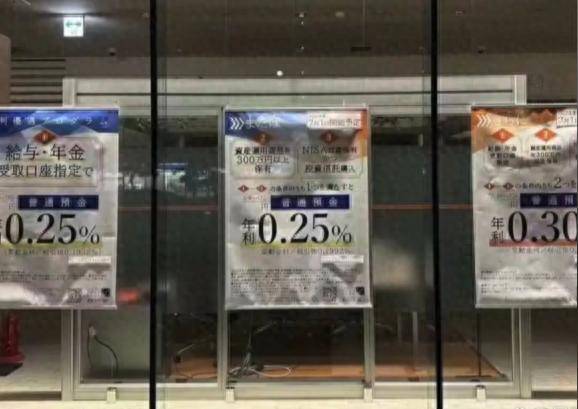
今明两年,别再盲目存定期存款!银行内部人说出3大真相
Sou Hu Cai Jing· 2025-06-13 04:43
Core Insights - The banking landscape is changing in 2025, with a significant increase in savings deposits, reaching 9.22 trillion yuan in Q1, averaging 2,195 yuan per person per month [1] - Interest rates on savings are declining, with three-year fixed deposit rates dropping from 3.05% three years ago to below 2% now, resulting in a 37.7% decrease in interest income for depositors [1] - Inflation is eroding the purchasing power of savings, with a three-year fixed deposit rate of 1.5% failing to keep pace with rising prices, leading to a projected loss of 1,100 yuan in value per year for a 100,000 yuan deposit [3] Banking and Savings Trends - The trend of decreasing interest rates is expected to continue, influenced by central bank policies and global economic conditions, making traditional savings less beneficial for depositors [1] - The liquidity of fixed deposits is a concern, as early withdrawal results in significantly lower interest earnings, exemplified by a case where a depositor lost over 10,000 yuan due to early withdrawal penalties [5] Investment Strategies - A diversified approach to managing funds is recommended, suggesting that individuals should not rely solely on fixed deposits but instead allocate funds into different categories for better flexibility and security [5] - Caution is advised against chasing high-yield investments without proper knowledge, as many investment products, including mutual funds, have experienced significant losses [7] - Different age groups should adopt tailored investment strategies, with younger individuals taking on more risk while older individuals prioritize safety and capital preservation [7]

瑞士央行会重返负利率吗
Jin Rong Shi Bao· 2025-06-11 08:34
相对于美联储、欧洲央行在6月议息例会上的平淡表现,瑞士央行即将召开的6月例会可能会给投资者带 来不一样的感受。其背后最受关注的焦点在于:在时隔数年之后,瑞士央行会成为首个重返负利率的欧 美央行吗? 这种猜测并非无稽之谈。瑞士联邦统计局最新公布的数据显示,该国5月份消费者价格指数同比下降 0.1%,这是自2021年3月瑞士经济受到新冠危机打击以来的最低水平。通胀率转为负值,不仅标志着瑞 士消费者物价指数已经降至0-2%的目标区间之外,也意味着瑞士央行本月晚些时候大幅降息的压力加 大。 6月例会或成焦点 荷兰国际集团(ING)经济学家蒙彼利埃预计,6月瑞士央行将降息25个基点,9月第二次降息25个基点。 蒙彼利埃表示,瑞士央行必须采取行动,将通胀预期维持在0-2%的目标区间内。"我认为瑞士央行会希 望将利率停在-0.25%……但风险在于,如果瑞士法郎变得更加昂贵,油价继续下跌,情况将进一步恶 化,瑞士央行将不得不进一步降息。"蒙彼利埃表示。 瑞银和瑞士盈丰银行的经济学家也预测,瑞士央行6月份将降息25个基点。瑞士经济协会首席经济学家 鲁道夫明施则预计,瑞士央行将在6月或9月一次性降息25个基点,然后停止降息。他认 ...
银行存款利率跌破1%,释放了怎样的信息?
3 6 Ke· 2025-05-22 12:28
Group 1 - Major state-owned banks have lowered deposit rates, with the one-year deposit rate falling below 1% due to the need to reduce costs as the central bank has cut the benchmark interest rate by 10 basis points to 3.5% [1][2] - Banks face high operational costs, including employee salaries and non-performing loans, which necessitate maintaining loan rates above 3% to ensure profitability [2][3] - The reduction in deposit rates is also aimed at stimulating economic activity, as excessive deposits indicate a lack of market vitality and liquidity [5][7] Group 2 - The central bank's strategy of lowering interest rates is intended to encourage spending rather than saving, pushing consumers to withdraw and spend their money [7][10] - Historical examples, such as Japan's experience with negative interest rates, illustrate the challenges of stimulating consumption in a low-demand environment, particularly due to demographic factors [9][10] - The overall goal is to activate the economy by ensuring money circulates, which is essential for growth and investment opportunities [10][12]
债券拍卖遇冷,日本国债大跌,石破茂:日本财政状况比希腊还差
Mei Ri Jing Ji Xin Wen· 2025-05-22 08:43
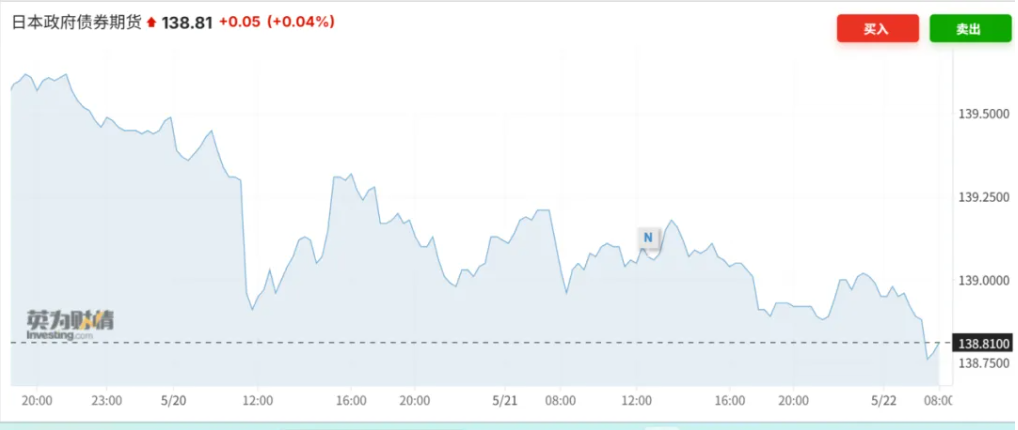
Core Viewpoint - The structural risks of Japan's ultra-long-term government bonds are rising as yields continue to increase, with the 40-year yield reaching its highest level since issuance in 2007, indicating potential challenges for Japan's fiscal sustainability and global market stability [1][2][4]. Group 1: Bond Market Dynamics - Japan's long-term bond yields are on the rise, with the 40-year yield increasing by 6 basis points to 3.675%, the highest since 2007 [1]. - The 10-year and 5-year government bond yields have also risen, reaching 1.56% and 1.02% respectively [1]. - The recent auction of 20-year bonds saw the lowest bid-to-cover ratio since 2012, dropping to 2.5 times, indicating weak market demand [2][4]. Group 2: Central Bank Challenges - The Bank of Japan holds 52% of the Japanese government bond market, acting as a stabilizer but facing a dilemma between continuing quantitative tightening (QT) and the risk of market volatility [5]. - If QT continues, long-term bond yields may rise further, leading to significant losses for bondholders and potentially forcing the Bank of Japan to reintroduce yield curve control (YCC) or negative interest rates [5]. - Conversely, if the Bank of Japan opts for quantitative easing (QE), it may alleviate market volatility but exacerbate inflationary pressures and lead to a depreciation of the yen [5]. Group 3: Economic Sentiment - A recent survey indicated that 65% of Japanese companies are calling for the Bank of Japan to pause its interest rate hike plans, reflecting concerns over economic contraction and uncertainty from external factors [6]. - The total national debt of Japan is projected to reach 1,323.7155 trillion yen by the end of the fiscal year 2024, marking a continuous increase and raising concerns about fiscal sustainability [7]. - The Japanese government is facing a fiscal dilemma, with rising expenditures due to inflation not being fully covered by tax revenues, leading to a precarious financial situation [8].
零利率到来,影响有多大?
商业洞察· 2025-05-21 09:23
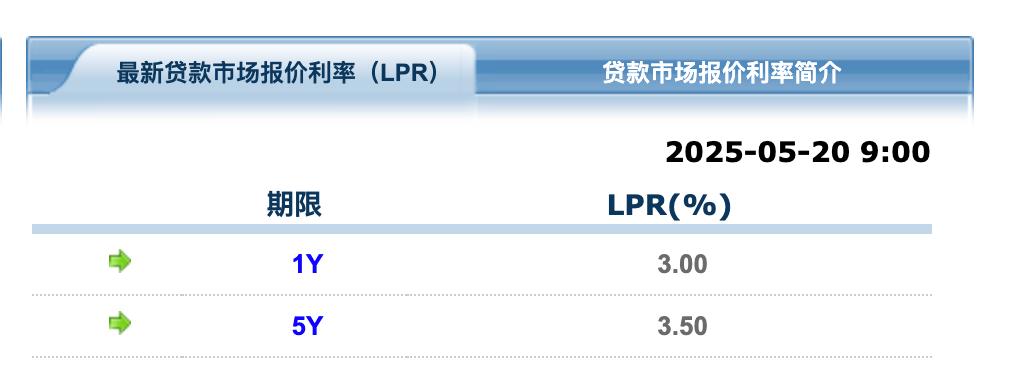
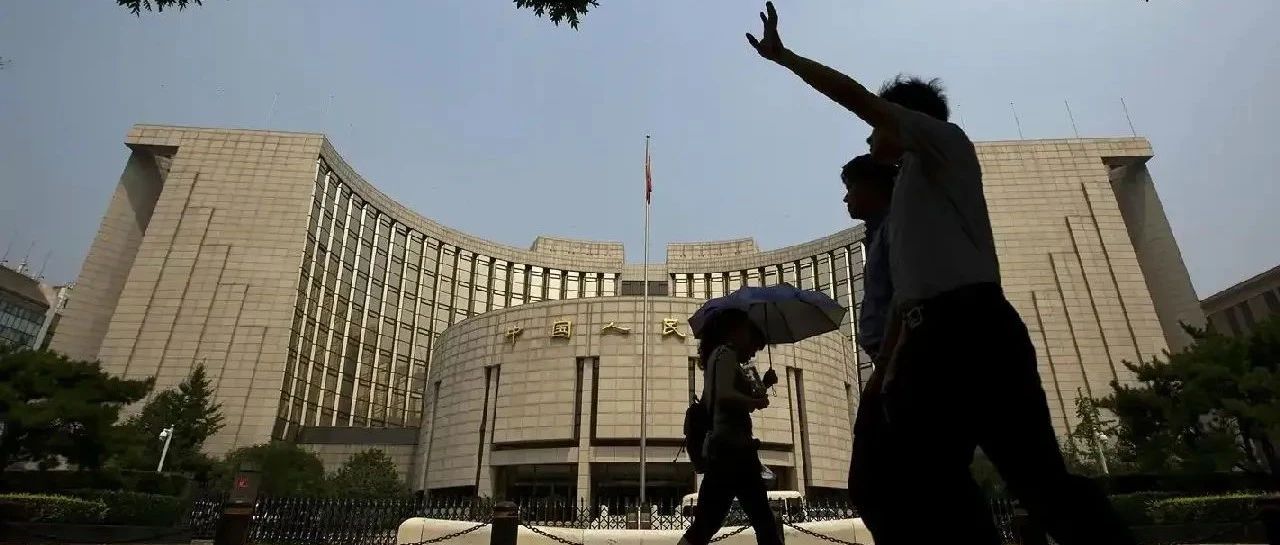
Core Viewpoint - The recent reduction in LPR (Loan Prime Rate) by the central bank signals an approaching era of zero and negative interest rates, which will have significant implications for the banking sector and the broader economy [1][6][12]. Group 1: Interest Rate Changes - The central bank has lowered the 1-year LPR to 3% and the 5-year LPR to 3.5%, with major state-owned banks following suit by reducing deposit rates by up to 25 basis points [1][3]. - The 1-year fixed deposit rate has dropped to a historic low of 0.95%, marking the first time it has fallen below 1% [3][6]. - The trend of declining interest rates is expected to continue, potentially leading to zero or negative rates in the future [6][12]. Group 2: Banking Sector Implications - The profitability of commercial banks is under pressure due to a declining net interest margin, which has fallen to 1.43%, below the critical threshold of 1.8% [7][11]. - The reduction in deposit rates is a direct response to the need for banks to maintain profitability by lowering costs associated with deposits [12][18]. - The banking sector is facing challenges as the volume of non-performing loans remains significant, with a non-performing loan ratio of 1.22% across major banks [10]. Group 3: Economic Impact - The shift towards lower interest rates is intended to encourage consumer spending and investment, as saving becomes less attractive [12][28]. - The government aims to alleviate the burden of existing debts for enterprises and local governments by creating a low-interest environment [12][16]. - Historical comparisons with Japan and the U.S. suggest that low or negative interest rates can stimulate economic activity and housing markets, as seen in the significant rise in U.S. housing prices during similar conditions [34][37]. Group 4: Housing Market Dynamics - The anticipated decrease in mortgage rates, potentially below 3%, is expected to stimulate housing demand, leading to a possible surge in property prices [18][30]. - However, the increase in demand may also result in stricter lending standards, making it more challenging for buyers to secure mortgages [31]. - The potential for rising inflation due to increased consumer spending and investment could further complicate the economic landscape [32].
【财经分析】日本国债拍卖“崩了” 投资者需警惕“连锁反应”
Xin Hua Cai Jing· 2025-05-20 11:31
当全球金融市场的焦点集中在美债走势之时,日本超长期国债的结构性风险正悄然的攀升,"供需错 位"导致日本债券拍卖遇冷,超长期日债收益率跳涨或导致全球金融市场震动,而作为日本国债最大的 买家,日本央行的量化紧缩能否持续推进再次出现了较大的不确定性。 截至5月20日发稿,日本20年期国债收益率跃升至2.555%,为2000年10月以来的最高水平;日本30年期 国债收益率上涨13个基点至纪录高点3.10%;40年期国债收益率则跃升10个基点至3.591%的历史最高 点。日本基准10年期国债收益率一度升至1.525%,为3月底以来高位。 日本债券市场的供需失衡也令日本央行陷入两难局面,一方面若日本央行持续推进量化紧缩(QT), 可能导致长端债券收益率继续上行,引发债市剧烈波动,使持债机构面临巨大账面损失,最终甚至可能 迫使央行重启收益率曲线控制(YCC)或重新实施负利率。 另一方面,如果日本央行选择提前放弃紧缩政策,重新启动量化宽松(QE),虽然有助于缓解市场波 动,但可能加剧通胀压力,导致日元大幅贬值、资本外流。 日债收益率上升的"连锁反应" 日本央行的量化紧缩能否持续? 当地时间5月20日,日本财务省进行的1万亿日 ...
5月20日电,瑞士央行行长表示,负利率是一种非常措施,前次使用产生了预期效果,不能排除实行负利率的可能性。
news flash· 2025-05-19 17:35
智通财经5月20日电,瑞士央行行长表示,负利率是一种非常措施,前次使用产生了预期效果,不能排 除实行负利率的可能性。 ...
瑞士央行行长施莱格尔:负利率是一项非常措施,但上次使用时取得了预期效果。
news flash· 2025-05-19 17:34
瑞士央行行长施莱格尔:负利率是一项非常措施,但上次使用时取得了预期效果。 ...