零利率

Search documents
瑞郎避险底色下平衡零利率
Jin Tou Wang· 2026-01-23 02:54
Core Viewpoint - The Swiss Franc (CHF) has maintained a unique position as a safe-haven currency, supported by a combination of zero interest rate policy, regular foreign exchange interventions, and a differentiated economic backdrop, allowing it to avoid excessive appreciation while preserving its core value in a volatile global monetary environment [1][2]. Group 1: Monetary Policy and Economic Outlook - The Swiss National Bank (SNB) is one of the few major central banks maintaining a zero interest rate, with a high threshold for reintroducing negative rates, contrasting sharply with the easing cycles of the Federal Reserve and the European Central Bank [1]. - The SNB reaffirmed its commitment to a 0% policy rate until the second half of 2027, even with inflation projected at only 0.4% in 2026, due to concerns over the long-term negative effects of negative rates on the Swiss pension and banking sectors [1]. - The Swiss economy, being export-oriented, faces challenges from global demand slowdown, with watch exports declining by 7.3% year-on-year in November 2025, and GDP growth forecasted to slow from 1.2% to 1.0% in 2026, alongside an increase in unemployment to 3.0% [1]. Group 2: Supportive Factors for the Swiss Franc - Switzerland's macroeconomic advantages, such as a current account surplus consistently above 4% of GDP and a net international investment position exceeding 100% of GDP, bolster the CHF's safe-haven status [2]. - Despite facing a 39% tariff from the U.S. in 2025, Switzerland quickly negotiated a reduction to 15%, leading to a rapid recovery in the trade account, with gold exports increasing significantly from an average of 0.3 tons to 128.2 tons [2]. - Switzerland's low government debt ratio of 40% and decades of political neutrality make the CHF a preferred choice for safe-haven investments amid global risks, although central bank interventions moderate excessive appreciation [2]. Group 3: Exchange Rate Dynamics - The CHF has remained within a narrow trading range of 0.79-0.81 against the USD, with the SNB's proactive measures neutralizing the impact of interest rate differentials [3]. - The CHF's performance diverges from other non-USD currencies, maintaining stability even amid global capital flows triggered by monetary policy changes from the ECB and BoJ [3]. - Short-term forecasts suggest the USD/CHF will oscillate between 0.79-0.80, with the SNB's interventions setting clear boundaries for exchange rates [3]. Group 4: Future Considerations - Key variables to monitor include the escalation of global geopolitical risks, which could lead to significant inflows of safe-haven capital, potentially surpassing the SNB's intervention thresholds and driving unexpected CHF appreciation [4]. - Changes in the SNB's intervention tools may occur if export weaknesses intensify, possibly leading to increased foreign exchange interventions or adjustments to the current deposit rates to manage CHF valuation [4]. - Overall, the CHF's trajectory in 2026 represents a new approach for safe-haven currencies, balancing the preservation of its safe-haven attributes, the health of the export economy, and stable exchange rate movements through active central bank management [4].
谁会阻止疯狂的白银?当年亨特兄弟是栽在谁手里?
美股IPO· 2025-12-27 03:11
Core Viewpoint - The article discusses the recent surge in silver prices and the implications of margin increases by the CME, drawing parallels to historical events that preceded market reversals [1][3][5]. Group 1: Historical Context - The CME has raised silver margins again, reminiscent of past instances where such actions preceded market downturns, notably in 2011 and 1980 [1][3]. - In 2011, the CME raised silver margins five times in nine days, leading to a nearly 30% price drop as leveraged positions were liquidated [5]. - The Hunt Brothers' failure in 1980 was similarly triggered by regulatory changes that restricted leverage, resulting in a dramatic price decline from nearly $50 to $10 [7]. Group 2: Current Market Dynamics - On December 26, silver prices surged over 10%, nearing $80 per ounce, with COMEX silver futures rising nearly 18% for the week [3]. - The current market is characterized by a "metal frenzy," with gold surpassing $4550 and copper reaching historical highs, driven by narratives around commodity control and hedging against inflation and currency devaluation [3]. - Domestic actions include the Shanghai Futures Exchange adjusting trading limits and margin requirements for gold and silver futures, indicating a tightening of market conditions [3]. Group 3: Fundamental Drivers and Risks - Key drivers for the current silver price increase include surging industrial demand from solar panels, electric vehicles, and AI data centers [10]. - There is a persistent supply deficit in silver, with 70% of production being a byproduct, leading to inflexible supply [11]. - Investors are using precious metals as a hedge against fiscal deficits and currency depreciation [12]. - However, valuation indicators suggest risks, with the silver-to-oil ratio at historical highs, indicating potential for a correction in silver prices [13]. - Analysts warn that high leverage in the market poses significant risks, as regulatory bodies may intervene similarly to past instances, potentially leading to a market correction [13].


刚刚宣布,0利率!
Zhong Guo Ji Jin Bao· 2025-12-11 10:22
Group 1 - The Swiss National Bank (SNB) has maintained its policy interest rate at 0%, aligning with market expectations [4][8] - Following the announcement, the Swiss Franc strengthened slightly, with the USD/CHF exchange rate decreasing by 0.15% [4] - The SNB is prepared to intervene in the foreign exchange market if necessary [4] Group 2 - Recent inflation in Switzerland has been slightly below expectations, with the inflation rate dropping from 0.2% in August to 0% in November, primarily due to slower price increases in sectors like hospitality, rent, and clothing [6] - The Swiss economy contracted in the third quarter, mainly due to the pharmaceutical sector, while other manufacturing and service sectors showed slight growth [6] - The SNB has revised its GDP growth forecast for 2025 to slightly below 1.5% and for 2026 to approximately 1% [6] Group 3 - The SNB's decision to maintain a 0% interest rate reflects a cautious approach to avoid destabilizing the financial system, despite previous expectations of potential negative interest rates [8] - Recent inflation data being lower than the SNB's prior predictions has led to increased market speculation about the possibility of negative interest rates [8][9] - The recent trade agreement between the US and Switzerland, which reduced tariffs on Swiss goods from 39% to 15%, has alleviated some concerns regarding negative interest rate expectations [8]
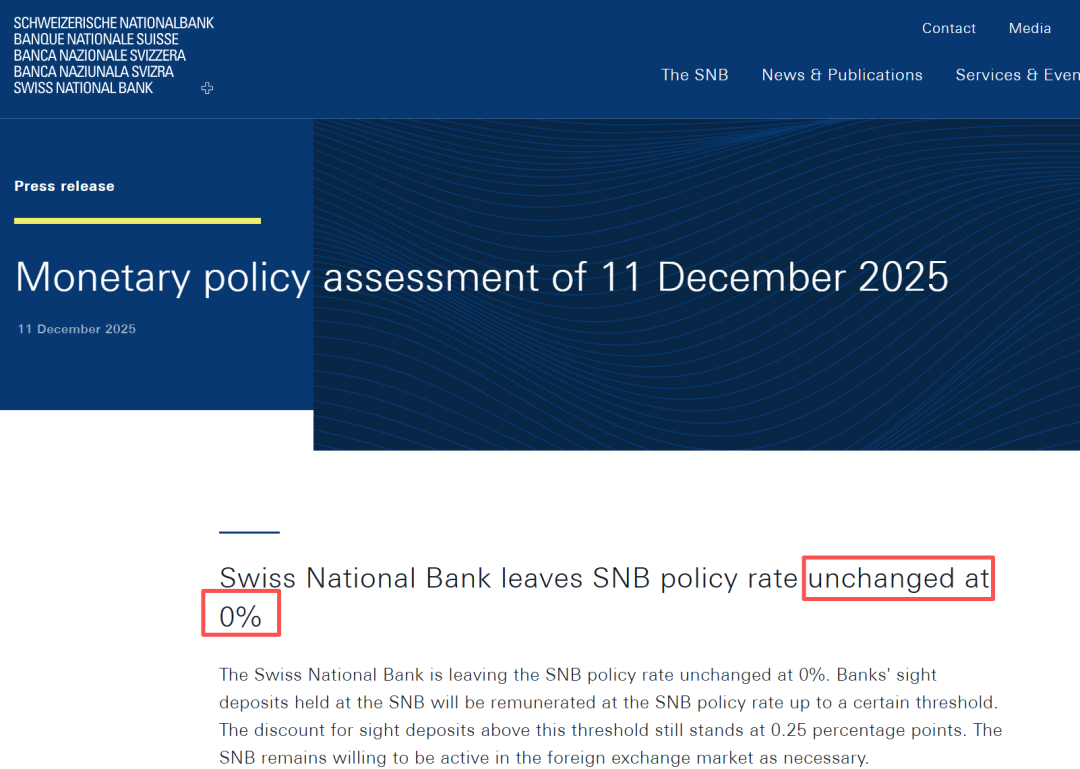
滕泰:什么政策能避免通缩长期化
Di Yi Cai Jing· 2025-07-22 06:47
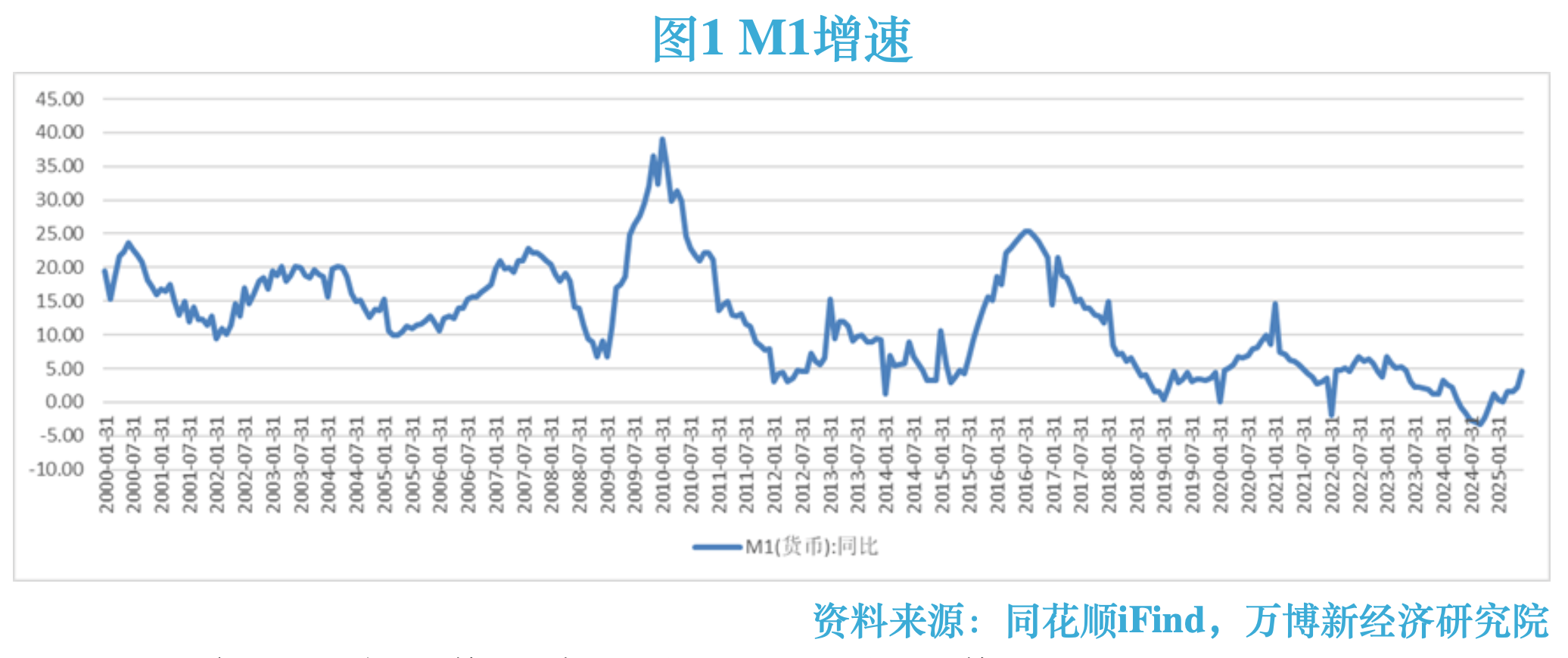
Group 1 - The central bank's continued interest rate cuts can significantly reduce the cost of existing debt for households, businesses, and the government, leading to substantial savings in interest payments each year [1][5] - As of June, the broad money supply (M2) grew by 8.3% year-on-year, while the narrow money supply (M1) increased by 4.6%, indicating positive changes in financial data [1] - M1 is considered a leading indicator of economic activity, as it reflects the liquidity available for consumption, investment, and trading [1][2] Group 2 - A further increase in M1 growth to between 5% and 10% is necessary for true monetary easing and to stimulate consumption, stabilize housing prices, and revitalize the stock market [2][4] - The net financing of government bonds in the first half of the year reached 7.66 trillion yuan, which is 4.32 trillion yuan more than the previous year, benefiting from the low-interest environment [4] - The corporate bond net financing was 1.15 trillion yuan, a decrease of 256.2 billion yuan year-on-year, indicating a need for improved business investment confidence and further interest rate cuts [4] Group 3 - The current household debt in China amounts to approximately 80 trillion yuan, and a 1% reduction in interest rates could save households around 800 billion yuan in interest payments annually [5] - Non-financial enterprises owe about 150 trillion yuan to banks, and a 1% interest rate cut could result in an additional 1.5 trillion yuan in profits for these companies [5] - The total government debt, including hidden debts, is over 100 trillion yuan, and a 1% interest rate reduction could save the government more than 100 billion yuan in interest payments each year [5] Group 4 - There is a viewpoint that emphasizes the importance of not deliberately devaluing the currency to enhance export advantages, suggesting that market forces should dictate currency value [8] - Concerns about interest rate cuts leading to currency devaluation and capital outflow are seen as misplaced, as the primary goal of monetary policy should be to stabilize domestic economic growth and employment [8][9] - Historical examples from Japan and the U.S. demonstrate that aggressive monetary policies, including zero and negative interest rates, can successfully stimulate economic recovery [9][10]
美元也要0利率,A股会成为最后的避风港吗?
Sou Hu Cai Jing· 2025-07-08 11:49
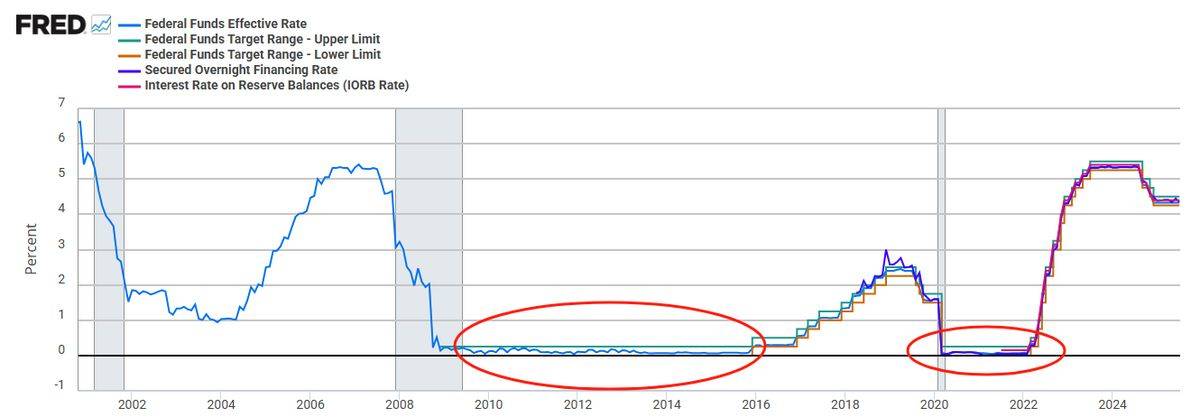
Core Viewpoint - The article discusses the unreliability of expert predictions in the financial market, emphasizing the importance of data analysis over expert opinions [1][3][10]. Group 1: Expert Opinions - Experts often provide ambiguous analyses that can be interpreted in multiple ways, leading to confusion among retail investors [3]. - The article criticizes the tendency of experts to take credit for correct predictions while deflecting blame for incorrect ones through complex jargon [3]. Group 2: Market Dynamics - The essence of the stock market is the competition for pricing power, which is predominantly held by institutional investors, leaving retail investors as passive participants [4]. - Institutional investors often act contrary to their public statements, as illustrated by their secretive investments in restructuring stocks while claiming to avoid speculative plays [4]. Group 3: Data Analysis - Data is presented as a more reliable indicator of institutional behavior than expert opinions, with examples showing how institutions were quietly accumulating shares of "Rongke Technology" during a market downturn [6]. - The case of "Wenyi Technology" demonstrates that analyzing trading behavior data is crucial for understanding market movements beyond just price charts [8]. Group 4: Federal Reserve Report - The 9% probability of zero interest rates, while seemingly low, is significant in the context of the global economic landscape, warranting careful preparation [10]. - The article concludes that rather than relying on expert forecasts, investors should focus on studying trading data and developing their analytical tools [10].
大家担心的事情,终于有了答案!银行利率不可能会降到0
Sou Hu Cai Jing· 2025-06-25 22:58
Core Viewpoint - The decline in bank deposit interest rates is a concern, but it is unlikely that rates will drop to zero in China due to various economic factors and the current financial landscape [1][3][12] Group 1: Current Trends in Deposit Rates - Recent years have seen a significant decline in bank deposit interest rates, with 3-year rates dropping from 3.05% to 1.50% and 1-year rates from 2.25% to 1.3% [1] - Concerns have been raised that if this trend continues, deposit rates could eventually reach zero, similar to some developed European countries [1][3] Group 2: Economic Context and Implications - The situation in Europe, where some countries have zero deposit rates, is not directly applicable to China, as those rates are often just nominal and banks still offer rates above zero [3][4] - China's economic conditions, including a GDP growth of 5.4% in the first quarter and a high M2 money supply exceeding 300 trillion, suggest that a zero interest rate policy would not be feasible [8][12] Group 3: Risks of Zero Interest Rates - A zero deposit rate could lead to significant capital outflows as domestic deposits would shift to countries with higher rates, exacerbating issues in the domestic real estate and stock markets [6][12] - The potential for increased loan demand due to low rates could result in higher default rates, reminiscent of the U.S. subprime mortgage crisis, indicating that maintaining a balance in interest rates is crucial [10][12]

瑞士央行行长:瑞士央行认为零利率并不意味着负利率,尽管市场利率可能处于负区间。
news flash· 2025-06-19 08:40
Core Viewpoint - The Swiss National Bank (SNB) believes that a zero interest rate does not imply negative interest rates, even though market rates may be in the negative territory [1] Group 1 - The SNB's stance indicates a differentiation between policy rates and market rates, suggesting that the central bank does not view the current market conditions as a signal to adopt negative rates [1]
存款利率跌破1%!金价3300、比特币11万,如零利率来临普通人怎么办
Sou Hu Cai Jing· 2025-06-15 00:26
Core Viewpoint - The article discusses the challenges posed by a low-interest-rate environment and suggests various asset allocation strategies to mitigate inflation pressure and enhance returns in such conditions [1][3][7]. Group 1: Financial Environment - The global financial environment is becoming increasingly complex, with many individuals struggling to keep pace [1]. - Japan's zero interest rate policy since 1999 and Europe's negative interest rates since 2014 have led to a shift in asset allocation strategies among residents [1][3]. Group 2: Current Market Conditions - Gold prices have reached $3,300, and Bitcoin has surged to $110,000, while deposit interest rates have fallen below 1%, creating significant pressure on traditional savings [3]. - Major domestic banks have collectively lowered deposit rates, with one-year fixed deposit rates dropping below 1% [3]. Group 3: Asset Allocation Strategies - Personal asset management should follow a "three-part method" for diversified asset allocation [3]. - Short-term liquidity should be managed through money market funds or T+0 cash management products, with annualized rates around 1% [3]. - High-dividend stocks and REITs are recommended for stable income, with average dividend rates of approximately 3% for domestic ETFs and up to 7% for Hong Kong's high-dividend ETFs [5]. - A combination of government bonds, convertible bonds, and high-rated corporate bonds can target around 3% returns, with domestic options including policy financial bond funds and convertible bond index funds [5]. - Long-term guaranteed income can be achieved through life insurance products offering around 3% returns, although recent trends show a decline in guaranteed rates [5][7]. Group 4: Global Asset Diversification - Investors concerned about currency depreciation are advised to consider QDII index funds and gold ETFs for international asset diversification and commodity risk hedging [5]. - The article emphasizes the need for a multi-faceted investment strategy to adapt to the low-interest-rate environment and ensure asset preservation and growth [7].
零利率到来,影响有多大?
商业洞察· 2025-05-21 09:23
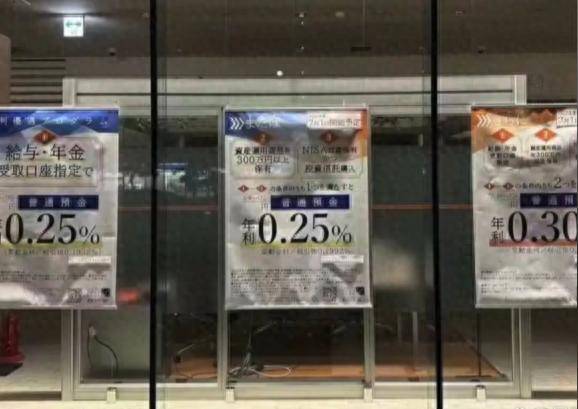
Core Viewpoint - The recent reduction in LPR (Loan Prime Rate) by the central bank signals an approaching era of zero and negative interest rates, which will have significant implications for the banking sector and the broader economy [1][6][12]. Group 1: Interest Rate Changes - The central bank has lowered the 1-year LPR to 3% and the 5-year LPR to 3.5%, with major state-owned banks following suit by reducing deposit rates by up to 25 basis points [1][3]. - The 1-year fixed deposit rate has dropped to a historic low of 0.95%, marking the first time it has fallen below 1% [3][6]. - The trend of declining interest rates is expected to continue, potentially leading to zero or negative rates in the future [6][12]. Group 2: Banking Sector Implications - The profitability of commercial banks is under pressure due to a declining net interest margin, which has fallen to 1.43%, below the critical threshold of 1.8% [7][11]. - The reduction in deposit rates is a direct response to the need for banks to maintain profitability by lowering costs associated with deposits [12][18]. - The banking sector is facing challenges as the volume of non-performing loans remains significant, with a non-performing loan ratio of 1.22% across major banks [10]. Group 3: Economic Impact - The shift towards lower interest rates is intended to encourage consumer spending and investment, as saving becomes less attractive [12][28]. - The government aims to alleviate the burden of existing debts for enterprises and local governments by creating a low-interest environment [12][16]. - Historical comparisons with Japan and the U.S. suggest that low or negative interest rates can stimulate economic activity and housing markets, as seen in the significant rise in U.S. housing prices during similar conditions [34][37]. Group 4: Housing Market Dynamics - The anticipated decrease in mortgage rates, potentially below 3%, is expected to stimulate housing demand, leading to a possible surge in property prices [18][30]. - However, the increase in demand may also result in stricter lending standards, making it more challenging for buyers to secure mortgages [31]. - The potential for rising inflation due to increased consumer spending and investment could further complicate the economic landscape [32].
瑞郎涨势太猛!经济学家预计瑞士央行或于6月重返“零利率”时代
Zhi Tong Cai Jing· 2025-05-12 06:50
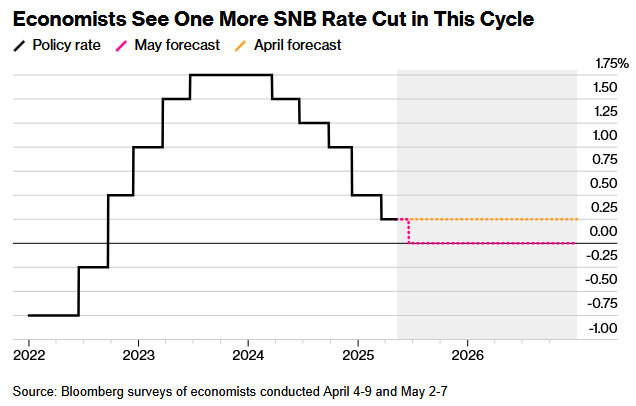
Group 1 - The Swiss National Bank (SNB) is expected to lower the benchmark interest rate by 25 basis points to 0% in the upcoming policy meeting on June 19, returning to the level seen in September 2022 when the "zero interest rate" era ended [1] - The Swiss franc has reached a 10-year high against the US dollar and is close to its highest level against the euro, driven by capital fleeing US assets amid increased tariffs announced by President Trump [4] - The SNB is moving towards a zero interest rate policy to prevent further appreciation of the Swiss franc, which could lower domestic inflation and harm exports, negatively impacting economic growth [4] Group 2 - Among 20 forecasters, only one economist predicts a 50 basis point cut to -0.25% in June, while most expect a cut to -0.25% in September, indicating a potential end to the rate-cutting cycle in June [5] - The average inflation rate forecast for Switzerland in 2025 is 0.4%, aligning with the SNB's recent predictions, providing some comfort to policymakers [5] - Economic growth for Switzerland is projected at 1.1% for this year, with growth rates of 1.4% and 1.6% expected for 2026 and 2027, respectively, indicating no significant slowdown in economic activity [5]