
财富传承

Search documents
美国私人财富管理协会|中国财富传承的深层逻辑与现实出路
Sou Hu Cai Jing· 2025-11-05 02:45
Core Insights - Wealth inheritance in China faces significant challenges, often resulting in the phenomenon of "wealth not lasting beyond three generations" [1][4][26] Historical Context - The cyclical nature of family wealth decline is illustrated through the story of the Jia family in "Dream of the Red Chamber," reflecting a broader historical trend in Chinese families [3][4] - Since the Song and Ming dynasties, many prominent families have failed to sustain wealth across generations due to inherent flaws in family systems, wealth concepts, and social structures [4][6] Cultural and Institutional Challenges - The agrarian economy's focus on fixed assets like land and property limits wealth mobility and is vulnerable to external shocks, hindering long-term wealth transmission [6] - Traditional Chinese culture emphasizes family and state unity, where family authority often overshadows individual property rights, leading to a lack of systematic wealth management [9][10] - The equal distribution of inheritance leads to wealth dilution across generations, contrasting with Western practices that favor primogeniture for capital concentration [10] Modern Structural Challenges - Despite rapid wealth accumulation post-reform, issues of wealth inheritance remain acute, with modern wealth being more complex and requiring specialized planning [12][13] - Many private enterprises lack governance structures, leading to conflicts in management and ownership during transitions, with over 60% of firms unprepared for succession [14] - Generational value differences create conflicts in wealth management, with younger generations often favoring consumption over prudent financial stewardship [15] Comparative Analysis - Western wealth inheritance mechanisms are grounded in legal frameworks that protect individual property rights, contrasting with China's reliance on familial and moral constraints [17][18] Pathways to Solutions - Establishing modern family governance structures is essential for effective wealth transmission, including family charters and professional family offices [21][22] - Strengthening legal frameworks and inheritance planning tools can provide necessary protections and flexibility for wealth distribution [23] - Promoting wealth education and shared family values across generations is crucial for ensuring that wealth is not only preserved but also aligned with family missions [24]


全球财富将迎来传承浪潮,家族艺术收藏如何转型?
Di Yi Cai Jing· 2025-11-03 04:08
Core Insights - The global art market is experiencing a significant shift due to the impending wealth transfer, estimated at $83 trillion over the next 20 to 25 years, which will impact art and collectibles [3][4] - The increase in female wealth and influence in the art market is notable, with women collectors showing a preference for works by female artists and a focus on social value in their collections [4][5] - The inheritance of art collections is becoming more common in China, with 47% of high-net-worth collectors having never inherited art, indicating a future shift in ownership and collection dynamics [6][7] Group 1: Wealth Transfer and Art Market - UBS's report predicts a historic wealth transfer of $83 trillion, with $9 trillion moving between spouses and $74 trillion across generations [3] - The art collection is a significant part of high-net-worth individuals' wealth, and the upcoming transfer will influence the art market [3][4] Group 2: Female Influence in Art Collecting - The UBS report highlights a major change in wealth structure, with an increase in female wealth due to income growth and inheritance [4] - Female collectors are increasingly focusing on works by women artists and are sensitive to themes like motherhood, often integrating social causes into their collections [5] Group 3: Inheritance and Collection Dynamics - In China, 97% of billionaires are self-made, and many high-net-worth collectors have not inherited art, suggesting a future of significant art inheritance [6] - The ideal scenario for art collection inheritance involves gradual decision-making power transfer to the next generation, fostering a deeper understanding of the collection's significance [6][7] - Some collectors may choose to sell their collections instead of passing them down, reflecting a growing trend in the mature art market [7][8]

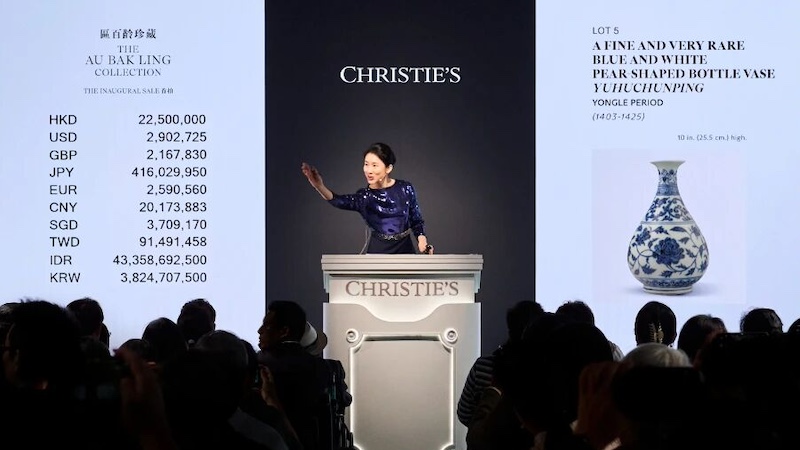
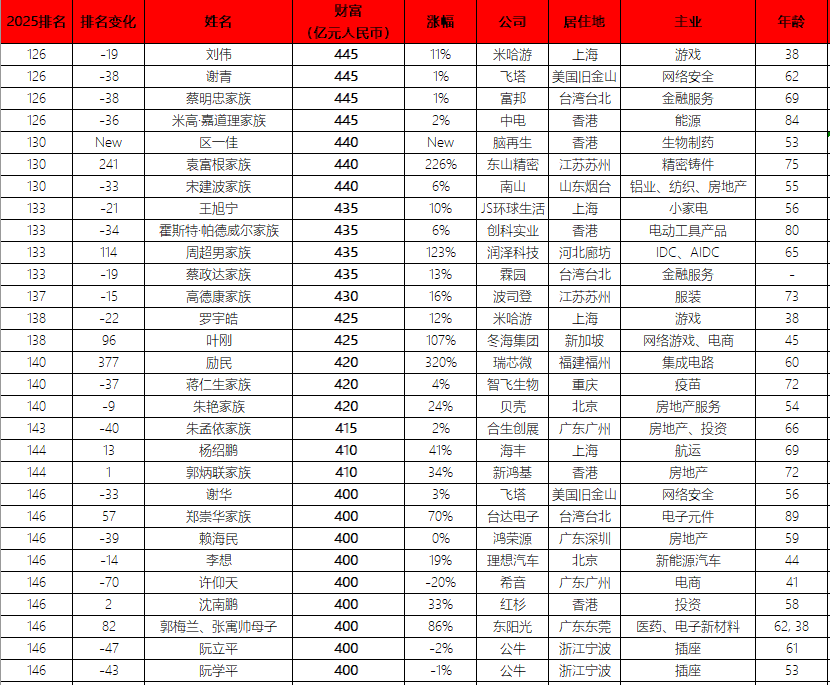
《胡润百富榜》上的传承样本:蔡明忠家族身家445亿,排名126名背后的“富过三代”的传承之道
Xin Lang Cai Jing· 2025-10-28 11:08
Group 1 - The Hu Run Research Institute released the "2025 Hu Run Rich List," where the Cai Mingzhong family ranks 126th with a wealth of 44.5 billion RMB, showing a growth of 500 million RMB or 1% over the past year, but a drop of 38 places in ranking [1][2] - The Cai Mingzhong family is recognized as one of Taiwan's most representative business families, with wealth spanning three generations, often referred to as a model of "wealth across three generations" [2][3] - The family business, Fubon Group, was co-founded by Cai Mingzhong's father, Cai Wanchun, and has become a significant player in Taiwan's financial sector [2][3] Group 2 - Cai Mingzhong, as the eldest son of Cai Wanchun, co-manages Fubon Group with his brother, Cai Mingxing, and has a background in law from National Taiwan University [3] - In 2009, during a downturn in the global life insurance market, Cai Mingzhong demonstrated remarkable decisiveness by executing a deal to acquire ING AnTai Life Insurance for approximately 600 million USD, which significantly expanded Fubon's financial services footprint [3]
专访香港投资推广署方展光:香港家办的三大核心优势
2 1 Shi Ji Jing Ji Bao Dao· 2025-10-16 12:36
Core Insights - Hong Kong has successfully attracted over 200 family offices, surpassing the target set in the 2022 Policy Address, with a new goal to increase this number by at least 220 by 2026-2028 [1][2] - The capital market in Hong Kong has shown significant growth, with IPO fundraising reaching HKD 182.9 billion this year, a 229% increase from last year [1][2] Group 1: Advantages of Hong Kong for Family Offices - Hong Kong's unique approach allows family offices to manage global assets from a local base without relocating physical assets, appealing to internationally diversified families [3] - The legal environment in Hong Kong, based on common law, provides a reliable framework for international investors, enhancing asset protection [3] - The currency peg to the US dollar offers monetary stability, supported by foreign exchange reserves equivalent to 1.7 times the money supply, ensuring liquidity even during financial crises [3] Group 2: Ecosystem and Policies - Hong Kong's flexible ecosystem allows family offices to collaborate with various professional institutions without a centralized licensing system, fostering diverse family office models [4] - The strategy of "bringing in and going out" is supported by a network of over 60 top international and Chinese financial and professional institutions, facilitating investment opportunities both into and out of China [4][5] Group 3: Non-Financial Core Competencies - Family offices are increasingly focusing on non-financial aspects such as family governance, education for the next generation, and philanthropy, with Hong Kong providing a robust legal framework for charitable activities [6] - The establishment of charitable foundations in Hong Kong not only optimizes tax structures but also serves as a platform for training future generations in responsible wealth management [6] Group 4: Development Stages and Future Vision - The development of family offices in Hong Kong is categorized into three stages: 1.0 focuses on empowerment and narrative, 2.0 emphasizes the synergy between family businesses and family offices, and 3.0 aims to create a complete capital lifecycle ecosystem [7][8] - The long-term vision includes establishing Hong Kong as a hub for the entire capital journey, from early-stage financing to post-IPO asset management [7][8] Group 5: Unique Value for Chinese Families - Hong Kong offers unique resources and expertise for Chinese families, particularly those transitioning from the first to the second generation, integrating Eastern and Western practices [9] - Financial and legal tools, such as international trusts, are available to help families manage ownership and control, ensuring smooth transitions and effective distribution of interests [9]
I just inherited around $500,000 in mutual funds. What should I do with them — withdraw the cash or keep it invested?
Yahoo Finance· 2025-09-30 13:00
Core Insights - The Great Wealth Transfer is underway, with baby boomers expected to pass on a total of $105 trillion to their heirs by 2048, significantly increasing the wealth of Millennials and Gen Z [1] Inheritance and Financial Decisions - An individual named Ryan is currently navigating the complexities of inheriting a mutual fund portfolio valued at approximately $500,000 following his mother's passing [2] - The emotional burden of grief can complicate the decision-making process regarding inherited wealth, highlighting the importance of taking time and seeking expert advice [3] - The step-up in basis provision applies to Ryan's inherited investments, meaning capital gains taxes will be calculated based on the value at the time of inheritance rather than the original purchase price [4][5] Personal Financial Considerations - The decision to sell or retain inherited investments is highly personal and contingent on individual circumstances, such as existing debt or financial goals [6] - Ryan is considering selling some investments to pay off student loan debt and to save for a down payment on a home, indicating a strategic approach to managing his inheritance [6]
百年人寿成功举办百年启承家族办公室发布会 暨与上海信托全面合作签约仪式
13个精算师· 2025-09-28 09:57
Core Viewpoint - The establishment of the "Bai Nian Qi Cheng Family Office" by Bai Nian Life Insurance marks a significant step in the company's strategic layout in the high-net-worth service sector, aiming for value transformation and high-quality development [1][4]. Group 1: Strategic Significance and Vision - The "Bai Nian Qi Cheng" family office is designed to address the challenges of wealth security, preservation, and inheritance in the current uncertain macroeconomic environment [2]. - The family office aims to provide a comprehensive service covering the entire wealth lifecycle, including wealth creation, preservation, inheritance, and enjoyment, thus supporting clients in achieving a sustainable family legacy [4][11]. Group 2: Collaboration with Shanghai Trust - Bai Nian Life Insurance has entered into a comprehensive cooperation with Shanghai International Trust, focusing on resource sharing and value co-creation, integrating insurance safety with trust flexibility [5][7]. - The partnership aims to create a top-tier family office ecosystem, leveraging both companies' strengths to enhance client services and ensure long-term strategic collaboration [11]. Group 3: Service Model and Offerings - The family office will utilize a "1+3+N" service model, where one family office consultant coordinates three core service officers to provide customized, diversified, and global resources for high-net-worth clients [2]. - The goal is to offer a "one-stop, long-term, and warm" wealth inheritance solution, helping clients navigate future uncertainties and achieve wealth security, preservation, appreciation, and orderly transfer [2][4]. Group 4: Future Outlook - The collaboration is expected to introduce global top-tier resources in law, investment banking, asset management, charity, education, and healthcare, establishing a benchmark for family offices in China [5][11]. - Both companies are committed to creating a client-centered value proposition and exploring growth paths through digital empowerment, aiming for innovative solutions that meet future challenges [7][11].

星展银行周邦贵:解码全球变局下的财富传承之道
财富FORTUNE· 2025-09-23 14:03
Core Viewpoint - The global economy is at a critical juncture, with geopolitical uncertainties affecting capital flows and increasing market volatility, indicating a more intense game of opportunities and risks than ever before [1][3]. Group 1: Wealth Management Trends - High-net-worth individuals (HNWIs) are increasingly anxious, with 51% citing "global economic recession" as their primary concern, and 45% wary of "asset price revaluation due to interest rate fluctuations" [3]. - The current economic turning point is reshaping asset price logic, leading to a shift in wealth management needs and philosophies among HNWIs [3][6]. - The traditional low-risk investment products are under pressure as the yield declines due to the Federal Reserve's interest rate cuts, highlighting the need for wealth preservation [6]. Group 2: Structural Opportunities - Despite challenges, there are structural opportunities in sectors like technology, communication services, and healthcare, which maintain long-term growth potential due to innovation and resilient market demand [6]. - The focus should be on balancing risk exposure with potential returns, moving away from blindly chasing high yields to capturing certain opportunities while managing risks [6]. Group 3: Generational Shifts in Wealth Management - The rise of the "second-generation entrepreneurs" (创二代) is reshaping wealth management, as they embody both "heirs" and "innovators," redefining the boundaries and essence of wealth management [7][8]. - This group is more receptive to new economic trends and emphasizes sustainable development and resource conservation, with "business for good" becoming a core consensus [7]. Group 4: Evolving Client Needs - HNWIs' demands are expanding beyond wealth growth to include family protection, children's education, retirement planning, and asset inheritance, with a significant rise in cross-border asset allocation needs [9][10]. - The wealth management industry is becoming increasingly competitive, requiring banks to innovate service models to meet changing client preferences and investment structures [9]. Group 5: Comprehensive Service Framework - The service framework of the bank covers five major goals: family protection, children's education, retirement planning, asset inheritance, and wealth growth, providing a one-stop solution through various financial tools [10]. - The bank leverages Singapore's status as a global wealth management hub to offer a dual platform of "global resource connection + local service implementation" for Chinese HNWIs [10]. Group 6: Digital Transformation and Value Transmission - The wealth management industry is accelerating digital transformation, with a focus on utilizing big data and AI to enhance service efficiency and client demand analysis [11]. - True wealth transmission goes beyond mere asset transfer; it involves the continuation of family values, business vision, and social responsibility across generations [11]. Group 7: Future Outlook - The demand for diversified global asset allocation among Chinese HNWIs is expected to be a long-term trend, driven by deep insights into global economic patterns and investor philosophies [14]. - The bank aims to deepen its roots in China while enhancing international market connectivity to better serve the evolving needs of its clients [14].

神秘山西富豪,手持重金连续“扫货”奢华酒店
3 6 Ke· 2025-09-15 04:09
Core Viewpoint - The luxury hotel market in China is witnessing significant acquisitions by wealthy individuals, particularly from the Shanxi coal industry, indicating a shift in investment strategies towards long-term value assets like luxury hotels [2][8][31]. Group 1: Recent Acquisitions - The Changsha R&F Wanda Hotel was auctioned for 5.13 billion yuan, acquired by Hunan Lichi Consulting Management Co., Ltd. [2] - Hunan Lichi is a subsidiary of Beijing Lichi Consulting Management Co., Ltd., which has previously acquired the 100% stake in the Hilton Sanya Yalong Bay Resort for 1.849 billion yuan [3][10]. - The actual controller of these acquisitions is Zhang Yuelong, who has been linked to Shanxi coal tycoon Zhang Yuesheng [3][6]. Group 2: Investment Trends - The trend of Shanxi coal tycoons investing in luxury hotels reflects a broader strategy of diversifying assets away from traditional coal investments towards high-potential sectors like luxury hospitality [8][22]. - The luxury hotel market is seen as a stable investment due to its asset attributes, scarcity, and potential for long-term operational returns [9][28]. - The recent auction results indicate a growing interest in high-star hotels, with only 6 out of 94 listed hotels sold in the first half of 2025, highlighting the selective nature of these investments [9]. Group 3: Market Dynamics - The luxury hotel sector is characterized by its location scarcity and brand value, making it an attractive investment for those with substantial cash reserves [9][12]. - The acquisition of luxury hotels is increasingly viewed as a strategic move for wealth preservation and generational wealth transfer among wealthy families [24][31]. - The shift from short-term speculative investments to long-term value investments among Shanxi coal tycoons signifies a maturation of investment strategies in response to changing market conditions [31].

图解上市公司传承破局:家族信托控股架构与路径拆解(财富与家族系列之四)
Sou Hu Cai Jing· 2025-09-12 12:23
Core Viewpoint - The establishment of family trusts by actual controllers of A-share listed companies faces significant challenges, including high tax burdens, transfer issues, and potential changes in control. However, with careful structural design, these trusts can achieve asset isolation and wealth succession, representing a complex "operating system" for family wealth management [2][3]. Group 1: Challenges in Wealth Succession - The lack of effective wealth succession planning can lead to four major potential harms for listed companies, including negative impacts on stock prices and investor confidence due to unstable control [4][5]. - Family disputes arising from succession failures can severely affect company operations and management, often leading to litigation and potential business dissolution [5][6]. - Risks associated with marriage and asset isolation are critical concerns, especially for the next generation, as marital disputes can threaten family business control [6][8]. Group 2: Successful Family Trust Case Study - The case of Puyang Huicheng illustrates a successful family trust structure that maintains control over the listed company while ensuring wealth transmission and isolation from personal liabilities [12][14]. - The trust structure involves a layered approach with a family trust at the top, followed by a limited partnership, and a holding company, effectively separating control and economic benefits [12][13]. - This design allows the actual controllers to retain decision-making power while transferring significant economic interests to the trust, thus complying with regulatory requirements and avoiding triggering a change in actual control [14][15]. Group 3: Regulatory and Structural Obstacles - Establishing family trusts for listed companies faces six major regulatory challenges, including compliance with securities laws and the need for clear ownership structures during IPOs [15][17]. - Tax planning is crucial in determining the most efficient structure for trust establishment and share injection, aiming to minimize tax burdens while adhering to regulatory frameworks [18]. - The differences in regulatory requirements between A-share and New Third Board companies necessitate tailored approaches for each case, emphasizing the importance of individual analysis [18][19]. Group 4: Advantages and Limitations of Family Trusts - Family trusts offer four key advantages: they provide mechanisms to address unexpected risks, isolate assets from external disputes, facilitate smooth transitions to the next generation, and enable tax-efficient wealth transfer [21][22]. - However, the establishment of a family trust is only the beginning of the succession process, and additional governance and management structures are necessary to ensure long-term stability and effectiveness [22][25]. - The successful management of family wealth requires addressing numerous governance issues, including decision-making processes, succession planning, and conflict resolution among family members [26][28]. Group 5: Conclusion and Future Directions - The establishment of trust structures is a complex endeavor that requires a deep understanding of legal, financial, and family governance dynamics [28][29]. - The real challenge lies in translating legal frameworks into effective governance mechanisms that align family interests with professional management needs [29].
从“管钱”到“管家”:家族信托如何守护家族财富?
2 1 Shi Ji Jing Ji Bao Dao· 2025-09-01 15:33
Core Viewpoint - The article emphasizes the importance of family trusts as a crucial tool for wealth management and intergenerational wealth transfer in high-net-worth families in China, especially in the context of increasing wealth accumulation and the complexities of wealth succession [1][2][5]. Group 1: Understanding Family Trusts - Family trusts are defined as a legal structure that allows individuals to manage and protect their assets according to their wishes, ensuring compliance, asset isolation, and tax planning [3][4]. - Contrary to the belief that family trusts are exclusive to the ultra-wealthy, they can be tailored for families with varying asset scales, starting from as little as 1 million yuan [3][4]. Group 2: Growth and Adoption - The adoption of family trusts in China has seen significant growth, with the number of family trust clients at Shanghai Trust increasing from 1,200 to 12,000 in three years, marking a tenfold increase [4]. - This growth reflects a shift in focus from short-term gains to long-term wealth preservation among families [5]. Group 3: Functions and Benefits - Family trusts serve multiple functions, including risk isolation, asset protection, and structured wealth transfer, particularly in complex family dynamics [6][7]. - They provide legal independence and long-term stability, effectively safeguarding assets from marital disputes, debt issues, or inheritance conflicts [4][7]. Group 4: Planning for the Future - Family trusts allow for proactive planning, enabling clients to set specific conditions for wealth distribution, such as educational milestones or age thresholds for beneficiaries [8][11]. - In the context of an aging population, family trusts are increasingly seen as essential for ensuring the financial security of dependents and managing wealth transitions [13][14]. Group 5: Professional Management - The complexity of modern family wealth necessitates professional management, as family assets now often include diverse forms such as equity, intellectual property, and cross-border assets [14]. - Family offices, like Shanghai Trust's family management office, provide comprehensive support for family trusts, integrating legal, tax, investment, and governance expertise [9][10].