
跨界投资

Search documents
卖衣服的也要卖芯片,探路者6.8亿跨界收购半导体
阿尔法工场研究院· 2025-12-03 00:06
Core Viewpoint - The article discusses the recent strategic move by the company "探路者" (Trekking) to invest in the semiconductor industry, raising concerns about the lack of synergy between its outdoor products and the new chip business [4][18]. Group 1: Acquisition Details - The company plans to invest a total of 678 million yuan to acquire 51% stakes in two semiconductor companies [6]. - The first acquisition involves 321 million yuan for a 51% stake in 贝特莱 (Betel), a leader in fingerprint recognition chips, which reported a revenue of 166 million yuan and a net profit of 17.73 million yuan for the first eight months of 2025 [8]. - The second acquisition is for 357 million yuan for a 51% stake in 上海通途 (Shanghai Tongtu), focusing on image and video processing IP licensing, with a revenue of 105 million yuan and a net profit of 18.89 million yuan for the same period [8][9]. Group 2: Financial Performance - For the first three quarters of 2025, the company reported a revenue of 953 million yuan, a year-on-year decline of 13.98%, and a net profit of 33.04 million yuan, down 67.53% [12][14]. - The decline in net profit is attributed to poor sales in the outdoor business and foreign exchange losses impacting the chip business [14]. Group 3: Shareholder Changes - The largest shareholder is 北京通域合盈投资管理有限公司 with a 7.80% stake, while the company's founders hold 5.43% and 4.78% respectively [16]. - Recent shareholding changes include a reduction in holdings by co-founder 王静, who decreased her stake from 5.17% to 4.67% through a series of share sales [18]. Group 4: Strategic Concerns - Analysts express skepticism about the company's ability to successfully manage both outdoor and semiconductor businesses simultaneously, highlighting the lack of synergy and the risk of resource dilution [18].

园林股份业绩承压1.12亿跨界投资遭问询 标的尚未盈利估值溢价265%曾撤单IPO
Chang Jiang Shang Bao· 2025-12-02 23:33
长江商报消息 ●长江商报记者 徐佳 跨界布局半导体芯片行业,园林股份(605303.SH)一笔对外投资引发多方质疑。 12月1日晚间,园林股份抛出资产购买计划,园林股份及其全资子公司拟作价1.12亿元,收购杭州华澜微电子股份 有限公司(以下简称"华澜微")6.4969%股权。 对于园林股份而言,本次参股华澜微,是其跨界布局半导体芯片行业的重要举措。 值得关注的是,此笔收购很快引起监管部门高度注意。 收购案发布当日晚间,上交所火速对园林股份下发问询函,就华澜微的业绩、本次交易目的合理性、交易估值、 交易支付安排、内幕交易等五个方面进行详细问询。 然而,长江商报记者注意到,2022年12月,华澜微曾申报科创板IPO,但2024年5月撤单。但近年来,华澜微营收 规模下滑且一直未能盈利。本次交易中,华澜微整体估值17.25亿元,评估增值率达265.23%。在自身主业持续亏 损的背景下,园林股份购买持续未盈利的华澜微股权,是否具备商业合理性?是否有助于提高上市公司持续经营 能力? 收购案发布后,当日晚间,上交所火速对园林股份下发问询函,对华澜微的业绩、本次交易目的合理性、交易估 值等多个方面进行详细问询。 需要注意的是 ...


“民营船王”,出局
Shang Hai Zheng Quan Bao· 2025-12-01 01:29
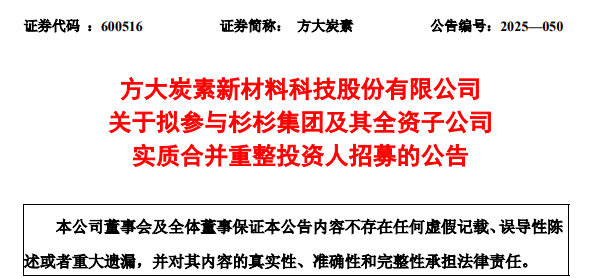
Group 1 - The restructuring plan proposed by Ren Yuanlin, known as the "private shipping king," has failed, leading Shanshan Group to initiate a new selection process for restructuring investors [1][2] - Fangda Carbon New Material Technology Co., Ltd. has announced its participation as an industrial synergy partner in the recruitment of substantial merger restructuring investors for Shanshan Group and its wholly-owned subsidiary, Ningbo Pengze Trading Co., Ltd. [1] - The restructuring process will include stages such as preliminary selection, final selection, and voting by the creditors' committee [1] Group 2 - The initial registration for investors has concluded, but the exact number of applicants remains unclear due to the presence of consortiums [2] - Jiangsu Xinyangzi Trading Co., Ltd., led by Ren Yuanlin, did not register for this recruitment, although there is a possibility of future financial collaboration with other investors [2][3] - A previous agreement was signed on September 29, where a consortium including Jiangsu Xinyangzi and others aimed to acquire 23.36% of Shanshan's shares for a total price of 3.284 billion yuan [2] Group 3 - The rejection of the restructuring plan indicates a significant setback for the capital plan led by the four-party consortium attempting to take control of Shanshan [3] - Ren Yuanlin's background in shipbuilding has raised concerns regarding his ability to ensure the sustainable development of Shanshan's core business in the new energy sector [5] Group 4 - Fangda Carbon's main business includes the production and sales of graphite electrodes, carbon bricks, and other carbon-based materials, with total assets exceeding 400 billion yuan and annual sales projected to exceed 300 billion yuan in 2024 [5][6]

20亿元跨界或搁浅,002348控制权恐再生变
3 6 Ke· 2025-11-26 04:37
Core Viewpoint - The major shareholder, Huadong Group, is planning to transfer its shares in Gaole Co., which may lead to a change in control and potentially halt the company's ambitions in the new energy sector [1][2]. Group 1: Shareholder Changes - Huadong Group has notified Gaole Co. about its plan to transfer shares or voting rights, which could result in a change of control [1]. - The stock of Gaole Co. experienced a limit-up before the announcement of the share transfer [1]. - The transfer comes after Huadong Group took control of Gaole Co. in March 2023, following a share acquisition in November 2022 [1][2]. Group 2: New Energy Ventures - Huadong Group's entry into Gaole Co. was seen as a critical step towards establishing a new energy business [2]. - In December 2022, Gaole Co. established Gaole New Energy Technology (Zhejiang) Co., focusing on battery manufacturing and sales [2]. - A strategic cooperation agreement was signed to invest in a 2GWh solid-state battery project in Yiwu, with a total investment of approximately 2 billion yuan [2]. Group 3: Financial Aspects and Project Status - The 20 billion yuan solid-state battery project was partially funded by Huadong Group through bond financing, contributing about 601 million yuan [3]. - The project has been adjusted to a 1.2GWh sodium-ion battery project, reducing the total investment to 1.05 billion yuan [3]. - As of now, the battery project remains in its early stages, with no production or revenue generated [4]. Group 4: Performance Metrics - For the first three quarters of 2025, Gaole Co. reported revenues of 226 million yuan, a year-on-year increase of 10.06%, but still incurred a net loss of 12 million yuan [6]. - The company has not achieved profitability since Huadong Group's acquisition, with continued losses expected in 2023 and 2024 [6].

*ST沐邦的3年,“破产速成班”
Tai Mei Ti A P P· 2025-11-23 04:40
Core Insights - The case of *ST Muban illustrates the risks of blind cross-industry investments, particularly in the capital-intensive photovoltaic sector, leading to bankruptcy restructuring within three years of entering the market [1][2][6] Group 1: Company Overview - *ST Muban, originally a toy company, transitioned into the photovoltaic industry in 2022 amid declining growth in its core business, driven by a speculative mindset [2][3] - The company aimed to focus on monocrystalline silicon rod and wafer production but failed to deliver competitive technological results, struggling to keep pace with rapid industry advancements [2][3] Group 2: Financial Challenges - Since entering the photovoltaic sector, *ST Muban's capital expenditures surged, with interest-bearing debt increasing over 300% compared to pre-transition levels, while revenue growth lagged significantly [4][5] - The company faced a cash flow crisis due to a mismatch between investment and returns, leading to investigations for financial data misrepresentation and subsequent debt crisis [4][5] Group 3: Industry Context - The photovoltaic industry is characterized by rapid technological evolution and significant capital requirements, making it challenging for new entrants without established technical expertise [6][7] - The case of *ST Muban reflects a broader trend where numerous companies entering the photovoltaic market face operational difficulties, with many already exiting the sector [6][7] Group 4: Future Outlook - The restructuring process for *ST Muban may not guarantee recovery, as the company must find strategic investors and viable plans within a competitive and oversupplied market [6][7] - Successful companies in the photovoltaic sector, such as Trina Solar and JinkoSolar, continue to expand by leveraging technological advantages and maintaining a focus on core competencies, contrasting sharply with *ST Muban's approach [7]

和顺石油拟5.4亿收购前股价蹊跷涨停 业绩全面承压实控人2.37亿转让股权
Chang Jiang Shang Bao· 2025-11-18 00:08
Core Viewpoint - Heshun Petroleum (603353.SH), operating 35 gas stations in Hunan, plans to diversify into the semiconductor industry by acquiring control of Shanghai Kuixin Integrated Circuit Design Co., Ltd. (Kuixin Technology) through cash transactions and share transfers [1][3]. Group 1: Acquisition Details - Heshun Petroleum intends to acquire at least 34% of Kuixin Technology's equity, with a total valuation of Kuixin Technology not exceeding 1.588 billion yuan (post-investment valuation) and an expected final transaction price not exceeding 540 million yuan [3][4]. - The actual controllers of Heshun Petroleum will transfer 6% of the company's shares to Kuixin Technology's actual controller, Chen Wanyi, for 237 million yuan, with the unlocking period tied to Kuixin Technology's performance commitments [4][5]. - Kuixin Technology has committed to achieving a total revenue of no less than 2.1 billion yuan from 2025 to 2028, with annual profitability [1][6]. Group 2: Financial Performance - For the first three quarters of 2025, Heshun Petroleum reported revenues of 2.126 billion yuan, a slight decrease of 0.13% year-on-year, and a net profit attributable to shareholders of 21.81 million yuan, down 49.44% year-on-year [1][9]. - Heshun Petroleum's revenues for 2023 and 2024 are projected to be 3.273 billion yuan and 2.812 billion yuan, respectively, reflecting year-on-year declines of 18.04% and 14.11% [9]. - Kuixin Technology's revenues for 2023 and the first half of 2025 were 146 million yuan and 110 million yuan, respectively, with net losses reported in both periods [8][9]. Group 3: Market Context - Heshun Petroleum is facing challenges from fluctuating international oil prices, increased industry competition, and the expansion of the electric vehicle market, which have contributed to its declining performance [9]. - The stock price of Heshun Petroleum experienced a significant increase prior to the announcement of the acquisition, indicating market speculation or investor interest [2][10].

老凤祥三季度营利双降,金价大涨为何不挣钱?
Sou Hu Cai Jing· 2025-11-03 12:00
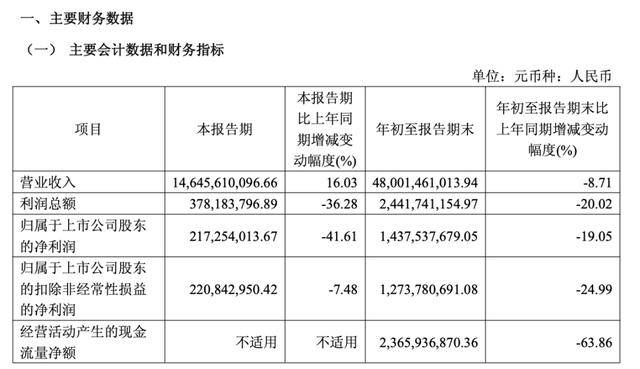
Core Viewpoint - The rising gold prices are significantly impacting the gold consumption market, leading to a decline in both revenue and profit for Lao Feng Xiang, despite promotional efforts. The company's decision to invest heavily in a luxury brand raises questions about its strategic direction and potential risks [1][4]. Financial Performance - In the first three quarters of 2025, Lao Feng Xiang reported a revenue of 48.001 billion yuan, a year-on-year decrease of 8.71% [2] - The net profit attributable to shareholders was 1.438 billion yuan, down 19.05% year-on-year, with a significant drop of 41.61% in the third quarter net profit to 217 million yuan [2][3] - The company experienced a dramatic increase in accounts receivable, rising 1541% to 3.725 billion yuan, indicating deteriorating sales collection capabilities [3] Market Conditions - The continuous rise in gold prices has suppressed gold jewelry consumption, with China's gold consumption in the first half of 2025 at 505.205 tons, a decline of 3.54% year-on-year, particularly in gold jewelry which saw a 26% drop [4] - Despite promotional strategies like a discount of 120 yuan per gram, customer traffic remains low, reflecting broader sales pressures in the jewelry market [5][7] Strategic Decisions - Lao Feng Xiang has decided to invest 24 million USD in the yet-to-open Maybach luxury brand company, which raises concerns due to the investment size being equivalent to 80% of its third-quarter net profit [7][9] - This strategic shift aims to develop the high-end luxury market in the Asia-Pacific region, similar to the successful differentiation strategy of "Old Shop Gold" in the gold jewelry sector [9]

沥青龙头宝利国际盈转亏,前实控人对赌压力陡增
Shen Zhen Shang Bao· 2025-11-03 01:23
Core Viewpoint - Baoli International is facing significant challenges in its main business of asphalt, leading the company to seek transformation and upgrades through investment in the semiconductor industry [1][3][4]. Financial Performance - For the first three quarters, Baoli International reported total revenue of 1.067 billion yuan, a year-on-year decline of 36.42% [2][3]. - The company incurred a net loss attributable to shareholders of 10.13 million yuan, compared to a profit of 6.97 million yuan in the same period last year [1][2]. - The net cash flow from operating activities was -185 million yuan, down from 138 million yuan in the previous year [1][2]. Business Segments - Baoli International's main business includes "asphalt + general aviation," with the asphalt segment being the larger component [2][3]. - The decline in revenue is primarily attributed to decreased asphalt sales, influenced by macroeconomic conditions and increased credit impairment losses [3]. Corporate Actions - The company approved a capital reduction for its wholly-owned subsidiary, Jiangsu Baoli Aviation Equipment Investment Co., Ltd., reducing its registered capital from 200 million yuan to 50 million yuan [3]. - Baoli International's controlling shareholder changed to Chizhou Investment Technology, with a performance commitment from the previous controlling shareholder to ensure a cumulative net profit of no less than 20 million yuan for 2024 and 2025 [3]. Investment in Semiconductor - In September, Baoli International announced plans to invest up to 47.43 million yuan in the semiconductor sector by acquiring a stake in Nanjing Hongtai Semiconductor Technology Co., Ltd. [4]. - The company completed the acquisition of 2.6354% of Hongtai Technology, which specializes in semiconductor testing equipment [4]. - Baoli International aims to invest in the downstream chip-related industry chain to create business synergies with Hongtai Technology [6]. Performance of Hongtai Technology - Hongtai Technology has experienced a significant decline in performance, with revenues of 221 million yuan in 2023, dropping to 172 million yuan in 2024, and 25.65 million yuan in the first quarter of 2025 [5][6]. - The company reported a net profit of 8.15 million yuan in 2023, followed by losses of 58.32 million yuan in 2024 and 18.25 million yuan in the first quarter of 2025 [5][6].


跨界投资标的尚亏损 东方材料回复上交所问询
Mei Ri Jing Ji Xin Wen· 2025-10-28 13:52
Core Viewpoint - Oriental Materials announced a two-step cross-industry investment plan totaling 48 million yuan, involving an initial investment of 18 million yuan in Suzhou First Element Nano Technology Co., Ltd, which has been questioned by the Shanghai Stock Exchange regarding the commercial rationale of investing in a loss-making asset [1][2]. Investment Details - The investment plan includes establishing a joint venture, Carbon Nest Technology (Tengzhou) Co., Ltd, with a registered capital of 100 million yuan, where Oriental Materials will contribute 30 million yuan for a 30% stake [1]. - First Element is projected to incur cumulative losses exceeding 5.4 million yuan in the first half of 2025, with revenues of 1.05 million yuan and a net loss of 415,000 yuan in 2024 [2]. Business Rationale - First Element specializes in the research and sales of nano carbon materials, with its core product being high-purity carbon nanotubes (CNTp), which are expected to see rapid growth in applications for high-power lithium batteries and solid-state batteries [2][3]. - The company has a production capacity of 4.67 tons of CNTp powder and 65.5 tons of CNTp slurry for 2024, with major clients contributing significantly to its revenue [2]. Investment Justification - Oriental Materials stated that the investment aims to expand First Element's CNTp production capacity to ensure a stable supply of core materials for the joint venture, addressing potential production constraints due to funding limitations [3][6]. - The investment will initially be in the form of convertible debt, with conditions for conversion tied to First Element's future financing rounds [3]. Regulatory Inquiry - The Shanghai Stock Exchange has raised concerns about the commercial rationale behind investing in a loss-making asset and requested additional disclosures regarding First Element's business operations, shareholder relationships, and valuation methods for the convertible debt [2][4]. Shareholder Background - Oriental Materials clarified that there are no related party transactions with First Element's shareholders, although a former executive of Oriental Materials is involved in the project as a personal investor [5]. - The joint venture's intellectual property contributions from First Element have not yet been evaluated for their value [5]. Future Plans - The joint venture, Carbon Nest Technology, plans to invest 100 million yuan to establish a production base capable of producing 1,000 tons of conductive slurry and 30 million square meters of CNTp-3D current collectors, which is expected to enhance the competitiveness of China's battery industry [6].

服装、火腿、饮料企业集体跨界,七匹狼双线押注芯片,AI芯片成传统巨头“救命稻草”?
Sou Hu Cai Jing· 2025-10-27 09:22
Core Insights - Traditional companies are diversifying into AI chip investments as a strategic move to secure future growth while maintaining their core businesses [1][2] - The AI chip market has shown significant potential, with its market size exceeding one trillion yuan last year, making it an attractive sector for investment [1] Group 1: Company Strategies - Seven Wolves has invested in AI chip companies, holding 0.47% of Muxi Integrated Circuit and participating in funding for leading GPU firm Moore Threads through Shenzhen Innovation Investment Group [1] - Jinzi Ham has announced plans to acquire up to 20% of Zhongsheng Microelectronics for no more than 300 million yuan, focusing on high-speed optical communication and wireless access chips [1] - Yangyuan Beverage has invested 1.6 billion yuan to acquire 0.99% of the parent company of Yangtze Memory Technologies, a leading domestic storage chip manufacturer [1] Group 2: Industry Context - The traditional apparel industry is facing growth challenges, prompting companies to seek new avenues for expansion, such as AI chips [1] - The shift towards AI technology is seen as a proactive response to market pressures and a strategic move to build a second growth curve using stable cash flows from existing businesses [2] - The trend of traditional industries entering the semiconductor space reflects a deeper dialogue between established sectors and cutting-edge technology, indicating potential for unexpected cross-industry innovations in the future [2]
