循环经济

Search documents
资源高效循环 增强发展后劲
Ren Min Ri Bao· 2025-12-09 22:32
Core Viewpoint - The transformation of Mianzhu into an industrial hub is highlighted by the collaboration between traditional and emerging industries, particularly in the new energy and environmental protection sectors, showcasing a shift from a single-industry structure to a diversified and innovative economic model [1][2]. Group 1: Industrial Development - Mianzhu is undergoing a significant industrial transformation, focusing on new energy and environmentally friendly industries, with a goal of high-quality economic development [1]. - The Mianzhu New Materials Chemical Park hosts 28 companies, including Longbai Titanium Industry and Longmang Dadi Agricultural Co., achieving an output value of 12.1 billion yuan last year [1]. - The park is designed to create a complete circular economy industrial chain, promoting efficient resource recycling and revitalizing traditional industries [1]. Group 2: Economic Growth and Investment - The Mianzhu New Materials Chemical Park is emphasizing the upgrade of lithium battery materials and high-end chemical materials, with 12 emerging companies generating an output value of 18.6 billion yuan last year [2]. - The favorable business environment in Mianzhu has accelerated project timelines, exemplified by a high-performance water treatment membrane project that went from signing to production in just 10 months [2]. - Mianzhu is strategically planning for future industrial layouts, focusing on high-performance composite materials and electronic chemicals, while also advancing in the biopharmaceutical sector, particularly in cancer drug development [2]. Group 3: Strategic Vision - Mianzhu's government is committed to aligning with technological revolutions and industrial changes, continuously optimizing industrial layouts to strengthen long-term economic development [3].
四川绵竹推动重点领域向精细化、高端化、绿色化迈进 资源高效循环 增强发展后劲
Ren Min Ri Bao· 2025-12-09 22:14
Group 1 - The core viewpoint of the articles highlights the transformation of Mianzhu into an industrial hub focusing on new energy and high-end chemical materials, driven by the collaboration between traditional and emerging industries [1][2][3] - Mianzhu's new chemical park hosts 28 companies, including Longbai Titanium Industry and Longmang Dadi Agricultural Company, achieving an output value of 12.1 billion yuan last year [1] - The Mianzhu New Materials Chemical Park is undergoing an industrial upgrade with a focus on lithium battery materials and high-end chemical materials, with 12 new industry players generating an output value of 18.6 billion yuan last year [2] Group 2 - The favorable business environment in Mianzhu is a key factor for its high-quality development, exemplified by the rapid production timeline of projects like the high-performance water treatment membrane [2] - Mianzhu is strategically planning for future industrial layouts while enhancing traditional industries, focusing on high-performance composite materials and electronic chemicals [2][3] - The city is also targeting the biopharmaceutical sector, particularly in the development and production of anti-cancer drugs, leveraging existing industrial foundations and research resources [2]
踩准固态电池风口!博苑股份如何“废料变宝”
Da Zhong Ri Bao· 2025-12-09 10:47
Group 1 - The company has developed recycling technology that extracts useful elements such as iodine, bromine, platinum, palladium, rhodium, and ruthenium from waste in various industries, achieving zero iodine discharge in treated wastewater [1] - The recycling technology significantly reduces dependence on imported raw materials and production costs, effectively addressing the risks associated with price fluctuations of imported materials while providing economic and environmental benefits [1] - The company has a stable core management team and has established a comprehensive salary management system, ensuring steady salary growth for employees alongside business expansion [2] Group 2 - The company is gaining attention in the solid-state battery sector, particularly due to the importance of lithium iodide in solid-state batteries, and has signed a strategic cooperation agreement with a leading lithium battery company to develop new solid-state electrolyte products [3] - The company aims to extend its product offerings into high-value downstream intermediates and expand into new energy and materials sectors, enhancing its product matrix and customer structure [3] - The company plans to strengthen collaborations with industry leaders and gradually expand into overseas markets to enhance its international competitiveness [3]
国际组织联合报告显示:循环经济为可持续发展提供机遇
Jing Ji Ri Bao· 2025-12-09 05:40
Core Insights - The report highlights the significant role of informal employment in the circular economy, with over half of the jobs in this sector being informal, providing opportunities for decent work and sustainable development [1][2]. Employment Statistics - Globally, 121 million to 142 million people are directly engaged in circular economy activities, accounting for 5% to 5.8% of total employment, with actual numbers likely higher due to unreported informal jobs [2] - Among the reported circular economy jobs, over 74 million are informal, representing more than 50% of the total [2] - Specific sectors show high rates of informal employment, such as 58.4% in urban public transport, 48.9% in automotive repair and second-hand retail, and 72.7% in personal and household goods repair [2] Contribution to Sustainable Development - The circular economy positively impacts environmental sustainability by reducing resource extraction, waste generation, carbon emissions, and pollution, while promoting the recycling of renewable materials [3] - Economically, it decreases reliance on single-use resources and enhances supply chain resilience [3] - Socially, it provides job opportunities for informal workers and improves equity and accessibility in shared services like public transport [3] Employment Characteristics - Repair and maintenance work constitutes 46% of circular economy jobs, representing a key intersection of "green jobs and sustainable employment" [3] - The circular economy is becoming a crucial employment engine for sustainable development through labor-intensive roles, skill enhancement, and the transition to a service-oriented economy [3] Challenges and Recommendations for Informal Employment - Informal employment is central to the circular economy but also represents its most vulnerable aspect, with workers facing low and uncertain incomes, lack of social security, high occupational risks, and inadequate tools and technology [4] - Protecting informal workers is essential for advancing the circular economy, necessitating legal recognition and practical pathways for formalization [4] - Recommendations include expanding social security coverage, improving conditions for informal workers, and extending occupational safety and health regulations to cover informal workers and micro-enterprises [4]
“以纸代塑”第二轮高质量增长周期开启?
Zhong Guo Neng Yuan Wang· 2025-12-08 05:02
Group 1 - The European Commission has officially released the strategic guidance document "Building a Competitive and Sustainable EU Bioeconomy Strategy Framework" on November 27, 2025, which is seen as the beginning of a significant regulatory shift [1] - A series of stringent regulations are being implemented, including the EU Biotech Act, PPWR, ESPR, and the Green Claims Directive, which will impact the market access and compliance for bio-based materials [1] - By 2026, the EU will implement carbon footprint accounting rules for bio-based plastics and initiate compliance reviews for microplastic release in food contact materials [1] Group 2 - The Chinese paper and packaging industry is undergoing a critical reflection due to the new international standards emerging from Europe, questioning the sustainability of the past decade's growth driven by simple physical replacements [2] - The first round of growth, characterized by "paper replacing plastic," has led to significant market expansion but has also created challenges, particularly with the traditional "paper + PE coating" structure that hinders recyclability [2][3] - There is a consensus in the industry that the reliance on simple physical replacements has reached its limits, prompting a shift towards bio-based water-based coating technologies that focus on carbon reduction and sustainability [2] Group 3 - The traditional PE coating structure presents three systemic challenges: difficulties in recycling, environmental risks from microplastics, and regulatory pressures from new EU laws [3][4] - The emergence of bio-based water-based coating technology represents a significant advancement, moving from a "composite" approach to a "reduction" and "multiplication" strategy [5][6] - This technology allows for easy separation of materials during recycling, significantly reducing the carbon footprint and providing a pathway to meet stringent international market standards [6] Group 4 - Chinese companies are transitioning from being followers of international trends to defining them, leveraging the largest paper industry and advanced synthetic biology capabilities [7] - The integration of various sectors, including chemical technology and new materials, enables China to offer cost-effective and high-performance solutions like Bioten™, transforming low-carbon packaging from experimental to industrial standards [7] - The competition in the second phase of "paper replacing plastic" will focus on technological barriers and data credibility rather than price [8] Group 5 - The bio-based high-performance water-based coating technology is not just a material innovation but also a strategic battle for "carbon rights" and "recycling rights" [8] - Mastery of these rights will define the future of global green packaging, with a focus on solving challenges related to carbon reduction and recyclability [8]

美囤铜40万吨!三重杀招直指中国命门?
Sou Hu Cai Jing· 2025-12-07 16:48
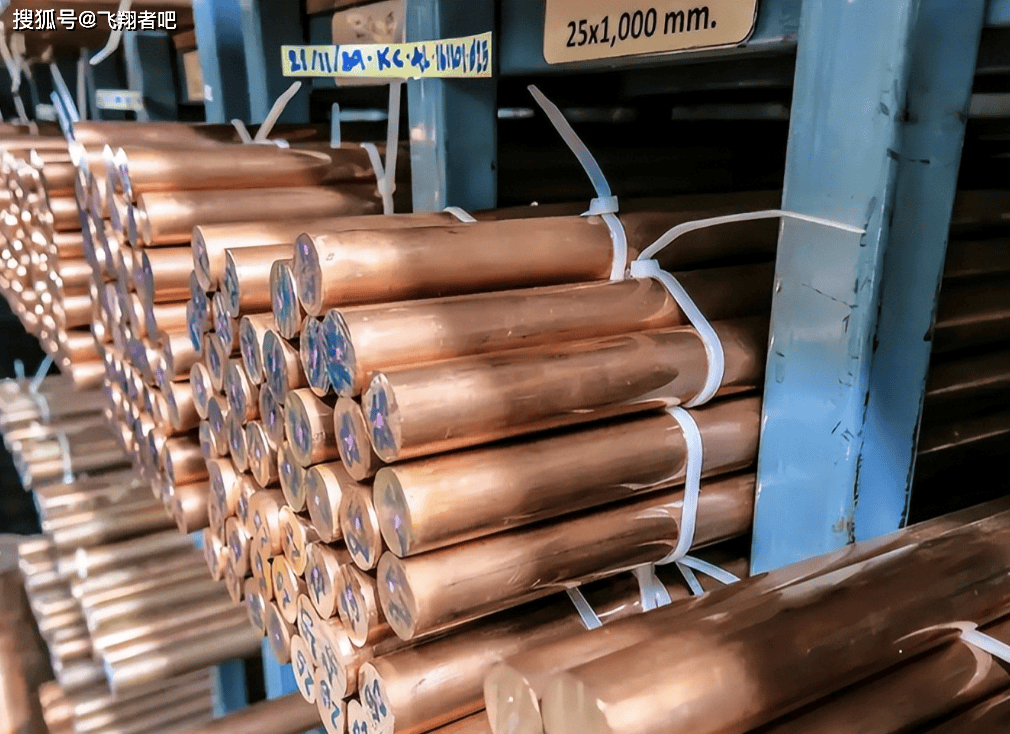
Core Viewpoint - The article discusses the significant increase in copper inventory in the U.S. and its implications for global copper supply, particularly targeting China's copper industry and technological advancements [1][4]. Group 1: Copper Supply Dynamics - In 2025, U.S. copper inventory surged by 470%, from 84,000 tons at the beginning of the year to 400,000 tons, while the U.S. only accounts for 6% of global copper consumption [1]. - Global copper mine grades have dropped by 40% over the past 40 years, and mining costs have risen significantly, leading to a projected global copper mine growth rate of only 3.4% in 2025, with a shortage expected in 2026 [3]. - The U.S. holds 62% of global exchange copper inventory, which has reduced liquidity in the international copper market [3]. Group 2: Strategic Implications for China - The U.S. strategy of stockpiling copper is seen as a direct attack on China's refined copper industry, which relies on imports for 94% of its copper concentrate [4]. - The price of copper on the London Metal Exchange has increased from $7,000 per ton in 2023 to $12,000 per ton in 2025, benefiting U.S. capital in the futures market [4]. - The copper shortage could hinder China's advancements in the renewable energy and AI sectors, as significant amounts of copper are required for infrastructure [4][6]. Group 3: Countermeasures and Industry Response - China is accelerating the production of new copper mining projects in Yunnan and Tibet and has doubled the output of recycled copper in three years [5]. - Long-term supply agreements with countries like Congo and Peru are being established by China to secure copper resources through a "resource for technology" model [5]. - The U.S. copper stockpile, sufficient to produce 20 million electric vehicles, is not aligned with its current production capacity, indicating a strategic move to limit China's growth [6]. Group 4: Market Reactions and Economic Impact - The rising copper prices are affecting various sectors, including appliances and construction, contributing to increased inflationary pressures in the U.S. [7]. - China's advanced refining technology and high recycling rates (98%) position it to mitigate raw material shortages effectively [7]. - The competition for copper resources highlights the importance of technological innovation and supply chain resilience in the current geopolitical landscape [8].
惠城环保:欧盟近期通过并实施了一系列旨在推动循环经济和减少塑料污染的法规
Zheng Quan Ri Bao Zhi Sheng· 2025-12-05 11:43
证券日报网讯 12月5日,惠城环保在互动平台回答投资者提问时表示,欧盟近期通过并实施了一系列旨 在推动循环经济和减少塑料污染的法规,这些法规对再生料的使用有明确要求,重点在于强制提升再生 材料的使用比例,而非"限制使用本地产的再生料"。 (编辑 楚丽君) ...
Tarkett - Information relative au nombre total des droits de vote et d’actions composant le capital social de Tarkett au 30 novembre 2025
Globenewswire· 2025-12-05 08:42
Core Points - Tarkett reported a total of 65,550,281 shares and 123,938,579 voting rights as of November 30, 2025 [1] - The number of exercisable voting rights is 123,920,020 after deducting treasury shares [2] Company Overview - Tarkett is a global leader in innovative and sustainable flooring and sports surface solutions, with a revenue of €3.3 billion in 2024 [3] - The company employs nearly 12,000 people and operates 24 R&D centers, 8 recycling centers, and 35 production sites [3] - Tarkett serves clients in over 100 countries, providing solutions for hospitals, schools, residential areas, hotels, offices, retail, and sports fields [3] - The company is committed to circular economy and sustainable development through its Tarkett Human-Conscious Design® approach [3] - Tarkett is listed on the regulated market of Euronext under compartment B, ISIN code FR0004188670, and mnemonic code TKTT [3]

林平发展聚焦循环造纸业务实现稳健发展 韧性凸显推动产业绿色升级
Zheng Quan Shi Bao Wang· 2025-12-05 08:07
在"双碳"目标的宏观背景下,造纸和纸制品等资源循环利用产业正成为我国战略性新兴产业,受到了政 策的大力支持和重点培育,这也为林平发展等专注于资源循环利用的企业带来了重要的发展机遇。 近期,林平发展在上交所主板的上市进程迎来关键进展,将于12月11日接受上会审议。作为我国造纸行 业的优质企业,安徽林平循环发展股份有限公司深耕循环造纸领域多年,是一家集废纸利用、热电联 产、绿色造纸于一体的资源综合利用企业,其业务模式高度契合国家绿色发展战略,在行业转型中展现 出强劲的发展潜力。 行业规模领先,展现良好盈利能力和发展韧性 目前,我国造纸行业仍处于集中度低、中低端产品产能高的发展阶段。行业内多数企业规模较小,且技 术水平参差不齐。在此情况下,拥有较高的产能规模及生产水平的企业则更易实现成本控制与资源高效 利用,从而在市场竞争中占据优势地位。 林平发展凭借多年的深耕与积累,已形成规模化的循环造纸生产能力。公司主要从事包装用瓦楞纸、箱 板纸产品的研发、生产和销售,产销量位居行业前列。公司现有产能115万吨,2024年原纸产量合计达 101.97万吨,占安徽省纸及纸板产量和全国纸及纸板产量的比例为35.65%和0.75%, ...
清空一座垃圾山,崛起一座未来城
Qian Zhan Wang· 2025-12-05 07:00
Core Viewpoint - The transformation of the Yulong landfill in Shenzhen from a waste site into a resource-rich industrial area represents a strategic shift in China's waste management approach, addressing the dual challenges of insufficient waste for incineration and the need for urban land resource optimization [1][2][4]. Group 1: Challenges in Waste Management - Shenzhen's waste incineration facilities are facing a decline in the volume of combustible waste due to effective waste classification and reduction policies, leading to a situation where the total amount of waste is decreasing while its quality is changing [2][4]. - There are over 100,000 informal waste dumping sites across China, with more than 8 billion tons of legacy waste posing environmental risks and potential resource opportunities [4]. Group 2: Strategic Initiatives - The Yulong landfill project is part of Shenzhen's "14th Five-Year Plan" aimed at promoting a "waste-free city," with plans to excavate and utilize 2.55 million cubic meters of aged waste [5]. - The project employs a large-scale green canopy system to facilitate a clean excavation process, minimizing environmental impact and maintaining high cleanliness standards [5][6]. Group 3: Resource Recovery and Economic Impact - The excavation process at Yulong landfill is expected to recover approximately 330,000 tons of combustible materials, generating enough energy to power around 26,000 households for a year [8]. - The project aims to release about 30 hectares of prime industrial land, potentially accommodating over 1 million square meters of buildings, thus creating significant economic opportunities and attracting over 15 billion yuan in fixed asset investment [9]. Group 4: Policy Evolution and Implementation - Shenzhen has been at the forefront of waste management policy evolution, becoming a pilot city for "waste-free" initiatives and implementing mandatory waste classification to enhance waste reduction and quality [11][12]. Group 5: Global Implications - The Yulong landfill project is gaining international attention as a replicable model for urban waste management, showcasing a comprehensive approach that integrates environmental remediation, space reclamation, and industrial development [12].