生态文明建设

Search documents
美丽中国系列主题绘画创作工程将走进六省市采风创作
Xin Hua She· 2025-08-19 08:05
Core Viewpoint - The "Beautiful China" series of thematic painting creation project aims to showcase the achievements of ecological civilization construction and socio-economic development in China over the past 40 years through artistic expression [1] Group 1: Project Overview - The project is organized by the Cultural and Tourism Ministry's Art Development Center and China Cultural Media Group [1] - It will last for three years and involve field trips, sketching, creation, and exhibitions across six provinces and cities [1] Group 2: Objectives and Impact - The initiative seeks to engage artists of all ages to deeply connect with life and roots, producing works that enhance the spiritual strength of the people [1] - A number of outstanding works are expected to be released, reflecting the significant changes in China [1] Group 3: Personnel Involvement - The event included the awarding of artistic consultant certificates to over 30 experts from the art community [1]
AI时政画报|烟雨漓江
Yang Shi Wang· 2025-08-19 06:56
Core Viewpoint - The article emphasizes the importance of ecological protection and restoration of the Li River, highlighting the efforts made by the local government and the positive outcomes achieved in preserving the region's natural beauty and biodiversity [3][4][5]. Group 1: Ecological Challenges and Government Response - The Li River has faced severe ecological degradation due to unregulated development, including illegal construction and pollution from livestock farming [3]. - In 2017, President Xi Jinping stressed the need for ecological conservation in Guangxi, advocating for prioritizing resource conservation and natural restoration [4]. - The Guangxi government launched the "Guilin Li River Ecological Protection and Restoration Enhancement Project (2019-2025)" to address comprehensive governance and ecological restoration [4]. Group 2: Progress and Achievements - Following various initiatives, the ecological environment of the Li River has shown significant improvement, with the river's ecological quality maintaining a "Class I" rating as of 2023 [5]. - The establishment of "Li River Protection Day" in 2022 aims to enhance public awareness and commitment to protecting the river [5]. - The implementation of the "Guilin Li River Island and Wetland Protection Regulations" in 2025 provides legal support for ongoing ecological protection efforts [6]. Group 3: Economic and Cultural Impact - The integration of ecological protection with cultural tourism and industrial development has led to the emergence of unique projects that capitalize on the region's ecological advantages [6]. - The revitalization of the Li River has attracted tourists, contributing to local economic benefits and enhancing the quality of life for residents [6].


中国生态环保成果在泰国国家科学技术展上受关注
Xin Hua She· 2025-08-18 15:27
Core Viewpoint - The exhibition showcased China's significant achievements in environmental protection and air quality improvement over the past decade, particularly in the context of the "Bangkok Clean Air" project, highlighting the potential for deeper Sino-Thai cooperation in ecological technology [1][2][3]. Group 1: Exhibition Highlights - The Chinese exhibition at the 2025 Thailand National Science and Technology Exhibition featured a comparison of air sampling membranes from Beijing over the past ten years, illustrating the dramatic improvement in air quality [1]. - The exhibition theme was "Sustainable Community Technology in Action - Recreating Clear Water and Blue Sky," emphasizing China's latest achievements in ecological civilization and environmental protection technology [1][2]. - Advanced ecological monitoring instruments, such as automated water quality analyzers and air quality online monitoring devices, were displayed to demonstrate China's technological capabilities in environmental governance [2]. Group 2: Sino-Thai Cooperation - The exhibition served as a significant platform for Sino-Thai technological cooperation, with the "Bangkok Clean Air" project being a key initiative where China provides a comprehensive air pollution monitoring and governance technology system [2][3]. - The collaboration aims to transition from technical and academic exchanges to a deeper partnership involving standard-setting, technology transfer, and joint governance, providing a model for pollution management in developing countries [3]. - Thai officials expressed high regard for China's environmental achievements and expressed hopes for further collaboration in ecological technology to promote regional green development [3].
坚定推进生态文明建设 申城努力打造美丽中国上海典范
Zhong Guo Fa Zhan Wang· 2025-08-18 08:36
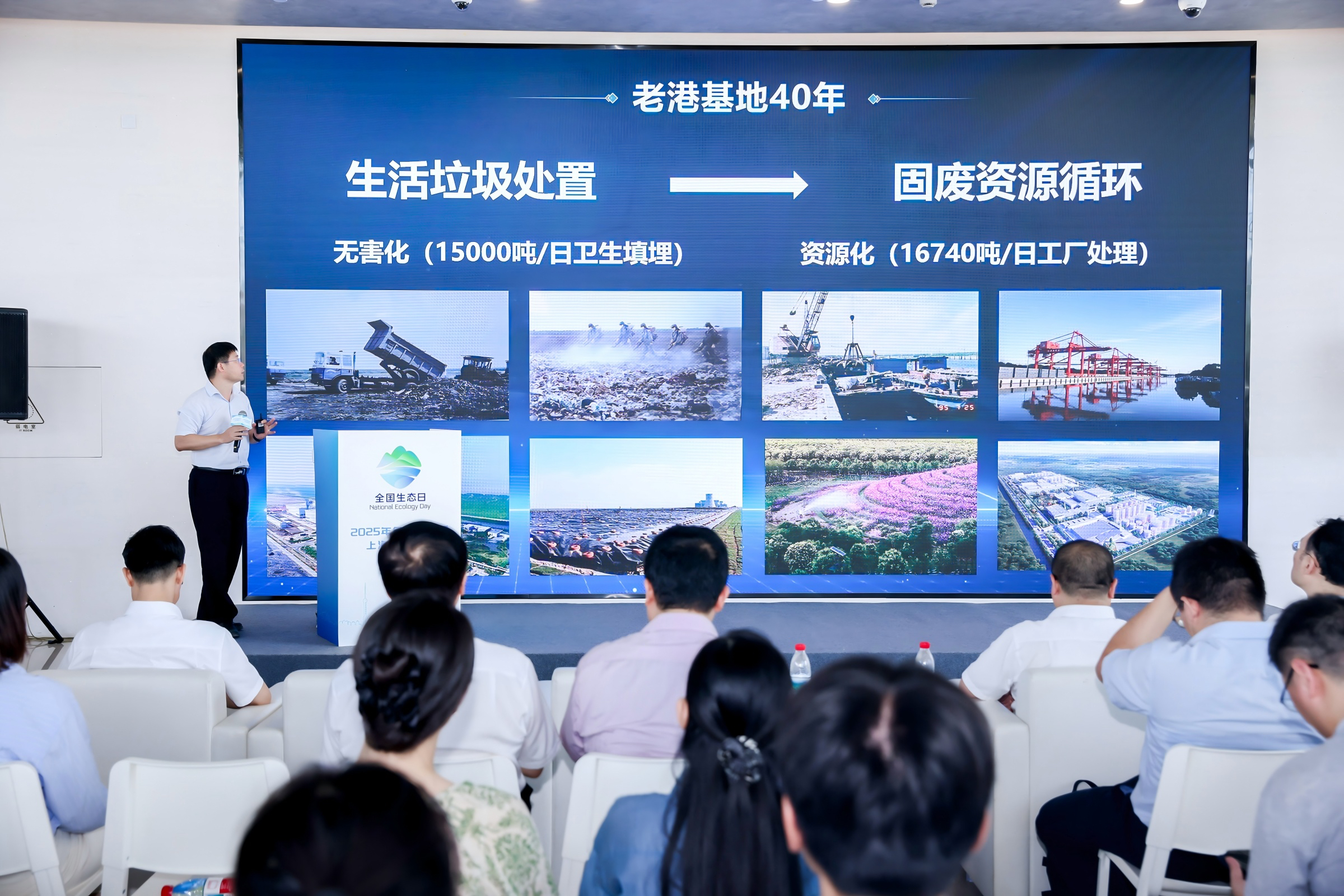
Core Viewpoint - Shanghai is committed to ecological civilization construction and green low-carbon development, aiming to create a model for a beautiful China through collaborative efforts in carbon reduction, pollution control, and green expansion [1][3]. Group 1: Green Technology and Innovation - Technological innovation is a key driver for accelerating green low-carbon transformation, with significant progress in the construction of key application scenarios in Shanghai [3]. - Shanghai Electric has pioneered the CCUS technology demonstration, capturing over 140,000 tons of CO2 [3]. - The release of the "Shanghai Green Low-Carbon Advanced Technology Directory and Demonstration Project List (2025 Edition)" includes 42 advanced green technologies and 9 demonstration projects [3]. Group 2: Policy and Legislative Framework - Shanghai has implemented a series of regulations to support green transformation, including the "Shanghai Green Transformation Promotion Regulations" and the "Shanghai Waste-Free City Construction Regulations" [5]. - The recent decision by the Shanghai People's Congress provides important institutional support for ecological civilization construction [5]. - The "Shanghai Green Building Regulations" integrates green development concepts into the entire lifecycle management of buildings [5]. Group 3: Waste Management and Resource Utilization - Shanghai's household waste classification compliance rate is stable at over 95%, with a resource utilization rate of 86% [6]. - The Laogang slag resource utilization project is a key node for promoting the recycling of waste from incineration [6]. Group 4: Energy and Emission Reduction Initiatives - As of June this year, Shanghai has installed 5.46 million kilowatts of photovoltaic capacity, promoting a new energy system [7]. - The city has promoted over 1.8 million new energy vehicles, leading globally in scale, and has built 1.05 million charging piles and 254 battery swap stations [7]. - Shanghai is actively fostering a green low-carbon supply chain through the establishment of the CN100 alliance [7].
“做实政治监督 推动绿色发展”之二 让绿水青山永远成为福建的骄傲
Zhong Yang Ji Wei Guo Jia Jian Wei Wang Zhan· 2025-08-18 00:31
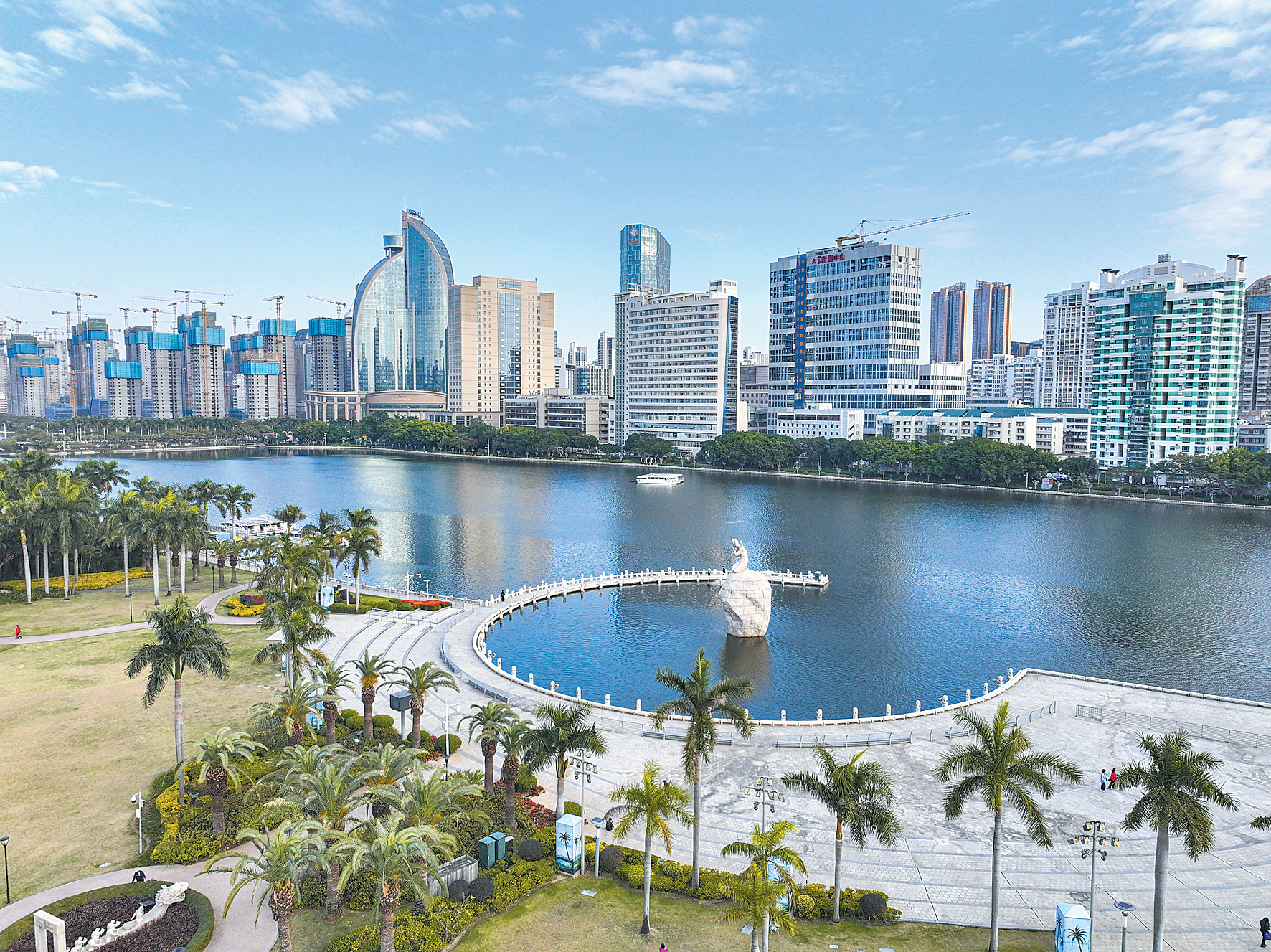
Group 1: Ecological Transformation - The transformation of Xiamen's Yundang Lake from a polluted "stinky lake" to a clear and green ecological landscape reflects the solid achievements of ecological governance in Fujian Province [2][3] - Yundang Lake has become a popular recreational area for citizens, symbolizing the successful implementation of ecological protection policies [3] Group 2: Ecological Governance and Supervision - Fujian Province, as the first ecological civilization pilot zone in China, emphasizes the integration of ecological protection into overall development strategies, guided by the principle of "green mountains and clear waters are invaluable assets" [3][7] - The local government has established a robust supervision mechanism to ensure the effective implementation of ecological protection policies, focusing on key areas such as forest management and environmental monitoring [7][10] Group 3: Community Involvement and Economic Benefits - The case of Huang Zhenfang's family forest farm in Ningde City illustrates how community involvement in afforestation has led to significant ecological and economic benefits, with collective income projected to reach 873,900 yuan in 2024 [6][8] - The integration of ecological resources into local economies, such as the development of tea gardens and carbon trading, demonstrates the tangible economic advantages of ecological protection [17] Group 4: Waterway Management and Improvement - The systematic governance of the Mulian River has transformed it from a flood-prone area to a well-managed waterway, enhancing the quality of life for local residents [9][12] - Continuous monitoring and innovative supervision mechanisms have been implemented to address water quality issues, resulting in a 3.18% improvement in the comprehensive water quality index in 2024 [12][11] Group 5: Future Directions - Fujian's disciplinary inspection and supervision agencies are committed to maintaining ecological protection as a political responsibility, aiming for more precise and effective oversight to ensure sustainable environmental health [18]
出游寻“绿”
Ren Min Ri Bao Hai Wai Ban· 2025-08-17 23:21
Core Viewpoint - The article highlights the growing trend of eco-tourism in various regions of China, showcasing how local communities are leveraging their natural resources to enhance tourism while promoting ecological conservation. Group 1: Eco-Tourism Development - The scenic areas in Jiangsu, Yunnan, and Guizhou are becoming popular destinations for tourists seeking to enjoy nature and engage in recreational activities [5][6]. - The Xiaoqikong Scenic Area in Guizhou has introduced new water sports and traditional boat experiences to attract visitors, emphasizing the area's ecological beauty [6]. - The Beihai National Wetland Park in Guangxi has become a hub for educational tourism, with a focus on biodiversity and ecological conservation [6]. Group 2: Scenic Roads and Routes - Scenic roads, such as the East Lake Greenway in Wuhan, are gaining popularity as they allow tourists to enjoy beautiful landscapes while traveling [8][9]. - The "1号滨海风景道" in Fujian, stretching over 1200 kilometers, connects multiple coastal cities and offers various experiential points for tourists [9]. Group 3: Community Involvement and Economic Impact - Local communities are increasingly involved in eco-tourism, with residents in places like Tibet and Henan benefiting economically from tourism-related activities [10][11]. - Volunteer programs in areas like Luoyang are helping to maintain local ecosystems while providing economic opportunities for residents [11].
学习手记 | 路子选对了就要坚持走下去——读懂“两山”理念的实践导向
Xin Hua She· 2025-08-17 08:44
Core Viewpoint - The article emphasizes the importance of the "Two Mountains" concept in ecological civilization construction, highlighting its long-term vision, strategic determination, and historical awareness in achieving sustainable development [4][5][8]. Group 1: Long-term Vision - The "Two Mountains" concept is rooted in a long-term perspective, focusing on both economic growth and environmental protection, ensuring that future generations can thrive [4][5]. - Xi Jinping's commitment to ecological civilization is reflected in his consistent emphasis on maintaining a long-term strategic focus and the need for persistent efforts in environmental protection [6][8]. Group 2: Strategic Determination - Xi Jinping has demonstrated unwavering determination in ecological construction, participating in tree planting activities for 13 consecutive years, showcasing a commitment to grassroots environmental initiatives [6][7]. - The article notes that Xi has issued multiple directives regarding ecological issues, indicating a hands-on approach to addressing environmental degradation [6][7]. Group 3: Historical Awareness - The historical perspective is crucial, as Xi emphasizes that ecological protection is not just for immediate gains but for the sustainable future of the nation and its descendants [8]. - The article highlights Xi's belief that true responsibility towards history and future generations involves making sacrifices today for long-term ecological benefits [8].
“两山”理念指引美丽中国建设
Ren Min Wang· 2025-08-17 04:41
Core Points - The "Two Mountains" concept proposed by President Xi Jinping has become a consensus and action among the party and society, representing the core of Xi Jinping's ecological civilization thought [1] - China has achieved significant environmental improvements, including a 60% reduction in PM2.5 average concentration in key cities by 2024 compared to 2013 [1] - China has contributed to 25% of the world's new green area, becoming the fastest and largest country in terms of greening [1] - The country has transitioned from "sand encroachment" to "green recovery" in key governance areas, achieving zero growth in land degradation and reducing both desertified and sandy land areas [1] - China has built the largest and fastest-growing renewable energy system globally, establishing the most complete new energy industry chain [1] - The country has committed to peak carbon emissions before 2030 and achieve carbon neutrality before 2060 [1] Industry Achievements - The achievements in ecological civilization construction are significant indicators of historical accomplishments and transformations in the party and state [2]
金观平:为“两山”转化注入更强动能
Zhong Guo Jing Ji Wang· 2025-08-17 01:45
Group 1 - The concept of "Green Mountains and Clear Water are as Valuable as Mountains of Gold and Silver" was proposed 20 years ago, guiding the path for high-level ecological protection and high-quality economic development [1] - As of the end of last year, China's forest coverage rate exceeded 25%, and since the 14th Five-Year Plan, the country has completed afforestation of 4.5 million hectares and managed 1.05 million hectares of desertified land [1] - China's energy consumption per unit of GDP has decreased by 11.6% compared to the end of the 13th Five-Year Plan, making it one of the fastest countries in the world in terms of energy intensity reduction [1] Group 2 - Emphasizing integrated protection and systematic governance of ecosystems, the article highlights the need for comprehensive strategies rather than fragmented approaches to enhance the quality of ecological products [2] - The article suggests that the realization of ecological product value is crucial for promoting the appreciation and efficiency of ecological resources, with various regions exploring models like carbon trading platforms and "Two Mountains" banks [2] - The integration of digital technology with various industries is seen as a way to enhance the support for the transformation of the "Two Mountains" concept, optimizing the efficiency and benefits of ecological product value conversion [2] Group 3 - Recent institutional innovations related to the construction of a beautiful China have shown significant results, including the implementation of the Ecological Protection Compensation Regulations, which has created the largest and most comprehensive ecological compensation mechanism in the world [3] - The article emphasizes the importance of legal guarantees and the need for effective market and government collaboration to stimulate investment in the social sector, ensuring that green mountains and clear water become a foundation for wealth [3] - The call for sustained efforts and collaborative actions aims to continue writing a new chapter of harmonious coexistence between humans and nature in the context of Chinese-style modernization [3]
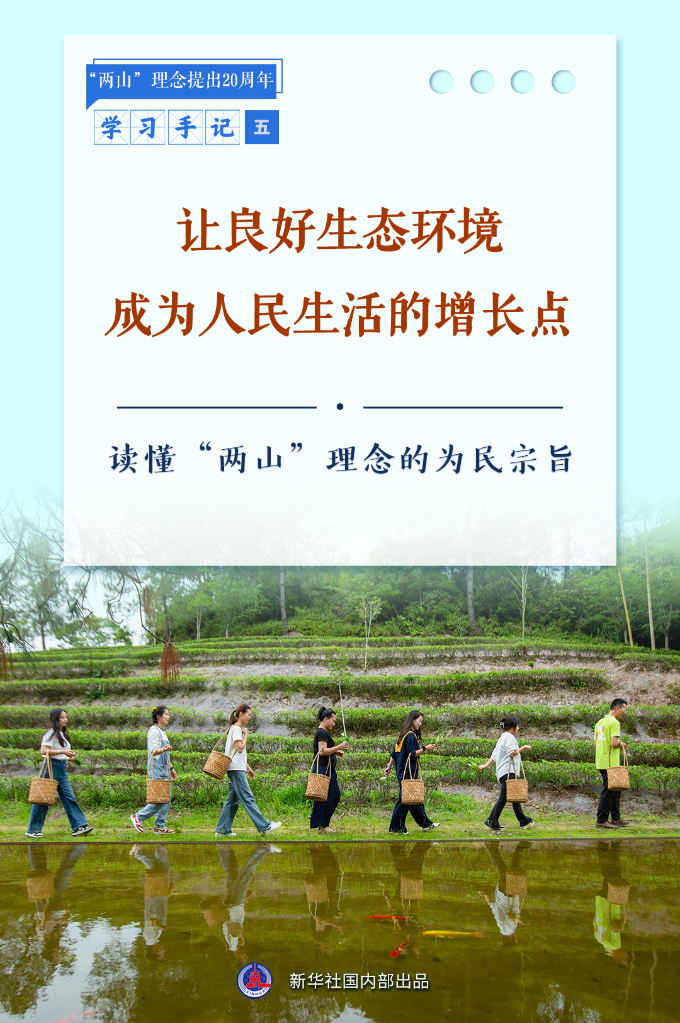
学习手记丨让良好生态环境成为人民生活的增长点——读懂“两山”理念的为民宗旨
Jing Ji Wang· 2025-08-17 01:40
Core Idea - The article emphasizes the importance of the "Two Mountains" concept, which advocates for the integration of ecological protection and economic development, highlighting its role in improving the quality of life for the people [5][6][12]. Group 1: Historical Context and Development - The "Two Mountains" concept was proposed 20 years ago in Yucun, Zhejiang, where the local community transitioned from mining to eco-tourism, showcasing a successful model of sustainable development [5]. - The shift in public sentiment from merely seeking basic needs to prioritizing environmental quality reflects a significant change in societal values over the years [6][11]. - The concept has been consistently integrated into national policies, particularly after the 18th National Congress of the Communist Party, where ecological civilization was included in the overall layout of socialism with Chinese characteristics [6][10]. Group 2: Ecological and Economic Integration - The article highlights that a good ecological environment is considered the most equitable public good and a fundamental aspect of people's well-being [6][10]. - Successful case studies, such as the transformation of military village in Xiamen and the ecological restoration in Shandong, illustrate how environmental improvements can lead to economic benefits for local communities [12]. - The narrative stresses that "green water and lush mountains" are not only essential for a happy life but also serve as a necessary material foundation for creating economic wealth [12].