
智能体

Search documents
亚马逊云科技增资生成式AI技术创新中心 瞄准智能体未来
Huan Qiu Wang· 2025-08-15 11:29
Core Insights - Amazon Web Services (AWS) announced an additional investment of $100 million in its Generative AI Innovation Center to help clients leverage AI for business value, marking the second significant funding since its establishment in 2023 [1][2] - The investment aims to transition AI from passive response systems to autonomous decision-making agents, which is expected to unlock substantial economic potential [2][4] - By 2028, it is predicted that 15% of work decisions will be made independently by autonomous agents, prompting strategic investments from global enterprises [4] Investment and Strategy - The recent $100 million investment focuses on developing the commercial value of intelligent agents, addressing current client needs more precisely [1][2] - AWS plans to deepen partnerships with startups and expand its partner alliance as part of its resource strategy [9][10] Technological Advancements - The Generative AI Innovation Center provides a three-layer technology stack: infrastructure (Amazon Trainium), model selection (Amazon Bedrock), and application products (e.g., Amazon Q) [6] - Companies like AstraZeneca and SonicWall have successfully implemented AWS's AI technologies to enhance operational efficiency and reduce response times [5][6] Industry Applications - The center has supported over 100 companies across various sectors, including manufacturing, finance, and retail, by providing end-to-end support from scenario exploration to production deployment [7][8] - Notable implementations include Syngenta's Cropwise AI for agriculture and a logistics company optimizing dialogue quality inspection processes using AWS's AI models [4][8] Future Outlook - AWS anticipates that the integration of Agentic AI and Generative AI will not only enhance productivity but also help clients explore new revenue streams, driving business growth [11]



三六零官宣“All in Agent”战略
Zheng Quan Shi Bao Wang· 2025-08-15 10:16
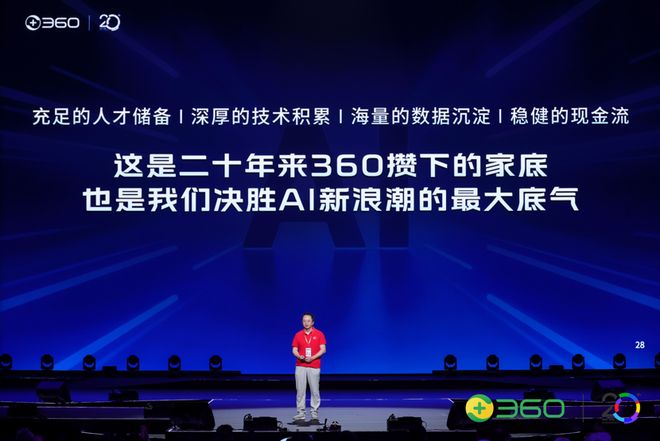
Core Insights - 360 Group celebrates its 20th anniversary and announces a strategic focus on "All In Agent" for the next phase of development [1] - The company has upgraded its mission, vision, and values to support the implementation of this strategy [1] - Zhou Hongyi predicts that 2025 will be the "Year of Intelligent Agents," highlighting advancements in nano AI, which has achieved L3-level reasoning capabilities [1] Company Strategy - The strategic direction emphasizes a commitment to intelligent agents, indicating a shift towards more advanced AI applications [1] - The company aims to enhance its operational efficiency and effectiveness through the deployment of intelligent agents [1] Technological Advancements - Nano AI has successfully executed 100-step tasks with zero errors, showcasing its reliability and performance [1] - The technology consumes 1 million tokens per single execution and utilizes over 100 tools, achieving a task success rate of 98.2% [1]

360集团20周年会:升级使命愿景价值观,全员All In Agent
Jing Ji Guan Cha Bao· 2025-08-15 10:15
Core Insights - 360 Group celebrated its 20th anniversary and announced its new strategic direction: "All In Agent" [1][8] - The company aims to leverage its strong talent pool, technological foundation, and cash flow to capitalize on the AI wave [3][11] Company Development - Over the past 20 years, 360 has evolved from a network security leader to a "digital security and AI national team," achieving multiple industry benchmarks [3][6] - 360 has the largest global cybersecurity big data and national-level capabilities in network attack detection and defense [3][6] AI Strategy - AI is identified as the next strategic pivot for 360, with the launch of the "Nano AI Multi-Agent Swarm" as a leading application in AI search and intelligent agents [3][6] - The company has developed L3 and L4 level intelligent agents, achieving a task success rate of 98.2% for L3 agents and 95.4% for L4 multi-agent swarms [6][7] Intelligent Agent Framework - 360 has categorized intelligent agents into five levels (L1 to L5), ranging from basic chat assistants to self-evolving agents [4][6] - The introduction of the "Intelligent Agent Factory" allows employees to create agents without programming skills, enhancing operational efficiency [7][8] Strategic Goals - The "All In Agent" strategy aims to reshape personal roles and organizational structures in response to AI-driven changes [8][10] - The company encourages all employees to develop AI skills and integrate intelligent agents into their workflows to create "super teams" and "super products" [8][10] Mission and Vision Update - 360 has updated its mission to "make the AI world safer and better" and its vision to "become the safest AI innovator" [10] - The company will initiate various internal and external innovation competitions to stimulate creativity and engagement [10]
筑牢智能体发展安全根基
Jing Ji Ri Bao· 2025-08-13 21:58
Group 1: Core Insights - The development of intelligent agents is becoming a significant focus in the AI field, characterized by their ability to perceive environments and take actions to achieve specific goals, thus driving industrial transformation [1] - The global AI industry is expanding rapidly, with over 35,000 AI companies worldwide and more than 5,100 in China, accounting for approximately 15% of the global market [2] - China's AI industry is projected to exceed 700 billion yuan in 2024, maintaining a growth rate of over 20% for several consecutive years [2] Group 2: Technological Advancements - The emergence of large models in AI is providing strong momentum for the digital transformation of the real economy, with Beijing housing over 40% of the nation's top AI talent and more than 2,400 AI companies [3] - The number of generative AI products has seen significant growth, with 80.9% of users utilizing these products for answering questions as of June [2] - The transition from large models to intelligent agents is seen as inevitable, as intelligent agents can understand goals, plan tasks, and utilize tools effectively [3] Group 3: Security Challenges - The rise of intelligent agent hackers is increasing the asymmetry in cyber defense, presenting both risks and opportunities in the intersection of AI and cybersecurity [4] - The complexity of governance in AI security is growing, with challenges in technology standards, legal regulations, and ethical norms [5] - The emergence of "intelligent agent hackers" poses a new phase in cyber warfare, where a single hacker can control multiple intelligent agents to launch automated attacks [5] Group 4: Future Directions - The integration of AI technology with digital security is crucial for accelerating digital economic development, emphasizing the need for safety, reliability, and fairness in AI advancements [6] - There is a call for a fundamental transformation in security capabilities, shifting from passive defenses to proactive immune systems that leverage AI for threat detection and response [7] - Companies like 360 are focusing on developing security intelligent agents to enhance digital security, aiming to replicate the capabilities of human security experts [7]
AI Coding大佬聊透了:产品智能重要还是用户体验重要?答案让人意外
量子位· 2025-08-13 09:13
Core Viewpoint - The article discusses the evolving landscape of AI coding, highlighting the shift from AI replacing developers to a collaborative approach where AI and humans work together. The focus is on the balance between user experience and the intelligence of AI products, as well as the differing needs of professional developers and non-developers [1][2][3]. Group 1: AI Coding Trends - AI coding products are transitioning from replacing humans to collaboration, emphasizing the importance of cooperation between humans and AI [7][18]. - The future of AI coding will involve reducing human-machine interaction, with humans taking on supervisory roles [7][29]. - Even with advancements towards AGI, expert knowledge will remain essential across all fields [7][44]. Group 2: User Perspectives - Professional developers prioritize precision and control, while non-developers focus on results and ease of use [90][100]. - The demand for AI coding tools is driven by the need for efficiency and the ability to quickly deliver results [32][37]. - Users expect AI tools to understand their underlying needs and provide relevant solutions, rather than just executing commands [104][106]. Group 3: Product Development and Features - The importance of product intelligence is highlighted, as it should address user needs effectively and enhance the overall experience [103][106]. - AI coding products must ensure quality and reliability, especially in enterprise environments where data security is a concern [33][38]. - The distinction between To B and To C markets is blurring, with both types of users seeking similar functionalities from AI coding tools [32][41]. Group 4: Future Directions - Future AI coding products are expected to have long-term memory capabilities, allowing them to better understand user context and needs [128][130]. - The relationship between humans and AI will evolve, with AI taking on more responsibilities while humans focus on oversight and collaboration [118][121]. - The core keywords in the AI coding era include cost, collaboration, demand, and leverage, reflecting the changing dynamics of software development [131][139].


AI应用如何落地政企?首先不要卷通用大模型
量子位· 2025-08-12 09:35
Core Viewpoint - The article emphasizes the rapid integration of intelligent agents into core industrial sectors, highlighting the shift from mere technological buzzwords to practical productivity tools, particularly through the example of 360's AI applications in enterprise settings [4][8]. Group 1: Strategic Focus - The company advocates for not blindly pursuing large models but instead focusing on smaller, specific scenarios to achieve breakthroughs in enterprise applications [5][6]. - The transition from large models to intelligent agents is seen as a necessary evolution, where intelligent agents serve as the operational components that execute tasks and deliver results [8]. Group 2: Implementation Methodology - The company’s approach involves identifying and addressing core pain points within enterprises, leveraging small-scale scenarios to unlock significant business value and efficiency improvements [13][32]. - A case study in the rail transit sector illustrates how the company automated monthly operational reports, significantly enhancing management efficiency through the integration of AI knowledge bases and intelligent agents [11][12]. Group 3: SEAF Platform Capabilities - The SEAF platform is designed to address common issues faced by enterprises, such as usability and security, by providing a comprehensive suite of tools and resources for intelligent agent development [16][20]. - The platform features an "8+10" capability architecture, which includes foundational and enhanced capabilities to support complex task management and security [17]. Group 4: Safety and Security - The article stresses the importance of integrating safety measures with AI applications, as the deployment of intelligent agents introduces new security risks, including data breaches and automated attacks [34][36]. - The company positions itself as a key player in providing the necessary security infrastructure to support the safe deployment of intelligent agents in enterprises [37][38]. Group 5: Ecosystem Development - The company aims to establish an open-source ecosystem similar to Android, which would lower development barriers and foster collaboration among partners to create standardized applications for various industries [41][42]. - The ultimate goal is to build a foundational AI infrastructure that facilitates the widespread adoption of AI technologies across diverse sectors, ensuring accessibility and efficiency [44].
中国电子云成立AI产品线,黄锋:从平台能力向行业应用延伸
Tai Mei Ti A P P· 2025-08-11 08:19
Group 1 - The core viewpoint is that 2025 is anticipated to be the year of AI applications, but many agents have not yet been effectively integrated into business scenarios, particularly in industries less sensitive to new technology demands [2][3] - China Electronics Cloud has established an AI product line led by Huang Feng, who has over ten years of experience in AI commercialization and a deep understanding of AI technology applications across various industries [2][6] - The AI product line focuses on the actual needs of key national industries, providing end-to-end AI solutions from data to models to applications and services [2][7] Group 2 - Huang Feng noted that while large models are gaining popularity, their deep application in industries is still limited, with most current applications being peripheral, such as office efficiency tools and knowledge Q&A systems [3][4] - Four major pain points for the application of general models in industries include difficulty in understanding business needs, low cost-effectiveness, challenges in achieving effective scenario-based applications, and the difficulty of standardizing scenario implementation [4][5] - The company aims to address these pain points by training high-quality datasets for industry-specific models, optimizing hardware and software for cost-effectiveness, and providing better application development tools and support services [5][6] Group 3 - The AI product line includes capabilities such as multimodal data governance, application development, and model development platforms, along with general applications like multimodal visual integration and intelligent procurement management [7] - The company has established partnerships with over five national laboratories and more than ten central enterprises to create high-quality datasets, and is collaborating with various airlines and financial institutions to develop intelligent applications [7][8] - The current strategy for deploying intelligent agent systems involves workflow orchestration rather than solely relying on model capabilities, especially in open application scenarios [8]

“申”度解盘 | 市场热点轮动,机器人板块表现活跃
申万宏源证券上海北京西路营业部· 2025-08-11 01:54
Market Overview - The A-share market has recovered from the previous week's decline, driven by the technology and large financial sectors, with the Shanghai Composite Index reaching a new high for the year [7] - The robotics sector has shown active performance this week, with the upcoming World Robot Conference in Beijing on August 8, focusing on humanoid robotics, expected to boost industry interest [8] - The banking sector, represented by large financial institutions, has also contributed to the market's upward movement, with the Shanghai Composite Index surpassing the 3600-point mark [9] Sector Analysis - The humanoid robotics industry is transitioning from concept validation to practical application, with significant breakthroughs in core hardware and intelligent software, indicating a potential acceleration in commercialization in manufacturing and home services [8] - The recent implementation of the "Childcare Subsidy Policy" is expected to benefit over 20 million families annually, positively impacting the consumer sector in the medium to long term [9] - The software sector experienced a notable adjustment following the release of OpenAI's GPT-5 model, which has enhanced capabilities in coding, creative writing, and complex query reasoning, leading to a market correction in related stocks [9] Market Outlook - In a low-interest-rate environment, there is an anticipated increase in market preference for equity assets, although the current index levels may face pressure near the upper boundary of a monthly range [10] - The margin balance in the two markets has officially surpassed 2 trillion yuan, marking a nearly 10-year high, indicating increased market activity [10] - Investors are advised to consider high-quality listed companies with expected growth in mid-year reports, especially in light of potential market fluctuations [10]

AI应用商业化放量成规模 基金经理看好端侧创新驱动下一轮增长
Zheng Quan Shi Bao· 2025-08-10 17:41
Group 1 - The core viewpoint is that AI is entering a new phase of commercialization, driven by a virtuous cycle of computing power investment, cloud service consumption, and revenue generation [1][2] - The Chinese government has approved a plan to implement "Artificial Intelligence +" actions, aiming to accelerate the commercialization of AI applications across various sectors [1][2] - Fund managers believe that 2025 will be a pivotal year for AI application commercialization, with significant growth in annual recurring revenue (ARR) for companies like Cursor, Anthropic, and OpenAI [2][3] Group 2 - AI applications are increasingly focusing on both B-end (enterprise) and C-end (consumer) empowerment, with B-end applications optimizing costs and increasing revenue in marketing, office, and education sectors [4] - The introduction of AI Agents is seen as a key development in human-computer interaction, with OpenAI's GPT-5 series enhancing capabilities in programming and problem-solving [5][6] - The shift from traditional apps to AI Agents is expected to redefine content distribution and user interaction, making AI Agents the new core of the internet [7] Group 3 - Despite the rapid growth in AI applications, the hardware side, particularly in consumer products, is lagging behind, with expectations for significant advancements in the coming years [8][9] - The smart glasses market is projected to grow significantly, with sales expected to reach 1 million units by 2027, representing a market space of 100 billion yuan [9] - The development of AI applications is transitioning towards embedding AI into real-world scenarios, requiring skilled product managers and engineers to drive innovation [10]
打造安全智能体 推动安全与AI深度融合
Zhong Guo Zheng Quan Bao· 2025-08-08 21:03
Core Viewpoint - The integration of security and AI is essential for the future of digital transformation, with 360 Group focusing on developing security and AI in tandem to drive industry change [1][2]. Group 1: AI and Security Integration - 360 Group emphasizes that security is the foundation of digitalization, while AI represents its pinnacle, leading to a dual development strategy of security and AI [1]. - The company has launched the 360 Security Large Model and 360 Security Intelligent Agent to address new security challenges posed by AI [1]. - The emergence of large models has been a milestone in AI development, but their application in enterprises has faced challenges, particularly in reasoning capabilities and independent task execution [1][2]. Group 2: Intelligent Agent Development - 360 Group has been working on intelligent agents for two years and has identified key trends, including the viability of specialized intelligent agents over general ones and the need for collaborative base models [2]. - The concept of "multi-agent swarm" is introduced, where multiple intelligent agents work together to complete complex tasks, enhancing efficiency and effectiveness [2][3]. - The performance of the multi-agent swarm has shown a task success rate of 95.4%, demonstrating significant advancements in collaborative capabilities [3]. Group 3: Intelligent Agent Factory - 360 Group aims to enable enterprises to create their own reasoning and multi-agent swarms through the establishment of an Intelligent Agent Factory, providing essential infrastructure in the cloud [3]. - The Intelligent Agent Factory includes eight foundational elements necessary for building intelligent agents, addressing the challenges enterprises face in acquiring these resources [3]. Group 4: Impact on Cybersecurity - The development of intelligent agents could replace human security experts, allowing companies to deploy numerous virtual security agents to mitigate talent shortages [4]. - However, there is a concern that intelligent agents could also be exploited by hackers, transforming the landscape of cyber warfare into a confrontation between humans and machines [4]. - 360 Group is committed to using intelligent agents to enhance digital security, offering customizable security agents and ready-to-use solutions for businesses [4].