
全球治理倡议

Search documents
驻挪威使馆举办庆祝中华人民共和国 成立76周年招待会
Shang Wu Bu Wang Zhan· 2025-10-07 16:02
萨代表挪政府致贺,表示挪中高层交往密切,务实合作动能强劲,愿秉持相互尊重、互利共赢理 念,推动两国友好跨越重洋、世代传承。 来宾还共同欣赏了"天涯共此时"文艺表演。 侯悦大使致辞表示,在中国共产党坚强领导下,中国人民正以中国式现代化全面推进强国建设、民 族复兴伟业,为各国共同繁荣创造新机遇。习近平主席最新提出的全球治理倡议,为加强和完善全球治 理进一步贡献中国方案。中方愿同挪方继续深化各领域互信合作,与各国携手推动构建人类命运共同 体。 (原标题:驻挪威使馆举办庆祝中华人民共和国 成立76周年招待会) 9月29日,驻挪威使馆举办庆祝中华人民共和国成立76周年招待会。挪贸工渔业部国务秘书萨格巴 肯、国防参谋长杰尔德、罗加兰郡副郡长英比约及各界人士、驻挪使节、华侨华人等400余人出席。 ...


专访丨全球治理倡议展现大国远见与担当——访多中友协主席阿博
Xin Hua She· 2025-10-07 12:30
新华社记者孙毅 多哥—中国友好协会主席、多哥前驻华大使姚·布鲁阿·阿博日前在多哥首都洛美接受新华社记者书面专 访时说,中国提出的全球治理倡议为建设更加公平、和平、包容的国际秩序注入了新理念、新动力,是 21世纪全球治理的重要思想纲领,展现了中国作为负责任大国的远见与担当。 阿博表示,中国提出的全球治理倡议延续了其对公正与和平的追求,"奉行主权平等、遵守国际法治、 践行多边主义、倡导以人为本、注重行动导向"展现出具有创新性的全球治理愿景。 阿博说,全球治理倡议将政治稳定、经济繁荣、社会公正与环境可持续发展有机结合,回应了当前国际 治理体系碎片化、失衡化等现实问题。他说,在地缘政治分裂、经济危机反复、技术变革加速以及气候 挑战加剧的背景下,该倡议为各国间重建信任提供了结构性框架。 阿博认为,全球治理倡议为国际社会发展提供了切实可行的思路和路径,提出了推动国际金融架构改 革、提升发展中国家代表性和发言权等多项具体举措,展现了中国在推动全球治理体系变革中的责任感 与务实精神。 谈及非洲国家从倡议中获得的启示与机遇,阿博说,全球治理倡议重视南南合作与对话,强调平等互信 的伙伴关系,为非洲国家增强自主发展能力、积极参与全 ...
中方呼吁:制裁“俾路支解放武装”
Zhong Guo Ji Jin Bao· 2025-10-07 06:18
Group 1 - The core viewpoint emphasizes the increasing threat of terrorism globally and the need for a unified international response to combat it [1][2] - China proposes three main initiatives to address terrorism: maintaining unified standards for international cooperation, adhering to the rule of law in anti-terrorism efforts, and adopting a systematic approach to eliminate the root causes of terrorism [1][2] Group 2 - The first initiative stresses the importance of a collective international effort against terrorism, rejecting double standards and political manipulation of anti-terrorism measures [1] - The second initiative calls for the enhancement of the legal framework for anti-terrorism, supporting the establishment of a comprehensive convention on international terrorism [2] - The third initiative highlights the need for a comprehensive strategy that addresses the underlying issues of terrorism, including poverty and conflict resolution, while also focusing on new threats like digital terrorism [2]
中方呼吁:将“俾路支解放武装”列入制裁名单
Sou Hu Cai Jing· 2025-10-07 02:56
Core Viewpoint - The Chinese government emphasizes the need for a unified international approach to combat terrorism, advocating for global security and governance initiatives to address the rising threat of terrorism worldwide [1][2]. Group 1: Key Proposals by China - The first proposal is to adhere to unified standards and build international cooperation against terrorism, rejecting double standards and the politicization of anti-terrorism efforts [1]. - The second proposal focuses on upholding international law and enhancing the legal framework for counter-terrorism, supporting the development of a comprehensive convention on international terrorism [1]. - The third proposal advocates for a systematic approach to eliminate terrorism by addressing its root causes, promoting peaceful conflict resolution, and leveraging technology to combat new threats like digital terrorism [2]. Group 2: China's Position on Terrorism - China identifies itself as a victim of terrorism, specifically mentioning the "East Turkestan Islamic Movement" as a listed international terrorist organization responsible for attacks within China [2]. - The Chinese government calls for collective action against terrorist groups, particularly urging the inclusion of the "Baloch Liberation Army" and its "Majeed Brigade" in sanction lists [2]. - China expresses its willingness to collaborate with other nations to promote international counter-terrorism efforts under the concept of a shared human destiny [2].
中国代表就消除恐怖主义提出三点主张
Xin Hua Wang· 2025-10-07 01:52
Core Viewpoint - The Chinese government emphasizes the need for a unified international approach to combat terrorism, highlighting the increasing global threat of terrorism and proposing three main principles for international cooperation in counter-terrorism efforts [1][2]. Group 1: Unified Standards - The Chinese government advocates for a unified standard in international counter-terrorism efforts, urging countries to adopt a comprehensive and cooperative security perspective, and to reject double standards in counter-terrorism [1]. - It opposes linking terrorism to specific countries, ethnicities, or religions, and condemns the politicization and weaponization of counter-terrorism issues [1]. Group 2: Rule of International Law - The Chinese government calls for adherence to international law in counter-terrorism, emphasizing the importance of the UN Charter and relevant Security Council resolutions [1]. - It supports the development of a comprehensive convention on international terrorism and stresses the need to combat all organizations and individuals listed by the Security Council [2]. Group 3: Systematic Approach - The Chinese government promotes a systematic approach to eliminate terrorism, focusing on addressing root causes and resolving conflicts peacefully to prevent terrorists from exploiting chaos [2]. - It highlights the importance of addressing development issues to break the cycle of poverty and terrorism, and emphasizes the need for technological empowerment to combat new threats like digital terrorism [2]. - The government identifies the East Turkestan Islamic Movement as a listed international terrorist organization and calls for collective action against it and other terrorist forces [2].
体系化学理化研究 | 构建21世纪政治经济学的几点思考
Sou Hu Cai Jing· 2025-10-06 09:18
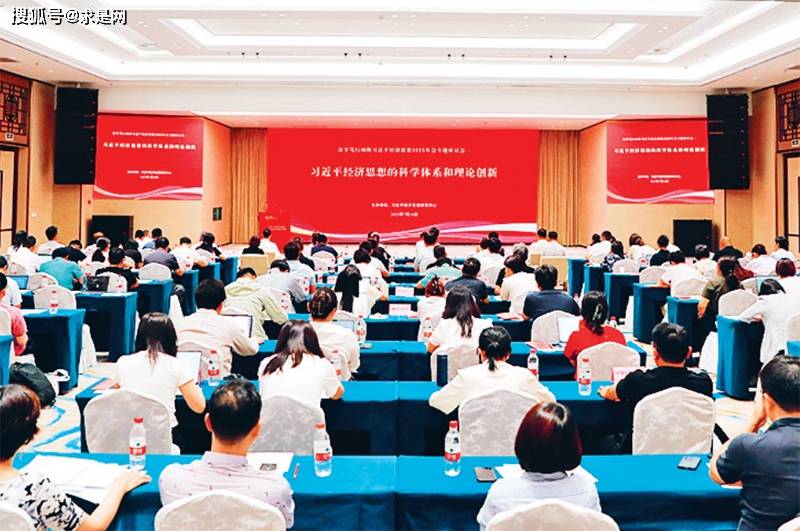
Core Ideas - The article emphasizes the need to construct a 21st-century political economy that reflects China's unique experiences and offers solutions to global challenges, guided by Xi Jinping's economic thought [1][3][5] Group 1: Theoretical Framework - Xi Jinping's economic thought serves as a comprehensive theoretical summary for China's economic development, providing a foundation for the construction of a 21st-century political economy [3][4] - The historical context of political economy shows that significant theoretical advancements arise from profound reflections on transformative practices, indicating that China's reform and modernization can inspire new theories [4][5] Group 2: Global Context and Challenges - The world is undergoing unprecedented changes, with issues such as economic imbalance, widening wealth gaps, and ecological crises becoming increasingly complex, necessitating a return to classical political economy concerns [1][2] - The dominance of Western economic paradigms has limited China's academic discourse and global understanding, highlighting the importance of developing a political economy that reflects Chinese practices and engages in international dialogue [5][6] Group 3: Key Issues in Political Economy - The fundamental purpose of development should focus on ethical values and social equity, moving beyond the Western economic model that often leads to wealth polarization [6][7] - The dynamics of development must consider new drivers such as technological innovation and data factors, emphasizing the role of new productive forces in shaping economic growth [6][8] - The relationship between economy and politics is crucial, with a need to clarify the roles of political parties, government, and markets in economic governance [7][8] Group 4: Environmental and Global Governance - Addressing the relationship between development and the environment is essential, advocating for a green development model that harmonizes economic growth with ecological sustainability [11][12] - The article discusses the challenges of economic globalization and the need for a fairer global governance system, proposing that China's initiatives can contribute to a more inclusive global economic order [12][13]
厚植合作沃土 共筑发展之路(国际论坛)
Ren Min Ri Bao· 2025-10-05 21:52
Core Insights - The Shanghai Cooperation Organization (SCO) aims to strengthen unity, deepen mutually beneficial cooperation, and contribute to building a community with a shared future for mankind [2][5] - The recent SCO Tianjin Summit established a 10-year development strategy and the formation of the SCO Development Bank, enhancing regional and global stability [2] - Economic cooperation, particularly in digital economy, green development, poverty reduction, and infrastructure connectivity, is a key pillar for the SCO's growth [2] Economic Cooperation - The China-Pakistan Economic Corridor has improved Pakistan's transportation, energy, and industrial infrastructure, promoting industrialization and modernization [3] - China's practical initiatives align with the development needs of SCO member states, providing tangible benefits [2][3] Cultural Exchange - Human exchanges are vital for development cooperation, fostering understanding and trust among nations [3][4] - The SCO emphasizes cultural dialogue, youth exchanges, and think tank cooperation to enhance mutual understanding [3] Manufacturing Influence - "Made in China" products play a significant role in the daily lives of people in SCO member countries, serving as a bridge for communication and understanding [4]

全球治理倡议是迈向建立更加公平国际体系的重要一步——访土耳其国际经济专家阿克布卢特
Xin Hua Wang· 2025-10-05 10:05
Core Insights - The global governance initiative proposed by China is seen as a significant step towards establishing a more equitable and balanced international system [1][2] - Emerging economies such as China, India, Brazil, and Turkey are now the core drivers of global growth, yet they still have limited representation in major international organizations [1] - There is a need for reforms in the global governance system to better address global challenges and balance the interests of developed and developing countries [1][2] Group 1 - The global governance initiative is closely linked to the Belt and Road Initiative, which provides the necessary infrastructure for connectivity, while the governance initiative establishes a framework for mutually beneficial relationships [1] - The post-World War II global governance architecture must adapt to the current multipolar reality, and reforming this system is crucial for rebuilding confidence in multilateralism [2] - A more representative and responsive global governance system will enhance international cooperation and improve the ability to address urgent issues such as climate change, terrorism, and global health security [2] Group 2 - Recent protectionist measures by the United States have significant impacts on countries with close trade ties, potentially forcing them to reduce production or shift exports to other markets [2] - The ongoing changes in U.S. tariff decisions create substantial uncertainty for producers, exporters, importers, and investors, undermining trust in institutions like the World Trade Organization [2] - Strengthening cooperation and reducing uncertainty in international trade are essential for ensuring sustainable global growth [2]
德国席勒研究所创始人兼主席:全球治理倡议弘扬全人类共同价值
人民网-国际频道 原创稿· 2025-10-05 05:20
Core Points - The article emphasizes the importance of shared human values such as peace, development, fairness, justice, democracy, and freedom as universal goals recognized by the international community [1] - It highlights China's global governance initiative proposed by President Xi Jinping, aimed at enhancing international order and cooperation among nations to achieve common development [1][2] - The article discusses the influence of Chinese traditional philosophy, particularly Confucianism, on universal human values and its impact on Western philosophy through historical figures [2] Group 1 - The concept of a community with a shared future for mankind provides a theoretical foundation for constructing a new global security and development framework [2] - The article notes that countries are collectively opposing unilateralism and advocating for a multipolar world, with developing nations uniting through organizations like BRICS and the Shanghai Cooperation Organization [2]
全球治理倡议对小岛屿发展中国家具有深远意义
Ren Min Ri Bao· 2025-10-05 04:38
Core Viewpoint - The article emphasizes the urgent need for a more just and equitable global governance system, particularly for small island developing countries like Jamaica, as a strategic choice for survival and development in a changing international landscape [1][3]. Group 1: Global Governance Initiative - The global governance initiative advocates for the principle of sovereign equality, which is crucial for small countries like Jamaica, as their interests are often marginalized in climate financing, debt restructuring, and trade negotiations [1][2]. - The initiative stresses adherence to international rule of law and the elimination of double standards, addressing the selective enforcement faced by developing countries in international affairs [2]. - The commitment to multilateralism is reaffirmed, rejecting unilateral actions, which is vital for third-world countries that rely on a multilateral consensus for development [2][3]. Group 2: Development Opportunities - China’s focus on renewable energy and artificial intelligence presents significant development opportunities for developing countries, including Jamaica, which has long depended on fossil fuel imports [3]. - Strengthening cooperation in photovoltaic and wind energy production can benefit Jamaica, while the introduction of digital economy platforms and AI technology can enhance key sectors such as education, agriculture, and healthcare [3]. - The call to narrow the development gap between the Global North and South aligns with the needs of Jamaica and its neighboring countries, which face challenges like economic inequality and climate vulnerability [2].