强化学习

Search documents
李建忠:关于AI时代人机交互和智能体生态的研究和思考
AI科技大本营· 2025-08-18 09:50
Core Insights - The article discusses the transformative impact of large models on the AI industry, emphasizing the shift from isolated applications to a more integrated human-machine interaction model, termed "accompanying interaction" [1][5][60]. Group 1: Paradigm Shifts in AI - The transition from training models to reasoning models has significantly enhanced AI's capabilities, particularly through reinforcement learning, which allows AI to generate synthetic data and innovate beyond human knowledge [9][11][13]. - The introduction of "Agentic Models" signifies a shift where AI evolves from merely providing suggestions to actively performing tasks for users [16][18]. Group 2: Application Development Transformation - "Vibe Coding" has emerged as a new programming paradigm, enabling non-professionals to create software using natural language, which contrasts with traditional programming methods [19][22]. - The concept of "Malleable Software" is introduced, suggesting that future software will allow users to customize and personalize applications extensively, leading to a more democratized software development landscape [24][26]. Group 3: Human-Machine Interaction Evolution - The future of human-machine interaction is predicted to be dominated by natural language interfaces, moving away from traditional graphical user interfaces (GUIs) [36][41]. - The article posits that the interaction paradigm will evolve to allow AI agents to seamlessly integrate various services, eliminating the need for users to switch between isolated applications [45][48]. Group 4: Intelligent Agent Ecosystem - The development of intelligent agents is characterized by enhanced capabilities in planning, tool usage, collaboration, memory, and action, which collectively redefine the internet from an "information network" to an "action network" [66][68]. - The introduction of protocols like MCP (Model Context Protocol) and A2A (Agent to Agent) facilitates improved interaction between agents and traditional software, enhancing the overall ecosystem [70].


智驾或超过人驾,别克高端新能源至境L7首搭Momenta R6飞轮大模型
Feng Huang Wang· 2025-08-18 08:34
据介绍,基于强化学习的Momenta R6飞轮大模型,可以在模拟的环境里去探索新的驾驶行为,系统从 自己的成功和失败中吸取经验,自我快速的成长,可以让驾驶在安全、安心的能力上,有机会超过人甚 至大幅度超过人。 凤凰网科技讯 8月18日,上汽通用汽车与Momenta签署战略合作协议,双方将在辅助驾驶领域展开深度 合作。别克高端新能源子品牌"至境"旗下的首款智能豪华轿车——别克至境L7,将搭载基于强化学习的 Momenta R6飞轮大模型。 ...

VLA/强化学习/VLN方向的论文辅导招募!
具身智能之心· 2025-08-18 06:00
Core Viewpoint - The article announces the availability of one-on-one guidance for papers related to embodied intelligence, specifically in the areas of vla, reinforcement learning, and sim2real, targeting conferences such as CVPR, ICCV, ECCV, ICLR, CoRL, ICML, and ICRA [1]. Group 1 - The guidance is aimed at students interested in submitting to major conferences in the field of embodied intelligence [1]. - There are currently three available slots for the guidance sessions [1]. - The mentors are actively engaged in the academic field of embodied intelligence and have innovative ideas [1]. Group 2 - Interested individuals can inquire further by adding a specific WeChat contact or by scanning a QR code for consultation [2].
VLA+RL还是纯强化?从200多篇工作中看强化学习的发展路线
具身智能之心· 2025-08-18 00:07
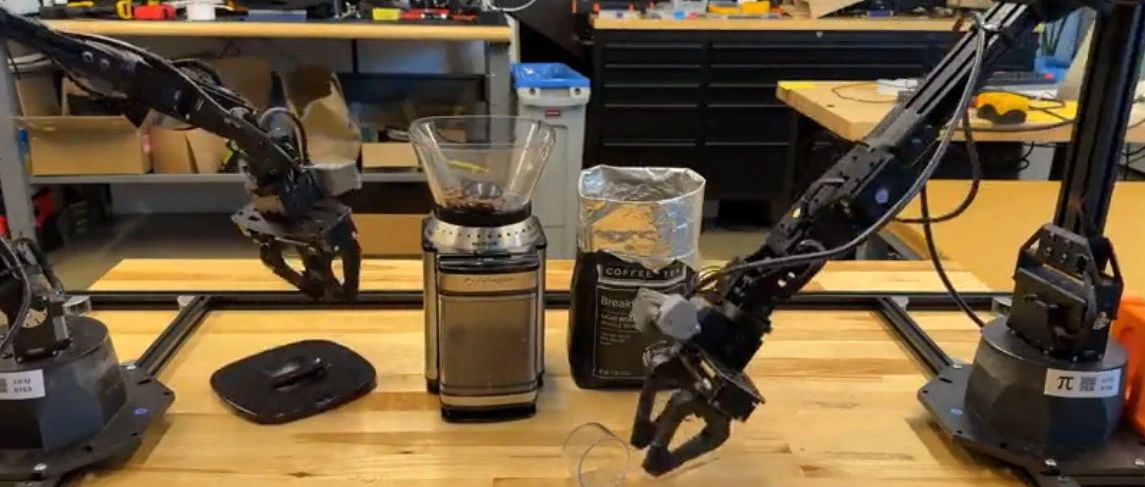
Core Insights - The article provides a comprehensive analysis of the intersection of reinforcement learning (RL) and visual intelligence, focusing on the evolution of strategies and key research themes in visual reinforcement learning [5][17][25]. Group 1: Key Themes in Visual Reinforcement Learning - The article categorizes over 200 representative studies into four main pillars: multimodal large language models, visual generation, unified model frameworks, and visual-language-action models [5][17]. - Each pillar is examined for algorithm design, reward engineering, and benchmark progress, highlighting trends and open challenges in the field [5][17][25]. Group 2: Reinforcement Learning Techniques - Various reinforcement learning techniques are discussed, including Proximal Policy Optimization (PPO) and Group Relative Policy Optimization (GRPO), which are used to enhance stability and efficiency in training [15][16]. - The article emphasizes the importance of reward models, such as those based on human feedback and verifiable rewards, in guiding the training of visual reinforcement learning agents [10][12][21]. Group 3: Applications in Visual and Video Reasoning - The article outlines applications of reinforcement learning in visual reasoning tasks, including 2D and 3D perception, image reasoning, and video reasoning, showcasing how these methods improve task performance [18][19][20]. - Specific studies are highlighted that utilize reinforcement learning to enhance capabilities in complex visual tasks, such as object detection and spatial reasoning [18][19][20]. Group 4: Evaluation Metrics and Benchmarks - The article discusses the need for new evaluation metrics tailored to large model visual reinforcement learning, combining traditional metrics with preference-based assessments [31][35]. - It provides an overview of various benchmarks that support training and evaluation in the visual domain, emphasizing the role of human preference data in shaping reward models [40][41]. Group 5: Future Directions and Challenges - The article identifies key challenges in visual reinforcement learning, such as balancing depth and efficiency in reasoning processes, and suggests future research directions to address these issues [43][44]. - It highlights the importance of developing adaptive strategies and hierarchical reinforcement learning approaches to improve the performance of visual-language-action agents [43][44].
首届机器人“奥运会”结束:宇树狂揽径赛金牌,障碍赛75%队伍未完赛
第一财经· 2025-08-17 14:58
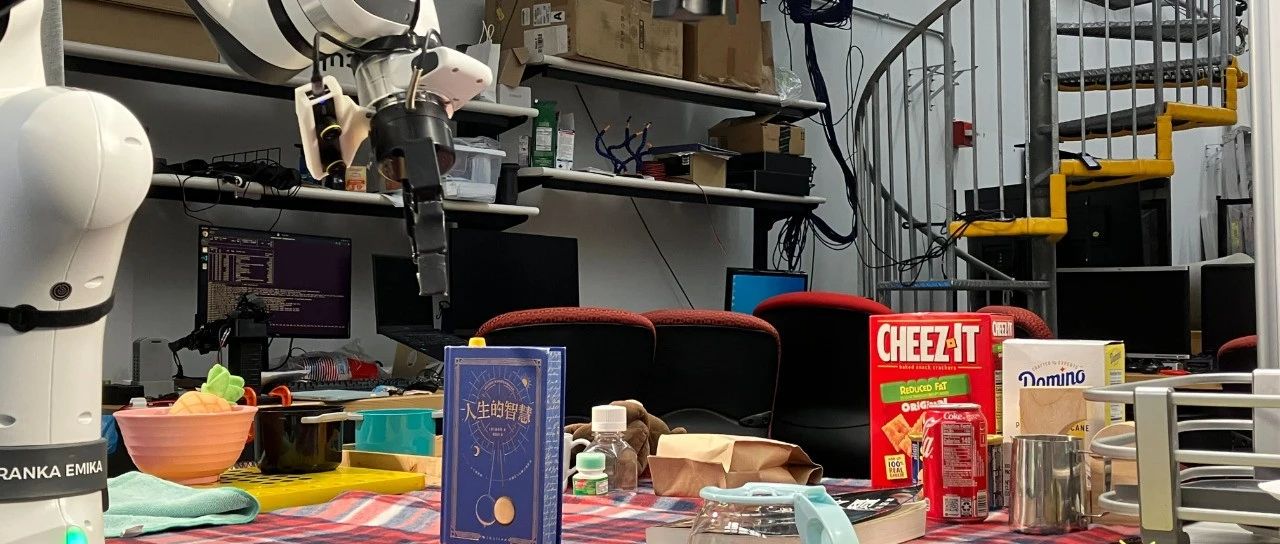
Core Viewpoint - The first World Humanoid Robot Conference showcased advancements in humanoid robotics, highlighting both achievements and challenges within the industry [3][11]. Group 1: Competition Results - Yuzhu won gold medals in multiple events, including the 1500m and 100m races, demonstrating significant performance capabilities [3][5]. - The Tian工Ultra robot, utilizing autonomous navigation, secured the gold in the 100m race, aiming to change perceptions of robots as mere toys [3][5]. - The MagicBot Z1 improved its average speed by 1 meter per second through enhanced reinforcement learning techniques, showcasing the potential for rapid advancements in robot performance [5]. Group 2: Challenges in the Industry - The 100m obstacle race revealed a 75% failure rate among competitors, indicating significant challenges in algorithm robustness and motion coordination within the humanoid robotics sector [6][8]. - Many robots struggled with environmental adaptability, as evidenced by a robot's inability to pick up different brands of bottles, highlighting limitations in perception and generalization [11]. Group 3: Autonomous Functionality - In material handling and hotel cleaning scenarios, only a few teams achieved full autonomy, with most relying on traditional programming methods [10][11]. - The competition underscored the need for breakthroughs in algorithms and adaptive learning for robots to transition from demonstration-level capabilities to practical applications [11].
松延动力小顽童队立定跳远夺冠,姜哲源:优化了机器人跳远算法
Bei Ke Cai Jing· 2025-08-17 06:41
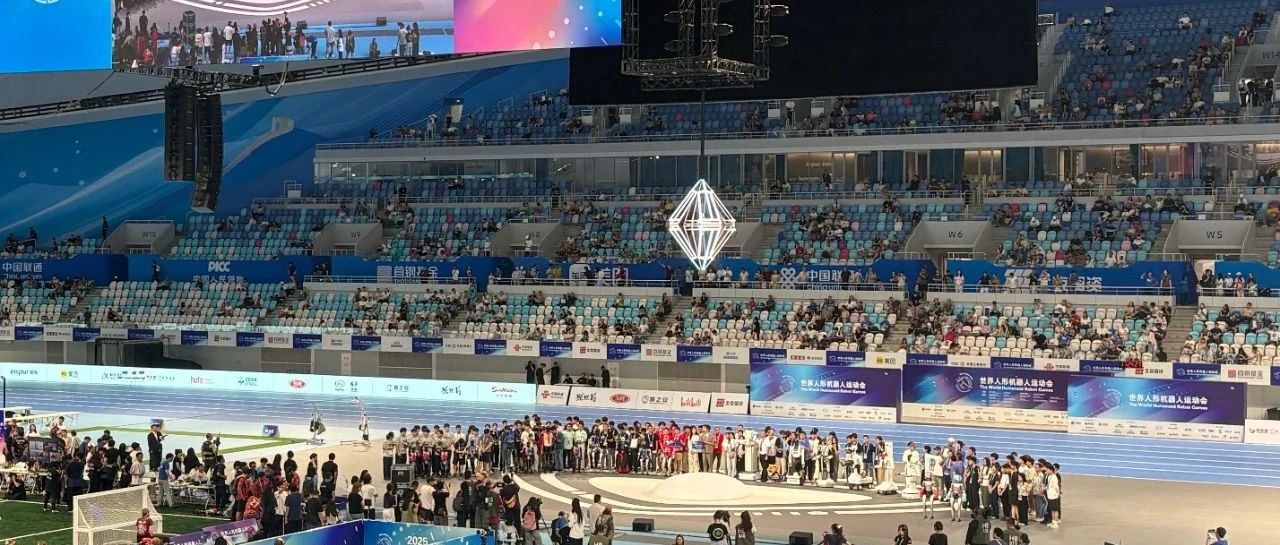
Group 1 - The 2025 World Humanoid Robot Sports Competition announced the results, with Songyan Power's "Little Rascal" team winning the long jump event with a score of 1.25 meters, followed by Yushu Technology at 1.20 meters and Lingyi Technology at 1.13 meters [1] - Songyan Power's founder and chairman, Jiang Zheyuan, explained that the company prepared multiple strategies and sent two teams to compete, utilizing different robots (N2 and K1) and algorithms to enhance performance [4] - The technical challenges in robot long jump include hardware requirements for explosive power and algorithm optimization, with the company employing reinforcement learning to fine-tune the robot's performance [4] Group 2 - Songyan Power's robots do not have a height advantage, but the company plans to release a full-sized humanoid robot product by the end of this year [4]

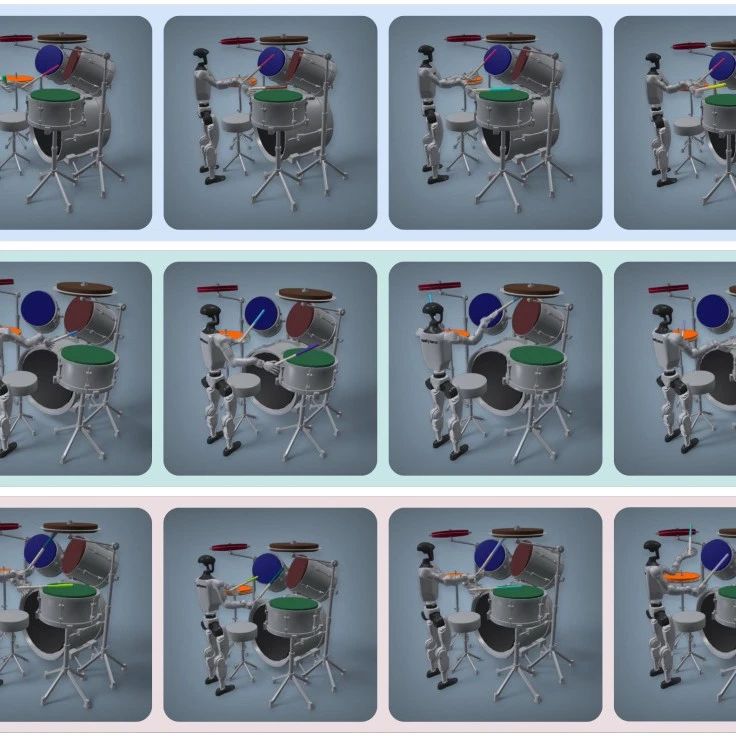
从MIDI乐谱到“类人灵魂”:机器人鼓手用90%+精准度复刻人类演奏魅力
机器人大讲堂· 2025-08-17 05:43
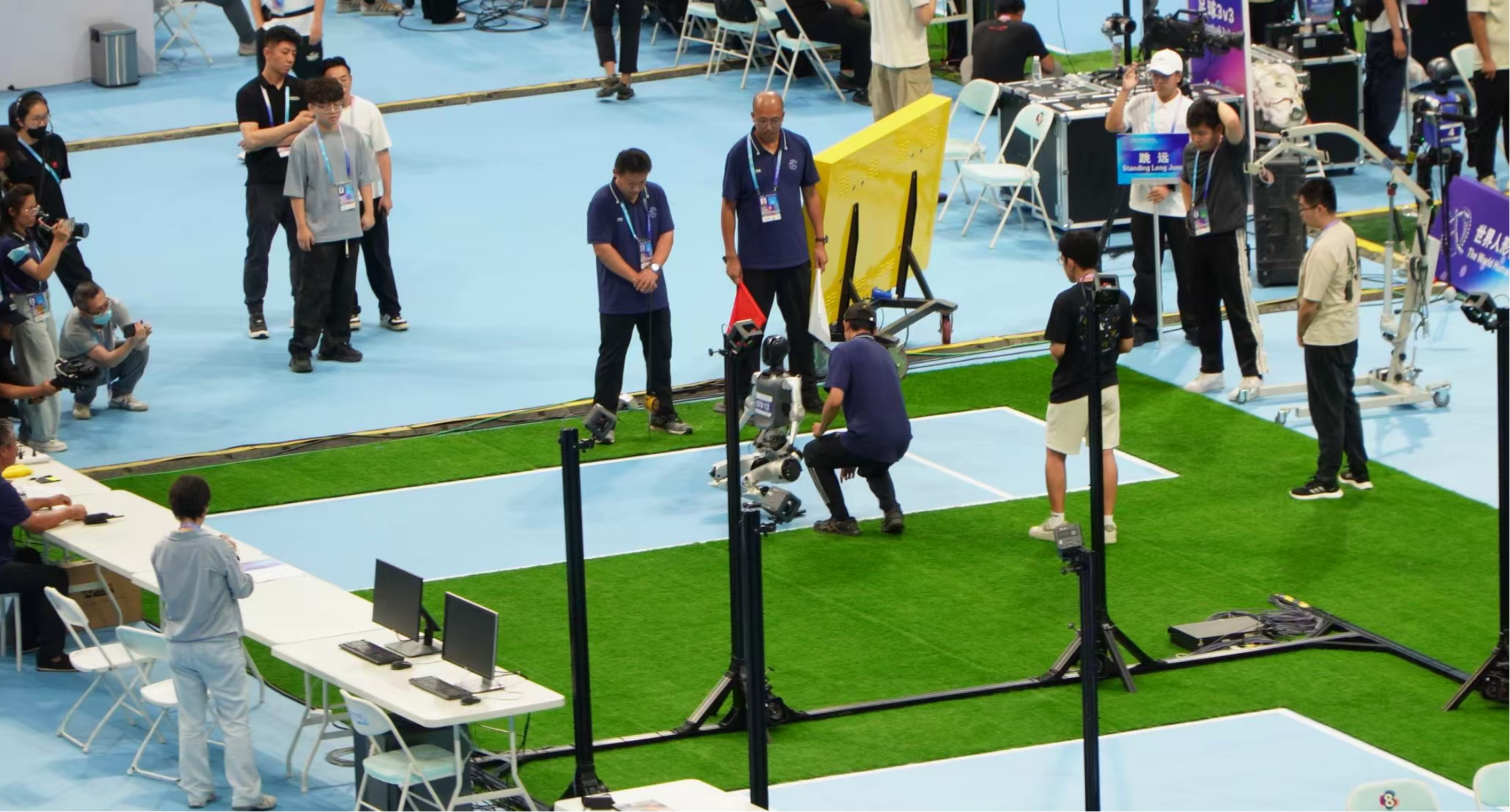
Core Viewpoint - The article discusses the development of a humanoid robot capable of drumming, highlighting its potential in creative tasks and the innovative approach taken by a research team from SUPSI, IDSIA, and Politecnico di Milano to explore this capability [1][2]. Group 1: Project Background - The "Robot Drummer" project was inspired by a casual conversation about the role of robots in music, leading to the exploration of drumming as an ideal domain due to its rhythmic nature and physical coordination requirements [3]. Group 2: Technical Development - The humanoid robot utilizes reinforcement learning algorithms to learn drumming skills, gradually acquiring human-like behaviors typical of drummers [2][5]. - The team employed MIDI as the "language" of music to accurately encode timing and dynamics, allowing the robot to interpret and perform drumming patterns based on MIDI transcriptions [6][8]. Group 3: Challenges and Solutions - The project faced three main challenges: timing precision, spatial coordination, and dynamic adaptation to varying rhythms and intensities [6][8]. - To address these challenges, the researchers developed a "Rhythmic Contact Chain" system, enabling the robot to learn through a series of timed contact events, enhancing its ability to perform complex drumming tasks [8]. Group 4: Performance Evaluation - The robot was tested on over 30 popular songs across various genres, including tracks from Linkin Park and Bon Jovi, to assess its timing, coordination, and ability to handle complex rhythms [9][10]. - The evaluation metrics included F1 scores, with results showing the robot's performance achieving over 90% rhythm accuracy and demonstrating human-like strategies in drumming [10]. Group 5: Future Prospects - The long-term vision for the robot drummer includes its integration into live performances and the ability to improvise and adapt its playing style in real-time, similar to human drummers [11].
最近被公司通知不续签了。。。
自动驾驶之心· 2025-08-17 03:23
Core Insights - The smart driving industry is currently in a critical phase of competing on technology and cost, with many companies struggling to survive in 2024, although the overall environment has improved slightly this year [2][6] - Traditional planning and control (规控) has matured over the past decade, and professionals in this field need to continuously update their technical skills to remain competitive [7][8] Group 1: Industry Trends - The smart driving sector has faced significant challenges, with many companies unable to endure the tough conditions last year, but some, like Xiaopeng, have found a way to thrive [6] - The price war in the industry has been curtailed by government intervention, yet competition remains fierce [6] Group 2: Career Guidance - For professionals in traditional planning and control, it is advisable to continue in their current roles while also learning new technologies, particularly in emerging areas like end-to-end models and large models [7][8] - There is a growing trend of professionals transitioning from traditional planning and control to end-to-end and large model applications, with many finding success in these new areas [8] Group 3: Community and Resources - The "Automated Driving Heart Knowledge Planet" community offers a platform for technical exchange, featuring members from renowned universities and leading companies in the smart driving field [21] - The community provides access to a wealth of resources, including over 40 technical routes, open-source projects, and job opportunities in the automated driving sector [19][21]

理想VLA司机大模型新的36个QA
自动驾驶之心· 2025-08-16 16:04
Core Viewpoint - The article discusses the challenges and advancements in the deployment of Visual-Language-Action (VLA) models in autonomous driving, emphasizing the integration of 3D spatial understanding with global semantic comprehension. Group 1: Challenges in VLA Deployment - The difficulties in deploying VLA models include multi-modal alignment, data training, and single-chip deployment, but advancements in new chip technologies may alleviate these challenges [2][3][5]. - The alignment issue between Visual-Language Models (VLM) and VLA is gradually being resolved with the release of advanced models like GPT-5, indicating that the alignment is not insurmountable [2][3]. Group 2: Technical Innovations - The VLA model incorporates a unique architecture that combines 3D local spatial understanding with 2D global comprehension, enhancing its ability to interpret complex environments [3][7]. - The integration of diffusion models into VLA is a significant innovation, allowing for improved trajectory generation and decision-making processes [5][6]. Group 3: Comparison with Competitors - The gradual transition from Level 2 (L2) to Level 4 (L4) autonomous driving is highlighted as a strategic approach, contrasting with competitors who may focus solely on L4 from the outset [9][10]. - The article draws parallels between the strategies of different companies in the autonomous driving space, particularly comparing the approaches of Tesla and Waymo [9][10]. Group 4: Future Developments - Future iterations of the VLA model are expected to scale in size and performance, with potential increases in parameters from 4 billion to 10 billion, while maintaining efficiency in deployment [16][18]. - The company is focused on enhancing the model's reasoning capabilities through reinforcement learning, which will play a crucial role in its development [13][51]. Group 5: User Experience and Functionality - The article emphasizes the importance of user experience, particularly in features like voice control and memory functions, which are essential for a seamless interaction between users and autonomous vehicles [18][25]. - The need for a robust understanding of various driving scenarios, including complex urban environments and highway conditions, is crucial for the model's success [22][23]. Group 6: Data and Training - The transition from VLM to VLA necessitates a complete overhaul of data labeling processes, as the requirements for training data have evolved significantly [32][34]. - The use of synthetic data is acknowledged, but the majority of the training data is derived from real-world scenarios to ensure the model's effectiveness [54]. Group 7: Regulatory Considerations - The company is actively engaging with regulatory bodies to ensure that its capabilities align with legal requirements, indicating a proactive approach to compliance [35][36]. - The relationship between technological advancements and regulatory frameworks is highlighted as a critical factor in the deployment of autonomous driving technologies [35][36].


OpenAI掌门人曝GPT-6瓶颈,回答黄仁勋提问,几乎为算力“抵押未来”
3 6 Ke· 2025-08-16 04:04
Group 1 - The core observation made by Greg Brockman is that as computational power and data scale rapidly expand, foundational research is making a comeback, and the importance of algorithms is once again highlighted as a key bottleneck for future AI development [1][21][22] - Brockman emphasizes that both engineering and research are equally important in driving AI advancements, and that OpenAI has always maintained a philosophy of treating both disciplines with equal respect [3][6][8] - OpenAI has faced challenges in resource allocation between product development and research, sometimes having to "mortgage the future" by reallocating computational resources originally intended for research to support product launches [8][9][10] Group 2 - The concept of "vibe coding" is discussed, indicating a shift towards serious software engineering practices, where AI is expected to assist in transforming existing applications rather than just creating flashy projects [11][12] - Brockman highlights the need for a robust AI infrastructure that can handle diverse workloads, including both long-term computational tasks and real-time processing demands, which is a complex design challenge [16][18][19] - The future economic landscape is anticipated to be driven by AI, with a diverse model library emerging that will create numerous opportunities for engineers to build systems that enhance productivity and efficiency [24][25][27]