AI医疗

Search documents
开年行情或可关注脑机接口 Table_Title] &AI 医疗&国企改革条线
Xinda Securities· 2026-01-04 11:54
Investment Rating - The investment rating for the pharmaceutical and biotechnology industry is "Positive" [2] Core Viewpoints - The pharmaceutical and biotechnology sector experienced a weekly return of -2.06%, ranking 28th among 31 primary sub-industry indices, with the medical services sub-sector performing the best at -1.40% [3][9] - Emerging industries such as brain-computer interfaces, robotics, and AI applications are highlighted as key areas of focus for investment in 2026, alongside state-owned enterprise reforms as part of the "14th Five-Year Plan" [3][9] - Long-term investment themes include innovation and international expansion, with recommendations to focus on high-end medical devices and innovative drug supply chains [3][9] Summary by Sections 1. Industry Weekly Viewpoints - The medical services sub-sector had the highest weekly return, while the pharmaceutical commercial sub-sector ranked sixth with a return of -2.68% [9] - The report emphasizes the importance of new industries and state-owned enterprise reforms for investment opportunities in 2026 [3][9] 2. Pharmaceutical Sector Performance and Valuation - The pharmaceutical and biotechnology industry index had a recent one-month return of -2.97%, ranking 29th among primary sub-indices [11] - The current PE (TTM) for the pharmaceutical and biotechnology industry is 28.59 times, slightly below the five-year historical average of 28.62 times [15][18] 3. Market Tracking - The medical services sub-sector showed the smallest weekly decline, while it also had the highest monthly return of 1.91% [28] - The report provides detailed performance metrics for various sub-sectors, indicating a mixed performance across the board [25][28] 4. Industry and Company Dynamics - Recent policy developments include the implementation of a unified basic medical insurance management procedure in Guangdong Province, effective February 1, 2026 [35] - Significant news includes the approval of new drugs and clinical trials by various companies, indicating ongoing innovation in the sector [36][37]
健康160获机构看好
Sou Hu Cai Jing· 2026-01-04 05:02
2025年12月下旬,开盘证券等机构发布针对健康160(02656.HK)的评级报告,最高目标价达到95.51港 元,引发市场广泛关注。 作为国内领先的数字医疗健康综合服务平台,健康160凭借超过18年的行业深耕,在平台挂号量、合作 医疗机构及医护人员数量等核心资源指标上均位列行业第一。券商研究所的乐观预期正是源于健康160 展现出的明确业绩拐点信号:营收重回增长轨道,经调整净亏损大幅收窄,盈利在望。 健康160的业务构成呈现出鲜明的"医药产品经销与数字健康服务双轮驱动"特征。医药健康用品销售业 务贡献了公司收入的主要部分,但毛利率较低;而数字医疗健康解决方案虽然收入占比约30%,但毛利 率超过70%,成为公司盈利改善的关键动力。截至2025年3月31日,健康160的平台已连接超过4.46万家 医疗健康机构,其中包括超过1.44万家医院(含3430家三级医院)及超过3.02万家基层医疗卫生机构。 平台与超过90万名医护人员建立合作关系,注册个人用户达到5690万名。这些资源构成了健康160的核 心竞争壁垒。 行业风口:数字医疗赛道迎来黄金发展期 中国医疗健康行业正经历深刻变革。根据行业数据,数字医疗健康综合服 ...
AI医疗正迎来商业化拐点 机构高频调研股揭晓
Zheng Quan Shi Bao Wang· 2025-12-31 14:10
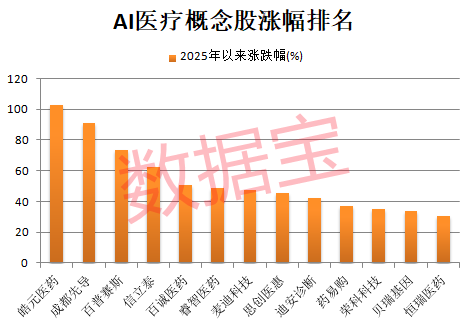
Group 1: AI Medical Industry Outlook - The AI medical industry is expected to maintain high prosperity due to continuous breakthroughs in AI technology and increasing healthcare demands [1] - The integration of AI in the medical field is becoming a core driver for industry development, with significant policy support from the government [5][4] - The global AI medical market is projected to grow at a compound annual growth rate (CAGR) of 43% from 2024 to 2032, potentially exceeding $491 billion [5] Group 2: Beijing's Support for AI in Healthcare - Beijing's health commission has introduced the "Action Plan" and "Several Measures" to support the development of AI in healthcare, focusing on core application scenarios and expanding application areas [3][4] - The "Action Plan" outlines 16 key tasks aimed at promoting collaboration between medical institutions and AI companies, with a goal to establish a robust AI industry support system by 2027 [3] Group 3: Market Performance of AI Medical Stocks - AI medical concept stocks have seen an average increase of 18.75% this year, with five stocks rising over 50% [6] - Haoyuan Pharmaceutical has the highest cumulative increase of 102.86% this year, reflecting strong market interest and institutional attention [8][6] - Yunnan Baiyao has been the most frequently researched stock, with 41 institutional surveys conducted this year, indicating significant investor interest [8]


数字健康走向执行层:CES样本里,健康管理的竞争点已经悄然改变
GLP1减重宝典· 2025-12-31 10:59
Core Insights - The article emphasizes the shift in comprehensive health management from human decision-making to system-driven execution, highlighting the importance of products that take on greater responsibility for health outcomes [4][22]. Group 1: Execution Responsibility in Health Management - Traditional health management applications rely on users to record data and follow suggestions, often failing during the transition from advice to action [5]. - Newer products are designed to automate measurement, triggering, and intervention, thereby increasing the system's responsibility for health outcomes [5][22]. - WELT exemplifies this by focusing on waist circumference as a key health metric, integrating sensors to track changes and provide actionable feedback without user input [6][8]. Group 2: Innovative Product Examples - ElliQ integrates health management into the daily routines of elderly users, actively engaging them and their caregivers through reminders and updates, thus expanding execution responsibility to the family network [10][12]. - UREVO automates training plans within its device usage, reducing the need for user decision-making and making health behaviors a default part of device interaction [13][15]. - Appscent Medical and Vagustim explore non-traditional interaction methods to lower execution costs, with Appscent using olfactory stimulation during sleep to assist recovery [19][21]. Group 3: Market Trends and Future Directions - The article suggests that the future of comprehensive health management lies in creating replicable execution Standard Operating Procedures (SOPs) that automate measurement, triggering, and intervention [22]. - Companies like WELT, ElliQ, and UREVO are leading the way by embedding health management into everyday actions, moving from mere health information products to comprehensive health execution systems [22].

西南证券:2025年创新药迎来β行情 2026年创新药行情将进入精选个股阶段
Zhi Tong Cai Jing· 2025-12-31 03:52
Group 1: Core Insights - The report from Southwest Securities indicates that by early 2025, Hong Kong-listed companies will begin to achieve business development (BD) milestones, with innovative drugs leading the market surge [1] - The Chinese innovative drug sector is expected to accelerate following the government's support for drug pricing mechanisms and the development of innovative drugs and medical devices, as highlighted in the March government work report [1] - The innovative drug sector is predicted to transition from a broad market rally to a selective stock picking phase by 2026, with a focus on three key areas: overseas expansion, brain-computer interfaces, and AI in healthcare [1] Group 2: Overseas Expansion - By December 5, 2025, the number of BD projects for Chinese innovative drugs going overseas reached 166, an increase of 54 projects compared to the entire year of 2024 [1] - The upfront payments for these projects totaled $6.3 billion, representing a growth of over 199% from 2024 [1] - The total amount for overseas projects reached $141.97 billion, an increase of over 136.8% from 2024, with over 52% of the molecules in early clinical stages [1] Group 3: Brain-Computer Interfaces - The 15th Five-Year Plan emphasizes the development of brain-computer interfaces as a new economic growth point, with several provinces introducing fee standards and including some projects in medical insurance [2] - The application of brain-computer interface technology is primarily focused on medical rehabilitation, particularly for patients with stroke and spinal cord injuries, with potential expansion into education, entertainment, and industrial sectors [2] Group 4: AI in Healthcare - Five national departments issued guidelines to promote and regulate the application of AI in healthcare, setting clear short-term (by 2027) and long-term (by 2030) goals across eight major areas [3] - AI in healthcare is entering a new phase of technological integration and industry restructuring, with key applications including AI health management, clinical decision support systems, medical imaging diagnostics, surgical robotics, genetic sequencing, and drug development [3] Group 5: Recommended Companies - The report recommends several companies for investment, including Heng Rui Medicine, BeiGene, Mindray Medical, United Imaging Healthcare, and others, indicating a diverse portfolio in the healthcare sector [4]

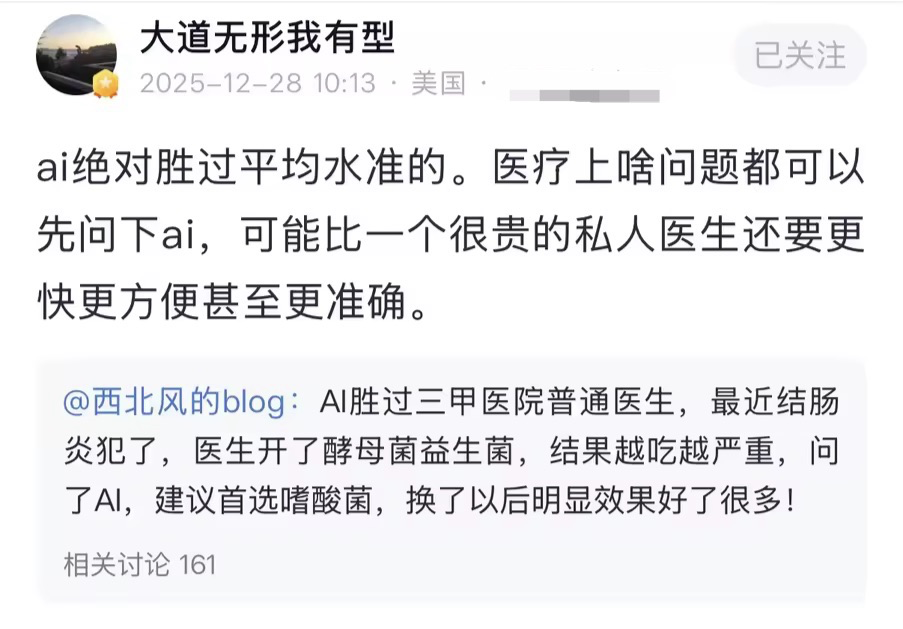
顶级投资人段永平看好AI医疗 称AI已超三甲医院普通医生平均水平
Shang Hai Zheng Quan Bao· 2025-12-30 14:56
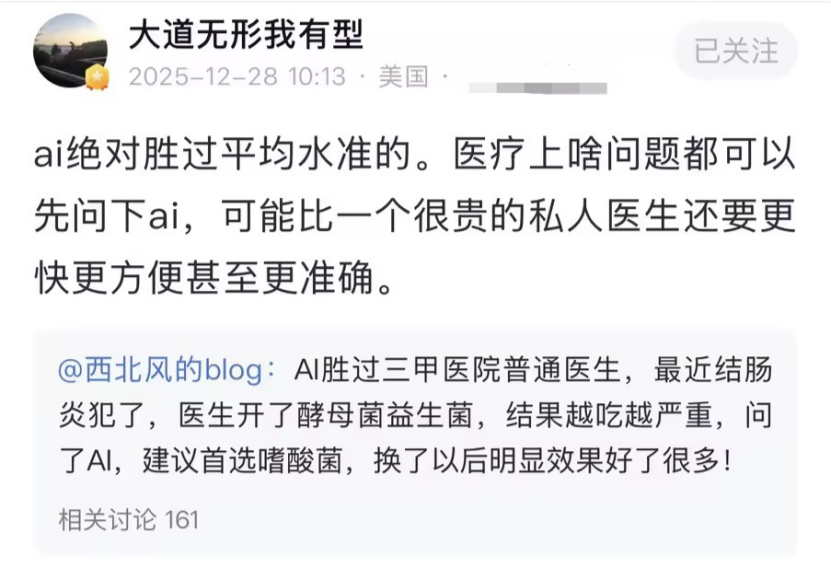
Group 1 - The discussion on "AI surpassing ordinary doctors in top-tier hospitals" has garnered significant attention in the investment community, with notable investor Duan Yongping commenting that AI is likely to be faster, more convenient, and even more accurate than expensive private doctors [1][3] - The AI healthcare sector is experiencing a surge in interest, particularly highlighted by the rapid popularity of consumer-level applications, such as Ant Group's AI health app "Antifufu," which has reached the top of the Apple App Store's free download chart and processes 5 million health inquiries daily [3][6] - The capital market's enthusiasm for the AI healthcare sector has been ignited, with the Wind AI healthcare theme index rising for several consecutive trading days following the product upgrade of "Antifufu," leading to active stock performance among related listed companies, including Meinian Health, Huaren Health, Weining Health, and Yuyue Medical [6] Group 2 - The aging population and increasing life expectancy are driving the demand for health-related AI applications, revealing a widespread market need for health solutions [6] - The current trajectory of AI healthcare is expanding from single products to a full diagnostic and treatment chain, with applications extending from core hospitals to grassroots healthcare and personalized health management [6] - The integration of "artificial intelligence + healthcare" is expected to deepen under supportive policies and the development of new productive forces, opening up broader opportunities for industry growth [6]
AI超过普通医生平均水平?大咖齐发声,机构密集调研医疗AI
Mei Ri Jing Ji Xin Wen· 2025-12-30 13:18
Core Viewpoint - The rise of AI applications in healthcare, particularly the "Ant Fortune" app, is expected to significantly impact the market, with predictions that next year could be a pivotal year for AI applications in this sector [2][6]. Group 1: AI in Healthcare Applications - The "Ant Fortune" app has gained remarkable traction, reaching the second position on the Apple App Store's free chart after a surge in downloads following its latest release [6]. - AI is increasingly being utilized as a "super assistant" for doctors, enhancing diagnostic completeness by allowing physicians to consult the app during patient evaluations [10][8]. - The healthcare sector is showing a positive response to AI technology, with the "Ant Fortune" app providing a "famous doctor AI avatar" feature, which has already answered over 27 million health inquiries [18]. Group 2: Market Response and Investment Trends - The healthcare sector has seen a strong performance in the stock market, with AI healthcare concept stocks like Meian Health and Weining Health experiencing significant gains [11]. - Investment interest is growing, with investors actively inquiring about potential collaborations with the "Ant Fortune" app and urging companies to capitalize on industry trends [15]. - Analysts suggest that AI healthcare is transitioning from thematic investment to a growth track supported by real performance metrics [11]. Group 3: Policy Support and Industry Standards - The government has expressed clear support for the integration of AI in healthcare, identifying it as a key direction for cultivating new productive forces by 2025 [17]. - The establishment of industry standards is crucial for the development of AI in healthcare, with the first AI doctor standard in the surgical field recently released by Peking University People's Hospital in collaboration with Ant Health [22].
医药行业2026年投资策略:创新药板块进入精选个股行情,关注出海、脑机接口、AI医疗三大方向
Southwest Securities· 2025-12-30 11:50
Core Insights - The report indicates that the innovative drug sector is entering a phase of selective stock picking in 2026, following a beta market in 2025. The A-share pharmaceutical industry has risen by 15.9% since the beginning of 2025, underperforming the CSI 300 index by 0.65 percentage points, ranking 17th among industries [2][14]. - The report highlights three key investment directions for 2026: overseas expansion of pharmaceuticals, brain-computer interfaces, and AI in healthcare [2]. Investment Strategy Overview - The innovative drug sector is expected to shift from a broad market rally to a focus on selective stocks in 2026. The average increase for 75 innovative drug sample indices in A-shares reached 54.8%, with Hong Kong's indices doubling [2]. - The report notes that as of December 5, 2025, there were 166 overseas business development (BD) projects, a significant increase from the previous year, with upfront payments reaching $6.3 billion, a growth of over 199% compared to 2024 [2]. Key Investment Directions Overseas Expansion - The report emphasizes the acceleration of Chinese innovative drugs entering international markets, with ADCs and bispecific antibodies being hot topics. The potential for GLP-1R target new drugs remains strong in areas such as long-acting formulations and oral medications [2]. Brain-Computer Interfaces - The report outlines the government's strategic push for brain-computer interfaces as a new economic growth point, with applications in medical rehabilitation for conditions like stroke and spinal cord injuries [2]. AI in Healthcare - The report discusses the establishment of clear short-term and long-term goals for AI in healthcare, covering various applications such as AI health management and clinical decision support systems [2]. Recommended Stocks - The report recommends several companies for investment, including Heng Rui Medicine (600276), BeiGene (688235), Mindray Medical (300760), and others, indicating a diversified approach across the innovative drug and medical device sectors [2].


港股IPO申请失效,微脉的盈利迷途与行业拷问
Sou Hu Cai Jing· 2025-12-30 00:42
Core Insights - The company, Weimai, is facing significant challenges as it attempts to transition from a registration service platform to a "full-course management" model, particularly in the context of its upcoming IPO application to the Hong Kong Stock Exchange [2][10] Financial Performance - Weimai's revenue growth has stagnated, with reported revenues of 512 million yuan, 628 million yuan, and 653 million yuan for 2022, 2023, and 2024 respectively, showing a year-on-year growth of 22.7% in 2023 but a sharp decline to 3.98% in 2024 [3] - The company has incurred net losses of 414 million yuan, 150 million yuan, and 193 million yuan over the same period, with total losses amounting to 757 million yuan, which is 1.16 times the projected revenue for 2024 [3] - Operating cash flows have been negative, with net cash from operating activities reported as -243 million yuan, -83 million yuan, and -39 million yuan from 2022 to 2024, indicating that the current business model is not generating sufficient funds for operations [3] Research and Development - Weimai emphasizes its self-developed CareAI platform as a core competitive advantage, claiming coverage of over 1,000 diseases and service to approximately 500,000 patients [4] - However, R&D expenditures have halved from 61 million yuan in 2022 to 30 million yuan in 2024, representing only 4.6% of revenue, significantly below the industry average of over 8% [4] - The AI technology's effectiveness is questioned, as it relies on third-party technologies for its foundational models, and core services still depend heavily on human teams [4] Business Model and Partnerships - Weimai's deep integration with public hospitals distinguishes it from competitors like Alibaba Health and JD Health, having established "full-course management centers" with 157 hospitals and partnerships with over 4,700 medical institutions by the end of 2024 [5] - Despite the apparent stability of this model, it is fragile due to profit-sharing disputes and data security concerns raised by hospitals [5] - The company's revenue model relies on a prepayment package fee system, with about 30% of income coming from value-added services that require profit-sharing with hospitals, leading to high marginal costs and challenges in achieving economies of scale [5] Market Position and Competition - The full-course management market is projected to grow from 61.4 billion yuan in 2024 to 365.4 billion yuan by 2030, with a compound annual growth rate of 34.6% [8] - However, Weimai's market share is only 1.06% based on 2024 revenue, indicating a lack of a strong competitive moat in a highly fragmented market [8] - The company faces increasing competition from other players in the chronic disease management space, many of whom have already integrated with insurance systems, highlighting Weimai's commercial model weaknesses [8] IPO and Financial Pressure - Weimai's push for an IPO is seen as a strategic necessity due to pressure from investors, with some agreements containing clauses that trigger buyback options if the IPO is not initiated by the end of 2025 [7] - The company has 821 million yuan in cash and cash equivalents as of the end of 2024, which may support short-term operations, but the negative operating cash flow raises concerns about future financial stability [7] Conclusion - Weimai's innovative approach to integrating AI and public hospital services has potential, but it must address fundamental questions regarding cost control, scalability, and the correlation between technology investment and commercial returns to succeed in a challenging market environment [9][10]
【看新股】吉因加科技港股IPO:主营精准医疗赛道 华大基因、爱尔医疗等参投
Xin Hua Cai Jing· 2025-12-29 23:31
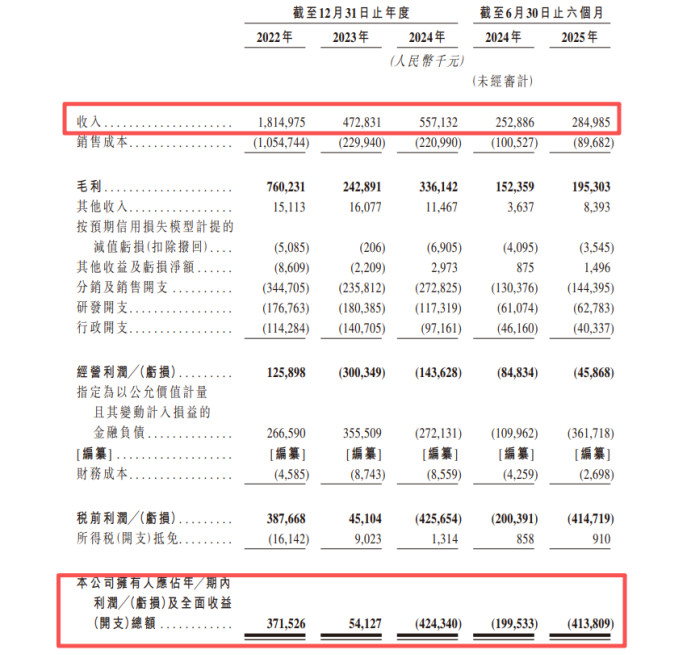
Core Viewpoint - GeneTech (Shaoxing) Co., Ltd. has submitted an IPO application to the Hong Kong Stock Exchange, aiming to raise funds for enhancing R&D capabilities and expanding its product portfolio [1][2] Company Overview - Founded in 2015, GeneTech specializes in precision medicine, integrating AI capabilities into the biomarker value chain [3] - The company offers three main solutions: precision diagnostics, drug development empowerment, and clinical research and transformation [3] - GeneTech operates China's only integrated platform covering the entire chain of biomarker discovery, validation, product development, and commercialization [3] Financial Performance - Revenue from 2022 to 2024 was 1.815 billion RMB, 473 million RMB, and 557 million RMB, respectively, with profits of 372 million RMB, 54.1 million RMB, and a loss of 424 million RMB [5] - In the first half of 2025, revenue was 285 million RMB, a year-on-year increase of 12.69%, while the loss was 414 million RMB, indicating an expanded loss compared to the previous year [5] - The decline in revenue from 2022 to 2023 was primarily due to the cessation of COVID-19 nucleic acid testing services following the end of the pandemic [5] Revenue Structure - Precision diagnostics solutions account for over 70% of GeneTech's revenue, with 77.7% of total revenue in the first half of 2025 coming from this segment [6][7] - The gross margin for precision diagnostics solutions reached 75.6% in the first half of 2025 [6] Supplier Dependency - GeneTech faces a high dependency on major suppliers, with procurement from the top five suppliers accounting for 41.5%, 71.5%, 67.4%, and 68.1% of total procurement in 2022, 2023, 2024, and the first half of 2025, respectively [9] - As of June 30, 2025, the company had approximately 96 million RMB in cash and cash equivalents, while its bank loans due within one year were about 140 million RMB, indicating potential liquidity pressure [9] Investment and Future Plans - The company has received multiple rounds of financing from investors including BGI Genomics and Aier Eye Hospital [11] - The funds raised from the IPO will be used for enhancing R&D capabilities, expanding product offerings, marketing, and upgrading manufacturing capabilities [11]