智能体

Search documents
老百姓携手腾讯健康上线“老百姓小丸子AI”
Zheng Quan Ri Bao Wang· 2025-08-06 13:45
Core Insights - The collaboration between Lao Bai Xing and Tencent Health aims to enhance operational efficiency and precision in the pharmaceutical retail industry through the launch of the AI-powered assistant "Lao Bai Xing Xiao Wan Zi AI" [1][2][3] Group 1: Partnership and Technology - Lao Bai Xing has partnered with Tencent Health to develop an enterprise-level AI assistant tailored for the pharmaceutical retail sector [1] - The AI assistant is built on Tencent Cloud's intelligent agent development platform, utilizing high-performance computing clusters for enhanced data security and operational efficiency [1][3] Group 2: Features and Applications - The "Lao Bai Xing Xiao Wan Zi AI" integrates two major knowledge bases: industry policies and company regulations, covering key business scenarios such as medical insurance policies and store operations [2] - The AI can provide real-time, precise answers to employee inquiries regarding complex policies and operational issues, thereby improving internal collaboration and employee satisfaction [2][3] Group 3: Future Developments - Future plans include expanding the AI's capabilities from knowledge-based responses to comprehensive business decision-making and customer service, aiming to transform the smart health service ecosystem [3]


事关AI!周鸿祎最新发声
Zhong Guo Ji Jin Bao· 2025-08-06 13:32
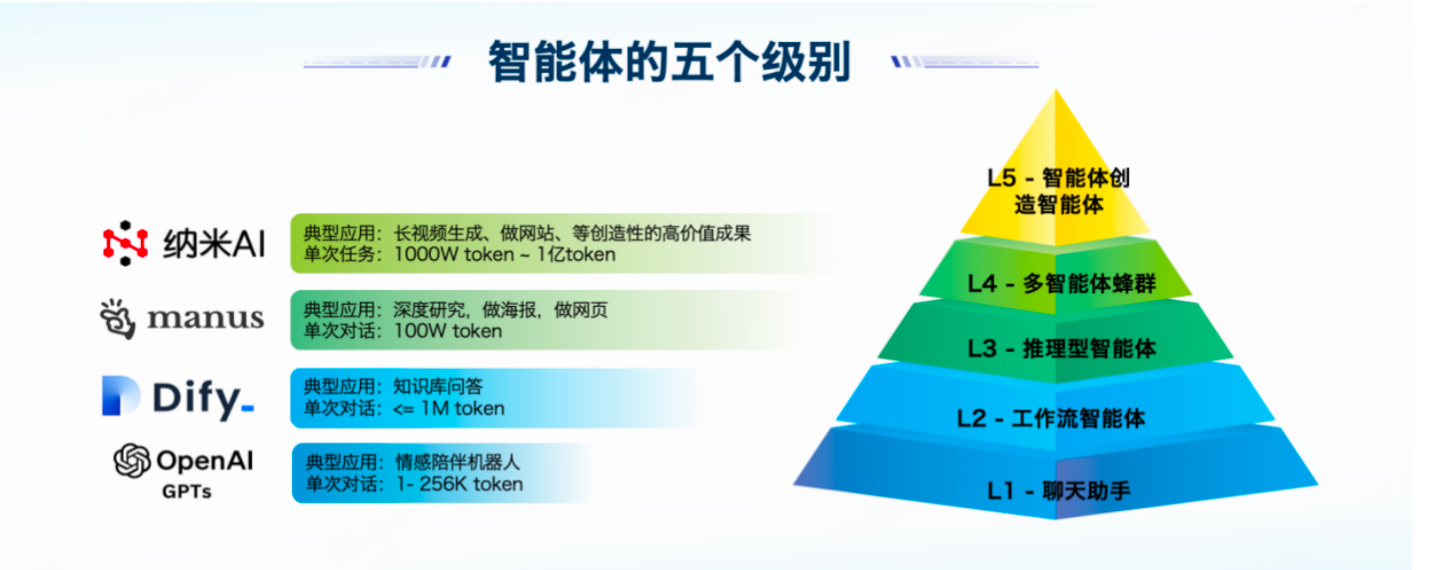
Core Viewpoint - The chairman of 360, Zhou Hongyi, stated that AI large models must evolve into intelligent agents to become effective productivity tools rather than mere toys [2]. Group 1: Evolution of AI Models - Zhou highlighted two main pain points in enterprise applications of large models: insufficient reasoning ability and lack of independent working capability. The former has improved significantly in the past year, while the latter remains unresolved [2]. - Zhou emphasized that large models lack the ability to use tools and cannot perform tasks directly, which limits their effectiveness [2]. - The evolution of intelligent agents is outlined in stages, starting from L1 chat assistants, which are essentially chat tools, to L4 multi-agent swarms that can execute complex tasks collaboratively [3][3]. Group 2: Intelligent Agent Development - L2 low-code workflow agents have progressed from being "toys" to "tools," requiring human setup for processes while AI executes tasks [3]. - L3 reasoning agents can autonomously plan and complete tasks, functioning like specialized employees, but still face limitations in cross-domain complex problem-solving due to a lack of collaborative planning capabilities [3]. - L4 multi-agent swarms represent a breakthrough in nano AI, allowing multiple expert agents to collaborate flexibly, achieving high task success rates of 95.4% with a token consumption range of 5 million to 30 million [3]. Group 3: Company Initiatives - To enable more enterprises to benefit from intelligent agents, 360 recently launched the "Intelligent Agent Factory," allowing companies to customize their own L3 agents without programming knowledge [5]. - The platform also facilitates the formation of L4 multi-agent swarm teams, enhancing collaborative capabilities for businesses [5]. - As of August 6, 360's stock price was reported at 10.95 yuan per share, with a market capitalization of 766 billion yuan [5].



事关AI!周鸿祎最新发声
中国基金报· 2025-08-06 13:28
Core Viewpoint - The chairman of 360, Zhou Hongyi, stated that AI large models must evolve into intelligent agents to become effective productivity tools rather than mere toys [2][4]. Group 1: Pain Points and Evolution of AI Models - Zhou identified two main pain points in the application of large models: insufficient reasoning ability and lack of independent working capability. The former has improved significantly in the past year, while the latter remains unresolved [3]. - Zhou emphasized that large models lack the ability to use tools and perform tasks directly, which limits their effectiveness. He proposed that intelligent agents can address these issues by understanding goals, planning tasks, and utilizing tools to deliver complete results [4]. Group 2: Levels of Intelligent Agents - Intelligent agents are expected to evolve through several levels: - L1: Chat assistants, which are essentially chat tools providing suggestions or emotional support, are considered "toy-level" intelligent agents [4]. - L2: Low-code workflow intelligent agents have progressed from "toys" to "tools," requiring human setup for processes while AI executes tasks to enhance productivity [5]. - L3: Reasoning intelligent agents can autonomously plan and complete tasks, akin to specialized employees, but face limitations in cross-domain complex problem-solving due to a lack of collaborative planning capabilities [5]. - L4: Multi-agent swarms represent a breakthrough in nano AI, where multiple expert agents can flexibly collaborate and execute complex tasks with a high success rate of 95.4% over 1,000 steps, consuming between 5 million to 30 million tokens [5]. Group 3: Company Initiatives - To enable more enterprises to benefit from intelligent agents, 360 recently launched the "Intelligent Agent Factory," allowing companies to customize their own L3 intelligent agents using natural language without programming knowledge. This initiative aims to help every enterprise create its own intelligent agent and combine them into L4 multi-agent swarm teams [6]. Group 4: Market Performance - As of the close on August 6, 360's stock price was reported at 10.95 yuan per share, with a market capitalization of 766 billion yuan [7].

全国工商联人工智能委员会常务秘书长范丛明:智能体相关新工种有望问世
Zheng Quan Shi Bao Wang· 2025-08-06 12:41
Group 1 - The development of artificial intelligence (AI) is expected to give rise to new job roles related to intelligent agents by next year, as highlighted by the National Federation of Industry and Commerce's AI Committee [1] - The AI Committee has been conducting research on key enterprises in representative cities since December last year, focusing on the integration of "industry + AI" and has formed multiple proposals and suggestions [1] - The committee aims to leverage AI technology to enhance productivity and promote industrial intelligence upgrades, capitalizing on local industrial advantages [1] Group 2 - The National Data Bureau has been promoting data openness and has implemented measures regarding data rights, circulation, and trading, with pilot projects in the Greater Bay Area [2] - The concept of "data assets on the balance sheet" is discussed, emphasizing that the true value of data lies in its usability and confirmation by customers, rather than merely listing it as an asset [2] - As national laws and regulations become more refined, data trading is expected to become more standardized and orderly, which is crucial for realizing data value [2] Group 3 - The evolution of AI is categorized into several stages: logical reasoning (1950-1980), knowledge reasoning (1980-2000), deep learning (2000-2020), and the current AIGC stage starting in 2023 [3] - The AI industry has transitioned from voice recognition companies to image processing and machine vision firms, culminating in the emergence of generative AI led by companies like DeepSeek and Baidu [3] - The focus is on promoting AI applications while ensuring safety, with efforts to showcase successful industry cases and enhance AI platform construction [3]
周鸿祎:现阶段智能体竞争的唯一护城河是执行力
Tai Mei Ti A P P· 2025-08-06 11:42
Core Insights - The rapid evolution of AI agents leads to a very short product lead time, with companies needing to focus on execution and adaptability to stay competitive [2] - The concept of "Swarm L4" categorizes AI agents into five levels, with increasing complexity and application value as the level rises [3] - Single AI agents face significant limitations in task execution, while multi-agent swarm collaboration shows a high success rate and efficiency in completing complex tasks [5] Group 1: AI Agent Development - The competitive edge in the AI agent industry lies in the ability to quickly iterate and update products, rather than just launching them [2] - The "Swarm L4" framework indicates that higher-level agents can handle more complex projects, enhancing their task processing capabilities [3] Group 2: Multi-Agent Collaboration - Multi-agent systems can execute up to 1000 steps with a success rate of 95.4%, showcasing their effectiveness in complex task execution [5] - Challenges in multi-agent collaboration include task allocation and communication costs, but the benefits outweigh these difficulties [5] Group 3: Human-Machine Collaboration - The "human-in-the-loop" principle emphasizes the importance of user oversight in AI operations, allowing for decision-making and risk reduction [6] - The unpredictability of AI outputs necessitates a collaborative approach where humans guide AI execution, enhancing overall efficiency [6] Group 4: Specialized vs. General AI Agents - Specialized AI agents focusing on single domains are more effective than general-purpose agents, which struggle to excel in multiple areas [7][8] - General AI agents are suitable for repetitive tasks, while specialized agents provide more precise and efficient services for creative tasks [8] Group 5: Cybersecurity Challenges - The rise of AI agents introduces new cybersecurity threats, with the emergence of "super hackers" capable of automating attacks using AI [9] - Companies are encouraged to deploy security AI agents to counteract these threats, acting as digital counterparts to human security experts [9][10] Group 6: 360's AI Initiatives - 360 is advancing its entire product line towards AI integration, with the "AI Factory" enabling customized security AI agents for various scenarios [10] - Data shows that security AI agents significantly outperform traditional human services in threat detection and operational efficiency [10]

360周鸿祎:新智能体时代网络安全进入“机器对机器”新阶段
第一财经· 2025-08-06 10:04
Core Viewpoint - The integration of artificial intelligence (AI) and cybersecurity is not optional but a necessary response to the demands of the times, requiring deep collaboration between the AI and security industries [4]. Group 1: Development of Intelligent Agents - The evolution of large models to intelligent agents is essential for addressing the limitations of current AI applications, particularly in reasoning and independent task execution [4]. - The development path for intelligent agents is categorized into four levels: 1. L1: Chat assistants 2. L2: Low-code workflow agents, which require human setup 3. L3: Reasoning agents capable of autonomous task planning but limited in cross-domain collaboration 4. L4: Multi-agent swarms that can flexibly collaborate and optimize tasks [5][6]. Group 2: Industry Challenges and Innovations - Key advancements driving the intelligent agent industry include: 1. DeepSeek's promotion of reasoning model accessibility 2. The introduction of the Model Context Protocol (MCP) to standardize tool interface calls 3. Manus's upgrade from traditional workflow models to a dynamic task decomposition framework [6]. - The emergence of "intelligent agent hackers" poses a new challenge in cybersecurity, as they can automate attacks on a large scale, increasing the risks of cyber warfare [6]. Group 3: Chip Security Concerns - The discussion on the importance of computing power and chips in the large model industry highlights concerns regarding chip backdoor security risks, referencing past incidents where CPUs were compromised [7]. - The focus should be on whether there is intent behind such actions rather than presuming guilt within the industry [7].

对话山石网科董事长叶海强:DeepSeek是一次全民教育,让大家都能做自己的智能体
Sou Hu Cai Jing· 2025-08-06 08:17
对于普遍亏损的安全公司而言,背后是巨大的成本压力,山石网科也尚未盈利。叶海强解释称,主要原因是大家搭的模型都差不多,需要大量的人去做服 务,去做研发,去做交付,而产品同质化、碎片化、低水平重复竞争,"这是一个红海"。 出品 | 搜狐科技 作者 | 梁昌均 "在DeepSeek出来之前,我们认为跟AI没关系,但DeepSeek是一次全民教育,让大家都可以做自己的大模型和智能体。"山石网科董事长兼CEO叶海强在今 天开幕的第十三届互联网安全大会期间表示。 谈及对大模型的认识,叶海强对搜狐科技表示,对它的认知会有一个规律,在DeepSeek之前,"我们认为AI是大厂华为、百度、阿里的事"。 不过,随着DeepSeek的爆火,叶海强的这一想法改变了。今年7月,这家在科创板上市的网络安全公司发布"ASIC+AI"战略,围绕自研ASIC芯片和大模型应 用进行业务重构。 "AI这件事,每个人、每家公司都得去想,但真正想明白非常难。"叶海强表示,现在国内外智能体都很热,但现在的AI商业应用,在Coding上有些效果。所 以提出AI For Process(流程),推动公司的研发流程、服务流程因AI而改变,把人给释放出来。 " ...

360周鸿祎:新智能体时代网络安全进入“机器对机器”新阶段
Di Yi Cai Jing· 2025-08-06 07:25
Core Insights - The integration of artificial intelligence and cybersecurity is deemed a necessary responsibility for various sectors, as emphasized by Zhao Zhiguo, former chief engineer of the Ministry of Industry and Information Technology [2] - Zhou Hongyi, founder of 360, highlighted that the evolution from large models to intelligent agents is essential for AI to transition from being a toy to a productivity tool, addressing the limitations of reasoning capabilities and independent task execution [2][3] Development Path of Intelligent Agents - Zhou Hongyi outlined a four-step development path for intelligent agents: 1. L1: Chat assistants 2. L2: Low-code workflow agents, evolving from "toys" to "tools" but requiring human setup 3. L3: Reasoning agents capable of autonomous task planning, yet limited by technical frameworks in cross-domain complex issues 4. L4: Multi-agent swarms, allowing flexible collaboration among expert agents [3] - Key advancements driving the intelligent agent industry include the popularization of reasoning models by DeepSeek, the establishment of the MCP standard for tool interface unification, and Manus's upgrade of traditional workflow models to a dynamic task decomposition architecture [3] Cybersecurity Challenges in the New Intelligent Agent Era - Companies face dual challenges in cybersecurity: a shortage of security operation experts and the emergence of "intelligent hackers" that enable automated attacks, escalating the risks of cyber warfare [4] - Zhou Hongyi expressed concerns regarding chip backdoor security risks, noting past precedents where major CPU companies embedded additional CPUs for security control, emphasizing the need for vigilance against potential non-commercial influences on product decisions [4]
达观数据CEO陈运文:什么样的智能体,才值得你花钱? | 数据猿专访
Sou Hu Cai Jing· 2025-08-06 07:00
Core Insights - The AI industry is shifting from a focus on large models to practical applications of "intelligent agents" that can perform specific tasks in real-world scenarios [2][4][24] - Intelligent agents are compared to digital white-collar workers, requiring capabilities such as perception, execution, cognition, and memory to effectively replace human roles [2][3][8] - The deployment of intelligent agents is becoming more accessible for businesses through modular and customizable solutions, reducing the barriers to entry [3][12][14] Group 1: Intelligent Agents and Their Capabilities - Intelligent agents are designed to integrate various AI components, such as OCR, RPA, and large models, to function cohesively like a human employee [3][4] - The ability of intelligent agents to process complex tasks, such as financial audits and contract evaluations, demonstrates their advanced capabilities beyond simple automation [8][24] - The distinction between "shallow" and "deep" intelligent agents is crucial, with deep agents capable of professional judgment and task decomposition [25][26] Group 2: Knowledge and Data Utilization - The effectiveness of intelligent agents relies heavily on the knowledge they possess, as data alone is insufficient for making informed decisions [5][6][7] - Companies face challenges in transforming unstructured data into actionable knowledge, which is essential for intelligent agents to operate effectively [6][7] - The process of building a knowledge base from accumulated industry experience is vital for enhancing the decision-making capabilities of intelligent agents [7][9] Group 3: Deployment Strategies - The introduction of "intelligent agent all-in-one machines" provides a plug-and-play solution for small to medium enterprises, simplifying the deployment process [12][13][14] - For larger enterprises with stringent data security requirements, private deployment solutions are offered to mitigate risks associated with cloud-based systems [15][16][17] - The compatibility with domestic GPU manufacturers ensures stability and independence in AI system deployment, addressing concerns over supply chain reliability [16][17] Group 4: Business Model Evolution - The transition from traditional SaaS to a "Service as the Software" model reflects a shift in how businesses will engage with AI, focusing on outcomes rather than tools [22][23] - Companies will increasingly seek to procure AI services that deliver results directly, reducing the need for extensive training and software management [22][23] - This new model emphasizes the role of intelligent agents as integral components of business operations, rather than mere tools [24][27]

所谓“氛围编程”,不过是“技术债”的新马甲
AI科技大本营· 2025-08-06 06:12
Core Viewpoint - The article discusses the evolving role of human programmers in the age of artificial intelligence, emphasizing that "Vibe Coding" essentially leads to legacy code, which is often misunderstood and can accumulate technical debt [1][11][13]. Group 1: Concept of Vibe Coding - "Vibe Coding" is defined as a new programming approach where programmers immerse themselves in the "vibe" and embrace exponential possibilities, often neglecting the actual code [6][10]. - The term was coined by Andrej Karpathy, who illustrated that programmers may not even look for specific lines of code but instead instruct AI to perform tasks [6][10]. - This approach is suitable for one-off projects but is not considered true programming, as it results in code that is difficult to understand and maintain [10][11]. Group 2: Technical Debt and Legacy Code - The article argues that code produced through "Vibe Coding" is essentially legacy code, which is often viewed negatively due to its lack of clarity and maintainability [11][13]. - Programming should focus on building a deep, operable theoretical model in the programmer's mind, rather than merely producing lines of code [11][20]. - Accumulating technical debt through "Vibe Coding" can lead to significant challenges, especially when untrained individuals attempt to manage long-term projects [13][16]. Group 3: The Role of AI and Tools - The article highlights the importance of using AI as a tool rather than delegating thought processes to AI agents, advocating for a balance between human creativity and AI assistance [17][22]. - It emphasizes that effective tools should enhance human capabilities rather than replace human thought, likening programming to a collaborative process between the programmer and the tool [18][20]. - The conclusion stresses that the human brain remains central to programming, and the goal should be to leverage AI to strengthen this core capability [23].