能源转型

Search documents
英国石油公司预告能源转型相关资产减记金额最高可达50亿美元
Xin Lang Cai Jing· 2026-01-14 08:52
Core Viewpoint - BP Plc is expected to record an asset impairment of up to $5 billion in Q4, following a recent CEO change aimed at reversing financial losses [1] Group 1: Financial Performance and Strategy - The impairment charge is primarily related to BP's natural gas and low-carbon businesses, with oil trading performance expected to remain weak for the second consecutive quarter [1] - BP's net debt has decreased, but oil production is expected to remain flat, increasing pressure on the company to maintain its stock buyback pace amid a declining oil price environment [1] - BP's stock price increased by 10% last year, performing nearly on par with Shell, driven by growth in oil and gas production [2] Group 2: Leadership Changes and Market Conditions - The sudden departure of former CEO Murray O'Grady raised market concerns, as BP faced pressure from activist shareholders and had been shifting focus back to fossil fuel operations [1] - New Chairman Albert Manifold believes the pace of strategic transformation is insufficient, leading to the appointment of Meg O'Neill from Woodside Energy as the new CEO [1] - Despite geopolitical risks providing some support for oil prices, Brent crude remains below $70 per barrel, which is critical for BP to achieve its turnaround goals [2] Group 3: Industry Context - Shell and ExxonMobil have also issued warnings about facing significant challenges in Q4 performance, indicating broader industry pressures [3]

英国石油公司披露最高50亿美元能源转型相关资产减记
Xin Lang Cai Jing· 2026-01-14 08:51
Core Viewpoint - BP is expected to record an asset impairment of up to $5 billion in Q4, following a recent CEO change aimed at reversing financial losses [1][4]. Group 1: Financial Performance and Strategy - The impairment primarily affects the natural gas and low-carbon business segments, with the announcement made ahead of the upcoming financial report [1][4]. - BP's oil trading business is projected to underperform for the second consecutive quarter, while crude oil production is expected to remain stable, and net debt has decreased [1][4]. - The company is divesting non-strategic assets to help reduce debt levels, which is critical in the current low oil price environment [1][4]. Group 2: Leadership Changes - Murray Auchincloss was abruptly dismissed amid pressure from activist shareholder Elliott Investment Management, following years of unsuccessful low-carbon investments [1][4]. - Albert Manifold, the new chairman, indicated that the pace of strategic adjustments was insufficient, leading to the appointment of Meg O'Neill from Woodside Energy as the new CEO [1][4][5]. Group 3: Market Conditions - BP's stock price increased by 10% last year, aligning closely with Shell's performance, making it one of the best-performing stocks among the top five oil giants [6]. - Despite a strong third-quarter performance driven by oil and gas production growth, the current global oil market appears to be leaning towards oversupply, posing risks to BP's transformation efforts [6]. - The price of Brent crude oil remains below the $70 per barrel threshold necessary for BP to achieve its transformation goals, despite geopolitical risks providing some price support [6].
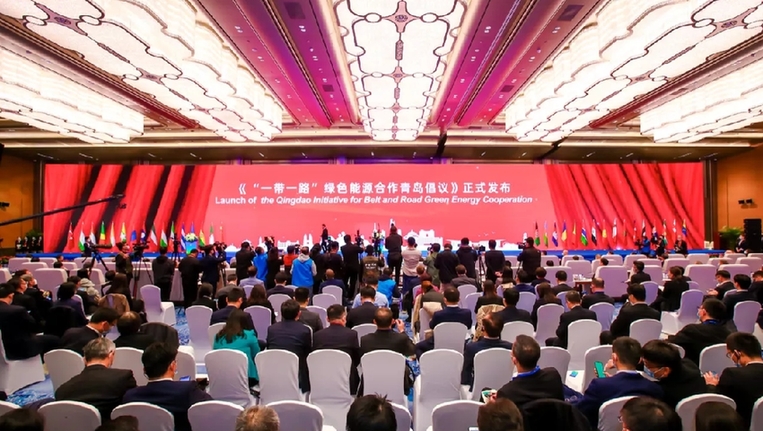
《“一带一路”绿色能源合作青岛倡议》 发布
Zhong Guo Dian Li Bao· 2026-01-14 08:13
Core Viewpoint - The second "Belt and Road" Energy Ministerial Conference was held in Qingdao on October 18, focusing on a greener and more inclusive energy future, resulting in the release of the "Belt and Road" Green Energy Cooperation Qingdao Initiative, which calls for unified action to support the green low-carbon development of energy in developing countries [1][4]. Group 1: Key Initiatives - The initiative emphasizes the need for more ambitious green energy development plans and goals, taking into account each country's energy resources and demands, and enhancing intergovernmental cooperation in energy planning [4]. - It aims to improve the reliability and resilience of green energy supply, prioritizing green energy to meet electricity demands and enhancing its role in energy security [5]. - The initiative seeks to create a more attractive investment environment for green energy by stabilizing policies, reducing project approval processes, and increasing policy support to attract more capital [5]. Group 2: Technological and Economic Aspects - There is a focus on strengthening cooperation in green energy technology innovation to reduce costs and achieve grid parity for renewable energy, promoting the cross-border application of innovative technologies [6]. - The initiative aims to enhance the economic and social benefits of green energy, driving industrialization and improving energy accessibility, thereby contributing to poverty alleviation and job creation [6][7]. - It emphasizes lowering financing costs for green energy projects by leveraging multilateral financial institutions and exploring various financing models to attract private capital [7]. Group 3: Capacity Building and Technical Assistance - The initiative includes plans for capacity building and technical assistance in the green energy sector, promoting talent development and knowledge sharing among Belt and Road countries [7].

中国石化西南石油局年产气突破100亿方 累计探明天然气地质储量超1万亿立方米、生产天然气超1100亿方
Xin Hua Wang· 2026-01-14 08:13
12月25日,中国石化西南石油局迎来历史性跨越,2024年生产天然气突破100亿立方米,相当于油 当量800万吨大油田,热能当量相当于三峡电站全年发电量的总热能,可满足2740万户家庭一年的用气 需求。目前,西南石油局累计生产天然气1100亿立方米、探明天然气地质储量超1万亿立方米,为保障 国家能源安全作出重要贡献。 西南石油局是中国石化在四川盆地最大的油气生产企业,目前已开发建设了元坝气田、威荣气田、 川西气田、綦江气田等28个气田。1979年,公司从"寻油找气"的地质普查单位转型发展为"探采结合"的 油气生产企业,经过45年接续奋斗,实现了从0到100亿的跨越式发展:1999年,天然气年产量首次突破 10亿立方米,用了20年时间完成这一目标;2005年,天然气年产量实现20亿立方米,仅用5年实现翻 倍;2013年,天然气年产量突破30亿立方米;2021年,天然气年产量跨越80亿立方米;2024年,天然气 年产量突破100亿立方米,用了3年时间,实现历史性跃升。 科技创新破解世界级难题。四川盆地天然气总资源量达40万亿立方米,勘探开发前景广阔,但地质 条件复杂,是全球范围内极具挑战性的天然气开发区块之一。西 ...

政策重构!2026年万亿赛道蓄势爆发!
Sou Hu Cai Jing· 2026-01-14 07:13
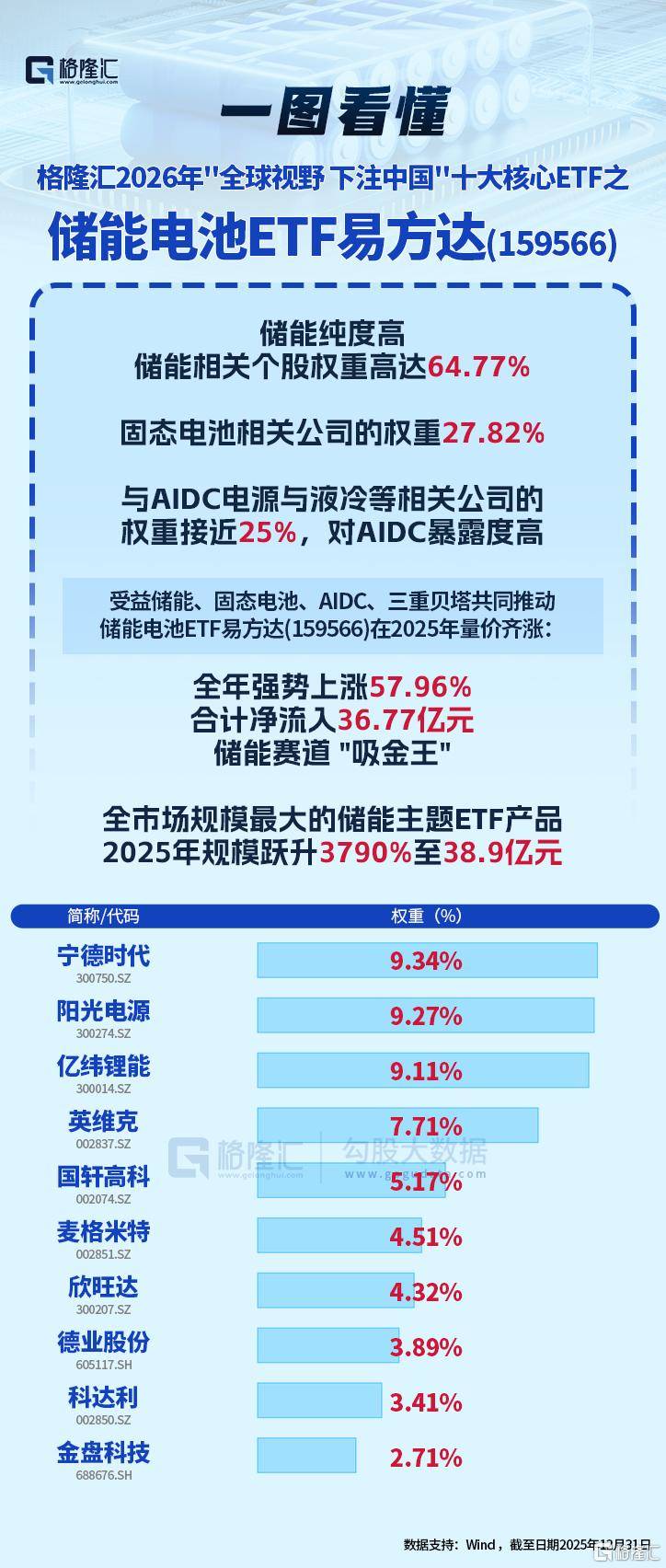
Core Insights - The AI industry is experiencing historic development opportunities, with the energy storage sector transforming from a marginal support role to a core engine for stable power supply in the AI era [1] - By 2026, the energy storage industry is expected to enter a historic opportunity period characterized by large-scale and high profitability, driven by policy marketization, technological breakthroughs, and global demand [1] Policy Restructuring - The profound changes in China's energy storage industry by 2025 stem from a systematic upgrade of the policy framework, shifting from "administrative intervention" to "market empowerment" [4] - The introduction of the "Document No. 136" in February 2025 marks the transition of China's energy storage from a "policy task" to a "market profit" model, providing a valuable reference for global energy storage development [5] - Following the policy implementation, domestic energy storage bidding volumes surged to 19.2 GWh from March to May 2025, a year-on-year increase of 210% [4] Market Growth and Demand - The energy storage market is expected to experience explosive demand growth in 2026, driven by multiple scenarios including renewable energy, grid upgrades, and AI data centers, with a market space projected to exceed trillions [6] - In the first nine months of 2025, domestic installed capacity of wind and solar energy reached 102 GW, a year-on-year increase of 45% [6] - The global energy storage installed capacity is predicted to reach 1,200 GW by 2030, a 380% increase from approximately 250 GW in 2025 [7] Diverse Growth Dynamics - The domestic market is characterized by a diversified growth pattern, with energy storage for renewable energy accounting for 31.7% of total new installations in the first nine months of 2025 [9] - User-side energy storage is rapidly growing, with a year-on-year increase of 230% in new installations, driven by cost reduction and peak-valley price differences [9] - The overseas market is becoming a significant growth curve for domestic companies, with new installations reaching 45 GW in the first nine months of 2025, a 112% year-on-year increase [9] Capital Market Performance - The energy storage sector has shown strong performance in the capital market, with the National Renewable Battery Index rising by 55.15% in 2025, significantly outperforming many industries [10] - The energy storage battery ETF (159566) achieved a strong increase of 57.96% in 2025, reflecting the robust growth potential of core companies in the sector [10] Industry Chain Value Release - The value center of the energy storage industry chain is increasingly shifting towards technology-intensive segments, with leading companies benefiting from cost control and profitability [13] - In the system integration sector, the domestic market's CR5 has reached 65%, with leading companies holding a combined market share of 52% [14] - Major companies like Sungrow and CATL have reported significant revenue growth in their energy storage businesses, with CATL's revenue exceeding 20 billion yuan in 2025, a year-on-year increase of 110% [15] Investment Opportunities - The energy storage battery ETF (159566) is an effective tool for investors to share in industry dividends and participate in the green transition, focusing on core segments of the energy storage industry [17] - The ETF's top holdings include leading companies such as CATL and Sungrow, which dominate the market and are well-positioned to capture industry growth [18] - The ETF has shown a 12% annualized return over the past decade, outperforming the China Securities New Energy Index [19]




邱慈观专栏 | 能源转型下金属矿业的ESG实践标准解析
Xin Lang Cai Jing· 2026-01-14 03:19
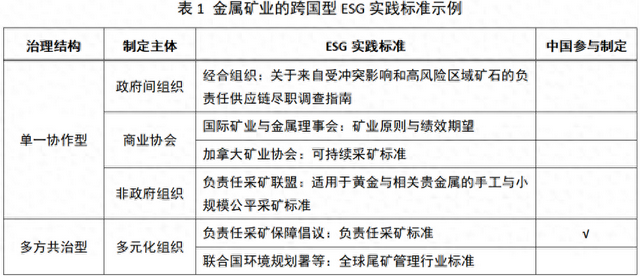
矿业价值链包括勘探、采选、冶炼加工、精加工、运输与分销、回收与终端处置等环节,链条深长、工 艺复杂,任何节点的干扰都可能波及上下游,形成供应链风险。特别是,与能源转型相关的锂、镍、钴 等金属矿呈现种类多、品位低、资源分布分散等特征,造成其供应在资源禀赋和技术能力等方面更受限 制,安全保障难度显着提高。在多重不确定性叠加下,能源转型金属矿的产业链比较脆弱,投资风险偏 高。 我国虽在能源转型金属矿的加工精炼环节具有优势,但矿种来源主要依赖进口。以锂、钴为例,我国 2022年消费量在全球占比分别为65.9%和42.8%,但国内矿山产量在全球占比仅约为14%和1%,绝大部 分由外部供应。为强化供应链韧性,近年国内矿产公司积极涉足能源转型金属矿的海外投资,紫金矿 业、赣锋锂业、洛阳钼业、华友钴业等都在此列。 值得注意的是,随着全球矿产投资的增加,各方对矿产资源的争夺更为加剧,资源国地区的地缘政治冲 突与资源民族主义也同步兴起。尤其,全球矿产资源禀赋分布不均,矿业投资多发生于资源国,而资本 约束与终端消费主要来自国际市场与下游工业国,故单一国家的法律对跨国矿业投资的约束存在天然边 界。在资源国监管能力不足与跨境执法不易的 ...



有色板块震荡拉升,有色金属ETF(159871)涨超1.8%,近5日累计“吸金”近1.5亿元
Sou Hu Cai Jing· 2026-01-14 02:10
Group 1 - The non-ferrous metal sector experienced significant gains, with the China Nonferrous Metals Index rising by 2.05% as of the report date, and several stocks, including Hunan Silver and Xiyang Co., seeing increases of over 7% [1] - The Nonferrous Metals ETF (159871.SZ) opened higher, increasing by 1.84% during the session, with a trading volume exceeding 60 million yuan and a real-time premium rate of 0.09% [1] - The ETF has seen net inflows for 4 out of the last 5 trading days, accumulating nearly 150 million yuan, with a latest circulation size of 640 million yuan [1] Group 2 - The tungsten market has experienced a "violent" surge in January, with tungsten powder prices exceeding 1.1 million yuan per ton and tungsten concentrate reaching 464,000 yuan per standard ton, both hitting historical highs [1] - The main contract for Shanghai tin futures surged by 7%, reaching a new historical peak [1] - Guosheng Securities predicts that by 2026, the non-ferrous metals industry will face increasing supply-demand mismatches and a rising price center [2] - CITIC Securities anticipates that non-ferrous metals will continue to perform strongly, with gold being a core safe-haven asset under the "de-dollarization" pricing logic, and copper and aluminum benefiting from energy transition and supply constraints [2]
绿色去碳化技术企业宝加国际(GCDT.US)登陆美股市场 开盘后触发停牌机制
Zhi Tong Cai Jing· 2026-01-13 15:52
Core Viewpoint - GCDT International, a green decarbonization technology company, made its debut on the US stock market, experiencing a significant stock price increase of 25% after its IPO, which raised approximately $10 million for various business expansions and operational needs [1] Company Summary - GCDT International is a holding company registered in the Cayman Islands, primarily operating through its Hong Kong subsidiary, Boca International Limited [1] - The company focuses on the application of phase change materials (PCM) energy storage systems in cooling and heating sectors, providing energy-saving solutions aligned with global decarbonization and energy efficiency trends [1] Industry Summary - The global push for emission reduction and energy transition is leading to increased attention from capital markets towards companies specializing in energy-saving and low-carbon technologies [1] - GCDT International's entry into the US market is seen as a case of companies in this niche accelerating their international financing efforts [1]
这家公司控股股东变更!还被隐形巨头重仓25.4%
Zheng Quan Ri Bao Zhi Sheng· 2026-01-13 13:04
Core Viewpoint - The announcement by State Power Investment Corporation Financial Holdings Co., Ltd. regarding the completion of a significant asset restructuring and change of controlling shareholder marks a strategic shift towards enhancing its nuclear power asset platform and attracting long-term capital support from strategic investors like China Life Insurance [1][3]. Group 1: Shareholder Structure Changes - Prior to the transaction, State Power Investment Group held 49.76% of the shares, and after the restructuring, its total holding increased to 59.44%, maintaining absolute control [2]. - China National Nuclear Corporation became the largest shareholder with a 43.62% stake, while State Power Investment Group's direct shareholding was diluted to 15.42% [2]. - China Life Insurance's stake surged from 0.01% to 25.40%, making it the second-largest shareholder and a significant strategic investor [2]. Group 2: Industry Impact - The change in controlling shareholder to China National Nuclear Corporation is seen as a key move for central enterprises to respond to carbon neutrality goals and promote specialized restructuring [3]. - The restructuring is expected to enhance the securities rate and core competitiveness of nuclear assets, providing a new model for asset integration and mixed ownership reform among other central enterprises [3]. - The focus on clean energy and the integration of nuclear assets is anticipated to create a positive cycle between energy production and financial services, leveraging the resources of China National Nuclear Corporation [3].


长三角融资占了全国的近半,京津冀屈居第2 梯队
3 6 Ke· 2026-01-13 12:16
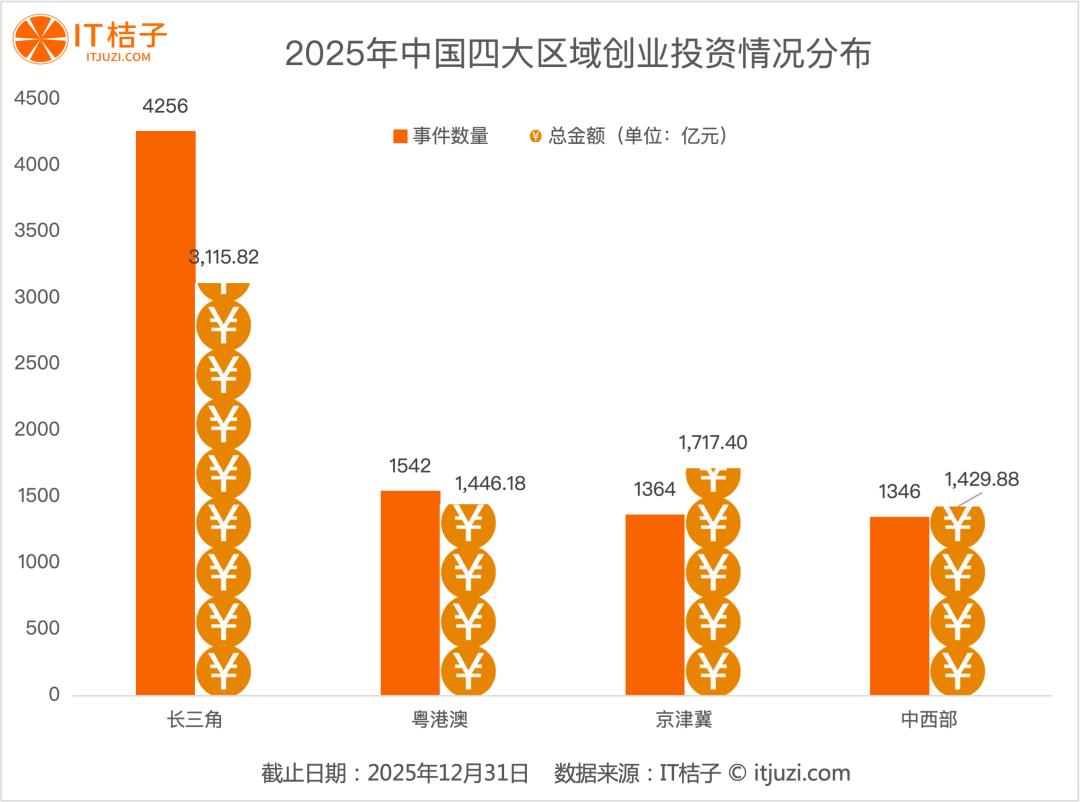
Core Insights - The investment landscape in China's venture capital is characterized by a "one strong, many strong" and "similarity with differences" pattern, with the Yangtze River Delta leading significantly [1] - The article analyzes four major economic regions, highlighting their scale, investment consensus, and unique sectors, creating a comprehensive view of capital flow [1] Regional Investment Landscape - The primary market in China has formed a clear tiered structure, with the Yangtze River Delta as the most active venture capital center, recording 4,256 investment events and attracting 311.58 billion yuan [2][4] - The second tier includes the Beijing-Tianjin-Hebei, Guangdong-Hong Kong-Macau, and Central-Western regions, with investment events close in number: 1,364, 1,542, and 1,346 respectively, indicating increasing competition among these regions [4] Core Investment Consensus - Despite regional differences, there is a strong national consensus on seven key investment sectors: artificial intelligence applications, pharmaceuticals, biotechnology, medical devices, new energy, integrated circuits, and robotics [5][7] - Integrated circuits have the highest consensus, ranking among the top two investment hotspots in the Yangtze River Delta (597 events), Guangdong-Hong Kong-Macau (160 events), and Central-Western regions (110 events) [5] Unique Regional Advantages - Each region has developed differentiated sectors based on local resources, creating unique competitive advantages: - **Beijing-Tianjin-Hebei**: Notable for aerospace (76 events), AIGC (60 events), and AI foundational technologies (52 events), showcasing its role as a national technology innovation center [8][10] - **Yangtze River Delta**: Strong industrial chain collaboration, with new materials (332 events) as a significant sector, complementing the leading integrated circuit industry [10][13] - **Guangdong-Hong Kong-Macau**: Focus on intelligent equipment (88 events), reflecting a deep foundation in precision manufacturing and the integration of cutting-edge technology with industry [15] - **Central-Western Regions**: Actively converting local resource advantages into industrial momentum, with new materials (104 events) emerging as a key growth area [18] Conclusion - The 2025 venture capital landscape in China illustrates a dynamic picture of "concentration with dispersion, consensus with uniqueness," defining the direction of capital flow and presenting opportunities for entrepreneurs and investors [19]