
区域协调发展

Search documents
推进省内全域一体化全面融入长三角一体化
Xin Hua Ri Bao· 2025-06-23 21:00
Core Viewpoint - Jiangsu province is emphasized to actively participate in the integrated development of the Yangtze River Delta and the Yangtze River Economic Belt, focusing on regional coordination and high-quality development [1] Group 1: Achievements in Regional Integration - Jiangsu has made significant progress in implementing regional coordinated development strategies since the 18th National Congress, addressing regional imbalances and promoting coordinated growth [2] - The "1+3" key functional area strategy initiated in 2017 has effectively broken traditional geographical and administrative barriers, optimizing resource allocation and promoting balanced development [2] - The Yangtze River Delta urban agglomeration contributes 77% to the province's economic growth, while the coastal economic belt accounts for over 10% of the national marine production value [2] Group 2: Promoting Provincial and Regional Integration - Jiangsu aims to enhance its integration within the Yangtze River Delta and the Yangtze River Economic Belt by coordinating regional interests and improving development mechanisms [3][4] - The province plans to strengthen major transportation infrastructure and establish a modern comprehensive transportation system to facilitate resource flow and optimize land use [4] Group 3: Active Participation in Regional Cooperation - Jiangsu is set to enhance regional connectivity by optimizing infrastructure and developing a modern transportation network centered around Shanghai and Nanjing [5] - The province will promote collaborative innovation by forming industry innovation alliances and enhancing the transfer of scientific achievements [6] Group 4: Collaborative Development with Neighboring Regions - Jiangsu is positioned to enhance its role in supporting Shanghai and collaborating with Zhejiang and Anhui, focusing on ecological and green development along the Ning-Hang Economic Belt [7] - The province aims to leverage its educational and industrial resources to create a comprehensive development model that integrates headquarters, research, and production [7]
透视“小体量”的大能量(评论员观察)——直击2025经济新现象①
Ren Min Ri Bao· 2025-06-22 21:45
Core Viewpoint - The article discusses the transformation of the Chinese economy, highlighting the emergence of "small-scale" businesses that are proving to be more valuable and effective in the current economic landscape, driven by quality, efficiency, and innovation [2][4][5]. Group 1: Economic Transformation - The shift towards "mini" retail formats and smaller product sizes reflects a broader trend of reducing costs and increasing efficiency, which helps stimulate consumer demand [2][3]. - The service retail sector has shown a growth rate of 5.2% in the first five months of the year, indicating a stronger performance compared to traditional goods retail [4]. - The "small-scale" businesses are not merely downsizing but are strategically enhancing their operations to better match supply and demand, thus activating local economic cycles [3][4]. Group 2: Innovation and Market Dynamics - The rise of "small giants" in strategic emerging industries, which represent only 3.2% of the total number of industrial SMEs, contributes to 10.9% of the profits, showcasing their significant impact on the economy [4]. - The integration of AI and collaborative international strategies in small-scale businesses, such as those in Yiwu, demonstrates how small products can generate substantial market flows [4]. - The article emphasizes that the focus on quality and efficiency in various sectors, including rural development and technological innovation, is crucial for China's transition from a follower to a leader in multiple fields [5][6]. Group 3: Sustainable Development - The deployment of distributed solar energy systems illustrates how small-scale initiatives can lead to significant environmental benefits, such as reducing coal consumption and carbon emissions [5]. - The article highlights the importance of new development concepts that promote innovation, coordination, and sustainability, which are essential for unlocking the potential of small-scale enterprises [5][6]. - The overall narrative suggests that the combination of traditional and modern practices, along with a focus on quality, is vital for fostering a vibrant and resilient economy [6].
经济随笔丨“苏超”:魅力是竞赛 底色是协作
Yang Shi Xin Wen· 2025-06-22 06:12
Group 1 - The "Su Super" league has gained significant popularity, with a record attendance of 36,712 at a recent match, highlighting its appeal and the growing interest from sponsors and online engagement [1] - The league's charm lies in its intense competition, which reflects the cultural and community aspects of modern football, resonating well with social media dynamics [3] - The "Thirteen Taibao" collaboration mechanism between northern and southern Jiangsu has evolved from a one-way support system to a more balanced partnership, effectively reducing the development gap between regions [4] Group 2 - The "Su Super" league serves as a platform for cross-industry collaboration, integrating cultural, tourism, sports, and business sectors, emphasizing the importance of teamwork among cities [5] - Jiangsu's automotive industry, particularly in Changzhou, showcases a localized supply chain, with significant portions of procurement occurring within the region, promoting regional economic integration [7] - The Long Triangle region, where Jiangsu is located, is recognized for its high level of coordinated development, with recent meetings focusing on enhancing regional innovation capabilities and market integration [8] Group 3 - The adjustment of the "North-South Link" mechanism, where Xuzhou transitioned from a support role to a supportive partner with Anhui, exemplifies the successful outcomes of regional collaboration [10] - The ongoing success of the "Su Super" league has attracted attention from other regions looking to replicate its competitive and collaborative model [10]


中山市来京举办湾区创享生活体验季系列主题活动
Bei Jing Shang Bao· 2025-06-20 08:16
Group 1 - The event "Taste Life, Smart Zhuhai" was held in Beijing, marking the conclusion of a series of thematic activities aimed at promoting communication between the Northeast industrial base and the Guangdong-Hong Kong-Macao Greater Bay Area [1][2] - Zhongshan, the hometown of Sun Yat-sen, is strategically located in the Greater Bay Area, benefiting from improved transportation links such as the Shenzhong Passage, which allows for a half-hour commute to Shenzhen [1] - Zhongshan's housing policy includes "no purchase restrictions, no sales restrictions," allowing all national provident fund contributors to apply for loans, with additional incentives such as a 5‰ electronic consumption voucher for purchases made by the end of the month [1] Group 2 - Zhongshan has 38 national industrial bases and 3 trillion-level industrial clusters, particularly in emerging industries like new energy and biomedicine, complementing Beijing's strengths in technology research and high-end manufacturing [2] - The event served as a platform for collaboration between entrepreneurs from both regions, highlighting the importance of coordinated development between northern and southern regions [2] - The integration of Zhongshan's smart living concept with the advantages of various industries and innovative genes from different regions provides a new paradigm for regional coordinated development [2]
广东再揽3000亿投资!广州投入80亿帮扶粤东西北招商
Sou Hu Cai Jing· 2025-06-19 10:18
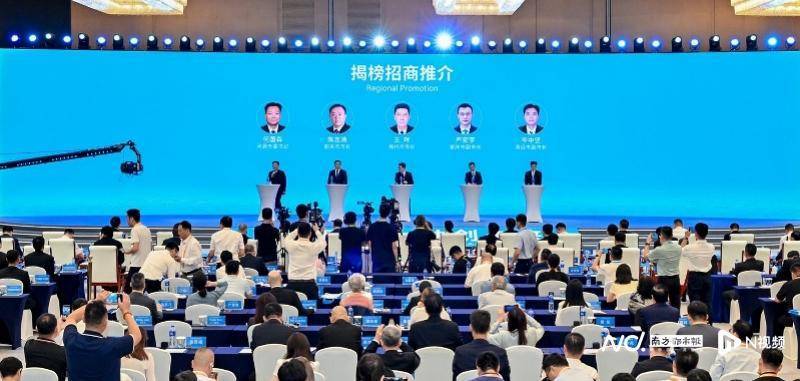
近年来,珠三角与粤东西北两大引擎你追我赶,推动广东省区域协调发展迈向新高度。广东省省长王伟中在致辞 中表示,依托招商会,粤东西北地区有效链接珠三角乃至海内外,促进区域联动、资源共享、优势互补,从而推 动产业有序转移,开创互利共赢的崭新局面。 会上,来自粤东粤西粤北12个市和惠州、江门、肇庆市的有关负责人揭榜招商,展现本地的资源禀赋、产业特色 和优惠政策。 广州市委常委、常务副市长陈杰透露,按照"全省一盘棋"的工作要求,广州创新构建"湾区赋能+区域协同"联合招 商模式,走出了一条双向奔赴、合作共赢的区域帮扶协作新路子。 广州印发了《广州市促进与粤东粤西粤北对口帮扶市招商工作方案》,建立了"市级统筹+区县结对+政企协同"三 级联动机制,推动与粤东西北对口帮扶市的招商对接,2024年以来,累计投入财政帮扶资金达到了80亿元,派驻 驻点干部418名。 6月19日,2025年珠三角与粤东西北经贸合作招商会在广州举行。南都湾财社记者现场获悉,本次招商会共达成电 子信息、新能源、新材料、食品加工、低空经济等产业领域的投资项目661个、投资总额3022亿元。 通过区域协作合力,释放对口招商新势能,广州与清远2024年度联合招 ...
中国最不好惹的一个省!半个中国都要依赖它,还能在战时承接产业
Sou Hu Cai Jing· 2025-06-14 03:00
Core Viewpoint - Sichuan is positioned as a strategic hinterland in China's national development, leveraging its geographical advantages and multi-dimensional strengths in energy, agriculture, and industry to support national security and economic growth [2][5][14]. Energy Security - Sichuan has abundant natural gas resources, with reserves exceeding 40 trillion cubic meters, accounting for over 25% of the national total. The province's natural gas production has surged to over 10 billion cubic meters, making it a crucial part of China's gas supply system [7][8]. - The "Chuanqi Dongsong" project annually delivers over 12 billion cubic meters of natural gas to economically developed regions, ensuring energy security and economic stability [7]. - Sichuan's hydropower capacity has reached over 100 million kilowatts, representing nearly one-fourth of the national total, supporting both local and regional energy needs [7][8]. Agricultural Development - Sichuan is the largest pig farming province in China, with over 66 million pigs slaughtered in 2023, meeting national pork demand [10]. - The province's grain production reached 72.68 billion jin in 2024, maintaining its status as the leading grain producer in Western China, and it also leads in oilseed cultivation [10][12]. Industrial Growth - Sichuan has a robust manufacturing base, benefiting from historical "Third Line Construction," and is advancing in high-end manufacturing sectors such as aerospace and new energy equipment [12]. - The province is becoming a key area for industrial transfer and technological innovation as industries shift from the eastern coastal regions [12]. - Sichuan's advanced manufacturing clusters are the largest in Western China, indicating significant future growth potential [12]. Strategic Importance - Sichuan's role as a strategic backstop is underscored by its energy, agricultural, and industrial capabilities, which are essential for national security and economic stability [14]. - The province's integration of resources and market potential positions it as a vital component in China's overall strategic layout, contributing to regional development and national economic quality [12][14].

券商履行社会责任专项评价办法获修订,着重强调服务实体经济和国家发展战略功能
Mei Ri Jing Ji Xin Wen· 2025-06-13 11:52
Core Viewpoint - The China Securities Association (CSRC) has revised the "Special Evaluation Method for Securities Companies' Social Responsibility" to enhance the accountability of securities firms in fulfilling their social responsibilities, particularly in supporting rural revitalization strategies [1]. Group 1: Evaluation Content - The revised evaluation method includes four main categories: services for rural revitalization, coordinated development services, participation in social welfare, and recognition and awards received [2]. - Services for rural revitalization focus on metrics such as the number of poverty-stricken counties paired with firms, the number of projects for public stock issuance by enterprises in these counties, and the total direct financing amount for enterprises in poverty-stricken areas [2]. - Coordinated development services include the evaluation of regional development support, success in bidding for government-supported bonds, and the reception of minority university graduates [2]. Group 2: Principles of Revision - The revision adheres to four principles: coordinated planning to avoid duplication of evaluation indicators, emphasis on serving the real economy and national development strategies, problem-oriented adjustments based on industry realities, and ensuring fairness and objectivity in evaluations [3]. - The focus is on enhancing the role of securities companies in supporting rural revitalization and regional coordinated development, leveraging their resources and expertise [3]. Group 3: Key Adjustments - The evaluation method increases the scoring for direct financing to poverty-stricken enterprises, encouraging smaller institutions to leverage their business strengths [4]. - New indicators have been added to promote support for underdeveloped regions and national infrastructure projects, such as railway construction [4]. - The criteria for recognizing investor education activities have been adjusted to require a minimum of 60 events with over 100 participants each [4].
做好建设现代化经济体系这篇大文章——学习《习近平经济文选》第一卷
Jing Ji Ri Bao· 2025-06-10 00:15
Group 1: Modern Economic System - The modern economic system is an organic whole composed of various interconnected social and economic activities, involving multiple aspects such as industrial development, technological innovation, regional coordination, green development, and market system construction [1][2] - The construction of a modern economic system is both a significant theoretical proposition and a major practical task, as discussed in multiple writings in the first volume of "Xi Jinping's Economic Works" [1][2] Group 2: Green Development - Accelerating the green transformation of economic and social development is a crucial strategy for addressing resource and environmental issues in China, with significant achievements in recent years [2][3] - The concept of "lucid waters and lush mountains are invaluable assets" has become deeply ingrained in society, forming a resource-saving and environmentally friendly green development system as part of the modern economic framework [2][3] Group 3: Development Philosophy - The need for a new development philosophy is emphasized, particularly the importance of green development in achieving harmony between humanity and nature, which is essential for sustainable economic growth [3][4] - The integration of economic growth with environmental protection is highlighted as a key requirement for modern construction, promoting a harmonious coexistence between human development and natural ecosystems [4][5] Group 4: Technological Innovation - Technological innovation is positioned as the primary driving force for development and a strategic support for building a modern economic system, with a focus on advancing green productivity [11][12] - The importance of aligning the innovation chain with the industrial chain is stressed, particularly in tackling key core technologies to enhance national competitiveness [13][19] Group 5: Regional Coordination - The significance of regional coordinated development is underscored as a vital component of the modern economic system, addressing the long-standing issue of regional disparities in resource endowments and development levels [15][16] - Recent strategies have led to noticeable improvements in regional coordination, with specific initiatives aimed at enhancing economic competitiveness and promoting balanced development across different areas [16][18] Group 6: Integration of Digital and Real Economies - The deep integration of the real economy and digital economy is identified as an essential requirement for high-quality economic development, with a focus on enhancing the intelligence and digitalization of the real economy [19][20] - Emphasis is placed on fostering advanced manufacturing clusters and promoting technological platform construction to support the integration of digital and real economies [21][22]
美国农学大学生遇见中国农业大省
He Nan Ri Bao· 2025-06-09 23:36
Group 1 - The article highlights the exchange program where 22 agricultural students from 16 universities in 15 states of the U.S. visited Henan, China, to learn about modern agricultural practices [1][2] - The students expressed admiration for China's innovative water resource management, particularly the South-to-North Water Diversion Project, which showcases engineering excellence and regional development [2] - The visit included an exploration of the agricultural supply chain, with a focus on the popular beverage brand Mixue Ice City, which is planning to expand into the U.S. market [2] Group 2 - The students noted the similarities between their home states and Henan, emphasizing the agricultural richness and the importance of collaboration between U.S. and Chinese agricultural practices [1][2] - The article mentions a future initiative where China plans to invite 50,000 American youth for exchange programs over the next five years, fostering people-to-people connections [2] - The overall sentiment from the students was one of inspiration and the belief that sustainable agricultural development is a shared global challenge [2]

深入推动区域协调发展走深走实
Jing Ji Ri Bao· 2025-06-09 21:52
这些年来,在党中央制定实施的一系列重大战略和政策举措推动下,不同区域的比较优势得到充分释 放,区域协调发展取得明显成效。一方面,统筹推进西部大开发、东北全面振兴、中部地区崛起和东部 率先发展战略。中西部地区经济比重有所提高,居民收入较快增长;东北地区维护国家粮食安全"压舱 石"地位持续巩固,经济结构不断优化;东部地区持续发挥创新带动作用,区域发展平衡性、协调性明 显增强。另一方面,实施区域重大战略迈出坚实步伐。京津冀协同发展向纵深推进,2024年京津冀地区 经济总量为11.5万亿元,三地牢牢牵住疏解北京非首都功能这个"牛鼻子",推动雄安新区和北京城市副 中心"两翼"联动发展,重点领域协同发展亮点纷呈,重点区域一体化发展不断深入;长江经济带生态环 境保护和治理全面改善,长江干流全线水质稳定保持在Ⅱ类,2024年长江经济带地区生产总值为63万亿 元,占全国比重为47%;粤港澳大湾区成为我国开放水平最高、经济最有活力的地区之一,2024年其经 济总量已超过14.5万亿元,以不到全国0.6%的国土面积、6%的人口总量,创造了全国1/9左右的经济总 量,其专利实力跻身全球四大湾区前列;长三角区域一体化发展取得积极进展, ...