
十四五规划

Search documents
数说“十四五”成就丨消费主引擎作用持续凸显
Xin Hua Wang· 2025-08-12 06:36
Group 1 - The core achievement of the "14th Five-Year Plan" is the significant role of consumption as a main engine for economic growth, with major indicators in consumption, foreign trade, foreign investment, and international cooperation meeting expectations [1][2][8] - The domestic consumption market remains robust, with an average annual growth rate of 5.5% in total retail sales over the past four years, and is expected to exceed 50 trillion yuan this year [2][3] - Service consumption has seen rapid growth, with the proportion of residents' service consumption expenditures increasing by 3.5 percentage points to 46.1% [4] Group 2 - China has solidified its position as a trade power, maintaining the world's second-largest service trade scale and ranking among the top three in total foreign investment, with over 700 billion USD in foreign investment absorbed during the "14th Five-Year Plan" [9][12] - The export of high-tech products is projected to reach 18.2% by 2024, with knowledge-intensive service trade increasing by 38% compared to 2020 [12] - The negative list for foreign investment access continues to shrink, with all restrictions in the manufacturing sector eliminated, and pilot programs in sectors like telecommunications and biotechnology being implemented [14]


新华社快讯:“十四五”时期,我国经济增长带动税费征收累计将超155万亿元
Xin Hua Wang· 2025-08-12 06:20
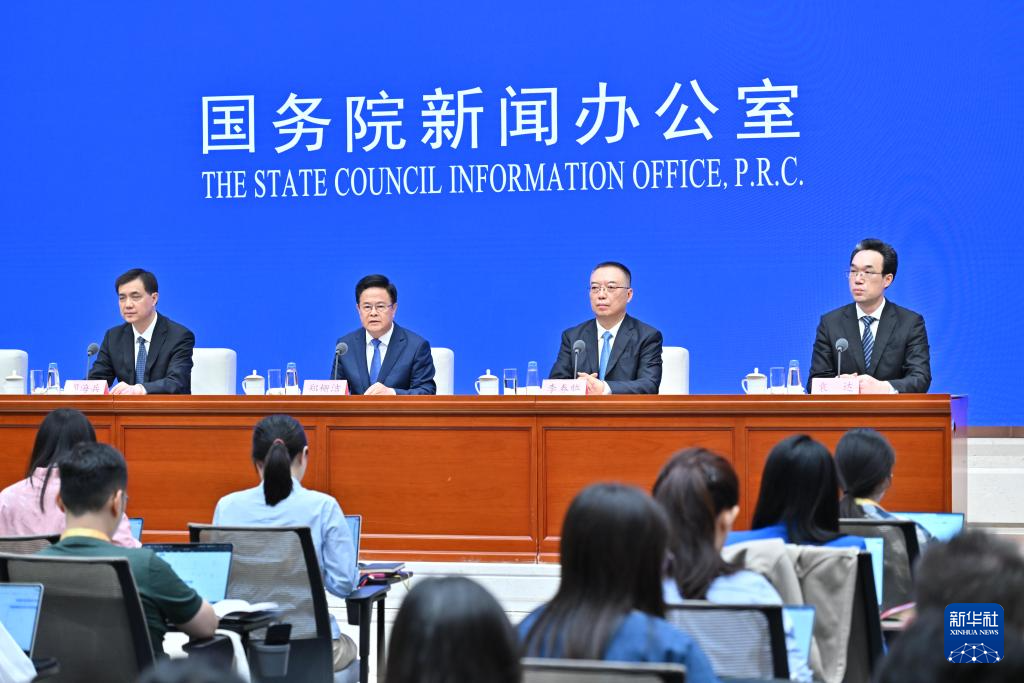
新华社快讯:国家税务总局局长胡静林7月28日在国新办举行的"高质量完成'十四五'规划"系列主题新 闻发布会上介绍,"十四五"时期,我国经济平稳增长,税务部门累计征收的税费收入预计将超155万亿 元,占全口径财政收入的比重已达80%左右。经济社会发展和民生改善的财力基础不断夯实。 【纠错】 【责任编辑:王佳宁】 ...
高质量完成“十四五”规划丨“十四五”期间经济增长带动税费征收累计将超155万亿元
Xin Hua Wang· 2025-08-12 06:10
Core Insights - The National Taxation Administration revealed that during the "14th Five-Year Plan" period, tax revenue is expected to exceed 155 trillion yuan, accounting for approximately 80% of total fiscal revenue [2] - A series of tax reduction and fee reduction policies have been implemented, with an estimated total of 10.5 trillion yuan in new tax reductions and fee reductions, and export tax rebates expected to exceed 9 trillion yuan [4] - The tax system reform and tax reductions have significantly supported the improvement of people's livelihoods, with personal income tax reductions increasing from 116 billion yuan in 2020 to nearly 300 billion yuan this year [4] Tax Revenue and Economic Growth - Tax revenue during the "14th Five-Year Plan" is projected to exceed 85 trillion yuan, with social insurance fees and land transfer fees expected to exceed 70 trillion yuan [2] - As of June 2023, the number of tax-related business entities has surpassed 100 million, reflecting strong market vitality and resilience [4] Tax Compliance and Enforcement - A new tax enforcement system has been established, focusing on risk management and accountability, with 62,100 tax law violations investigated, recovering 571 billion yuan in tax losses [5] - The awareness of tax law and the importance of maintaining legal fairness have significantly increased across society [5]
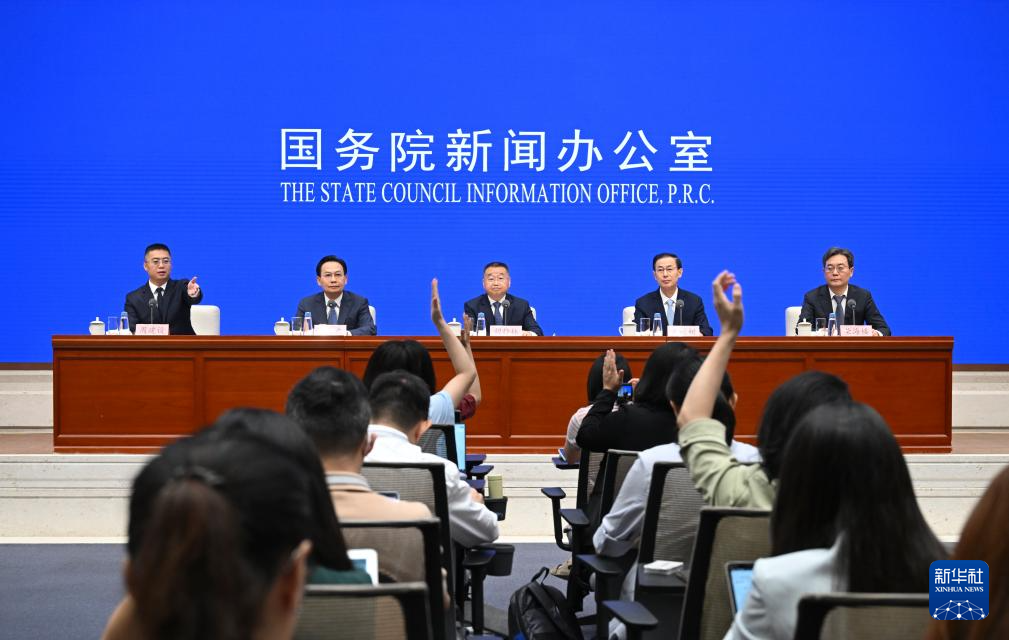
友升股份沪主板IPO获受理 海通证券保荐
Xin Hua Wang· 2025-08-12 05:47
Core Viewpoint - YouSheng Co., Ltd. has received approval for its IPO on the Shanghai Stock Exchange, aiming to raise 2.471 billion yuan for various projects, primarily in the lightweight aluminum alloy components for the new energy vehicle sector [1][2]. Group 1: IPO Details - YouSheng plans to issue no more than 48.267 million shares and intends to raise 2.471 billion yuan [1]. - The funds will be allocated to the Yunnan YouSheng lightweight aluminum alloy components production base project (Phase I) with 1.271 billion yuan, a project for producing 500,000 battery trays and 200,000 undercarriage sets with 700 million yuan, and 500 million yuan for working capital [1]. Group 2: Company Overview - YouSheng is a specialized manufacturer of aluminum alloy automotive components, focusing on the new energy vehicle sector, with a product range that includes door sill beams, battery trays, bumpers, and subframes [1]. - The company has established long-term stable partnerships with leading new energy vehicle manufacturers such as Tesla, GAC Group, NIO, BAIC New Energy, and Geely Group, due to its advanced technology and strong product development capabilities [1]. Group 3: Financial Performance - The company has experienced significant revenue growth, with reported revenues of 811 million yuan, 1.511 billion yuan, 2.350 billion yuan, and 1.164 billion yuan for the years 2020, 2021, 2022, and the first half of 2023, respectively [2]. - Corresponding net profits for the same periods were 56.048 million yuan, 129 million yuan, 233 million yuan, and 110 million yuan [2]. Group 4: Future Outlook - YouSheng aims to capitalize on the rapid growth of the new energy vehicle industry and align with national goals of "carbon peak and carbon neutrality," while expanding its product and technology applications within the new energy vehicle supply chain [2].


高质量完成“十四五”规划丨新的开创性进展、突破性变革、历史性成就——国新办发布会聚焦我国“十四五”时期经济社会发展
Xin Hua Wang· 2025-08-12 05:43
Core Achievements - The "14th Five-Year Plan" has led to significant economic and social development in China, with major indicators meeting or exceeding expectations [3][4] - China's economic output has consistently surpassed 110 trillion, 120 trillion, and 130 trillion yuan, with an expected reach of around 140 trillion yuan this year [4] - The contribution rate of domestic demand to economic growth averaged 86.4% over the past four years, with final consumption contributing 56.2%, an increase of 8.6 percentage points compared to the "13th Five-Year Plan" [4] Economic Strength - China has maintained its position as the world's largest manufacturing power, goods trading nation, and foreign exchange reserve holder, with over 200 major industrial products leading globally [4] - The average economic growth rate over the past four years was 5.5%, with a total economic increment exceeding 35 trillion yuan, equivalent to the combined economic output of Guangdong, Jiangsu, and Shandong provinces [4] Innovation and Technology - Major breakthroughs in innovation include the launch of the first domestically produced aircraft carrier and the operation of the first fourth-generation nuclear power plant [6] - R&D investment is projected to grow nearly 50% by 2024 compared to the end of the "13th Five-Year Plan," reaching 1.2 trillion yuan, with R&D intensity increasing to 2.68% [7] - The production of integrated circuits is expected to increase by 72.6% by 2024, with high-tech manufacturing value added projected to grow by 42% [7] Green Development - China's forest coverage rate has increased to over 25%, contributing to a quarter of the world's new greening area [10] - The proportion of days with good air quality has stabilized at around 87%, and the clean energy generation capacity has surpassed that of coal [10] - By 2024, the energy consumption per unit of GDP is expected to decrease by 11.6%, making China one of the fastest countries in terms of energy intensity reduction [10] Social Welfare - The establishment of the largest education, social security, and healthcare systems globally, with over 95% coverage in compulsory education and basic insurance [11] - Urban employment has remained stable at over 12 million new jobs annually, with income growth aligning closely with economic growth [11] - The number of practicing physicians per thousand people has increased from 2.9 to 3.6, reflecting improvements in healthcare access [11] Reform and Opening Up - The reform goals set during the 18th National Congress have been largely achieved, focusing on enhancing market efficiency and stimulating economic vitality [12] - From 2021 to May this year, foreign direct investment in China reached 4.7 trillion yuan, surpassing the total for the "13th Five-Year Plan" period [13] - Foreign enterprises contributed to one-third of China's imports and exports, one-fourth of industrial value added, and created over 30 million jobs [13]
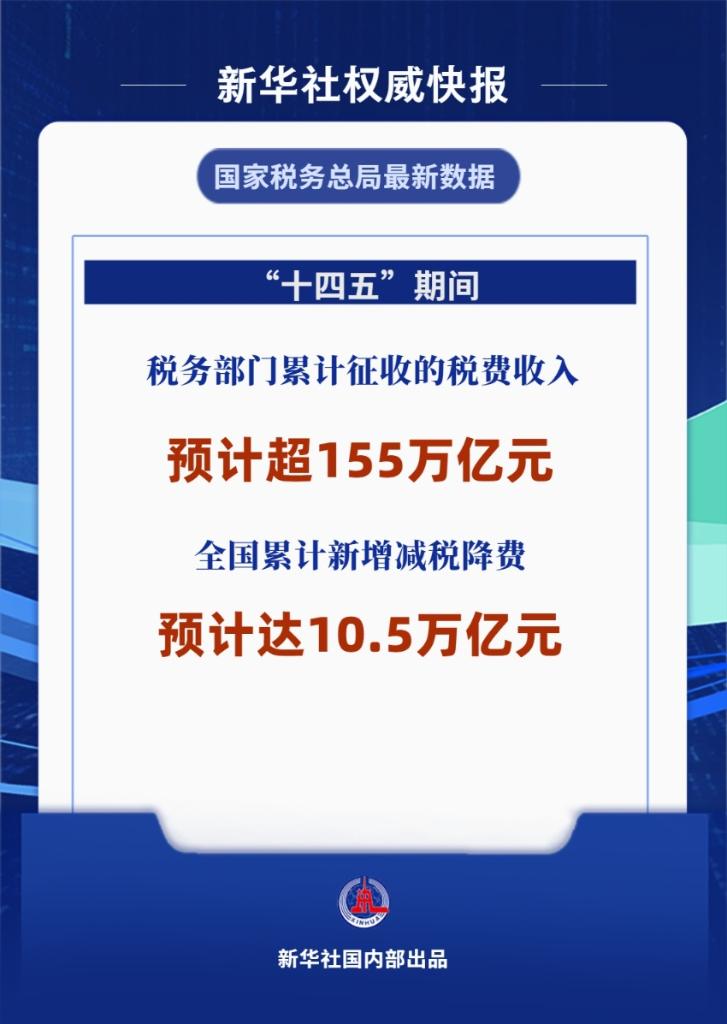
新华社权威快报丨“十四五”期间经济增长带动税费征收累计将超155万亿元
Xin Hua Wang· 2025-08-12 05:40
Group 1 - The core viewpoint is that during the "14th Five-Year Plan" period, the tax revenue collected by the tax authorities is expected to exceed 155 trillion yuan, which accounts for approximately 80% of the total fiscal revenue [1][3] - The total new tax cuts and fee reductions across the country are projected to reach 10.5 trillion yuan [1][3] - The export tax rebates are expected to exceed 9 trillion yuan, contributing positively to economic and social development [1][3]
国务院新闻办公室将于8月14日(星期四)上午10时举行“高质量完成‘十四五’规划”系列主题新闻发布会
Zheng Quan Shi Bao Wang· 2025-08-12 01:56
人民财讯8月12日电,国务院新闻办公室将于2025年8月14日(星期四)上午10时举行"高质量完成'十四 五'规划"系列主题新闻发布会,请国家发展改革委党组成员、国家数据局局长刘烈宏介绍"十四五"时期 数字中国建设发展成就,并答记者问。 ...
“十四五”期间保险业保障能力持续提高
Zhong Guo Zheng Quan Bao· 2025-08-11 21:05
Core Insights - The insurance industry in China is projected to see significant growth, with original insurance premium income expected to increase by over 25% from 2020 to 2024, and total assets expected to grow by 68% by mid-2025 compared to the end of 2020 [1][2] Group 1: Enhancements in Social Welfare - The insurance industry has strengthened its capacity to protect and improve people's livelihoods, with personal insurance payouts reaching 1.2 trillion yuan in 2024, an increase of 88.08% from 2020, and property insurance payouts reaching 1.1 trillion yuan, up 57.14% from 2020 [1] - The industry has expanded its coverage and improved service capabilities, actively developing commercial insurance products such as annuities and long-term care insurance to better meet public needs [2] Group 2: Disaster Risk Management - The insurance sector has improved its claims handling and risk reduction services, with significant payouts for natural disasters, including 116 billion yuan for heavy rainfall in 2021 and 126 billion yuan in 2023 [2] - A comprehensive catastrophe insurance pilot has been implemented in over 20 provinces, providing 22.36 trillion yuan in catastrophe risk protection for 64.39 million households in 2024 [2] Group 3: Support for the Real Economy - The insurance industry has provided risk protection across various sectors, with agricultural insurance premiums increasing from 97.6 billion yuan in 2021 to 148.37 billion yuan in 2024, enhancing coverage for staple crops [3] - Insurance funds have supported large-scale projects, with cumulative risk protection of approximately 4.2 trillion yuan for integrated circuit co-insurance and around 9 trillion yuan for technology insurance [3] Group 4: Investment and Reform Initiatives - The balance of insurance company funds has grown from 21.68 trillion yuan at the end of 2020 to 34.93 trillion yuan by the first quarter of 2024, reflecting active investment in advanced manufacturing, technology innovation, and green initiatives [4] - The implementation of comprehensive reforms in auto insurance has led to a 21.2% decrease in average premiums, while the compulsory insurance coverage has increased significantly [4][5] Group 5: Future Directions - The insurance industry is expected to continue enhancing its operational standards and management practices, focusing on risk prevention, regulatory compliance, and high-quality development to better serve national strategies and improve social governance [5]
决胜“十四五” 打好收官战丨做好“减震器”“稳定器”!“十四五”期间保险业保障能力持续提高
Xin Hua She· 2025-08-11 11:12
Core Viewpoint - The insurance industry in China is enhancing its risk protection capabilities and service quality during the "14th Five-Year Plan" period, contributing significantly to economic stability and social welfare [1][2][3]. Group 1: Insurance Industry Growth - By 2024, the original insurance premium income in China is expected to grow over 25% compared to 2020, with total assets projected to increase by 68% by mid-2025 [1]. - The personal insurance sector's payout in 2024 is anticipated to reach 1.2 trillion yuan, an increase of 88.08% from 2020, while property insurance payouts are expected to hit 1.1 trillion yuan, up 57.14% from 2020 [2]. Group 2: Improvement in Public Welfare - The insurance industry is expanding its coverage and improving service capabilities, with a focus on commercial insurance products such as annuities and long-term care insurance [2]. - The disaster insurance system has achieved full coverage for common natural disasters, with over 20 provinces piloting comprehensive disaster insurance [2]. Group 3: Support for the Real Economy - The insurance sector is providing risk protection across various sectors, including agriculture, with agricultural insurance premiums rising from 97.6 billion yuan in 2021 to 148.37 billion yuan in 2024 [3]. - The technology insurance sector is projected to provide approximately 9 trillion yuan in insurance coverage for innovation activities in 2024 [4]. Group 4: Investment in Key Areas - Insurance funds are increasingly supporting large-scale projects, with the balance of insurance company funds rising from 21.68 trillion yuan at the end of 2020 to 34.93 trillion yuan by the first quarter of this year [5]. Group 5: Reforms in the Insurance Sector - The "Car Insurance Easy to Insure" platform has facilitated coverage for over 880,000 new energy vehicles, with total insured amounts reaching 888.95 billion yuan [6]. - The average car insurance premium has decreased by 21.2% to 2,773 yuan, while the compulsory insurance coverage has increased from 122,000 yuan to 200,000 yuan [6][7]. Group 6: Future Directions - The insurance industry is expected to continue enhancing its risk management and regulatory frameworks, aiming to improve service levels and support national strategic goals [7].
决胜“十四五” 打好收官战 | 做好“减震器”“稳定器”!“十四五”期间保险业保障能力持续提高
Xin Hua She· 2025-08-11 11:05
Core Insights - The insurance industry in China is projected to see a significant increase in original insurance premium income, with a growth of over 25% by 2024 compared to 2020, and total assets expected to rise by 68% by mid-2025 compared to the end of 2020 [1] - The insurance sector has enhanced its capacity to safeguard and improve people's livelihoods, with personal insurance payouts reaching 1.2 trillion yuan in 2024, an increase of 88.08% from 2020, and property insurance payouts at 1.1 trillion yuan, up 57.14% from 2020 [2] - The insurance industry is actively developing commercial insurance products, optimizing coverage for new industries and urban residents, and improving the inclusive insurance system to better meet public needs [2] Group 1: Enhancements in Public Welfare - The insurance industry has expanded its coverage and improved service capabilities, with a focus on commercial insurance for long-term care and annuities [2] - Catastrophe insurance has achieved full coverage for common natural disasters in China, with over 20 provinces piloting comprehensive catastrophe insurance [2] - The urban and rural residential catastrophe insurance community provided 22.36 trillion yuan in catastrophe risk protection for 64.39 million households in 2024 [2] Group 2: Support for the Real Economy - The insurance sector is providing risk protection across various aspects of the real economy, including agriculture, with agricultural insurance premiums increasing from 97.6 billion yuan in 2021 to 148.37 billion yuan in 2024 [3] - Innovative insurance products, such as weather index insurance for oil tea gardens, have been developed to mitigate losses from adverse weather conditions [3] - The insurance industry has supported significant projects and infrastructure, with insurance fund utilization increasing from 21.68 trillion yuan at the end of 2020 to 34.93 trillion yuan by the first quarter of 2023 [4] Group 3: Ongoing Reforms - The auto insurance reform has led to a 21.2% decrease in average premiums, with the average compulsory insurance coverage increasing significantly [6] - The insurance industry is implementing reforms to enhance product pricing accuracy and operational efficiency, including the establishment of a dynamic adjustment mechanism for life insurance product rates [6] - A series of reform measures aim to improve the competitiveness and risk management capabilities of insurance companies while better serving national strategies and social governance [6] Group 4: Future Directions - The financial regulatory authority plans to continue enhancing risk management, regulatory oversight, and high-quality development in the insurance sector, emphasizing its role as an economic stabilizer and social safety net [7]