大语言模型

Search documents
鸿海攻机器人大脑 英伟达助阵 人形产品将会思考、判断、解决问题
Jing Ji Ri Bao· 2025-08-17 23:13
Group 1 - Foxconn is collaborating with NVIDIA to develop the latest generation of humanoid robots, which will be showcased at the upcoming Foxconn Technology Day in November [1] - The humanoid robots will utilize a multi-skill AI model based on Foxconn's first traditional Chinese AI large language model (code-named FoxBrain), which has been trained by NVIDIA [1] - The AI model demonstrates strong capabilities in understanding and reasoning, excelling in data analysis, decision support, document collaboration, mathematics, logical reasoning, and code generation [1] Group 2 - Foxconn's subsidiary, Hon Hai Precision Industry, is developing the industrial robot brand "FoxBot" to enhance factory automation, with Hon Hai being the main manufacturing and assembly unit [2] - Hon Hai has the capacity to produce over 10,000 FoxBot robotic arms annually and plans to invest $1 billion to expand manufacturing in the United States [2] - Guangyu, another subsidiary, is set to acquire a Belgian robotics company to enhance its production capabilities for robotic joints, aiming to improve load-bearing and torque [2]


“智汇丝路·融通四海”,第六届“一带一路”出版合作经验交流会举办
Bei Jing Ri Bao Ke Hu Duan· 2025-08-17 05:58
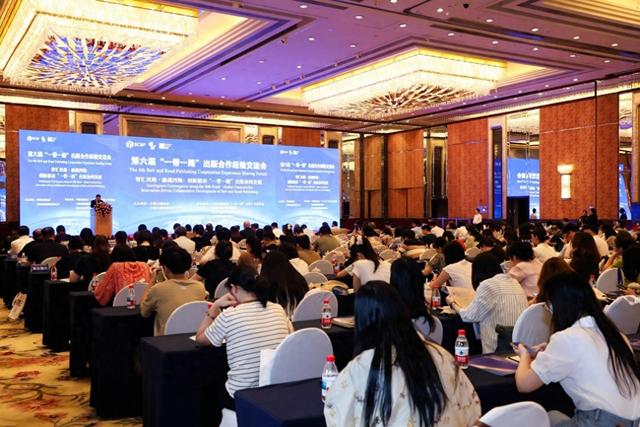
Group 1 - The sixth "Belt and Road" Publishing Cooperation Experience Exchange Conference was successfully held in Guangzhou, focusing on the theme of "Intelligent Integration of the Silk Road: Innovation-Driven Collaborative Development of 'Belt and Road' Publishing" [1][3] - Since 2013, the Chinese publishing industry has translated over 3,000 classic Chinese works, established topic databases with publishers from more than 50 countries, and launched over 1,200 cooperative books, resulting in 18,000 copyright trades [3][5] - The China Publishing Group is promoting the translation of works like "Xi Jinping's Stories of Poverty Alleviation" to inject Chinese wisdom into global governance and is enhancing its competitive edge through innovative projects like large language models [5][12] Group 2 - The Guangdong Publishing Group is leveraging its geographical advantage as the starting point of the "Maritime Silk Road" to upgrade publishing cooperation through digital innovation and regional collaboration [7][8] - The group is implementing initiatives such as the "South Guangdong Mutual Translation Plan" and the "Guangdong Books Entering Overseas Libraries Plan" to promote local publications internationally [8][10] - The global number of AI research papers has increased significantly from 36,000 in 2004 to 486,000 in 2024, with China leading in AI research contributions [12][14] Group 3 - The conference highlighted the importance of cultural exchange and mutual understanding in publishing, emphasizing the need for innovative thinking to overcome cross-cultural communication barriers [14][15] - Suggestions were made to establish a joint digital publishing platform between China and Arab countries, create a translation and digital support fund, and establish a "Belt and Road Publishing and Culture Academy" to enhance international communication [10][15] - The need for a collaborative network for copyright protection and a cross-border rights protection mechanism was emphasized to address piracy challenges and ensure the vitality of innovation [15]


机器人,还当不了打工人
创业邦· 2025-08-16 03:15
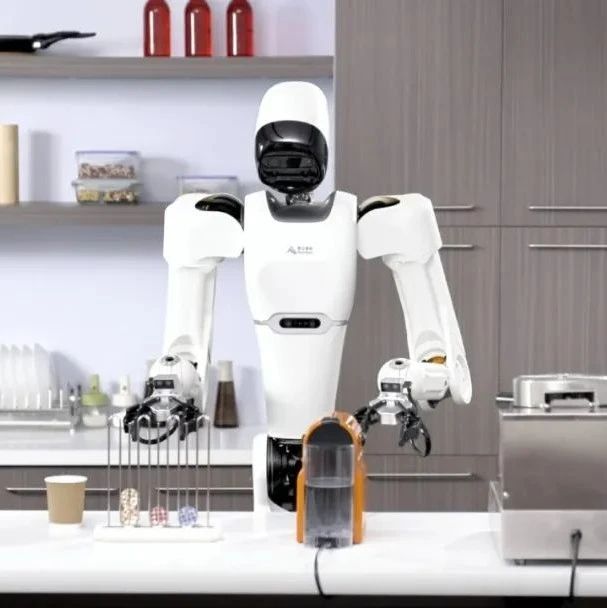
Core Viewpoint - The article discusses the rapid evolution and increasing popularity of humanoid robots, highlighting their capabilities and the challenges they face in terms of intelligence and cost [6][7][25]. Group 1: Humanoid Robot Capabilities - Humanoid robots have advanced significantly, showcasing skills such as dancing, performing in competitions, and assisting in household tasks [6][7]. - They can interact with humans, understand speech, and perform simple conversations, moving beyond the label of "artificial intelligence" [6][7]. - Despite their advancements, they still exhibit limitations such as single-action performance, slow efficiency in tasks, and high costs, with top models priced comparably to luxury cars [6][7]. Group 2: Technical Aspects - Humanoid robots typically feature a human-like structure, with variations in hand and foot designs, affecting their functionality and cost [9][10]. - The cost of high-end dexterous hands can reach 100,000 to 200,000 yuan, making them a significant portion of the robot's total cost [9][10]. - Control methods for humanoid robots include remote operation, isomorphic arms, and voice control, but true AI autonomy remains a challenge [12][13]. Group 3: Application Scenarios - Humanoid robots are categorized into B2B (business) and B2C (consumer) applications, with B2B focusing on entertainment, industrial manufacturing, tourism services, and healthcare [14][15]. - The entertainment sector is currently the most developed application area, while other sectors are still in basic application stages [14][15]. Group 4: Industry Challenges - The main challenges for humanoid robots are their intelligence and cost, with current software capabilities being limited and requiring significant data for improvement [16][18]. - The industry consensus indicates that while physical capabilities are maturing, the software intelligence is lagging, restricting the robots' operational scope [18][19]. Group 5: Market Outlook - Despite the challenges, the humanoid robot industry is experiencing rapid growth, with a reported 27.8% increase in revenue in the first half of the year [25]. - Over 15,280 new robot-related companies were registered in the first seven months of the year, marking a 43.81% increase compared to the previous year [25]. - More than 20 humanoid robot companies are pursuing IPOs, with 16 based in China, indicating strong market interest and investment potential [25][26]. Group 6: Company Strategies - Companies like Yushutech focus on core technology and commercialization, while others like Zhiyuan Robotics emphasize a full-chain layout from hardware to software [25][26]. - The industry is characterized by diverse strategies and focuses, with some companies prioritizing intelligence and others emphasizing hardware capabilities [27].
视觉强化学习最新综述:全领域梳理(新加坡国立&浙大&港中文)
自动驾驶之心· 2025-08-16 00:03
Core Insights - The article discusses the integration of Reinforcement Learning with Computer Vision, marking a paradigm shift in how AI interacts with visual data [3][4] - It highlights the potential for AI to not only understand but also create and optimize visual content based on human preferences, transforming AI from passive observers to active decision-makers [4] Research Background and Overview - The emergence of Visual Reinforcement Learning (VRL) is driven by the successful application of Reinforcement Learning in Large Language Models (LLMs) [7] - The article identifies three core challenges in the field: stability in policy optimization under complex reward signals, efficient processing of high-dimensional visual inputs, and scalable reward function design for long-term decision-making [7][8] Theoretical Foundations of Visual Reinforcement Learning - The theoretical framework for VRL includes formalizing the problem using Markov Decision Processes (MDP), which unifies text and visual generation RL frameworks [15] - Three main alignment paradigms are proposed: RL with human feedback (RLHF), Direct Preference Optimization (DPO), and Reinforcement Learning with Verifiable Rewards (RLVR) [16][18] Core Applications of Visual Reinforcement Learning - The article categorizes VRL research into four main areas: Multimodal Large Language Models (MLLM), Visual Generation, Unified Models, and Visual-Language-Action (VLA) Models [31] - Each area is further divided into specific tasks, with representative works analyzed for their contributions [31][32] Evaluation Metrics and Benchmarking - A layered evaluation framework is proposed, detailing specific benchmarks for each area to ensure reproducibility and comparability in VRL research [44][48] - The article emphasizes the need for effective metrics that align with human perception and can validate the performance of VRL systems [61] Future Directions and Challenges - The article outlines four key challenges for the future of VRL: balancing depth and efficiency in reasoning, addressing long-term RL in VLA tasks, designing reward models for visual generation, and improving data efficiency and generalization capabilities [50][52][54] - It suggests that future research should focus on integrating model-based planning, self-supervised visual pre-training, and adaptive curriculum learning to enhance the practical applications of VRL [57]
港股午评:恒指跌1.19%、科指跌1.08%, 医药股强势,科技股低迷
Jin Rong Jie· 2025-08-15 04:21
Market Overview - The Hong Kong stock market experienced a decline, with the Hang Seng Index down 1.19% to 25,215.1 points, the Hang Seng Tech Index down 1.08% to 5,515.77 points, and the National Enterprises Index down 1.26% to 9,013.58 points [1] - Major technology stocks saw widespread declines, with Alibaba down 2.63%, JD.com down 3.84%, and Meituan down 3.14%, while Tencent saw a slight increase of 0.76% [1] - Internet healthcare stocks surged, with Dingdang Health rising over 26%, while Chinese brokerage stocks strengthened, with Zhongzhou Securities up over 13% [1] Company News - Alibaba Group is launching a large-scale AI talent recruitment plan, aiming to hire nearly 1,000 people focusing on advanced technologies such as large language models and AI hardware, with positions available in major cities like Beijing and Shanghai [2] - China Telecom reported a revenue of 271.5 billion yuan for the first half of the year, a year-on-year increase of 1.3%, and a net profit of 23 billion yuan, up 5.5% year-on-year [3] - CK Hutchison Holdings reported a revenue of 240.66 billion HKD for the first half of the year, a year-on-year increase of 3.45%, but a significant net profit decline of 91.65% to 850 million HKD [4] - JD.com reported a second-quarter revenue of 356.7 billion yuan, a year-on-year increase of 22.4%, but a net profit decline of approximately 50.8% to 6.2 billion yuan [4] - NetEase reported a revenue of 56.72 billion yuan for the first half of the year, a year-on-year increase of 8.37%, and a net profit of 18.90 billion yuan, up 31.33% year-on-year [5] Institutional Insights - Analysts from Zhongtai International noted that the current valuation of Hong Kong stocks has significantly recovered, with the Hang Seng Index's forecast PE returning to the mid-level of 2018-2019, and the risk premium at a historical low [6] - Guotai Junan analysts indicated that the overall pressure from capital outflows in Hong Kong stocks may be relatively controllable, with an expected net inflow of over 1.2 trillion yuan for the year [6] - Ping An Securities highlighted that despite uncertainties from U.S. tariffs, China's export data in July was unexpectedly strong, supporting a bullish outlook for Hong Kong stocks [6] - Everbright Securities stated that the overall profitability of Hong Kong stocks remains strong, with relatively scarce assets in sectors like internet, new consumption, and innovative pharmaceuticals, suggesting a favorable long-term investment outlook [6]
别盯着GPT-5了!Google这款Genie 3世界模型,才是未来的AI核心战场
老徐抓AI趋势· 2025-08-15 04:00
Core Viewpoint - The article emphasizes that while GPT-5 is receiving significant attention, the true focus should be on Google DeepMind's Genie 3, which represents a breakthrough in world modeling technology that could reshape the AI landscape [2][5]. Summary by Sections Introduction - The AI community is currently focused on GPT-5, but there is a risk of overlooking Genie 3, which is considered more significant [2]. World Model Definition - World models generate interactive and logically consistent environments, allowing users to explore and interact, unlike traditional video which is static and fixed [6]. Genie 3 Demonstration - Genie 3 can create a persistent world where changes made by users are retained, showcasing its ability to maintain logical consistency [9][11]. Disruptive Potential of World Models - World models could democratize high-quality content creation, significantly reducing costs in gaming and film production, and have potential applications in robot training [14][20]. Applications in Autonomous Driving - World models can generate training scenarios for autonomous vehicles, allowing for efficient data generation that adheres to physical laws, thus lowering training costs [15][19]. Relation to Metaverse and Mirror World - The advent of world models could lower the production costs associated with the metaverse, making it more feasible and aligning with the concept of mirror worlds that blend reality and virtuality [20]. Future Investment Opportunities - Companies and investors interested in autonomous driving, robotics, and immersive virtual experiences should closely monitor developments in world modeling technology, as it is seen as a key driver for these industries [22].


GPT5发布标志:以Tranformer为架构的大语言模型即将走到尽头,下一波浪潮在哪?
老徐抓AI趋势· 2025-08-15 03:00
Core Viewpoint - The release of GPT-5 marks a significant moment in the AI industry, indicating a shift from a transformative era of large language models to a more incremental improvement phase, suggesting that the Transformer architecture may be reaching its limits [6][56]. Performance Analysis - GPT-5 shows improvements in various core metrics, such as achieving a 94.6% accuracy in the AIME math competition without tools and 100% with tools, but the progress compared to previous models is less dramatic [9][12]. - In the HLE human ultimate exam, GPT-5 Pro achieved 42%, a notable increase from the previous model's 24.3% [16]. - For programming capabilities, GPT-5 scored 74.9% in the SWE Bench Verified test, slightly surpassing Anthropic's Claude Opus 4.1 [21][24]. - The cost of using GPT-5 is significantly lower than its competitors, with input costs at $1.25 per million tokens, indicating a potential price competition in the market [26][27]. Industry Trends - The release event for GPT-5 was more elaborate but lacked the excitement of earlier launches, reflecting a shift in how OpenAI presents its advancements [8][9]. - The AI industry is moving towards a phase where quality and user experience are prioritized alongside capability, indicating a maturation of the market [8][12]. - The potential saturation of training data and parameters suggests that the industry may soon face challenges in achieving further breakthroughs with current architectures [34][37]. Future Directions - Two potential future directions for AI development are algorithmic innovation, such as hierarchical reasoning models, and upgrading data types to include more complex modalities like video and sensor data [38][41]. - The industry is transitioning from a phase of "superior quality" to "lower prices," which could lead to a competitive environment where profit margins are squeezed [43]. Conclusion - The release of GPT-5 signifies both a peak and a potential turning point in the AI landscape, with future advancements likely requiring new architectures or data modalities to sustain growth [56].

网易有道20250814
2025-08-14 14:48
Summary of the Conference Call for NetEase Youdao (2025 Q2) Company Overview - **Company**: NetEase Youdao - **Quarter**: Q2 2025 Key Financial Metrics - **Net Revenue**: RMB 1.4 billion, a year-over-year increase of 7.2% [2][3] - **Operating Cash Flow**: RMB 185 million, attributed to effective execution of AI-native strategy and cost control [2] - **Net Loss**: RMB 17.8 million, significantly narrowed from RMB 99.5 million year-over-year [10] - **Non-GAAP Net Income**: RMB 12.5 million, a turnaround from a loss of RMB 96 million year-over-year [10] - **Sales and Marketing Expenses**: Decreased to RMB 401.8 million from RMB 515.7 million year-over-year [10] - **R&D Expenses**: Decreased to RMB 128.3 million from RMB 153 million year-over-year [10] - **Gross Profit**: RMB 609.4 million, a year-over-year decrease of 4.3% [3] Business Segments Performance Learning Services - **Net Revenue**: RMB 657.8 million, a year-over-year increase of 2.2% [3] - **Strong Performance**: The Youdao Leading Edge segment saw significant growth, with digital content services revenue reaching RMB 444.74 million [5] Online Marketing Services - **Record Revenue**: RMB 632.9 million, a year-over-year increase of 23.8% [6] - **Growth Drivers**: Strong demand from the gaming industry and Chinese clients' overseas expansion [6] - **Game Advertising Revenue**: Increased by over 50% [6] Smart Devices - **Net Revenue**: RMB 126.8 million, a year-over-year decrease of 23.9% [3][7] - **Market Leadership**: Despite the decline, the company maintains its market leadership, focusing on products like Utah Dictionary Ten [7][8] Strategic Initiatives - **AI-Native Strategy**: Continued focus on optimizing large language models and smart agents to enhance learner efficiency and advertiser ROI [4][9] - **Product Development**: Plans to launch new AI-driven smart devices and personalized learning technologies [4][9] - **Cost Control**: Integration of hardware and learning services to reduce overall sales and marketing costs [4][14] Future Outlook - **Continued Investment**: Plans to invest more in technology to achieve long-term value [17][18] - **Stock Buyback**: Ongoing stock buyback plan with potential for new plans based on market conditions [17][18] - **Advertising Growth**: Anticipated acceleration in advertising revenue, particularly in domestic and overseas gaming markets [18] Additional Insights - **User Engagement**: The introduction of AI interactive course formats has improved user learning outcomes and brand reputation [11] - **Market Potential**: The Chinese AI hardware market is expected to exceed RMB 1 trillion in 2025, with an 18% CAGR over the next five years [12] - **AI Advertising Optimizer**: Expected to enhance advertising efficiency and ROI, supporting revenue growth [13] This summary encapsulates the key points from the conference call, highlighting the financial performance, business segment insights, strategic initiatives, and future outlook for NetEase Youdao in Q2 2025.

Ai2推出MolmoAct模型:在机器人领域挑战英伟达和谷歌
Sou Hu Cai Jing· 2025-08-14 07:50
Core Insights - The article discusses the rapid development of physical AI, which combines robotics and foundational models, with companies like Nvidia, Google, and Meta releasing research results exploring the integration of large language models with robotics [2][4] Group 1: MolmoAct Overview - The Allen Institute for Artificial Intelligence (Ai2) has released MolmoAct 7B, an open-source model designed to enable robots to "reason in space," aiming to challenge Nvidia and Google in the physical AI domain [2] - MolmoAct is classified as an action reasoning model that allows foundational models to reason about actions in a three-dimensional physical space, enhancing robots' ability to understand the physical world and make better interaction decisions [2][3] Group 2: Unique Advantages - Ai2 claims that MolmoAct possesses three-dimensional spatial reasoning capabilities, unlike traditional visual-language-action (VLA) models, which cannot think or reason spatially, making MolmoAct more efficient and generalized [2][6] - The model is particularly suited for applications in dynamic and irregular environments, such as homes, where robotics face significant challenges [2] Group 3: Technical Implementation - MolmoAct utilizes "spatial location perception Tokens" to understand the physical world, which are pre-trained and extracted using vector quantization variational autoencoders, allowing the model to convert video data into Tokens [3][7] - These Tokens enable the model to estimate distances between objects and predict a series of "image space" path points, leading to specific action outputs [3] Group 4: Performance Metrics - Benchmark tests indicate that MolmoAct 7B achieves a task success rate of 72.1%, surpassing models from Google, Microsoft, and Nvidia [3][8] - The model can adapt to various implementations, such as robotic arms or humanoid robots, with minimal fine-tuning required [8] Group 5: Industry Trends - The development of more intelligent robots with spatial awareness has been a long-term goal for many developers and computer scientists, with the advent of large language models facilitating this process [4][5] - Companies like Google and Meta are also exploring similar technologies, with Google’s SayCan helping robots reason about tasks and determine action sequences [4]

被王兴兴质疑的VLA,为何自变量机器人CEO王潜坚定看好?
Sou Hu Cai Jing· 2025-08-14 07:37
Core Viewpoint - The development of humanoid robots is heavily reliant on advancements in AI and model capabilities, with a timeline of 3 to 5 years anticipated to reach levels comparable to ChatGPT or GPT-3.5 [2][7] Group 1: AI and Model Development - The consensus in the industry is that a fully unified end-to-end model, referred to as a foundational or general model, is essential for progress [6][13] - The scaling law observed in large language models is expected to similarly influence the development of embodied models, necessitating large data volumes and advanced model architectures [7][10] - The company emphasizes that embodied models should be independent of digital world models, focusing instead on physical world interactions [9][14] Group 2: Market Potential and Applications - The largest market for humanoid robots is anticipated to be in domestic and elder care applications, surpassing industrial use cases [3][14] - The company believes that the price point for consumer acceptance will likely be between $10,000 and $20,000, although current capabilities do not meet this price range [4][17] Group 3: Data Collection and Quality - The company employs a strategy of collecting data from real-world interactions rather than relying solely on simulation data, particularly for complex physical tasks [10][11] - The quality of data is a critical factor in model training, with the company focusing on ensuring high-quality data collection methods [12] Group 4: Future Outlook - The company plans to integrate hardware and software solutions, aiming to sell complete products or solutions rather than following traditional software distribution models [4][19] - The timeline for seeing humanoid robots in everyday consumer settings is projected to be within the next 2 to 4 years [15]