数字经济

Search documents
江西省两会上的“新”声音:澎湃“建设力” 共谋新发展
Xin Lang Cai Jing· 2026-01-29 13:35
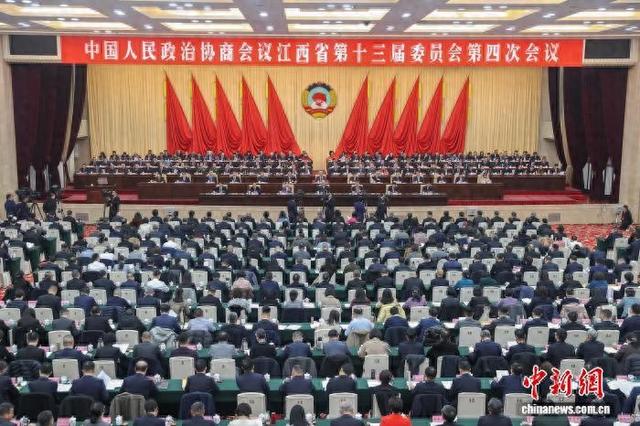
Group 1 - The core focus of the Jiangxi Provincial Two Sessions is on high-quality development, with new social strata individuals contributing insights on industrial development and social welfare [1] - Jiangxi is rich in cultural tourism resources, with a 13.8% increase in total tourism expenditure in 2025 and over 600,000 inbound tourists [1] - Proposals during the sessions emphasize the need for a digital tourism trading platform to enhance cultural confidence and address the issue of "having resources but no assets" in the tourism sector [2] Group 2 - The integration of AI in the digital content industry is highlighted as a means to deepen the fusion of cultural resources with cutting-edge technology, aiming to create immersive digital cultural products that reflect Jiangxi's identity [2] - The digital industry is identified as a key driver for cultivating new productive forces, with recommendations for a "chain integration" system and enhanced regional collaborative innovation [2] - The importance of establishing a local AI application ecosystem rooted in Jiangxi's industries is stressed, with a call for relevant departments to lead planning efforts to leverage AI for industrial development [4] Group 3 - The emergence of the "二次元" (two-dimensional) culture presents new opportunities for the consumer market, with suggestions for government support and collaboration between industries to integrate traditional culture with modern elements [5]

北京立法推动城市副中心高质量发展
Xin Hua She· 2026-01-29 13:19
Core Viewpoint - The "Beijing Urban Sub-center Regulations" were passed, granting greater autonomy for reform and innovation to address development challenges, effective from May 1, 2026 [1] Group 1: Regulatory Framework - The regulations consist of 9 chapters and 65 articles, covering general principles, management systems, planning and construction, industrial layout, green development, smart cities, public services, collaborative development, and supplementary provisions [1] - The regulations apply to the planning scope defined by the urban sub-center's detailed control planning and its expansion areas [1] Group 2: Key Development Areas - A unified land spatial planning system will be established, focusing on unique urban spatial structures, green space systems, and historical and cultural preservation [2] - The sub-center will prioritize the development of six key industries, including digital economy and modern finance, to foster future industries [2] - The smart city initiative will emphasize digital empowerment for socio-economic development, establishing a mechanism for synchronized planning and construction of digital and municipal infrastructure [2] Group 3: Collaborative Development - The regulations outline the integration of the sub-center with the main urban area, expansion zones, and surrounding regions, including the coordination with Xiong'an New Area for non-capital functions and population transfer [2] - There will be a focus on the integrated development of Tongzhou District with Tianjin and surrounding areas in Hebei Province [2] Group 4: Implementation Strategy - The implementation of the regulations is included in the annual work priorities of the urban sub-center construction leadership group, coinciding with the start of the 14th Five-Year Plan [2] - The Beijing Urban Sub-center Management Committee will develop implementation plans and supporting policies, leveraging local legislative experiences to ensure high-quality task completion [2]
“全球投资者对中国的兴趣正迎来新一轮升温!”高盛董事长回应中证报提问:看好中国市场持续发展开放机遇
Zhong Guo Zheng Quan Bao· 2026-01-29 13:03
Group 1: Investment Opportunities in China - Global investors are showing renewed interest in China, particularly in the IPO market, with a notable acceleration in issuance and a recovery in demand for financial advisory services [1][2] - The growth of local enterprises, especially in innovative sectors like artificial intelligence and digital economy, is creating new opportunities for investment banking activities in China [2][4] - Goldman Sachs is actively participating in the domestic wealth management market through its joint venture, Goldman Sachs ICBC Wealth Management, to meet the asset allocation needs of Chinese individual investors [2][4] Group 2: Market Attractiveness and Investment Strategies - From a relative valuation perspective, the Chinese stock market remains attractive compared to other major global markets, with performance dependent on economic growth and corporate earnings expectations [3] - Long-term investors are advised to build diversified portfolios, potentially achieving around 7% stable returns, with the possibility of doubling their principal every 10 years through compounding [3] - Specific asset allocation strategies are recommended for different age groups, emphasizing the importance of long-term investment for wealth accumulation [3] Group 3: Economic Structure and Market Development - The development of China's capital markets and ongoing opening-up measures are encouraging, with expectations for continued rapid growth in the onshore market [4][5] - There is a strong belief that a more balanced economic structure and increased market openness are crucial for attracting capital inflows and aligning with China's large economic scale [4][5] - The potential for economic structural transformation is significant, with a focus on enhancing consumption and service sectors as key growth drivers in the coming decade [6] Group 4: Technological Innovation and Future Outlook - The long-term potential of artificial intelligence is recognized, with expectations for significant impacts on global productivity, although there may be a calibration period following the current investment surge [7] - Goldman Sachs will continue to assess trends in China's economic development and is committed to a long-term strategy in the Chinese market [8]

赵健:未来,我们将致敬更多的行业领军企业和优秀企业家
Xin Lang Cai Jing· 2026-01-29 12:52
Core Viewpoint - The event "Praise for China's Economy - Entrepreneur Night" held on January 29 in Beijing recognized representatives from the "China Chip Infrastructure" sector, highlighting the significant contributions of AI chip companies to China's economic development [1][4]. Group 1: AI Chip Industry Contributions - AI chips are identified as the core foundation of modern technology and the digital economy, essential for supporting rapid advancements in artificial intelligence, high-performance computing, and automotive electronics [2][3][6]. - The Chinese semiconductor industry aims to establish a self-controlled computing foundation by 2025, which will drive economic transformation and high-quality development [2][3][6]. Group 2: Characteristics of AI Chip Companies - AI chip companies are characterized by youthful teams, specialized technology, a mission for domestic substitution, and continuous innovation investment as their core competitive advantages [2][3][6]. - These companies are rapidly emerging through architectural innovation, ecosystem co-construction, and practical application, supported by favorable policies and capital [2][3][6]. Group 3: Recognition and Future Aspirations - The event also served to honor the achievements of seven outstanding AI chip companies, representing a significant segment of the AI chip foundation enterprises [2][3][6]. - Future events will continue to recognize leading enterprises and outstanding entrepreneurs, contributing to the ongoing support for China's economic growth [3][7].


赵健:AI芯片是现代科技与数字经济的核心基石
Xin Lang Cai Jing· 2026-01-29 12:52
Core Viewpoint - The event "China Economic Praise - Entrepreneur Night" held on January 29 in Beijing recognized representatives from the "China Chip Infrastructure" sector, highlighting the importance of AI chips in driving China's economic transformation and high-quality development [1][5]. Group 1: Event Overview - The "China Economic Praise - Entrepreneur Night" took place in Beijing, honoring representatives from AI chip companies [1][5]. - Key figures present included Zhao Jian, President of the China Economic Media Association, and Yang Yudong, Editor-in-Chief of Yicai [1][5]. Group 2: Significance of AI Chips - AI chips are described as the core foundation of modern technology and the digital economy, essential for supporting rapid development in artificial intelligence, high-performance computing, and automotive electronics [2][3]. - The Chinese semiconductor industry aims to establish a self-controlled computing foundation by 2025, which is crucial for driving economic transformation and high-quality development [2][3][8]. Group 3: Characteristics of AI Chip Companies - AI chip companies are characterized by youthful teams, specialized technology, a mission for domestic substitution, and continuous innovation investment [2][3]. - These companies are rapidly emerging through architectural innovation, ecosystem building, and practical application, supported by policies and capital [2][3].
李强同英国首相斯塔默会谈
Xin Hua She· 2026-01-29 12:32
Group 1 - The core viewpoint emphasizes the importance of open cooperation and mutual benefit between China and the UK, aligning with both countries' interests [1] - China is willing to enhance intergovernmental dialogue and cooperation mechanisms, promoting frequent exchanges across various levels and fields [2] - Both countries aim to leverage their complementary advantages to expand and improve bilateral trade, focusing on sectors such as artificial intelligence, advanced manufacturing, clean energy, digital economy, and modern shipping services [2] Group 2 - The UK is committed to strengthening high-level and cross-sector dialogue with China, supporting open and free trade, and enhancing cooperation in trade, finance, investment, manufacturing, services, and culture [3] - Both countries signed multiple cooperation documents in areas such as trade, agriculture, media, education, and market regulation following the talks [5] - The discussions highlight the shared responsibility of both nations as permanent members of the UN Security Council to address global challenges and promote a fair international order [2][3]
历城区“十四五”发展成绩单
Qi Lu Wan Bao· 2026-01-29 11:05
Economic Growth - The total economic output is projected to exceed 149 billion by 2025, with a year-on-year growth of over 5% and an average annual growth rate of 5.2% [1] - The general public budget revenue remains third in the city, with an average annual growth of 4% [1] Investment and Projects - A total of 252 key provincial and municipal projects have been implemented, with fixed asset investment growing at an average annual rate of 3.8%, maintaining the highest investment volume in the city for eight consecutive years [1] - The number of new market entities reached 34,000, bringing the total to over 233,000, leading the city in both growth and total number [1] Research and Development - R&D investment accounts for 4.1% of GDP, significantly higher than provincial and municipal averages, with seven national key laboratories, the highest in the city [1] Digital Economy - The total computing power has reached 2300P, and a unique AI-themed overseas returnee town has successfully settled [1] Trade and Logistics - The Dongjia Railway Freight Center has a throughput exceeding 2.5 million tons, and the China-Europe Railway Express has completed 2,577 trips, connecting to 52 cities in 23 countries [1] - The total import and export volume has surpassed 23.5 billion, with an average annual growth rate of 20% [1] Infrastructure Development - The Jilai High-speed Railway and Huangdong Link Line have been fully completed, with the Licheng High-speed Railway Station now in operation [2] - Major air quality indices have improved by 29%, with PM2.5 concentration down by 40% [2] - A total of 78 new parks and 39 kilometers of greenways have been established, with significant improvements in local environmental quality [2] Employment and Education - Urban employment has increased by 104,000, with 52 new primary and secondary schools and kindergartens built, adding 64,000 new student places [2] - The establishment of 18 new community health service institutions and the renovation of 123 village health clinics have been completed [2] Housing and Social Welfare - Ten resettlement housing projects and 47 "guaranteed housing" projects have been delivered, with 27,000 units of affordable rental housing secured [3]
深圳2025年全社会用电量同比增长4.71%
Zhong Guo Xin Wen Wang· 2026-01-29 09:08
中新网深圳1月29日电 (索有为 向哲誉 姚钪)南方电网深圳供电局29日发布的统计数据显示,2025年,深 圳全社会用电量1272.15亿度,同比增长4.71%。 据统计,2025年深圳数据中心用电量34.54亿千瓦时,同比增长14.92%,占第三产业用电量7.39%,拉动 第三产业增长1.03个百分点,与区域数字经济发展及算力基础设施超前布局的整体趋势一致。 绿色出行也在崛起。随着"1公里超充出行圈"走进深圳市民的生活,2025年,全市充电站(桩)用电量 69.42亿千瓦时,同比增长16.22%,占第三产业用电量14.85%,拉动第三产业增长2.07个百分点。 景。黄海鹏 摄 近日,比亚迪集团迎来电力扩容。到目前,南方电网深圳供电局通过"电等产能"服务,已累计为比亚迪 集团送电超170万千伏安,满足了企业日益增长的用电需求。据统计,2025年深圳汽车制造业用电量同 比增长23.98%,成为深圳打造"新一代世界一流汽车城"的生动注脚。 随着深圳持续推进产业结构优化,以电动汽车、半导体、机器人、无人机等为代表的专精特新行业用电 需求突飞猛进。2025年,医药制造业,计算机、通信和其他电子设备制造业,仪器仪表制造 ...

全国人大代表黄茂兴:加快构建现代化基础设施体系
Ren Min Ri Bao· 2026-01-29 08:55
Core Viewpoint - The construction of a modern infrastructure system is essential for building a modern industrial system and plays a strategic role in national development [1] Group 1: Digital Infrastructure - Accelerate the construction of intelligent and comprehensive digital information infrastructure, integrating network, computing power, and application infrastructure to strengthen the foundation for the digital economy and modern industrial system [1] Group 2: Energy Infrastructure - Focus on building new energy infrastructure, developing a new power system, advancing energy storage, and promoting clean energy base construction to increase the proportion of renewable energy supply and support the green transformation of industries [1] Group 3: Transportation Infrastructure - Improve the modern comprehensive transportation system by enhancing cross-regional coordination, advancing inter-regional corridor construction, and promoting national comprehensive freight hub development to elevate the service level of transportation and support the construction of a modern industrial system [1]
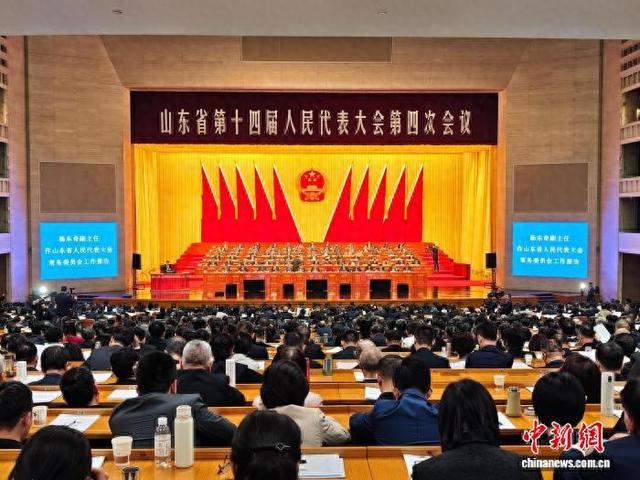
山东省人大公布2025年“成绩单” 新兴领域立法护航高质量发展
Xin Lang Cai Jing· 2026-01-29 08:28
Legislative Developments - Shandong Province has introduced special education regulations to ensure equal educational rights for children and adolescents with special educational needs [1] - The province has enacted its first provincial-level regulations on offshore ranching to promote high-quality development in marine fisheries [1][5] - The legislative assembly has approved various local regulations to support the development of cultural and tourism industries, including those related to tourism promotion and the ceramic industry [3][5] Economic Legislation - The legislative assembly plans to strengthen economic legislation by introducing regulations to promote the private economy and digital economy, addressing systemic barriers to development [5] - Future legislative efforts will focus on areas such as data management, fair competition, land management, and the prevention of rare diseases [5] Social Welfare and Oversight - The assembly has prioritized social welfare by addressing issues related to corruption and misconduct, enhancing the oversight of local government actions [6][8] - A total of 3,827 public petitions have been processed, with a focus on resolving urgent public concerns [8] Representative Support and Engagement - The assembly has improved the legislative process and support for representatives, ensuring high-quality handling of proposals and suggestions [8][9] - During the recent assembly session, 65 proposals were submitted, with 17 related to legislative projects already approved [8][9]