
风险管理

Search documents
“互换通”运行机制再优化
Shang Hai Zheng Quan Bao· 2025-09-25 18:14
Core Insights - The launch of interest rate swap contracts linked to the one-year Loan Prime Rate (LPR1Y) under the "Northbound Swap Connect" has been well-received, indicating strong market demand for these new products [1] - The introduction of these contracts is expected to enhance risk management tools for domestic and foreign investors, improve market liquidity, and facilitate price discovery [1] - The "Swap Connect" functionality has been continuously optimized since its inception in 2023, with plans to introduce new contracts and features in 2024 [1] Group 1 - The new interest rate swap contracts have seen active participation from multiple institutions, including Dongfang Securities, SPDB, and Standard Chartered Bank, with successful trades on the first day of launch [1] - The LPR serves as a core pricing benchmark for commercial bank loan rates in China, and there is a rapidly growing demand for hedging instruments linked to it [1] - The "Swap Connect" product system has become more comprehensive with the introduction of LPR interest rate swap contracts, addressing the diverse risk management needs of foreign institutions [1] Group 2 - Standard Chartered Bank noted that the "Swap Connect" has undergone multiple optimizations, enhancing product functionality and attracting more market participants [2] - The bank aims to leverage the synergy between the mainland and Hong Kong to support global clients in participating in "Swap Connect" transactions [2] - The ongoing development of the "Swap Connect" is seen as a contribution to the continuous opening and high-quality development of China's financial market [2]
“完善衍生品布局服务高质量发展”报道(上) | 增“绿”拓“新” 助力期货服务实体广覆盖深赋能
Qi Huo Ri Bao Wang· 2025-09-25 18:08
Core Viewpoint - The Chinese futures market has made significant progress in expanding its product offerings, which is expected to enhance its service to the real economy and support high-quality development in various industries [1][2]. Group 1: Product Development and Market Expansion - As of now, China has listed 157 futures and options products, covering major sectors of the national economy, including agriculture, metals, energy, chemicals, and finance [1]. - New products launched this year include futures and options for casting aluminum alloy, pure benzene, propylene, and various derivatives in the chemical and paper industries [1][2]. - The introduction of new futures products is seen as a response to the diverse risk management needs of industries, particularly in the context of the "dual carbon" goals [2][3]. Group 2: Strategic Alignment with National Goals - The China Securities Regulatory Commission has emphasized the need to enhance futures product layouts in key areas such as agriculture, manufacturing, and green transformation [1]. - The development of futures products is aligned with national strategies to improve the resilience of industrial chains and respond to commodity price fluctuations [2][3]. - The market is actively working on new products related to liquefied natural gas, sunflower seed oil, lithium hydroxide, and other essential materials for the energy transition [2]. Group 3: Innovation and Market Functionality - The introduction of series options and monthly average futures is aimed at meeting the diverse and refined risk management needs of the real economy [3]. - The total funds in the futures market have surpassed 1.9 trillion yuan, indicating a steady increase in market participation from industrial clients [3]. - The ongoing product innovation is expected to enhance the market's global attractiveness and effectiveness in serving the national economy [3]. Group 4: Green Transition and Industry Upgrades - The futures market is focusing on supporting the green transition by developing products that align with the needs of industries undergoing transformation [5][7]. - The launch of casting aluminum alloy futures is expected to facilitate the development of a standardized recycling system for aluminum, promoting a low-carbon circular economy [5]. - Future product developments will include derivatives related to renewable energy materials and environmental rights, aiming to create a comprehensive risk management toolset for the green economy [7].
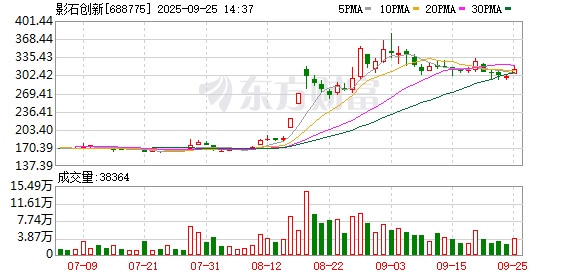
影石创新存货周转率大幅放缓 全球化挑战加剧
Xin Hua Cai Jing· 2025-09-25 06:36
Core Viewpoint - Yingstone Innovation, which went public on the Sci-Tech Innovation Board in June, is facing increasing competition in the global smart imaging device market, highlighted by declining inventory turnover and significant drops in cash flow from operating activities [2][4]. Financial Performance - In the first half of the year, Yingstone Innovation reported revenue of 3.671 billion yuan, a year-on-year increase of 51.17%, while total profit decreased by 6.46% to 540 million yuan, and net profit attributable to shareholders rose slightly by 0.25% to 520 million yuan [4]. - The company's inventory turnover ratio fell from 2.10 in the same period last year to 1.43, a decline of 32%, and net cash flow from operating activities dropped over 60% from 606 million yuan to 241 million yuan [2]. R&D and Production Costs - R&D expenses doubled year-on-year, exceeding 15% of revenue, with a workforce of 1,836 employees, 56.75% of whom are technical staff [4][5]. - External processing costs accounted for 10.14% of the main business costs, amounting to 180 million yuan in the first half of 2025 [5]. Market Competition - Yingstone Innovation is entering the drone market with the launch of the Antigravity A1, an 8K panoramic drone, to compete directly with DJI, which holds a dominant market share of 76% in the global drone market [6][7]. - The global consumer drone market is projected to reach $4.85 billion in 2023, with a compound annual growth rate of 13.5% expected until 2030 [7]. Strategic Focus - The company has decided not to enter the automotive sector, focusing instead on its core competency in imaging technology, which is supported by analysts who believe this strategy will help maintain competitive advantages [8]. - Future plans include increasing R&D investment to strengthen leadership in panoramic technology while expanding into new categories like action cameras and drones [8].

为产业培养风险管理复合型人才
Qi Huo Ri Bao Wang· 2025-09-25 02:06
上期所联合中钢协举办深化服务钢铁企业专项系列培训 唐祖君表示,我国钢铁行业正处于转型升级的攻坚期、绿色低碳发展的关键期,也是国际竞争格局重塑 的重要窗口期。期货市场作为现代金融体系的重要组成部分,蕴含着助力钢铁行业风险管理的巨大能 量,有望成为钢铁企业管控成本、降低风险的有力工具。中钢协始终把"服务行业、培育人才"作为核心 职责,本次培训内容"实"、师资"实"、形式"实",是结合行业需求、政策导向与企业痛点设计的专业培 训课程。希望学员珍惜学习机会,学用结合,为增强钢铁产业链韧性、推动行业高质量发展贡献智慧。 陆丰表示,钢铁工业作为国民经济的重要基础产业和建设现代化强国的重要支撑,正经历从"规模扩 张"向"质量提升"的关键转型期,可持续发展空间仍然广阔。近年来,在中国证监会的坚强领导下、在 中钢协的大力指导下,上期所深入贯彻落实习近平总书记考察上期所重要指示精神,围绕企业所关切的 交割品牌、交割仓库、合约连续性等问题广泛调研,并采取了有针对性的一揽子政策措施,推动钢铁期 货高质量发展。上期所将继续扎根实体,锚定加快建成世界一流交易所的目标,全面深化钢铁期货高质 量发展专项行动,助力我国钢铁工业稳健运行。 据期 ...
第六期宁波地区大宗商品产业培训班成功举办
Zheng Quan Ri Bao Zhi Sheng· 2025-09-25 01:48
参加培训的企业代表均表示,通过本次系统性的理论授课、前沿的案例分析及深度的同业研讨进一步提 升了企业对期货及衍生品工具的认知水平和应用能力,对于引导树立正确的风险管理理念,有助于企业 在复杂多变的市场环境中增强抗风险能力和核心竞争力。 宁波市证券期货业协会相关负责人也表示,将以本期培训为新的起点,持续深化服务实体经济内涵,积 极联合证监会系统单位等各方力量,共同搭建更广阔的合作平台,为促进宁波期现市场互联互通,营造 良好的产融结合发展环境。 大连商品交易所相关业务负责人在活动中表示,近年来,大宗商品价格波动加剧,实体企业风险管理需 求迫切。大商所在持续完善产品体系、不断丰富市场服务模式、深化场外建设、加快高水平对外开放等 方面努力为实体经济健康发展保驾护航。宁波的经济结构与大商所上市品种关联度较高,一直以来都是 大商所产业服务的重要区域之一。举办本次产业培训活动,就是希望在地方政府部门的支持下,能与证 监会系统单位一起,帮助实体企业进一步认识期货市场的功能与作用,依托衍生品工具强化风险管理能 力、提升企业管理水平,积极为宁波实体经济的高质量发展助力赋能。 中国期货市场监控中心相关部门负责人在致辞中提到,近年来 ...

柳工:降息刺激需求但风险增加,公司保障国际业务发展
Xin Lang Cai Jing· 2025-09-25 01:17
Group 1 - The current interest rate cut cycle in the US is expected to lower the financing costs for overseas dealers and end-users, stimulating equipment procurement demand [1] - Enhanced global liquidity and intensive economic stimulus policies are likely to boost investment demand in downstream industries such as infrastructure, real estate, and mining projects [1] - The company aims to seize growth opportunities in emerging markets and the recovery in Europe and the US while maintaining cautious and comprehensive risk management to ensure long-term high-quality development of international business [1]

上期所联合中钢协举办深化服务钢铁企业专项系列培训 为产业培养风险管理复合型人才
Qi Huo Ri Bao Wang· 2025-09-24 19:55
Group 1 - The training program for steel industry professionals is aimed at enhancing risk management and cost control through the use of financial derivatives [1][2] - The steel industry in China is undergoing a critical transformation from "scale expansion" to "quality improvement," with significant sustainable development potential [2] - The Shanghai Futures Exchange (SHFE) is committed to high-quality development of steel futures, implementing targeted policies based on extensive research into industry needs [2] Group 2 - The training includes three sessions scheduled from September to November, focusing on innovation, risk management, and compliance in the steel sector [2] - Experts from the steel and futures industries will provide insights on green and low-carbon development, as well as practical applications of futures and derivatives [2] - The program aims to equip participants with the knowledge to effectively utilize futures and options for hedging, thereby enhancing risk management capabilities within the steel supply chain [2]
期权市场规模创历史新高上市品种达62个
Zheng Quan Ri Bao· 2025-09-24 16:55
Core Insights - The Chinese options market has experienced rapid growth, with daily average open interest increasing by 207% compared to 2022, indicating a significant rise in market activity and demand for risk management tools [1][2] Market Development - The China Futures Market Monitoring Center reported that the options market has reached new highs in open interest, with a record of 13.48 million contracts on August 6 [1] - A total of 7 new options products have been launched this year, bringing the total to 62, with comprehensive coverage across major futures and options products in energy and agricultural sectors [1] Demand Drivers - The volatility in international commodity prices has heightened the hedging needs of enterprises, leading to increased participation in the options market [2] - The understanding of options among various market participants, especially enterprises, has deepened, shifting strategies from directional trading to complex hedging strategies [2] Client Growth - In the first half of the year, the futures market added 410,000 new clients, a 2.5% increase year-on-year, with total effective clients reaching 2.61 million, marking a 12% year-on-year growth [2] - The number of institutional clients surged by 43% compared to 2022, while overseas clients increased by 63% [2] Impact on the Economy - The options market is playing a unique role in supporting national strategies and the real economy, with enterprise clients showing a growing preference for options as a flexible risk management tool [3] - Options have been effective in assisting enterprises with risk management and contributing to rural revitalization efforts [3] Future Outlook - Industry experts suggest further expansion of options product coverage to meet diverse risk management needs and recommend optimizing existing contract specifications for greater flexibility [3]
报告:保险业转型发展面临的外部环境仍然严峻 但预期较去年有明显改善
Bei Jing Shang Bao· 2025-09-24 15:46
Core Insights - The 2025 insurance industry is seen as a critical window for reshaping the market, necessitating strategic and tactical alignment for insurance companies [1] - The implementation of new standards is a pivotal opportunity for financial management digital transformation and deeper integration of finance and operations [2] Group 1: Strategic Discussions - The conference emphasized five core topics: strategic formulation, new standards planning, system construction, risk management, and internal audit empowerment [1] - The importance of "long-termism" in strategy and "lean management" in tactics was highlighted as essential for navigating industry transformations [1] Group 2: New Standards Implementation - Insights were shared on the practical handling of new standards, focusing on the core operational indicators and performance impacts for insurance companies [1] - Companies are encouraged to refine their implementation processes, including plans, systems, and internal controls, while also preparing for future challenges in assessment, product development, and asset-liability management [1][2] Group 3: Risk Management Insights - A survey covering over 150 insurance companies revealed ongoing challenges in risk management, including weak data governance and insufficient quantitative modeling tools [2] - Despite improvements, the integration of risk management into core decision-making processes remains lagging, and the application of emerging technologies and AI in risk management is still in its early stages [2]
报告:保险业转型发展面临的外部环境仍然严峻,但预期较去年有明显改善
Bei Jing Shang Bao· 2025-09-24 15:32
Core Insights - The 2025 insurance industry seminar hosted by Tianzhi International emphasizes the critical window for reshaping the insurance landscape, focusing on strategic transformation and new standards implementation [1] - The seminar discusses five core topics: strategy formulation, new standards planning, system construction, risk management, and internal audit empowerment [1] Group 1: Strategic Insights - Tianzhi International's financial industry partner highlights the need for insurance companies to align strategy and tactics, advocating for a long-term approach and lean management to navigate industry changes [1] - The emphasis is on thorough preparation and execution to ensure stability and growth during the industry's transformation [1] Group 2: Implementation of New Standards - The insurance consulting partner shares insights on the practical handling of new standards, stressing the importance of refining implementation processes and planning for future challenges [1] - Companies are encouraged to focus on detailed aspects such as proposals, systems, and internal controls to ensure successful implementation [1] Group 3: Technological and System Insights - The actuarial partner discusses the importance of balancing cost-effectiveness with management needs in the design of technical solutions for new standards [2] - The concept of an integrated financial platform, "1+N application," is introduced as a means to enhance financial management and decision-making [2] Group 4: Risk Management Findings - A survey of over 150 insurance companies reveals ongoing challenges in risk management, including weak data governance and insufficient quantitative modeling tools [2] - Despite improvements, the integration of risk management into core decision-making processes remains lagging, and the application of emerging technologies and AI is still in its early stages [2]