人工智能技术

Search documents
记者观察 | 投资的“终极智慧”:大道至简
Shang Hai Zheng Quan Bao· 2025-11-30 18:44
Group 1 - The core viewpoint of the articles highlights the changing market ecology, where traditional investment methods are becoming less effective due to the rise of quantitative investing and the deep application of artificial intelligence [1] - The Shanghai Composite Index has reached a ten-year high, yet many investors are underperforming compared to the index, indicating a disconnect between market performance and individual investor returns [1] - Quantitative private equity has altered market dynamics, changing trading speed, frequency, and the pricing mechanism, making it increasingly difficult for individual investors to achieve excess returns using traditional analysis methods [1] Group 2 - Investors must return to the essence of investing, which is understanding the intrinsic value of companies rather than merely speculating on price movements [2] - The article emphasizes that short-term price fluctuations are often amplified by algorithms, but long-term prices will eventually revert to value, highlighting the importance of a value-based investment approach [2] - Successful investors are those who focus on fundamental research of companies, accurate industry trend analysis, and a clear understanding of their own capabilities [2] Group 3 - The concept of "abandoning cleverness" does not mean rejecting modern investment tools; rather, it suggests that investors should use these tools to enhance their value investment philosophy [3] - Investors can utilize quantitative models to filter companies based on specific financial metrics and monitor industry trends using big data, but final investment decisions should be based on independent thinking [3] - The long-term value of a company is considered its "root," and anchoring investment decisions to this value is essential for successful investing [3]
ET发bu器真能帮你自动产出爆文?实测结果惊人
Sou Hu Cai Jing· 2025-11-30 15:39
Core Insights - In the digital age, ET publishing tools have gained attention for their ability to automate content creation and distribution, leveraging AI technology to streamline the entire process from content acquisition to publishing [1][3] - The evaluation focuses on several mainstream ET publishing tools, analyzing them across various dimensions such as functionality, ease of use, content quality, and automation level to provide reference for potential users [1][4] ET Publishing Tool Functionality - ET publishing systems are built around two core functions: "collection" and "originality," allowing users to scrape articles from the internet and generate unique content through AI algorithms [3] - The systems integrate various optimization options, including title rewriting, image processing, and SEO settings, ultimately automating the publishing process to minimize human intervention [3] Evaluation of Tools - **Youcaiyun AI Content Factory**: This tool excels in full-process automation and deep AI integration, providing a comprehensive solution for content creators. It supports multiple content sources and has robust anti-duplication mechanisms [7][10] - **Zhituijingsheng**: This tool shows good performance in content collection and basic processing, with a satisfactory collection speed but lacks the advanced features of Youcaiyun [14][16] - **Wenjian Automation**: This tool balances content processing depth and breadth, particularly in article rewriting and SEO optimization, but has a simpler anti-duplication mechanism compared to Youcaiyun [22][24] - **Kuaifa Content Matrix**: Positioned as a lightweight tool for users with lower automation needs, it offers basic content collection and processing capabilities but lacks advanced features [24][26] User Considerations - Users should consider their content needs, technical capabilities, and budget when selecting an ET publishing tool, ensuring they choose the most suitable solution for their requirements [27]

广电总局:打造覆盖各个领域的纪录片百科全书
Xin Hua She· 2025-11-25 11:09
Core Viewpoint - The National Radio and Television Administration emphasizes the importance of documentaries in preserving national history and cultural heritage, particularly in the context of the 80th anniversary of the victory in the Anti-Japanese War and World Anti-Fascist War [1] Group 1: Documentary Production - A series of key documentaries have been created to commemorate the 80th anniversary, including titles such as "Victory," "Lugou Bridge: Our Commemoration," "Where is the Heart at Ease," "Northeast Anti-Union," "Just War," and "Justice Trial" [1] - These documentaries are supported by academic and legal principles, utilizing historical facts and materials to promote a correct understanding of the history of the Anti-Japanese War and World War II [1] Group 2: Industry Development - Documentary creators are encouraged to integrate a "quality awareness" throughout the production process, aiming for documentaries that possess depth of thought, artistic quality, and emotional resonance [1] - There is a push to increase the application of ultra-high-definition technology in documentaries and to effectively utilize artificial intelligence to enhance visual effects and artistic presentation [1] - The industry is urged to adopt internet thinking, expand television broadcasting, strengthen multimedia dissemination, and enhance short video distribution [1]
能源转型大会上,“能源谷”亮出能源新质生产力硬核成果
Bei Jing Ri Bao Ke Hu Duan· 2025-11-23 08:43
Core Insights - The 2025 Energy Transition Conference opened in Changping District, focusing on energy digitalization and showcasing hard technology achievements from 15 companies [1] - The conference highlighted the innovative products in the outdoor exhibition area, including hydrogen-powered vehicles and drones for power line inspection [1][5] Group 1: Energy Innovations - Hydrogen-powered two-wheelers were showcased, featuring a 48V350W motor and solid-state hydrogen storage system for efficient power output and extended range [3] - A fully hydrogen-powered vehicle was presented, emphasizing zero carbon emissions and alignment with green transportation trends [3] - The power line inspection drone developed by State Grid Electric Power Space Technology Co., Ltd. integrates advanced avionics and positioning systems for efficient operation [5] Group 2: Renewable Energy Focus - Geothermal energy was a key focus in the indoor exhibition, noted for its ability to provide stable base-load power, which is a significant advantage over other renewable sources [7][8] - An automated liquid nitrogen cementing equipment model was displayed, designed to enhance cementing quality and safety in high-temperature geothermal wells [10] Group 3: Digitalization and AI Integration - The integration of digital and AI technologies in the energy sector was highlighted, with the introduction of unmanned driving robots for mining and power plant applications [12] - These robots are capable of autonomous operations and have been successfully implemented in various coal mines and power plants for over a year [12] Group 4: Research and Development Ecosystem - The Future Science City "Energy Valley" hosts 1,889 enterprises and has established 60 high-level research platforms, including national and provincial key laboratories [16] - Over the past three years, 78 research outcomes from 20 central enterprise research institutes and technology companies have been transformed on-site in the "Energy Valley" [16]

2025年中国数据中心能源管理行业政策、产业链、市场规模、细分结构、竞争格局及发展趋势研判:在数据中心容量持续扩张的驱动下,市场保持强劲增长[图]
Chan Ye Xin Xi Wang· 2025-11-20 01:32
Core Insights - The energy consumption of data centers is primarily derived from IT equipment, cooling systems, power distribution, and other infrastructure, exhibiting significant dynamism and volatility [1][2][4] - Driven by national policies such as new infrastructure and digital transformation, the demand and number of data centers in China have surged, leading to increased energy consumption and environmental pollution [1][4] - The Chinese data center energy management market is projected to grow robustly, reaching 75.2 billion yuan in 2024 and approximately 100.6 billion yuan in 2025, with power management systems accounting for a significant portion of the market [1][4][6] Data Center Energy Management Industry Definition and Energy Sources - Data centers are critical infrastructures in the modern information society, with energy consumption becoming a global concern [2] - The energy consumption sources include IT equipment, cooling systems, power distribution systems, and other energy-consuming infrastructure, with notable differences in energy consumption characteristics across different types of computing tasks and regions [2][4] Data Center Energy Management System Architecture - The energy management system for data centers consists of a data collection and processing platform, including modules for data reception, processing, monitoring, alarm management, energy analysis, and reporting [3] Market Size and Growth - The Chinese data center energy management market is expected to grow from 39.3 billion yuan in 2020 to 75.2 billion yuan in 2024, with a forecast to exceed 100 billion yuan in 2025 [4][6] - The market is primarily composed of power management systems and thermal management systems, with power management expected to maintain a significant share [6] Industry Chain - The upstream of the data center energy management industry includes equipment, components, software, and energy supply; the midstream consists of energy management solution integrators and service providers; the downstream includes demand-side entities such as cloud computing giants and telecom operators [6] Competitive Landscape - The industry is characterized by intense competition with a diverse range of players, including international leaders and domestic companies like Schneider Electric, Eaton, Huawei Digital Energy, and ZTE Corporation [8][9] - Schneider Electric holds a significant position in the global market due to its R&D capabilities, while Huawei focuses on energy digitalization and has rapidly gained market share in China [8][9] Industry Development Trends - The demand for high-performance computing devices is increasing, necessitating improved energy management solutions [10] - The integration of renewable energy and advancements in AI and big data analytics are expected to enhance energy management efficiency and promote sustainable practices in data centers [10][11] - Emerging technologies such as quantum computing for energy scheduling and advanced cooling techniques are anticipated to reshape the energy management landscape [11]



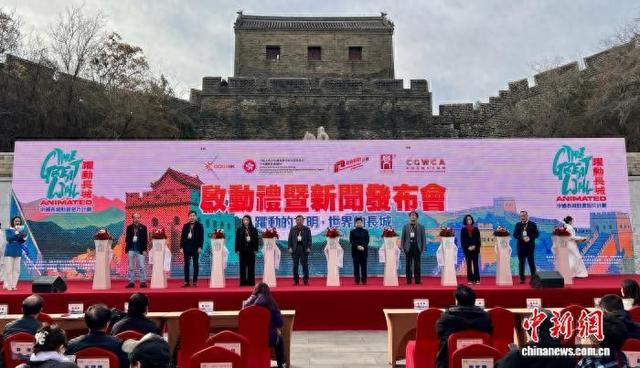
“‘跃动长城’中国长城动画短片计划”助力文化出海
Zhong Guo Xin Wen Wang· 2025-11-16 06:54
Core Points - The "Dynamic Great Wall" animation short film project was officially launched on November 15 at the Jinshanling Great Wall scenic area in Hebei, China, marking a significant collaboration between the Hong Kong Special Administrative Region government and mainland China [1][3][5] - This initiative aims to creatively express and internationally promote the cultural significance of the Great Wall, integrating Hong Kong's creativity with artificial intelligence technology [3][5][7] Group 1 - The project involves five selected Hong Kong animation teams that will create short films covering diverse themes such as historical legends, fantasy adventures, and human emotions, showcasing the multifaceted charm of the Great Wall [3][5] - The animation shorts will participate in international animation festivals or competitions to enhance the global presence of Chinese Great Wall culture [3][5] - The project is the first officially authorized Hong Kong original animation initiative related to the Great Wall, aiming to establish a key channel for Hong Kong's original animations to enter the mainland market [7] Group 2 - The project is seen as a vital step in promoting Chinese traditional culture, with Hong Kong acting as a platform for international engagement [5][7] - The project director emphasized the integration of "Great Wall spirit" with unique Hong Kong artistic styles and narrative perspectives, utilizing AI technology to enhance visual expression [7]

大成基金总经理谭晓冈:公募与券商协同转型 共筑高质量财富管理生态
Zhong Zheng Wang· 2025-11-16 02:54
Core Insights - The forum hosted by Zhongtai Securities focused on the high-quality development of wealth management and the ETF ecosystem, emphasizing the need for public funds and securities companies to undergo deep transformations in their operational philosophy, marketing models, and research paradigms to better serve residents' wealth management needs [1][2]. Group 1: Transformation Strategies - The collaboration between public funds and securities firms is entering a phase of iterative upgrade, focusing on three major transformations: shifting from a product-centric to a customer-centric approach, moving from single product sales to comprehensive asset allocation solutions, and aligning research paradigms with national strategic directions [2][3]. - The operational philosophy should prioritize customer differentiation and provide customized asset allocation advice, while the marketing model should evolve to enhance long-term investor satisfaction by transitioning from "selling products" to "managing accounts" [2][3]. Group 2: Key Focus Areas for Wealth Management - Key drivers for high-quality wealth management development include investment advisory services, artificial intelligence technology, and a multi-tiered product system [3]. - The investment advisory business should adopt a "buyer advisory" model, linking income to long-term asset appreciation, thereby strengthening industry trust [3]. Group 3: ETF Market Development - The explosive growth of the ETF market presents opportunities for public funds and securities firms to establish a comprehensive cooperation model, focusing on product development, ecosystem operation, and asset allocation [4]. - Collaborative efforts should include creating a strategy-driven, intelligent ETF toolkit, enhancing liquidity services, and developing diversified ETF solutions to convert product advantages into long-term client value [4].

三场展会看科技如何打造"好房子"
Jing Ji Ri Bao· 2025-11-14 00:13
Core Insights - The construction industry is increasingly integrating advanced technology, transforming the perception of building homes from a labor-intensive process to a tech-driven one [1] Group 1: Standards and Design - The implementation of the national standard "Residential Project Specification" on May 1 has introduced 14 new standards aimed at improving housing quality, including enhanced sound insulation requirements [2] - The exhibition showcased 18 model homes, including a 30-square-meter affordable rental unit designed to maximize space efficiency and adaptability for families [2] - There is a growing demand for the renovation of old homes, with 15 provinces reporting higher transaction volumes for second-hand homes compared to new ones, highlighting the importance of good design [2] Group 2: Materials Innovation - New construction materials are being developed, such as light-sensitive concrete that improves energy efficiency and self-healing concrete that can repair cracks autonomously [3] - The introduction of innovative materials like photovoltaic building glass and aerogel insulation is expected to enhance building performance, reduce carbon emissions, and lower maintenance costs [3] Group 3: Construction Techniques and Maintenance - The exhibition featured advanced construction equipment, including a domestically developed building machine that offers integrated, lightweight, and intelligent features for efficient construction [4][5] - A new integrated housing inspection platform was presented, capable of assessing indoor air quality and structural integrity, ensuring timely maintenance and health records for buildings [5] - The integration of AI, big data, IoT, and cloud computing is driving the evolution of the residential and urban construction sectors, enhancing living conditions through technological advancements [5]
中经评论:用科技打造“好房子”
Jing Ji Ri Bao· 2025-11-12 00:00
Group 1: Core Insights - The construction industry is increasingly integrating advanced technology, transforming the perception of building homes from a labor-intensive process to a tech-driven one [1][4] - The implementation of the national standard "Residential Project Specifications" on May 1 introduces 14 new standards aimed at improving housing quality, including enhanced sound insulation requirements [2] - The exhibition showcased innovative housing designs, such as a 30-square-meter rental unit that maximizes space efficiency and adaptable layouts for families [2][3] Group 2: Technological Advancements - New materials are being developed, such as light-sensitive concrete that improves energy efficiency and self-healing concrete that addresses cracking issues [3] - The introduction of advanced construction equipment, like a new type of building machine, enhances construction efficiency through automation and smart monitoring [3] - A comprehensive building inspection platform was presented, capable of assessing indoor air quality and structural integrity, contributing to better maintenance practices [4] Group 3: Industry Trends - The demand for renovation of existing homes is rising, with 15 provinces reporting higher transaction volumes for second-hand homes compared to new ones, highlighting the importance of good design [2] - The integration of AI, big data, IoT, and cloud computing is driving innovation in the residential and urban construction sectors, improving living conditions [4]
购车成本增加!明年起,新能源车购置税将从全免调为减半【附新能源汽车行业市场分析】
Qian Zhan Wang· 2025-11-10 07:12
Group 1 - The core point of the news is that China's new energy vehicle (NEV) purchase tax policy will shift from "exemption" to "50% reduction" starting January 1, 2026, with the maximum reduction amount decreasing from 30,000 yuan in 2025 to 15,000 yuan [2] - The adjustment is seen as a critical step to transition the NEV industry from price competition to value competition, encouraging companies to focus on quality and technology rather than low-cost strategies [2][7] - The price war in the automotive market has led to significant financial losses, with the new car market experiencing a cumulative loss of 138 billion yuan from January to August 2024 [3] Group 2 - BYD, a leading player in the NEV sector, held a market share of 31.7% in 2022, but has faced challenges due to the ongoing price war, resulting in a 32.6% year-on-year decline in net profit for Q3 2025 [3][5] - The company's strategy of lowering prices to maintain market dominance has severely impacted its profitability, with single-vehicle profit dropping to 5,000 yuan and gross margin reaching historical lows [5] - Future growth opportunities in the NEV industry are expected to arise from advancements in smart electric vehicles, artificial intelligence, connected vehicle technology, cloud computing, and digital car-sharing platforms [5]