
企业家精神

Search documents
韧行2025:企业家画像|钟睒睒:沉默中天亮了
Mei Ri Jing Ji Xin Wen· 2025-12-23 12:10
Core Viewpoint - In 2025, Zhong Shanshan has transformed from a public figure facing intense scrutiny in 2024 to a successful entrepreneur, regaining his status as a leading billionaire and restoring the market value of his company, Nongfu Spring [8][10]. Group 1: Public Image and Reputation Management - In 2024, Zhong faced significant public backlash following the death of a competitor, leading to various accusations and a decline in his company's market value [4][6]. - He responded to the criticisms by clarifying his relationship with the late founder of Wahaha and addressing concerns about his son's nationality, emphasizing that Nongfu Spring remains a Chinese enterprise [5][6]. - Despite his efforts, the company's market value halved, and its revenue dropped by 21.3%, indicating a severe impact on its brand image [7]. Group 2: Financial Recovery and Business Performance - By 2025, Zhong's net worth reached 530 billion yuan, making him the richest person in China for the fourth time, while Nongfu Spring's market value surpassed 500 billion HKD, with stock prices hitting a four-year high [8][10]. - The company's gross margin returned to over 60%, and new product lines, such as Oriental Leaf tea, significantly contributed to revenue, with tea beverage sales reaching 10.089 billion yuan, accounting for nearly 40% of total revenue [8][11]. Group 3: Strategic Business Initiatives - Zhong's long-term strategy focused on enhancing brand value and operational efficiency, including the development of multiple water source projects, which solidified Nongfu Spring's competitive advantage [11][12]. - The company shifted its market strategy away from price competition towards elevating industry standards, promoting sustainable practices, and supporting local farmers, thereby creating a mutually beneficial ecosystem [12][13]. - This approach not only improved the company's supply chain resilience but also aligned with social responsibility, marking a mature transition in its competitive logic [13][14].



2025新材料创业者大会宋锡滨主题报告《创业与企业家精神》
AMI埃米空间· 2025-12-22 09:09
Core Viewpoint - The report emphasizes the essence of entrepreneurship and entrepreneurial spirit, highlighting the importance of perseverance, understanding human nature, and the need for a supportive ecosystem in the entrepreneurial journey [1][9][19]. Group 1: Definition and Nature of Entrepreneurship - Entrepreneurship is defined as both a process and a result, shaped by various factors including environment, resources, opportunities, and risks [11][13]. - The entrepreneurial journey requires a clear understanding of macro trends and the ability to adapt to changing circumstances [9][11]. Group 2: Entrepreneurial Ecosystem - The entrepreneurial ecosystem is likened to a forest, where entrepreneurs, finance, talent, policy, and culture interact to create a healthy environment for innovation [17]. - Observations indicate a contraction in the value of the entrepreneurial ecosystem globally, with a 31% decrease noted this year [16]. Group 3: Challenges and Sacrifices in Entrepreneurship - The success rate of entrepreneurship is low, with team cohesion contributing 84.5% to success, highlighting the importance of a stable and united team [21]. - High levels of sacrifice are common in entrepreneurship, affecting time, finances, and personal well-being [24]. Group 4: Entrepreneurial Spirit and Characteristics - The entrepreneurial spirit is characterized by innovation, risk-taking, persistence, and collaboration, essential for overcoming challenges [28]. - Successful entrepreneurs often exhibit optimism and a proactive approach to problem-solving [29]. Group 5: Entrepreneurial Preparation and Mindset - Adequate preparation and a courageous mindset are crucial for navigating the uncertainties of entrepreneurship [21][24]. - Defining success personally rather than through societal standards can lead to a more fulfilling entrepreneurial experience [22]. Group 6: The Role of Human Nature in Entrepreneurship - Understanding and leveraging human nature is vital for effective management and organizational success [19]. - The entrepreneurial process involves both confronting human weaknesses and harnessing human strengths [19]. Group 7: The Importance of Values and Principles - A clear understanding of personal values and principles is essential for defining success and navigating the entrepreneurial journey [22][39]. - The balance between ambition and realistic expectations is crucial for sustainable success [22]. Group 8: The Future of New Materials Industry - The new materials industry is characterized by long research, validation, and application cycles, necessitating a robust entrepreneurial ecosystem [17]. - The industry faces unique challenges and opportunities, particularly in the context of global trends and technological advancements [16].

从一部百万字的“史纲”说开去:科技史亟应引起史学界高度重视
Xin Lang Cai Jing· 2025-12-21 23:49
转自:北京日报客户端 科技史研究是深入推进中国特色社会主义政治经济学发展的重要工具。恩格斯曾经说过:"即使只是在 一个单独的历史事例上发展唯物主义的观点,也是一项要求多年冷静钻研的科学工作,因为很明显,在 这里只说空话是无济于事的,只有靠大量的、批判地审查过的、充分地掌握了的历史资料,才能解决这 样的任务。"中国今天的经济学,特别是政治经济学研究要丰富和发展,就必须深入到生产力的各个部 门里面去,因此就必须下功夫钻研科学技术和产业史,了解人类怎样从科学发明转变到技术应用,又怎 样由新的科技形成新的产业,以及这个产业是怎样扩张、成熟起来并成为支柱产业,最后又是怎样被新 的科技革命所形成的新的产业所取代的。在这方面,新中国史尤其是改革开放史等提供了大量研究素 材,值得深入研究。 综上所述,随着以《中华人民共和国科学技术史纲》等为代表的新中国科技史研究论著的出版,相关研 究机构和人员的持续跟进,新中国科技史研究显示出勃勃生机。新中国科技史研究与新中国的科学技术 发展同频共振,后者的飞速发展为前者提供了不竭动力,前者则持续记述、总结后者的规律及特点,二 者共同为强国建设、民族复兴伟业提供重要支持。 (作者为当代中国研 ...
于不确定中寻路——读《寻路集》
Shang Hai Zheng Quan Bao· 2025-12-21 18:17
Core Insights - The book "Seeking a Path" by Professor Zhou Qiren reflects on the current critical phase of development, emphasizing the need for exploration and repositioning in both global dynamics and corporate growth paths [4] - The author advocates for a methodology that focuses on asking the right questions rather than merely recalling answers, especially in a world filled with uncertainties [5] Group 1: Global Economic Landscape - The book discusses the profound restructuring of the global economic landscape, where industries and enterprises face dual pressures of upgrading and competition [6] - It highlights the shift from traditional nation-state perspectives to market network-based observations, emphasizing the importance of connectivity and radiation capabilities in economic networks [6] - Chinese companies like Shenzhou International and Midea Group have proactively integrated into global networks, transitioning from "Made in China" to "Regionally Supplying Regions" strategies [7] Group 2: Manufacturing Evolution - The transition of Chinese manufacturing from "product export" to "capability going global" is framed as a necessary leap for sustainable long-term development [8] - The book outlines the growth stages of manufacturing in emerging economies, emphasizing the need for innovation and unique product offerings as opposed to mere cost competition [9] - Companies are encouraged to focus on quality and uniqueness to break free from the constraints of cost competition, with examples of successful innovations from various firms [9] Group 3: Institutional Environment - The author stresses that reducing institutional costs and clearly defining rights are foundational for economic growth, moving beyond micro-level discussions to deeper institutional analyses [10] - Local reforms aimed at redefining rights and enhancing resource allocation efficiency are documented, showcasing the importance of property rights in unlocking economic potential [10][11] - The book suggests that improving the social security system and breaking down labor mobility barriers are essential for optimizing human resource allocation [11] Group 4: Entrepreneurial Spirit - The narrative emphasizes the importance of entrepreneurial spirit in navigating uncertainties, where the ability to assess trends and allocate resources becomes crucial for survival and growth [12][13] - The author posits that the success of enterprises ultimately hinges on their internal capabilities rather than external macroeconomic conditions [13] - The book encourages a focus on actionable strategies rather than passive responses to external challenges, highlighting the resilience of market entities [14]

如何做好研究与投资?
材料汇· 2025-12-19 15:08
Core Insights - The article emphasizes the importance of time management in research and investment, highlighting that time is the most scarce asset for individuals [3] - It advocates for focusing on significant issues and understanding the macro, industry, business, and financial logic to make informed decisions [5][6] - The essence of industries and their core drivers should be grasped, especially during critical changes, to identify investment opportunities [7][8] Group 1: Research and Investment Insights - Time management is crucial; individuals should prioritize researching significant issues over minor details [3] - Research should focus on major problems, industry directions, and high-probability outcomes [3] - A scientific and rational research methodology should be established and continuously optimized [4] Group 2: Analytical Frameworks - Four logical frameworks for analyzing important issues include macro logic, industry logic, business logic, and financial logic [5] - Macro logic considers economic factors, societal trends, and geopolitical relationships that influence industries [5] - Industry logic examines how core drivers and competitive factors change across different development stages [6] Group 3: Industry Characteristics and Changes - Understanding the essence of different industries is vital; for example, the stability of the water and electricity industry versus the rapid changes in technology-driven sectors [7] - Key drivers of industry growth and company success must be identified, such as product strength in consumer goods [8] - Recognizing critical changes at inflection points in industries, like the end of the smartphone boom, is essential for strategic investment [8] Group 4: Core Competencies and Business Models - Companies should align their business models with societal trends and human development to ensure sustainability [9] - The importance of a strong governance structure and entrepreneurial spirit in driving a company's core competitiveness is emphasized [10] - Sustainable competitive advantages can be built through strong systems, R&D capabilities, and brand loyalty [10] Group 5: Industry-Specific Analysis - In the consumer goods sector, the disappearance of demographic dividends and the rise of the middle class will shift market dynamics [11] - The service industry is expected to grow as consumer preferences shift towards experience and service consumption [14] - Manufacturing in China retains competitive advantages due to its comprehensive capabilities and large domestic market [18] Group 6: Research Methodology - Research involves three processes: induction, deduction, and empirical validation, which should be interlinked for effective analysis [24] - Induction requires organizing fragmented information to identify key issues, while deduction involves formulating hypotheses based on this information [24] - Empirical research validates hypotheses and can lead to new insights, enhancing understanding and decision-making [25] Group 7: Characteristics of Successful Researchers - Curiosity and a strong desire to learn are essential traits for effective researchers [26] - Honesty and self-reflection are critical for recognizing biases and improving research quality [29] - Independent thinking allows for clearer analysis and the development of a unique research framework [30] Group 8: Daily Work Recommendations - Establishing a personal network of experts can enhance research quality and provide diverse perspectives [33] - Continuous learning and broad reading are vital for staying informed and developing a comprehensive understanding of industries [35] - Structuring research documentation can improve efficiency and facilitate future analysis [37]

王辉:创新进取是企业家精神核心之处
Xin Lang Cai Jing· 2025-12-17 14:24
新浪声明:所有会议实录均为现场速记整理,未经演讲者审阅,新浪网登载此文出于传递更多信息之目 的,并不意味着赞同其观点或证实其描述。 责任编辑:王翔 专题:2025企业家之夜启动仪式 王辉指出,创新进取是企业家精神核心之处。作为国有企业管理者,深刻体会到企业的艰辛不易,尤其 感佩中国民营企业家们的创新进取精神。"有效市场与有为政府的结合,重要一点在于国有企业与民营 经济优势互补、合作共赢,形成紧密的命运共同体。民营经济独特的创新进取精神,应成为新时代企业 家精神的重要内涵。" 王辉表示,虽然企业当前面临一些困难,但不畏浮云遮眼眼,坚守远见定力,砥砺奋进、勇毅前行,前 路一定是光明的。 专题:2025企业家之夜启动仪式 "为中国经济点赞——企业家之夜"启动仪式于12月17日在北京举行。国研科技党委书记董事长王辉出席 并致辞。 王辉表示,虽然企业当前面临一些困难,但不畏浮云遮眼眼,坚守远见定力,砥砺奋进、勇毅前行,前 路一定是光明的。 新浪声明:所有会议实录均为现场速记整理,未经演讲者审阅,新浪网登载此文出于传递更多信息之目 的,并不意味着赞同其观点或证实其描述。 责任编辑:王翔 "为中国经济点赞——企业家之夜"启 ...

弘扬新时代企业家精神!“为中国经济点赞——企业家之夜”正式启动
Xin Lang Cai Jing· 2025-12-17 10:18
专题:2025企业家之夜启动仪式 12月17日消息,"为中国经济点赞——企业家之夜"启动仪式于今日在北京举行。本次活动由新浪财经、 第一财经主办,古井贡酒·年份原浆为战略合作伙伴。 "为中国经济点赞——企业家之夜"已持续举办多年,活动以"致敬新时代驱动力"为主题,以"弘扬企业 家精神,为企业家点赞"为副题,从"创新性、颠覆性、前瞻性、成长性、新锐性"五大维度,寻找引领 商业之美,产业之变,时代之潮的优秀企业家。旨在弘扬新时代企业家精神,为扎实推动经济高质量发 展的代表性企业家给予鼓励。 新浪财经CEO邓庆旭在会上宣布,本次"企业家之夜"将于1月底举行,届时,过去一年中国经济界涌现 出的多位优秀企业家将到会分享。 刚刚闭幕的中央经济工作会议指出,我国经济长期向好的支撑条件和基本趋势没有改变。要坚定信心、 用好优势、应对挑战,不断巩固拓展经济稳中向好势头。 清华大学互联网产业研究院院长、清华大学经济管理学院教授朱岩表示,现在做企业与30、40年前已大 不相同,现在的企业家精神已经发生了技术型改变,他总结为四点:一是守正创新,继续沿着梦想前 进;二是数据驱动,不再是流量驱动或单纯追求经济价值驱动;三是范式引领,企业 ...

刘持金:企业家精神需有两个坚守
Xin Lang Cai Jing· 2025-12-17 10:01
Core Viewpoint - The "Entrepreneur Night" launch ceremony emphasizes the importance of entrepreneurial spirit in China, highlighting the need for foresight and customer-centricity in the current economic environment [1][2]. Group 1: Entrepreneurial Spirit - Liu Chijin, Chairman of Beijing Pan-Pacific Group, stresses that entrepreneurs must adhere to two key principles: foresight and customer-centricity [3][5]. - Foresight is crucial as many executives discuss the current environment and global economy, indicating that successful entrepreneurs should always maintain a forward-looking perspective [3][5]. - The shift in customer behavior due to AI is significant, and entrepreneurs must focus on how these changes affect customer operations, usage, and consumption of products [3][5]. Group 2: AI Impact - The influence of AI on all enterprises is profound, necessitating a strong emphasis on customer needs and experiences [3][5]. - Entrepreneurs are encouraged to adapt their strategies to align with the evolving landscape shaped by AI technologies [3][5].
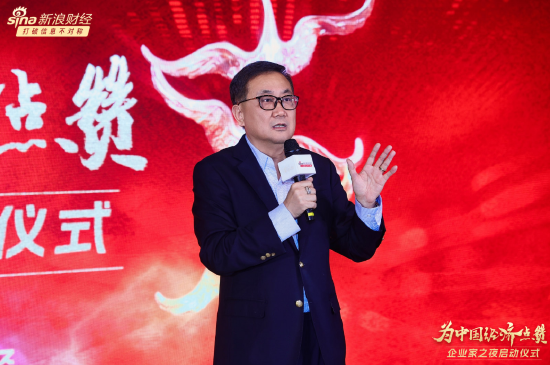
清华大学朱岩:现在的企业家精神正发生技术型改变
Xin Lang Cai Jing· 2025-12-17 08:48
Core Insights - The entrepreneurial spirit in China is undergoing a technological transformation, moving beyond traditional economic scale changes to focus on innovation and data-driven approaches [1][4][5] Group 1: Entrepreneurial Spirit Transformation - The new entrepreneurial spirit is characterized by four key aspects: adherence to innovation, data-driven decision-making, paradigm leadership, and human-machine symbiosis [1][4] - Traditional entrepreneurial spirit emphasized market opportunity capture and resource integration, while the digital intelligence era requires a focus on technological breakthroughs [5] - The organizational structure is shifting from hierarchical and centralized management to flatter, customer-oriented, and intelligent collaboration [5] Group 2: Competition and Risk Management - The competition logic has evolved from zero-sum games based on scale and joint development to a paradigm-leading approach that emphasizes ecological win-win scenarios [5][6] - Traditional entrepreneurs often preferred risk avoidance, but the digital intelligence era encourages embracing technological innovation to reduce risks and maximize industry-wide value [2][5] - The focus is shifting from maximizing individual enterprise profits to enhancing the overall value of the industrial ecosystem [6] Group 3: Innovation and Responsibility - Innovation must become the core of entrepreneurial spirit, requiring a shift from following technology trends to mastering foundational technologies [6] - Data literacy is essential for respecting factual information and credible data, which is crucial in the digital intelligence era [6] - Entrepreneurs are encouraged to engage in institutional discussions and create new market theories and rules, positioning Chinese enterprises to lead globally in the next 30 years [3][6]
清华大学朱岩:数智时代企业家精神一定是范式引领,而非卷规模
Xin Lang Cai Jing· 2025-12-17 08:48
Core Viewpoint - The entrepreneurial spirit in China is undergoing a technological transformation, moving beyond traditional economic scale changes to focus on innovation and data-driven approaches [1][4]. Group 1: Key Aspects of Entrepreneurial Spirit - The new entrepreneurial spirit is characterized by four main points: adherence to innovation, data-driven decision-making, paradigm leadership, and human-machine symbiosis [1][4]. - Traditional entrepreneurial spirit emphasized market opportunity capture and resource integration, while the digital intelligence era requires a focus on technological breakthroughs [5]. - Organizational structures are shifting from hierarchical and centralized management to flatter, customer-oriented, and intelligent collaboration [5]. Group 2: Competition and Risk Management - The competition logic has evolved from zero-sum games based on scale and joint development to a focus on paradigm leadership rather than mere scale competition [5]. - Many traditional industries are still caught in scale and price competition, which is detrimental to overall industry health [5]. - In the digital intelligence era, entrepreneurs are encouraged to embrace technological innovation to reduce risks and maximize value across the entire industry ecosystem, rather than just focusing on individual profit maximization [2][5]. Group 3: Innovation and Responsibility - Innovation must become the core of entrepreneurial spirit, requiring a shift from following technology trends to mastering foundational technologies [6]. - Data literacy is essential, emphasizing the importance of respecting credible data [6]. - The ecological landscape should transition from single-point competition to symbiotic and win-win relationships, with an upgraded sense of responsibility that goes beyond compliance to value leadership for humanity [6]. Group 4: Consumer Quality and Market Evolution - There is a need to identify new consumption scenarios and business models, particularly as the state emphasizes the release of the consumer market by 2026 [2][6]. - Entrepreneurs should actively embrace new technological advancements while also engaging in discussions about institutional changes and market rules to foster a new level of entrepreneurial spirit that can lead globally in the next 30 years [3][6].