
利率市场化改革

Search documents
货币政策框架转型稳步推进 为高质量发展提供有力支撑
Jin Rong Shi Bao· 2025-10-15 01:05
Core Viewpoint - The People's Bank of China (PBOC) has established a modern monetary policy framework that effectively supports the economic and social development goals outlined in the 14th Five-Year Plan, with a focus on maintaining stable total liquidity, optimizing structure, reducing costs, and stabilizing expectations [1][2]. Monetary Policy Tools and Achievements - Since the beginning of the 14th Five-Year Plan, the PBOC has implemented 9 reserve requirement ratio cuts, reducing the ratio by 3.5 percentage points, which has released approximately 7 trillion yuan in long-term liquidity [2][3]. - The PBOC has utilized various monetary policy tools to maintain ample liquidity, including open market operations and reverse repos, while promoting reasonable growth in credit [2][3]. Structural Monetary Policy Tools - The PBOC has improved its structural monetary policy tool system, focusing on key areas such as technological innovation, green development, and consumer services, achieving comprehensive coverage of financial services [3]. - The annual growth rates of social financing scale and broad money supply (M2) have reached around 9% to 10%, significantly higher than the nominal economic growth rate of 6% to 7% [3]. Interest Rate Marketization - The PBOC has deepened interest rate marketization reforms, establishing a clearer relationship between short-term and long-term interest rates, and has adjusted the policy interest rate to influence market rates [4][5]. - Since the beginning of the 14th Five-Year Plan, the PBOC has cumulatively lowered the policy interest rate by 0.8 percentage points, leading to a decrease in the loan market quotation rates (LPR) for both 1-year and 5-year loans [5]. Exchange Rate Stability - The PBOC has maintained a stable RMB exchange rate through managed floating exchange rate systems, enhancing the currency's elasticity and ensuring it remains within a reasonable equilibrium [6][7]. - The foreign exchange market has shown resilience, with the RMB exchange rate maintaining stability against major currencies, supported by a robust macroeconomic foundation [6][7]. Expectations Management - The PBOC has emphasized the importance of expectation management and effective communication of monetary policy, enhancing transparency and understanding of policy measures [8][9]. - Various channels have been utilized to communicate with the market, including regular policy announcements, financial data releases, and public education on monetary policy [9][10].


央行:将保持汇率弹性强化预期引导,防范汇率超调风险
Sou Hu Cai Jing· 2025-10-14 09:23
Core Viewpoint - The People's Bank of China (PBOC) has made significant progress in establishing a modern monetary policy framework during the "14th Five-Year Plan" period, focusing on supporting economic recovery and enhancing financial services to the real economy [1][2]. Monetary Policy Tools and Achievements - The PBOC has implemented a supportive monetary policy stance, utilizing various tools to maintain ample liquidity, including nine reductions in the reserve requirement ratio (RRR) totaling 3.5 percentage points, releasing approximately 7 trillion yuan in long-term liquidity [2][3]. - The annual growth rates of social financing scale and broad money supply (M2) have reached around 9%-10%, significantly exceeding the nominal economic growth rate of 6%-7% [3]. - The cost of financing for the economy has decreased, with new corporate loan and personal mortgage rates around 3.1% as of August 2025, down approximately 1.5 and 2.3 percentage points from the end of 2020, respectively [3][6]. Structural Monetary Policy Tools - The PBOC has enhanced its structural monetary policy toolset, focusing on key areas such as technological innovation and green development, ensuring comprehensive coverage of financial services [3][4]. - The financing structure has improved, with growth rates for inclusive small and micro loans, medium to long-term loans for manufacturing, and technology loans outpacing overall loan growth [3]. Interest Rate Marketization - The PBOC has made strides in market-oriented interest rate reforms, establishing a clearer relationship between policy rates and market rates, which has fostered a conducive financing environment for the real economy [4][5]. - The establishment of a market-based deposit rate adjustment mechanism and the removal of the lower limit on personal housing loan rates have further advanced interest rate marketization [5]. Exchange Rate Stability - The PBOC has maintained a stable RMB exchange rate, with a focus on market-driven adjustments and a managed floating exchange rate system, ensuring resilience in the foreign exchange market [7][8]. - The RMB exchange rate index has remained around 100, with the RMB/USD exchange rate showing stability against major currencies [8]. Communication and Expectation Management - The PBOC has emphasized the importance of expectation management and effective communication regarding monetary policy, enhancing transparency and understanding of policy directions [9][10]. - Various channels have been utilized for policy communication, including press releases, financial data publications, and public education initiatives, leading to improved policy transparency and effectiveness [10].
央行:我国宏观经济基本盘稳固,中长期汇率稳定有坚实基础
Xin Lang Cai Jing· 2025-10-14 09:09
Core Insights - The article discusses the achievements of the People's Bank of China (PBOC) during the "14th Five-Year Plan" period, highlighting the deepening of financial reforms and the effective implementation of monetary policy to support economic development [1][2]. Monetary Policy Framework - The PBOC has established a supportive monetary policy stance, contributing to the successful completion of the main economic and social development goals of the "14th Five-Year Plan" [1][2]. - A total of 9 reserve requirement ratio (RRR) cuts have been implemented, releasing approximately 7 trillion yuan in long-term liquidity [2][3]. - The PBOC has enhanced its monetary policy toolbox, including open market operations and reverse repos, to maintain liquidity and promote reasonable growth in credit [2][3]. Structural Monetary Policy Tools - The PBOC has improved its structural monetary policy tools, focusing on key areas such as technological innovation and green development, ensuring comprehensive coverage of financial services [3]. - The annual growth rates of social financing and broad money supply (M2) have been maintained at around 9%-10%, significantly higher than the nominal economic growth rate of 6%-7% [3]. Interest Rate Marketization - The PBOC has made significant progress in market-oriented interest rate reforms, establishing a clearer relationship between short-term and long-term interest rates [4][5]. - The establishment of a market-based deposit rate adjustment mechanism has led to a more market-driven environment for loan rates, with the average interest rate for new corporate loans and personal mortgages around 3.1% as of August 2025 [5]. Exchange Rate Stability - The PBOC has maintained a stable RMB exchange rate, with a focus on market-driven adjustments and a managed floating exchange rate system [6][7]. - The RMB exchange rate index has remained around 100, indicating stability against major currencies, while the corporate foreign exchange hedging ratio has increased from 17% in 2020 to 30% in 2025 [7]. Communication and Expectation Management - The PBOC has emphasized the importance of expectation management and effective communication of monetary policy, enhancing transparency and understanding of policy measures [8][9]. - Various channels have been utilized for policy communication, including press releases, financial data publications, and public education initiatives, leading to improved policy transmission effects [9].
央行:将继续坚持市场在汇率形成中的决定性作用 强化预期引导
Jin Rong Shi Bao· 2025-10-14 08:54
Core Viewpoint - The article discusses the achievements of the People's Bank of China (PBOC) during the "14th Five-Year Plan" period, highlighting the deepening of financial reforms, effective monetary policy, and the establishment of a modern central banking system to support economic development and stability [1][2]. Monetary Policy Achievements - The PBOC has implemented a supportive monetary policy stance, with a focus on both total and structural functions of monetary policy tools, contributing to a favorable financial environment for economic recovery [2]. - A total of 9 reserve requirement ratio cuts have been made, reducing the ratio by 3.5 percentage points, which has released approximately 7 trillion yuan in long-term liquidity [2][3]. - The annual growth rates of social financing scale and broad money supply (M2) have reached around 9%-10%, significantly higher than the nominal economic growth rate of 6%-7% [3]. Interest Rate Marketization - The PBOC has made significant progress in establishing a market-oriented interest rate formation and transmission mechanism, enhancing the effectiveness of monetary policy [4][5]. - The policy interest rate for the 7-day reverse repurchase operation was clarified in July 2024, improving the transmission relationship of interest rates from short to long [4]. - The cumulative reduction of policy interest rates by 0.8 percentage points has led to a decrease in the LPR for 1-year and 5-year loans by 0.85 and 1.15 percentage points, respectively [5]. Exchange Rate Stability - The PBOC has maintained the stability of the RMB exchange rate, allowing it to fluctuate within a reasonable range while enhancing its elasticity [6][7]. - The annualized volatility of the RMB exchange rate has averaged around 4%, with the exchange rate index remaining close to 100, indicating a stable performance against major currencies [6][7]. Communication and Expectation Management - The PBOC has focused on improving communication and expectation management regarding monetary policy, enhancing transparency and understanding among market participants [8][9]. - Various channels have been utilized for effective communication, including press releases, forums, and public education initiatives, which have contributed to increased policy transparency and understanding [9].

9月央行各项工具净投放9268亿元 专家:预计四季度降准、降息等工具仍有操作空间
Sou Hu Cai Jing· 2025-10-13 04:50
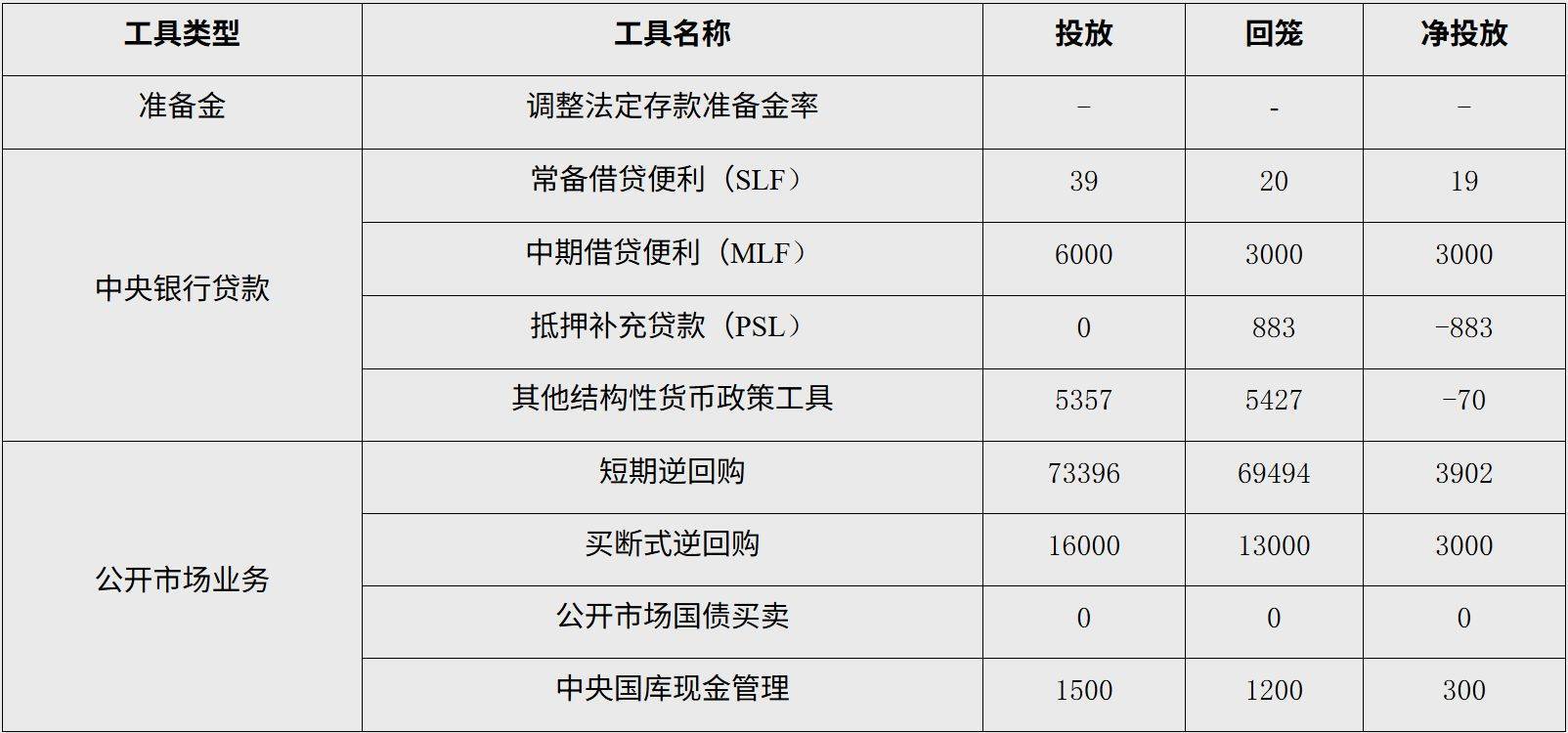
Core Viewpoint - The People's Bank of China (PBOC) has significantly increased liquidity net injection in September, amounting to 926.8 billion yuan, indicating a potential for further monetary easing in the fourth quarter, including possible reserve requirement ratio (RRR) cuts and interest rate reductions [1][4]. Group 1: Monetary Policy Tools - In September, the PBOC's liquidity injection included 19 million yuan from the Standing Lending Facility (SLF), 300 billion yuan from the Medium-term Lending Facility (MLF), and 3.9 trillion yuan from short-term reverse repos, while there was no activity in government bond transactions [3][4]. - The MLF and reverse repos can serve as substitutes for government bond transactions, reducing the necessity for the PBOC to inject liquidity through bond purchases [3][4]. - The PBOC's toolbox remains rich, with significant room for both quantity-based tools like RRR cuts and price-based tools like interest rate cuts [3][4]. Group 2: Economic Context and Future Outlook - The current macroeconomic environment is characterized by weak recovery, necessitating a continuation of a moderately loose monetary policy to address external shocks and domestic demand deficiencies [4][9]. - The introduction of 500 billion yuan in new policy financial tools is expected to be a crucial pathway for stimulating investment, with a projected leverage effect that could lead to an additional investment scale of approximately 1 trillion to 1.7 trillion yuan [4][7]. - The PBOC's approach to government bond transactions differs fundamentally from quantitative easing (QE) practices in developed economies, focusing on liquidity management rather than a large-scale, one-sided purchase of bonds [6][7]. Group 3: Market Reactions and Indicators - The market liquidity remains ample, with funding rates stabilizing around policy rates, and the PBOC is expected to maintain a balance between financial stability and economic development [3][8]. - Observations of market interest rates should focus on the weighted average of key rates rather than individual transaction rates, as fiscal factors can influence liquidity conditions [8][9]. - The anticipated gradual recovery of prices will require coordinated efforts across various sectors, with expectations for the 10-year government bond yield to trend down to around 1.6% amid ongoing economic adjustments [9].
各大银行行一锤定音,2025年起这类存款将喊停,今后存款要注意
Sou Hu Cai Jing· 2025-10-12 02:53
Core Viewpoint - The article discusses the decline in interest rates for bank deposits in China, highlighting the challenges faced by ordinary citizens in asset allocation as banks begin to phase out high-interest deposit products starting in 2025 [1][4][5]. Summary by Sections Deposit Rate Changes - As of September 2025, the average interest rate for fixed-term deposits across over 400 banks in China has decreased by 0.32 percentage points since the beginning of the year, reaching a five-year low [3]. - The People's Bank of China reported that the total RMB deposits in financial institutions reached 285.6 trillion yuan, with a year-on-year growth of 9.3%, but the growth rate has slowed by 0.5 percentage points compared to the previous year [1]. Types of Deposit Products Being Phased Out - "Tiered interest" deposit products, which adjust rates based on central bank interest rate changes, are being reduced from over 20 banks in 2024 to only 8 by September 2025 [4]. - "Step-up" high-interest deposits, which offer increasing rates over time, are also being discontinued, with one bank halting its "Step Up" product in May 2025 [4]. - Exclusive high-interest deposits targeting specific groups, such as the elderly or military personnel, are being eliminated, with over 30 banks already canceling such offerings in 2025 [4]. Reasons for Changes - Banks are halting high-interest deposits to manage funding costs more effectively as interest rate liberalization progresses, which is crucial for maintaining profitability amid rising non-performing loan pressures [5]. - The average net interest margin for commercial banks fell to 1.76% in the first half of 2025, down 0.25 percentage points from 2023, indicating challenges in profitability [6]. - Regulatory measures have been introduced to curb excessive high-interest deposit competition, which poses systemic risks to the financial market [6]. Investment Strategies - Diversification is emphasized as a key strategy in the current low-interest environment, suggesting a balanced allocation among various financial instruments such as savings, government bonds, and low-risk investment products [7]. - The average yield for fixed-income investment products was reported at 3.2% in Q3 2025, which remains competitive compared to traditional deposits [8]. - Caution is advised regarding high-interest deposit products that may have hidden conditions or penalties for early withdrawal, as these can diminish actual returns [8][11]. Long-term Financial Management - The article suggests that individuals should adapt to a prolonged low-interest rate environment by enhancing financial literacy and exploring diverse investment options beyond traditional bank deposits [12]. - For risk-averse individuals, government-supported retirement financial products are recommended, while those with higher risk tolerance may consider equity investments like index funds for potentially better long-term returns [11][12].

【财经分析】浮息债三季度延续扩容升级 创新产品深化利率市场化改革
Xin Hua Cai Jing· 2025-10-11 07:16
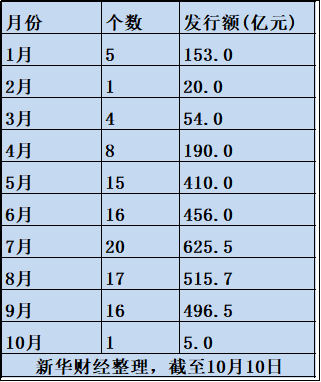
Core Insights - The floating rate bond market is experiencing a revival driven by policy guidance and market innovation, with nearly 300 billion yuan issued this year, an 80% increase compared to last year's total issuance [1][2]. Market Growth - The floating rate bond market has seen significant growth, with 103 bonds issued and a total scale of 292.57 billion yuan as of October 9, 2025, compared to 161.81 billion yuan in the previous year [2][4]. - The issuance in 2025 has already surpassed the total issuance of approximately 490.1 billion yuan from 2022 to 2024, marking a notable recovery since the peak in 2021 [4]. Market Structure - The floating rate bond market has diversified, with participation expanding from policy banks to commercial banks and non-financial enterprises, creating a richer market structure [1][4]. - The majority of floating rate bonds issued since 2022 have been dominated by policy banks, accounting for over 80% of the total issuance [4]. Investment Demand - Floating rate bonds provide a stable investment return and are increasingly seen as a tool for managing interest rate risk, particularly beneficial during periods of declining interest rates [1][5]. - The bonds are appealing to commercial banks for optimizing their liability structure amid pressures on net interest margins due to LPR reductions and declining bond market yields [5][7]. Innovation and Future Potential - The market is innovating with products that combine floating rate bonds with policy support areas such as technology and green finance, with a total of 332.5 million yuan issued in these categories this year [5][6]. - The establishment of a diversified benchmark interest rate system, including DR007 and LPR, enhances the market's ability to connect short-term rates with long-term financing costs [6][9]. Regulatory Support - Regulatory bodies are actively promoting the development of the floating rate bond market, creating a favorable environment for its growth [2][8]. - The ongoing market reforms and the deepening understanding of floating rate bonds among investors are expected to lead to a steady increase in supply and participation [8][9].
公开市场十四天期逆回购机制调整 更好满足差异化资金需求
Jing Ji Ri Bao· 2025-10-07 01:39
Core Viewpoint - The People's Bank of China (PBOC) has adjusted its 14-day reverse repo operations to a fixed quantity, interest rate bidding, and multiple price winning method, enhancing market liquidity management and reflecting the demand for short-term funds among financial institutions [1][2][3] Group 1: Adjustment Details - The PBOC conducted a 300 billion yuan 14-day reverse repo operation, marking the first implementation after the adjustment announced on September 19 [1] - The adjustment shifts from a "fixed rate, quantity bidding" model to a "fixed quantity, interest rate bidding, multiple price winning" model, allowing banks to bid at different interest rates [1][2] - This change aims to improve the precision and flexibility of monetary policy, catering to the diverse short-term funding needs of financial institutions [1][2] Group 2: Implications for Market Liquidity - The adjustment allows for clearer market expectations and reduces uncertainties related to operational scale, which can stabilize market conditions [2][3] - The PBOC will determine operation timing and scale based on real-time liquidity management needs, enhancing its ability to maintain ample liquidity in the banking system [2] - Historically, the PBOC has initiated 14-day reverse repo operations before major holidays to ensure sufficient liquidity, with the current operation starting earlier than in previous years [2][3] Group 3: Future Outlook - The adjustment is expected to focus the 14-day reverse repo as a short-term liquidity tool, furthering interest rate marketization and improving financial institutions' pricing capabilities [3] - The PBOC's liquidity management toolbox is being optimized, allowing for a more flexible combination of long, medium, and short-term operations to smooth out the rhythm of fund injection and withdrawal [3]
更好满足差异化资金需求
Jing Ji Ri Bao· 2025-10-07 01:19
Core Viewpoint - The People's Bank of China (PBOC) has adjusted its 14-day reverse repo operations to a fixed quantity, interest rate bidding, and multiple price winning method, enhancing liquidity management and reflecting market demand more accurately [1][2]. Group 1: Adjustment Details - The PBOC conducted a 300 billion yuan 14-day reverse repo operation, marking the first implementation after the recent adjustment announcement [1]. - The adjustment shifts from a "fixed rate, quantity bidding" model to a "fixed quantity, interest rate bidding, multiple price winning" model, allowing banks to bid at different interest rates [1]. - This change aims to improve the precision and flexibility of monetary policy, catering to the varying short-term funding needs of financial institutions [1][2]. Group 2: Implications for Market Liquidity - The adjustment indicates a more proactive and flexible approach by the PBOC in managing liquidity based on real-time factors such as banking system liquidity and market interest rate trends [2]. - Historically, the PBOC has initiated 14-day reverse repo operations before major holidays to ensure liquidity, with this year's timing being slightly earlier than in previous years [2]. - The early initiation of the operation, combined with previous liquidity injections, is expected to alleviate funding pressures for institutions ahead of the quarter-end and holiday periods [2]. Group 3: Future Outlook - The adjustment is seen as a step towards further market-oriented interest rate reforms, enhancing financial institutions' pricing capabilities and better reflecting market supply and demand [3]. - The PBOC's liquidity management toolbox is being optimized, allowing for a more flexible combination of long, medium, and short-term operations to smooth out funding flows [3].
公开市场十四天期逆回购机制调整—— 更好满足差异化资金需求
Jing Ji Ri Bao· 2025-10-06 22:03
Core Viewpoint - The People's Bank of China (PBOC) has adjusted its 14-day reverse repo operations to a fixed quantity, interest rate bidding, and multiple price winning method, enhancing liquidity management and reflecting market demand more accurately [1][2][3] Group 1: Adjustment Details - The PBOC conducted a 300 billion yuan 14-day reverse repo operation, marking the first implementation after the recent adjustment announcement [1] - The adjustment shifts from a "fixed rate, quantity bidding" model to a "fixed quantity, interest rate bidding, multiple price winning" model, allowing banks to bid at different interest rates [1][2] - This change aims to improve the precision and flexibility of monetary policy, catering to the varying short-term funding needs of financial institutions [1][2] Group 2: Implications for Liquidity Management - The PBOC will determine operation timing and scale based on real-time liquidity management needs, allowing for a more proactive approach to maintaining ample liquidity in the banking system [2] - Historically, the PBOC initiates 14-day reverse repo operations before major holidays to ensure sufficient liquidity, with this year's timing being slightly earlier than in previous years [2][3] - The adjustment is expected to enhance the PBOC's ability to smooth market fluctuations and provide a more suitable monetary environment for the real economy [2] Group 3: Market Positioning and Future Outlook - The 14-day reverse repo rate has traditionally been viewed as having policy attributes, but the recent adjustment aims to focus it more on short-term liquidity provision [3] - The reform is anticipated to deepen interest rate marketization and improve financial institutions' pricing capabilities, better reflecting market supply and demand [3] - The PBOC's liquidity management toolbox is being optimized, allowing for flexible combinations of long, medium, and short-term operations to enhance the efficiency of liquidity management [3]