
夜间经济

Search documents
零售节节高,入境游创纪录:“消费第一城”上海火力全开
Sou Hu Cai Jing· 2026-01-21 01:53
作为全国"消费第一城",上海公布2025全年消费成绩单。 上海统计局数据显示,2025年,上海市实现社会消费品零售总额超过16600亿元,同比增长4.6%,增速 逐季回升,比前三季度提高0.3个百分点。这个增速高出全国(3.7%)0.9个百分点。 其中,新能源汽车、通讯器材、家电家具销售额均保持两位数增长。从类别看,限额以上单位中,文化 办公用品类零售额同比增长30.4%,家用电器和音像器材类增长24.3%,家具类增长22.0%,通讯器材类 增长16.4%。从零售业态看,限额以上网上商店零售额同比增长14.1%。 值得一提的是,上海2025全年接待入境游客创历史新高,达到936万人次,比上年增长40%,离境退税 销售额增长约80%。 根据官方数据,2025年上海加力扩围实施消费品以旧换新政策,汽车以旧换新超过32万辆,手机等数码 产品购新超过450万件,全年以旧换新商品销售额1200亿元以上、惠及超过2195万人次。同时发放10 亿 元"乐·上海"服务消费券。 此外,沈开艳认为,上海消费的有力提振增长还受益于"五五购物节""旅游节"等活动的持续引流,其中 旅游节带动消费超3000亿元。另一方面,入境游政策如3 ...
上海“十五五”:增强内需主动力、壮大服贸优势
Di Yi Cai Jing· 2026-01-19 12:45
Core Viewpoint - Shanghai aims to strengthen its role as a "key node in the global city network" during a period of globalization headwinds by enhancing domestic consumption and service engines while improving its discourse power in trade and shipping rules [1][2] Economic Development Goals - The "15th Five-Year Plan" outlines major goals for Shanghai's economic and social development, emphasizing high-quality development, new leaps in urban core functions, breakthroughs in high-level reform and opening up, and significant improvements in social civilization [3] - The plan highlights the importance of building an international consumption center and enhancing domestic demand as the main driver of economic growth [3] Service Sector Expansion - Shanghai plans to expand service consumption, focusing on cultural, tourism, sports, and health services, while promoting green and smart consumption [4] - The city encourages innovation in consumption models and formats, integrating online and offline consumption, and enhancing the international influence of large consumption events [4] Policy Measures - Recent policies include the "Measures to Promote the Quality Improvement and Consumption Expansion of the Service Industry," which proposes 28 initiatives aimed at optimizing supply and expanding consumption [5] - The focus is on quality competition in the service sector, shifting from scale expansion to value enhancement [5][6] Trade and Shipping Enhancements - Shanghai's "15th Five-Year Plan" emphasizes the enhancement of trade hub functions and the optimization of trade structures, aiming to strengthen global supply chain management [7][8] - The city plans to promote high-value product exports and develop knowledge-intensive service trade, including cultural and technical trade [7] Foreign Trade Performance - In 2025, Shanghai's foreign trade is projected to reach 4.51 trillion yuan, with exports growing by 10.8% and imports by 1.8%, outperforming national averages [8] - The export of high-end manufacturing products, particularly electric vehicles and industrial robots, has shown significant growth, indicating a shift towards "Shanghai Intelligent Manufacturing" [9] Maritime and Shipping Development - Shanghai aims to solidify its position as a global maritime hub by developing modern shipping services and promoting digital and green transformations in the shipping industry [9] - Plans include establishing a world-class shipping exchange and enhancing the global service network of shipping insurance institutions [9]
上海“十五五”规划建议:大力发展文化、旅游、体育、健康等改善型服务消费
Zheng Quan Shi Bao Wang· 2026-01-18 23:54
Core Viewpoint - The Shanghai Municipal Committee has released recommendations for the 15th Five-Year Plan, emphasizing the implementation of strategies to expand domestic demand and enhance consumption [1] Group 1: Consumption Strategies - The plan includes a continuation of special actions to boost consumption and the development of Shanghai as an international consumption center [1] - There is a focus on expanding service consumption, particularly in cultural, tourism, sports, and health sectors, to improve the quality of service supply [1] - The initiative promotes green and smart consumption, aiming to upgrade and expand product consumption [1] Group 2: Innovation and Integration - Encouragement for innovation in consumption models and formats, promoting the integration of online and offline consumption [1] - The plan supports the development of "AI + consumption," intellectual property derivative products, and interactive, immersive, and experiential consumption [1] - There is a push for the growth of the live-streaming economy and the deep integration of culture, tourism, commerce, and sports [1] Group 3: Economic Environment and Infrastructure - The recommendations include optimizing the consumption environment and advancing the construction of world-class business districts [1] - Development of distinctive commercial streets and enhancement of tax refund and cross-border payment convenience to increase inbound consumption [1] - The plan aims to create an all-age-friendly quality living circle to better match supply and demand in consumer goods, stimulating consumption potential among the elderly and youth [1]
赛事场馆成夜间乐园 武汉体育中心“晚上比白天还俏”
Chang Jiang Ri Bao· 2026-01-18 00:52
Group 1 - The core idea of the articles highlights the transformation of Wuhan Sports Center into a vibrant night-time consumption hub, integrating sports, culture, tourism, wellness, and commerce [1][2] - The center attracts over 5 million visitors annually, with more than half of them participating in night-time activities, showcasing its role as a social consumption venue [2] - Various events such as international competitions, concerts, and seasonal festivals are held throughout the year, contributing to the development of a multifaceted consumption system [2] Group 2 - The center is undergoing upgrades to enhance its offerings, including the introduction of more live entertainment options and outdoor movie screenings [2] - The company plans to continue expanding its night-time experiences, including night tours, shopping, fitness, performances, and entertainment, to unlock new potential in the night economy [2]
从赛事场馆到“夜间乐园”,武汉体育中心夜经济占比过半
Chang Jiang Ri Bao· 2026-01-16 00:41
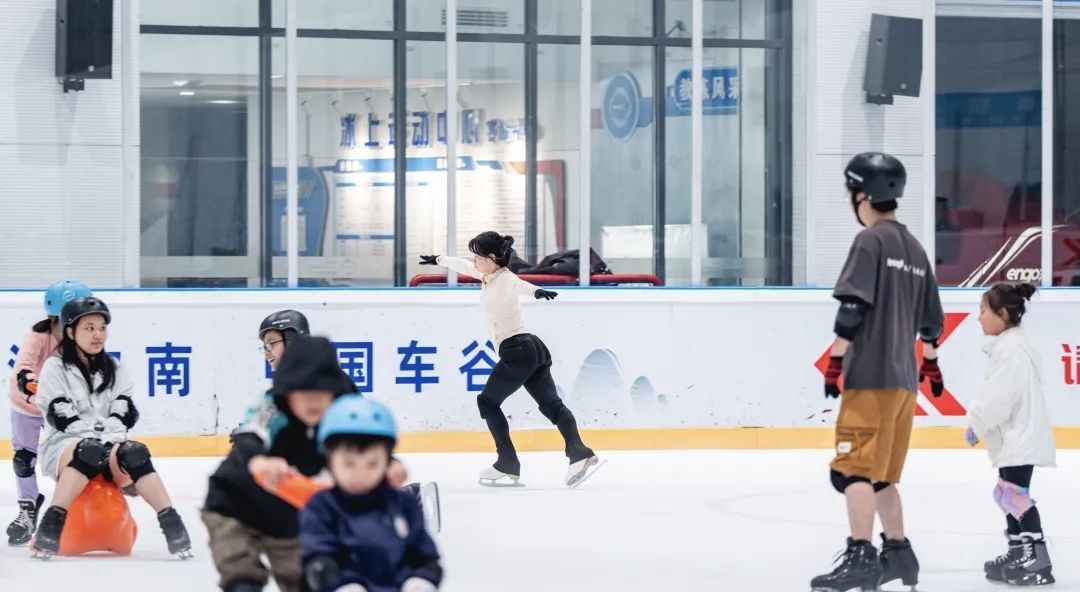
Core Insights - Wuhan Sports Center has transformed into a vibrant hub for night-time activities, attracting significant crowds and enhancing the local economy [4][7][8]. Group 1: Night-time Activities - The center has been recognized as a provincial-level night consumption gathering area, indicating its role as a new focal point for urban nightlife [4]. - The facility hosts various activities, including public running groups and ice sports training, with over 100 participants on weekdays and nearly 200 students engaged in ice hockey and figure skating [1][3]. - The center's atmosphere is lively, with food and entertainment options available, such as live music performances and diverse dining experiences [4][6]. Group 2: Economic Impact - The park receives over 5 million visitors annually, with more than half of these visits occurring at night, showcasing the growing importance of night-time economy [7]. - A composite consumption system has been established, integrating events like international competitions, concerts, and cultural experiences, catering to a wide range of interests [8][12]. - The center is actively enhancing its offerings by introducing new entertainment options, such as outdoor camping movies and upgraded performance spaces, to further stimulate night-time economic activities [13].

上海28条新政锻造消费“强磁场”
Xin Lang Cai Jing· 2026-01-15 14:14
Core Insights - Shanghai's "28 Measures" aim to stimulate consumption through a systematic restructuring of the supply side rather than simple financial incentives, focusing on enhancing quality and efficiency in various sectors [2][8][20] Group 1: Policy Measures - The measures include 28 specific policies designed to optimize the supply side and activate the entire consumption chain [2][8] - The policies encourage financial institutions to develop tailored financial products for emerging consumption scenarios such as holiday, night, nostalgic, and two-dimensional economies [4][16] - The initiative promotes the integration of financial services with cultural and tourism sectors, aiming to create a comprehensive ecosystem that supports both supply and demand [5][17] Group 2: Financial Innovations - The measures facilitate the securitization of personal consumption loans, which can enhance banks' lending capabilities and foster a positive cycle of financial support for consumption [4][17] - Innovations in financial products are expected to extend beyond traditional large-item purchases to include experiences like themed exhibitions and night markets [4][16] - The optimization of inclusive insurance products provides a safety net for consumers, alleviating concerns and encouraging spending [5][17] Group 3: Digital Content and AI - The development of AI micro-dramas is highlighted as a key area for cultural consumption, with policies aimed at creating a hub for this content and fostering talent through competitions [6][18] - The integration of AI technology is expected to lower production costs and increase output efficiency in the digital content sector, leading to significant market growth [21][22] - The cross-industry collaboration between micro-dramas and tourism or commerce is anticipated to open new monetization channels for advertising and brand placement [21][22] Group 4: Industry Integration - The measures emphasize the deep integration of cultural, tourism, and commercial sectors, breaking down barriers and creating new opportunities for resource consolidation [10][22] - The focus on experiential consumption is expected to transform traditional shopping centers into experience centers, enhancing customer retention and rental income [10][22] - The promotion of event-driven consumption models, such as "travel with events," is likely to benefit the sports industry and related sectors [10][22] Group 5: Retail and Service Upgrades - Retail and service industries are encouraged to adopt digital tools for comprehensive upgrades, leading to innovations like unmanned retail and smart business districts [11][23] - The policies aim to expand the production service sector, including advertising and market research, to better align with high-quality consumer demand [11][23] - Sectors related to healthcare, childcare, and green consumption are expected to be activated through policy guidance and financial support, creating new family consumption engines [11][23]
一场光影节,带动消费2.63亿元!委员再建议:“水”里还有更大潜力
Sou Hu Cai Jing· 2026-01-14 18:15
Core Insights - The focus is on developing new economic models such as night economy, silver economy, and pet economy, along with the urban renewal of key areas like Xinzhuang Hub and Qibao Old Street [2] Group 1: Economic Development Initiatives - The second Shanghai International Light and Shadow Festival in 2025 will center around Qibao Ancient Town, creating a 7-kilometer "Light Min Show Belt" that is expected to attract 2.55 million visitors and generate 263 million yuan in consumption [4] - The proposal for a "Minhang Characteristic Light and Shadow Festival" was initiated by a local leader, emphasizing the need for a cultural corridor that integrates water travel and tourism [4][6] Group 2: Tourism and Cultural Integration - Current tourism in Qibao Ancient Town primarily focuses on daytime activities such as food and shopping, with nighttime experiences lacking depth in water-based activities [9] - A proposed 1.8-kilometer water tourism axis would connect cultural sites and create a composite tourism route that combines culture, creative arts, and ecological leisure [11] Group 3: Innovative Experiences - Daytime tours could include cultural and ecological education, while nighttime experiences could feature immersive water shows and interactive lighting installations [12] - The integration of "water+" business models is essential, with suggestions for daytime markets and nighttime food stalls to create seamless consumption experiences [14] Group 4: Collaborative Opportunities - Potential partnerships could be formed with local attractions to offer combined packages that enhance visitor experiences and stimulate the water economy [16]

去年全国5A景区夜间开放率66.9%,搭建夜间消费生态
Nan Fang Du Shi Bao· 2026-01-14 11:31
Core Insights - The report by the China Tourism Research Institute indicates a stable growth in night-time tourism demand, with night-time consumption accounting for 32.9% of total consumption and 28.3% of total transactions from January to October 2025 [1] - The supply of 5A scenic spots is stabilizing, with a night-time opening rate of 66.9%, and nearly half (47.5%) of these spots achieving full coverage of various service categories [1] Demand Side Insights - Night-time consumption is evolving from basic needs to a multi-dimensional experience focusing on diversity, novelty, and social interaction [2] - Consumers are increasingly seeking richer choices and accessibility, with night-time activities expanding beyond traditional markets to include cultural and tourism complexes, industrial parks, and rural ancient towns [1][2] - Over 60% of tourists who experienced night-time performances participated in activities at cultural and tourism complexes or industrial parks, with non-material experiences becoming a significant aspect of night-time outings [2] Social Connection Insights - The emotional aspect of night-time economy is gaining importance, with family gatherings and community activities being primary motivations for night-time outings [2] - Collaborative activities like script-solving and intangible cultural heritage workshops are popular, fostering deeper connections among participants and creating interest-based communities [2] Rural Night Tourism Insights - Rural ancient town night tours are emerging as a new consumption hotspot, with nearly 70% of residents preferring towns within a 3-hour drive, and spending concentrated in the 301-700 yuan range [3] - Local residents favor social and stress-relieving activities such as long-table banquets and themed concerts, shifting the focus of rural night tourism from merely serving tourists to providing regular leisure spaces for locals [3] Supply Side Insights - The night-time economy is undergoing systematic responses and structural upgrades, with leading resources completing initial explorations of "night transformation" [3] - The core attractions of night-time activities are diversifying from simple light shows to include drone fireworks, immersive performances, themed banquets, and camping bases, catering to various age groups [3] Spatial Innovation Insights - Night-time commercial districts are transitioning from traditional shopping centers to park-like, walkable spaces, with examples like Beijing's Liangma River waterfront and Shanghai's EKA community park [4] - Cultural venues are enhancing their offerings from simple extended hours to high-value experiences, with the night-time opening rate of national first-class museums reaching 37.6% during peak seasons [4] Night-time Performance Insights - Night-time performances are becoming increasingly independent, showcasing trends of lightweight, IP integration, and strong interactivity [4] - Thematic content is shifting from grand scenic displays to emotionally resonant historical figures, with innovative business models like "dining and performance integration" emerging as significant growth points [4] Challenges and Recommendations - The night-time economy faces challenges such as insufficient brand recognition and a need for better supply-demand alignment [5] - Recommendations include shifting from activity-based thinking to brand asset thinking, utilizing data for refined governance, and establishing a comprehensive benefit evaluation system for collaborative development among government, market, and community [5]
打造文旅特色商圈!广州白云这条“韩国风情街”即将迎来升级
Nan Fang Du Shi Bao· 2026-01-14 09:21
Core Insights - The "Korean Street" on Yuanjing Road in Guangzhou has evolved into a mature commercial area with an annual revenue of approximately 8 billion yuan, showcasing a blend of Korean culture and cuisine [1][3][5] Group 1: Development and Growth - Yuanjing Road has transformed from a gathering of Korean merchants into a vibrant commercial hub, attracting over 2,000 registered Korean residents and more than 200 Korean companies [3][2] - The area features over 120 Korean restaurants, including 47 barbecue establishments, alongside various beverage brands and 9 Korean supermarkets [3][4] - The local government has integrated Yuanjing Road into a broader commercial system aimed at creating an international cultural and tourism district [1][6] Group 2: Future Plans and Investments - A significant investment of 32 million yuan is planned to enhance the "Yuanjing Road Korean City" project, focusing on upgrading transportation nodes and modernizing the street's aesthetics [5] - The area aims to develop into a recognized international landmark, with plans to introduce new consumption scenarios, including tax refund shops for inbound travelers [5][6] - Nighttime consumption currently accounts for over 60% of the area's revenue, with initiatives underway to apply for recognition as a leading night market in Guangzhou [6]
海粟文化广场业态更新 以音乐为载体夜经济蓬勃生长
Jie Fang Ri Bao· 2026-01-14 01:58
Core Insights - The "C·PARK Haishu Cultural Square" in Shanghai is undergoing significant changes, with the new underground space focusing on a diverse range of activities including music, art, and markets, aiming to create a youth music town called "Yuyin Town" [1] - The project is set to fully revamp by the second quarter of this year, with a focus on integrating "pet economy + daytime sports lifestyle" and "night economy + ticket-root economy" into a comprehensive cultural and commercial complex [1] Group 1 - The new underground space spans 5,000 square meters and is designed to enhance the night economy, centering around music culture with various performance venues [1] - Key establishments include the Yuyin Hall, which has been a staple in Shanghai's live music scene, featuring performance spaces that can accommodate 350 and 150 people, respectively [1] - The venue will host a variety of music genres including rock, electronic, world music, jazz, and hip-hop, creating a vibrant night-time consumption area [1] Group 2 - The "REACTOR" club, a first for Shanghai, brings authentic Techno electronic music parties to the cultural square, enhancing the local music scene [2] - The square also introduces multiple hybrid business formats, such as the "ILLUM CLUB," which combines elements of clubs, bars, cafes, and community activities, attracting a diverse customer base [2] - Future plans include collaborations with more exhibition and performance venues in Changning and Shanghai to extend the "ticket-root economy" consumption chain, offering a one-stop cultural experience that includes exhibitions, performances, shopping, dining, and sports [2]